Archive for the ‘Biofilm’ Category

Hottest Lyme Disease Treatment Update 2022

https://www.treatlyme.net/guide/hottest-lyme-treatment-updates-2022  Video Here (Approx. 11 Min)

Hottest Lyme Disease Treatment Updates in 2022

Marty Ross MD on Top Lyme Treatment Updates of 2022

In the video in the link above Marty Ross MD describes the latest Lyme disease treatment updates in his integrative medicine practice. For more information about the topics discussed in the video article see the following resources:

Dr. Ross’s new book, Hacking Lyme Disease: An Action Guide to Wellness, will be released by early December 2022.

Disclaimer

The ideas and recommendations on this website and in this article are for informational purposes only. For more information about this, see the sitewide Terms & Conditions.

________________

**Comment**

Dr. Ross discusses peptides. These are not antimicrobials but help the body in fighting off infections and restoring the issues infections cause.  Ross as well as Dr. Holtdorf is evidently having a lot of success with them.

Ross also discusses biofilm busters such as lumbrokinase, which helps improve circulation, decrease muscle pain, and improve medicine delivery deep into tissues.  Those with hypercoagulation would also do well to check it out.  

A golden nugget he discussed was the finding that cryptolepis, a drug normally given for Babesia, also has action against Lyme (in vitro – or the lab, which may not transfer over to the human body or in vivo) This study also found that black walnut, Japanese knotweed, sweet wormwood, ccat’s claw, Cistus incanus, and Chinese skullcap at 1% extracts had good activity against Bb’s stationary phase compared to control antibiotics doxycycline and cefuroxime.

Important note: The minimum inibitory concentration (MIC) values of Artemisia annua, Juglans nigra, and Uncaria tomentosa were quite high for the growing phase of Bb, despite their strong activity against the non-growing stationary phase. On the other hand, the top two active herbs, Cryptolepis and Japanese Knotweed showed strong activity against both growing Bb and non-growing stationary phase.  In subculture studies, only 1% Cryptolepis extract caused complete eradication, while doxycycline and cefuroxime and other active herbs could not eradicate B. burgdorferi stationary phase cells as many spirochetes were visible after 21-day subculture.

Ross states both herbs are helpful for Bartonella as well as diflucan/fluconazole.  My LLMD had us pulse diflucan twice a week throughout our entire treatment (5 years).  I can say with experience we herxed on this drug, often.  It is a known anti-fungal; however, Dr. Hoffman (RIP) stated he believed it did far more than that, and I tend to agree having taken it.

In contrast, the study showed that Stevia rebaudiana, Andrographis paniculata, Grapefruit seed extract, colloidal silver, monolaurin, and antimicrobial peptide LL37 had little or no activity against stationary phase B. burgdorferi A few years ago all kinds of headlines came out that stevia cured Lyme. Nothing could be further from the truth.  Per usual, if something seems too good to be true, it usually is.

Dr. Klinghardt uses a sublingual form of Hyaluronic Acid to fool the cyst forms to open and become spirochetes so they can be killed by antimicrobials.  For more on Klinghardt’s treatment:  Klinghardt Lyme Protocol.

Hyaluronic Acid is a type of sugar molecule.  Many other Lyme literate doctors also use forms of sugar such as Stevia or Erythritol as “cyst busters,” in their treatment regimens.  Look for reputable sources of Erythritol as it is most commonly made with GMO cornstarch.

For more:

Borrelia burgdoeri Co-Localizing With Amyloid Markers in Alzheimer’s Disease Brain Tissues

https://content.iospress.com/articles/journal-of-alzheimers-disease/jad215398

Borrelia burgdorferi Co-Localizing with Amyloid Markers in Alzheimer’s Disease Brain Tissues

Accepted Oct. 24, 2021, Published Dec. 5, 2021

How Lyme Disease Can Affect Your Vision

https://www.lymedisease.org/padula-lyme-affects-eyes/

TOUCHED BY LYME: How Lyme disease can affect your vision

Aug. 4, 2021

Dr. William Padula is a noted expert on how Lyme and other tick-borne diseases can affect the eyes.

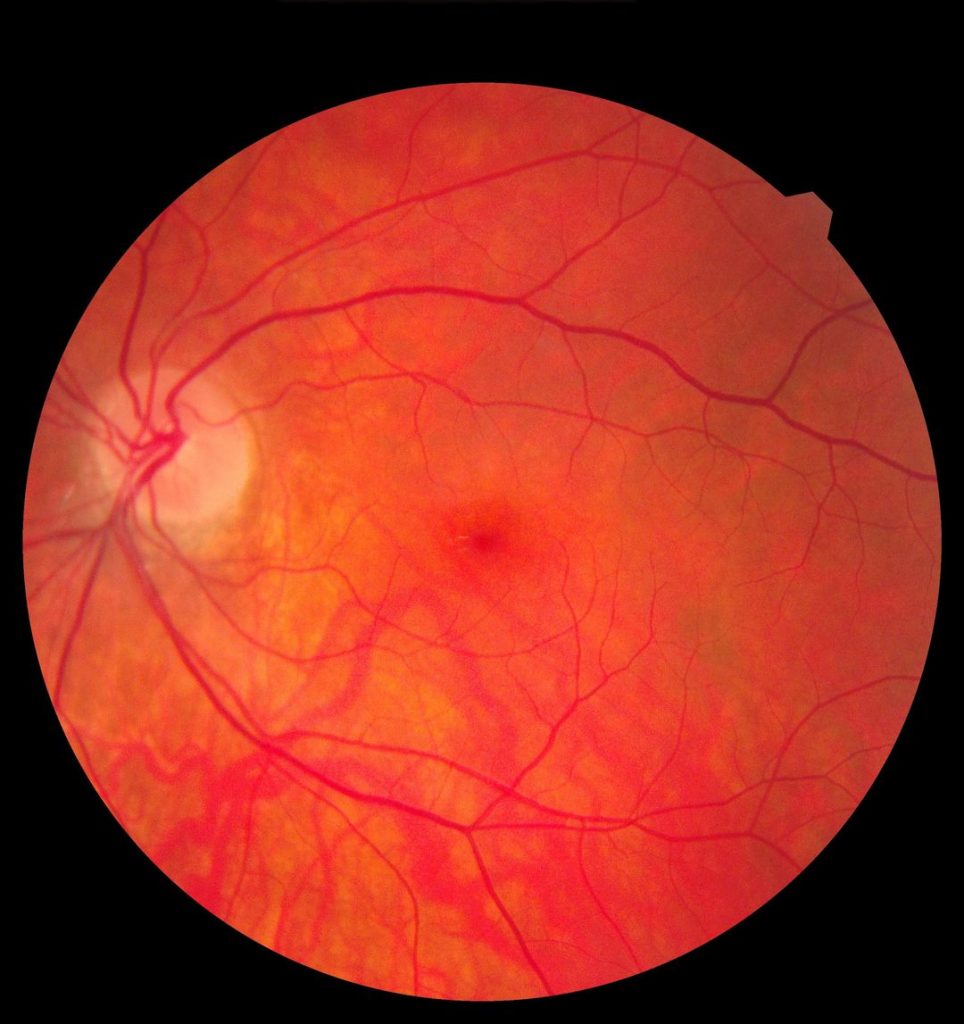
According to his website, the following can all be symptoms of tick-borne illness: blur, visual fatigue, double vision, headaches associated with visual activities, light sensitivity, losing place when reading, seeing words appear to double or become double when reading, and more obscure problems often not associated with vision such as difficulty with balance, spatial orientation, memory, comprehension, feeling of being overwhelmed by being in a busy environment, and sensitivity to sound.

The website notes: “The cause of the visual symptoms is because the tick-borne disease affects visual processing in the brain.”

Recently, Dr. Padula has discovered two eye-related biomarkers for tick-borne infection. (A biomarker is something that can be found by examination or testing that indicates the presence of a particular disease or condition.)

In an article published by Healio, Dr. Padula reports:

“My colleagues and I have demonstrated that the presence of a hazy, white ring of peri-papillary ischemia around the optic nerve — especially in children or adults younger than 60 years who would not be expected to have ischemic changes — is associated with tick-borne infection. One way that spirochetes hide from the immune system is by building up protective biofilms. We believe that these biofilms clog the narrow capillary vessels just around the perimeter of the optic nerve, blocking blood flow.”

Dr. Padula recommends that optometrists and ophthalmologists who observe this condition in patients who also have convergence insufficiency or focusing should rule out the possibility of tick-borne infection.

In the same article, Dr. Padula also discusses something called the Visual Evoked Potential (VEP) test. He says that abnormal results on this test strongly indicate tick-borne disease.

As we in the Lyme community know well, it often takes a long time for people to get properly diagnosed with tick-borne infections. If eye doctors become alert to these biomarkers, that could speed up the process considerably.

Click here to read the article on Healio.

Click here to visit Dr. Padula’s website

TOUCHED BY LYME is written by Dorothy Kupcha Leland, LymeDisease.org’s Vice-president and Director of Communications. She is co-author of When Your Child Has Lyme Disease: A Parent’s Survival Guide. Contact her at dleland@lymedisease.org.

____________________

For more:

Biofilm

https://www.medicalnewstoday.com/articles/319858.php

Strength in numbers: How biofilms outfox antibiotics

Bacteria are vital for survival, but when they form communities, they can wreak serious havoc and pose a threat to our health.

When bacteria flock together and form a community, this is called a biofilm. Found all over the planet — from desert rocks to the surfaces of buildings — biofilms are an integral part of nature.

Biofilms are tricky beasts because they have a tendency to become resistant to all manner of efforts employed to eradicate them. This spells bad news for anyone with conditions such as cystic fibrosisperiodontitis, or chronic wounds as medical implants and catheters are hotspots for biofilm formation.

But why are biofilms so persistent, and what are doctors and scientists doing to outsmart these clever microbial communities?

What are biofilms?

“Biofilms are one of the most widely distributed and successful modes of life on Earth,” says Prof. Hans-Curt Flemming — director of the Institute for Interface Biotechnology at the University of Duisburg-Essen in Germany — in a 2016 article published in Nature Reviews Microbiology.

(See link for article)

_____________________

For more:

May Lyme Awareness Talk, 2021

http://

May 5, 2021

Lyme Awareness Talk

According the the Centers for Disease Control and Prevention (CDC), the average number of Lyme disease cases has more than doubled over the last decade.  In this presentation, Alicia Cashman from the Madison Lyme Support Group discusses tick-born illness, why it’s so difficult to obtain help, symptoms, prevention, and real life experience of patients.  The program was made possible through funding from the Friends of the Oregon Library.

Slide 1: Lyme Disease a 21st Century Pandemic
Slide 2: Why should we care about Lyme disease:
Slide 3: The History of Lyme disease:
Slide 4:  What is Lyme disease?
  • The CDC/NIH/IDSA accepted narrative
  • Reality
Slide 5: Pleomorphism (Lyme shape-shifts)
Slide 6: Video of a spirochetal cluster grown from a sick patient’s blood
Slide 7: Polymicrobialism (There are often other infections involved)
Slide 8:  How is Lyme Transmitted?
  • The CDC accepted narrative
  • Reality
Slide 9:  Congenital Lyme – is real
Slide 10: How is Lyme diagnosed?
Slide 11:  Symptoms of Lyme disease
  • CDC accepted narrative
  • Reality
Slide 12: Lyme disease signs and symptoms explained by Dr. Aucott of Johns Hopkins
  • Patients can jump to stage 3 quickly and bypass the other stages.  I give the example of the little girl who went out to play, got a tick bite above her eye and within 4-6 hours couldn’t walk or talk.
  • Many never see the tick or the rash
  • While the rash is diagnostic for Lyme (if you have the rash, you have Lyme – no testing required), you may still be infected even if you don’t have the rash. Most doctors are uneducated, don’t know what the rash looks like, and mistakenly tell people they got a spider or other bug bite.  The rash can also be irregular: https://madisonarealymesupportgroup.com/2020/07/18/misdiagnosis-of-lyme-caused-rash-can-have-potentially-fatal-consequences/
Slide 13: Why are definitions important?
  • Organism
  • Transmission
  • Treatment
Slide 14:  Tick Prevention
Slide 15: Willy Burgdorfer, the “discoverer” of Lyme
Slide 16: New Treatments for Lyme disease
Please remember that most patients are infected with numerous infections.  Treatment should reflect this as research shows patients fighting numerous infections simultaneously have more severe symptoms for a much longer duration.
Slide 17: Hollywood Stars infected with Lyme