Archive for the ‘Bartonella’ Category

First Report of Cat-Scratch Disease Associated With B. clarridgeiae

https://www.ncbi.nlm.nih.gov/pmc/articles/PMC229848/

. 1997 Jul; 35(7): 1813–1818.
PMCID: PMC229848
PMID: 9196200

Bartonella clarridgeiae, a newly recognized zoonotic pathogen causing inoculation papules, fever, and lymphadenopathy (cat scratch disease).


ABSTRACT

Shortly after adopting a 6-week-old cat, a veterinarian was bitten on the left index finger. Within 3 weeks, he developed headache, fever, and left axillary lymphadenopathy. Initial blood cultures from the cat and veterinarian were sterile. Repeat cultures from the cat grew Bartonella-like organisms with lophotrichous flagella. Sera from the veterinarian were not reactive against Bartonella henselae, B. quintana, or B. elizabethae antigens but were seroreactive (reciprocal titer, 1,024) against the feline isolate. Sequential serum samples from the cat were reactive against antigens of B. henselae (titer, 1,024), B. quintana (titer, 128), and the feline isolate (titer, 2,048). Phenotypic and genotypic characterization of this and six additional feline isolates, including microscopic evaluation, biochemical analysis, 16S rRNA gene sequencing, DNA-DNA hybridization, and PCR-restriction fragment length polymorphism of the 16S gene, 16S-23S intergenic spacer region, and citrate synthase gene identified the isolates as B. clarridgeiae.

This is the first report of cat scratch disease associated with B. clarridgeiae.

**Comment**

More and more strains of Bart are going to be found to be problematic to humans.

To this day, mainstream research and medicine is NOT factoring Bartonella into Lyme/MSIDS, yet nearly everyone I work with has it.  Research is scant and typically pushing the idea that only immunocompromised people around cats get it.  While this case certainly had cat exposure, many do not:  https://madisonarealymesupportgroup.com/2019/01/23/chest-imaging-of-cat-scratch-disease-in-2-year-old-immunocompetent-baby-with-no-history-of-cat-contact/

To my knowledge there is little to no research showing the combined effect of Lyme and Bartonella.  This is desperately needed as well as the combined effect with Babesia, Mycoplasma, Tularemia, various viruses, and other coinfections.

Current research has shown the polymicrobial nature of this, yet mainstream medicine blindly continues on treating this is a singular pathogen disease when nothing could be further from the truth:  https://madisonarealymesupportgroup.com/2018/10/30/study-shows-lyme-msids-patients-infected-with-many-pathogens-and-explains-why-we-are-so-sick/

Key Quote:  Our findings recognize that microbial infections in patients suffering from TBDs do not follow the one microbe, one disease Germ Theory as 65% of the TBD patients produce immune responses to various microbes.”

Please see microscopy on Bartonella.  Slides in link:  https://madisonarealymesupportgroup.com/2019/02/27/advanced-imaging-found-bartonella-around-pic-line/  Dr. Ericson has a vested interest in getting down to the bottom of things as her own son is struggling with persistent Bartonellosis.  She is now looking at Bartonella in skin cancer and Gulf War Illness as well as the role of biofilms in chronic Bartonellosis.  Please consider helping her research project.


Small Fiber Neuropathy & PTLDS

https://journals.plos.org/plosone/article?id=10.1371/journal.pone.0212222

Association of small fiber neuropathy and post treatment Lyme disease syndrome

Peter Novak , Donna Felsenstein, Charlotte Mao, Nadlyne R. Octavien, Nevena Zubcevik

Published: February 12, 2019  https://doi.org/10.1371/journal.pone.0212222

Abstract

Objectives

To examine whether post-treatment Lyme disease syndrome (PTLDS) defined by fatigue, cognitive complaints and widespread pain following the treatment of Lyme disease is associated with small fiber neuropathy (SFN) manifesting as autonomic and sensory dysfunction.

Methods

This single center, retrospective study evaluated subjects with PTLDS. Skin biopsies for assessment of epidermal nerve fiber density (ENFD), sweat gland nerve fiber density (SGNFD) and functional autonomic testing (deep breathing, Valsalva maneuver and tilt test) were performed to assess SFN, severity of dysautonomia and cerebral blood flow abnormalities. Heart rate, end tidal CO2, blood pressure, and cerebral blood flow velocity (CBFv) from middle cerebral artery using transcranial Doppler were monitored.

Results

10 participants, 5/5 women/men, age 51.3 ± 14.7 years, BMI 27.6 ± 7.3 were analyzed. All participants were positive for Lyme infection by CDC criteria. At least one skin biopsy was abnormal in all ten participants. Abnormal ENFD was found in 9 participants, abnormal SGNFD in 5 participants, and both abnormal ENFD and SGNFD were detected in 4 participants. Parasympathetic failure was found in 7 participants and mild or moderate sympathetic adrenergic failure in all participants. Abnormal total CBFv score was found in all ten participants. Low orthostatic CBFv was found in 7 participants, three additional participants had abnormally reduced supine CBFv.

Conclusions

SFN appears to be associated with PTLDS and may be responsible for certain sensory symptoms. In addition, dysautonomia related to SFN and abnormal CBFv also seem to be linked to PTLDS. Reduced orthostatic CBFv can be associated with cerebral hypoperfusion and may lead to cognitive dysfunction. Autonomic failure detected in PTLDS is mild to moderate. SFN evaluation may be useful in PTLDS.

________________

**Comment**

Keep in mind, researchers by nature have to keep tight & narrow study parameters. In this case they chose to use the unscientific and abysmal CDC 2-tiered blood serology which research has shown misses over half of all cases.  It was also never intended for diagnosis but for surveillance purposes only.  Lyme should be a clinical diagnosis.  We desperately need a better form of accurate testing for this very reason.  Nearly ALL research is based upon 2-tiered serology which leaves out a huge subset of patients – which means there is study bias. 

Some of the sickest people NEVER test positive using CDC criteria.

Also, please note:  

All patients had received a course of antibiotics for Lyme disease including 3 weeks of oral doxycycline as recommended by Infectious Diseases Society of America (IDSA) guidelines [13,30]. Because of symptoms persistence, all participants were treated with additional antibiotics (data in S1 Table). The list may not be accurate and may underestimate the antibiotic therapy as many participants were treated in multiple institutions and as such medical records may be incomplete.

Many would argue that the entire premise of this research article is flawed in that the CDC moniker of PTLDS is not taking into account persistent/chronic infection.  For a fantastic read on that:  https://madisonarealymesupportgroup.com/2019/02/25/medical-stalemate-what-causes-continuing-symptoms-after-lyme-treatment/

Until this issue is resolved, people will be put into two camps based on a false premise, 1) Acute cases 2) PTLDS.  There are numerous subsets of people.  See link above.

Parasympathetic failure & low orthostatic CBFv  was noted in 7 out of 10 patients and abnormal total CBFv score was found in all 10!
All of you out there suffering with dry eye & mouth, inability to digest food, and having colitis type symptoms (either diarrhea or constipation – usually alternating) this study reveals why.
Lyme loves the spine!  
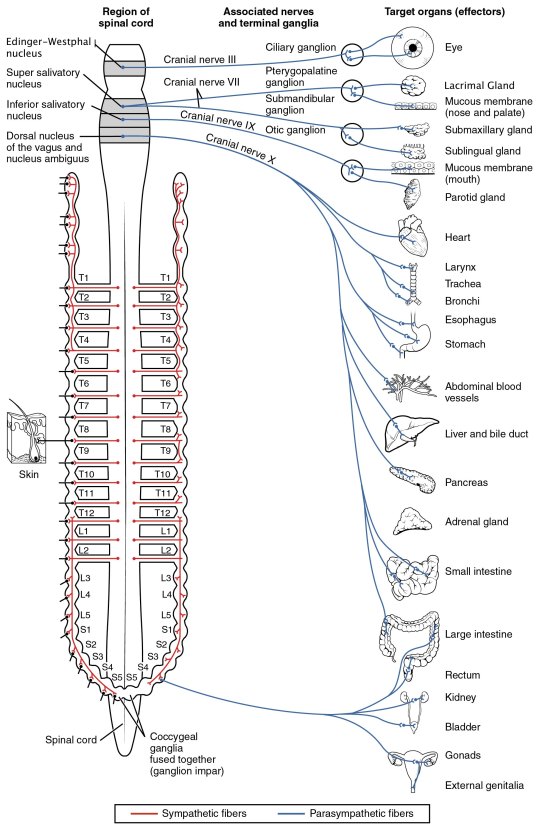
1503_Connections_of_the_Parasympathetic_Nervous_System

By OpenStax College – Anatomy & Physiology, Connexions Web site. http://cnx.org/content/col11496/1.6/, Jun 19, 2013., CC BY 3.0, https://commons.wikimedia.org/w/index.php?curid=30148020

You can visualize where on the spine the various organs receive information from.  Notice all the things connected to the cranial nerves at the top.  Please know Bartonella and other coinfections can affect these areas as well.  Dr. Ericson’s found Bart all over the place:  https://madisonarealymesupportgroup.com/2019/02/27/advanced-imaging-found-bartonella-around-pic-line/  Take a gander at her slides where she’s found Bart in collagen, where a PIC line was removed, skin biopsies (including the brain), cartilage, and blood cells.

Lastly, besides the spinal involvement, notice ALL of the patients had an abnormal Total CBFv score.  This is cerebral blood flow velocity from the middle cerebral artery.  Not enough blood flow = not enough oxygen, which is required for normal functioning.  It alone can account for brain fog and fatigue.  Too much blood flow = swelling and inflammation which can cause severe pain and even lead to Chiari:  https://madisonarealymesupportgroup.com/2016/04/02/chiari/  In one week I met 3 Lyme patients with a Chiari diagnosis.  I had an MRI to rule it out myself.

One drug that was most effective for me for this issue was Minocycline:  https://madisonarealymesupportgroup.com/2017/06/04/minocycline-for-ms-and-much-more/


Disseminated Bartonella Visualized by PET/CT & MRI

https://www.mdpi.com/2075-4418/9/1/25

Diagnostics 2019, 9(1), 25; https://doi.org/10.3390/diagnostics9010025

Disseminated Bartonella henselae Infection Visualized by [18F]FDG-PET/CT and MRI

Published: 1 March 2019
Abstract
We describe the clinical course of a 24-year old male with Crohn’s disease in immunosuppressive therapy admitted with a 6-week history of fever, weight loss, night sweat, and general malaise. The patient received extensive workup for a fever of unknown origin and received empiric antibiotics. Workup with Fluorine-18 fluoro-2-deoxy-d-glucose ([18F]FDG) positron-emission tomography (PET/CT), and magnetic resonance imaging (MRI) with intravenous contrast showed multifocal ostitis of the columna and os sacrum, as well as abscesses in m. iliopsoas and m. iliacus and affection of the retroperitoneum, liver, and spleen. Initially, malignancy was suspected, but a subsequent liver biopsy showed necrotizing granulomatous inflammation and a later polymerase chain reaction (PCR) showed Bartonella henselae. The patient had relevant exposure from housecats. He was treated with Doxycycline and Rifampicin for 12 weeks resulting in complete recovery. This case is, to our knowledge, a rare example of disseminated infection with Bartonella henselae visualized on both [18F]FDG-PET/CT and MRI. View Full-Text
___________________
**Comment**
The Cat’s beginning to get out of the bag regarding Bartonella.  Prepare yourself to see a whole lot more of this. I’m thankful that the authors stated that this case was to their knowledge a rare example; however, Bartonella has flown under the radar for so long chances are quite high there is much more of this going on. Similarly to Lyme and other coinfections, testing that relies on serology is abysmal and many remain undiagnosed.
We’ve always been told that folks that contract Bartonella need a history of cat exposure or other animals and have suppressed immune systems.  Please know, many completely healthy individuals with NO cat exposure can have disseminated Bartonella.  For examples of this:  https://madisonarealymesupportgroup.com/2019/03/02/skin-inflammation-nodules-letting-the-cat-out-of-the-bag/  After the study I list 6 cases.
Dr. Ericson’s work has shown Bartonella virtually everywhere in the human body:  https://madisonarealymesupportgroup.com/2019/02/27/advanced-imaging-found-bartonella-around-pic-line/  Slides in link
In my experience Bartonella is as bad if not worse than Lyme which gets all the press. Authorities do not even consider it with Lyme patients but nearly everyone I work with has it along with Lyme and often Babesia as well as Mycoplasma and various viruses.  Until the polymicrobial aspect is acknowledged and treated, we are doomed as patients.
Yes, Martha, Lone Star ticks are in Wisconsin as well:  https://madisonarealymesupportgroup.com/2017/02/10/lone-star-ticks-in-wisconsin/


Reducing Bartonella in Cats Utilizing Flea & Tick Collar

https://www.ncbi.nlm.nih.gov/pubmed/30709361

2019 Feb 1;12(1):69. doi: 10.1186/s13071-018-3257-y.

Effectiveness of a 10% imidacloprid/4.5% flumethrin polymer matrix collar in reducing the risk of Bartonella spp. infection in privately owned cats.

Abstract

BACKGROUND:

Bartonella henselae, Bartonella clarridgeiae and the rare Bartonella koehlerae are zoonotic pathogens, with cats being regarded as the main reservoir hosts. The spread of the infection among cats occurs mainly via fleas and specific preventive measures need to be implemented. The effectiveness of a 10% imidacloprid/4.5% flumethrin polymer matrix collar (Seresto®, Bayer Animal Health), registered to prevent flea and tick infestations, in reducing the risk of Bartonella spp. infection in privately owned cats, was assessed in a prospective longitudinal study.

METHODS:

In March-May 2015 [Day 0 (D0)], 204 privately-owned cats from the Aeolian Islands (Sicily) were collared (G1, n = 104) or left as controls (G2, n = 100). The bacteraemia of Bartonella spp. was assessed at enrolment (D0) and study closure (D360) by PCR and DNA sequencing both prior to and after an enrichment step, using Bartonella alpha proteobacteria growth medium (BAPGM).

RESULTS:

A total of 152 cats completed the study with 3 in G1 and 10 in G2 being positive for Bartonella spp. Bartonella henselae genotype I ZF1 (1.35%) and genotype II Fizz/Cal-1 (6.76%) as well as B. clarridgeiae (5.41%) were detected in cats of G2. Bartonella clarridgeiae was the only species detected in G1. Based on the yearly crude incidence of Bartonella spp. infection (i.e. 3.85% in G1 and 13.51% in G2; P = 0.03) the Seresto® collar achieved a preventative efficacy of 71.54%. The incidence of Bartonella spp. infection was more frequent in flea-infested cats (6/33, 18.18%) than in uninfested ones (7/112, 5.88%) (P = 0.036).

CONCLUSIONS:

Cats living in the Aeolian Islands are exposed to B. henselae and B. clarridgeiae. The Seresto® collar provided significant risk reduction against Bartonella spp. infection in outdoor cats under field conditions. Such a preventative tool could be a key contribution for decreasing the risk of Bartonella spp. infection in cats and thus ultimately to humans.

_________________

**Comment**

Bartonella is a huge player with Lyme/MSIDS, and far more than cats & fleas are involved.  Many healthy people without cat exposure have contracted Bartonella:  

 https://madisonarealymesupportgroup.com/2019/01/23/chest-imaging-of-cat-scratch-disease-in-2-year-old-immunocompetent-baby-with-no-history-of-cat-contact/  Healthy 2 year old with no history of cat exposure.

https://madisonarealymesupportgroup.com/2018/07/10/bartonella-henselae-neuroretinitis-in-patients-without-cat-scratch  All the patients denied a history of a cat or any animal contact, or of having CSD findings.

https://madisonarealymesupportgroup.com/2018/07/05/cat-scratch-disease-in-a-1-5-year-old-girl-case-report/  Healthy 1.5-year-old girl who was seen in hospital for the sparing use of her left arm when crawling. Tested positively for Bartonella henselae.

https://madisonarealymesupportgroup.com/2018/04/03/encephalopathy-in-adult-with-cat-scratch-disease/  Case of a 53-year-old healthy man, presenting with confusion. Serology confirmed Bartonella henselae infection.

https://madisonarealymesupportgroup.com/2019/01/09/transverse-myelitis-guillain-barre-associated-with-bartonella/  Healthy 10 year old girl had coexisting transverse myelitis and Guillain-Barré syndrome (GBS) related to infection with Bartonella henselae.

https://madisonarealymesupportgroup.com/2018/11/05/skull-infection-due-to-bartonella/  While cats are implicated, this 3 year old had no significant medical history, presented at emergency department for a 2-week history of worsening scalp lump with redness.

https://madisonarealymesupportgroup.com/2018/03/04/bartonella-erythema-nodosum-atypical-presentations/  All immunocompetent hosts.


High Prevalence of Bartonella in Spanish Veterinarians With Non-Specific Symptoms: Headache, Insomnia, Fatigue, & Memory Problems

https://www.ncbi.nlm.nih.gov/pmc/articles/PMC5678790/

. 2017; 10: 553.
Published online 2017 Nov 7. doi: 10.1186/s13071-017-2483-z
PMCID: PMC5678790
PMID: 29116007

Prevalence of Bartonella spp. by culture, PCR and serology, in veterinary personnel from Spain

Abstract

Background

The genus Bartonella includes fastidious, facultative intracellular bacteria mainly transmitted by arthropods and distributed among mammalian reservoirs. Bartonella spp. implicated as etiological agents of zoonoses are increasing. Apart from the classical Bartonella henselae, B. bacilliformis or B. quintana, other species (B. elizabethae, B. rochalimae, B. vinsonii arupensis and B. v. berkhoffii, B. tamiae or B. koehlerae, among others) have also been associated with human and/or animal diseases. Laboratory techniques for diagnosis (culture, PCR assays and serology) usually show lack of sensitivity. Since 2005, a method based on a liquid enrichment Bartonella alphaproteobacteria growth medium (BAPGM) followed by PCRs for the amplification of Bartonella spp. has been developed. We aimed to assess culture, molecular and serological prevalence of Bartonella infections in companion animal veterinary personnel from Spain.

Methods

Each of 89 participants completed a questionnaire. Immunofluorescence assays (IFA) using B. vinsonii berkhoffii (genotypes I, II and III), B. henselae, B. quintana and B. koehlerae as antigens were performed. A cut-off of 1:64 was selected as a seroreactivity titer. Blood samples were inoculated into BAPGM and subcultured onto blood agar plates. Bartonella spp. was detected using conventional and quantitative real-time PCR assays and DNA sequencing.

Results

Among antigens corresponding to six Bartonella spp. or genotypes, the lowest seroreactivity was found against B. quintana (11.2%) and the highest, against B. v. berkhoffii genotype III (56%). A total of 27% of 89 individuals were not seroreactive to any test antigen. Bartonella spp. IFA seroreactivity was not associated with any clinical sign or symptom. DNA from Bartonella spp., including B. henselae (n = 2), B. v. berkhoffii genotypes I (n = 1) and III (n = 2), and B. quintana (n = 2) was detected in 7/89 veterinary personnel. PCR and DNA sequencing findings were not associated with clinical signs or symptoms. No co-infections were observed. One of the two B. henselae PCR-positive individuals was IFA seronegative to all tested antigens whereas the other one was not B. henselae seroreactive. The remaining PCR-positive individuals were seroreactive to multiple Bartonella spp. antigens.

Conclusions

High serological and molecular prevalences of exposure to, or infection with, Bartonella spp. were found in companion animal veterinary personnel from Spain. More studies using BAPGM enrichment blood culture and PCR are needed to clarify the finding of Bartonella PCR-positive individuals lacking clinical symptoms.

________________

**Comment**

While the abstract above doesn’t state this, the results section in the full study states of the 89 veterinary personnel from different regions of Spain:

A high percentage of the participants reported having chronic/ persistent non-specific symptoms such as headache, insomnia, fatigue or memory problems.

Veterinarians & those working with animals are especially at risk for Bartonella.  Spread the word.

More on Bartonella:  https://madisonarealymesupportgroup.com/2016/01/03/bartonella-treatment/

https://madisonarealymesupportgroup.com/2017/09/13/dr-fox-cat-scratch-fever-warning/

https://madisonarealymesupportgroup.com/2018/05/07/fox-news-bartonella-is-the-new-lyme-disease/

https://madisonarealymesupportgroup.com/2016/11/29/bartonella-seizures/

https://madisonarealymesupportgroup.com/2018/04/03/encephalopathy-in-adult-with-cat-scratch-disease/

https://madisonarealymesupportgroup.com/2017/01/04/endocarditis-consider-bartonella/

https://madisonarealymesupportgroup.com/2018/11/10/neurological-presentations-of-bartonella-henselae-infection/

https://madisonarealymesupportgroup.com/2017/10/23/opthalmic-manifestations-of-bartonella-infection/