Archive for the ‘Babesia’ Category

Phase II Malaria Meds – 100% Cured – Good for Babesia?

https://www.sciencedaily.com/releases/2018/01/180119090342.htm

Promising malaria medication tested
New combination of drugs proves effective and well-tolerated; further studies planned

January 19, 2018

Universitaet Tübingen

Summary:
An international research team has conducted successful phase II clinical tests of a new anti-malaria medication. The treatment led to a cure in 83 cases.

FULL STORY

Researchers tested the efficacy, tolerability and safety of a combination of the drugs Fosmidomycin and Piperaquine. 

An international research team has conducted successful phase II clinical tests of a new anti-malaria medication. The treatment led to a cure in 83 cases. The new combination of drugs was developed by Professor Peter Kremsner of the Tübingen Institute of Tropical Medicine and the company DMG Deutschen Malaria GmbH. The study was recently published in Clinical Infectious Diseases and is freely accessible.

In the study, the researchers tested the efficacy, tolerability and safety of a combination of the drugs Fosmidomycin and Piperaquine. The twofold medication was administered for three days to patients aged one to thirty who were infected with malaria via the Plasmodium falciparum pathogen. In the 83 evaluable cases, there was a 100% cure rate. Patients tolerated the treatment well, and it led to a swift reduction of clinical symptoms. Safety issues were limited to changes in electrocardiogram readings, as had been described for Piperaquine.

The study was conducted at the Centre de Recherches Médicales de Lambaréné (CERMEL) in the African country of Gabon; CERMEL has close ties with the University of Tübingen. Financial support came from the nonprofit organisation Medicines for Malaria Venture (MMV).

“This study represents a milestone in the clinical research into Fosmidomycin,” says Tübingen Professor of Tropical Medicine Peter Kremsner. The substance was originally extracted from Streptomyces lavendulae and today can be produced synthetically. It blocks a metabolic pathway for the production of Isoprenoid in the malaria pathogen. This makes the malaria pathogen unable to metabolize or reproduce. Because Isoprenoids are formed via a different synthesis path in the human body, humans have no target structures for Fosmidomycin. For this reason humans tolerate the drug well and suffer barely any side effects. In addition, this unique mechanism excludes the possibility of cross-resistance to the drugs used in earlier malaria treatments.

The new combination meets WHO guidelines for combination therapies. The two drugs mechanisms against differing target structures means that they attack the parasite in the bloodstream independently of one another. This meets WHO requirements for a fast and effective treatment of the acute phase of infection, and for protection against relapse due to reappearance of the infection. The researchers say the effective mechanism helps to delay the formation of a possible resistance. Further studies are in planning to optimize dose.

Journal Reference:

Ghyslain Mombo-Ngoma, Jonathan Remppis, Moritz Sievers, Rella Zoleko Manego, Lilian Endamne, Lumeka Kabwende, Luzia Veletzky, The Trong Nguyen, Mirjam Groger, Felix Lötsch, Johannes Mischlinger, Lena Flohr, Johanna Kim, Chiara Cattaneo, David Hutchinson, Stephan Duparc, Moehrle Joerg, Thirumalaisamy P Velavan, Bertrand Lell, Michael Ramharter, Ayola Akim Adegnika, Benjamin Mordmüller, Peter G Kremsner. Efficacy and safety of fosmidomycin-piperaquine as non-artemisinin-based combination therapy for uncomplicated falciparum malaria – A single-arm, age-de-escalation proof of concept study in Gabon. Clinical Infectious Diseases, 2017; DOI: 10.1093/cid/cix1122

https://clinicaltrials.gov/ct2/show/NCT02198807    Evaluation of Fosmidomycin and Piperaquine in the Treatment of Acute Falciparum Malaria (FOSPIP)
Verified June 2015 by Jomaa Pharma GmbH.

Collaborator:
Centre de Recherche Médicale de Lambaréné

Brief Summary:
The objective of this study is to explore the role of fosmidomycin and piperaquine as non-artemisinin-based combination therapy for acute uncomplicated Plasmodium falciparum when administered over three days.
Together, fosmidomycin and piperaquine fulfil the WHO criteria for combination therapy by meeting the three key parameters of having different modes of action and different biochemical targets while exhibiting independent blood schizonticidal activity. Like the artemisinins, fosmidomycin is fast-acting, has an excellent safety record and is active against existing drug-resistant parasites. Piperaquine has a long half life protecting fosmidomycin as a much shorter lived molecule against selection of resistant parasites and will provide post-treatment prophylaxis.

Experimental: Fosmidomycin-Piperaquine
Fosmidomycin sodium capsules 450 mg, dosage: 30mg/kg twice daily for 3 days Piperaquine phosphate tablets 320 mg, dosage: 16 mg/kg once a day for 3 days

______________

**Comment**

It appears this works for Babesia as well:  http://journals.plos.org/plosone/article?id=10.1371/journal.pone.0019334&bw=1  Babesia divergens, a related parasite that also infects human erythrocytes and is also known to induce an increase in membrane permeability, displays a similar susceptibility and uptake behavior with regard to the drug. In contrast, Toxoplasma gondii-infected cells do apparently not take up the compounds, and the drugs are inactive against the liver stages of Plasmodium berghei, a mouse malaria parasite.

The big caveat; however, is that many Lyme/MSIDS patients are persistently infected with Babesia and need far more than 3 days for acute treatment:  https://madisonarealymesupportgroup.com/2016/01/16/babesia-treatment/  Dr. Krause published in the New England Journal of Medicine that when a patient has Lyme and Babesia, Lyme is found three-times more frequently in the blood, proving Babesia suppresses the immune system.

Testing which is poor as these organisms are not often found in high enough numbers in the blood, as well as people present subclinically. In other words, their Lyme case is more severe and they have malarial-type symptoms, but they can’t find Babesia in the blood in a Giemsa stain. It takes a trained eye to identify Babesia, which produces a Maltese Cross form, which may or may not be present in a particular smear. Also, doctors have been taught that besides the day and night sweats and chills, patients are supposed to get hemolytic anemia and their liver functions go up or their platelet count might go down (thrombocytopenia). The fly in the ointment is that only certain strains of Babesia do this. Many strains do not cause these symptoms – but doctors aren’t educated on these finer points. Also, to hide from the immune system, the various species produce offspring that have different exterior proteins, or genotypes. http://www.townsendletter.com/July2015/babesia0715_2.html According to Dr. Schaller, there is immense variation and pre-2015 treatments were “weak and showed ignorance of the power of Babesia – it is vastly harder to kill than malaria.”


Headaches and Lyme/MSIDS

https://globallymealliance.org/my-1-headache-trigger-lyme-disease/

th

By Jennifer Crystal

Skiing has always been part of my life. I went to a college in Vermont that had its own ski run. After graduation, I moved to Colorado to teach high school, and to become a ski instructor. It was supposed to be the high point of my life, and in many ways it was, but there were also some very low points because I was wrestling with undiagnosed tick-borne illnesses.

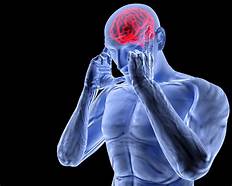
One such low found me on the bathroom floor, writhing in pain from an excruciating migraine. The throbbing started over my left eye, working its way up over that side of my head and around the back to my neck. I felt as if my brain was going to explode out of my skull.

“It’s probably from the altitude,” a doctor later told me. In the years since I had started developing strange symptoms—fever, joint aches, exhaustion, hand tremors, hives—I grew accustomed to doctors writing them off with a simple explanation.

But altitude was not causing my migraines. In fact, I was suffering from Lyme disease, Ehrlichia, and Babesia, the last being a tick-borne parasite that consumes oxygen in red blood cells. Due to these infections, a scan would later show that I was not getting enough oxygen to the left side of my brain. Living at a high altitude certainly didn’t help this situation, but the root cause was the fact that my oxygen levels were already compromised by infection.

Babesia is not the only tick-borne disease that can cause headaches; so can Ehrlichia and relapsing fevers. But with or without co-infections, the vast majority of Lyme disease patients complain of headaches as a chief symptom, with pain ranging from moderate to severe. Many patients, myself included, have encountered migraines so debilitating they’re relegated to bed in a dark room due to pain, light sensitivity and nausea. Though tick-borne diseases can cause pain throughout the cranium, migraines are usually focused to one side. As a child, I had four surgeries to correct weak muscles in my eyes, especially on the left, leaving scar tissue over that eye. I later learned that Lyme bacteria, spirochetes, like to hide out in scar tissue, which may explain why my migraines always started over that eye.

So why are headaches so common for Lyme patients? Spirochetes can enter the central nervous system by crossing the blood-brain barrier. This barrier is supposed to protect the brain from infection, but spirochetes are tricky and swift and can coil their way across, causing headaches for their victims.

Lyme is an inflammatory disease, so once spirochetes enter the central nervous system, they cause swelling there. In his book Why Can’t I Get Better? Solving the Mystery of Lyme & Chronic Disease, Dr. Richard Horowitz equates this inflammation to a fire that ignites heat, redness, pain, and loss of function.[1] Feeling like my brain was going to explode out of my skull was not really hyperbole; my head was indeed swollen, but I just couldn’t see it the way I would be able to if  I’d had a swollen ankle or knee.

At my lowest points of illness, I got migraines several times a week. I tried to try to push through the pain. I wanted to be living my life, teaching and skiing. But I always paid a high price for not listening to my body—or in this case, to my brain. Ignoring the headache only increased the pain, sometimes sending me to bed for two or three days at a time. I got prescription medication, which I learned to take as soon as I felt a headache coming on, rather than trying to wait it out. I also found that staying hydrated, eating foods rich in iron, and stretching gently—to help increase blood flow—sometimes helped alleviate my headaches.

The best treatment, however, was rest. If you have a swollen ankle or knee, you stay off that joint, giving it time to heal. The same is true for your brain. Your head needs time to recover from inflammation, and nothing has helped that process more for me than sleep. Though I rarely get migraines these days, I still get pressure on the left side of my head when I get tired or neurologically overwhelmed. I never want to spend a day in bed, but one is better than being there for several days—and it’s certainly better than writhing on the bathroom floor. A day spent recuperating means more days on the slopes, and I’ll take as many of those as I can get.

[1] Horowitz, Richard I. Why Can’t I Get Better? Solving the Mystery of Lyme & Chronic Disease. New York: St. Martin’s Press. 2013. (186)


Opinions expressed by contributors are their own.

Jennifer Crystal is a writer and educator in Boston. She is working on a memoir about her journey with chronic tick-borne illness. Do you have a question for Jennifer? Email her at  jennifercrystalwriter@gmail.com

________________

**Comment**

Infection driven inflammation is the name of the game here and anything you can do to lower both will help the headaches.

Since this was a major thorn for me my quest for relief has led me to numerous modalities.  One is systemic enzymes:  

https://madisonarealymesupportgroup.com/2016/04/02/why-docs-miss-msids-wobenzym/

https://madisonarealymesupportgroup.com/2016/04/22/systemic-enzymes/

My husband nearly destroyed his liver taking Ibuprofen for Lyme/MSIDS pain.  

The other is ruling out Chiari and/or any other physical causes:  https://madisonarealymesupportgroup.com/2016/04/02/chiari/  Normally Chiari is thought of as a congenital abnormality; however, within 1 week I met 3 people with a MSIDS diagnosis who also have Chiari. Coincidence?  Brain infections can cause it.

Next down the rabbit hole is MSM (a derivative of DMSO – without the smell):  https://madisonarealymesupportgroup.com/2018/01/03/the-invisible-universe-of-the-human-microbiome-msm/  MSM stands for Methylsulfonylmethane and is 34% sulfur by weight. Sulfur plays a crucial role in detoxification and is an important antioxidant for producing glutathione.  It has been used for decades for pain and inflammation.  

There are also MSM creams – but beware and do your reading.  Many have toxic additives and perfumes.  

And then of course, DMSO:

I promised I would write an in-depth article on both DMSO and its derivative MSM but there’s a lot to read!  I have personally tried both with excellent results.  MSM is as safe as water but please read about it in the link above as the process in which it’s made is important.  

As to DMSO, it’s safe as well but since it’s a solvent (penetrating agent) it demands scrupulous attention to detail, plus you may not enjoy the garlic/oyster smell it gives.  You also need to find pure DMSO.  

http://www.alternative-medicine-digest.com/dmso.htmlOver 100,000 articles have been written about medical DMSO uses. In 1963, when the FDA approved human testing, all studies showed it to be safe and non-toxic. One study revealed changes in the lens of the eye in specific lab animals; however, when a number of human studies were done around the world in the late sixties, no human eye damage was found.

After two human studies done on human volunteers in prison, Dr. Richard Brobyn stated: “A very extensive study of DMSO use was conducted at three to 30 times the usual treatment dosage in humans for three months. DMSO appears to be a very safe drug for human administration, and, in particular, the lens changes that occur in certain mammalian species do not occur in man under this very high, prolonged treatment regimen. I am very glad to be able to present these data at this time, so that we can permanently dispel the myth that DMSO is in any way a toxic or dangerous drug.”

So far I’m taking 1/2 tsp of MSM crystals in water twice a day.  All pain gone.  POOF!  If there is any pain ever, I use a DMSO gel topically on the specific area of pain – typically the base of my skull.  Within minutes, pain gone.  POOF!

Please read about DMSO before trying as it burns and itches for a spell.  Do not itch it.  You also need to read about concentrations as some are too strong for topical application.  I use the 70% DMSO gel.  Some are more sensitive and need a lower percentage.   It also has a lovely smell to it – but hey, I’ll smell like an oyster any day than deal with the pain!  Also, hands and anything DMSO touches has to be scrupulously clean.  It must dry (takes about 20-30 min) before putting any clothing on it as the dyes, etc will go into your body.  

I’ve called numerous places to find out what the ingredient (such as rose smell) is in certain DMSO creams.  I’m not getting straight answers so I’m not using it.  I’d rather deal with the smell than introduce yet another foreign substance into my body.

Of course the question begs to be asked, “Would taking liquid DMSO internally aid with getting antimicrobials/antivirals deeper into the body?”  My hunch is yes, if you can stand the smell.

Stay tuned.  More to come.


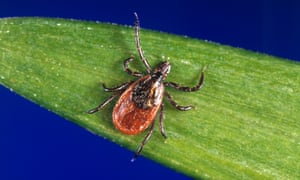
Blacklegged Tick – Increasing Public Health Concern

  • The blacklegged tick, Ixodes scapularis, is becoming more widespread in the eastern United States.
  • The number of I. scapularis-borne microorganisms recognized to be pathogenic in humans is increasing.
  • The incidence of I. scapularis-borne disease cases continues to increase.

The geographic distribution of human cases of I. scapularis-borne diseases is expanding.

There is a critical need for control approaches with proven capacity to reverse the growing public health problem imposed by I. scapularis.

In the United States, the blacklegged tick, Ixodes scapularis, is a vector of seven human pathogens, including those causing Lyme disease, anaplasmosis, babesiosis, Borrelia miyamotoi disease, Powassan virus disease, and ehrlichiosis associated with Ehrlichia muris eauclarensis.

In addition to an accelerated rate of discovery of I. scapularis-borne pathogens over the past two decades, the geographic range of the tick, and incidence and range of I. scapularis-borne disease cases, have increased. Despite knowledge of when and where humans are most at risk of exposure to infected ticks, control of I. scapularis-borne diseases remains a challenge. Human vaccines are not available, and we lack solid evidence for other prevention and control methods to reduce human disease. The way forward is discussed.

______________

**Comment**

Hopefully this memo is getting out to practitioners so that long-gone are the days where a patient is told, “It can’t be Lyme because there isn’t any Lyme here.”  

https://madisonarealymesupportgroup.com/2016/09/24/arkansas-kids-denied-lyme-treatment/

https://madisonarealymesupportgroup.com/2017/10/24/no-lyme-in-oklahoma-yeah-right/

https://madisonarealymesupportgroup.com/2016/11/03/ld-not-in-australia-here-we-go-again/

Feel free to copy this article and show it to health practitioners.  They NEED to know what we all have known for decades.

See the blue link in the beginning of the article for graphs and images.  For some reason I wasn’t able to upload them here.  Again, all data needs to be viewed with skepticism for a myriad of reasons, the main one being that everything regarding TBI’s is underreported and even the CDC acknowledges this – which demonstrates how severe the problem truly is.

https://madisonarealymesupportgroup.com/2017/08/24/canine-maps-better-than-the-cdcs-in-predicting-lyme-disease/

https://madisonarealymesupportgroup.com/2017/10/12/the-cdc-needs-a-good-dictionary/

Promising research testing for ALL bacteria in ticks:  https://madisonarealymesupportgroup.com/2018/01/15/developing-new-tests-to-identify-all-bacteria-in-ticks-drexel-university/

We need to know:

Bb Persistence, if it’s a STD, it can be spread congenitally, via breast milk, urine and body fluids, other possible vectors such as mosquitoes and spiders, how to kill these suckers without killing ourselves and pets, and many other issues that have either been ignored completely or the science is so old is has dust on it.


Blood Screening for Babesiosis Using Enzymatic Assays

Screening of patient blood samples for babesiosis using enzymatic assays

Primus S, Akoolo L, Schlachter S, Parveen N.
Ticks and Tick-borne Diseases, online first 2017 Nov 12.

https://doi.org/10.1016/j.ttbdis.2017.11.003

Abstract

Human babesiosis is an emerging tick-borne disease in the United States and Europe. Transmitted by Ixodes ticks, the causative agent Babesia microti is an intraerythrocytic parasite that causes mild to deadly disease. Transmission of B. microti can also occur by transfusion of infected blood and blood products resulting in transfusion-transmitted babesiosis (TTB), which carries a high risk of fatality.

To effectively manage this rise in B. microti infections, better screening tools are needed, which require minimal manipulation of the samples before testing. To this end, we tested two enzymatic assays, aspartate aminotransferase (AST) and alanine aminotransferase (ALT), for efficacy in diagnosis of babesiosis. The results show that AST and ALT activity is significantly higher in the plasma of B. microti-infected patients.

Moreover, statistical analysis revealed that these assays have high sensitivity and positive predictive values, which highlights their usefulness as diagnostics for babesiosis. These standardized enzymatic assays can be used to perform high-throughput, large-scale screens of blood and blood products before they are certified safe for transfusion.

____________

For more on Babesia:  https://madisonarealymesupportgroup.com/2016/01/16/babesia-treatment/

https://madisonarealymesupportgroup.com/2016/12/15/blood-screening-for-babesia/

https://madisonarealymesupportgroup.com/2017/07/09/2600-increase-in-babesia-in-12-years-in-wisconsin/

https://madisonarealymesupportgroup.com/2016/11/19/seroprevalence-of-babesia-in-individuals-with-ld/


Congenital Babesiosis in Two Infants

Congenital Babesiosis After Maternal Infection With Borrelia burgdorferi and Babesia microti
Saetre K, Godhwani N, Maria M, Patel D, Wang G, Li KI, Wormser GP, Nolan SM.
Journal of the Pediatric Infectious Diseases Society, online first 2017 Sep 16.

https://doi.org/10.1093/jpids/pix074

Abstract

We describe the cases of 2 infants with congenital babesiosis born to mothers with prepartum Lyme disease and subclinical Babesia microti infection.

The infants both developed anemia, neutropenia, and thrombocytopenia, and 1 infant required red blood cell transfusion. Both infants recovered with treatment.

Additional studies are warranted to define the optimal management strategy for pregnant women with early Lyme disease in geographic areas in which B microtiinfection is endemic.

______________

For more on Babesia:  https://madisonarealymesupportgroup.com/2016/01/16/babesia-treatment/

https://madisonarealymesupportgroup.com/2017/08/30/babesia-spread-to-newborn/

https://madisonarealymesupportgroup.com/2017/09/27/premature-infants-develop-babesia-via-blood-transfusion/

https://madisonarealymesupportgroup.com/2017/08/08/transfusion-transmitted-babesiosis-in-nonendemic-areas/

https://madisonarealymesupportgroup.com/2017/08/06/transfusion-transmitted-babesiosis-leading-to-severe-hemolysis-in-sickle-cell-anemia-patients/

https://madisonarealymesupportgroup.com/2017/07/09/2600-increase-in-babesia-in-12-years-in-wisconsin/

https://madisonarealymesupportgroup.com/2017/09/25/man-dies-of-babesia/