Archive for the ‘Babesia’ Category

Adjunct Therapies That Have Helped With My Tick-Borne Illneses

https://www.globallymealliance.org/blog/adjunct-therapies-that-have-helped-with-my-tick-borne-illnesses

Jen Crystal discusses the adjunct therapies that helped her in her Lyme disease journey.

Patients write to me every day asking what helped me achieve remission from tick-borne illness. I wish there was a magic answer I could give them, but since every single case is different, there is no set protocol. What worked for me might not work for someone else. Moreover, what worked for me five years ago is not what works for me now. Each case changes over time as spirochetes are killed off and symptoms improve. My Lyme Literate Medical Doctor (LLMD) is always fine-tuning my protocol.

That said, there are several adjunct therapies that have worked in conjunction with my ever-changing protocol of medication and supplements. I call these adjunct or complementary therapies because they supported, but did not replace, my medical protocol. These therapies would not have worked alone, because first and foremost I needed to treat the infections of Lyme disease, babesiosis, ehrlichiosis, and possible bartonella. In fact, before I was accurately diagnosed with these tick-borne illnesses, I tried some alternative therapies and they did not help, because the underlying infections were too severe. Once I started appropriate treatment, the following therapies helped me heal:

Integrative Manual Therapy

Developed by Sharon Giammatteo, Ph.D., this hands-on technique uses light touch to facilitate healing. The therapy combines cranial therapy and neurofascial processing. In her book Body Wisdom: Light Touch for Optimal Health, Giammatteo explains that cranial therapy is “a manual approach to correcting problems of the cranium, as well as the tissues and structures within in. Cranial therapy works by exerting a gentle force on the head and the body. The force decompresses dysfunctional areas and facilitates proper biological rhythms.”[1]

Don’t be alarmed by the word “force”; it’s simply someone gently placing a hand on your head or body, making barely perceptible movements. The technique is lighter than massage. When I’m struggling with brain fog or other symptoms of Lyme brain, my integrative manual therapist might place one hand on my forehead and one hand on my lower back, to enable drainage. This is part of neurofascial processing, which is just placing hands on different parts of the body to get systems working in sync.

The great part about Integrative Manual Therapy is that a lot of it can be done at home, either by yourself or with the help of someone else. Techniques are outlined in Giammatteo’s book. You can also work with a trained facilitator. Some D.O.’s (Doctors of Osteopathic Medicine) do manual therapy, and some physical therapists do it. This means these appointments might be covered by insurance. You can also pay out-of-pocket for a private practitioner. At the height of my illnesses, I did Integrative Manual Therapy twice a week; now I do it twice a month.

Neurofeedback

You may have heard of biofeedback, which uses the body’s own feedback to regulate systems. Neurofeedback works in the same way, except on the brain instead of the body. This non-invasive technique uses your brain’s own feedback to help it work optimally, whether that is being able to rest, thinking more clearly, or having less intrusive thoughts.

During neurofeedback appointments, I sit in a comfortable lounge chair. The practitioner affixes small sensors on my head and ears. These sensors are connected to a computer that receives feedback from my brain, and then relays information back to my brain that helps it work better. During this process, I watch kaleidoscope-style images on a screen (though it’s fine to close your eyes), and listen to soft music. Sometimes as certain feedback is being sent, the music skips. That’s all I notice during the entire session. Otherwise I just sit and relax, and let my brain do its work.

I started neurofeedback when I saw a sleep specialist for insomnia. In conjunction with sleep medication, neurofeedback helped my brain retrain itself to turn off for rest. It toned down, though did not eliminate, my hallucinogenic nightmares. It also helped me to be able to fall asleep for a nap during the day, which my exhausted body desperately needed.

There are different types of neurofeedback. Some work on just one part of your brain at a time, while others work on the whole brain. I do NeurOptimal, which helps the whole brain at once. My practitioner thinks that working on only one part of my brain at a time might actually exacerbate, not help, some of my neurological issues.

Some sleep specialists do neurofeedback, which can be covered by insurance. There are also private practitioners that you can find through NeurOptimal. When my insomnia was raging, I did neurofeedback three times a week. Now that I am in remission, I do it once a month.

Physical Therapy

Physical therapy is an important way to rebuild muscle strength and stamina—when you are ready. I made the mistake of starting physical therapy too early in my treatment, and paid for it. Because infections were ravaging my body, exertion only made them worse. Before my babesiosis was adequately treated, thirty seconds on a stationary bike gave me a migraine and sent me straight back to bed.

When I was bedridden, people used to say to me, “You should get up and go for a walk. It’ll make you feel better.” Just walking to the end of the driveway made me feel much, much worse. You know your body best. If you had the flu, you would not go for a walk. You would wait until you felt better. I had to wait until my infections were cleared up enough before I could do physical therapy consistently, and have it make a positive difference. Talk with your LLMD about when physical therapy would be appropriate for you.

Make sure your physical therapist understands the way your illnesses impact your body, and has you go at a slow pace. You likely won’t be able to do a typical graded physical therapy program where you steadily increase time and weights. Instead, you’ll make progress, take some down turns, then make progress again. When I first started physical therapy, all I did were some gentle stretches and slow manipulations with my fingers and toes. It took months to work up to twelve minutes on a stationary bike. I added weights very, very slowly. Now, after regaining strength and learning to pace myself, I am able to ski, walk, paddleboard, kayak, and swim. (For more on my slow but steady physical therapy, see my poem “Never Say Never”).

Talk Therapy

Being sick, especially for an extended period of time, can take an emotional toll. Moreover, Lyme disease can cause anxiety and depression. Your LLMD or a psychiatrist may prescribe medication to help your mood, but it’s also really helpful to talk about your feelings with an objective professional. You want someone who believes your illness and believes in you. Someone who will allow you to vent on the tough days and, more importantly, give you some coping skills to handle those hard times. My own therapist also helped me examine relationships and patterns from my past that informed my response to illness. She helped me to accept and love my illnesses, and myself. By encouraging me to be gentle with myself, she helped me not to wallow in the past, but to learn from it so I could move forward.

These are the therapies that have helped me. It is not an exclusive or exhaustive list; other therapies that I haven’t tried, like reiki, light massage, rife machines, and hyperbaric oxygen chambers, may be helpful to other patients. I encourage you to discuss possible adjunct therapies with your LLMD to determine which would be best for you.

[1] Giammatteo, Sharon, Ph.D. Body Wisdom: Light Touch for Optimal Health. Berkeley, California: North Atlantic Books, 2002 (21).


Jennifer Crystal

Writer

Opinions expressed by contributors are their own. Jennifer Crystal is a writer and educator in Boston. Her work has appeared in local and national publications including Harvard Health Publishing and The Boston Globe. As a GLA columnist for over six years, her work on GLA.org has received mention in publications such as The New Yorker, weatherchannel.com, CQ Researcher, and ProHealth.com. Jennifer is a patient advocate who has dealt with chronic illness, including Lyme and other tick-borne infections. Her memoir about her medical journey is forthcoming. Contact her via email below.

Email: lymewarriorjennifercrystal@gmail.com


Tick Bite Leads to Multiple Co-infections

https://danielcameronmd.com/tick-bite-multiple-co-infections/

Tick bite leads to multiple co-infections

Man in hospital bed with co-infections from a tick bite.

In their case report “One man, three tick-borne illnesses” Grant and colleagues describe a 70-year-old man who was admitted to the emergency department with ongoing fevers, ankle edema and nausea. [1] One month earlier he noticed a small raised red lesion on his left ankle, which he believed was an insect bite.

“Two days after noting this ankle lesion, the patient noticed an erythematous rash on his neck and chest,” the authors explain. He was prescribed an antihistamine and 7-day course of trimethoprim–sulfamethoxazole.

The rash resolved after 5 days of antibiotic treatment, but the man continued to have pain and swelling in his ankle.  The pain spread to his left hip and he was “diagnosed with sciatica and prescribed gabapentin.”

The patient had reportedly travelled to an endemic area of the United States. And was therefore, suspected of having a tick-borne illness.

“Physicians must maintain a high level of suspicion for co-infection, as untreated disease can result in long term and sometimes life-threatening sequelae,” the authors suggest.

He tested positive for Borrelia burgdorferi, Anaplasma phagocytophilum and Babesia microti serologies.

The patient’s symptoms improved with treatment, but one year later, he continued to have symptoms of neuropathy at the site of the presumed insect bite.

References:
  1. Grant L, Mohamedy I, Loertscher L. One man, three tick-borne illnesses. BMJ Case Rep. 2021 Apr 16;14(4):e241004. doi: 10.1136/bcr-2020-241004. PMID: 33863772; PMCID: PMC8055128.

__________________

**Comment**

A perfect example of how mainstream medicine is hopelessly lost in its own hubris.

  1. Seven days of treatment of anything will not solve this
  2. trimethoprim–sulfamethoxazole, commonly known as Bactrim DS will not touch Babesia at all
  3. Bactrim DS, while a great drug, should not be the first choice for Lyme disease – and he had a clear EM rash, which is diagnostic for Lyme – no testing required
  4. It is common knowledge that the EM rash will wax and wane all on its own and should never be used to determine if treatment is working or not
  5. Doxycycline is still the best front-line drug for both Lyme and Anaplasmosis, but is far from sufficient in and of itself
  6. It is not surprising at all that this poor man continued to suffer with neuropathy, which they will undoubtedly blame on anything but tick-borne illness and it will never occur to them in a million years to treat him with numerous antimicrobials simultaneously for far longer than 7 days.  Myopia is a a very real condition

For more:

For Lyme treatment:  https://madisonarealymesupportgroup.com/2016/02/13/lyme-disease-treatment/

For Anaplasmosis treatment:  https://madisonarealymesupportgroup.com/category/anaplasmosis-treatment/

For Babesia Treatment:  https://madisonarealymesupportgroup.com/category/babesia-treatment/

New Guidance for Treatment of Lyme & Other TBD in Pregnancy

https://www.lymedisease.org/lyme-pregnancy-guidance/

New guidance for treatment of Lyme and other TBD in pregnancy

Oct. 27, 2021

from the Lyme Disease Association website:

In a recently published review article,* authors provide a comprehensive summary of treatment options for pregnant patients with less common bacterial, fungal, and viral infections, including several tick-borne diseases (Lyme disease, ehrlichiosis, human granulocytic anaplasmosis, human monocytic ehrlichiosis, babesiosis, and Rocky Mountain spotted fever).

This review provides guidance to clinicians based on the most recently published evidence-based research and expert recommendations.

The review included a search of MEDLINE (inception to March 2021); clinical practice guidelines (both national and international); the CDC website; and additional references from bibliographies of noteworthy articles. The review also provides a list of medications on the WHO Essential Medications List that are used to treat the above infections (*Alyssa P. Gould et al., Drugs in Context-peer reviewed).

A summary of key treatment recommendations from the review article for several tick-borne diseases during pregnancy are as follows:

Lyme disease:

  • Treatment of gestational Lyme disease is essential to reduce adverse outcomes in pregnancy. The data shows adverse outcomes in treated pregnancy is (11–16%) compared to untreated disease (50–60%).
  • Doxycycline should not routinely be used in pregnancy for Lyme disease in order to avoid adverse side effects including transient suppression of bone growth and staining of developing teeth, especially with proven alternatives.
  • Amoxicillin is the preferred treatment in the absence of neurological manifestations or atrioventricular heart block.
  • Ceftriaxone is typically reserved for patients with severe neurological or cardiac manifestations.
  • One study noted a non-significant increase in adverse pregnancy outcomes, such as pregnancy loss, among orally treated (31.6%) compared to parenterally treated (12.1%) pregnant patients.
  • Alternative oral therapy is cefuroxime axetil and parenteral therapies include penicillin G or cefotaxime.
  • Late Lyme disease (often manifesting as Lyme arthritis) may be managed with oral or parenteral β-lactams.

Ehrlichiosis & Anaplasmosis:

  • If infections with anaplasmosis or ehrlichiosis is suspected, treatment should be initiated due to the likelihood of complications and potential for vertical transmission of disease.
  • Rifampin has shown in vitro activity against ehrlichia and has been used successfully in limited case reports of pregnant women with anaplasmosis.
  • Doxycycline has been used successfully to treat ehrlichiosis.
  • Due to a lack of data, these pregnant patients should be closely monitored for resolution of disease.
  • The addition of amoxicillin or cefuroxime is suggested if coinfection with Lyme disease is suspected, as rifampin does not have activity against B. burgdorferi.

Babesiosis:

  • Patients with suspected babesiosis should be treated due to potential complications, including possible vertical transmission to the fetus.
  • Combination therapy is preferred with clindamycin plus quinine.
  • Longer treatment courses or retreatment may be needed in cases with symptoms and/or parasitaemia persisting >3 months. Resolution of parasitaemia should be used to determine treatment course.

Rocky Mountain spotted fever (RMSF):

  • RMSF cases are associated with poor outcomes for the fetus, regardless of the treatment.
  • Prevention is crucial for pregnant patients, and treatment should be provided within 3–5 days of exposure.
  • Doxycycline is the preferred therapy. Treatment course is typically 5–7 days or 3 days after fever resolution.
  • Chloramphenicol is a proposed alternative treatment; but there are concerns for significant adverse effects, including myelosuppression, aplastic anaemia, and grey baby syndrome, specifically at or near birth, and it is associated with higher mortality in RMSF. (chloramphenicol is not available orally in the US).

Read the full review article here.

Read other LDA articles regarding treatment here

New Maps Show Where Citizen Scientists Found Infected Ticks

https://www.lymedisease.org/balf-interactive-tick-maps/

New maps show where citizen scientists found infected ticks

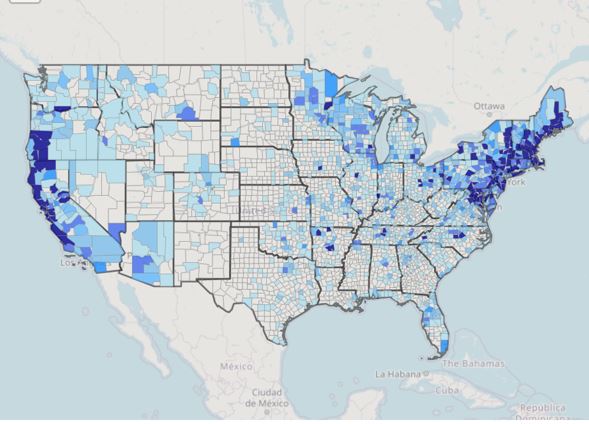
Want an easy way to see where disease-carrying ticks have been found throughout the United States?

Check out the new interactive tick maps recently launched by the Bay Area Lyme Foundation.

The maps are based on data published in mSphere, a multidisciplinary open-access journal of the American Society for Microbiology.

The information came from ticks submitted by citizen scientists as part of BALF’s Free Tick Testing Program, which ran from 2016 to 2019.

The study found infected Ixodes ticks in 116 counties which were not previously identified by the Centers for Disease Control as having them.

The testing program collected more than 20,400 ticks. 8,954 were Ixodes ticks, capable of carrying the most common tick-borne pathogens.

The research was conducted through a partnership between Bay Area Lyme Foundation, Northern Arizona University, Colorado State University and the Translational Genomics Research Institute (TGen).

The study evaluated the distribution and prevalence of the four most common tickborne pathogens:

  • Borrelia burgdorferi sensu lato, the group which causes Lyme disease
  • Borrelia miyamotoi, which causes tick-borne relapsing fever
  • Anaplasma phagocytophilum, which causes human granulocytic anaplasmosis
  • protozoan pathogen, Babesia microti.

The program tested two types of ticks:

  • Ixodes scapularis, also known as the blacklegged tick or the deer tick, which are found in the Northeast, Midwest and South;
  • Ixodes pacificus, also known as the western blacklegged tick, which lives in the West
The interactive maps only represent data from this citizen science study. They do not represent the total risk of tick-borne infections in the US.

An eye-opening look

“These maps will be eye-opening for many Americans as it makes it easy to see that ticks carrying disease-causing bacteria can be commonly found across the US,” stated Tanner Porter, MS, a research associate at TGen and the lead author on the study.

“If you aren’t aware of the possibility of ticks, either in your backyard or whilst traveling, you are unlikely to look for them – but an unseen tick can still transmit a pathogen and cause disease. It is important for everyone to know to look for ticks, be aware of the pathogens that they carry, and takes steps to mitigate their risk.”

This new study expands on previous research identifying ticks capable of carrying Lyme and other tick-borne diseases in 83 counties (in 24 states) where these ticks had not been previously recorded.  These included:  Alabama, Arizona, Georgia, Illinois, Indiana, Iowa, Kansas, Kentucky, Louisiana, Michigan, Minnesota, Montana, Missouri, Nevada, North Carolina, Ohio, Oregon, South Carolina, Tennessee, Texas, Utah, Virginia, Washington, and Wisconsin.

The study builds on recently released CDC data that added 100 counties to the list of those with disease-carrying ticks.

PRESS RELEASE SOURCE: Bay Area Lyme Foundation

Detection of Anaplasma phagocytophilum, Babesia odocoilei, Babesia sp., Borrelia burgdorferi Sensu Lato, and Hepatozoon canis in Ixodes scapularis Ticks Collected in Eastern Canada

Scott et al. 2021, 5 pathogens-1

Detection of Anaplasma phagocytophilum, Babesia odocoilei, Babesia sp., Borrelia burgdorferi Sensu Lato, and Hepatozoon canis in Ixodes scapularis Ticks Collected in Eastern Canada

John D. Scott 1,* and Risa R. Pesapane 2,3

https://doi.org/10.3390/pathogens10101265
Received: 27 August 2021
Accepted: 21 September 2021
Published: 1 October 2021


Abstract:

Tick-borne pathogens cause infectious diseases that inflict much societal and financial hardship worldwide. Blacklegged ticks, Ixodes scapularis, are primary vectors of several epizootic and
zoonotic pathogens. The aim sets forth the pathogens and their prevalence. In Ontario and Quebec,
113 I. scapularis ticks were collected from songbirds, mammals, including humans, and by flagging.
PCR and DNA sequencing detected five different microorganisms:

  • Anaplasma phagocytophilum,1 (0.9%)
  • Babesia odocoilei, 17 (15.3%)
  • Babesia microti-like sp., 1 (0.9%)
  • Borrelia burgdorferi sensu lato (Bbsl), 29 (26.1%)
  • Hepatozoon canis, 1 (0.9%)

Five coinfections of Bbsl and Babesia odocoilei occurred. Notably, H. canis was documented for the first time in Canada and, at the same time, demonstrates the first transstadial passage of H. canis in I. scapularis. Transstadial passage of Bbsl and B. odocoilei was also witnessed. A novel undescribed piroplasm (Babesia microti-like) was detected. An established population of I. scapularis ticks was detected at Ste-Anne-de-Bellevue, Quebec. Because songbirds widely disperse I. scapularis larvae and nymphs, exposure in an endemic area is not required to contract tick-borne zoonoses. Based on the diversity of zoonotic pathogens in I. scapularis ticks, clinicians need to be aware that people who are bitten by I. scapularis ticks may require select antimicrobial regimens.