Archive for the ‘Activism’ Category

Potential Medical Adhesive – Tick Saliva

https://news.nationalgeographic.com/2018/01/animals-ticks-saliva-health-disease/

Bloodsucking Ticks Make Cement to Attach to Your Skin

By Joshua Rapp Learn
PUBLISHED JANUARY 19, 2018

The disease-carrying parasites’ natural glue could also hold a key to healing us.
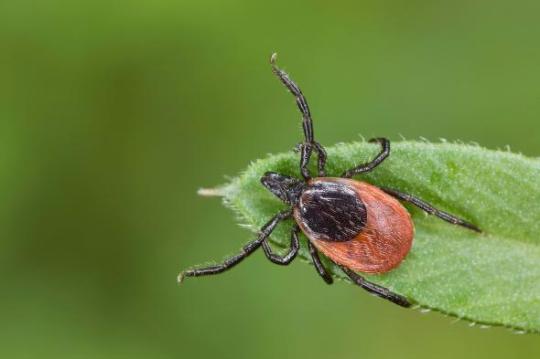
01-tick-BMYJ9K.adapt.590.1

Picture of a deer tick

Native to the United States, the deer tick (pictured) is a vector for several diseases that afflict humans, including Lyme.
PHOTOGRAPH BY JUNIORS BILDARCHIV, ALAMY

Bloodsucking parasites that can carry deadly diseases create their own cement to glue themselves to our bodies, a new study says.

Hard ticks—a family of 700 species that includes the Lyme-spreading deer tick—use pincer-like appendages and mouths to attach to a host’s skin. But sometimes this grip isn’t strong enough for the arachnid to hold on and feed while the host moves.

Sylvia Nürnberger and colleagues discovered hard ticks have an extra tool to glom onto their hosts’ skin—a kind of glue made of proteins in their saliva. See a map that shows Americans’ risk of catching Lyme:  http://phenomena.nationalgeographic.com/2015/07/20/map-lyme/?  (See my comment below article on accuracy of this map)

“Not all species have it and not all species have it in the same amount,” says Nürnberger, a researcher at the Department of Orthopaedics and Trauma Surgery at the Medical University of Vienna.

The cement discovery could actually benefit humans, she adds, as its properties could be repurposed into a medical adhesive.

NOTHING TO SPIT AT
For the study, the scientists reviewed all existing scientific research on tick saliva, which gave them an expansive view of this previously underreported cement substance.

Tick saliva is complex, containing properties that suppress the immune system of the tick’s host to keep them unaware of the intrusion by also suppressing pain and itchiness, according to the study, published in November 2017 in Biological Reviews:  http://onlinelibrary.wiley.com/doi/10.1111/brv.12384/full

“In a way, they play with the immune systems of the host,” Nürnberger says.

The new study is “a remarkably detailed review of quite an obscure thing,” notes Tony Goldberg, a professor of epidemiology at the University of Wisconsin-Madison’s School of Veterinary Medicine.

All blood-sucking organisms, not only ticks but leeches and mosquitoes, must “run a gauntlet of defenses by the animal it’s feeding on,” he notes.

He should know: Goldberg once discovered a new species of tick stuck in his nose after visiting Uganda several years ago.  https://blog.nationalgeographic.org/2013/10/08/how-a-mysterious-tick-ended-up-in-a-scientists-nose/

“I can tell you that thing had some powerful glue,” he says.

TICK PARADOX
Properties in tick spit also lower the host’s defenses against pathogens like Lyme disease, he adds.

“It’s a paradox. One of the functions of this [cement] is that it’s antimicrobial, so the ticks don’t [cause] an infection which would keep them from feeding,” Goldberg says.

“Yet there are an awful lot of horrible tickborne diseases that have latched onto this system and are transmitted to us in the saliva.”

Ticks’ technique for removing themselves from skin is less clear, but Nürnberger says the arachnids may detach themselves by moving their mouthparts around and retracting their pincers. They may also use their saliva to dissolve the cement.

WHAT HURTS US COULD MAKE US STRONGER
As fascinating as tick spit is, Nürnberger and colleagues weren’t just studying it for fun.

They are conducting ongoing studies on how to recreate properties from the cement that could be made into medical adhesives or sealants. These substances could help heal human injuries and broken bones, as well as glue implants to the body.

Scientists have already developed biological adhesives inspired by barnacles, mussels, and sea urchins, but she says tick cement may be more promising.

“The animal already uses this substance to glue to human tissue,” she says. “So we think it could be very compatible and very good in terms of bonding strength.”

_____________

**Comment**

When is there going to be practical and helpful research done to help the plight of Lyme/MSIDS patients?

Recently I commented on another tick article about research ideas:  https://madisonarealymesupportgroup.com/2018/01/19/how-ticks-find-you/

Which TBI’s are sexually transmitted? https://madisonarealymesupportgroup.com/2017/02/24/pcos-lyme-my-story/
Do other insects transmit Lyme? Are there other modes of transmission? (The studies are over 30 years old)
https://madisonarealymesupportgroup.com/2016/02/13/lyme-disease-treatment/
What other vectors transmit the co-infections that typically come with Lyme?
https://madisonarealymesupportgroup.com/2017/04/18/bartonella-vectors/
https://madisonarealymesupportgroup.com/2016/11/06/probable-transfusion-transmission-of-babesiosis/
When are the “powers that be” going to admit that the interplay of Lyme and various coinfections require far more than 21 days of doxycycline?
https://madisonarealymesupportgroup.com/2017/07/01/one-tick-bite-could-put-you-at-risk-for-at-least-6-different-diseases/
When are the “powers that be” going to admit that this complex illness is serious and requires serious treatment (The issue of persistence needs to be serious addressed)  https://madisonarealymesupportgroup.com/2017/12/14/live-bb-found-after-months-of-doxy/
https://madisonarealymesupportgroup.com/2017/11/03/lyme-bug-stronger-than-antibiotics-in-animals-and-test-tubes-now-study-people/
https://madisonarealymesupportgroup.com/2015/09/19/proof-of-borrelia-persistence/

The CDC has awarded 10 million to midwestern universities – including the UW Madison.  Please take the time to call these universities and make it clear you want a preponderance of this money going into research that will DIRECTLY help Lyme/MSIDS patients – which means putting Zika way down the list of priorities since it isn’t even on the radar here!  https://madisonarealymesupportgroup.com/2017/01/27/uwm-center-of-excellence-vector-borne-diseases/

As for the infamous geographical maps telling where Lyme is and where Lyme isn’t:  http://steveclarknd.com/wp-content/uploads/2013/11/The-Confounding-Debate-Over-Lyme-Disease-in-the-South-DiscoverMagazine.com_.pdf   Scroll to page 6 to learn how Andrew Spielman’s tick maps have ruled Lyme Land like the iron curtain, and frankly still do, dictating where Lyme is and is not. https://madisonarealymesupportgroup.com/2017/08/24/canine-maps-better-than-the-cdcs-in-predicting-lyme-disease/

Lyme/MSIDS is everywhere and don’t let anyone tell you otherwise!

Will somebody do meaningful research to help patients?


Wormser Replacement – Infectious Disease Doctor

https://www.lymedisease.org/smith-replace-wormser/

Maine ID doctor to replace Wormser on federal Lyme panel

robert-smith-TBDWG-267x300
The U.S. Department of Health and Human Services (HHS) has announced the appointment of Robert Smith, MD, MPH, to the Tick-Borne Disease Working Group.

He will fill the slot left vacant after Dr. Gary Wormser withdrew. (Wormser left the panel after widespread outcry from the Lyme disease community over his financial conflicts of interest.)

Dr. Smith will join Dr. Dennis Dixon as a co-chair to the Vaccine and Therapeutics Working Group Subcommittee.

HHS posted the following information about Dr. Smith on its website:

Dr. Smith is Director of the Division of Infectious Diseases at Maine Medical Center, and Director and co-founder of the Vector-Borne Disease Laboratory at the Maine Medical Center Research Institute. He has also served as Medical Director of the HIV care program at Maine Medical Center since its inception in 1992.

In 2009, he served as Chair of the external review panel of the Centers for Disease Control and Prevention’s Lyme disease program, and, in 2011, as an Invited Reviewer for the Institute of Medicine’s workshop report Critical Needs and Gaps in the Understanding, Prevention, and Resolution of Lyme and other Tick-borne Diseases.

He is an author of more than 40 peer-reviewed journal articles and book chapters on tick-borne diseases, and has conducted more than 20 grant-supported studies of ticks and the diseases they transmit.

His recent research includes investigations into the determinants of emergence of tick-transmitted diseases, the clinical spectrum of newly recognized infections, and interventions to lower human risk.

The next meeting of the TBD Working Group is scheduled for February 12. Like all of the group’s meetings, it will be livestreamed to the public. More details here:  https://madisonarealymesupportgroup.com/2018/01/19/tbd-working-group-meets-feb-12-live-streaming/


Review of Lyme Tests & How to Diagnose Lyme – Dr. Marty Ross LLMD

 Approx. 31 Min

Jan. 2018

Marty Ross MD LLMD describes how to overcome obstacles to getting a Lyme diagnosis like how to find a doctor to help you or what the best and lowest cost test is. Read more helpful articles about how to treat and diagnose Lyme at www.treatlyme.net

Ross states emphatically it’s possible to have Lyme and test negative.

Dr. Ross uses the Horowitz Lyme/MSIDS Questionnaire:  https://madisonarealymesupportgroup.com/wp-content/uploads/2016/01/symptomlist.pdf

If you are concerned you may be infected, please print and fill this out.  Tell others about this questionnaire as it really is a great document to help you figure things out.  Take it with you to your doctor appointment.

Ross states that in his practice about 15% of sexual partners both have Lyme, indicating the need to consider it as a STD.  For more:  https://madisonarealymesupportgroup.com/2017/02/24/pcos-lyme-my-story

He also points out he sees it in families and suggests there is a genetic component.  I would also add that I feel there are probably many ways to contract it but the studies are lacking or are old.  Bb is fastidious and extremely tough to study in the lab:  https://madisonarealymesupportgroup.com/2017/02/24/pcos-lyme-my-story/  (Breast milk, semen, vaginal secretions, congenitally, urine, saliva, and other modes)

Ross has found that 30% of his chronic fatigue & fibromyalgia patients also have Lyme.

At about 13:00 he talks about Lyme testing.  

He says the CDC 2-tiered testing is worthless and a waste of money. 

He talks about using an antibiotic challenge which is using antibiotics for 3 weeks before testing so the immune system has a stronger reaction and can be picked up on the test.

To read about IGeneX testing:  https://madisonarealymesupportgroup.com/2016/12/07/igenex-presentation/

New tests:  https://madisonarealymesupportgroup.com/2018/01/15/new-lyme-tests-could-offer-quicker-more-accurate-detection/

http://www.treatlyme.net/treat-lyme-book/best-lyme-tests/  The following review by Dr. Ross on Lyme testing includes the new tests from IGenex.  Ross advises caution on DNA Connexions.  He also does NOT include the CD-57 test as it only shows immune suppression which may or may not be caused by a Lyme infection.  Please go to link for a detailed explanation of all the available tests.

Although tests are helpful they are far from perfect.  The toughest part of my job is convincing patients that testing may NEVER be positive and yet a person can be infected.  Having a positive test somehow validates to a person that the are sick.  For Lyme/MSIDS, that paradigm just isn’t true and you must shift your thinking to a symptom-based illness that defies testing.  

There are plenty of us that believe you out here in Lyme Land!

In the video Ross recommends taking the specific test you want taken to your doctor and circle the exact test(s) you want.  Show them the validation/accuracy numbers so they can see the results.

Before you attempt that, read this first:  https://madisonarealymesupportgroup.com/2018/01/15/new-lyme-tests-could-offer-quicker-more-accurate-detection/

Unfortunately, doctors at this point in time are brain-washed into thinking the only valid tests are the CDC-two-tiered testing.  They’ve been taught that any other lab out there is using “home brewed” tests and equivalent to quackery.

More on testing:  https://www.lymedisease.org/lyme-basics/lyme-disease/diagnosis/

https://madisonarealymesupportgroup.com/2018/01/16/2-tier-lyme-testing-missed-85-7-of-patients-milford-hospital/

https://madisonarealymesupportgroup.com/2017/12/13/suppression-of-microscopy-for-lyme-diagnostics-professor-laane/

https://madisonarealymesupportgroup.com/2017/08/15/reliability-of-lyme-testing/

https://madisonarealymesupportgroup.com/2017/08/08/lyme-testing-using-two-recominant-proteins/

For an excellent article on testing by Dr. Ross:  http://www.treatlyme.net/treat-lyme-book/best-lyme-tests/.  This is covered in Ross’s The Treat Lyme Book and is by subscription only (monthly, for a year, or for $30 you have unlimited access and will be able to read on many topics.  Highly recommended)


TBD Working Group Meets Feb 12 – Live Streaming

https://www.lymedisease.org/tbd-working-group-feb12/

Next TBD Working Group meeting set for February 12

tbd-whole-group-300x167
The third meeting of the federal Tick-Borne Disease Working Group has been scheduled for February 12, 2018.

It will take place from noon to 4 pm, Eastern Time (9 am to 1 pm, Pacific Time), and will be livestreamed for public viewing.

According to the group’s website, “For this third meeting, the Working Group will focus on mapping out and initiating the work of the six Subcommittee Meeting Working Groups that were established on December 12, 2017.”

Here are the subcommittees and co-chairs that were announced previously:

Working Group Subcommittee Co-Chair Assignments
Working Group Subcommittee Co-Chairs

  • Disease Vectors, Surveillance and Prevention – Pat Smith and Ben Beard
  • Pathogenesis, Transmission, and Treatment – Wendy Adams and Estella Jones
  • Testing and Diagnostics – Lise E. Nigrovic and Vanila Singh
  • Access to Care Services and Support to Patients – Karen Vanderhoof-Forschner and Scott Cooper
  • Vaccine and Therapeutics – Dennis Dixon and New Working Group Public Member TBA
  • Other Tick-Borne Diseases and Co-Infections – Rich Horowitz and Allen Richards

According to the website, the members of each subcommittee will be announced before February 12.

The federal panel was established by the 21st Century Cures Act, to bring together diverse viewpoints. There is no word yet on who will replace Dr. Gary Wormser, who withdrew from the group after the Lyme community protested his major financial conflicts of interest.

Click here for more information about the Working Group.

https://www.hhs.gov/ash/advisory-committees/tickbornedisease/notices/index.html

Presentation on Wisconsin Tick Control- Dr. Paskewitz

Approx. 38 Min.  Jan 16, 2018

Public Tick IPM Working Group: Dr. Paskewitz presentation on the Upper Midwest

She states we have at least a three fold increase of tick borne disease in Wisconsin since the 1990’s.  Anaplasmosis has increased as well.
She also states hardly anything has been done about tick control in Wisconsin and that they must rely on East Coast tick control research – which is unfortunate as there may be significant differences in a host of issues.
Work by others has shown invasives such as honeysuckle (lone star), Japanese Barberry (I.scapulars), https://madisonarealymesupportgroup.com/2015/09/30/barberry-friend-or-foe/
and unpublished data on Buckthorn (I. scapulars) are related to tick abundance.  
Tick tubes have shown conflicting results.

For more on Paskewitz:  http://labs.russell.wisc.edu/paskewitz/

More on Wisconsin Ticks and Tick borne illnesses:  http://labs.russell.wisc.edu/wisconsin-ticks/

More on Ticks: