Archive for the ‘Activism’ Category

Antiparasitic & Antifungl Medications Targeting Cancer Cells Repurposing Drugs For Cancer

https://www.linkedin.com/pulse/antiparasitic-antifungal-medications-targeting-cancer-yu-md/

Antiparasitic and Antifungal Medications Targeting Cancer Cells: Repurposing Drugs for Cancer

Dr. Simon Yu, MD, Medical Director at Prevention and Healing,Inc.

Is it possible to treat cancer as a neglected infectious disease? Is cancer a metabolic disease, with tumors growing – and metastases spreading – like a metabolic parasite? It may sound farfetched, but there is growing evidence to support this novel idea that can change the way we treat many types of cancers.

Researching this topic in depth with Frederick T. Guilford, MD, we published a comprehensive article, “Antiparasitic and Antifungal Medications for Targeting Cancer Cells: Literature Review and Case Studies,” in the peer-reviewed journal, Alternative Therapies in Health and Medicine.

The Abstract concludes, “The information offered in this review suggests scientists should think of cancer not only as a metabolic disease but also as a metabolic parasite and should consider using antiparasitic medications under a new understanding of the role of inflammation, infection, and mitochondrial dysfunction in the development of cancer cells.”

Before discussing our latest paper, I would like to review the concept of an integrated program of mass drug administration (also referred to as preventive chemotherapy) to treat wide scale parasitic infections, published in The New England Journal of Medicine(NEJM) June 2019, “Collateral Benefits of Preventive Chemotherapy-Expanding the War on Neglected Tropical Diseases.”

The paper discusses how largescale administration of the antiparasitic medications albendazole, mebendazole, ivermectin, praziquantel and/or azithromycin in the early 2000’s – reaching over 1 billion people per year in Africa, Asia and Latin America for the original targets of parasitic diseases – had an unintended outcome of collateral health benefits. In addition to greatly reducing the incidence of parasitic diseases and disability and saving many lives on a mass scale, it provided a form of universal health coverage, including reducing transmission of malaria. A thought provoking idea!

Going back to our paper, chronic inflammation is a new catchphrase for the explanation of all chronic degenerative diseases, from asthma, arthritis, heart disease, autoimmune disease, and irritable bowel disease to cancer. Unrecognized low-grade infection is a main cause of inflammation from oncovirus, bacterial, fungal and lesser-known parasite infections that are driving forces in the cellular evolution and degeneration of cancer cells.

The observation that cancers, like parasites, feed off of our bodies without returning a benefit has been known for some time, and early in the 20th century, it was suggested that cancer is a parasite. The metabolism of some parasites shows a method of energy formation similar to that of cancer cells.

An approach using currently available medications that target both fungal and parasite metabolism appears to interfere with tumor growth and aggressiveness.

Due to the complexity of the behavior and biology of the cells, scientists’ primary focus should be on detection and elimination of sources of inflammation. Physicians should think of cancer not only as a metabolic disease but also as a metabolic parasite, and should also consider using antiparasitic and antifungal medications with the understanding of the role of inflammation, infection and mitochondrial dysfunction in the development of cancer cells.

For more on this line of thinking, see Thomas Seyfried, Ph.D. et al’s article in Carcinogenesis, “Cancer as a Metabolic Disease: Implications for Novel Therapeutics,” and R. Lamb et al’s research paper in Oncotarget in 2015, “Antibiotics that target mitochondria effectively eradicate cancer stem cells, across multiple tumor types: Targeting cancer like an infectious disease.”

In my practice, I have learned over the years that many unsuspected chronic illnesses – and some cancers – are caused by parasites. A few years ago, I wrote, “Cancer is an Infectious Disease as if Cancer is Metabolic Parasites: Evolution and Degeneration of Biology of Cancer Cells,” reviewing Seyfried’s work.

I have also learned that there is much research to be done on how our cells and our ancestral microbes share commonalities as well as differences in how they function in health and disease to this day – providing potential new avenues for treatment. One of my favorite phrases is, “We are not so different, you and I.” It applies not only across people and cultures, but across cells, microorganisms, and all of God’s creatures, great and small.

Our position in the paper is analogous to NEJM’s recent article, “Collateral Benefits of Preventive Chemotherapy-Expanding the War on Neglected Tropical Diseases,” regarding the unintended outcome of extended collateral benefits of saving lives on a mass scale, if mainstream academic medicine is willing to embrace the concept of cancer as infectious diseases as if cancer is metabolic parasites.

In my cancer and complex chronic disease patients, I have been extensively using parasite medications (such as albendazole, mebendazole, ivermectin, and praziquantel), antibiotics and antifungal medications, and making referrals to biological dentists to eradicate hidden dental infections (especially Entamoeba and protozoal parasites). As patients recover healthy metabolic and immune functioning, it is not uncommon to witness the resolution of many chronic diseases, including asthma, autism, Lyme, persistent Lyme, psoriasis, neurologic disorders like MS and Parkinson’s, seizures, and cancers.

I am not in a position to claim that cancer is an infectious disease. I think it is worth asking the question if it is possible to treat cancer as a neglected infectious disease, as if cancer is a metabolic parasite. Dr. Guilford and I are interested in collaborating and testing our hypothesis for Preventive Chemotherapy using parasite medications for cancer. Time to think differently!

Dr. Simon Yu, M.D. is a Board Certified Internist. He practices Internal Medicine with an emphasis on Integrative Medicine to use the best each has to offer. For more articles and information about integrative medicine, patient success stories, and Dr. Yu’s new book, AcciDental Blow Up in Medicine: Battle Plan for Your Life, visit his website at www.preventionandhealing.com or call Prevention and Healing, Inc., 314-432-7802. You can also attend a free monthly presentation and discussion by on Integrative Medicine at his office on the second Tuesday each month at 6:30 pm. Call to verify the date. Seating is limited, arrive early.

_____________________

For more: https://madisonarealymesupportgroup.com/2019/08/18/parasites-the-immune-system/

https://madisonarealymesupportgroup.com/2017/10/03/removing-parasites-to-fix-lyme-chronic-illnesses-dr-jay-davidson/

https://madisonarealymesupportgroup.com/2019/05/21/free-antigerm-action-plans-for-lyme-disease-how-to-use-herbal-prescription-germ-killers-for-bacteria-parasites-viruses-yeast/

https://madisonarealymesupportgroup.com/2019/09/06/the-macabre-world-of-mind-controlling-parasites/

https://madisonarealymesupportgroup.com/2017/03/23/rebecca-keith-on-mcas-parasites-lymemsids/
https://www.cancertreatmentsresearch.com/fenbendazole/

‘Don’t Punish Pain’Bill Unanimously Approved by RI House

https://patch.com/rhode-island/cranston/dont-punish-pain-bill-unanimously-approved-ri-house

‘Don’t Punish Pain’ Bill Unanimously Approved By RI House

The bill known as “Claudia’s Bill” is expected to be approved by the full General Assembly before the end of the legislative session.

By Rachel Nunes, Patch Staff

Now, thanks to the Washington Post’s investigation, we learn that the DEA directly negotiated with the drug industry to grant opioid manufacturers selective immunity from criminal seizure and prosecution. Is anyone really surprised? This has been the DEA’s business model for decades.

The following graphic (see link above), published by the Washington Post, reveals that at least 56 DEA and Justice Dept. officials left their government jobs to work for the pharmaceutical industry.


Image

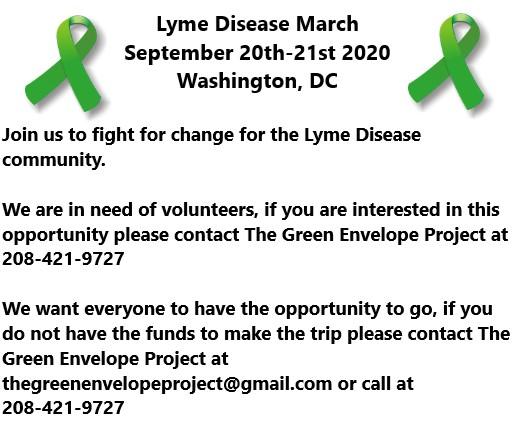
Lyme March Scheduled for Sept. 2020

0-11

Lyme Disease: The Major Players, the Disagreements and the IDSA Draft Guidelines

http://outbreaknewstoday.com/lyme-disease-the-major-players-the-disagreements-and-the-idsa-draft-guidelines

Lyme disease: The major players, the disagreements and the IDSA draft guidelines

August 29, 2019
Lyme disease. So much we seem not to know, in many different areas.

Draft guidelines for the diagnosis and treatment of Lyme disease were recently issued by the Infectious Disease Society of America (IDSA)–two really big, contentious issues.

And of course there are the disagreements of how the various organizations view these Lyme topics–I’ve often termed this the establishment vs. the advocates.

My guest today took a look at this in a recent two-part series in Forbes entitled “Lyme Wars”.

Joining me is the author and infectious disease physician, Judy Stone, MD.

Podcast: Play in new window | Download

___________________

For more:  https://madisonarealymesupportgroup.com/2019/08/04/the-lyme-wars-major-organizations-arent-playing-nicely-together/

https://madisonarealymesupportgroup.com/2019/08/07/the-lyme-wars-part-2-which-way-should-we-treat/  I disagree with the author on numerous points and present them in this link.

Dr. Masters fought to get Lyme recognized in the South. It took decades for it to happen yet patients are still denied testing and treatment:  https://madisonarealymesupportgroup.com/2017/10/06/remembering-dr-masters-the-rebel-for-lyme-patients-who-took-on-the-cdc-single-handedly/

https://madisonarealymesupportgroup.com/2019/04/22/its-just-crazy-why-is-lyme-disease-treatment-so-difficult-to-find-in-mississippi/

https://madisonarealymesupportgroup.com/2016/09/24/arkansas-kids-denied-lyme-treatment/

https://madisonarealymesupportgroup.com/2017/10/24/no-lyme-in-oklahoma-yeah-right/

https://madisonarealymesupportgroup.com/2018/05/31/no-lyme-in-the-south-guess-again/

We need more researchers and doctors who are willing to go against ancient dogma which has ruled Lyme-land for 40 years.
How many more have to suffer and die before Lyme/MSIDS is finally recognized as the true pandemic it is?

‘Virtual Clinic’ of Specialists Focused on Lyme Disease Diagnosis, Treatment Expected to Open Early Next Year

https://www.cbc.ca/news/canada/manitoba/tick-bourne-lyme-disease-service

‘Virtual clinic’ of specialists focused on Lyme disease diagnosis, treatment expected to open early next year

Program will connect primary health providers, patients to specialists to help treat tick-borne illnesses

Black-legged ticks can spread Lyme disease and other tick-borne illnesses. A new provincial program is intended to help diagnose and treat those illnesses by connecting patients and primary-care physicians with specialists. (Bertrand Guay/AFP/Getty Images)

Winter may be around the corner, but Manitoba health officials are already focused on treating a summer hazard — tick-borne illnesses like Lyme disease.

A “virtual clinic” of medical health officers focused on better diagnosing and treating tick-borne illnesses, first announced by the Manitoba government last June, is expected to be operating by early next year, says Dr. Richard Rusk, the province’s medical health officer for communicable disease control.

“If you have someone with multiple issues and symptoms and they don’t really come up with a clear diagnosis, then they are lost — so how do you look after this group?” said Rusk.

It’s estimated as many as 1,000 Manitobans may be suffering from tick-borne illness and need help getting diagnosed and treated.The tick-borne collaborative care service, which the province said in a June media release is intended to “streamline and improve health services for patients who show symptoms of late Lyme disease and other emerging tick-borne illnesses,” will receive $240,000 a year. The program will gather a round table of experts in a tele-health format to help diagnose and treat patients.In 2018, there were 70 reported cases of Lyme disease, with  28 confirmed cases and 26 probable cases, according to the province.

Symptoms, which typically appear from three to 30 days following the bite of an infected black-legged tick, can include fever and muscle aches, but if untreated, infection can spread to the joints, heart and nervous system, according to the province’s website.

Rusk says tick-borne illnesses can be difficult to diagnose, and the new collaborative program is meant to help primary physicians by connecting them with specialists.

“It often involves intense evaluations, which is why your average family physician won’t be able to do this,” he said.

Dr. Richard Rusk is the lead on a virtual system that will link family doctors with a team of medical specialist to better diagnose and treat patients struggling with tick-borne illnesses like Lyme disease. (Jaison Empson/CBC)

“The team consists of an infectious disease specialist, a neurologist, an internal medicine specialist, a rheumatologist, a psychiatrist and physiatrist, so it’s a fairly high-level group of specialists,” said Rusk. A primary health care nurse and pharmacist will also be on the team.

Some patients who are already working with an internal medicine specialist are starting to be seen by the other medical experts as a trial run of the program. But software and administrative details are still being worked out before the official rollout of the virtual clinic.

“We’re looking to take in 10-12 patients a month, because it’s complex and each patient probably takes about two hours just with the internal medicine specialist, never mind the other experts,” says Rusk.

He says the Manitoba tick-borne collaborative care service will also be part of the Canadian Lyme Disease Research Network.

Dr. Kieran Moore is the Ontario medical health officer tasked with bringing together a cross-country network of university researchers, medical specialists, and patients  to fill gaps when it comes to research, diagnosis, treatment and education.

“We’ve got a lot of catch-up on education on the clinical signs and symptoms, as well as testing reliability and treatment pathways,” says Moore, who is also a professor of family and emergency medicine at Queen’s University.

There are plans to include Manitobans in research efforts, but that is still two or three years away.

“We have to get protocols set in [Ontario] and then in Halifax, and then we will expand,” said Moore.