French and Australian Connections on Lyme, Inflammation and Cancer: Medicine Week 2019, Baden-Baden
By Dr. Simon Yu, MD
Medical Director at Prevention and Healing,Inc.
______________________
Medicine Week in Germany is considered one of the biggest cutting-edge complementary medical conferences in the world and there are multiple lectures simultaneously held at the huge congress hall. I gave a lecture on Parasites, Inflammation and Immune Dysregulation in the section on “Causal Therapies for Chronic Inflammation and Chronic Infection,” sponsored by Dr. med. Rainer Mutschler from Germany.
Many of the international speakers covered cutting edge topics of Lyme, parasites, mold, inflammation and chronic infections, and different treatment modalities. Bacteriophage therapy and hemoadsorption therapy were new concepts for me take home to investigate further.
The first speaker, Louis Charles Teulieres, MD from France and England, spoke on bacteriophages in Lyme disease and diagnostics. Bacteriophages are a hot topic in the Lyme community as a means to detect and treat Lyme disease instead of heavily relying on antibiotics. Bacteriophages, a dominant viral life form existing as naked DNA with a protein coat, infect bacteria and “devour” them. They are everywhere: 50 million bacteriophage viruses are found in one milliliter of seawater.
Dr. Teulieres’ main focus: Is there a place for bacteriophages in diagnosis and treatment of Lyme disease? Can this provide an alternative treatment to antibiotics for Lyme disease, and thereby avoid post-antibiotic resistance? His lecture was highly technical, and it is still theoretical to use bacteriophages as a diagnostic tool, or to kill Borrelia Lyme bacteria with a Borrelia-specific virus. Phage Therapy is a novel idea to be tested soon. I have some skepticism about this approach which overlooks hidden dental spirochete and parasite infections, but stay tuned for more research.
Other topics included molds and fungus in chronic inflammation by Dr. Damien Downing of London, a lecture on biofilm by a doctor from Scandinavia, Lyme and co-infections by Prof. Dr. Kenny de Meirleir of Belgium, immune monitoring of hemoadsorption approaches as a new treatment option in antibiotic resistant chronic Lyme infection by Prof. Dr. Marion Schneider of Germany, and patient cases treated with hemoadsorption and extracorporeal hyperthermia by Dr. med. Rainer Mutschler of Germany.
Bacteriophage testing for Lyme disease claims it could detect direct evidence of Borrelia presence, is highly sensitive and specific, could distinguish Lyme from relapsing fever Borrelia strains, could distinguish active and non-active Borrelia presence, and could be developed to have the ability to distinguish different Borrelia sub-types.
On my last day at the Medicine Week, I met Australian researcher Jennie Burke, MSc from Sydney who gave a lecture on, Cancer and Infection. I did not attend her lecture but at the night meeting at the restaurant, she gave me her lecture slides to review.
To my delight, she presented on viral, bacterial and parasite infections as possible causative agents for the development of tumors or opportunistic inhabitants. Her slides covered controversial topics from Virginia Livingston Wheeler, Royal Rife and Dr. Milbank Johnson on BX virus and Rife frequency therapy, Dr. Laszlo K. Csatary on Newcastle virus, and included a list of bacteria and viruses associated with inducing cancer. Her list of cancer types and infections include Gallbladder carcinoma, mucosa-associated lymphoid tissue (MALT) lymphoma, and Ovarian, Colorectal, Lung, Pancreatic, Breast, Prostate, Anal and Oral cancer. She listed the names of the bacterial and viral infections and development of specific cancer types.
The development of cancer, infections and environmental toxins are not a new concept, but have been largely sidelined (seduced) by the genetic mutation theory of cancer. It is time to renew infections and environmental toxins, including EMF, as the driving forces of inflammation and immune dysregulation. The end results are the imbalance of Th1, Th2, Th17 and regulatory T immune cells that can trigger autoimmune reactions or development of cancer.
I have written many articles on parasites, fungal infections and cancer connections, presenting cancer as an infectious disease as if cancer is a metabolic parasite. Dr. Tim Guilford and I published, Antiparasitic and Antifungal Medications for Targeting Cancer Cells Literature Review and Case Studies, in PubMed with extensive references. If you are suffering from cancer, get a copy and share with your oncologist. He or she may embrace and try parasite and fungal medications or scorn you and laugh at you. You have nothing to lose by trying.
Listening to French, Australian and other international speakers at Medicine Week was worthwhile, and I learn from going to Baden-Baden every year. Meeting good friends and enjoying good wine, beer, food and Roman Baths give even more incentives to attend, and expand my horizons.
Dr. Simon Yu, M.D. is a Board Certified Internist. He practices Internal Medicine with an emphasis on Integrative Medicine to use the best each has to offer. For more articles and information about integrative medicine, patient success stories, and Dr. Yu’s new book, AcciDental Blow Up in Medicine: Battle Plan for Your Life, visit his website at www.preventionandhealing.com or call Prevention and Healing, Inc., 314-432-7802. You can also attend a free monthly presentation and discussion by on Integrative Medicine at his office on the second Tuesday each month at 6:30 pm. Call to verify the date. Seating is limited, arrive early.
Summary: Researchers link the Human Herpes Virus 6A to the development of multiple sclerosis.Source: Karolinska InstituteResearchers at Karolinska Institutet have developed a new method to separate between two different types of a common herpes virus (HHV-6) that has been linked to multiple sclerosis. By analyzing antibodies in the blood against the most divergent proteins of herpesvirus 6A and 6B, the researchers were able to show that MS-patients carry the herpesvirus 6A to a greater extent than healthy individuals. The findings, published in Frontiers in Immunology, point to a role for HHV-6A in the development of MS.
Multiple sclerosis, MS, is an autoimmune disease that affects the central nervous system. The cause of the disease is unclear, but one plausible explanation is a virus tricks the immune system to attack the body’s own tissue. Human Herpesvirus 6 (HHV-6) has previously been associated with MS, but in those studies, it wasn’t possible to distinguish between 6A and 6B. Through virus isolation from ill individuals, researchers have been able to show that HHV-6B can cause mild conditions such as roseola in children, but it has been unclear if HHV-6A is the cause of any disease.
According to estimates, as many as 80 percent of all children are infected with the HHV-6 virus before 2 years of age, and many also carry protection in the form of antibodies against this particular virus for the rest of their lives. But since it hasn’t been possible to tell the two variants apart post-infection, it has been difficult to say whether HHV-6A or B is a risk factor for MS.
In this study, however, the researchers were able to distinguish between the A and B virus by analyzing antibodies in the blood against the proteins–immediate early protein 1A and 1B (IE1A and IE1B)–that diverge the most between the two viruses.
“This is a big breakthrough for both the MS and herpes virus research,” says Anna Fogdell-Hahn, associate professor at the Department of Clinical Neuroscience at Karolinska Institutet and one of the study’s senior authors. “For one, it supports the theory that HHV-6A could be a contributing factor to the development of MS. On top of that, we are now able, with this new method, to find out how common these two different types of HHV-6 are, something we haven’t been able to do previously.”
The researchers compared antibody levels in blood samples of some 8,700 MS-patients against more than 7,200 healthy people whose gender, date of birth, date of blood sample and other factors matched those with MS. They concluded that people with MS had a 55 percent higher risk of carrying antibodies against the HHV-6A protein than the control group. In a sub-group of almost 500 people, whose blood samples were drawn before the onset of the disease, the risk of developing MS in the future was more than doubled if they had a 6A viral infection. The younger the people were when the virus was first discovered in the blood, the higher the risk was of developing MS in the future. HHV-6B, on the other hand, was not positively associated with MS. Instead MS-patients had lower levels of antibodies toward IE1B than those without MS.
Antibodies toward Epstein-Barr virus (EBV), another herpes virus that is also associated with MS, were analyzed with the same method and the researchers were able to show that individuals affected with both viruses had an even greater risk of MS. This indicates that several virus infections could be acting jointly to increase the risk of MS.
“Both HHV-6A and 6B can infect our brain cells, but they do it in slightly different ways. Therefore, it is now interesting to go forward and attempt to map out exactly how the viruses could affect the onset of MS,” says Anna Fogdell-Hahn.
Funding: The research has been financed by grants from the Swedish Research Council, Stockholm County Council, Swedish Brain Foundation, KAW Foundation, Margareta af Ugglas Foundation, MultipleMS Horizon 2020, Multiple Sclerosis Society of Canada and the Swedish Society of Medical Research. Some of the researchers have previously received grants/fees by pharmaceutical companies in various contexts. See full scientific article for further information.
ABOUT THIS NEUROSCIENCE RESEARCH ARTICLE
Source: Karolinska Institute Media Contacts:
Press Office – Karolinska Institute Image Source:
The image is credited to UPF.
Increased Serological Response Against Human Herpesvirus 6A Is Associated With Risk for Multiple Sclerosis
Human herpesvirus (HHV)-6A or HHV-6B involvement in multiple sclerosis (MS) etiology has remained controversial mainly due to the lack of serological methods that can distinguish the two viruses. A novel multiplex serological assay measuring IgG reactivity against the immediate-early protein 1 from HHV-6A (IE1A) and HHV-6B (IE1B) was used in a MS cohort (8,742 persons with MS and 7,215 matched controls), and a pre-MS cohort (478 individuals and 476 matched controls) to investigate this further. The IgG response against IE1A was positively associated with MS (OR = 1.55, p = 9 × 10⁻²²), and increased risk of future MS (OR = 2.22, p = 2 × 10⁻⁵). An interaction was observed between IE1A and Epstein-Barr virus (EBV) antibody responses for MS risk (attributable proportion = 0.24, p = 6 × 10⁻⁶). In contrast, the IgG response against IE1B was negatively associated with MS (OR = 0.74, p = 6 × 10⁻¹¹). The association did not differ between MS subtypes or vary with severity of disease. The genetic control of HHV-6A/B antibody responses were located to the Human Leukocyte Antigen (HLA) region and the strongest association for IE1A was the DRB1*13:01-DQA1*01:03-DQB1*06:03 haplotype while the main association for IE1B was DRB1*13:02-DQA1*01:02-DQB1*06:04. In conclusion a role for HHV-6A in MS etiology is supported by an increased serological response against HHV-6A IE1 protein, an interaction with EBV, and an association to HLA genes.
Lyme disease can cause delayed neurologic symptoms similar to those seen in multiple sclerosis (MS) such as weakness, blurred vision caused by optic neuritis, dysesthesias (sensations of itching, burning, stabbing pain, or “pins and needles”), confusion and cognitive dysfunction, and fatigue. Lyme disease symptoms may also have a relapsing-remitting course. In addition, Lyme disease occasionally produces other abnormalities that are similar to those seen in MS, including positive findings on magnetic resonance imaging (MRI) scans of the brain and analysis of cerebrospinal fluid (CSF).
These similarities in symptoms and test results have led some people with MS to seek testing for the presence of antibodies to Borrelia, to determine if their neurologic symptoms are the result of Lyme disease or truly MS. The distinction is important because Lyme disease, especially when treated early, often responds to antibiotic therapy, whereas MS does not.
Studies examining Lyme disease & MS Two studies have examined the overlap in diagnosis of MS and Lyme disease. The studies were conducted in parts of Long Island, New York, an area where Lyme disease is endemic, or regularly found.
In the first study, people who had Borrelia antibodies in their blood as well as a variety of neurologic symptoms considered to be “MS-like,” were evaluated with MRI, evoked potentials (EP) and CSF analysis, including a test for the presence of Borrelia antibodies in the spinal fluid.
While those with the MS-like illness had the highest incidence of abnormal MRIs and were the only ones among those studied to have abnormal EP and oligoclonal bands in their spinal fluid (indicating an abnormal immune response), they did not prove to have any Borrelia antibody in their spinal fluid.
The researchers concluded that the few patients with the MS-like symptoms probably had these symptoms due to MS and had also been exposed to the Borrelia bacterium. A companion study looked for the presence of Borrelia antibodies in the blood of 100 people with the diagnosis of possible MS. Of 89 people who in fact turned out to have definite MS, only one had Borrelia antibodies. The researcher concluded that “…infection with Borrelia is infrequent in MS patients who live in an endemic area. Lyme disease is unlikely to be a significant factor in the differential diagnosis of MS.” Furthermore, the presence or antibodies to Borrelia does not prove that Borrelia is causing the neurological symptoms, only that there has been previous infection with the organism.
JUST REMEMBER, “RARE” IS ONLY “RARE” IF IT ISN’T YOU.
FDA ADMITS Vaccines Contaminated With Serious Viruses Including Cancer
Published on
Written by Aaron Kesel
The U.S. Food and Drug Administration (FDA) has published shocking results which found that cells used in the manufacturing of numerous childhood vaccines are often contaminated with serious viruses including cancer.
The FDA study looked at vaccines that are made from living cells, or replicated cell substrates that some manufacturers are investigating to create. According to research, these cells are oftentimes contaminated with hidden viral fragments which have the potential to cause cancer.
These viruses are dormant, meaning they live “quietly” inside other cells. However, eventually these cells no longer hide and circulate throughout the body in the form of serious disease. As a result, a person injected with a vaccine containing these cancer-causing micro-organisms may not display signs of health complications until long after they have been jabbed sometimes several years later.
An experiment injecting rodents with vaccines yielded surprising results showing that the rats now had tumor cells.
“In some cases the cell lines that are used might be tumorigenic, that is, they form tumors when injected into rodents,” the FDA paper explains.
“Some of these tumor-forming cell lines may contain cancer-causing viruses that are not actively reproducing. Such viruses are hard to detect using standard methods. These latent, or ‘quiet,’ viruses pose a potential threat, since they might become active under vaccine manufacturing conditions.”
The list of tumorigenic or cells that run the risk of causing cancer include MDCK and CHO cells (for influenza virus vaccines), 293 and PER.C6 cells (for adenovirus-vectored HIV-1 and other vaccines), and tumor-derived cells such as HeLa cells (for HIV-1 vaccines) according to the FDA.
Although this author is against the injection of foreign chemicals into his own body, the FDA proceeded with the study for other reasons. The FDA writes they want “to ensure the safety of vaccines, our laboratory is investigating ways to activate latent viruses in cell lines and to detect the activated viruses, as well as other unknown viruses, using new technologies. We will then adapt our findings to detect viruses in the same types of cell substrates that are used to produce vaccines.”
The FDA adds, “These methods will enable FDA scientists to help manufacturers to determine whether their specific cell substrate is safe to use for vaccine production. The methods our laboratory are developing and testing will help to ensure the production of safe and effective vaccines in two ways: 1) FDA will be able to develop testing guidelines for manufacturers who use new cell substrates for producing vaccines; and 2) FDA will publish the new methods it develops in peer-reviewed scientific journals, thus making them readily accessible to all manufacturers.”
The FDA is also evaluating the risk of retrovirus infections in humans such as Simian foamy virus (SFV) which can be transmitted from monkeys to humans. Although, the FDA says “there is no evidence that SFV causes disease.” However, the FDA cautions that the virus can “remain in a lifelong quiet state in the DNA after infection.”
Despite these claims, we know that polio and smallpox vaccines contain monkey, pig, kidney and other foreign cells that are contaminated with SIV, SFV, and various other cancer-causing viruses. Most are also well aware that the Polio vaccine SV40 is documented on record by the CDC themselves (on a now-deleted page) to have cost people their lives and caused cancer. However, you can confirm the web page existed by using Archive.org’s time machine. Also there’s other evidence that SV40 has been detected in some human tumors.
So the claim made by the FDA “there is no evidence that SFV causes disease” is a laughably ill-researched statement.
In other gene sequencing news, recently it has been reported by scientists in a separate study that there are 560 cancer genes in the human gene sequencing for GlaxoSmithKline’s (GSK) combination vaccine for measles, mumps, rubella, and varicella (MMRV).
Cancer genes aren’t the only worry with MMR vaccines or vaccines in general. As Activist Post has previously expressed, mercury and aluminum have long been debated by people like Robert Kennedy Jr. as ingredients (adjuvants) in vaccines that could cause autism. This is for good reason since we know that both aluminum and mercury are neurotoxins that harm the body at high levels.
RFK, Jr. believes “it’s the preservative Thimerosal in the vaccines that causes autism.”
Kennedy expressed his opinion in a weighty now-deleted piece on the CDC whistleblower entitled “CDC’s Latest Tuskegee Experiment African American Autism and Vaccines.” (archive)
Thiomersal isn’t the only ingredient in vaccines; they have admitted to traces of aluminum, which is classified as a neurotoxin to the body and stated that “despite using it for 90 years medical sciences’ understanding about using aluminum as a vaccine adjuvant is remarkably poor.”
In 2017, Activist Post reported a previous separate study that confirmed aluminum in vaccines may cause Autism Spectrum Disorder (ASD), and children who suffer from it have up 10 times more metal in their brains than what is considered a safe amount for adults. Those researchers discovered that aluminum causes the membrane to separate the brain from blood flowing to it, thus affecting its internal temperature, non-neuronal cells and inflammatory cells.
Another previous study in 2012, from the peer-reviewed medical journal Lupus by Lucija Tomljenovic, PhD and Christopher A. Shaw, PhD of the University of British Columbia corroborates those claims, indicating that aluminum toxicity targets the mitochondria. That experiment found evidence that aluminum as an adjuvant can lead to permanent detrimental alterations of the brain and immune system function.
There are several additional court cases; although the CDC and pharmaceutical industry would love to have these covered up, I dug them up. One MMR clinical trial’s results were faked by Big Pharma Merck. Merck knowingly falsified its mumps vaccine test results to fabricate a “95% efficacy rate.” In order to do this, Merck “spiked the blood test with animal antibodies to artificially inflate the appearance of immune system antibodies,” as reported by CourthouseNews.com.
In fact, regarding the use of aluminum and other metals in vaccines as an adjuvant, we may all be part of a 90-year-old experiment where we were all the lab rats.
Aluminum is an experimentally demonstrated neurotoxin and the most commonly used vaccine adjuvant. Despite almost 90 years of widespread use of aluminum adjuvants, medical science’s understanding about their mechanisms of action is still remarkably poor. There is also a concerning scarcity of data on toxicology and pharmacokinetics of these compounds. In spite of this, the notion that aluminum in vaccines is safe appears to be widely accepted. Experimental research, however, clearly shows that aluminum adjuvants have a potential to induce serious immunological disorders in humans. In particular, aluminum in adjuvant form carries a risk for autoimmunity, long-term brain inflammation and associated neurological complications and may thus have profound and widespread adverse health consequences. In our opinion, the possibility that vaccine benefits may have been overrated and the risk of potential adverse effects underestimated, has not been rigorously evaluated in the medical and scientific community. We hope that the present paper will provide a framework for a much needed and long overdue assessment of this highly contentious medical issue. – US National Library of Medicine National Institutes of Health.
The MMR vaccine isn’t the only vaccine under scrutiny. In 2017, the Centers for Disease Control (CDC) announced there might be a link between miscarriages and vaccinations. The researchers found that women who had miscarriages between 2010 and 2012 were more likely to have had back-to-back annual flu shots including the Swine flu vaccine that a UK court ruled caused brain damage and Guillain-Barre syndrome (GBS) in multiple kids in 2015, as Natural Blazereported.
At this point, the FDA effectively just inadvertently proved that jabbing yourself with a vaccine is the equivalent to trying Chinese research chemicals. Except that these deadly chemical combinations are approved by the FDA. The question on everyone’s minds is, how wasn’t any of this identified long before any of these vaccines were ever approved for use by the masses? Especially, the Polio and Smallpox vaccines which have injured and killed many over the years.
Where at first the problem may have been isolated to metallics (aluminum) used in vaccines that the US National Library of Medicine National Institutes of Health has admitted their understanding of as a main adjuvant in vaccines is “poor.” The new issue is vaccines that are made from living cells, or replicated cell substrates that may cause cancer or other serious diseases.Despite all this evidence, forced vaccinations are occurring in places like BC, Canada where, as Activist Post reported, parents have no choice but to vaccinate children. As this writer previously wrote, vaccines affect individuals differently and can have adverse side effects; now parents need to worry about deadly cells hidden beneath the vaccines that can cause illnesses.
Is it ever really safe to put a foreign substance into your body when each person’s body functions differently and has a different chemical make up? As RFK, Jr. says when it comes to vaccines: “Let the evidence speak for itself.”
PRINCIPIA SCIENTIFIC INTERNATIONAL, legally registered in the UK as a company incorporated for charitable purposes. Head Office: 27 Old Gloucester Street, London WC1N 3AX.
(Natural News) After going outside, it may be best to do a tick check. Lyme disease is a dangerous condition that causes fever, rashes, face paralysis, and arthritis. Without proper care, it can even lead to death. Interestingly, something so deadly comes from the bite of something so small: ticks.
Ticks are tiny arachnids commonly found in grassy, woodland areas where they attach themselves to a host. They are commonly associated with deer and other kinds of game found in the wild. However, they are not only found in woods and forests; they can thrive in cities as well.
According to the Centers for Disease Control and Prevention(CDC), more than 300,000 Americans are infected each year. They are especially plentiful from May to August when they are most active and a lot of people spend time outdoors.
After going outdoors, search your body for any ticks that may have latched on. Check areas that are exposed or close to clothing edges. Ticks prefer warm areas on the body, including:
The armpits
In and around the ears
Back of the knees
Inside the belly button
Around the waist
In and around all head and body hair (especially the scalp and groin area)
Make sure to also check used clothes before putting them in the hamper. Take a bath afterward for extra measure.
Children are especially vulnerable to tick bites because they play a lot and are closer to the ground. Teach them how to conduct tick checks on their body and their clothes.
2. Being unfamiliar to what a tick looks like
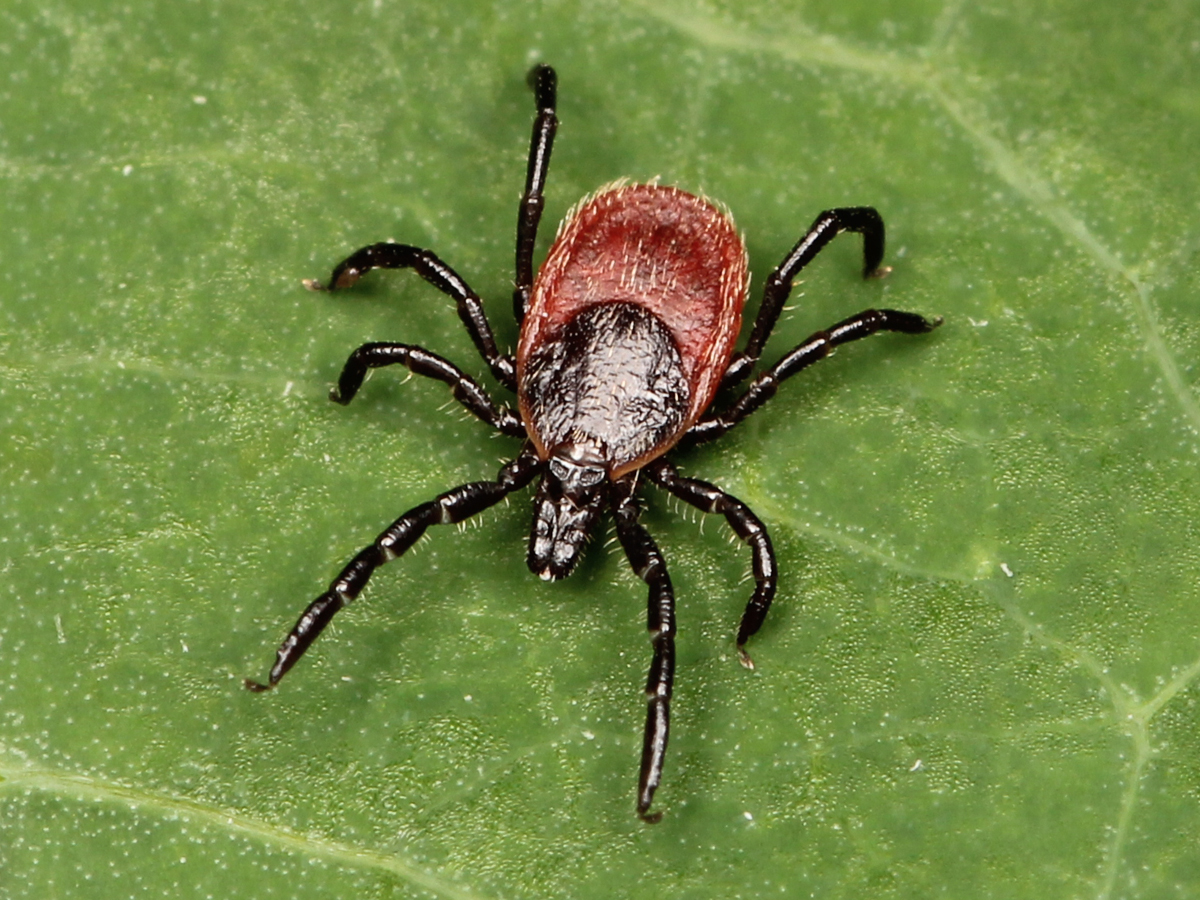
It is difficult to spot a tick when you are unaware of how it looks like. Ticks look like bulb-shaped spiders. It is easy to miss them since they embed themselves into the skin.
You can spot them by feeling a small bump while patting a pet or combing one’s hair. Ticks commonly have a dark color, but there are lighter varieties.
When planning for a hike or camping somewhere in the woods, it is best to do prior research on known ticks found in the area and prepare promptly.
3. Sleeping with your dog with no tick check
Some people prefer to sleep with their pets. Before doing that, however, do not skimp on conducting a tick check. Pets, like children, are vulnerable to tick bites because they often go out and are close to the ground.
4. Lowering your guard in city parks
People like lying on the grass or against trees in city parks, which makes them more vulnerable to tick bites. Lay a picnic mat before lying on the grass. Make sure to check the mat afterward upon getting home.
5. Raking leaves
Ticks can be found in tall grasses, but they hide under fallen leaves as well. This is especially the case in Southern states, where it is generally hotter.
When raking leaves, wear a long-sleeved shirt and pants. Spray some natural insect repellent, like citronella or lavender essential oil, at the cuffs and other holes where a tick can slip inside the clothes.
6. Thinking you’re safe in a place with no deer
It is a common misconception that ticks only attach themselves to deer, but mice, squirrels, and other animals can be carriers as well. In general, places with grassy and forested areas are more likely to have ticks, but when these animals reach the city, they can carry the ticks with them.
7. Throwing away the tick
If you find a tick attached to you, do not just throw it away. Carefully remove it with a pair of tweezers and lock it inside a container, like a sealing bag or small plastic container. Send it for testing to find out if it was infected or not. If it was, you can implement measures to prevent Lyme disease from developing.
It is impossible to completely remove ticks from residential or camping areas. However, you can implement measures that can prevent their bites. Avoid the listed habits and learn more about treating and preventing Lyme disease at Prevention.news.
Time to clean up Mold and residual spores in your home? Non-Toxic Tips from the experts.
Mold Remediation Strategy of Dr. Lee Cowden -recommended to us by Dr. Doug Phillips
A USA board-certified cardiologist and internist who is internationally known for his knowledge and skill in practicing and teaching integrative medicine. He has co-authored many books and articles on integrative medicine and has pioneered successful treatments of cancer, autism, Lyme disease and many other illnesses.
Procedure for Space that has been physically remediated- after all the water leaks are resolved and the mold contaminated building materials are replaced with new uncontaminated building materials.
Use the Concentrate Liquid EC3 in the Portable Fogger to kill mold in the air of a building AFTER you have resolved all the water and environmental issues.
CONCENTRATED MOLD SOLUTION EC3- Non-Toxic Extract
Portable Hand Held FOGGER
If the building has 8 rooms-
use about 2 ounces of the concentrate sprayed into each room.
A little more than 2 ounces for the big rooms and a little less than 2 ounces for small rooms.
If more than 8 rooms, you probably need to buy more than one bottle of the Concentrate.
All Closet Doors must be open in each room when fogging with the Ec3 concentrate.
Several Hours Later-
After fogging is complete, run a portable HEPA /Charcoal Filter in the house for a few days.
Moving it from room to room, but NOT in the bedroom where people are sleeping at night.
At the Academy we use the Austin Air Filter Health Mate Plus – a good quality Hepa/Charcoal Filter
Quite and effective- easy to move and fits well in our space.
Dr. Cowdens recommended unit – Guardian Hepa Filter
If the area continues to have issues-
At the Academy we like the Air Reactor by HITech Air Solutions for areas that need constant mold, fungus, virus, clearning. Especially areas where you cannot remediate fully, in basements, warehouses, school gymnasiums, etc.
This unit is used by many sport teams to keep equipment free of shared germs.
The machine is run 24/7 or when you know you will be in the room you can run it in advance.
If a burning smell happens when you first use it, that is positive as it is neutralizing the toxins, and make a smell during the reaction taking place. Give it time to work.
Please also use binders, as those with mold and fungal infections can also experience a die off reaction at first.
Keep windows closed for best outcome.Ordered directly from the HiTech Air Solutions(See link above for pictures of machines and more information)


 NEUROSCIENCE NEWS