Author Archive

Fauci Plot to Blow the Vaccine System Up

https://thenewamerican.com/october-2019-cspan-video-shows-fauci-plotting-to-blow-the-vaccine-system-up  (Video Here)

October 2019 CSPAN Video Shows Fauci Plotting To Blow The Vaccine System Up

Evil Fauci plot exposed! Horrible Department of Defense vaccine numbers are exposed! 2.5 million reported Instances of adverse effects from COVID vaccine affecting 570,000 people and that is the best case scenario! (See link for video)

This video presents a panel discussion hosted by the Milken Institute discussing the need for a Universal Flu Vaccine, that everyone would have to take and would make a huge profit for Big Pharma.  The 1 minute and 51 second dialogue is between moderator, Michael Specter, a journalist who is a New Yorker staff writer and also an adjunct professor of bioengineering at Stanford University, Anthony Fauci, director of the National Institute of Allergy and Infectious Diseases, and Rick Bright, director of HHS Biomedical Advanced Research and Development Authority (BARDA).

Fauci explains that bringing a new, mRNA vaccine, would take at least a decade, and he would know as he’s been trying to develop an mRNA “vaccine” for HIV for a decade.

Brian Shilhavy digs into the original 1 hour video where the following join Fauci, Specter, and Bright:

  • Margaret Hamburg, Foreign Secretary, National Academy of Medicine
  • Bruce Gellin, President, Global Immunization, Sabin Vaccine Institute
  • Casey Wright, CEO, FluLab

They admit the old way of producing vaccines was not sufficient for their purposes, that the annual flu virus was not scary enough to create an event to convince people to take the jab, and that they needed a global event where many people were dying, to be able to roll out a new mRNA “vaccine” to be tested on the public.

By now you know the punch line.

Shilhavy points out the discussion reveals a lot about “public health” including:

  • If they do too good of a job in public health, then they lose funding to develop products.
  • The estimate that 650,000 people die yearly from the flu is a complete guess as there are probably less than 1,000 confirmed laboratory cases of influenza each year in the U.S.
  • Bright complains that the yearly distribution of flu vaccines is inefficient in terms of collecting data, and in the process actually admits that some vaccines just don’t work well:

“We distribute 150 million doses of the seasonal (flu) vaccines every year, we don’t even know how many people are being vaccinated from the doses that are delivered to the people, which doses they got, and what the real outcome was, so that we can learn from that knowledge base on how to optimize or improve our vaccine. So there are opportunities that we have today…

I think if we uncloaked the poorest performing vaccines in the market place today, it might be very revealing to tell us which of the technologies we have, and allow us to go deeper into those technologies to determine why they are more effective. There are vaccine licenses today that are more effective. I think that we’re just afraid to admit the truth.”

So much for vaccines being completely “safe and effective.”
  • The panel discussion can be boiled down to: Nobody wants to fund research for a universal flu vaccine. So how do we change that? Create a pandemic of fear over the flu (but they couldn’t call it the “flu” because people are no longer afraid of influenza, and the fear over “AIDS” had also subsided).
  • Hamburg states that this time it has to be different and the need to really be organized in a way where there will be accountability for sustained action.
  • Fauci also tips his hand was to why he’s opposed to natural immunity. In short, it translates into an immune response against other strains which will interfere with his vaccine agenda.  He wants to jab 6 month old babies with a universal “vaccine” to prevent “confused” natural immunity from happening  before the child grows older.
  •  Wright made a remarkable comment about the need for “philanthropy” as it allows more risk with experimentation and bolder concepts.  Of course this is where the Gates Foundation, the Rockefeller Foundation, and other “philanthropies” come in as they are free of regulatory issues and have no accountability.
  • Gellin then talks about a report published by his organization that called for an “entity” that would make these decisions and bring everyone together to collaborate to create this universal vaccine, and eliminate those who oppose.

Shilvany states:

This is one of the most explosive videos I have ever watched that takes us into the mindset of the Globalist Tyrants and their greedy desire to control the human race by means of vaccines.

As you watch this, you need to ask yourself: Who appointed these people as caretakers of humanity to decide what is good for the entire human race?  Source

DISCLAIMER: Views and opinions expressed on The Ben Armstrong Show are solely those of the host and do not necessarily represent those of The New American. TNA is not responsible for, and does not verify the accuracy of any information presented.

Can Pets Harbor Ticks in Winter?

https://danielcameronmd.com/pets-harbor-ticks-in-the-winter/

Can pets harbor ticks, even in the winter?

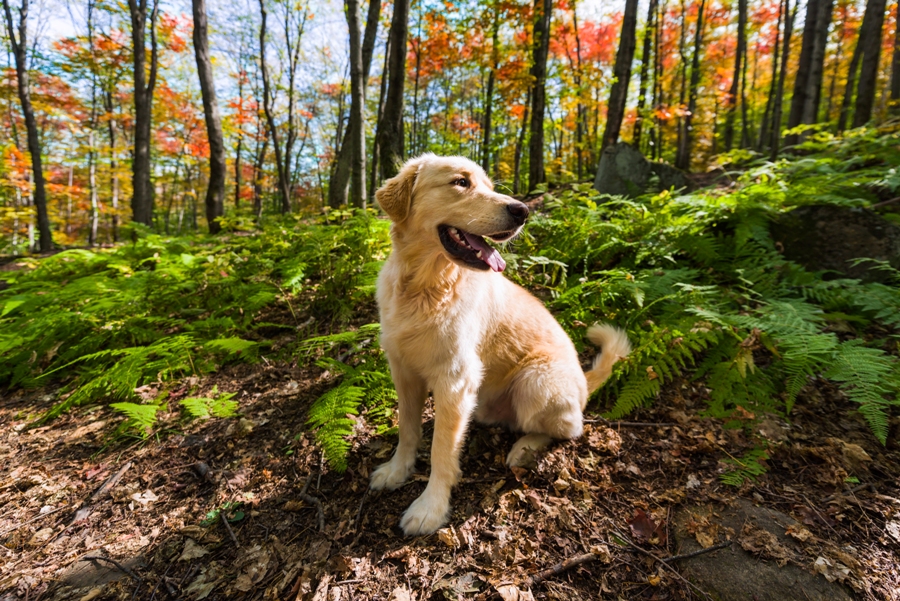
A dog with ticks sitting in the woods in the winter season.

A recent study utilized TickSpotters, a photograph-based crowdsourced surveillance program to identify a variety of tick species found on domestic pets throughout the year. The findings revealed that ticks, although typically thought to pose a health risk in the spring and summer, are present in colder months, including in the winter.

In their article, “An analysis of companion animal tick encounters as revealed by photograph-based crowdsourced data,” Kopsco and colleagues found:

“The percentage of reports of ticks found on companion animals is more than doubled in the fall and winter seasons from what was reported in the spring and summer seasons.”¹

Between January 1, 2014 and December 31, 2018, TickSpotters received  5,132 specimens from domestic animals (stated or assumed to be pets). The majority of ticks were found on dogs or cats.

50% of the ticks had been attached for 2.5 days or longer.

“Prior to uploading a photograph of the specimen to the system, instructions were provided to participants on how to take a photograph of the specimen with a size reference, proper lighting and clear focus to ensure the image highlighting the necessary anatomy to facilitate correct identification by researchers,” the authors write.

A variety of tick species were identified. Blacklegged ticks comprised 4 out of 10 of the tick species. American dog ticks, lone star ticks, and brown dog ticks were also found.

Additional findings:

  • Majority were adult ticks (9 out of 10);
  • 50% of the ticks had been attached for 2.5 days or longer;
  • Nearly 50% of the ticks were found in non-endemic states;

For example, 7.6% were from the East and West south central (AL, KY, MS, TN, AR, LA, OK, TX), 4.6% were from the Mountain area (AZ, CO, ID, MT, NM, NV, UT, WY), and 12.9% were from the Pacific area (AK, CA, HI, OR, WA).

  • More than half of the tick bites occurred in the Fall or Winter;

29% of all submissions occurred in the Fall (September-November), while 34% of all ticks  submitted occurred in the Winter months (December-February).

Since the duration of tick attachment on pets was more than 2 days, the authors raised the concern that pets are:

“not being checked regularly or thoroughly enough for ticks, or that owners are less inclined to continue use of effective tick prevention products when they believe tick activity is lower.”

Nearly 50% of the ticks were found in non-endemic states.

The authors also raised a concern for humans.

“A recent survey of pet owners found that people whose pets had a tick encounter within the past 6 months were more likely to encounter a tick themselves.”

“Crowdsourced data reveal that mostly adult ticks are detected on pets, and they are found at a point in the blood-feeding process that puts pets at heightened risk for disease transmission.”

The authors suggest, “Our findings emphasize the importance of more broadly publicizing these ticks’ seasonal activity.”

Related Articles:

Can you get ticks from pets?
Tracking ticks in Canada with digital images
How do Lyme disease vaccines work in dogs?

_________________

**Comment**

And this, right here, is why we never got any more pets after ours died.

I’m no expert but suddenly when I put a tick collar on our elderly dog, his health declined rapidly.  The vet told me it wasn’t the collar, but his skin and hair began falling out until he was left with something that looked like a rat tail.  Shortly after that he died of what appeared to be heart-related.  I always felt like I sent him to his Maker.

In my studies, I’ve looked high and low for a “safe” tick/flea killer for pets, knowing we are at ground zero.  To this day, I don’t believe any of them are safe.  Some are safer than others but I never felt confident in choosing something that worked but was safe.

Knowing that pet owners are at a higher risk of tick bites, we made the hard decision to be a “pet-less” household.

My best advice if you still want pets is to have a good discussion with your veterinarian on all the available products on the market – the pros and the cons.  I know Nootkatone is hopefully going to be available within a year and hopefully will be made into safe animal products.  That is one chemical I remain hopeful about.

Lyme Advocacy Webinar Oct. 28, 2021

https://www.lymedisease.org/advocacy-webinar-oct28/

Dorothy Kupcha Leland

Oct. 4, 2021

Many people who have Lyme disease themselves—or have a loved one with Lyme—want to do something to change the status quo.

You know what I’m talking about—the current situation that leaves so many Lyme patients in the lurch. Few doctors willing to treat them, little to no Lyme insurance coverage, ineffective tests, denial by public health officials—the list goes on and on.

Can one person make a difference? And if so, where does that one person begin? Well, I have a suggestion.

I recommend you start by registering for the free webinar called Advocacy Q & A, sponsored by Project Lyme. Its goal is to help you learn how to get involved with Lyme advocacy at the federal, state and individual levels. It will be held via Zoom on October 28, at 5:30 p.m. Eastern Time (2:30 p.m. Pacific Time).

I’m honored they asked me to participate. I’ll share insights from my 15 years of advocacy with LymeDisease.org, and discuss how the MyLymeData project helps drive patient engagement for healthcare reform.

I’ll be joined by Bonnie Crater, co-founder of the Center for Lyme Action, a group that lobbies in Washington to increase federal funding for Lyme disease. CLA is best known in the Lyme community for its annual Lyme Fly-in. She’ll tell us all how to get involved with 2022’s event.

Also on the panel will be Holiday Goodreau, Executive Director of the LivLyme Foundation and co-creator of the free global app Tick Tracker. She was recently named as co-chair of the federal Tick-Borne Disease Working Group. Like me, she’s the mother of a daughter with Lyme.

Click here to register.

TOUCHED BY LYME is written by Dorothy Kupcha Leland, LymeDisease.org’s Director of Communications. She is co-author of When Your Child Has Lyme Disease: A Parent’s Survival Guide. Contact her at dleland@lymedisease.org.

Amish Have Herd Immunity By Defying Everything the Government Says

https://fullmeasure.news/news/shows/amish-covid  (News Video Here)

Amish Covid

Excerpts of article:

Lapp: “There’s three things the Amish don’t like. And that’s government— they won’t get involved in the government, they don’t like the public education system— they won’t send their children to education, and they also don’t like the health system. They rip us off. Those are three things that we feel like we’re fighting against all the time. Well, those three things are all part of what Covid is.”

Lapp says they weren’t denying coronavirus, they were facing it head on.

Nolt: I know of some cases in which Amish people refused to go to the hospital, even when they were very sick because if they went there, they wouldn’t be able to have visitors. And it was more important to be sick, even very sick at home and have the ability to have some people around you than to go to the hospital and be isolated.

Then, last March, remarkable news. The Lancaster County Amish were reported to be the first community to achieve “herd immunity,” meaning a large part of a population had been infected with Covid-19 and became immune.

One thing’s clear: there’s no evidence of any more deaths among the Amish than in places that shut down tight— some claim there were fewer here. That’s without masking, staying at home, or another important measure.

By staying open, the Amish here have one tangible 2020 accomplishment few others can claim.

__________________

**Comment**

I love it when the little guy wins.

The Amish, like Sweden, and parts of India, defied what corrupt public health officials have tyrannically mandated and not only lived to tell the tale, but thrived beyond all the nay-sayer’s expectations.

For more:

Merck’s New COVID Drug Is Making News – How Does It Compare To Ivermectin?

https://childrenshealthdefense.org/defender/john-campbell-mercks-covid-molnupiravir-ivermectin

Merck’s New COVID Drug Is Making News — How Does It Compare to Ivermectin?

In his latest video, John Campbell, Ph.D., compared ivermectin, whose use as a COVID treatment has been widely criticized by mainstream media, with Merck’s new COVID drug, Molnupiravir, which is garnering positive media coverage.
© [10/8/21] Children’s Health Defense, Inc. This work is reproduced and distributed with the permission of Children’s Health Defense, Inc. Want to learn more from Children’s Health Defense? Sign up for free news and updates from Robert F. Kennedy, Jr. and the Children’s Health Defense. Your donation will help to support us in our efforts.

In his latest video, John Campbell, Ph.D., compared ivermectin, whose use as a COVID treatment has been widely criticized by mainstream media, with Merck’s new COVID drug, Molnupiravir, which has been the subject of glowing media attention.

Campbell, a UK-based nurse teacher, cited several studies as he compared the two treatments on the basis of effectiveness, safety and cost. He first turned to a paper in the Austin Journal of Pharmacology and Therapeutics, “Drugs Shown to Inhibit SARS-Cov-2 in COVID-19 Disease: Comparative Basic and Clinical Pharmacology of Molnupiravir and Ivermectin.”

The peer-reviewed paper refers to ivermectin as the most studied “repurposed” medication globally, and notes that it is approved by the U.S. Food and Drug Administration and “classified by the World Health Organization (WHO) as an ‘essential’ broad spectrum antiparasitic, antibiotic, and has demonstrated broad antiviral activity against RNA viruses, including HIV, Zika, MERS and coronavirus.”

“And of course, ivermectin also won the Nobel Prize in 2015,” Campbell said.

According to the paper, Campbell said, Molnupiravir — though still going through trials and safety testing — is believed to “work against seasonal and pandemic flu, MERS, coronavirus and SARS-CoV-2.” The paper’s author noted that Molnupiravir does not inhibit inflammation, whereas ivermectin does.

How do the two drugs compare on cost? Ivermectin is exponentially cheaper than Merck’s new Molnupiraravir.

The cost of a complete five-day course of Molnupiravir is $700 — or $70 per pill. That amounts to a 4,000% markup over what it costs Merck to make the drug.

Citing 2013 prices provided by the WHO, Campbell said a five-day course of ivermectin — 10 3mg pills — costs $0.53. (However, at today’s U.S. prices, 10 3mg pills cost about $39).

On effectiveness, Molnupiravir is lacking data. The only publicly available clinical data on Molnupiravir comes from a Merck press statement claiming the new drug is 50% effective against hospitalizations and deaths, when used as an early treatment.

For ivermectin, using publicly available data, Campbell referred to one peer-reviewed study that pegs ivermectin’s effectiveness in early treatment at 62%, and an ongoing meta-analysis which shows ivermectin is 66% effective in early treatment and 86% effective as a prophylactic.

Using VigiBase, a WHO database on pharmaceutical safety data, Campbell showed that out of  3.7 billion doses given of ivermectin there have been only 5,693 reports of adverse events — far fewer, according to Campbell, than the number of adverse event reports associated with amoxicillin and ibuprofen, both widely used and considered safe.

Comparable safety information for Merck’s Molnupiravir is not yet available, as trials and studies are still ongoing. But Campbell did raise concern about  Molnupiravir’s mutagenic properties. He cited the Austin Journal of Pharmacology and Therapeutics paper which states, “there is some concern about the safety of [Molnupiravir’s] NHC-nucleoside triphosphate, which is mutagenic to mammalian cells.”

According to Campbell, Merck denies this is a problem. But the paper suggests, at the very least,” it needs looking into,” Campbell said.

Watch the video here:

The views and opinions expressed in this article are those of the authors and do not necessarily reflect the views of Children’s Health Defense.

__________________

**Comment**

“Merck denies this is a problem.”

Ha, ha, ha….seriously, at some point you have to just look at this as theater of the absurd.

Due to Merck’s denial, our corrupt government and complicit mainstream media and medicine also will not see a problem.

It’s called blindness.

Two Indian Drugmakers have ended their trials of molnupiravir. They should have just followed the success of their countrymen in Uttar Pradesh as ivermectin brought COVID deaths down to ZERO. 

The interesting part: Merck earlier suspended its own development of it due to…..wait for it…..because many patients reached a phase of the disease that is too late for an antiviral drug to provide much help.

That’s interesting.

The Spartacus Paper and states:

Because of the way they are constructed, Randomized Control Trials will never show any benefit for any antiviral against COVID-19. Not Remdesivir, not Kaletra, not HCQ, and not Ivermectin. The reason for this is simple; for the patients that they have recruited for these studies, such as Oxford’s ludicrous RECOVERY study, the intervention is too late to have any positive effect.

This fact, while taken into account for their “golden child,” drug is completely ignored by those denying the efficacy of ivermectin.

There have been 63 AND COUNTING studies involving 26,000 patients showing a 96% reduction in DEATH using ivermectin.

That’s a big deal.  BIG!

A source with the Drug Controller General of India said molnupiravir has not shown “significant efficacy” against moderate COVID.  Aurobindo and MSN are conducting studies on patients with mild COVID.

The elephant in the room is ivermectin, which works beautifully in the exact same phases and costs a fraction of the price, but is being censored out of existence.