Archive for February, 2021

How to Ease Lyme Symptoms With Endorphins, Naturally (No Exercise Needed)

http://rawlsmd.com/health-articles/how-to-ease-lyme-symptoms-with-endorphins-naturally-no-exercise-needed?

How to Ease Lyme Symptoms with Endorphins, Naturally (No Exercise Needed)

How to Ease Lyme Symptoms with Endorphins, Naturally (No Exercise Needed)

by Jenny Lelwica Buttaccio
Posted 2/15/21

You’re probably most familiar with endorphins as they relate to the so-called “runner’s high,” the calm, euphoric feeling that people report after a long run. And it’s true that vigorous aerobic activity is a proven way to spark the release of these feel-good peptides. But if you’re dealing with the daily ups and downs of chronic Lyme disease, lacing up your sneakers to pound the pavement is likely on the bottom of your to-do list.

While exercise gets most of the credit when it comes to endorphins, it’s certainly not the only way your body generates these little wonder molecules that improve your sense of wellbeing. Here, we’ll take a look at endorphins and why they might hold the key to easing such Lyme symptoms as pain, immune dysfunction, and chronic stress, plus offer ways to reap the benefits even when you’re not feeling up to moving, no exercise needed.

An Overview of Endorphins

When your body experiences pain or stress, the hypothalamus and pituitary gland — your body’s largest producers of endorphins —generate these chemicals as a way of coping with physical and emotional pressures. Endorphins may arise from other parts of the body as well: Research suggests immune cells make endorphins in response to inflammatory processes in the body and help to quell certain pain-producing substances.

Endorphins have garnered the reputation of being “feel good” chemicals because they play a pivotal role in the body’s natural pain management process and possess opioid-like qualities. The term endorphin comes from two words: “endogenous,” meaning originating from within the body, and “morphine,” the opioid pain reliever. Indeed, endorphin is a fitting name for the morphine-like chemical produced in the body.

In the mid-70s, scientists were researching the mechanisms by which opioids alleviated pain. At that point, morphine had been around for nearly 200 years, but how and why it worked was still relatively unknown. The research led to the discovery of opioid receptors: When opioid medications like morphine bound to receptors in the peripheral and central nervous system, the drugs blocked pain signals.

Furthermore, researchers also noticed that other, natural chemicals in the body could bind to the same receptors and act in a manner comparable to opioid medications. They called these similar chemicals endorphins.

The Link Between Endorphins, Lyme Disease + Other Chronic Illnesses

There are many different types of endorphins, but the ones most often discussed in the research are beta-endorphins. Although we still have a lot to learn when it comes to endorphins, we know they’re responsible for mitigating pain, modulating the immune system, and enhancing pleasure. Besides stress, endorphins are released during activities you typically enjoy doing — sex, eating, and drinking, to name a few.

scientific image, X-ray of human skull, showing brain. surrounded by neurons, natural killer cells, and borrelia

Although research has yet to look specifically at Lyme disease and endorphins, evidence indicates that when beta-endorphins are secreted in the brain, they trigger the release of natural killer (NK) cells. These immune cells are our first line of defense against infectious agents like Borrelia burgdorferi and abnormal cell growth.

One therapeutic intervention yielding positive results for some Lyme patients, particularly those with neurological Lyme, is the endorphin-enhancing medication low-dose naltrexone (LDN). LDN partially blocks opioid receptors, leading to a slow increase of endorphins while supporting a healthier immune response, dampening inflammatory cytokines, and curbing neuroinflammation.

Endorphin levels can vary from one person to another, and low levels of endorphins have also been associated with several chronic conditions. On the list: fibromyalgia, ME/CFS (myalgic encephalomyelitis/chronic fatigue syndrome), depression, and headaches — and that’s probably just scratching the surface.

But can you begin to reap the benefits of endorphins without a prescription medication or running an all-out marathon? The answer is yes. The following are natural ways to boost endorphins so that you can experience lower pain levels, increased immune function, and a greater sense of wellbeing.

5 Natural Ways to Boost Endorphins + Ease Lyme Symptoms

1. Laugh Out Loud.

bright picture of laughing woman on the beach. backlight sunlight in nbackgroiund. beautiful young female model laugh like crazy. happiness and joyful concept for people in wanderlust

You’ve probably typed “LOL” countless times this week, but how many times have you actually done it? A hearty belly laugh has a host of mental and physical benefits, including a satisfying release of endorphins. It gets your heart, lungs, and muscles pumping, which in turn triggers the release of these euphoric molecules, according to a study in the journal Proceedings of the Royal Society B: Biological Sciences.

Additionally, the pain thresholds of the study participants were significantly higher after participating in laughter-inducing activities (like watching a comedy) compared to those who engaged in neutral or factually-based activities (like watching a documentary). The researchers believe it’s the endorphins’ effects on opioid receptors that create these positive changes.

To get your laugh on, watch a comedy, practice your amateur stand-up routine, find a laughter yoga class online, or do whatever you have to do to get the giggles flowing. The deeper the belly laugh, the more likely you are to experience that pleasant endorphin rush.

2. Try Full-Spectrum CBD Oil.

Many Lyme patients have chronic pain — like myofascial pain or neuropathy — as a predominant symptom. Finding ways to manage that pain effectively can be quite a challenge, however, CBD from hemp oil may be up to the task.

dropper dripping hemp oil into glass bottle, background hemp leaves

CBD (short for cannabidiol) shuts off nerve impulses that send uncomfortable pain signals and counteracts inflammation. Plus, it increases the body’s natural endorphin levels without suppressing them the way opioid medications do. Pain medications run the risk of causing dependence or withdrawal symptoms, but CBD doesn’t have those addictive qualities — most likely because it doesn’t contain the psychoactive component THC.

CBD dosing can vary from person to person, but a standard starting dose is 10-50 mg, one to three times per day. The concentrations of CBD differ by brand, so be sure to check the product label to find out how much CBD is in each dropperful or capsule. Some CBD users might notice its benefits immediately, while others may require two or three weeks of steady use to see improvements.

3. Sweat It Out, Exercise-Free.

You may be familiar with the use of far infrared saunas (FIR) as a means of detoxifyingthe body during Lyme treatment and managing uncomfortable Herxheimer reactions. But saunas have a longstanding history of being used around the globe due to their health-promoting properties.

inside of a wooden infrared sauna, towel on seating

The heat from FIR saunas is deeply penetrating, reaching up to a few inches beneath the skin’s surface. Research demonstrates sauna use may stimulate the release of endorphins and other opioid-like chemicals to fight pain, relieve inflammation, and facilitate a healthy immune system.

Not sure of how to use a sauna? Begin slowly (as little as 5 minutes a day) and increase your time to 30 minutes as your body adjusts to the heat. And aim for two to three times a week — consistency of use rather than intensity wins this race!

4. Get a Massage.

Looking for a reason to indulge in some extra self-care? Think about getting a massage because it can be helpful for increasing endorphins as well as other mood-boosting and pain-relieving chemicals like serotonin and dopamine.

Physiotherapist massaging back of man lying on Massage Table in hospital

One small-scale study showed that participants who received a connective tissue massage had a 16% increase in beta-endorphin levels, lasting approximately 1 hour after the massage was finished. Additionally, because some opioid receptors are located in deep tissues of the body, massages incorporating deeper pressure may even generate higher levels of endorphins compared to the mild touch of connective tissue release work.

If getting to a professional massage therapist isn’t in the cards right now, no problem. Similar to exercise and sauna use, any massage-type activity can get you headed in the right direction. Try a foam roller, a handheld massager, or a massage chair to relax tense muscles and let go of stress.

5. Get Moving at an Accessible Pace.

Yes, running has beneficial effects on endorphin production, but you can achieve results with less demanding forms of exercise as well — including activities that might be more appropriate for the needs and fitness levels of many chronic Lyme patients. Although the greatest endorphin high occurs with intense physical activity that lasts about an hour, almost all forms of exercise will have a beneficial impact.

woman in comfy clothes, rolling up yoga mat in living room

In fact, research suggests even 15 minutes of exercise per day can increase endorphins. Although it might not lead to a giant rush of the feel-good chemicals, you’re still likely to experience an uptick in your mood, a decrease in pain levels, and better immune function.

And there’s no need to push yourself to the max. You can mobilize endorphins with low-impact activities like walking, Pilates, power yoga, or qigong to bring on results. As you get further along in your Lyme disease recovery, the more you’ll be able to up the intensity of your workouts.

The Takeaway

No doubt, there’s still a lot to learn about the benefits of endorphins and how they impact Lyme disease and your health. But aiming to get a daily dose of them in your life may enhance immune function, improve pain levels, provide a more optimistic outlook, and more.

Best of all, boosting your endorphin levels is another cost-effective tool to add to your toolbox of healing modalities. Combine it with a comprehensive herbal therapy protocol, a healthy diet, and lifestyle modifications to achieve optimal healing results on your recovery journey.

Dr. Rawls is a physician who overcame Lyme disease through natural herbal therapy. You can learn more about Lyme disease in Dr. Rawls’ new best selling book, Unlocking Lyme.

You can also learn about Dr. Rawls’ personal journey in overcoming Lyme disease and fibromyalgia in his popular blog post, My Chronic Lyme Journey.

REFERENCES
1. Cabanas H, Muraki K, Staines D, Marshall-Gradisnik S. Naltrexone Restores Impaired Transient Receptor Potential Melastatin 3 Ion Channel Function in Natural Killer Cells From Myalgic Encephalomyelitis/Chronic Fatigue Syndrome Patients. Front Immunol. 2019;10:2545. Published 2019 Oct 31. doi: 10.3389/fimmu.2019.02545
2. Chaudhry SR, Gossman W. Biochemistry, Endorphin. [Updated 2020 Aug 11]. In: StatPearls [Internet]. Treasure Island (FL): StatPearls Publishing; 2020 Jan-. Available from: https://www.ncbi.nlm.nih.gov/books/NBK470306/
3. Dunbar RIM, Baron R, Frangou A, et al. Social laughter is correlated with an elevated pain threshold. Proc. R. Soc.2012 September; 279(1731):1161-7. doi: 10.1098/rspb.2011.1373
4. Hsueh CM, Chen SF, Ghanta VK, Hiramoto RN. Expression of the conditioned NK cell activity is beta-endorphin dependent. Brain Res. 1995 Apr 24;678(1-2):76-82. doi: 10.1016/0006-8993(95)00172-m
5. Hussain J, Cohen M. Clinical Effects of Regular Dry Sauna Bathing: A Systematic Review. Evid Based Complement Alternat Med. 2018;2018:1857413. Published 2018 Apr 24. doi: 10.1155/2018/1857413
6. Kaada B, Torsteinbø O. Increase of plasma beta-endorphins in connective tissue massage. Gen Pharmacol. 1989;20(4):487-9. doi: 10.1016/0306-3623(89)90200-0
7. Klockgether-Radke AP. F. W. Sertürner und die Entdeckung des Morphins – 200 Jahre Schmerztherapie mit Opioiden – [F. W. Sertürner and the discovery of morphine. 200 years of pain therapy with opioids]. Anasthesiol Intensivmed Notfallmed Schmerzther. 2002 May;37(5):244-9. German. doi: 10.1055/s-2002-30132
8. Ramanathan S, Panksepp J, Johnson B. Is fibromyalgia an endocrine/endorphin deficit disorder? Is low dose naltrexone a new treatment option? Psychosomatics. 2012 Nov-Dec;53(6):591-4. doi: 10.1016/j.psym.2011.11.006
9. Sprouse-Blum AS, Smith G, Sugai D, Parsa FD. Understanding endorphins and their importance in pain management. Hawaii Med J. 2010;69(3):70-71.
VCO as an Adjunct Supplement for COVID-19

https://www.fnri.dost.gov.ph/index.php/programs-and-projects/news-and-announcement/800-virgin-coconut-oil-vco-study-results-on-covid-19-suspect-and-probable-cases-released-by-dost-fnri

VCO-Study

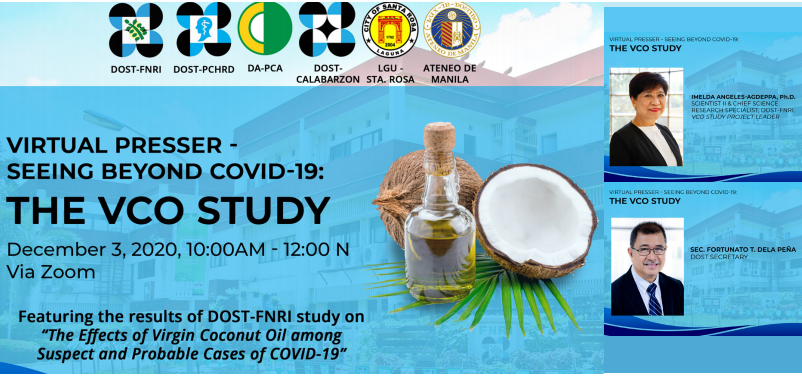
Results of the study on virgin coconut oil (VCO) as dietary supplement among COVID-19 probable and suspect cases showed that 5 of the 29 patients who were served meals with VCO manifested diminishing signs and symptoms as early as the second day, while only one patient served with the same meals but without VCO showed similar improvement.

This is according to the Department of Science and Technology’s Food and Nutrition Research Institute (DOST-FNRI) in a virtual presser dubbed as “Seeing Beyond COVID-19: The VCO Study – Effects of Virgin Coconut Oil among Suspect and Probable Cases” on December 3, 2020.

The VCO Group of patients who were served meals with VCO showed no COVID-19 related symptoms at Day 18, while symptoms persisted in some patients of the Control Group of patients who were served the same meals without VCO until Day 23, DOST Secretary Fortunato T. dela Peña further stated in the presser.

Secretary dela Peña added that VCO could be used as an adjunct supplement to probable and suspect COVID-19 cases to help prevent symptoms from becoming severe.

However, more studies are needed to determine the effectiveness of VCO as adjunct therapy for COVID-19 patients with other co-morbidities, Secretary dela Peña clarified.

In a follow-up interview, Dr. Imelda Angeles-Agdeppa, VCO study leader, Scientist II and Chief Science Research Specialist of DOST-FNRI, said that the study involved 57 suspect or probable COVID-19 cases randomly assigned to the Intervention or VCO Group and the Control Group at the Santa Rosa Community Hospital and Santa Rosa Community Isolation Units in Laguna.

Dr. Agdeppa added that aside from monitoring the signs and symptoms of COVID-19 among the study volunteers, the research team also noted that the mean C-Reactive Protein of CRP levels in the VCO Group normalized to 5 milligrams per liter or less as early as Day 14.

The C-Reactive Protein or CRP is a quantitative marker used to monitor inflammation or infection, and that a CRP equal or less than 5 milligrams per liter signifies recovery from inflammation or infection, Dr. Agdeppa explained.

Dr. Agdeppa further stated that while reduction to normal CRP levels in the Control Group was also evident from Day 1 to 14, it remained at the borderline of 5 milligrams per liter from Day 14 until end of intervention.

The VCO used in the study were strictly analyzed by the Laboratory Services Division of the Philippine Coconut Authority (PCA) to ensure product quality and compliance to Philippine National Standard (PNS).

The PCA requests VCO producers to have their VCO samples analyzed by PCA prior to promotion and marketing, PCA Administrator Benjamin R. Madrigal, Jr. said in the presser.

Administrator Madrigal also states that PCA is planning to develop the protocol in establishing the seal of quality for VCO.

Funding and monitoring of the VCO study was provided by the DOST-Philippine Council for Health Research and Development (or PCHRD), through the overall supervision and motoring of the DOST.

The Ateneo de Manila University Faculty of Chemistry, through Dr. Fabian M. Dayrit, provided research inputs and protocols based on previous VCO studies among HIV patients, like the correct VCO dosages to be given and the analysis to be used.

Dr. Dayrit, also an Academician of the DOST-National Academy of Science and Technology and President of the Integrated Chemists of the Philippines, supported the results of the DOST-FNRI VCO study, saying that several studies have proven the promising anti-viral properties of VCO and more studies are warranted to explore its full potential.

The public is hereby advised to carefully read the label of VCO products to check for PCA or FDA approval and make sure that ingredients, nutrient analysis, manufacturing and expiration dates are clearly declared.

Some media partners attending the presser commented that this development on VCO as promising dietary supplement may cause the skyrocketing of the price of VCO products.

The study team agrees with this inevitable consequence, but stated that the health benefits backed by scientific proof far outweigh the impending price increase, adding that DTI will monitor this.

This VCO study does not only have promising contribution to the prevention and management of symptoms among COVID-19 suspect and probable cases, but could also provide a boost to the coconut industry and the millions of coconut farmers who depend on the “tree of life” to uplift their quality of life.

For more information on the VCO study and other food and nutrition concerns, contact: Dr. Milflor S. Gonzales, Officer-in-Charge, Office of the Director, Department of Science and Technology – Food and Nutrition Research Institute, General Santos Avenue, Bicutan, Taguig City; Telephone/Fax Nos: 8-837-2934 or 8-837-3164; Direct Line: 8-839-1839; DOST Trunk Line: 837-2071 local 2296 or 2284; e-mail: dostfnri47@dost.fnri.gov.ph; DOST-FNRI website: http://www.fnri.dost.gov.ph. Like our Facebook Page at facebook.com/DOST.FNRI or follow our Twitter account at twitter.com/DOST_FNRI.

____________________

For more COVID treatments:

All of these treatments are being debunked and ignored by the CDC.  Please see this to find out why.  

COVID-19 has a 99.991% recovery rate by doing nothing – but you’d never know it from mainstream media.

To read about the numerous deaths/adverse reactions due to this COVID injection, which isn’t a vaccine and doesn’t prevent infection: (list is being updated daily): https://madisonarealymesupportgroup.com/2020/12/21/warning-3150-injuries-in-1st-week-of-covid-vaccines-among-american-healthcare-workers-pregnant-women-included/

43-Year-Old Man With Meningitis & Radiculitis Due to Lyme Disease

https://danielcameronmd.com/meningitis-and-radiculitis-lyme-disease/  Podcast Here

43-YEAR-OLD MAN WITH MENINGITIS AND RADICULITIS DUE TO LYME DISEASE

meningitis-lyme-disease

Hello, and welcome to another Inside Lyme Podcast. I am your host Dr. Daniel Cameron. In this episode, I will be discussing a unique case involving a 43-year-old man with neurological manifestations of Lyme disease including both meningitis and radiculitis.

The case was published in the journal Neurology International. [1] According to Dabiri and colleagues, the patient had a history of “scaly erythematous macular rash on his proximal medial upper and lower extremities.”

Within two weeks he presented with a broad range of symptoms “including cough, fever, anorexia, malaise, fatigue, myalgias, cervicalgia/neck stiffness with flexion and extension, mild photophobia, headache,”  the authors wrote.

The patient had extensive lab testing which revealed a mild abnormal liver function but no evidence of Lyme disease.  At the onset of symptoms, the patient refused to have a spinal tap.

Doctors presumed the man suffered from viral meningitis.

One month later, the patient developed progressive weakness, severe radicular lancinating pain, emotional lability along with depression and anxiety, an occasional action tremor in hands interfering with fine motor tasks, and tremor in his legs causing imbalance and instability.

Manifestations of the central nervous system (i.e, meningitis), as well as peripheral nervous system presentations (i.e., radiculitis) can occur in isolation or together.

Radiculitis or inflammation of the nerve root involving the peripheral nervous system (PNS) can lead to intractable pain, muscle denervation, and areflexia over one or a few adjacent dermatomes, wrote the authors.

At this point, results from a spinal tap were consistent with Lyme disease.  “A lumbar puncture was performed, and the patient’s cerebrospinal fluid (CSF) analysis showed lymphocytic pleocytosis with white blood cell count of 225 and elevated protein of 77 and decreased glucose 38,” the authors wrote.

The patient was treated with a 5-day course of doxycycline, followed by a month of intravenous ceftriaxone.

Approximately two weeks after starting treatment, the patient “noted his symptoms were significantly improved including resolution of the pain, weakness, constitutional and affective symptoms, while he still had some ambulatory difficulties.”

This podcast addresses the following questions:

  1. What is Lyme meningitis?
  2. What is Lyme radiculitis?
  3. Why is this case considered “unique”?
  4. CNS and PNS manifestations can occur in isolation or together?
  5. Can you discuss the patient’s symptoms of emotional lability, depression and anxiety?
  6. What is the significance of the rash?
  7. Initial testing for Lyme disease was inconclusive but follow-up tests were positive?
  8. Any significance to MRI and spinal tap results?
  9. What if the significance of a diagnosis of viral meningitis?
  10. What were the other symptoms that might have helped the diagnosis?
  11. Would clinical judgment to treat with antibiotics have been helpful?
  12. What are your thoughts regarding the course of treatment?
  13. Would it have been helpful to consider additional treatment for the remaining ambulatory difficulties?
    1. Thanks for listening to another Inside Lyme Podcast. You can read more about these cases in my show notes and on my website @DanielCameronMD.com. As always, it is your likes, comments, reviews, and shares that help spread the word about Lyme disease. Until next time on Inside Lyme.

Please remember that the advice given is general and not intended as specific advice as to any particular patient. If you require specific advice, then please seek that advice from an experienced professional.

Inside Lyme Podcast Series

This Inside Lyme case series will be discussed on my Facebook and made available on podcast and YouTube.  As always, it is your likes, comments, and shares that help spread the word about this series and our work. If you can, please leave a review on iTunes or wherever else you get your podcasts.

References:
  1. Dabiri I, Calvo N, Nauman F, Pahlavanzadeh M, Burakgazi AZ. Atypical presentation of Lyme neuroborreliosis related meningitis and radiculitis. Neurol Int. 2019 Dec 2;11(4):8318.
_____________________
https://madisonarealymesupportgroup.com/2019/03/17/first-case-of-b-corocidurae-in-native-european-presenting-as-meningitis-with-cranial-polyneuritis-cavernous-sinus-thrombosis/  European cases of B. crocidurae infection have been reported in travelers returning from endemic areas. We report the first autochthonous case in Europe of B. crocidurae infection, presenting as meningitis…..

Treatment Delays Increase Risk of Persistent Illness in Lyme Disease

https://www.hopkinslyme.org/news/treatment-delays-increase-risk-of-persistent-illness-in-lyme-disease/

Treatment Delays Increase Risk of Persistent Illness in Lyme Disease

Summary

In this retrospective study, one-third of Lyme disease patients report delayed treatment of greater than 30 days, and delayed treatment is associated with post-treatment Lyme disease (PTLD). Delays in treatment are shown to significantly impact patient outcomes and indicate that improved Lyme disease diagnosis and prevention strategies are needed.

Why was this study done?

The goals of the study were to analyze time-to-treatment in a sample of individuals treated for Lyme disease, including identifying risk factors for time to first medical contact and time under care. The study also evaluated associations between time-to-treatment and the development of post-treatment Lyme disease (PTLD). The study was done to determine if delays in treatment are significant to patient outcomes.

How was this study done?

A retrospective study was conducted of time-to-treatment among a general population sample of individuals treated for Lyme disease at Geisinger, a health system in Pennsylvania, the state with the most confirmed Lyme disease cases in the United States. Using electronic medical records and self-administered questionnaire data, respondents’ experiences were characterized by symptoms, care-seeking factors, diagnosis, and treatment. Associations between time-to-treatment and PTLD were examined, and risk factors were measured for delays in time to first medical contact and time under care.

Questionnaires were mailed to 5,314 adult patients who met previously described EHR-based criteria for Lyme disease between 2015 and 2017. Analyses focused on 778 respondents who reported that they were treated for Lyme disease within the past 5 years and reported a rash and/or a positive blood test for Lyme disease. Time-to-treatment was measured in days as the sum of two time windows: time to first medical contact and time under care. Logistic regression was used to evaluate factors associated with delayed time-to-treatment in each time window (>14 days vs. ≤14 days) and the association between total time-to-treatment (>30 days vs. ≤30 days) and PTLD.

What were the major findings?

In the sample of Lyme disease patients studied, delays in medical contact and care were identified in one-third of individuals and delays were associated with a higher risk for post-treatment Lyme disease. In the sample,

  • 25% had time to first medical contact greater than 14 days
  • 21% had time under care of a medical professional greater than 14 days
  • 31% had a total time-to-treatment greater than 30 days

Factors positively associated with delayed time to first medical contact included being uninsured and attributing initial symptoms to something other than Lyme disease. Diagnoses between November and April, and the absence of rash were positively associated with delays in contact and care. First medical contact in an emergency department or “other” setting showed delays in care.

Individuals whose treatment was delayed, defined as time-to treatment >30 days, had 2.26 times the odds of developing PTLD as those who were treated within 30 days of symptom onset.

What is the impact of this work?

Despite post-treatment Lyme disease occurring in an estimated 10-20% of Lyme disease cases, no peer-reviewed studies have evaluated the role of time-to-treatment in PTLD. This retrospective study indicates timely treatment may be important in preventing PTLD and other long-term consequences of Lyme disease.

Strategies to ensure more timely treatment of Lyme disease should include educational campaigns targeting patients and healthcare providers. Education could improve the recognition of the varied clinical presentations of Lyme disease and the erythema migrans rash and underscore the limitations of diagnostic tests. Although urgent care clinics can help patients be seen earlier, there is a clear need to improve disease recognition and diagnosis and reduce time-to-treatment in this setting. Another opportunity to reduce time-to-treatment is to build awareness among patients and medical providers of the risk of Lyme disease throughout the year in endemic regions.

Education, diagnostics, and prevention approaches are needed and should address the risk factors for treatment delays and aim to reduce both the time before and after contacting a medical professional.

This research was supported by:

funded by the Steven & Alexandra Cohen Foundation

Publication Information

Hirsch AG, Poulsen MN, Nordberg C, Moon KA, Rebman AW, Aucott JN, Heaney CD and Schwartz BS (2020) Risk Factors and Outcomes of Treatment Delays in Lyme Disease: A Population-Based Retrospective Cohort Study. Front. Med. 7:560018. doi: 10.3389/fmed.2020.560018

Johns Hopkins Lyme Disease Research Center

The Johns Hopkins Lyme Disease Research Center is focused on patient-based research in all manifestations of Lyme disease. Our goal is to translate our pioneering research into improved patient care, education, and health outcomes.

USE OF THIS SITE

All information contained within the Johns Hopkins Lyme Disease Research Center website is intended for educational purposes only. Physicians and other health care professionals are encouraged to consult other sources and confirm the information contained within this site. Consumers should never disregard medical advice or delay in seeking it because of something they may have read on this website.

_____________________

**Comment**

Although this study is helpful for demonstrating that delays in diagnosis and treatment are bad, there are a number of concerns:

  1. The continued use of outdated and stringent criteria such as the EM rash and blood serology testing. Reality has proven a huge subset of patients meet neither.
  2. Electronic medical records and self-administered questionnaire data are only as effective as the people are filling them out, the questions being asked, and the objectivity of the person compiling the data.
  3. The PTLD label is deceptive and assumes ongoing symptoms are not caused by persistent/chronic infections.

The major findings; however, were helpful in showing that more than half were not obtaining treatment until 14-30 days.  This is important in the light of this mouse study which demonstrated Bb in the brain within a week of infection.

The factors of being uninsured and uneducated on tick-borne illness led to delayed time to 1st medical contact as well as those being seen between Nov-April and the absence of rash (both of which really should be under the banner of being uneducated about tick-borne illness as you can be infected in any month and getting the rash is highly variable).

Study Finds Lyme in Mouse Brains Within a Week of Infection

https://journals.plos.org/plospathogens/article?id=10.1371/journal.ppat.1009256

A murine model of Lyme disease demonstrates that Borrelia burgdorferi colonizes the dura mater and induces inflammation in the central nervous system

journal.ppat.1009256.g003

Fig 3. B. burgdorferi in the dura mater are extravascular and motile.  Multiphoton image of ex vivo dura mater from C3H mouse after infection with GFP-Bb_297 for 7 days. B. burgdorferi is shown in green; collagen (second harmonics) shown in blue. Imaging parameters: Wavelength = 910 nm, pixel resolution = 135. See S1 Movie for image series movie showing spirochete motility.  https://doi.org/10.1371/journal.ppat.1009256.g003

Timothy Casselli, Ali Divan, Emilie E. Vomhof-DeKrey, Yvonne Tourand, Heidi L. Pecoraro, Catherine A. Brissette

Published: February 1, 2021

https://doi.org/10.1371/journal.ppat.1009256


Abstract


Lyme disease, which is caused by infection with Borrelia burgdorferi and related species, can lead to inflammatory pathologies affecting the joints, heart, and nervous systems including the central nervous system (CNS). Inbred laboratory mice have been used to define the kinetics of B. burgdorferi infection and host immune responses in joints and heart, however similar studies are lacking in the CNS of these animals. A tractable animal model for investigating host-Borrelia interactions in the CNS is key to understanding the mechanisms of CNS pathogenesis. Therefore, we characterized the kinetics of B. burgdorferi colonization and associated immune responses in the CNS of mice during early and subacute infection. Using fluorescence-immunohistochemistry, intravital microscopy, bacterial culture, and quantitative PCR, we found B. burgdorferi routinely colonized the dura mater of C3H mice, with peak spirochete burden at day 7 post-infection. Dura mater colonization was observed for several Lyme disease agents including B. burgdorferi, B. garinii, and B. mayonii. RNA-sequencing and quantitative RT-PCR showed that B. burgdorferi infection was associated with increased expression of inflammatory cytokines and a robust interferon (IFN) response in the dura mater. Histopathologic changes including leukocytic infiltrates and vascular changes were also observed in the meninges of infected animals. In contrast to the meninges, we did not detect B. burgdorferi, infiltrating leukocytes, or large-scale changes in cytokine profiles in the cerebral cortex or hippocampus during infection; however, both brain regions demonstrated similar changes in expression of IFN-stimulated genes as observed in peripheral tissues and meninges. Taken together, B. burgdorferi is capable of colonizing the meninges in laboratory mice, and induces localized inflammation similar to peripheral tissues. A sterile IFN response in the absence of B. burgdorferi or inflammatory cytokines is unique to the brain parenchyma, and provides insight into the potential mechanisms of CNS pathology associated with this important pathogen.

___________________

**Comment**

Technically one could say this isn’t the brain.  It’s the outer layer called the meninges – of which, the dura mater is one layer.  Regardless, this inflammation caused by infections can cause swelling, pain, and so much more.  It’s also why some Lyme/MSIDS patients have been diagnosed with Chiari.

Important excerpts:

Overall, we report that B. burgdorferi routinely colonizes the meninges in laboratory mice during early and subacute infection, and induces similar localized inflammatory gene expression profiles as other peripheral tissues as well as histopathological changes.

Conclusion:

Overall, the findings reported in this study are significant, as the lack of a tractable animal model has hindered our understanding of host-pathogen interactions in the CNS during B. burgdorferi infection. Our results provide insight into potential mechanisms of CNS pathologies associated with Lyme disease, and describe a model system that will allow for future studies evaluating the bacterial, host, and environmental factors that can contribute to the severity of CNS involvement during B. burgdorferi infection. Such studies are critical for the development and implementation of novel prophylactic and therapeutic interventions for this important disease.

The discussion section mentioned something that’s always interested me: the location of the tick bite or injection site.  The authors state that although they were able to “readily culture spirochetes from the blood of all mice at day 7 post-infection, dura spirochetes were rarely detected in mice inoculated in the footpad, and spirochete burdens were dramatically reduced in mice inoculated in the dorsal lumbar skin compared to thoracic skin.”  Further, dissemination of Bb happens in more ways than via blood and that these other ways, such as through the lymphatic system, may contribute to increased early colonization of the dura mater in mice.  This was only true for early infection and by 28 days, Bb in the dura mater were comparable regardless of the inoculation site.

This article reveals what patients have been experiencing for decades: heads that feel as if they were going to explode.  I wondered if there would ever be a day without a headache.  I personally found that Minocycline was one of the most productive antibiotics for this.