https://docs.google.com/document/d/1P_Vd-au29HEJb5ZoZbfyBGKPQLUuCsIXzE-vCeOrg1Y/mobilebasic#

If Disulfiram is the cure for Lyme disease, should Disulfiram be prescribed to all Lyme disease patients?
by Alain Mass, M.D.
Disulfiram is particularly effective on Borrelia Burgdorferi, the Lyme disease bacteria, and Babesia, far more potent than any antibiotics. The difficulty in treating Lyme disease has always been not only to choose the appropriate antibiotics to kill the active bacteria responsible for the disease but also a subpopulation of Lyme disease bacteria, called “persister-cells”, known to stay in a dormant, latent state, avoiding the destructive effect of antibiotics, waking up after the course of antibiotics to cause relapses of the disease. Persisters are largely responsible for high levels of biofilm impeding the effects of antimicrobials. Disulfiram has not only an excellent effect on active Lyme bacteria but also on persister-cells and may, therefore, be regarded as a true breakthrough in the treatment of Lyme disease not only to treat efficiently but also potentially to eradicate Lyme disease.
Disulfiram is not new and unknown medication. It is an FDA approved- drug that has been used since 1949 for the treatment of alcoholism. Researchers regularly screen medicinal compound libraries to identify molecules that may be effective against specific bacteria. After screening about 7,450 drug molecules, Disulfiram was identified as highly active against both B. burgdorferi and babesiosis, a common Lyme disease coinfection. Its use in the treatment of Lyme disease and other tick-borne diseases is, however, off-label meaning that there is no FDA approval for these indications. The obvious question is why should Disulfiram not be prescribed to all Lyme disease patients?
The first reports presented, first, by Dr. Liegner and later by other clinicians are astonishing by a dramatic and persisting improvement of patients who resisted multiple treatments and by the scarcity of side effects. It does not mean, however, that the medication is safe and can be prescribed without precaution. As for any medication or any new indication, a review of side effects and of the use of Disulfiram must be undertaken and are presented in this article.
Disulfiram dosage
What is the dosage of Disulfiram? The ‘target’ dose for patients of 100 Lbs. or less is 250 mg a day, from 101 to150 Lbs. 375 mg, from 151 to 200 Lbs. 500 mg and from 200 to 300Lbs. 750 mg and above 300Lbs 1 gram a day. Disulfiram dosing in alcoholics was tried in the past at doses up to 3000 mg/day. The precise effective dose and the duration of therapy are, however, still unknown. According to Dr. Liegner, a 6-week duration of therapy may be insufficient. Some say 60 to 90 day and some say 6 to 12 weeks. After this period, the treatment is suspended and the patient is surveilled. Because it takes two weeks for Disulfiram to be cleared from the body, it is recommended to wait for two weeks before increasing the dose. The target dose should never be given at the beginning. Not only the risk of Herxheimer’s reaction is real but the intensity may be severe. To the opposite, all agree that Disulfiram should be started at a very low dose and increased progressively according to a well-defined protocol. It seems that those side effects are dose-dependant. The lowest dose you start with, the less chance you have to encounter side effects. Many will start with 62.5 mg a day every 3 days and slowly will increase up to a maximum dose based on 1weight. Some are more prudent and start even at a dose of 10mg a day. Some will give Disulfiram at the beginning only once a week and will progress as tolerated. Hopkinton Drugs compound Liposomal Disulfiram form down to 25mg/cap, or the powder form down to 10mg… or whatever dose wanted. Disulfiram is also compounded with milk thistle. The main message at the annual ILADS conference in Boston in November 2019 was “start low and go slow.” Patients may be in a hurry to get rid of this chronic disease, to get over with. This is the big temptation and trap to avoid. Dr. Liegner remarks that the beneficial effects may be already noticeable at a very low dose. One more reason not to run after higher doses.
| weight |
initial dose as low as possible |
following doses are increased every two weeks up to target dose |
target dose |
| up to 100Lb |
62.5mg a day down to 25 or 10mg/day every 3 days or once a week |
|
250mg/ day |
| 101-150Lb |
62.5mg a day down to 25 or 10mg/day every 3 days or once a week |
|
375mg/ day |
| 151-200Lb |
62.5mg a day down to 25 or 10mg/day every 3 days or once a week |
|
500mg/ day |
| 201-300Lb |
62.5mg a day down to 25 or 10mg/day every 3 days or once a week |
|
750mg/ day |
| >300Lb |
62.5mg a day down to 25 or 10mg/day every 3 days or once a week |
|
1000mg/ day |
Can you use Disulfiram alone or do you need to combine it with other drugs?
So far, the tendency is to combine Disulfiram with other drugs. For this, there are at least three reasons. The first one is that we are not sure that Disulfiram works on other co-infections, especially on Bartonella. Co-infections should also be treated. In this regard, comorbidities like mold and/or heavy metal toxicity should be addressed as well. The second reason is not to be confused in case of side effects and to be able to attribute the side effect to the causative drug. The third reason is that more than ever Herxheimer reactions, that can be severe, should always be prevented by a health support and detoxification regimen before and during the treatment.
The question is when to add other drugs. Disulfiram may need other antimicrobials to be fully effective but this may be at the risk of unwanted side effects. Like many other Lyme doctors, I recommend a prudent and progressive approach by starting with Disulfiram alone and by adding as tolerated. Herxheimer’s reactions with Disulfiram may be severe and may be far more severe with the association of other antimicrobials.
Disulfiram pharmacology
Disulfiram passes the blood-brain barrier and is well distributed throughout the body, working also intracellularly making it a drug of choice for intracellular forms of Borrelia as well as for such other intracellular tick-borne disease bacteria. Disulfiram is completely absorbed from the stomach after oral administration and is broken down in the liver and excreted in the urine. Normally, the enzyme alcohol dehydrogenase in the liver and brain transforms alcohol into acetaldehyde. The enzyme aldehyde dehydrogenase (ALDH), also in the liver and brain, oxidizes the acetaldehyde byproduct into acetic acid. Disulfiram blocks this oxidation by inhibiting ALDH, causing a rapid rise of acetaldehyde in the blood when alcohol is consumed. The result is called a disulfiram-alcohol reaction. The level of acetaldehyde concentration in blood may increase up to 5 to 10 times more than the level occurring without disulfiram. This is responsible for a very unpleasant side effect called the Antabuse effect aimed to discourage alcohol abusers.
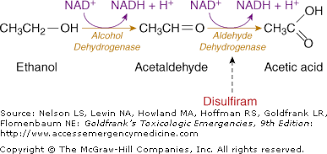
The use of Disulfiram in tick-borne disease has, however, nothing to do with the original use of the drug. The mechanism of action in killing Borrelia is still unknown. There are several hypotheses to explain the effect of disulfiram on Borrelia. It is a heavy metal chelator. It also interferes with the Manganese-Superoxide Dismutase system and also inhibits lactate dehydrogenase that is present in the Lyme bacteria. Its action on biofilm is still uncertain. One major consequence of the effect of Disulfiram on alcohol metabolism is that any intake of alcohol during the treatment may cause an Antabuse effect. Not only alcoholic beverages must be avoided but also anything that may contain traces of alcohol including medications, supplements, etc… B. burgdorferi to thrive needs manganese, zinc, magnesium, etc.. Hence, the hypothesis that Disulfiram’s high avidity for metal ions may inhibit the Lyme bacteria metabolism.
Disulfiram efficacy
In 2016, Venkata Raveendra Pothineni and colleagues at Stanford University reported on the new drug against Borrelia burgdorferi, Disulfiram among their top 20 hits. Based on Pothineni’s work, Dr. Kim Lewis of Northeastern University compared the activity of disulfiram against a few other well-known drugs used in the treatment of Lyme disease. In his talk at the Precision Medicine conference, Dr. Kim
Lewis showed the following slide.
This graph shows the number of colonies remaining after treating Bb with the following four drugs: doxycycline, ceftriaxone, vancomycin, and disulfiram. Disulfiram entirely sterilized the culture—there were no persisters. Caution should be paid that these results are in vitro. No animal or human studies on the efficacy of disulfiram in the treatment of Lyme disease have not yet been published aside from case reports.
Disulfiram and copper
Disulfiram chelates the copper. Copper deficiency may be responsible for neuropathy that may overlap with the Lyme disease neuropathy and Herxheimer’s reactions. Some recommend using enteric-coated capsules to avoid possible copper-related side effects. Keep in mind that Lyme disease may deplete copper, zinc, manganese, iron, and magnesium. The monitoring of these metals is recommended.
Disulfiram and alcohol
It is very important to be aware that only alcoholic beverages contain alcohol but also many medications, supplements, and other products commonly used may contain traces of alcohol that may interact with Disulfiram. Users of Disulfiram should have a list of products containing alcohol and must ask the pharmacist before taking any other product.
https://www.soberlink.com/products-containing-alcohol/
Side effects
Disulfiram toxicity may be classified as follows. The first type of toxicity is due to the interaction between Disulfiram and alcohol. Secondly, Disulfiram has its own diverse acute and chronic adverse drug reactions that will be summarized below. The side effects caused by Disulfiram may include effects include :
- encephalopathy,
- convulsion,
- headaches
- cranial and peripheral neuropathy: Neuropathy, though usually reversible may be irreversible.
- toxic optic neuropathy,
- irreversible injury to the basal ganglia with permanent neurological deficits,
- hypertension,
- psychosis, possibly due to the inhibition of dopamine beta-hydroxylase,
- liver injuries which have required liver transplantation and/or resulted in death
- fatal drug hypersensitivity reaction.
- Severe permanent neurological injury has been reported in accidental disulfiram poisoning in children On the other hand, it has been used, apparently safely, in adolescents (16–19 years of age) with alcohol addiction.
- exfoliative dermatitis and allergic dermatitis: Peaks at about 2 weeks of treatment;
- Gastrointestinal toxicity: to a lesser degree a rotten-egg odor on breath (sulfide metabolites), garlic-like or metallic aftertaste in the mouth. far more concerning, hypersensitive or toxic hepatitis – that peaks at about 2 months of therapy may be fatal.
Frequently reported aversive reactions are mainly hepatic, neurologic, dermatologic, and psychiatric.
- Drowsiness is the most common side effect and occurs in up to 5% of patients. It generally resolves after 2 weeks of treatment. Other side effects include dyspnea, sweating, alteration of taste, vasodilation, impotence, amblyopia, dizziness, ataxia.
Disulfiram and psychosis
The possibility of psychosis with Disulfiram is especially of interest because of the inhibitory effect on the enzyme called dopamine-beta-hydroxylase that catalyzes the metabolism of dopamine to norepinephrine. It may, therefore, cause a buildup of dopamine and a depletion of norepinephrine that can potentially cause depression and psychosis.
Drug interactions
Drug interactions with Disulfiram may result from the effects of CYP450, CYP2E1 and other enzymes on drug metabolism affecting significantly the levels of other prescribed drugs, such as warfarin, phenytoin, barbiturates, opioids, tricyclic antidepressants, hypoglycemic agents, antihistamines, benzodiazepines, CNS stimulants, and psychopharmacologic agents.
To check drug interactions: https://www.drugs.com/drug-interactions/disulfiram.html
Monitoring
| End of first week |
End of second week |
every two weeks |
| CBC & CMP & Zinc RBC & Cooper RBC & CPK & U/A |
CBC & CMP & CPK & U/A |
CBC & CMP & Zinc RBC & Cooper RBC & CPK & U/A |
Unanswered Questions
- Can disulfiram be used safely in children less than 16 years of age?
- Is there any threshold dose below which no serious or irreversible side effects can occur?
- Is there any screening test prior to treatment to assess for susceptibility to serious side effects?
Effects on mold
Disulfiram has antifungal effects. The potency, spectrum and clinical relevance, however, are still unclear. Disulfiram is a P-glycoprotein efflux modulator that may have therefore potential antifungal effects. Disulfiram has antifungal activity against Aspergillus spp (1). Disulfiram reverses Cdr1p-mediated drug resistance by interaction with both ATP and substrate-binding sites of the transporter and may be useful for antifungal therapy (2). Disulfiram was also shown to be effective on candida (3)
If Disulfiram is the cure for Lyme disease, should Disulfiram be prescribed to all Lyme disease patients?
The efficacy of Disulfiram on Borrelia is so far much higher than any other tested antibiotics. Studies at a much larger scale and of longer duration are needed to confirm the efficacy of Disulfiram. The first reports of Disulfiram on Lyme disease are, however, impressive enough for having improved or resolved chronic manifestations of Lyme disease that were resistant to multiple treatments and antimicrobials to consider Disulfiram as a new treatment of choice of Lyme disease. To authorize such a statement, this medication must prove its safety. The review of literature on side effects is concerning and needs to be analyzed at a deeper level. There is no medication without side effects and even the most common medications like Tylenol may have terrifying listed side effects. What allows us to take any way or prescribe medications is the knowledge that the side effects are rare and that the benefits outweigh the risks.
The first consideration to have in mind is that Disulfiram has been prescribed since 1949 to severely alcoholic patients with most often liver abnormalities, neuropsychiatric abnormalities, and nutritional deficiencies. And yet, in one study symptoms of encephalopathy, such as paranoid ideas, disorientation, impaired memory, weakened balance or coordination or slow or slurred speech were reported in only two patients. While a study reports a unique case of an extremely severe neuropathy involving cranial nerves that developed within weeks after regular dosage of 500mg/day disulfiram, the authors of this study admit that such a severe and rapidly-progressive course has never been described with disulfiram doses of only 500mg/day. Irreversible Parkinsonism has been reported but in only two patients. In 1979, The Western Journal of Medicine reported that only 47 cases of Disulfiram-induced psychosis were known after 30 years of use, noting that doses used to be much higher (up to 2,000 mg per day) than current doses. Only 8 cases of psychosis reported between 1992-2016 in PubMed. The causative effect of Disulfiram on psychosis is also questionable. Patients who received Disulfiram were prone to psychosis due to alcoholism and comorbidities. Psychosis could also have been due to Herxheimer’s reaction. I asked Dr. Liegner at the ILADS annual conference whether the dopamine beta-hydroxylase should be checked or not before treating to screen who is more predisposed to psychosis. His response was negative because the test is difficult to perform, probably expensive and most of all because a “start low and go slow” approach should avoid or minimize the occurrence of side effects. The British Medical Journal in 1977 reported 6 cases of liver damage and concluded that the evidence that disulfiram caused severe liver damage was only circumstantial. Here, too, Disulfiram has been given since 1949 to patients with liver often affected by alcohol. Toxic hepatitis that may be fatal has a fatality rate of approximately 1 in 25,000 cases.
Conclusion
Disulfiram is a drug, known since 1949 that may be the most potent drug against Lyme disease, superior to any other antibiotics but that may also cause serious side effects that may be irreversible. The benefits of a drug must always outweigh the risks. Like any drug, potential side effects, almost always, are possible. The significance of side effects, however, should be related to the frequency of these side effects, the dose of the medication, the targeted population, and the indication. The side effects that are reported by the medical literature occurred were rare, for much higher doses than those used for Lyme disease, in severely alcoholic patients prone to liver disease, psychosis, malnutrition, and other comorbidities. Side effects should be expected to be even rarer in the Lyme disease population at much lower doses and beneficial effects already occurred at low doses. Higher doses may even not be necessary, especially when associated with other Lyme disease antimicrobials.
It is probably safe when “start low and go slow”. An expression that has been repeated several times at the ILADS conferences, which conveys the main message about Disulfiram. “probably safe” for a new medication or for a new indication does not mean safe for all. One cannot promise that individualized or extremely rare severe reactions will never happen. Dr. Liegner told that one of his patients who experienced a psychotic episode begged him not to discourage other patients to take Disulfiram because even despite this psychotic episode the patient felt so much better that he was not bothered by this incident. Disulfiram should certainly be prescribed with caution or avoided in patients with personal and familial antecedents of psychosis. Case reports are, however, not enough to guarantee the safety of a drug. Studies at larger scales are necessary. Some questions still remain unanswered. 1) are the side effects only dose-dependant? In other words, is there any threshold dose below which no serious or irreversible side effects can occur? 2) Is there any test that may help to predict who may be more susceptible than others to have serious side effects, especially psychosis or neurological complications? We know that Disulfiram inhibits the enzyme Dopamine-beta-hydroxylase responsible for the conversion of Dopamine to norepinephrine. Individuals who genetically have a deficit in this enzyme are more prone to psychosis and depression and will probably be more vulnerable to Disulfiram. We may also, therefore, consider with caution or to avoid Disulfiram in the presence of genetic abnormalities or variants that may predispose to higher levels of dopamine.
As long as these questions are not answered, the benefits would not outweigh the risks by starting with Disulfiram before giving a chance to other drugs known to be safer. Dr. Liegner states: “ Disulfiram appears to have conferred benefit in the treatment of a limited number of patients with Lyme disease and babesiosis in a clinical setting. Formal controlled trials of this agent for the treatment of Lyme disease and babesiosis may be warranted along with elucidation of mechanisms of its apparent anti-borrelial and possible anti-babesial effects.” Dr. Liegner at the ILADS conference discouraged to use Disulfiram as the first treatment for Lyme disease but to reserve this remarkable new pharmaceutical weapon to patients who failed multiple treatments. Selection of the right patient, patience, prudence, monitoring clinical signs and laboratory markers are key to success. As long as we do not know for sure if below a certain threshold dose no serious neuropsychiatric side effects may happen, I recommend testing especially for copper, zinc and neurotransmitters prior to starting a treatment.
Case report
My first case of Disulfiram.
16 years old boy who has suffered for the past 10 years of chronic sinusitis with severe daily 7-8/10 of intensity, lasting for days, maxillary and frontal headaches with nasal congestion with post nasal drip but without runny nose even when he blew his nose since the age of 6 years old. He saw multiple ENTs, neurologists, allergists and one infectious disease specialist at Montefiore, NYC who all diagnosed with chronic sinusitis that resisted Zithromax, amoxicillin, Augmentin, Duricef, and Netipot. The mother refused surgery that was offered. The CT scan only showed deviated septum and a polyp but no collection of pus. As a result of the past 10 years of chronic pain, the patient missed a significant amount of time at school. The patient came to see me for the first time on July 2019 for multiple symptoms of multiple systems alluding to tick-borne disease but also to mold toxicity with known mold exposure and known sensitivity to mold as symptoms got exacerbated by mold exposure. At that time the patient who was found to have Lyme disease by blood serology already received by another physician Doxycycline and rifampin that did not improve the symptoms. The workup revealed positive IgE for C herbarium, Low copper but normal ceruloplasmin and normal 24 urine copper, elevated CRP at 7.6. and of hyperthyroidism with a free T4 at 1.62, low IgG 10.7. The Bartonella serology was negative but there are Bartonella striae. Brucella IgM and Mycoplasma were positive. The porphobilinogen was elevated. 4.2 (<2.4). MMP9 is mildly elevated. CD57 is 13 Ochratoxin highly positive and positive Citrinin on the mycotoxin urine test. ERMI is pending.
I started by giving Resveratrol, GI detox, S-Acetyl-Glutathione, NAC, ALA, Burbur-Pinella, Phosphaline, Biocucurmin, Medcap DPO, Magnesium, Quercetin, Claritin, Cromolyn, Zantac and later silver nasal spray was added. Since this treatment only caused a mild improvement, I started Disulfiram at the dose of 62.5mg every three days on 09/21/2019. Happening the next day, the patient started to have a continuous runny nose of greenish thick whitish for two weeks. Now the headaches are 1-2/10 of intensity and the frequency once a week. Before Disulfiram headaches were every day.
Now after 6 weeks he takes Disulfiram 125mg every three days:
The following symptoms have completely disappeared
- – Blurred vision and Cloudy
- – Migratory numbness, tingling in feet, stabbing pain & ice-pick like pain
- – New onset of impairment in the assimilation of new knowledge
- – A decline in performances at school
- – New onset of difficulty reading comprehension
- – Disorientation making it difficult to find the way
- – Anxiety
- – Teary eyes
- – Palpitations
- – Right-hand cramps
- – Neck crack
- – Foot pain
- – Difficulty breathing, nasal obstruction, chronic cough, air hunger
- – Sleep disorder
- – Orthostatic dizziness
- – Near-syncope episodes
- – Itching
Got improved
- Memory impairment recent and old events: on and off
- Depression: on and off
Did not get improve
- Fatigue
- Vertigo
- Twitching
- Dizziness
- Brain fog
- Difficulty finding words
- Stuttering since 4th grade
- Wording difficulty, reverse words
- OCD
- Chest pain or rib cage pain
- Red eyes
- Hypersensitivity to light
- Migratory muscle pain and joint pain (mostly back and also both knees but at different times
- Mild abdominal pain, constipation (Admits lactose intolerance)
- Cold hands
- Excessive unexplained sweats
Effects on mold
Before the treatment with Disulfiram, when he was exposed to mold he felt all of the symptoms above. Today when exposed to mold school or home and on Disulfiram he only feels the following remaining symptoms: fatigue, headaches, sweats, nasal cavity pain, red eyes, nausea, eye burning. The fatigue before Disulfiram was 10/10 now 8/10, headaches 10/10 now 8/10, nausea was 10/10 and now 6-7/10. Most of the symptoms that used to be exacerbated by mold exposure disappeared.
side effects
none
Alain Mass, M.D. Member of the International Lyme and Associated Disease Society (ILADS), Diplomate of International Society for Environmentally Acquired Illness (ISEAI)
400 Rella Boulevard, suite 165 Montebello, NY Tel: (845) 623-0047 contact@massfunctionalmd.com
(1) Antifungal potential of disulfiram. Khan S1, Singhal S, Mathur T, Upadhyay DJ, Rattan A. Department of Infectious Diseases, New Drug Discovery Research, R and D III, Sarhaul, Sector-18, Ranbaxy Research Laboratories, Gurgaon-122001, India.
(2) Disulfiram is a potent modulator of multidrug transporter Cdr1p of Candida albicans. Shukla S1, Sauna ZE, Prasad R, Ambudkar SV. Laboratory of Cell Biology, Center for Cancer Research, National Cancer Institute, National Institutes of Health, Bethesda, MD 20892-4256, USA.
(3) Repurposing FDA approved drugs against the human fungal pathogen, Candida albicans Kevin Kim, Leeor Zilbermintz & Mikhail Martchenko Annals of Clinical Microbiology and Antimicrobials volume 14, Article number: 32 (2015)
___________________
For more: https://madisonarealymesupportgroup.com/2019/06/03/disulfiram-in-the-treatment-of-lyme-babesiosis-3-case-reports/
https://madisonarealymesupportgroup.com/2019/07/14/disulfiram-breakthrough-drug-for-lyme-other-tick-borne-diseases/
https://madisonarealymesupportgroup.com/2019/07/26/is-disulfiram-the-magic-bullet-for-chronic-lyme-disease/
https://madisonarealymesupportgroup.com/2019/10/15/disulfiram-psychosis-update/
https://madisonarealymesupportgroup.com/2019/10/27/disulfiram-psychosis-update-2/
https://madisonarealymesupportgroup.com/2019/09/18/dr-liegner-interview-on-disulfiram/


