
Our next support meeting will be:
- February 8, 2020
- East Madison Police Station, 809 S Thompson Dr. Madison, WI 53718
- 2:30-4:30pm

Our next support meeting will be:
https://globallymealliance.org/2020-vision-for-lyme-warriors/

by Jennifer Crystal
As the saying goes, “hindsight is 20/20.” It’s easy for us to look back from the vantage point of experience and say, “I wish I’d done X,” or “If only I could have known Y.” It isn’t always so easy to see those options when we’re living our daily lives, making real-time decisions based on the information we have at the moment.
When I look back across my 20-year health journey, I recall many points of confusion, fear, and desperation. I remember the mixed messages from health professionals. I think back on the skepticism from those who were supposed to help me. I recollect the disbelief in myself, in what my body was telling me. I know so much now that I wish I’d known then. And while I can’t change my past, I hope I can use it to help make another patient’s health journey a little easier.
Here are some things I now know for sure, things I wish I’d known at various crucial points of my own journey:
I really was sick.
When I first developed a rash, and then hypoglycemia, and then a debilitating flu at age 19, I was not going crazy. I was not stressed. I was not run down. I did not need to exercise more. The symptoms were not psychosomatic. I had been bitten by a tick and was sick with real physical illnesses, namely Lyme and two of its co-infections Babesia and Ehrlichia. It would be another eight years until I was properly diagnosed. That delay was so extensive in part because of the disbelief or just plain ignorance of many health professionals. Naturally, I believed them too.
If I had been accurately diagnosed promptly, my whole life would have been different.
I was bitten by a tick in 1997, and perhaps again in 2001 or 2002, but I wasn’t tested for tick-borne diseases until 2005. Testing is faulty now and was even faultier then, so even if I’d been tested for Lyme or co-infections, I might have gotten a false negative and been told I was well.
But I also might have gotten a true positive. If I’d seen a Lyme Literate Medical Doctor (LLMD)—or even known that such a specialist existed then—they might have made a clinical diagnosis right away. I might have taken just three weeks of recommended antibiotics and been fine.
Instead, I developed chronic infections that, 20 years later, are in remission but by no means cured. I went through years of intense antibiotic therapy, including intravenous antibiotics, and I’m still on medications to this day. I don’t live my life with regret, but I would regret it if you were in the same position and didn’t learn from my story. If you discover a tick bite, or have symptoms of tick-borne illness, you don’t have to suffer for years without treatment. You can find a good LLMD in your area and get a head start on your return to wellness.
If a loved one has symptoms and doesn’t know about Lyme disease, or doesn’t know how to find a doctor, offer to go through the process with them. Remember that Lyme patients are often frightened, anxious, and even neurologically impaired. They need real help when it comes to navigating their path.
Lyme Literacy improves over time.
I don’t blame the many health practitioners who missed my case in 1997, because tick-borne disease wasn’t on the radar then. I believe that if I presented now with the same symptoms as I did in 1997, at least one of those practitioners would think about the possibility of tick-borne disease. Thanks to media coverage, increased awareness and education efforts, and, unfortunately, the expanding number of cases, Lyme literacy has greatly improved in the last 20 years. That should give us hope for the future.
Healing is not linear.
It took me a long time to get diagnosed. Therefore it took me a long time to get well. Along the way, there were many bumps in the road, and even some large potholes. Once I was diagnosed, I figured I’d take medicine and slowly get better, as one would from bronchitis or a sinus infection. But that’s not how it works with tick-borne disease. It can take a while for your LLMD to figure out the best treatment protocol for you since each case is unique. You will likely experience a nasty Herxheimer reaction, which means you will feel worse before feeling better. As I discussed in my Gratitude for the Long Game post, the journey through tick-borne disease is an up and down process like a spiraling helix that ultimately stretches towards wellness.
Not everyone will get it.
Lyme patients often spend time and energy they don’t have trying to convince doctors and loved ones that they really are sick. Once they are diagnosed, they may feel a sense of validation, but that doesn’t mean that everyone will immediately understand what they’re going through. I still knew people who didn’t believe me, those who thought my doctor was a quack, those who thought I just needed to “push through it.” These people didn’t understand that Lyme is complicated and comes in myriad forms; they didn’t want to hear about chronic illness and asked, “Aren’t you over that yet?”
At first, I wasted a lot of energy trying to convince these people of the truth. But eventually I realized, I don’t need them to understand. The only people who really need to get it are my doctor and me. I’m focused now on the people in my life who do want to understand, the folks who have offered unconditional support. I stopped worrying about the others. I don’t need their approval.
I came to understand that many of those people were well-intentioned, but were reacting out of fear or ignorance. Some of them did come around. My own family’s understanding of tick-borne illness blossomed alongside my own as they eventually read the books, watched the documentaries, attended the conferences, and accompanied me to doctor’s appointments. So while I have no more time to lavish on the doubters, I do hope that one day they will see the light.
No two cases are alike.
Every case of tick-borne disease is different; that means every treatment protocol is different, too. Patients write all the time to ask me what particular medication I took. But it doesn’t help for me to say which medications I’ve taken. Fact is, I’ve used many different combinations over time but never a single magic cocktail. That’s because what worked for me might not work for you, and vice-versa. It can be easy to think, “Well antibiotic X worked for her in five weeks, so it should work for me too.” Or, “My friend got better from Lyme in one month, so my son should, too.” It’s imperative to remember that each case is unique. Be patient with yourself, or with your loved one, knowing that each body heals at its own pace.
It gets better.
When I was bedridden with exhaustion, migraines, aching joints, and insomnia, I never, ever believed I could have gotten as well as I have. I am heading into the new decade still managing my tick-borne illnesses, but I’m doing it in the context of a full and happy life. Reflecting on my past has given me gratitude, wisdom, and resilience, and those tools will help me see clearly as I step into 2020. May your vision also be clear, and your new year bright!

Opinions expressed by contributors are their own.
Jennifer Crystal is a writer and educator in Boston. Her memoir about her medical journey is forthcoming. Contact her at lymewarriorjennifercrystal@gmail.com.
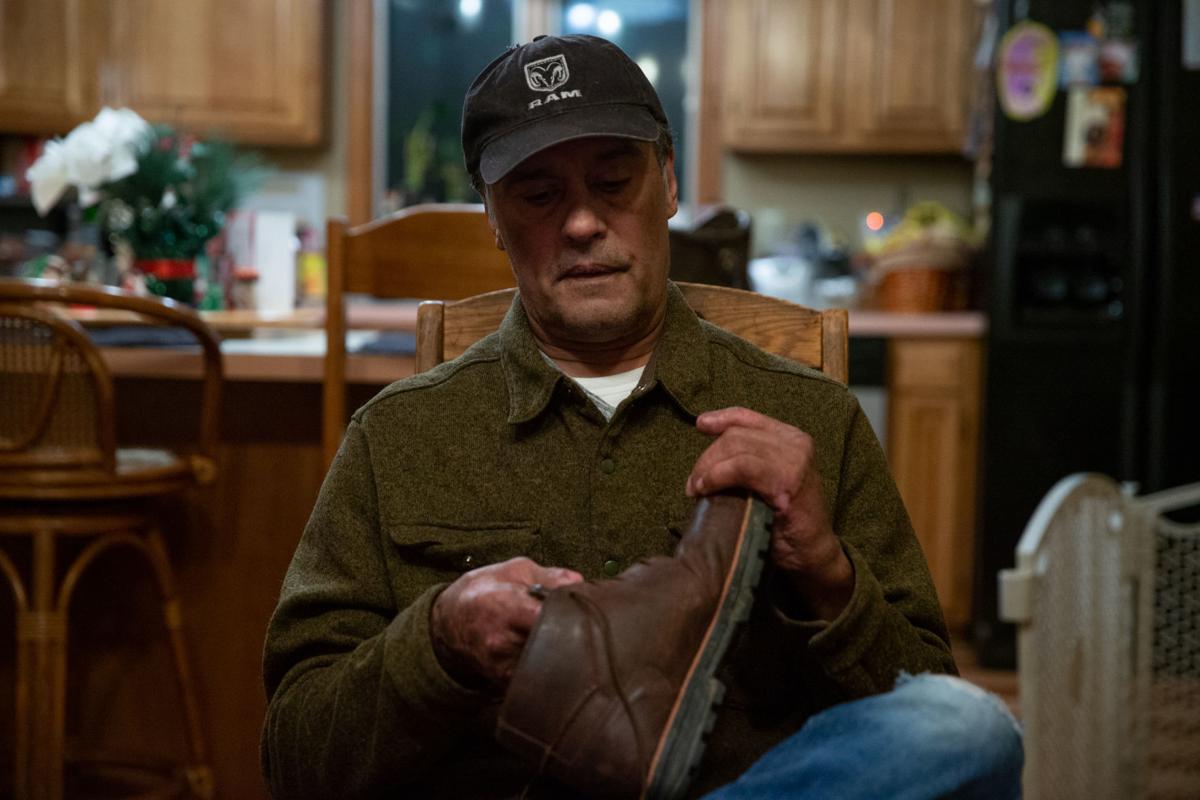
Beltran has one pair of shoes that accommodate his custom-made orthopedic spacers, which give him even footing after all his toes and a 2 1/2-inch portion of his left foot were amputated.
https://www.indystar.com/story/news/health/2019/12/23/gulf-coast-tick-now-indiana/
As the name suggests, this species of arachnid is primarily found in states that border the Gulf of Mexico. Its presence in Indiana could signify an expanded range, and for Hoosiers that would mean an increased risk of contracting a nasty disease.
Tidewater fever, or rickettsia parkeri, is a form of Rocky Mountain spotted fever. Both illnesses can result in fever, headache, rash and muscle aches.
“It’s not as bad as Rocky Mountain spotted fever, but it’s something you don’t want to get, for sure,” said Keith Clay, IU distinguished professor emeritus of biology.
Clay recently left IU after more than three decades to become chair of the Department of Ecology and Evolutionary Biology at Tulane University. He still leads IU’s Project Vector Shield, an initiative started in 2018 that collects ticks and mosquitoes from sites throughout Indiana.
The goal is to provide early warning for disease vectors that pose a threat to people and livestock. The project is part of IU’s Prepared for Environmental Change Grand Challenge initiative.
IU study: We have more ticks here that carry Lyme disease than thought
Tick season: What you need to know to keep yourself, and your dog, safe
Ticks and mosquitoes are collected during the growing season — roughly April through October — at 10 sites scattered across southern Indiana. Researchers regularly perform what’s known in the tick world as dragging or flagging at each site during the growing season, Clay said.
This technique consists of slowly dragging a heavy, white corduroy cloth across an area of vegetation. If ticks are present, they will instinctively grab onto the cloth, thinking it’s a deer, a dog or some other creature that could provide a blood meal.
“Maybe you get none, maybe one or two, and sometimes you hit a hot spot and get 500 on a cloth,” Clay said. “It’s kind of like fishing.”
http://www.wellexpomadison.com
1 John Nolen Dr.
Madison, WI 53703, USA
Admission is just $5 at door– or free with a donation of two (2) non-perishable food items!
The Well Expo is your one-stop shop for wellness and healthy living. Attend the Well Expo and experience two days of classes, presentations and demonstrations in the areas of health and wellness.
Enjoy free fitness classes and cooking demonstrations, and talk with local health-related businesses.
DID YOU KNOW…
Health-related goals are one of the most common New Years Resolutions. However, most resolutions fall flat just weeks after January 1.
We want to help! Attend the Well Expo on January 17-18, 2020 and equip yourself with everything you need to know about living well every day of the year.
https://wellexpomadison.com/schedule-hall-of-fame-classroom/
Saturday 12:00
Aging! Let’s Slow it Down!
Presented by Robert S. Waters, MD
The talk will review factors leading up to accelerated aging:
What can we do about it? One answer is Chelation Therapy using Magnesium Disodium EDTA. We must lower the burden of toxic metals that have accumulated in the body over a lifetime. Remove the excess iron that likewise has contributed to free radical damage. Also, most importantly, remove calcium deposits from the soft tissues of the body.

