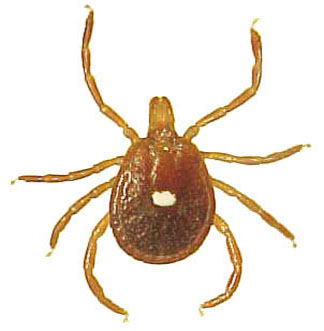
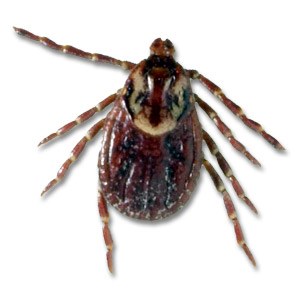
https://www.tickcheck.com/statistics?

Each tick submitted for testing contributes to the research being conducted at TickCheck. By keeping records of all the results generated, we have been able to gain valuable insights into disease prevalence and co-infection rates. The comprehensive testing panel has been especially helpful in contributing to this research by ensuring all diseases and coinfections are accounted for when examining a tick.

Our current research shows:
  • 76% of ticks tested have at least one disease causing organism
  • 49% are co-infected with two or more organisms
  • 20% carry three or more
  • 9% of the ticks tested carry four or more

Infection Visualization by Tick Species

All Ticks Tested
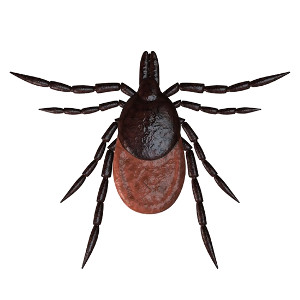
76% Positive for Infection
Negative (24%)
_____________________________
  • 93% Positive for Infection
  • Negative (7%)
  • 63% Positive for Infection
  • Negative (37%)
  • 48% Positive for Infection
  • Negative (52%)

Coinfection Visualization

  • 2+ coinfection 49%
  • No coinfection 51%

Pathogenic Prevalence

The information below shows the positive/negative prevalence ratio of selected pathogens we test for. These pathogens were observed in ticks from the United States and Canada. Data set includes tests performed since TickCheck’s founding in 2014 and is updated in real time. (

Go to link at beginning to filter by state.  I’ve added the 3 listed for Wisconsin next to the entire sample size.  Please note the small sample sizes of WI ticks. 

Borrelia burgdorferi (deer tick) associated with Lyme disease

Sample size of 3,280 ticks.           70 Wisconsin ticks
  • 30% postive                                           33% positive
  • 70% negative                                         67% negative

Borrelia burgdorferi (western blacklegged tick) associated with Lyme disease

Sample size of 279 ticks.
  • 4% positive
  • 96% negative

Borrelia burgdorferi (lone star tick) associated with Lyme disease

Sample size of 899 ticks.
  • 8% positive
  • 92% negative

Borrelia burgdorferi (American dog tick) associated with Lyme disease

Sample size of 901 ticks.
  • 2% positive
  • 98% negative

Anaplasma phagocytophilum associated with anaplasmosis

Sample size of 2,146 ticks.           36 Wisconsin ticks
  • 8% positive                                           11% positive in Wisconsin
  • 92% negative                                        89% negative in Wisconsin

Babesia microti associated with babesiosis

Sample size of 1,894 ticks.           32 Wisconsin ticks
  • 4% positive                                            6% positive
  • 96% negative                                        94% negative

Bartonella spp. associated with bartonellosis

Sample size of 1,060 ticks.
  • 47% positive
  • 53% negative

Ehrlichia chaffeensis associated with ehrlichiosis

Sample size of 857 ticks.
  • 2% positive
  • 98% negative

Rickettsia spp. associated with Rocky Mountain spotted fever

Sample size of 944 ticks.
  • 23% postive
  • 77% negative

Francisella tularensis associated with tularemia

Sample size of 1,028 ticks.
  • 1% positive
  • 99% negative

Borrelia miyamotoi associated with B. miyamotoi

Sample size of 1,091 ticks.
  • 6% postive
  • 94% negative

Borrelia lonestari associated with STARI

Sample size of 831 ticks.
  • 19% postitive
  • 81% negative

Babesia spp. associated with babesiosis

Sample size of 564 ticks.
  • 5% positive
  • 95% negative

Mycoplasma spp. associated with Mycoplasma spp.

Sample size of 948 ticks.
  • 8% positive
  • 92% negative

Borrelia spp. associated with Borrelia spp.

Sample size of 612 ticks.
  • 17% postive
  • 83% negative

Powassan virus Lineage II associated with Deer tick virus

Sample size of 102 ticks.
  • 24% positive
  • 76% negative

Borrelia mayonii associated with Lyme disease

Sample size of 376 ticks.
  • 100% negative

Ehrlichia ewingii associated with ehrlichiosis

Sample size of 283 ticks.
  • 100% negative

Rickettsia amblyommii associated with Rocky Mountain spotted fever

Sample size of 177 ticks.
  • 46% positive
  • 54% negative

__________________

For more about Tickcheck: https://www.tickcheck.com/about

You can request free tick identification by sending in a quality picture of your tick. Using real-time PCR (Polymerase Chain Reaction), Tickcheck can determine the presence of certain pathogens with an accuracy level of over 99.9%.  All information about how to send in your tick, costs of various tests, time for results, etc. is found here:  https://www.tickcheck.com/info/faq

Jonathan Weber is the founder and CEO of TickCheck and became acutely aware of the dangers of tick-borne diseases after his father caught Lyme during a family trip on the Appalachian Trail.

___________________

**Comment**

This information supports current research showing many patients are infected with numerous pathogens causing more severe illness & requiring far more than the CDC’s mono therapy of doxycycline:  https://madisonarealymesupportgroup.com/2018/10/30/study-shows-lyme-msids-patients-infected-with-many-pathogens-and-explains-why-we-are-so-sick/

It also supports previous work showing coinfections within ticks:  https://madisonarealymesupportgroup.com/2017/05/01/co-infection-of-ticks-the-rule-rather-than-the-exception/

What I want to know is WHY nothing’s being done about this?  Why are people STILL given 21 days of doxycycline when that particular med will not work on numerous pathogens?
Lastly, a word about statistics – this tick data should be used with caution & never to turn sick patients away due to a statistic. If you are the sorry sucker who gets bit by that ONE tick carrying a “statistically insignificant” pathogen, you still got bit and have to deal with it.  
Shame on doctors for turning sick people away due to statistics and maps.
There’s no such thing as an “insignificant” tick bite!

But, Patients are STILL being turned away:  https://madisonarealymesupportgroup.com/2019/04/22/its-just-crazy-why-is-lyme-disease-treatment-so-difficult-to-find-in-mississippi/

https://madisonarealymesupportgroup.com/2019/03/19/jacksonville-family-shares-daughters-9-month-diagnosis-of-rare-disease-which-isnt-rare-lyme/

https://madisonarealymesupportgroup.com/2018/05/31/no-lyme-in-the-south-guess-again/

https://madisonarealymesupportgroup.com/2017/10/24/no-lyme-in-oklahoma-yeah-right/

https://madisonarealymesupportgroup.com/2016/09/24/arkansas-kids-denied-lyme-treatment/  “They had the classic symptoms, they had the bulls eye rash, they had the joint pain, they had fevers and had flu like symptoms, yet we were denied treatment for at least two of them and I don’t understand how this is legal,” said Bowerman.

According to Dr. Naveen Patil, Director of the Infectious Disease Program, ADH,

“We don’t have Lyme Disease in Arkansas, we have the ticks that transmit Lyme Disease but we don’t have any recorded cases of Lyme Disease.” 

Bowerman also received a letter from the clinic stating doctors would no longer treat her children because she consistently questioned their medical advice and recommendations.

This is getting to be way beyond ludicrous.

 

https://yubanet.com/scitech/three-antibiotic-cocktail-clears-persister-lyme-bacteria-in-mouse-study/

Three-Antibiotic Cocktail Clears “Persister” Lyme Bacteria in Mouse Study

Scientists isolate slow-growing variant Lyme bacteria forms that caused severe symptoms, resisted standard single-antibiotic Lyme treatment in the mouse model

The study, published March 28 in Discovery Medicine, also found that these “persister” Lyme bacteria were resistant to standard single-antibiotic Lyme treatments currently used to treat Lyme patients, while a three-antibiotic cocktail eradicated the Lyme bacteria in the mouse model.

For their study, the scientists isolated slow-growth forms of the Lyme bacterium, Borrelia burgdorferi. They found that, compared to normal fast-growth forms, the slow-growing forms caused more severe arthritis-like symptoms and resisted standard antibiotic treatment in test tube as well as in a mouse model. The scientists found that a combination of three antibiotics—daptomycin, doxycycline and ceftriaxone—cleared the Lyme infection in the study mice. The scientists now hope to test the combination in people with persistent Lyme disease.

“There is a lot of excitement in the field, because we now have not only a plausible explanation but also a potential solution for patients who suffer from persistent Lyme disease symptoms despite standard single-antibiotic treatment,” says study senior author Ying Zhang, MD, PhD, professor in the Department of Molecular Microbiology and Immunology at the Bloomberg School.

Lyme disease afflicts about 300,000 people in the United States every year. It is caused by Borrelia bacteria that live inside common species of ticks and are transmitted to humans by tick bites. Treatment with a single antibiotic—either doxycycline, amoxicillin or cefuroxime—for two to four weeks clears infection and resolves symptoms in most patients. However, some 10 to 20 percent of Lyme patients who are treated continue to suffer persistent symptoms including fatigue, muscle and joint aches, and brain fog that can six months or longer.

This post-treatment Lyme disease syndrome has been controversial among many doctors, in part because studies of these patients usually have failed to show that Borrelia bacteria can be cultured from their blood, especially after treatment—a standard method for revealing the presence of an infection or relapse. However, Borrelia, like many bacteria, can switch under low-nutrient conditions or other stresses from their normal fast-growth mode to variant forms as in “stationary phase” with little or no growth.

Studies also have hinted that these stationary-phase variants can be killed with the right drugs. Research by Zhang and colleagues has shown that a combination of daptomycin, doxycycline and cefoperazone reliably kills cultures of B. burgdorferi that include stationary-phase variant forms.

In this new study, Zhang and colleagues grew stationary-phase B. burgdorferi and isolated two distinct no-growth forms, called microcolony and planktonic forms. They confirmed that these forms are resistant to standard antibiotics such as doxycycline and even two-drug combinations used for treating Lyme disease. They also showed that these stationary-phase forms, compared to normal-growing spiral forms of B. burgdorferi, cause worse Lyme disease-like symptoms in mice—chiefly inflammation and joint-swelling. However, treating these mice with the combination of daptomycin, doxycycline and ceftriaxone effectively eradicated the infection.

“A lot of physicians have been wanting to do clinical trials of antibiotic combinations in post- treatment Lyme disease syndrome patients, and now we have results in animals that support the idea of such trials,” Zhang says.

He and his colleagues are making plans for their own trial of the persister drug combination against post-treatment Lyme disease syndrome. They note that the idea of persister bacteria causing severe and persistent infections with varying susceptibilities to different drugs might apply to other infectious diseases in which symptoms sometimes persist, despite standard treatment.

“Stationary Phase Persister/Biofilm Microcolony of Borrelia burgdorferi Causes More Severe Disease in a Mouse Model of Lyme Arthritis: Implications for Understanding Persistence, Post-Treatment Lyme Disease Syndrome (PTLDS), and Treatment Failure” was written by Jie Feng, Tingting Li, Rebecca Yee, Yuting Yuan, Chunxiang Bai, Menghua Cai, Wanliang Shi, Monica Embers, Cory Brayton, Harumi Saeki, Kathleen Gabrielson, and Ying Zhang.

Funding for the research was provided by the Steven and Alexandra Cohen Foundation, Global Lyme Alliance, LivLyme Foundation, NatCapLyme, and the Einstein-Sim Family Charitable Fund.

_________________

**Comment**

The 10-20% being used to identify those with remaining symptoms is inaccurate and NEEDS to change. For a great read explaining this:  https://madisonarealymesupportgroup.com/2019/02/25/medical-stalemate-what-causes-continuing-symptoms-after-lyme-treatment/

In short, Microbiologist Holly Ahern recently wrote that the arbitrary label “Post Treatment Lyme Disease Syndrome,” or PTLDS, which the CDC estimates to be 10-20% of patients only truly represents a subgroup of patients who have been diagnosed early, treated with standard short-term antibiotics, and whom remained symptomatic or developed new symptoms. It does not and should not include a third group who were misdiagnosed or undiagnosed beyond the first few weeks of infection. She states estimates based on existing research show this unaccounted for group makes up 30-40% of Lyme disease patients. By combining the PTLDS group with the third group, there are 60% of patients ending up with chronic symptoms, a number that more closely matches my experience as a patient advocate (9)  https://madisonarealymesupportgroup.com/2019/02/22/why-mainstream-lyme-msids-research-remains-in-the-dark-ages/

This is important because 60% is much bigger than 10-20% and reveals the vast suffering and the dire need for research on this neglected subgroup of patients.

Recently, this came out regarding treatment:  https://madisonarealymesupportgroup.com/2019/04/17/global-lyme-alliance-doing-kick-butt-research/

Dr. Kim Lewis and his team at Northeastern University, independently, discovered that Disulfiram, used for treating alcoholism, was extremely effective in culture and in mice in to killing burgdorferi in all forms.

This is promising as it won’t destroy the gut like antibiotics.


https://xn123.infusionsoft.app/app/page/maria-rickert-hong-webinar?

webinar signup

Victoria Barrios hosts the Thriving with a Tic Disorder online summit, which explores the root causes of tic disorders.

In this webinar, she’ll discuss highlights from what she’s learned from experts in her summit such as:

•William Walsh MD of the Walsh Research Institute

•Robert Melilo DC, developer of the Brain Balance program

•Jane Hersey of the Feingold Association

•Anke Zimmerman, homeopath

•Mark Blaxill, author of “The Age of Autism”


We’ll talk about things such as:

•Triggers of tics such as food additives and medication

•Nutritional deficiencies/imbalances

•Oxidative stress

•Neurotransmitter deficiencies/imbalances

•The role of stress and anxiety

•Homeopathy

•Drug-free approaches


Join us to ask your own questions!

RSVP at link above.

As a child, Victoria Barrios was diagnosed with Tourette Syndrome, a neurological disorder that involves uncontrollable, repetitive movements or tics.

After cutting out any and all added and artificial sugars and preservatives, her symptoms were no longer controlling her and she was able to function in society again.

Her world later shifted when she discovered that within two weeks of eliminating any and all dairy products she had not ONE sign of acne. 

She finally understood how food could either be our nourishment or our destruction.

She is now a health coach who is the host of the Thriving with a Tic Disorder online summit.

**Be sure to sign up, even if you can’t attend in person so you can get the replay when it comes out the next day.** 

___________________
**Comment**
According to a prominent WI LLMD, 80% of his Autistic and PANS patients have Lyme/MSIDS.

https://www.lymedisease.org/lyme-ehlers-danlos/

When Lyme disease and Ehlers-Danlos syndrome overlap


https://www.change.org/p/the-us-senate-calling-for-a-congressional-investigation-of-the-cdc-idsa-and-aldf/u/24438160?

The CDC’s long history of incompetence/deception in the management of Lyme disease

APR 17, 2019 — 

Please see the letter below to the TBDWG and links provided.

WAKE UP AMERICA!

———- Original Message ———-
From: CARL TUTTLE <runagain@comcast.net>
To: brett.giroir@hhs.gov, tickbornedisease@hhs.gov
Cc: (98 Undisclosed recipients)
Date: April 16, 2019 at 10:13 AM
Subject: Correspondence between Doctor Edwin J. Masters and Dr. David Dennis Chief; Bacterial Zoonoses Branch

To the Tick Borne Disease Working Group,

For the record I would like to share the attached correspondence between Doctor Edwin J. Masters and Dr. David Dennis Chief; Bacterial Zoonoses Branch dated 1992 as an example of the CDC’s long history of incompetence/deception in the management of Lyme disease. The letters are in reference to Lyme disease in the South and we know now through Quest Diagnostics [1] that –

Lyme has been detected in each of the 50 United States and the District of Columbia.

Doctor Edwin J. Masters letter:

https://www.dropbox.com/s/043q3onpw82ze46/Ed%20Masters%20and%20the%20CDC%20Testing.pdf?dl=0

We are dealing with a life-altering/life-threatening infection with faulty/misleading antibody tests, inadequate treatment, no medical training and absolutely no disease control.

A plague denied; essentially classifying this disease as a low-risk and non-urgent health threat.

To gain an understanding of Dr. Masters’ background in Lyme disease you will want to read the following article: (The CDC’s manipulation of data is appalling)

Rebel with a Cause: The Incredible Dr. Masters, Part 1

He braved hand-to-hand combat with CDC over Lyme in the South.

By Pamela Weintraub Posted Jun 25, 2009

https://www.psychologytoday.com/us/blog/emerging-diseases/200906/rebel-cause-the-incredible-dr-masters-part-1

“Front and center in the debate over the existence of Lyme disease in the southern U.S.  was the country doctor, Edwin J. Masters of Cape Girardeau, Missouri, who reveled in fighting for a cause.”

Respectfully Submitted,

Carl Tuttle

Lyme Endemic Hudson, NH

Lyme Disease: Call for a “Manhattan Project” to Combat the Epidemic

Raphael B. Stricker, Lorraine Johnson

Published: January 02, 2014DOI: 10.1371/journal.ppat.100379

http://www.plospathogens.org/article/info:doi/10.1371/journal.ppat.1003796

Reference:

1. New Quest Diagnostics Data Shows Lyme Disease Prevalence Increasing and is Now Present in New U.S. States

http://newsroom.questdiagnostics.com/2018-07-30-New-Quest-Diagnostics-Data-Shows-Lyme-Disease-Prevalence-Increasing-and-is-Now-Present-in-New-U-S-States

____________________
**Comment**
Dr. Masters, like a good handful of other doctors are true rock stars in my book.  This man, fought the CDC single-handedly and the details are seriously movie material. I highly recommend you read Weintraub’s entire series on him, but I’ve highlighted it here:  https://madisonarealymesupportgroup.com/2017/10/06/remembering-dr-masters-the-rebel-for-lyme-patients-who-took-on-the-cdc-single-handedly/