https://articles.mercola.com/sites/articles/archive/2019/07/23/what-is-vaccine-shedding.aspx?

What is vaccine shedding?

Analysis by Dr. Joseph MercolaFact Checked
vaccine shedding

STORY AT-A-GLANCE

  • Live viral vaccines contain a weakened (or attenuated) version of the virus
  • Live attenuated viral vaccines can cause vaccinated persons to shed vaccine strain virus for a period of days, weeks or months, potentially infecting others and leading to symptoms of the very disease the vaccine was intended to prevent
  • One recent study revealed not only that influenza virus may be spread via simple breathing (i.e., no sneezing or coughing required) but also that repeated vaccination increases the amount of virus released into the air
  • Individuals who had gotten a flu vaccination in the current and previous season had 6.3 times more aerosol shedding of influenza virus than those who had received no vaccination in those two seasons
  • Due to a lack of active surveillance and testing, there’s no way to know how often vaccine-strain live virus shedding and disease transmission actually occurs

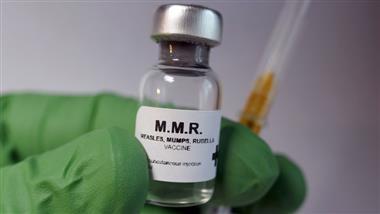
When you’re infected with a virus that causes an illness, that virus is shed in your saliva and other bodily fluids, and sometimes also via skin lesions. This means that a person who comes into direct contact with the shed virus may also become infected. The same holds true for live attenuated viral vaccines.

While inactivated vaccines use a killed version of the pathogen, live viral vaccines use a weakened (or attenuated) version of the virus. Typically, the live virus used in vaccine production is passed through a living cell culture or other host, such as chicken embryo, many times over until it becomes weakened to a point that it’s not likely to make you sick when it’s injected or, in the case of live oral vaccines, swallowed.

That being said, a live vaccine strain virus is still active and strong enough to trigger an inflammatory response in your body, prompting the creation of vaccine-acquired antibodies. There are a few problems with this, such as the possibility that the weakened vaccine-strain virus can revert to virulence, leading to serious complications identical or similar to complications of the natural disease the vaccine is supposed to prevent in the vaccinated person.1

Another noted problem is that the person who is given a live attenuated viral vaccine can asymptomatically shed and transmit vaccine-strain virus for a period of days, weeks or months and potentially infect close contacts, who can also experience symptoms of the very disease the vaccine was intended to prevent.

Live flu vaccine associated with increased viral shedding in exhaled breath

The possibility of vaccine strain viral shedding takes on renewed importance in the case of the government’s strong recommendation for annual flu vaccination. The U.S. Centers for Disease Control and Prevention’s (CDC) Advisory Committee on Immunization Practices (ACIP) recommends annual influenza vaccinations for everyone 6 months and older.

In the 2018 to 2019 flu season, CDC officials recommended health care providers “use any licensed, age-appropriate influenza vaccine (inactivated influenza vaccines (IIV), recombinant influenza vaccine (RIV), or live attenuated influenza vaccine (LAIV4) with no preference expressed for one vaccine over another.”2

The live influenza vaccine FluMist, which is approved for nonpregnant women as well as anyone aged 2 to 49 years, is administered in the form of a nasal spray.

While the CDC states that the live type A and B vaccine strain influenza viruses in FluMist are too weak to actually give recipients influenza, research has raised some serious doubts that this is the case. One recent study revealed not only that influenza virus may be spread via simple breathing (i.e., no sneezing or coughing required) but also that repeated vaccination increases the amount of influenza virus released into the air.3

“Self-reported vaccination for the current season was associated with a trend toward higher viral shedding in fine-aerosol samples; vaccination with both the current and previous year’s seasonal vaccines, however, was significantly associated with greater fine-aerosol shedding … ,” the researchers stated.4

What’s more, individuals who had been vaccinated in the current and previous season had 6.3 times more aerosol shedding than those who had received no vaccination in those two seasons. The researchers concluded:5

“The association of current and prior year vaccination with increased shedding of influenza A might lead one to speculate that certain types of prior immunity promote lung inflammation, airway closure and aerosol generation … If confirmed, this observation, together with recent literature suggesting reduced protection with annual vaccination, would have implications for influenza vaccination recommendations and policies.”


Virus shedding is common following FluMist — and can transmit flu

MedImmune, the company that developed FluMist, is aware that the vaccine sheds vaccine-strain virus. In its prescribing information, they describe a study on the transmission of vaccine-strain influenza viruses from vaccinated children to nonvaccinated children in a day care setting.

In 80 percent of the FluMist recipients, at least one vaccine-strain influenza virus was isolated anywhere from one to 21 days following vaccination. They further noted, “One placebo subject had mild symptomatic Type B virus infection confirmed as a transmitted vaccine virus by a FluMist recipient in the same playgroup.”6

Another MedImmune study revealed that 89 percent of babies under 2 years who received FluMist shed vaccine-strain influenza virus, as did 20 percent of adults. The most virus was shed two to three days following vaccination, continuing for up to 11 days.7

While the CDC claims vaccine-strain virus shedding, and subsequent transmission of disease, is rare, they have also stated that people with a weakened immune system, or those who will be caring for someone with a weakened immune system within seven days of vaccination, should not receive the live attenuated influenza vaccine due to the “theoretical” risk that the recently vaccinated person could shed and transmit the vaccine-strain virus to immunocompromised individuals.

That being said, there’s no way to know for sure how often vaccine-strain live virus shedding and disease transmission actually occurs. Barbara Loe Fisher, cofounder and president of the National Vaccine Information Center (NVIC), wrote a special report, The Emerging Risks of Live Virus and Viral Vectored Vaccines: Vaccine Strain Virus Infection, Shedding and Transmission, which contains over 200 references and delves into virus shedding and vaccine virus shedding. She noted:8

“There is no active surveillance and testing for evidence of vaccine strain live virus shedding, transmission and infection among populations routinely being given multiple doses of live virus vaccines, including measles vaccine. Therefore, it is unknown exactly how many vaccinated children and adults in the U.S. or other countries are shedding and transmitting vaccine strain live viruses.

Whether or not vaccine strain live virus shedding, transmission and infection is causing undiagnosed or misdiagnosed health problems, especially among people with severe immune deficiencies or autoimmune and other immune system disorders, is an open question.”

Which vaccines are capable of shedding?

Examples of live attenuated viral vaccines are measles, mumps, rubella, vaccinia (smallpox), varicella, zoster (which contains the same virus as varicella vaccine but in much higher amount), yellow fever, rotavirus and influenza (intranasal).9 As with the live virus influenza vaccine, there are many examples of other live attenuated viral vaccines spreading disease.

The live oral polio vaccine (OPV) is one of them. OPV is no longer used in the U.S., having been replaced by inactivated injectable polio vaccine in 1999, but OPV is still used in some developing countries. In 2017, there were 21 reported cases of vaccine-derived polio, compared to six cases of wild polio — marking the first time more cases of polio were caused by vaccine-derived strains than wild or naturally occurring strains.

In Syria alone, 15 children were paralyzed by vaccine-derived polio, according to the World Health Organization (WHO).10 Research published in the journal Cell also revealed that the live vaccine strain virus used in the oral polio vaccine can easily mutate and spread through a community.11 NPR reported:12

“After a child is vaccinated with live polio virus, the virus replicates inside the child’s intestine and eventually is excreted. In places with poor sanitation, fecal matter can enter the drinking water supply and the virus is able to start spreading from person to person.

‘We discovered there’s only a few [mutations] that have to happen and they happen rather quickly in the first month or two post-vaccination,” [lead study author Raul] Andino says. ‘As the virus starts circulating in the community, it acquires further mutations that make it basically indistinguishable from the wild-type virus. It’s polio in terms of virulence and in terms of how the virus spreads.'”

WHO also noted, “When a child is immunized with OPV, the weakened vaccine virus replicates in the intestine for a limited period … During this time, the vaccine virus is also excreted.”13 In some people, however, the period of replication may not be so “limited.”

One British man received three doses of attenuated live virus polio vaccine at 5, 7 and 12 months of age. He also received a booster at age 7, as was recommended. The man has a health condition that suppresses his immune system, making it more difficult for him to clear vaccine-strain poliovirus from the body.

Although he had no symptoms of the disease, when researchers tested his stool (more than 100 samples were taken over a period of 28 years), they confirmed high levels of the poliovirus even decades later.

Virus shedding is also possible after MMR vaccination

The CDC recommends the MMR (measles, mumps and rubella) vaccine for children aged 12 to 15 months, with a booster between ages 4 and 6 years. This live attenuated combination vaccine has also been associated with vaccine-strain virus shedding and disease transmission.

For instance, following live virus measles vaccination, measles virus RNA was detected in 10 of 12 children, as early as one day or as late as 14 days after vaccination.14 Vaccine virus-related measles has also been documented, including in one 2-year-old boy who became ill 37 days after receiving an MMR vaccine.

The researchers who published the case report explained, “Although this is the first such reported case, it likely represents the existence of additional, but unidentified, exceptions to the typical timeframe for measles vaccine virus shedding and illness.”15

It’s often the case that measles outbreaks are blamed on unvaccinated individuals, but this suggests that recently vaccinated individuals could also transmit a vaccine strain version of the disease.

Likewise, mumps vaccine strain virus has also been confirmed as being transmitted by recently vaccinated children to their parents, while live rubella vaccine virus can be transmitted via breast milk. The live attenuated chickenpox vaccine can also cause vaccine-strain chickenpox in healthy or immunocompromised vaccine recipients — or their close contacts. According to Fisher:16

“It is possible for healthy children and adults to transmit vaccine strain varicella zoster infection to other healthy children and adults. However, immune compromised persons are at special risk for contracting vaccine strain chickenpox infections and suffering complications.

Generally, it is advised that persons recently given chickenpox vaccine avoid close contact for at least six weeks after vaccination with potentially susceptible persons, such as immune compromised persons, pregnant women, newborn infants and premature babies, especially if a rash develops after vaccination.”

Why are live virus vaccines still being used?

With documented cases of live virus vaccines contributing to vaccine strain virus shedding and transmission, it’s clear there remain many questions about their safety and effectiveness. Yet, their use continues, in part because the immune response triggered by live virus vaccines is considered to be superior to that triggered by inactivated vaccines.

In short, live virus vaccines tend to stimulate an immune response that’s more similar to one that would occur had you been exposed to the wild-type virus naturally. That being said, live virus vaccines rarely confer the same kind of longer lasting immunity that exposure to a naturally acquired infection can confer.

This is why booster shots are necessary, and why some have recommended that a third MMR vaccine dose be added to the U.S. vaccine schedule.

At the very least, it’s important to be aware of the differences between attenuated live virus vaccines and inactivated vaccines, especially if you’re part of a vulnerable population, such as very young children, the elderly, pregnant and breastfeeding women and people with acute or chronic health problems or a compromised immune system.

For now, however, there remain many unanswered questions regarding live virus vaccines and their ultimate impact on public health. As Fisher explained:17

“The impact of vaccine-strain virus shedding infection and transmission on individual and public health is a question that deserves to be asked and more thoroughly examined by the scientific community. The fact that children and adults given live virus vaccines have the potential to pose a health risk to both unvaccinated and vaccinated close contacts should be part of the public conversation about vaccination.”

____________________

For more:  https://madisonarealymesupportgroup.com/2018/12/09/vaccines-likely-infected-with-retroviruses-linked-to-chronic-disease/

https://madisonarealymesupportgroup.com/2017/10/15/vaccines-and-retroviruses-a-whistleblower-reveals-what-the-government-is-hiding/

https://madisonarealymesupportgroup.com/2018/03/01/vaccines-could-contribute-to-disease-epidemics-due-to-retrovirus-contamination/

https://madisonarealymesupportgroup.com/2018/06/23/the-role-of-retroviruses-in-chronic-illness-a-clinicians-perspective/

https://madisonarealymesupportgroup.com/2019/07/02/polio-like-manifestation-of-powassan-virus-with-anterior-horn-cell-involvement-canada/

https://madisonarealymesupportgroup.com/2019/06/15/therapeutic-efficacy-of-favipiravir-against-bourbon-virus-in-mice/

https://madisonarealymesupportgroup.com/2018/05/23/cdc-warns-about-7-new-tick-viruses/

https://madisonarealymesupportgroup.com/2018/12/04/is-the-chickenpox-vaccine-creating-a-shingles-epidemic/

https://articles.mercola.com/sites/articles/archive/2012/07/30/whooping-cough-vaccine.aspx  (Outbreaks of Whooping Cough related to pertussis vaccine)
https://ohioamf.org/wp-content/uploads/2015/11/HIGHLY-and-FULLY-VACCINATED-outbreaks.-1.pdf  (9 pages showing outbreaks in fully vaccinated populations)


http://vaccineimpact.com/2019/fully-vaccinated-vs-unvaccinated-a-summary-of-the-research/

Fully Vaccinated vs. Unvaccinated — A Summary of the Research

07-18-19-Vax-Unvax-Full-Presentation-Featured-Image

By Robert F. Kennedy, Jr., Chairman
Children’s Health Defense

The Institute of Medicine (IOM) has repeatedly asked CDC to create studies which explain,

“How do child health outcomes compare between fully vaccinated and unvaccinated children?”

During a November 2012 Congressional hearing on autism before the House Committee on Oversight and Government Reform, Dr. Coleen Boyle, the Director of the National Center on Birth Defects and Developmental Disabilities, gave evasive answers to lawmakers pressing her on this point. After considerable badgering, she finally stated,

“We have not studied vaccinated versus unvaccinated [children].”

That was perjury.

Boyle knew that CDC had commissioned an in-house researcher, Thomas Verstraeten to perform vaccinated/unvaccinated study on CDC’s giant Vaccine Safety Datalink (VSD) in 1999 (I summarize Verstraeten’s secret findings on slide 2).

Verstraeten found a dramatic link between mercury-containing hepatitis B vaccines and several neurological injuries including autism and prepared the study for publication. CDC shared Verstraeten’s analysis with the then four vaccine makers but kept it secret from the American public.

The data in CDC’s 1999 Verstraeten study clearly inculpated thimerosal as the principle culprit behind the autism epidemic.

Burying the results

The world’s largest vaccine maker GlaxoSmithKline (GSK) then whisked Verstraeten off to a sinecure in Brussels and CDC handed his raw data to his CDC boss Frank DeStefano and another researcher, Robert Davis who served as a vaccine industry consultant.

Those two men tortured the data for 4 years, removing all unvaccinated children, to bury the autism signal before publishing a sanitized version purporting to exculpate the vaccine. The CDC then cut off public access to the VSD and to this day aggressively blocks any attempts by researchers to study health outcomes in vaccinated vs. unvaccinated populations.

Contemporary emails among CDC officials— obtained under the FOIA— and the transcripts from a secret 2000 meeting between government regulators and vaccine makers at Simpsonwood, Georgia, show HHS officials plotting to create phony studies to exonerate vaccines.

CDC officials hired a Scandanavian, Poul Thorsen, giving him $10 million to create a series of fraudulent reports from Denmark. Thorsen dutifully produced the predetermined results but allegedly stole at least $1 million of the grant from CDC.

He is now an international fugitive under Federal indictment and on HHS’s “Most Wanted” list (scroll down to see Thorsen). CDC continues to cite Thorsen’s studies as the bedrock for its claim that vaccines don’t cause autism.

Attempting to debunk the link

CDC officials Frank DeStefano and Coleen Boyle knew they needed to study an American population to convincingly debunk the vaccine/ autism link.

They believed it would be safe to study the MMR vaccine because the MMR did not contain thimerosal. They assigned senior scientist and CDC whistleblower, Dr. William Thompson, and three other researchers from the Immunization Safety Office to study the MMR vaccine in Georgia children.

Thompson worried about being dragged into another “circus” like the Verstraeten study. His bosses promised Thompson that this time there would be no mid-course shenanigans to bury unpleasant data. They would agree on protocols up front and stick to them no matter what the data revealed.

Nevertheless, when the data showed a shocking 364% increase in autism among African American boys given the MMR on time, Destefano ordered the four CDC scientists to destroy the damning information in large garbage cans. “I can’t believe we did what we did, but we did it”, recalls Thompson. That sanitized study is now cited in 97 subsequent publications as the proof that vaccines don’t cause autism.

“I have great shame now when I meet the parent of a child with autism because I have been part of the problem.”

Slide 12 shows the true results of Dr. Thompson’s original data.

Despite CDC’s efforts at suppression, independent scientists and research institutions (including UCLA) have managed to conduct and publish several additional vaccinated/unvaccinated studies since 1999. Those studies indicate high incidence of chronic diseases and brain and immune system injuries among vaccinated compared to unvaccinated cohorts. Some of those studies are summarize in this presentation.

See the 24 slides of the Vaxxed-Unvaxxed presentation.

Read the full article at ChildrensHealthDefense.org.

© 2019 Children’s Health Defense, Inc. This work is reproduced and distributed with the permission of Children’s Health Defense, Inc. Want to learn more from Children’s Health Defense? Sign up for free news and updates from Robert F. Kennedy, Jr. and the Children’s Health Defense. Your donation will help to support them in their efforts.

____________________

For more:  https://madisonarealymesupportgroup.com/2017/05/18/first-peer-reviewed-study-of-vaccinated-vs-unvaccinated-children/

https://madisonarealymesupportgroup.com/2019/03/02/mic-drop-at-the-acip-cdc-meeting-vaccine-science-not-settled/

https://madisonarealymesupportgroup.com/2018/09/08/acip-vote-yes-for-new-vaccine-despite-no-safety-studies-on-cumulative-effect-with-other-vaccines/

https://madisonarealymesupportgroup.com/2018/10/08/vaccine-safety-efficacy-studies-that-are-the-bases-for-marketing-authorizations-are-a-complete-methodological-mess/

The elites refuse vaccines for their own children:  https://madisonarealymesupportgroup.com/2019/01/22/bill-gates-former-doctor-says-billionaire-refused-to-vaccinate-his-children/


https://metro.co.uk/2019/07/31/man-thought-die-symptoms-lyme-disease-mistaken-stroke-10495446/

Man thought he would die after symptoms of Lyme disease were mistaken for a stroke

Zoe Drewett, 31 Jul 2019

image-49-bbc9Andrew McGuinness was told he had multiple sclerosis and told he had two strokes before his diagnosis for Lyme disease (Picture: supplied/Getty)

An author suffered in agony until he experienced suicidal thoughts because his Lyme disease was misdiagnosed for two years.

Andrew McGuinness, 52, was wrongly told he had multiple sclerosis, a brain tumour and even that he had suffered two strokes.

In reality, he had been bitten by a tick and become infected with Lyme disease.

It would be two painful years before he found out.

The author, of Whitstable, Kent, said: ‘Often people with Lyme disease are misdiagnosed because many of the symptoms are the same as that of a cold or flu.

‘My misdiagnosis was pretty life-changing. The entire time, nobody knew what it was.’

Andrew lost his ability to read and write and was forced to give up his job as a lecturer at Kent university as the bacterial infection took hold of his body.

IMG_3701-d4bd-e1564585877548Andrew said the lack of awareness around Lyme disease and a resistance to investigate it for him left him feeling angry and frustrated (Picture: supplied)

There was so little awareness of Lyme disease even among medical professionals that eventually, Andrew diagnosed himself after online research.

In 2010, Andrew noticed a strange rash that was initially diagnosed as cellulitis, a skin condition, contracted from an insect bite.

A few weeks later, he began developing other symptoms that he put down to being under the weather, or suffering from the flu.

But instead of lasting a few days, the illnesses would last him weeks.

He said: ‘I remember being in a supermarket with my wife and almost fainting. I had a fever and I was always exhausted.’

Next he started suffering from a stiff and painful neck. He now knows that this was the point at which the Lyme disease infected his spinal fluid, with bacteria entering his brain and attacking his central nervous system.

But he was told to take painkillers and that eventually he would return to normal.

The most extreme reaction happened about a year after the initial cellulitis diagnosis, when Andrew suddenly lost the feeling in the left half of his body.

He said: ‘I just went completely numb all down one side. I was absolutely terrified.

‘I was actually so terrified that I didn’t even tell my wife for a number of hours until I thought, actually, this might be something very serious.

‘She rushed me to A&E and they said, you are suffering a stroke.’

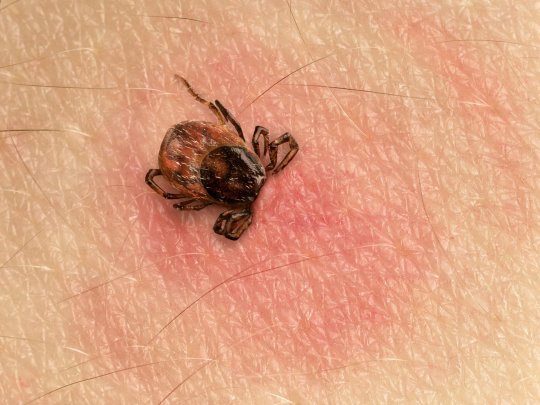
PRI_78195124Humans can contract Lyme disease if they are bitten by infected ticks (Picture: Getty)
Andrew was given blood thinning medication and eventually sent home, but seven days later, the same thing happened again.

He said: ‘The other half went numb. They said ‘you’ve had another stroke’. I thought ‘I might not survive this’.’

But after several tests and monitoring, doctors started to realise a stroke wasn’t behind the sudden numbness.

Instead, he was seen by neurologists, who began to suspect Andrew may have multiple sclerosis.

He said: ‘They did a lot of tests and MS was never explicitly mentioned but I knew what they were testing for.’

When the tests revealed swelling in his brain, Andrew was given the diagnosis he was dreading.

He said: ‘I was devastated. My sister-in-law had MS and I had watched her condition deteriorate. I knew that to be diagnosed as a man in my 40s probably meant it would come on quite rapidly.

‘I assumed the worst, saw myself incapacitated. Actually it made me very, very depressed.’

But the confusion continued when his medication for MS actually made him more ill and he was told he did not have the condition after all.

Andrew said: ‘When I was signed off treatment for MS I really thought I had nowhere else to go with this.

PRI_78195126If caught early enough, Lyme disease can be treated with antibiotics (Picture: Getty)

‘Eventually I went online and did research on my own and that led me to Lyme disease.

‘Up until that point, my symptoms had been treated individually by different doctors – there had been no communication or no linking of symptoms.

‘It suddenly became clear they were all connected.’

Official estimates put the number of cases of Lyme disease in the UK at around 2000 – but new research reveals the actual number of people with the disease could be closer to 8,000.

Lyme disease has been found in every region in the UK, particularly in Scotland and the south of England.

Researchers hope the new figures will increase awareness, as early intervention could prevent some of the long-term problems that Andrew now suffers.

He said: ‘If I have been diagnosed the very first time I went into hospital, I would have been given antibiotics and it would have gone away.’

IMG_0113-7e89-e1564585938771Andrew wrote semi-autobiographical fiction novel Anatomised in part to help raise awareness of Lyme disease (Picture: supplied)

Instead, he said not knowing what was wrong with him left him feeling suicidal.

He said: ‘I felt incredibly angry and frustrated, I felt a lot of resistance from my GP and the NHS in wanting to treat Lyme and find out more about it.’

Andrew still suffers with fatigue and has the constant feeling his hands are burning, taking strong medication typically prescribed to epilepsy sufferers every day to cope.

He spent four years writing a semi-autobiographical novel about his experience in the hope it would help others avoid the suffering he has faced.

The author said: ‘My main feeling is that I wanted people to know that being diagnosed with Lyme disease doesn’t mean your life is over.

‘I am so glad it has helped other people to find out more about the condition and helped other people with Lyme.

‘It’s all about raising awareness. We need to make as many people aware as possible as this is obviously a lot more common than first thought.’


https://www.forbes.com/sites/judystone/2019/08/02/the-lyme-wars-major-organizations-arent-playing-nicely-together/

The Lyme Wars: Major Organizations Aren’t Playing Nicely Together

Please go to above link for article written by Judy Stone.

Highlights:

  • There are three groups setting guidelines for diagnosing and treating Lyme
  • It’s close to impossible to make public comments on the 81 page draft and 203 page supplement.
  • The author was bit personally by a tick and points out she didn’t wait for it go grow to fit the 5 cm diameter to fit the case definition. She also points out that according to the IDSA a clinical diagnosis must occur in an endemic area (line 598) despite the knowledge ticks are spreading everywhere. So her case wouldn’t have fit the IDSA guidelines.
  • The IDSA also states that patients with ALS, MS, Parkinson’s, dementia, & psychiatric disease should NOT be tested for Lyme despite the fact many have been misdiagnosed with these diseases when in fact they were infected with Lyme/MSIDS.
  • The IDSA states that transmission of Lyme is rare if the tick was attached in under 24 hours, and to only recommend prophylactic treatment if it was attached more than 36 hours – yet research has shown that transmission has occurred in under 24 hours with one study finding it could happen in 6 hours and minimum attachment time for transmission has never been studied.
  • The IDSA is strongly opposed to tick testing.
  • She points out that while the IDSA recommends a single dose of doxycycline for those bitten in an endemic area, many feel this will do little and recommend 2-3 weeks of antibiotics.

There will be a part 2 coming up.


https://chrissmith.house.gov/news/documentsingle.aspx?DocumentID=405995

News Item

Chris Smith’s Lyme Disease Amendment Passes House, Tells DOD IG to Investigate the ‘Bioweaponization’ of Ticks

Washington, Jul 12, 2019 | Jeff Sagnip (202-225-3765)

• Rep. Smith addresses colleagues on the House floor July 11, 2019 on his Lyme disease amendment.

The full House of Representatives passed an amendment offered by Rep. Chris Smith (R-NJ) which directs the Inspector General (IG) of the Department of Defense to investigate the “possible involvement of DOD biowarfare labs in the weaponization of Lyme disease in ticks and other insects”  from 1950-1975.

According to Smith, he was “inspired to write the amendment”—now part of the House-passed 2020 National Defense Authorization Act (NDAA)—by “a number of books and articles suggesting that significant research had been done at U.S. government facilities including Fort Detrick, Maryland and Plum Island, New York to turn ticks and other insects into bioweapons.”

During debate on the floor, Smith said that, “The most recent book—Bitten: The Secret History of Lyme Disease and Biological Weapons—includes interviews with Dr. Willy Burgdorfer—the researcher who is credited with discovering Lyme disease.  The book reveals that Dr. Burgdorfer was a bioweapons specialist. Those interviews combined with access to Dr. Burgdorfer’s lab files suggest that he and other bioweapons specialists stuffed ticks with pathogens to cause severe disability, disease—even death—to potential enemies.”

“With Lyme disease and other tick-borne diseases exploding in the United States—with an estimated 300,000 to 437,000 new cases diagnosed each year and 10-20 percent of all patients suffering from chronic Lyme disease—Americans have a right to know whether any of this is true.  And have these experiments caused Lyme disease and other tick-borne disease to mutate and to spread?” Smith asked.

“My amendment tasks the DOD Inspector General to ask the hard questions and report back,” he said.   During debate on his amendment, Smith said the investigation would explore such questions as:

•  “what were the parameters of the program?

•  who ordered it?

•  was there ever any accidental release anywhere or at any time of any diseased ticks?

•  were any ticks released by design?

•  did the program contribute to the disease burden?

•  can any of this information help current-day researchers find a way to mitigate these diseases?”

Smith has a long record of fighting for people suffering from Lyme disease.  He is the author of the pending bipartisan, bicameral TICK Act introduced earlier this year to create a whole-of-government national strategy to aggressively fight Lyme disease.  The TICK Act (Ticks: Identify, Control, Knockout Act) (HR 3073) authorizes an additional $180 million to boost funding for Lyme research, prevention and treatment programs.

Smith—who is the founding co-chair of the House Lyme Disease Caucus along with Rep. Collin Peterson (D-MN)—said the bill provides $60 million over five years to reauthorize the Regional Centers of Excellence in Vector Borne Disease which have led the scientific response against tick-borne diseases.  And the bill authorizes new CDC grants for a total of $120 million over six years, to build a public health infrastructure for Lyme and other tick-borne diseases. The legislation is supported by more than 25 non-government organizations dedicated to combating Lyme.

In June, the House of Representatives adopted two other Smith amendments to boost funding for combating Lyme disease.  One amendment, (Division C of H.R. 2740, adopted June 18th), adds $2 million to the DOD’s Congressionally Directed Medical Research Program (CDMRP) for Tick-Borne Disease Research which primarily helps service personnel and their families exposed to Lyme. The program is currently funded at $5 million.

On June 12th, the House adopted Smith’s amendment to add $1 million for Lyme disease research at the Centers for Disease Control and Prevention (CDC). The CDC currently spends $11 million on Lyme research.

This spring, Smith hosted a Congressional town meeting on Lyme disease in Wall Township, NJ, featuring a panel of national experts including Dr. Ben Beard, Deputy Director of the Division on Vector-Borne Diseases at the U.S. Centers for Disease Control; Pat Smith, President of the Lyme Disease Association; and Dr. Richard Horowitz, an Internist and expert in treating patients with Lyme and other tick-borne diseases.

_________________

For more:  https://madisonarealymesupportgroup.com/2019/07/24/lyme-disease-expert-champions-investigation-into-pentagon-weaponizing-ticks-its-a-courageous-move/

https://madisonarealymesupportgroup.com/2019/07/19/biological-warfare-experiment-on-american-citizens-results-in-spreading-pandemic/

https://madisonarealymesupportgroup.com/2019/07/21/got-15-minutes-the-officially-ignored-link-between-lyme-plum-island/

https://madisonarealymesupportgroup.com/2019/07/31/tick-expert-admits-to-working-on-ticks-dropping-them-out-of-airplanes/

https://madisonarealymesupportgroup.com/2019/05/17/where-lyme-disease-came-from-and-why-it-eludes-treatment/