Archive for the ‘Treatment’ Category

Relapsing Babesia Treated Successfully With Tafenoquine & A Real Reason For Antibiotic Resistance: Livestock Farming

The following case report is an update from an earlier version.  The reason I include it is found in the comment section.

https://academic.oup.com/cid/advance-article-abstract/doi/10.1093/cid/ciac473/6605069

Broad antimicrobial resistance in a case of relapsing babesiosis successfully treated with tafenoquine  

Clinical Infectious Diseases, ciac473, https://doi.org/10.1093/cid/ciac473
Published:  10 June 2022

Abstract

We describe a case of relapsing babesiosis in an immunocompromised patient. A point mutation in the Babesia microti 23S rRNA gene predicted resistance to azithromycin and clindamycin whereas an amino acid change in the parasite cytochrome b predicted resistance to atovaquone. Following initiation of tafenoquine, symptoms and parasitemia resolved.

___________________

**Comment**

A wonderful example of how mutations can affect treatment outcome and the importance that a singular drug can make in a person’s life. This person is truly lucky to have this information to help guide their treatment.  Most patients simply have to struggle forward, shooting in the dark to find answers.

The topic of mutations is rarely is discussed or researched and is clearly an area begging for more work to be done.  How many more patients out there have this problem?

We need treatments, not a supposed magic-cure all injection.

For more:

___________________

Another topic that is rarely discussed or researched is the very real problem with wide-spread use of antibiotics in healthy animals in live-stock farming.

https://www.theepochtimes.com/study-sounds-alarm-over-new-bacteria-increasingly-spreading-among-humans

Study Sounds Alarm Over New Bacteria Increasingly Spreading Among Humans

By Jack Phillips
June 30, 2022

A strain of antibiotic-resistant bacteria discovered in pigs is spreading to people and causing infections, according to a new study released this week.

A strain of livestock-associated methicillin-resistant Staphylococcus aureus (LA-MRSA) is suspected to have merged among European pigs and other livestock in the past several decades because of frequent antibiotic use in farming.

“Historically high levels of antibiotic use” may have led to the cause of this “highly antibiotic-resistant strain of MRSA on pig farms,” said Dr. Gemma Murrayn, who worked on the study released by the University of Cambridge, in a news release. 

“We found that the antibiotic resistance in this livestock-associated MRSA is extremely stable—it has persisted over several decades, and also as the bacteria has spread across different livestock species,” Murrayn added in the news release.

(See link for article)

A New Look At Chronic Lyme

https://experiencelife.lifetime.life/article/a-new-look-at-chronic-lyme/

image compilation lyme disease
(See link for article)
SUMMARY:
  • Weintrub highlights Jennifer Crystal’s story which mimics many other patients
  • Unfortunately, the article regurgitates the notion that only up to 20% experience chronic symptoms when the number is more like 60%
  • Weintraub explains that historically LLMD’s used high doses of antibiotics/antimalarials in harsh regimens lasting months or years but due to grueling side effects have adopted a multi-pronged approach that combines the judicious use of drugs which includes natural therapies
  • The article also erroneously blames rising temperatures for tick expansion when independent research has shown this to be false
  • The reason infections are reported in every state but Hawaii and Oklahoma has to do with migrating birds, reptiles, and mammals – including humans.
  • Weintraub explains the difference between the “two types” of Lyme disease: the acute, straight-forward cases, and those who remain sick after standard treatment, who are typically diagnosed late, and who have more than one infection – which research confirms who are as impaired as those with congestive heart failure and sicker than type 2 diabetics, and who have a striking degree of neuro-inflammation
  • Unfortunately, this second group which suffers greatly with chronic infections is still gas-lit by physicians who would rather label them with chronic fatigue or fibromyalgia and give them “scattershot” treatment
  • The article then goes into the big problem with faulty Lyme testing which can not register antibodies for 6 weeks, miss a significant subset of people who will always remain seronegative, that can not register certain strains of borrelia, or pick up the organism which lies dormant within tissues.
  • Despite a CDC disclaimer, many doctors still rely on the faulty CDC surveillance case definition which requires a positive test or the EM rash, when many will never test positive and many never get a rash.
  • I was thankful for Dr. Maloney who states an early course of antibiotics does NOT eliminate the risk for chronic Lyme
  • The article then delves into the fact many patients are infected with way more than just Lyme
  • Researchers that previously doubted that Bartonella could be spread by ticks are changing their position as there is now strong circumstantial evidence
  • The article points out that research has identified “persister cells” which are antibiotic tolerate and generally unresponsive to drugs as well as biofilms which work to protect infectious organisms, also making it hard to eliminate them
  • Stanford researchers have exposed persister forms (in vitro) to more than 4,000 drugs to observe effectiveness which has resulted in the use of disulfiram/Antabuse, an old drug for use for alcoholism but is potent against Lyme disease (but can cause severe side-effects in some)
  • Dr. Zhang has tested lyme-containing biofilms (in vitro) using antibiotics and herbs and has found that Japanese knotweed, black walnut, sweet wormwood, and Ghanaian quinine are all effective against Lyme disease.
  • Dr. Horowitz has found that a 2-month course of dapsone combined with biofilm buster rifampin has helped almost half of his chronically ill patients return to health. One patient accidentally took quadruple the dose for 4 days which put her into full remission – another example of how dosage matters.  A few other patients used this approach with similar success leading Horowitz away from long-term antibiotics to hitting hard for several days 3-4 times a year
  • Dr. Kinderlehrer reports that a formerly straightforward infection has morphed into body-wide instability: extreme sensitivities to foods, mold, chemicals, activation of mast cells, and dangerous allergic reactions, which can trigger brain fog, mood problems, pain syndromes, and profound fatigue.
  • A suppressed immune system can reactivate other infections like EBV
  • Integrative doctor Erica Lehman’s experience has taught her to recognize the different between those with neurologic disease versus illness that hits the gut, endodrine system, joint tissues, etc.
  • Many of the doctors who specialize in chronic Lyme do so because they have gone through it themselves

I highly, highly recommend Weintraub’s 2008 book “Cure Unknown: Inside the Lyme Epidemic.”  Although it was written 14 years ago, it remains one of the most thorough, accurate accounts of the Lyme debacle and clearly demonstrates that little has changed.

She also wrote about Dr. Masters the Rebel for Lyme Patients Who Took on the CDC Single-handedly  and broke it down into four parts in Psychology Today and which I summarize in the link. This history must not be lost. 

We must remember the fraud and corruption behind & in the world of Lyme/MSIDS.

Fauci Gets COVID Yet Again After Taking Paxlovid, Proving the Drug that Cost Taxpayers $10.6 Billion is Worthless

https://childrenshealthdefense.org/defender/fauci-covid-rebound-pfizer-paxlovid-taxpayers

Fauci Gets COVID Again After Taking Pfizer’s Treatment — the Drug That Cost Taxpayers $10.5 Billion

Dr. Anthony Fauci said Tuesday he is experiencing a rebound of COVID-19 symptoms after taking Paxlovid, Pfizer’s COVID-19 antiviral pill. Taxpayers are on the hook for $10.5 billion worth of the experimental treatment, under a deal the White House cut with Pfizer.

Excerpts:
Fauci tested positive for COVID-19 on June 15, despite being quadruple-vaccinated, initially experiencing “mild symptoms,” according to the NIAID.
Summary:
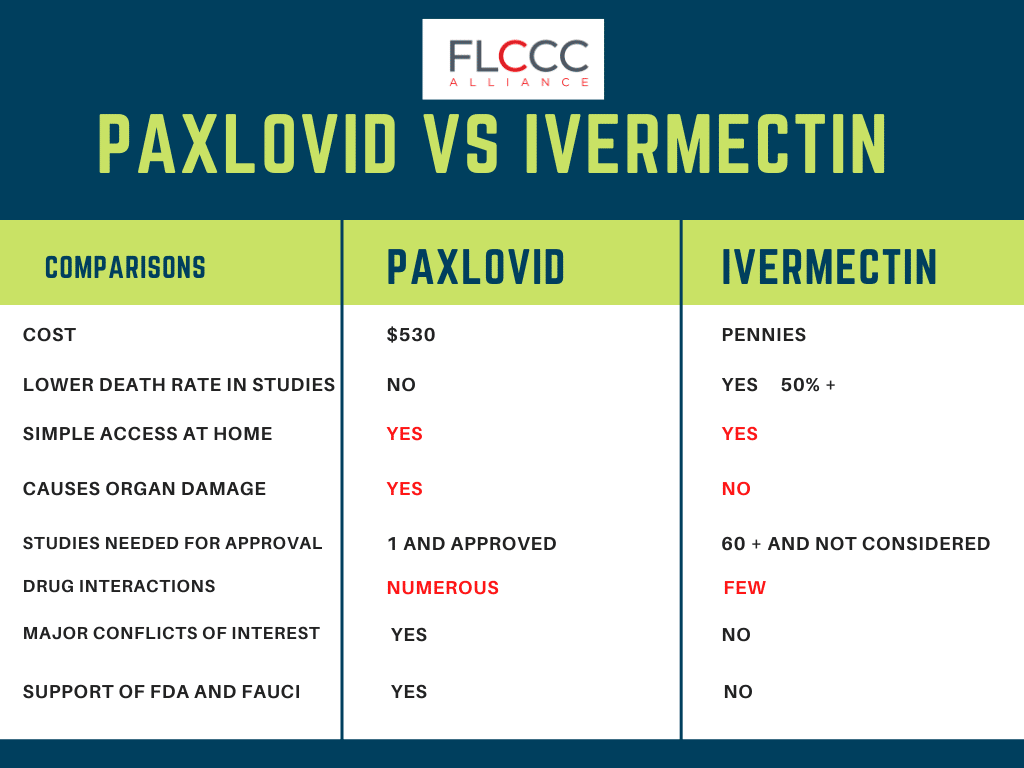
  • Due to his age he was put on a five day treatment of the expensive and rushed to market drug Paxlovid, which experts admit has a track record of causing a rebound of COVID, yet the CDC illogically continues to recommend it. Despite all common sense, logic, and science, the CDC will never in 1,000 years promote HCQ or ivermectin, vitamin C & D, and other effective, safe, cheap medications/supplements, just like they will never promote extended antibiotics for Lyme/MSIDS
  • Despite testing negative (as if that means anything) for three days in a row, Fauci reverted back to positive on the fourth day after treatment
  • His rebound felt worse than the first time he had COVID
  • Please know that while Biden’s “Test to Treat” initiative which supposedly allows Americans who test positive for COVID at a pharmacy to obtain “free” antiviral pills on the spot, these “free” pills have cost the U.S. taxpayer $10.6 BILLION.  
  • Dr. David Gortler, pharmacologist, pharmacist, FDA and healthcare policy oversight fellow and FDA reform advocate at the Ethics and Public Policy Center, questions why the government continues to invest in Paxlovid given it’s lack of performance.  He then rips the Pfizer study to shreds:
    • While Pfizer claims the drug reduces hospitalization and death by nearly 90% in people with mild to moderate infections, nearly everyone who gets the existing COVID mutation will have mild or moderate disease. 
    • Pfizer limited its study to people who were unvaccinated and who faced the greatest risk from the virus
    • An updated more recent analysis from 1,153 patients (out of a possible 2,246) showed a non-significant 51% relative risk reduction.
    • Gortler wants to know why Biden gambled every tax dollar on ONE single drug from ONE single drugmaker, Pfizer, “…when they could have spent almost nothing and promoted the established safety and efficacy of hydroxychloroquine and ivermectin with an established, superior outcome.”

Please see this powerful FLCCC graphic comparing Paxlovid vs ivermectin.

Pfizer stands to make $54 billion in sales in 2022 from its vaccine and Paxlovid, The Defender reported in March.

Non-Funded Study Shows LDN is a Broad-Spectrum Analgesic

https://www.futuremedicine.com/doi/10.2217/pmt-2021-0122

Low-dose naltrexone, an opioid-receptor antagonist, is a broad-spectrum analgesic: a retrospective cohort study

Samuel J Martin, Heath B McAnally, Paul Okediji and Moshe Rogosnitzky

Published Online:https://doi.org/10.2217/pmt-2021-0122

Aim: To evaluate the use of low-dose naltrexone (LDN) as a broad-spectrum analgesic. Methods: Retrospective cohort study from a single pain management practice using data from 2014 to 2020. Thirty-six patients using LDN for ≥2 months were matched to 42 controls. Pain scores were assessed at initial visit and at most recent/final documented visit using a 10-point scale. Results: Cases reported significantly greater pain reduction (-37.8%) than controls (-4.3%; p < 0.001). Whole sample multivariate modeling predicts 33% pain reduction with LDN, with number needed to treat (for 50% pain reduction) of 3.2. Patients with neuropathic pain appeared to benefit even more than those with ‘nociceptive’/inflammatory pain. Conclusion: LDN is effective in a variety of chronic pain states, likely mediated by TLR-4 antagonism.

Plain language summary

Naltrexone has historically been used to treat various substance use disorders, but recent discoveries have sparked interest in using low-dose naltrexone (LDN) to manage chronic pain. This study compared pain levels reported by patients before and after at least 2 months of LDN treatment to those reported by patients with the same painful diseases, who did not take LDN. Overall, patients who took LDN reported significantly more pain relief than patients who did not take LDN. How LDN alleviates pain seems complex, but apparently involves an anti-inflammatory effect on cells in the brain and spinal cord. LDN is extraordinarily safe, with no known risks (unlike most standard pain medications), and should be studied more in the treatment of chronic pain.

_________________

**Comment**

And this has been our personal findings as well.

I wish more offices did this internal research.  The data is all there begging to be collected, organized, and published.  This is a perfect example of how we can get answers without  corrupt, conflict riddled research institutions, government, and government collecting (bought out) researchers.

For more on this:  https://madisonarealymesupportgroup.com/2022/06/29/the-urgent-need-to-break-the-public-health-monopoly/

For more on LDN:

Case Report: Severe Back Pain in Child Caused by Lyme Disease

https://www.sciencedirect.com/science/article/abs/pii/S0735675722002297?via%3Dihub

Radiculoneuritis due to Lyme disease in a North American child

https://doi.org/10.1016/j.ajem.2022.03.063Get rights and content

Highlights

  • Peripheral nerve pain can be a presentation of early disseminated Lyme disease
  • Isolated neuroradiculits from Lyme is rare but important to recognize and treat
  • Patients with painful radiculitis should be tested for Borrelia infection

Abstract

Lyme disease is the most frequently reported vector-borne illness in the United States. It is caused by infection with Borrelia burgdorferi via the bite of an infected blacklegged tick (Ixodes spp.) Lyme disease has three stages: early localized, early disseminated, and late. Early disseminated Lyme disease may include neurologic manifestations such as cranial nerve palsy, meningitis, and radicular pain (also called radiculoneuritis). Isolated radiculoneuritis is a rare presentation of early disseminated Lyme disease and is likely underrecognized. We report a case of isolated Lyme radiculoneuritis in a child in Massachusetts characterized by fever and allodynia of the upper back that was treated in the emergency department. Laboratory investigation demonstrated elevated inflammatory markers and positive Lyme testing. Magnetic resonance imaging with gadolinium contrast revealed nerve root enhancement in C5-C6 and C6-C7. The symptoms resolved with oral doxycycline. Neuropathic pain should raise suspicion for neurologic manifestations of Lyme disease in North America even in the absence of meningitis and cranial nerve palsy. We report how timely recognition of this rare syndrome in North America is important and may prevent progression to late disease.

_________________

**Comment**

Again, this is not a “rare” syndrome, but is just “rarely” reported.  Big diff.  The authors even state that this syndrome is “likely underrecognized.”