Archive for the ‘Transmission’ Category

Under Our Skin 1 & 2 Lyme/MSIDS Documentary: Another Bioweapon?

A very real U.S. Government laboratory shrouded in secrecy that existed at Plum Island (which has been moved to Kansas state University) was inspired by a Nazi bioweapons expert, and housed Fort Terry a biological warfare defense research facility. The lab had a mission to poison cattle in the Soviet Union during the Cold War and was also connected to an African Swine Fever outbreak in Cuba. It should come as no surprise that strange genetically mutated creatures have washed up on the shores of the mainland.

Tick experimentation by the government has been going on since at least the 60’s due to their ability to spread disease, with certain pathogens never showing up on testing. The “discoverer” of Lyme disease – Willy Burgdorfer, just happened to work at the NIH state of the art BSL- 4 biomedical research facility called the Rocky Mountain Lab (RML) in Montana force-feeding ticks various pathogens.  There is also a record of dropping infected ticks from airplanes to study their distribution patterns.

It doesn’t take a rock-scientist to realize the implications of these actions.
But despite efforts the government says, “Nothing to see here!”

https://rumble.com/v43vmkx-under-our-skin-part-1-and-2-both-lyme-disease-movies-in-one-video-is-lyme-d.html

Under Our Skin 1 & 2:  Is Lyme Disease A Bioweapon?

Under Our Skin: Part 1 (2009)

https://amzn.to/48znBOJ

In the early 1970’s, a mysterious ailment was discovered among children living around the town of Lyme, CT. What was first diagnosed as isolated cases of juvenile arthritis, eventually became known as Lyme disease, an illness triggered by spiral-shaped bacteria, similar to the microorganisms that cause syphilis. Today, many of those untreated will suffer chronic debilitating illness. Some unknowingly will pass the disease onto their unborn children. Many will lose their livelihoods, and still others, their lives.

Yet Lyme disease is one of the most misunderstood and controversial illnesses of our time. Difficult to test accurately, tens of thousands of people go undiagnosed — or misdiagnosed with such conditions as fibromyalgia, chronic fatigue, autism, MS and ALS. The Centers for Disease Control estimates more than 300,000 people acquire Lyme disease each year, a number greater than breast cancers and AIDS combined. And yet, the medical establishment — with profound influence from the insurance industry — has stated that the disease is easily detectable and treatable, and that “chronic Lyme” is some other unrecognized syndrome or a completely psychosomatic disorder.

UNDER OUR SKIN is a powerful and often terrifying look not only at the science and politics of the disease, but also the personal stories of those whose lives have been affected and nearly destroyed. From a few brave doctors who risk their medical licenses, to patients who once led active lives but now can barely walk, the film uncovers a hidden world that will astound viewers. While exposing a broken health care and medical research system, the film also gives voice to those who believe that instead of a crisis, Lyme is simply a “disease du jour,” over diagnosed and contributing to another crisis: the looming resistance of microbes and ineffectuality of antibiotics. As suspenseful and hair-raising as any Hollywood thriller, UNDER OUR SKIN is sure to get under yours.

……..

Under Our Skin: Part 2 (Emergence) (2014)

https://amzn.to/48znBOJ

In this dramatic follow-up to the widely acclaimed UNDER OUR SKIN, EMERGENCE takes the viewer on a journey from horror to hope. We witness the emerging epidemic of Lyme disease as infection and education spread globally. We watch as the truth emerges about the disease’s persistence and reach, about promising new research, and about medical collusion and conflicts of interest that continue to impede progress. We revisit the characters from UNDER OUR SKIN as they emerge into better health, reclaiming their lives and dignity, and offering hope to the legions now suffering. As Lyme disease surges, EMERGENCE shines a probing light on the issue and becomes a beacon in the dark.

Bitten: The Secret History of Lyme Disease and Biological Weapons (Book)

By Kris Newby

https://amzn.to/3NKAUUq

Amazon Description:

A riveting thriller reminiscent of The Hot Zone, this true story dives into the mystery surrounding one of the most controversial and misdiagnosed conditions of our time — Lyme disease — and of Willy Burgdorfer, the man who discovered the microbe behind it, revealing his secret role in developing bug-borne biological weapons, and raising terrifying questions about the genesis of the epidemic of tick-borne diseases affecting millions of Americans today.

While on vacation on Martha’s Vineyard, Kris Newby was bitten by an unseen tick. That one bite changed her life forever, pulling her into the abyss of a devastating illness that took ten doctors to diagnose and years to recover: Newby had become one of the 300,000 Americans who are afflicted with Lyme disease each year.

As a science writer, she was driven to understand why this disease is so misunderstood, and its patients so mistreated. This quest led her to Willy Burgdorfer, the Lyme microbe’s discoverer, who revealed that he had developed bug-borne bioweapons during the Cold War, and believed that the Lyme epidemic was started by a military experiment gone wrong.

In a superb, meticulous work of narrative journalism, Bitten takes readers on a journey to investigate these claims, from biological weapons facilities to interviews with biosecurity experts and microbiologists doing cutting-edge research, all the while uncovering darker truths about Willy. It also leads her to uncomfortable questions about why Lyme can be so difficult to both diagnose and treat, and why the government is so reluctant to classify chronic Lyme as a disease.

A gripping, infectious page-turner, Bitten will shed a terrifying new light on an epidemic that is exacting an incalculable toll on us, upending much of what we believe we know about it.

…….

December 27, 2023

Jay Bhattacharya @DrJBhattacharya writes:

I just finished @krisnewby’s Bitten, which tells the history of the US government’s secret program in the 1950s and 1960s to weaponize ticks to deliver deadly bacteria to incapacitate unsuspecting populations.

Newby, a talented journalist and science writer, structures her history around a biography of Willy Burgdorfer, the Swiss-American scientist who discovered borellia burgdorferi, a spirochete bacteria often found in Lyme disease patients.

It’s an incredible, infuriating, well-written book worth your time.

A few lessons:

1. The mid-20th century US biomedical research establishment was psychopathic, whole-heartedly embracing reckless, deadly investigations in the name of developing vaccines and bioweapons.

2. It is possible (& perhaps likely, though not proven) that the emergence and spread of Lyme disease may have been caused by this research program, which included large open-air testing of intentionally infected ticks on US soil.

3. The bioweapons program used combinations of viruses and bacteria infecting the same tick to hide the body’s immune response to infection from detection by standard medical tests.

4. Lyme disease and related syndromes are likely caused by more than just borellia burgorferi. Newby makes a circumstantial case for a shadowy rickettsia bacteria that Willy Burgdorfer studied, which he called the “Swiss agent.”

5. The financial interests of biomedical researchers and testing companies peddling faulty tests — alongside their control over the official pronouncements and policy of the National Institute of Health and the US Infectious Disease Society of America — have frozen in place a diagnostic doctrine that has led to countless Lyme disease patients misdiagnosed and gaslit about the symptoms they are suffering.

Closing thought: similar tendencies in the biomedical research and medical establishments are still extant and may help explain many things about the covid pandemic. History does not repeat, but it rhymes.

Source:  https://twitter.com/DrJBhattacharya/status/1740029782967148624

_______________

**Comment**

Please read these articles to get a bird’s-eye view of the topic:

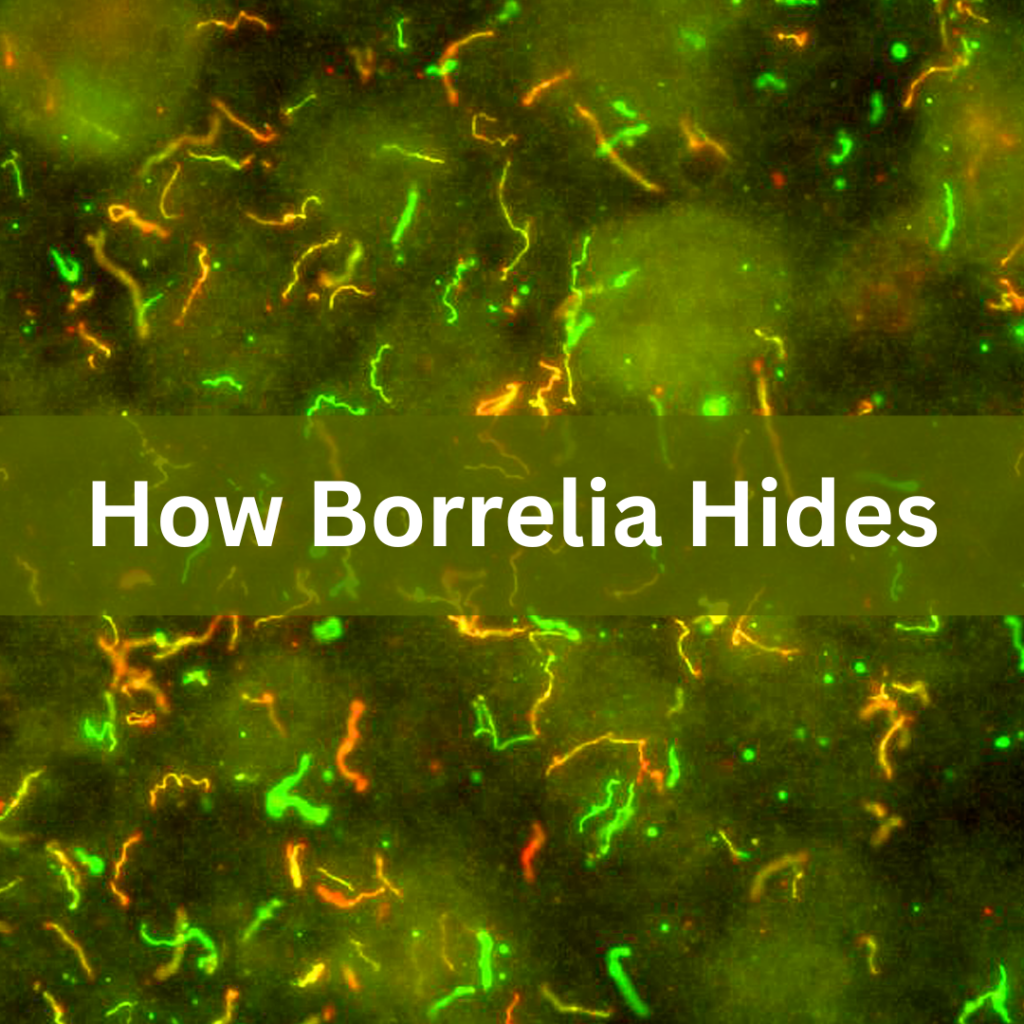
Why Lyme Spirochetes Are Like Stealth Bombers

https://www.lymedisease.org/lyme-stealth-bombers/

Why Lyme spirochetes are like stealth bombers

By Lonnie Marcum
12/7/23

Borrelia burgdorferi, the bacteria that causes Lyme disease, can persist in animals and humans because it has evolved complex mechanisms to avoid the immune system.

In a 1996 interview with The Scientist magazine, Stephen Barthold, DVM, PhD, the researcher who developed the first mouse model of Lyme disease, described Borrelia burgdorferi’s ability to avoid immune detection as a form of cloaking. “It’s using some sort of stealth-bomber-type mechanism,” he said.

Since then, Professor Barthold has gone on to partner with many researchers in the pursuit of learning how B. burgdorferi causes chronic infection, including Monica Embers, PhD, from Tulane University.

Nicole Baumgarth, DVM, PhD, now the director of the Johns Hopkins Lyme and Tickborne Diseases Research and Education Institute, has years of experience collaborating with Barthold.

The latest research by Baumgarth, Barthold and others at University of California, Davis offers the science community one more clue as to how Borrelia is able to subvert the immune system leading to persistent infection in mice.

Their paper entitled, “Borrelia burgdorferi Infection–Induced Persistent IgM Secretion Controls Bacteremia, but Not Bacterial Dissemination or Tissue Burden,” has shed new light on how these pathogens persist in tissues, but present in very low numbers in the blood.

As Dr. Baumgarth tells me, “Blood is not the way Borrelia gets around the mice. Rather it migrates through tissues.”

These new findings may offer a possible explanation as to why disseminated Borrelia is both harder to treat, and so difficult to detect in blood samples.

Immune system basics

The immune system is roughly divided into two: the innate immune system and the adaptive immune system.

The innate immune system is our body’s first line of defense against pathogens and harmful substances. When working properly, it reacts immediately, but non-specifically, to all foreign invaders.

In contrast, the adaptive immune system is more targeted. It relies on prior exposure to learn and generate protective antibodies. The adaptive immune system remembers previous encounters and develops specific weapons (B-cells and T-cells) to fight each pathogen.

IgM vs IgG Antibodies

When the immune system detects any foreign substance, it produces antibodies which trigger the innate and later the adaptive immune system. IgM (immunoglobulin M) and IgG (immunoglobulin G) are two types of antibodies produced by the immune system.

IgM, the larger of these two immunoglobulins, is an early type of antibody to emerge in the development of an immune response. It acts as the initial defense against infections and is a strong activator of the complement system immune response that helps to clear pathogens.

The complement system consists of multiple proteins (C1 to C9) that summon phagocytes to the site of infection. Phagocytes (macrophages, neutrophils, lymphocytes) are components of the innate immune system that destroy pathogens. [For a crash course on the complement system watch this video.]

IgM is very effective in the blood stream. However, the size of IgM antibodies impedes their ability to penetrate all the tissues of the body. This limits IgM’s ability to send phagocytes into deeper tissues (eg. joints, heart, brain) where infection may be hiding.

IgG, a smaller, more penetrable antibody, is produced later in the immune response. IgG levels typically increase over a longer period of time, in some cases promoting the immune system to develop long-term immunity to future infection.

Study shows Borrelia impairs immune response

This new study shows how persistent Borrelia burgdorferi triggers a prolonged initial (IgM) immune response, and can impair a secondary (IgG) immune response.

This initial (IgM) response leads to fewer Borrelia burgdorferi (Bb) in the blood stream while the infection continues to spread throughout the body.

In addition, Borrelia’s prolonged IgM response in both humans and animals leads to a reduction in antibody-mediated clearance of the infection from deeper tissues.

The authors state, “Together the data demonstrated that IgG, but not IgM, is critical for the long-term control of B. burgdorferi tissue burden or disease induction. Despite that, Borrelia tissue dissemination in mice appeared very little affected by the rate of bacteremia, suggesting the B. burgdorferi main mode of dissemination in mice occurs by means other than via the blood.”

How IgM causes false-negatives

This research has shown that the standard definition of IgM as an acute response versus IgG as chronic response may be problematic in the classification of Lyme disease.

The Lyme disease Western Blot detects IgM and IgG responses to specific proteins found on Borrelia burgdorferi—for example: OspC (band 23-25), OspA (band 31), OspB (ban 34), BmpA protein (band 39), and flagellin protein (band 63-93).

In people with healthy immune systems, the Lyme disease IgM is normally detectable within a couple of weeks after infection, typically peaking around 4-6 weeks, then slowly declining over the next several months. The IgG begins around 4-6 weeks, peaking around 4-6 months, then slowly declining over the next several years.

Unfortunately, people who are immune-compromised, and/or fighting more than one infection (co-infection), may never develop a robust IgG response. The lack of the IgG response also prevents the immune system from finding and clearing bacteria embedded within deeper tissues, further impairing the healing process.

 In the experimental Bb mouse model, despite extensive antibiotic treatment, IgM production continued for months. This is consistent with human Lyme disease studies demonstrating continued IgM response as long as 10 years, even in patients treated with antibiotics.

As the authors state, this is “a remarkable observation, given the short half-life of IgM, considered to be <24 hours.” Meaning a prolonged IgM is likely coming from the immune system reacting to persistent Borrelia.

The continued production of IgM in the blood stream may explain why Borrelia is so difficult to detect in blood samples.

And because the CDC discredits the presence of IgM after four weeks, the prolonged IgM is likely contributing to the high rate of false-negative standard tests for Lyme disease.

Per the CDC website, “the IgM Western Blot test result is only meaningful during the first four weeks of illness. If you have been infected for longer than 4 to 6 weeks and the IgG Western Blot is still negative, it is highly likely that the IgM result is incorrect (e.g., a false positive). This does not mean that you are not ill, but it does suggest that the cause of illness is something other than the Lyme disease bacterium.”

We now have evidence that this is simply not true in all cases.

Difficult to Detect

In 2019, I attended a vector-borne disease conference at University of California, San Francisco. While there, *Dr. Charles Chiu explained how his powerful direct detection DNA sequencing system—able to detect thousands of pathogens—was just not finding enough Borrelia burgdorferi in the blood stream of humans to work effectively. (See my live tweets of Chiu’s presentation here.)

I was just baffled how such a powerful tool could not consistently detect Lyme disease in humans. Now, knowing that IgM remains in the blood stream longer, keeping the bacteria numbers low, may help us understand this phenomenon.

The fact that the prolonged IgM reduces the presence of Bb in the blood stream helps to explain why next-generation serologic tests using direct detection of DNA or proteins may not be able to detect Bb in patients who are suffering from chronic Lyme disease.

[*Since then Dr. Chiu has gone on partner with Johns Hopkins University where they have developed a next-generation gene sequencing technique, called RNA-seq, to map the immune response to infection. And most recently Chiu has partnered with Columbia University to open the first West Coast Center for the Clinical Trials Network.]

Immune Disruption

Also covered in Baumgarth’s paper is another strategy Bb has developed to evade the immune system. Within 24 hours after the tick bite, Bb quickly invades and is detectible in the lymph nodes nearest the site of infection.

On the surface, this seems counterintuitive, as the lymph nodes contain many life-saving immune cells.

However, once Bb is in the lymph nodes, the spirochetes induce a signal that disrupts the “germinal centers” within the lymph node architecture. Ultimately, this alters the adaptive immune response of the lymphatics and impairs the immune system by limiting memory B and T cell production.

In addition, new research from Johns Hopkins has shown that Bb impairs dendritic cells. Dendritic cells are a type of immune cell spread throughout the body. Once activated, dendritic cells migrate to the lymph nodes, where they activate the adaptive immune response. Bb’s alteration of the dendritic cells also impairs the formation of memory B and T cells.

When the immune system functions properly, IgM is produced and triggers an immune response that is good at controlling bacteremia in the blood stream. From there, an IgG response is required to control dissemination outside the blood stream.

IgM and IgG also help to trigger macrophages, a type of white blood cell that envelops and destroys pathogens. The lack of this secondary IgG response prevents macrophages from getting the message to enter and clear Bb infection from deeper tissues—which contributes to persistent infection outside the bloodstream.

Conclusion

In conclusion, the authors “propose that the continued production of immune IgM is a manifestation of B. burgdorferi mediated B cell response subversion and represents an immune evasion strategy of B. burgdorferi. It may promote B. burgdorferi dissemination out of the blood and into the skin, where it can remain until attachment and bite of a tick will induce it to migrate toward the site of the tick bite.”

I was always told Bb likes to leave the blood stream and hide in zones of the body where it is protected from the immune system. This new study shows how Bb actually uses our own immune system to aide in its ability to hide. This strategy allows Bb to survive and attain its ultimate goal— which is not to kill the host, but to get picked up by another tick and spread to another host.

Over 40 years since the discovery of the spirochete responsible for Lyme disease, we are inching closer to understanding how Borrelia burgdorferi suppresses and evades the immune system.

LymeSci is written by Lonnie Marcum, a physical therapist and mother of a daughter with Lyme. She served two terms on a subcommittee of the federal Tick-Borne Disease Working Group. Follow her on Twitter: @LonnieRhea  Email her at: lmarcum@lymedisease.org.

Reference

Hastey CJ, Olsen KJ, Elsner RA, Mundigl S, Tran GVV, Barthold SW, Baumgarth N. Borrelia burgdorferi Infection-Induced Persistent IgM Secretion Controls Bacteremia, but Not Bacterial Dissemination or Tissue Burden. J Immunol. 2023 Nov 15;211(10):1540-1549. doi: 10.4049/jimmunol.2300384. PMID: 37782044.

_______________

For more:

Review: Borrelia Miyamotoi

https://danielcameronmd.com/review-borrelia-miyamotoi/

REVIEW: BORRELIA MIYAMOTOI

borrelia-miyamotoi

Borrelia miyamotoi is an emerging tick-borne illness that is transmitted by the deer tick. The most common symptoms of a B. miyamotoi infection include fever, fatigue, headache, chills, myalgia, arthralgia, and nausea.

In their article, “Human Borrelia miyamotoi Infection in North America,” Burde and colleagues discuss the frequency and location of infection in ticks and people, clinical presentation and complications, diagnosis, treatment, and prevention.

Prevalence of B. miyamotoi

B. miyamotoi-infected ticks have been reported throughout the northeastern, northern Midwestern, and western United States. They’ve also been detected in all Canadian provinces except Newfoundland and Labrador.

The prevalence of Borrelia miyamotoi infections is difficult to determine, since the illness is not nationally reportable in the U.S. but reportable in only a few states including Connecticut, Maine, Massachusetts, Minnesota, New Jersey, Vermont, and Wisconsin. And, confirmation of the diagnosis depends upon laboratory testing, which is not always available.

Furthermore, diagnosis can be challenging. “The discrepancy between diagnosed and undiagnosed infection is probably even greater for B. miyamotoi, a tick-borne disease that lacks an easily identifiable clinical marker, such as the erythema migrans rash, and is less well known by health care workers and the general public,” the authors write.

Transmission

B. miyamotoi can be transmitted to humans through the bite of an infected black-legged (deer) tick. Several studies have found that it may be transmitted through blood transfusions, as well.

The B. miyamotoi pathogen can be transmitted from an infected female tick to her eggs, which may result in some larval ticks harboring the infection and transmitting it to a host. “Other larvae become infected after taking a blood meal on an infected mouse reservoir host, molt to the nymphal stage, and then transmit infection to another mouse or human,” they write.

Symptoms & Treatment

B. miyamotoi symptoms can be non-specific and an individual may appear to have a viral-like illness with fever, chills, headache, myalgia, fatigue, arthralgia, and gastrointestinal complaints, according to the authors.

“The most striking clinical feature of B. miyamotoi is relapsing fever with an initial febrile episode followed by a period of wellness and then one or more additional febrile episodes,” the authors write.

Some studies have found that the “average time between relapses was 9 days with a range of 2 days to 2 weeks.”

However, not all individuals develop relapsing fever. “In the largest case series of B. miyamotoi cases in the US, only 2 of 51 cases (4%) developed relapsing fever.”

READ: Don’t Rely on Relapsing Fever to Diagnose B. miyamotoi 

Treatment of B. miyamotoi disease typically involves using the same antibiotics to treat Lyme disease: doxycycline, tetracycline, erythromycin, penicillin, and ceftriaxone. However, there have been no trials to evaluate the effectiveness of these treatments.

Co-infections worsen disease

Co-infections can worsen the illness. There have been reported cases of B. miyamotoi co-infection with B. burgdorferi and/or Babesia microti.

“Previous studies have found that coinfection of B. burgdorferi with either Babesia microti or with Anaplasma phagocytophilum are often associated with more severe disease compared with that caused by B. burgdorferi infection alone,” the authors write.

Testing for the infection can include blood smear, polymerase chain reaction (PCR), and/or antibody detection.

Authors’ Conclude:

“The possibility of B. miyamotoi infection should be considered in any patient with a febrile illness who resides in or has recently traveled to a region where Lyme disease is endemic, especially during the late spring, summer, or early fall.”

References:
  1. Burde J, Bloch EM, Kelly JR, Krause PJ. Human Borrelia miyamotoi Infection in North America. Pathogens. 2023 Apr 3;12(4):553. doi: 10.3390/pathogens12040553. PMID: 37111439; PMCID: PMC10145171.

_______________

For more:

Since Borrelia miyamotoi is not a reportable illness to the CDC, no one has any clue about prevalence but reports are coming in continually that it’s highly likely to be a much bigger problem than ‘authorities’ believe.
It was recently discovered that:

Also, Borrelia miyamotoi has been in California ticks for a long time:

https://madisonarealymesupportgroup.com/2018/02/15/b-miyamotoi-in-ca-ticks-for-a-long-time/

The following case shows how you can become infected while traveling:  https://madisonarealymesupportgroup.com/2020/10/24/a-case-of-borrelia-miyamotoi/

Pregnancy, Breast Feeding & Lyme

https://danielcameronmd.com/pregnancy-breast-feeding-and-lyme/

PREGNANCY, BREAST FEEDING AND LYME

By Dr. Daniel Cameron

Welcome to another selection from my book “An Expert’s Guide on Navigating Lyme disease.” The book highlights the findings of my first 600 Lyme disease Science blogs.  In this episode, I will discuss pregnancy, breast feeding, and Lyme disease.

Pregnancy and breast feeding are particularly concerning topics for Lyme disease patients and their doctors. Here are few findings to help with discussions.

Pregnancy and Lyme.

If a woman is bit by a deer tick or contracts Lyme disease (LD) while pregnant, she must immediately alert her treating physician. Poor outcomes have been described for newborns whose mothers contracted Lyme disease during pregnancy.
 Studies have found that stillbirths occurred when LD was contracted during the first trimester. Markowitz et al., 1986, Schlesinger et al., 1985, and MacDonald et al., 1987) Gestational Lyme borreliosis has been described in 5 of 19 pregnancies (26%) resulting in “syndactyly, cortical blindness, intrauterine fetal death, prematurity, and rash” (Markowitz et al., 1986).

A newborn died at 39 hours of life with a left-sided hypoplastic heart and the presence of spirochetes consistent with Bb [Borrelia burgdorferi] “in the spleen, kidneys, and bone marrow” (Schlesinger et al., 1985). Bb was also cultured from fetal liver tissue in 4 stillborn infants (MacDonald 1986). 
There was insufficient evidence to determine the risk to a child if their mother contracted Lyme disease before pregnancy (Mylonas 2011). A study of 2,000 women with a history of LD did not show an increased risk of fetal death, decreased birth weight, or length of gestation at delivery. There was an increase in the number of congenital defects but the risk may have been by chance alone (Strobino et al., 1993).

Choosing an antibiotic regimen for pregnant women with Lyme disease can be a complex challenge. Amoxicillin, cefuroxime, azithromycin, and IV ceftriaxone have been prescribed for pregnant women (Maraspin et al., 2009).

Author’s note: More studies will be needed to understand pregnancy and breast feeding concerns.

Breast feeding and Lyme.

The CDC addressed the question “Can Lyme disease be transmitted through breast milk?” They announced, “No reports of breast milk spreading Lyme disease to infants exist” (CDC 2022).
There is insufficient data to determine if breastfeeding can transmit Bb to the child. 
Certain antibiotic classes, such as tetracyclines, should not be used in breastfeeding women being treated for Lyme disease to avoid the risk of side effects, such as tooth discoloration. The child’s clinician can help guide treatment options for a breastfeeding mother. Read more.

Diversity of clinical presentations of Lyme and pregnancy.

Doctors followed 11 pregnant women with Lyme disease from 2008 to 2020. “In the present study, we report our case series, which includes 11 pregnant women, 6 of whom developed erythema migrans during pregnancy (between weeks 8 and 34), 3 had monoarticular or neurological symptoms, and 2 had positive serology but did not develop any clinical symptoms” (Trevisan et al., 2020).

All mothers were treated with amoxicillin 1g 3x/ day for 14 days. One child was born prematurely at seven months. Another child was born with angiomatoid patches that regressed spontaneously 18 months later. One of the pregnant women with Lyme disease, confirmed by spinal tap and labs, experienced articular and neurologic involvement and improved with amoxicillin. However, she required treatment with intravenous ceftriaxone because of persistent symptoms. Read more.

Two mothers transmit Lyme to their babies.

Babesia can be contracted from the bite of a deer tick, a blood transfusion, or during pregnancy. This podcast reviews a case in which Babesia was transmitted from mothers to their babies during pregnancy.

Questions raised in the podcast include: 
• How often do mothers contract Babesia from a tick bite during pregnancy?
• Is there an effective and safe treatment for Babesia in pregnant women?
• How does a mother or doctor recognize Babesia in a pregnant mother?
• Should doctors follow pregnant mothers with a tick bite or Lyme disease for Babesia and what evidence should be investigated? 
• Will the mothers develop complications of Babesia in the future if not treated?
• Should the two mothers have been treated for Babesia? Read more.

A baby girl with Lyme disease.

Slovenian researchers investigated whether Borrelia burgdorferi bacteria, the pathogen causing Lyme disease, might impact pregnancy outcomes. 
Pregnancy outcome was unfavorable in 13.8% (42/304) of patients. They found that the outcome of pregnancy in Lyme disease patients was not significantly worse.

There were 22 pre-term births, 10 fetal/perinatal deaths, and/or 15 anomalies. Several mothers had potential explanations for their unfavorable pregnancy outcomes. The poor outcome for Lyme disease patients was not significantly different compared to the general population (Maraspin et al., 2020).

Author’s note: The study did not follow the 262 women who gave birth with a favorable outcome for any long-term problems. Nor did the authors describe the outcome for women who were not treated for early Lyme disease. Read more.

Little information on treatment of tick bites during pregnancy.

Smith et al., (2020) argue that “high-level evidence” supports using a single 200 mg dose of doxycycline for tick bites during pregnancy. The evidence they cited is not high-level. Instead, they focused on a small Meta-Analysis study.
 Regrettably, there is no evidence that a single 200 mg dose of doxycycline prevents other manifestations of Lyme disease, such as heart block, 7th nerve palsy, Lyme arthritis, Lyme encephalopathy, or Neuropsychiatric Lyme disease. Read more.

Congenital transmission of Babesia to a 5-year-old twin.

A baby girl was born to a mother who showed no evidence of Lyme or a related tick-borne illness during her pregnancy (Walker et al., 2022). The 5-week-old female diamniotic dichorionic twin was born at 36 5/7 weeks by C-section and diagnosed with Babesia. Her twin brother was asymptomatic.
The mother described several trips to Cape Cod, Massachusetts, an area endemic to Lyme disease.

“The patient’s mother had one febrile illness during pregnancy, occurring at approximately 23-24 weeks of gestation, associated with a maculopapular rash that resolved spontaneously” (Walter et al., 2022). 
The daughter was treated with a blood transfusion, intravenous atovaquone twice daily, and azithromycin daily. The authors of the article pictured a blood smear with intraerythrocytic inclusions consistent with Babesia microti. Read more.

Delayed onset Babesia in two newborns.

A study from the Mayo clinic described two newborn infants diagnosed with Babesia several weeks after the mothers were treated for Lyme disease (Hoversten and Bartlett, 2018).
 Infant 1:
 A baby boy was diagnosed with Babesia at 4-1/2 weeks. His mother had been diagnosed and treated for early Lyme disease at 32 weeks gestation.  
Infant 2: 
A baby girl was diagnosed with Babesia at 18-days-old. Her mother had been diagnosed and treated for early Lyme disease at 37 weeks gestation.
 Neither mother was treated for Babesia during their pregnancy. Read more.

________________

**Comment**

Lyme/MSIDS has recognized for over 40 years, yet very little has been done relating to pregnancy, breastfeeding, effective treatments, persistence, and transmission.  The fact so much work on supposed ‘climate change’ should prove to anyone with a functioning brain that something isn’t right.  While thousands suffer, the only thing we have to show for it is mountains of data on ticks and the climate, despite independent research proving ticks are marvelously ecoadaptive as well as pointing out erroneous, biased, shoddy research being used to support a faulty model to push a climate narrative.

The fact that infected moms have had babies die, and the fact they have cultured spirochetes in the heart, liver, spleen, kidneys, and bone marrow of infants should raise alarming red flags.

Regarding the CDC’s statement on breastfeeding – just because something hasn’t been reported, doesn’t mean it doesn’t happen.

Any red flags simply get buried under climate data.  

For more:

Petition to Retract Fraudulent COVID Origin Paper in Nature Journal & Smoking Gun That Fauci Perjured Himself

https://www.change.org/p/retract-the-proximal-origin-of-sars-cov-2? (Go here to Sign)

Sign this petition to retract the fraudulent paper published in Nature Medicine. The virologists who published it, lied and this is now clear from their released email exchanges.

chng.it/VNVsKTtM via @ChangeGER

For more:

http://

We Now Have The Smoking Gun

Fauci perjured himself

Aug. 10, 2023

The GAO has admitted that funding to the Wuhan Lab came from the NIH.  The acting director of the NIH also admitted to this in writing.  While Fauci was adamantly told the public that the U.S. government did not fund this ‘gain of function’ research, his private correspondence stated he was suspicious of viral manipulation because he knew they were doing ‘gain of function’ research.

“Tony doesn’t want his fingerprints on any origins stories.”  (From the internal communications)

“There were mutations in the virus that would be most unusual to have evolved naturally in the bats and there was a suspicion that this mutation was intentionally inserted.  Dr. Anthony Fauci, internal communications

According to Rand Paul, partisanship is keeping this from being acted upon forcing him to seek help from a local U.S. attorney in D.C. to see if he act.  He also feels the current administration is keeping a tight grip on records he feels will clearly show that Fauci allowed this research that mixed viruses to make them more dangerous and more transmissible to be exempt from safety oversight from a committee.

“They are still funding this type of research.” Senator Dr. Rand Paul