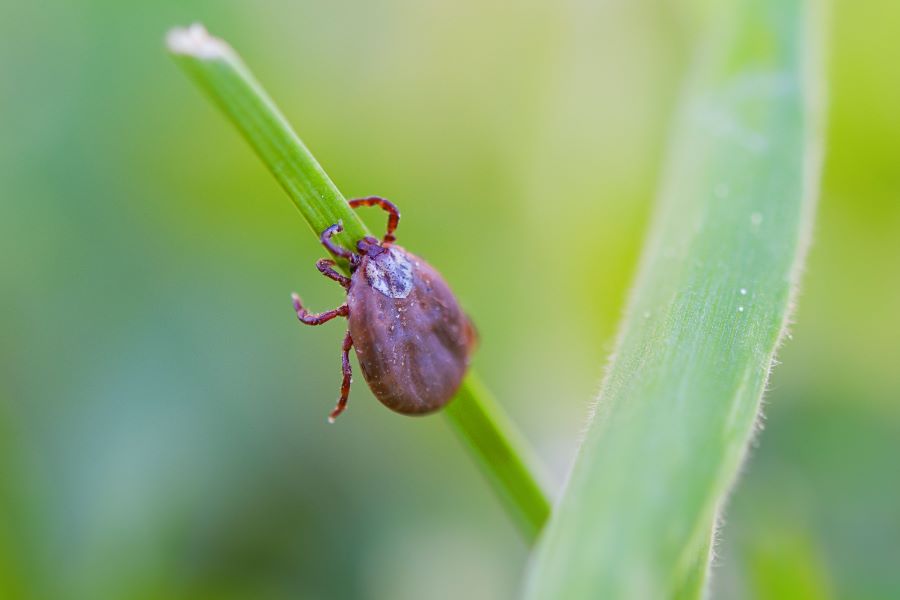
Americans Warned About Travel to Mexico Due to ‘Rocky Mountain Spotted Fever’
An advisory has been issued for Americans traveling to parts of Mexico, warning them of a potentially deadly disease called Rocky Mountain spotted fever.
Americans are being advised to exercise caution when traveling to Mexico, with the Centers for Disease Control (CDC) issuing a travel advisory due to reports of an illness known as Rocky Mountain spotted fever, which can be deadly.
“There have been reports of Rocky Mountain spotted fever (RMSF) in people traveling to the United States from Tecate, in the state of Baja California, Mexico,” the CDC said in the advisory, which was issued on Dec. 8.
The CDC said there are reports of the disease being found in urban areas in some states in northern Mexico (including Baja California, Sonora, Chihuahua, Coahuila, and Nuevo León). However, the illness isn’t exclusive to those regions, the CDC noted in its warning.
Bacteria that causes the disease isn’t spread from person to person but through ticks, the agency said. (See link for article)
______________
**Comment**
The article mentions that there is also an increase in Babesiosis.
Scientists from the University of Bristol studied the naturally occurring electrostatic charges in animals. They reported their findings in a study entitled “Static electricity passively attracts ticks onto hosts.”¹
“Mammals, birds, and reptiles are known to carry appreciable net electrostatic charges, equivalent to surface potentials on the order of hundreds to tens of thousands of volts,” the authors wrote.
“Therefore, we hypothesize that their parasites, such as ticks, are passively attracted onto their surfaces by electrostatic forces acting across air gaps.” (An electrostatic charge is equivalent to walking on a floor or rubbing one’s head with a balloon.)
“These findings open a new dimension to our understanding of how ticks, and possibly many other terrestrial organisms, find and attach to their hosts or vectors.”
“Using statically charged rabbit fur and other charged materials in the lab, researchers were able to pull castor bean ticks (Ixodes ricinus) across gaps of air three to four times their body length,” writes Christie Wilcox in Science News.
This electrostatic force is so strong it can overcome gravity, enabling lateral or vertical lifting motions.
The investigators found that ticks used static electricity to help them launch and attach onto a passing human or animal.
“Our results show that electrostatically charged hosts passing within a few millimeters of a tick, but without making direct contact, can generate electric conditions that enhance the capacity of ticks to successfully bridge the gap and establish contact.”
“… strategies and technologies can now be developed to disrupt this electrical interaction. For example, the treatment of livestock, pets, or human clothing with anti-static coatings may well reduce the rates of tick infestation in these contexts.”
References:
England SJ, Lihou K, Robert D. Static electricity passively attracts ticks onto hosts. Curr Biol. Jul 24 2023;33(14):3041-3047 e4. doi:10.1016/j.cub.2023.06.021
I’m skeptical of anti-static coatings as they might be just as toxic as a tick bite. Teflon is a perfect example.
But the topic of “ticks flying” is an important one and one that is flat-out denied by researchers. Of course, the definition of “flying” is also important. While ticks do not have wings that allow them to actually fly in the common sense of the word, anyone with a brain that has experience with ticks understands that the wind can blow them from point A to point B, and they have been known to drop down from trees.
Both of these realities are denied by researchers – despite reality.
Many are also unaware that ticks are in caves, on beaches & picnic benches, the cracks in sidewalks, and on rocks.
Birds, mammals, and reptiles transport ticks everywhere and to say otherwise is foolish.
Invasive Tick Found in 19 States Likely to be ‘Long-Term Problem,’ Ohio Researchers Warn
Story at a glance
The invasive Asian longhorned tick has now been confirmed in 19 states.
The ticks are now spreading rapidly across Ohio and are believed to be responsible for the death of three cattle due to severe blood loss.
The ticks can carry disease, though likely not Lyme.
(WJW) – An invasive species of tick known as the Asian longhorned tick, found in at least 18 other states, has been rapidly spreading across Ohio.
According to scientists from The Ohio State University, the ticks originally arrived in 2021. The ticks are believed to be responsible for the death of three cattle due to severe blood loss, according to Ohio State researchers.
Scientists from The Ohio State University are now conducting research focused on monitoring and managing these pests. (See link for article)
______________
**Comment**
This tick has been a concern from the get-go as they reproduce asexually without the need for a male and can lay thousands of eggs at one time, all hatching into females that will further lay thousands of their own eggs the following season. They are aggressive biters and thousands can be on a single animal, draining them of their blood. They are a real pest for cattle. So far, the only infection carried to the US is bovine theileriosis (Theileriosis orientalis). The good news: This disease doesn’t affect humans, but it can cause severe blood loss and anemia in animals that have been infected. This malarial-like blood parasite primarily infects cattle, and diagnosing a herd can be difficult due to most presenting asymptomatically.
While there haven’t been any reported cases of tick-borne illness in humans in the U.S. due to Asian Longhorned ticks, the possibility is real.
In Asia, the ALT can transmit Dabie bandivirus, or severe fever with thrombocytopenia syndrome (SFTS) which has a 12-30% fatality rate. In the U.S. a similar virus, Heartland Virus, is spread by Lone Star ticks and bears a close genetic relationship with SFTS. Heartland Virus has not been found in US ALT populations but one recent study found ALT is capable of carrying and transmitting the virus to mice in a laboratory setting, warranting further research.
ALT can carry and transmit some spotted fevers but it’s unclear if they transmit to humans.
Although ALT larvae have shown the ability to contract the Lyme-causing bacteria Borrelia burgdorferi while feeding on infected mice, the transmission process likely stops there. Research indicates that borrelia is lost during the molting phase from larvae to nymphs, so it’s unlikely that ALT will significantly contribute to Lyme disease transmission.
It’s crucial to acknowledge and treat congenital Lyme disease
By Kristina Bauer
Growing up in Illinois, I loved athletics and spending time outdoors exploring, hiking, camping, and boating. But I didn’t understand how important it was to prevent tick bites. My mom would check my head when I came in from playing in the woods, sometimes pulling off multiple ticks at a time.
I spent the next 30 years going from a very sick state, back to being athletic, and then going back to sick, not realizing what had resulted from those childhood tick bites.
Many doctors told me I was the healthiest sick person they knew, and I should increase my dose of treatment for Crohn’s disease even though I did not have typical Crohn’s symptoms. Truth is, they weren’t pulling the right labs.
I had flu-like symptoms, extremely painful fibromyalgia, migrating joint pain, frequent infections, and intestinal ulcers that would not resolve with prednisone and mesalamine drugs. Sixteen doctors missed my hallmark symptoms of Lyme disease because they hadn’t been trained in medical school about the symptoms and how to diagnose it properly.
I knew I was sick but got a pass from so many experts that I hoped I could lead a normal life. After college, when I married and had children, the health problems continued. By then, I was living in Texas.
Lyme disease and co-infections
In time, I visited the best-known Lyme specialist in the state and found I tested CDC-positive for Lyme and several co-infections. My LLMD made sure I tested my kids as well, although we knew that Lyme testing is not always definitive. Although none of my kids had ever had a known tick bite, they all had compromised immune systems—getting sick often and taking a long time to get well.
My sickest child also experienced periodic “absence seizures”— brief, sudden lapses of consciousness—yet had no bands on the Western blot Lyme test at all. Another child was positive through IGeneX Labs. The other two had only a few positive bands—but given a thorough history and taking into account the mother’s health, were given a clinical diagnosis of Lyme.
We treated all five of us over the course of 10 years, an expensive and gut-wrenching process.After about seven years, the kids and I were all feeling better. Over time, my kids resumed school, work, and enjoying their lives.
The heartache of watching our friends being active while we were stuck in bed, feelings of abandonment by the medical care system, and a lack of resources for the Lyme community is what fueled me to start advocating for congenital families.
The need for education
I thought, “how could this happen in America, and who is speaking for us?” I vowed to do what I could to change that by advocating, educating, and legislating for pediatric and congenital Lyme patients, and opening access to care for treatments. In time, I started the Texas Lyme Alliance and started speaking on behalf of congenital families because there was not a lot of discussion on the topic. I conduct interviews with leading clinicians and researchers for treatments and diagnostics to educate families and physicians alike.
I graduated from the Institute of Integrative Nutrition Health Coaching, and now connect people to resources for complex Lyme treatment all over the world. While I do not provide medical advice, I love unraveling the mystery of treating Lyme disease, and enjoy passing on my knowledge I’ve learned and my experience from treating with some of the best doctors from Texas to Germany.
This interview with Dr. Ronald Wilson can be passed along to your family, friends, and physician to help them understand how to test for Lyme, and how crucial it is to treat all the forms Lyme goes into to evade treatment and the immune system.
Dr. Wilson serves on the Medical Board of Texas Lyme Alliance.
Congenital Lyme, a Dr.’s perspective. Dr. Wilson is a board certified OBGYN of 31 years, delivered 6,000 babies, became a Lyme patient then turned Lyme doctor. He had treated 5,000 Lyme patients over 15 years. Dr. Wilson is a Harvard graduate and the President of Education for ILADEF, the international authority in guidelines (ILADS) for treating tick born illness. Thank you Dr. Wilson and all the Lyme docs around the world for helping us get our lives back! Interviewed by Kristina Bauer, founder Texas Lyme Alliance and Communications Expert GOTCHA.
You can see more of Kristina’s interviews on the website of the Texas Lyme Alliance.
Aussie Patients Calling For Doctors To Recognize Lyme Disease
The Project
Sept., 2023
Aussies are calling for doctors to recognize that there is Lyme disease in the country as medical professionals vehemently deny that new infections are occurring.
The emperor truly has no clothes on. Time to say it like it is.