Archive for the ‘Testing’ Category

Yet Another “Unique” EM Rash

https://danielcameronmd.com/unique-presentation-em-rash/

A UNIQUE PRESENTATION OF AN EM RASH

unique-EM-rash

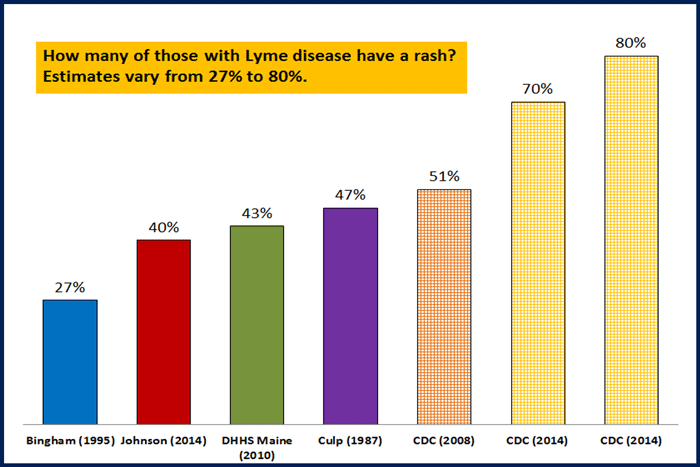
The rash, indicative of Lyme disease, does not always present as a classic “bull’s-eye rash,” as this case report demonstrates. A broad spectrum of lesions has been reported in patients with Lyme disease (LD). In fact, one study found only 6% of the lesions in LD patients had the “classic bull’s-eye or ring-within-a-ring pattern.” [1]

In the case report, “A Non-Classical Presentation of Erythema Migrans in a 51-Year-Old Woman With Early Manifestation of Lyme Neuroborreliosis (Bannwarth Syndrome),” Lorquet et al. describe a 51-year-old female who presented with general malaise, headache, neck stiffness, and an expanding rash consistent with Lyme neuroborreliosis.2

The woman reported having a worsening of her symptoms over a 4-day period and a rash which expanded on her upper back but she did not recall any tick bites.

“She stated that [the rash] started as a small area of redness, spreading rapidly,” the authors wrote.

Clinicians suspected she might have cellulitis and prescribed cephalexin and valacyclovir. But her symptoms did not improve.

“The “bull’s-eye” appearance of erythema migrans is not the only cutaneous manifestation of the acute stage of Lyme disease. There can be multiple variations of the rash, as demonstrated in the patient.”

According to the patient, “the rash had gotten larger and more pruritic [itchy] and that her headache had become more severe, also causing severe pain that radiated to the right side of her neck,” the authors wrote.

The erythema migrans (EM) rash covered two-thirds of her back and had a 5 cm crusted plaque in the center. There was a second circular rash that appeared, as well, behind the woman’s right ear.

READ: The many presentations of the Lyme disease rash

Clinicians treated her symptoms with intravenous ondansetron, ketorolac, pantoprazole, and saline. But also empirically treated for Lyme disease with doxycycline.

After Lyme disease testing was positive, the woman was diagnosed with Lyme Neuroborreliosis, also known as Bannwarth syndrome in Europe.

Bannwarth syndrome (BS) is a typical manifestation of early Lyme neuroborreliosis (LNB) in Europe. It is characterized by painful radiculopathy, neuropathy, varying degrees of motor weakness and facial nerve palsy, and cerebrospinal fluid (CSF) lymphocytic pleocytosis.3

“Several weeks later, the patient had made a full recovery and was back to her baseline level of functioning,” the authors wrote.

They point out, “The “bull’s-eye” appearance of erythema migrans is not the only cutaneous manifestation of the acute stage of Lyme disease. There can be multiple variations of the rash, as demonstrated in the patient.”

References:
  1. Schotthoefer A M, Green C B, Dempsey G, et al. (October 25, 2022) The Spectrum of Erythema Migrans in Early Lyme Disease: Can We Improve Its Recognition? Cureus 14(10): e30673. doi:10.7759/cureus.30673
  2. Lorquet JR, Pell R, Adams J, Tak M, Ganti L. A Non-Classical Presentation of Erythema Migrans in a 51-Year-Old Woman With Early Manifestation of Lyme Neuroborreliosis (Bannwarth Syndrome). Cureus. 2023 Jun 4;15(6):e39931. doi: 10.7759/cureus.39931. PMID: 37416051; PMCID: PMC10319937.
  3. Shah A, O’Horo JC, Wilson JW, Granger D, Theel ES. An Unusual Cluster of Neuroinvasive Lyme Disease Cases Presenting With Bannwarth Syndrome in the Midwest United States. Open Forum Infect Dis. 2017 Dec 23;5(1):ofx276. doi: 10.1093/ofid/ofx276. PMID: 29383323; PMCID: PMC5777478.

______________

**Comment**

So many thoughts here.

  • The rash issue has caused frequent, unnecessary delays in diagnosis and treatment as doctors are not properly educated on actual science, but have been fed a CDC-narrative.  Most doctors are unaware that this rash is diagnostic for Lyme disease, and that misdiagnosis can have fatal consequences.
  • Aucott reports that 54% of Lyme disease patients who present without a rash are misdiagnosed.
  • The designation of Bannwarth Syndrome is also confusing and has caused massive misdirection.  The symptoms are nearly synonymous with most cases of Lyme & can cause severe burning, stabbing, biting, or tearing pain & responds poorly to analgesics:
    • radicular pain (100%)
    • sleep disturbances (75.3%)
    • headache (46.8%)
    • fatigue (44.2%)
    • malaise (39%)
    • paresthesia (32.5%)
    • peripheral nerve palsy (36.4%)
    • meningeal signs (19.5%)
    • paresis (7.8%)
  • This case study shows many of the problems that continue on unabated in Lymeland.

Review: Borrelia Miyamotoi

https://danielcameronmd.com/review-borrelia-miyamotoi/

REVIEW: BORRELIA MIYAMOTOI

borrelia-miyamotoi

Borrelia miyamotoi is an emerging tick-borne illness that is transmitted by the deer tick. The most common symptoms of a B. miyamotoi infection include fever, fatigue, headache, chills, myalgia, arthralgia, and nausea.

In their article, “Human Borrelia miyamotoi Infection in North America,” Burde and colleagues discuss the frequency and location of infection in ticks and people, clinical presentation and complications, diagnosis, treatment, and prevention.

Prevalence of B. miyamotoi

B. miyamotoi-infected ticks have been reported throughout the northeastern, northern Midwestern, and western United States. They’ve also been detected in all Canadian provinces except Newfoundland and Labrador.

The prevalence of Borrelia miyamotoi infections is difficult to determine, since the illness is not nationally reportable in the U.S. but reportable in only a few states including Connecticut, Maine, Massachusetts, Minnesota, New Jersey, Vermont, and Wisconsin. And, confirmation of the diagnosis depends upon laboratory testing, which is not always available.

Furthermore, diagnosis can be challenging. “The discrepancy between diagnosed and undiagnosed infection is probably even greater for B. miyamotoi, a tick-borne disease that lacks an easily identifiable clinical marker, such as the erythema migrans rash, and is less well known by health care workers and the general public,” the authors write.

Transmission

B. miyamotoi can be transmitted to humans through the bite of an infected black-legged (deer) tick. Several studies have found that it may be transmitted through blood transfusions, as well.

The B. miyamotoi pathogen can be transmitted from an infected female tick to her eggs, which may result in some larval ticks harboring the infection and transmitting it to a host. “Other larvae become infected after taking a blood meal on an infected mouse reservoir host, molt to the nymphal stage, and then transmit infection to another mouse or human,” they write.

Symptoms & Treatment

B. miyamotoi symptoms can be non-specific and an individual may appear to have a viral-like illness with fever, chills, headache, myalgia, fatigue, arthralgia, and gastrointestinal complaints, according to the authors.

“The most striking clinical feature of B. miyamotoi is relapsing fever with an initial febrile episode followed by a period of wellness and then one or more additional febrile episodes,” the authors write.

Some studies have found that the “average time between relapses was 9 days with a range of 2 days to 2 weeks.”

However, not all individuals develop relapsing fever. “In the largest case series of B. miyamotoi cases in the US, only 2 of 51 cases (4%) developed relapsing fever.”

READ: Don’t Rely on Relapsing Fever to Diagnose B. miyamotoi 

Treatment of B. miyamotoi disease typically involves using the same antibiotics to treat Lyme disease: doxycycline, tetracycline, erythromycin, penicillin, and ceftriaxone. However, there have been no trials to evaluate the effectiveness of these treatments.

Co-infections worsen disease

Co-infections can worsen the illness. There have been reported cases of B. miyamotoi co-infection with B. burgdorferi and/or Babesia microti.

“Previous studies have found that coinfection of B. burgdorferi with either Babesia microti or with Anaplasma phagocytophilum are often associated with more severe disease compared with that caused by B. burgdorferi infection alone,” the authors write.

Testing for the infection can include blood smear, polymerase chain reaction (PCR), and/or antibody detection.

Authors’ Conclude:

“The possibility of B. miyamotoi infection should be considered in any patient with a febrile illness who resides in or has recently traveled to a region where Lyme disease is endemic, especially during the late spring, summer, or early fall.”

References:
  1. Burde J, Bloch EM, Kelly JR, Krause PJ. Human Borrelia miyamotoi Infection in North America. Pathogens. 2023 Apr 3;12(4):553. doi: 10.3390/pathogens12040553. PMID: 37111439; PMCID: PMC10145171.

_______________

For more:

Since Borrelia miyamotoi is not a reportable illness to the CDC, no one has any clue about prevalence but reports are coming in continually that it’s highly likely to be a much bigger problem than ‘authorities’ believe.
It was recently discovered that:

Also, Borrelia miyamotoi has been in California ticks for a long time:

https://madisonarealymesupportgroup.com/2018/02/15/b-miyamotoi-in-ca-ticks-for-a-long-time/

The following case shows how you can become infected while traveling:  https://madisonarealymesupportgroup.com/2020/10/24/a-case-of-borrelia-miyamotoi/

ACTION ALERT: The FDA & Legalized Censorship

https://anh-usa.org/fda-launches-lab-test-attack/

FDA Launches Lab Test Attack


A new proposal from the FDA will compromise your ability to get the personalized medical care you need. Action Alert!

We reported a few months ago that the FDA was planning to propose a new rule to extend its power over laboratory developed tests (LDTs). That proposal was published last week, and, in line with our concerns, it represents a major attack on LDTs that we think will compromise patient health. We cannot allow the agency to regulate these critical tests out of existence. Use the forms below to post an official comment to the public docket.

This rule is the culmination of many years of effort from the FDA to extend its power over LDTs. Like previous attempts, what the FDA is trying to do is regulate LDTs like other medical devices, which means a boatload of additional regulatory requirements and, in many cases, premarket review.

This is a critical threat, as LDTs are crucial tools used in personalized medicine because labs can create custom diagnostic tests for all sorts of health conditions. LDTs are diagnostic tests developed and performed by local labs. They are important tools used by healthcare providers to diagnose and manage a wide range of conditions. They are widely used—thousands of different LDTs are available—and include genetic tests, heavy metal tests, tests for rare conditions, nutritional status tests, and hormone tests. They can be tailored to meet specific patient needs and can be used to respond rapidly to emerging threats like COVID-19. Currently, laboratories have the flexibility to adapt and modify tests based on evolving scientific knowledge and patient requirements. That could all change if this proposed rule goes through.  (See link for more and to take action)

The FDA has a long history of attempting to monopolize testing.  If they control testing, they control the entire narrative.

______________

https://anh-usa.org/ftc-clarifies-how-it-will-censor-supplement-claims/

FDA to Censor Supplement Claims

While the FTC appears to have backtracked slightly on its draconian campaign to censor supplement health claims, it is really a classic example of doublespeak.  Action Alert!

The FTC is working to conceal the remarkable truth about the healing and disease-preventing powers of foods and nutrients. This is only good if you’re a drug company looking to sell more expensive drugs for preventable chronic illnesses that often do not work. This censorship keeps you from learning that magnesium can help lower blood pressure, for example, or that chromium can lower blood sugar, or any of the other innumerable benefits that come from natural vitamins, minerals, herbs, and amino acids.

The FTC has been censoring natural product health claims for years, but the latest threat is the December 2022 revision to the agency’s Health Products Compliance guidance coupled with the hundreds of warning letters sent in April this year to producers of supplements, homeopathic medicines, and functional foods. These letters warned companies that if they make claims without proper scientific substantiation (that is, evidence from more than one randomized controlled trial, or RCT), they will face large civil penalties. You can reference our earlier coverage for the details.  

Important excerpt:

The agency is talking out of both sides of its mouth. On the one hand, it says quite clearly in its updated guidance (see below) that most supplement claims will require substantiation by RCTs, and other kinds of evidence will not be sufficient. On the other hand, it’s saying there “may” be some exceptions, but it depends on what experts in the field say. But we know good and well that the “experts” the government consults with are often on the take from Big Pharma or are otherwise critics of the use of natural products as the mainstay in health. Just look at what’s happening with another natural medicine in the government’s crosshairs, compounded bioidentical hormone replacement therapy (cBHRT). The FDA asked an “independent” panel of “experts” at the National Academies of Sciences, Engineering, and Medicine to review the clinical utility of cBHRT, and lo and behold, they concluded that there wasn’t any evidence to support cBHRT because there weren’t RCTs supporting safety and efficacy.

In our view, this “clarification” about possible exceptions to the RCT standard is all a smokescreen from the FTC, perhaps to lure companies into thinking they don’t need RCTs to support a health claim so the agency can bring the hammer down on them later.

(See link for more and to take action)

The FDA also has a long history of attempting to monopolize drugs, hormones, and supplements as well. The agency often completely ignores its scientific advisers and approves dangerous drugs & products – often without sufficient data. Pharmaceutical companies like Biogen (Project Onyx) use back channels to get FDA approval. And a court recently ruled that the FDA exceeded its authority by advising against using ivermectin for COVID. Instead, it dug remdesivir out of the drug grave yard after it failed for Ebola, and approved it for COVID (even babies!) despite being ineffective and toxic.

There were more than 500 deaths in the first year of remdesivir usage, but there have only been 20 deaths in 19 years of ivermectin usage. Nurses have dubbed the drug, “Run, death is near!”

But a world famous toxicologist couldn’t find a SINGLE case of an ivermectin overdose death.

_________________

https://anh-usa.org/legalized-censorship-a-radical-shift-in-regulating-speech/

Legalized Censorship: A Radical Shift in Regulating Speech


From Joseph Mercola, DO

If you think freedom of speech has gone down the tubes, you haven’t seen the half of it yet. September 19, 2023, the U.K. passed a new law to “regulate” (read, censor) online content. The so-called Online Safety Bill has been described as “one of the most far-reaching attempts by Western democracy to regulate online speech.

Interestingly, the bill has been in the works for the last five years, again proving that online censorship is not something that sprang up in response to COVID.  Governments have been steadily moving in this direction for a long time.

As reported by The New York Times, the bill forces online platforms to “proactively screen for objectionable material and to judge whether it is illegal, rather than requiring them to act only after being alerted to illicit content.”

Of course, we now know that flagging material for removal is how the U.S. government has illegally circumvented constitutional free speech rights for the past few years.

September 8, 2023, the Fifth Circuit Court of Appeals upheld part of the lower court’s injunction, banning the White House, surgeon general, the Centers for Disease Control and Prevention, and the FBI from influencing social media companies to remove “disinformation.”

Unfortunately, the appellate court also reversed, vacated and modified other parts of the original injunction, leaving the door wide open for certain federal agencies to continue their censorship activities.

Importantly, officials from the Cybersecurity and Infrastructure Security Agency (CISA) were excluded, even though CISA has played a major, if not central, role in the government’s censorship of Americans.

 (See link for article)

______________

**Comment**

In case you are unaware: the FDA is not our friend. 

For more:

Babesia Concurrent With Multiple Abscesses From Staph Infection: A Case Report

https://www.sciencedirect.com/science/article/pii/S2405844023057717

Aug. 2023, e18563

Babesiosis concurrent with multiple abscesses from Staphylococcus aureus infection: A case report

https://doi.org/10.1016/j.heliyon.2023.e18563Get rights and content
Under a Creative Commons license
open access

Abstract

Background

Babesiosis is a tick-borne illness. These patients may have signs of a systemic inflammatory response, but abscess formation is unusual. Multiple abscesses in a patient with confirmed babesiosis is very rare, so concurrent infection by another pathogen should be considered.

Case presentation

We report a 42-year-old male patient who had fever, chills, joint pain, abdominal pain, and altered mental status after a possible tick bite on his right foot while fishing in a river. The laboratory tests, including a blood smear, suggested babesiosis. Imaging studies showed multiple brain and spleen abscesses due to Staphylococcus aureus based on the results of a blood culture and next-generation sequencing. The patient eventually recovered after treatment with azithromycinfosfomycin, and vancomycin.

Conclusion

Concurrent bacterial infection can occur in a patient with babesiosis. Additional tests should be performed when a babesiosis patient presents with signs inconsistent with Babesia infection. Prompt and appropriate treatment is necessary and may be life-saving for these patients.

For more:

The Lyme Disease Vaccine – Separating Fact And Fiction

https://www.lymedisease.org/lyme-vaccine-fact-vs-myth/

The Lyme disease vaccine–separating fact and fiction

By Lonnie Marcum

Aug. 29, 2023

The latest version of a Lyme disease vaccine, “VLA15” made by Pfizer and Valneva, is in phase 3 clinical trials and is due to hit the market in 2026.

A recent Bloomberg article reviews some of the history of the previous failed Lyme vaccine called LYMErix. However, they missed some critical elements of how and why LYMErix was pulled from the market 20 years ago—and believe me, it wasn’t anti-vaxxer conspiracy theories.

Let me be clear, I am not anti-vaccine. In fact, because I’ve worked in various aspects of healthcare for the past 30 years, I am fully vaccinated against most everything. There is no doubt, a vaccine that protects against Lyme disease would be highly valuable. Better yet, a vaccine that would protect against all tick-borne diseases.

According to the Centers for Disease Control (CDC), the incidence of reported vector-borne diseases (caused by ticks, mosquitos, and fleas) tripled during 2004-2016, with 75% of those infections coming from ticks. Lyme disease accounted for 82% of the tick-borne disease reports and is overall one of the top three “nationally notifiable” infectious diseases in the United States. (Rosenberg 2018)

The “discovery” of Lyme disease

In fact, evidence of Borrelia was found  in 5,300-year-old human remains from Europe (Keller 2012) and in fossilized 15-20 million-year-old amber from the Dominican Republic. Thus, disease caused by Borrelia, aka Lyme disease, is not a new phenomenon. (Poinar 2015)

However, it wasn’t until 1977 that Dr. Allen Steere first described an “epidemic” of arthritis occurring in patients living in Lyme, Connecticut. By 1982, researchers had identified a spirochete in blood samples from those patients and determined it to be the cause of this cluster of illnesses.

The bacterium was later named Borrelia burgdorferi after Wilhelm “Willy” Burgdorfer, the scientist who identified it. The illness was named Lyme disease, after the community in which it was discovered. (Burgdorfer 1982)

Complex bacteria

Borrelia burgdorferi is one of the most complex bacteria known to man. Its unique genomic structure contributes greatly to its ability to survive and maintain an extremely difficult life cycle that alternates between warm-blooded animals and cold-blooded ticks. (Brock 1994; Porcella 2001)

While there are many similarities between Borrelia and other spirochetes (eg. Leptospira, Treponema) the primary difference is their genomic structure. Where Treponema contains only one linear chromosome, Borrelia contains one linear chromosome, plus 21 extrachromosomal elements, including 12 linear and nine  circular plasmids—by far the largest number of plasmids ever found in any bacterium. (Frasier 1997)

It’s now known that Lyme disease can be caused by different strains and species of Borrelia bacteria, though most commonly by Borrelia burgdorferi in the US and Borrelia afzelii or Borrelia garinii in Europe. (Cutler 2016)

Today there are five known subspecies of Lyme disease causing Borrelia burgdorferi and over 52 species of Borrelia worldwide. Twenty-one species belong to the Lyme disease group and 29 are members of the relapsing fever group.

Furthermore, each of those species can develop genetic variants or subtypes.  In all, there are over 300 known strains of Borrelia worldwide, with over 100 found in the US alone. (Cerer 2016)

How do you develop a vaccine to protect against 300 strains of Borrelia?

Challenges of making a Lyme vaccine

Because of their genetic complexity, all Borrelia can alter their outer surface proteins when conditions change—a process known as antigenic variation. This complexity allows Borrelia to adapt to a variety of hosts, avoid immune detection, widely disseminate throughout the body, and support chronic or persistent infection. Borrelia has also been shown to survive standard antibiotic therapy in several animal and primate studies. (Hodzic, Barthold 2014; Elsner, Baumgarth 2015; Embers 2017)

Many of the reasons we do not have a vaccine for Lyme disease are the same reasons we do not have vaccines for other complex bacterial diseases like syphilis and tuberculosis.

The demise of LYMErix

The first vaccine for Lyme disease, drugmaker SmithKline Beecham’s LYMErix, was FDA-approved in 1998. In 2002, shortly after Lyme Disease Association President Pat Smith and others met with the FDA to discuss reports of adverse reactions to the vaccine, the manufacturer withdrew LYMErix from the market.

On that January day in 2002, Donald H Marks, MD, PhD, presented evidence of adverse events associated with the LYMErix vaccine. These included long-lasting arthritis and complicated neurological problems.

Dr. Marks has decades of clinical practice, research, and regulatory affairs experience in the pharmaceutical industry. While serving as director of clinical research at Aventis Pasteur, a pharmaceutical company, he oversaw its OspA Lyme disease vaccine program which was stopped due to adverse events.

In compelling testimony, Marks told the FDA, “The Company (the vaccine maker) dismissed the significance” and did not inform physicians of the potential for adverse events. “As a result of these actions, GPs in the US were kept in the dark about the life-threatening side effect of Lymerix.

Furthermore, Marks told FDA officials, “In my opinion, there is sufficient evidence that Lymerix is causally related to severe rheumatologic, neurologic, autoimmune, and other adverse events in some individuals. This evidence is such as to warrant a significantly heightened degree of warnings and possible limitations or removal from marketing of Lymerix.”

One month later, February 2002, SmithKline Beecham (now GlaxoSmithKline) withdrew LYMErix from the market claiming poor sales potential.

See the full LYMErix Safety Data Reported to the Vaccine Adverse Event Reporting System (VAERS) here.

Lyme vaccine fact check

Fact: LYMErix did not provide immunity to humans. The LYMErix vaccine was derived from a single outer-surface protein of Borrelia burgdorferi known as OspA. The vaccine relied on the tick to feed on the vaccinated human, ingest a human byproduct of the vaccine (OspA antigen), that would then kill the Borrelia spirochete in the midgut of the tick. In order to work, this process needed to take place prior to the tick injecting the live spirochetes into the human—a process that the makers of LYMErix admitted was only partially successful. (Sheller 2013)

The new Lyme vaccine, VLA15, also uses the OspA protein, with some structures removed to reduce the number of adverse reactions, in theory.

Fact: LYMErix required patient/doctor compliance and had limited effectiveness. The LYMErix vaccine required three doses within a 12-month period in order to obtain enough OspA antigen to kill the Borrelia in the tick. The vaccine was reported to be 50% effective after the second dose and only 73-78% effective after the third dose. (Smith 2022) Meaning 20% of people who were fully vaccinated could still acquire Lyme disease.

Unfortunately, there were no studies to show what would happen to a patient if they were bitten by an infected tick during the LYMErix vaccine series, and there were no studies demonstrating whether or not the vaccine would provide long-term protection.

The new VLA15 vaccine will also require three doses within a nine-month period followed by annual boosters.

Fact: LYMErix caused auto-immune reactions in some people.  Just prior to FDA approval of LYMErix, Dr. Allen Steere and others published research describing potential auto-immune responses to OspA in a subset of patients who are born with a genetic defect known as HLA-DR4. Approximately 30% of the population carries HLA-DR4 genetic defects. (Gross 1998)

We do not yet know if the VLA15 OspA vaccine will cause the same adverse reactions as the LYMErix. (Comstedt 2017)

Fact: LYMErix caused adverse events that ranged from mild to life-threatening illness, including symptoms of Lyme disease. In the FDA’s 2001 Safety Data Report there were 1,048 reports of injury following the vaccine, including four deaths, and 85 serious events. (Ball 2001; Latov 2004; Rose 2001)

The VAERS data is not available for VLA15. Pfizer states, “The VLA15-221 trial is ongoing to assess the safety and immunogenicity of VLA15 in a pediatric population aged 5 years and above.”

Fact: LYMErix caused hyper immune reactions in some people. A subset of the vaccinated population had extreme immune responses to the vaccine, causing them to test positive for Lyme disease. Using the currently available test, there was no way to determine if the patient had contracted a new case of Lyme, reactivated a subclinical infection, or if they were having an auto-immune reaction to the vaccine. Note: 20-30% of the vaccinated had no protection from Lyme. (Fawcett 2001)

Fact: LYMErix caused severe neurological complications in some patients. These may have been related to asymptomatic pre-existing Lyme disease infections and/or HLA-DR defects. (Marks  2011)

Dr. Marks told the FDA in 2002:

  • “Many of these people may have had prior exposure and clinical or subclinical infection. In these cases, Lymerix could be triggering or reactivating the damage caused by old and presumably cured Lyme disease.”
  • “Pattern of symptoms experienced after Lymerix mimicked pattern of prior infections in many individuals. In these patients, Lymerix-related symptoms seemed to respond to antibiotics, as did the initial infection, bolstering the theory of disease reactivation.”

Fact: LYMErix resulted in multiple class-action lawsuits. After reports of injury the FDA requested GlaxoSmithKline, the makers of LYMErix, to expedite the reporting of their Phase IV trial, including all adverse events. Shortly after a study was published documenting injury, LYMErix was pulled off the market citing “poor sales.” (Stricker, Johnson 2014)

The challenge of establishing trust

Because the history of the previous Lyme vaccine is so muddied, Pfizer will face an uphill battle establishing trust amongst the Lyme community for its new vaccine. As LymeDisease.org’s Lorraine Johnson points out, “without transparency about the issues with the past vaccinethere would be no trust in the patient community for a new vaccine.”

As Pat Smith says in the recent Bloomberg article, “We are interested in the possibility of a vaccine. The issue is the safety and efficacy.”

One way we might get that trust is for Pfizer and Valneva to make their VAERS data easily available for all to see!

In March 2020, I submitted written comments to the federal Tick-borne Disease Working Group on the history of the Lyme vaccine along with my suggestions on how to move forward. You can see those comments here.

And in July 2019, I composed a long thread on Twitter pointing out Myth vs Fact on the LYMErix vaccine in response to an article in The Guardian that got several details wrong. You can see that thread here.

LymeSci is written by Lonnie Marcum, a Licensed Physical Therapist and mother of a daughter with Lyme. She served two terms on a subcommittee of the federal Tick-Borne Disease Working Group. Follow her on Twitter: @LonnieRhea  Email her at: lmarcum@lymedisease.org.

References

1      Ball R. (2001) Powerpoint on the Lymerix Vaccine, LYMErix® Safety Data Reported to the Vaccine Adverse Event Reporting System (VAERS), https://www.lymediseaseassociation.org/images/NewDirectory/Government/Vaccines/2001_fda_powerpoint_RobertBall.pdf

2      Brock TD, et al. (1994) Biology of Microorganisms, 7th ed. Prentice Hall, NJ, USA. Introduction to Spirochètes. University of California Museum of Paleontology.

3      Burgdorfer W, Barbour AG, Hayes SF, Benach JL, Grunwaldt E, Davis JP. (1982). Lyme disease-a tick-borne spirochetosis? Science, 216(4552), 1317-1319.

4      Cerar T, et al. (2016) Differences in Genotype, Clinical Features, and Inflammatory Potential of Borrelia burgdorferi sensu stricto Strains from Europe and the United States. Emerging Infectious Diseases. 2016,22(5):818-827. doi:10.3201/eid2005.151806

5      Comstedt P, et al. (2017) The novel Lyme borreliosis vaccine VLA15 shows broad protection against Borrelia species expressing six different OspA serotypes. Plos. https://doi.org/10.1371/journal.pone.0184357

6      Cutler SJ, Ruzic-Sabljic E, Potkonjak A (2016). “Emerging borreliae – Expanding beyond Lyme borreliosis”. Molecular and Cellular Probes. doi:10.1016/j.mcp.2016.08.003. PMID 27523487.

7      Eisen RJ, Kugeler KJ, Eisen L, Beard CB, & Paddock CD. (2017) Tick-Borne Zoonoses in the United States: Persistent and Emerging Threats to Human Health. ILAR J, 1-17. doi:10.1093/ilar/ilx005

8      Elsner R, Hastey CJ, Baumgarth N. (2015) Suppression of long-lived immunity following Borrelia burgdorferi induced Lyme disease. PloS Pathogens, 11: e1004976.

9      Embers M, et al. (2017) Variable manifestations, diverse seroreactivity and post-treatment persistence in non-human primates exposed to Borrelia burgdorferi by tick feeding. PlosOne, https://doi.org/10.1371/journal.pone.0189071

10    Embers M, Narasimhan S. (2013) Vaccination against Lyme disease: past, present, and future. Frontiers in Cellular and Infection Microbiology 3(6):6 · DOI: 10.3389/fcimb.2013.00006

11    Fawcett PT, Rose CD, et al. (2001) Effect of Immunization with Recombinant OspA on Serologic Tests for Lyme Borreliosis. Clin Vaccine Immunol vol 8, no 1 79-84 doi: 10.1128/CDLI.8.1.79-84.2001

12    Frasier CM, et al. (1997) Genomic sequence of a Lyme disease spirochaete, Borrelia. Nature volume 390, pages 580–586

13    Gomes-Solecki, M. (2014) Blocking pathogen transmission at the source: reservoir targeted OspA-based vaccines against Borrelia burgdorferi. Front Cell Infect Microbiol. 2014; 4: 136 doi: 10.3389/fcimb.2014.00136

14    Gross DM, et al. (1998) Identification of LFA-1 as a Candidate Autoantigen in Treatment-Resistant Lyme Arthritis Science  31 Jul 1998: DOI: 10.1126/science.281.5377.703

15    Hodzic E, Imai D, Feng S, Barthold SW. (2014) Resurgence of persisting non-cultivable Borrelia burgdorferi following antibiotic treatment in mice. PLoS One, Jan 23;9(1):e86907. doi:  10.1371/journal.pone.0086907.

16    Hu LT, et al. (2006) Protective efficacy of an oral vaccine to reduce carriage of Borrelia burgdorferi (strain N40) in mouse tick reservoirs. Vaccine. doi:  10.1016/j.vaccine.2005.10.044

17    Keller A, Graefen A, et al (2012) New insights into the Tyrolean Iceman’s origin and phenotype as inferred by whole-genome sequencing. Nature Communications vol 3, Article number 698

18    Latov N, et al. Neuropathy and cognitive impairment following vaccination with the OspA protein of Borrelia burgdorferi. J Peripher Nerv Syst. 2004 Sep;9(3):165-7. DOI: 10.1111/j.1085-9489.2004.09306.x

19    Marconi RT, et al. (2017) Identification of a defined linear epitope in OspA protein of the Lyme disease spirochetes that elicitis bactericidal antibody responses: Implications for vaccine development. Science Direct. https://doi.org/10.1016/j.vaccine.2017.04.079

20   Marks DH. Neurological complications of vaccination with outer surface protein A (OspA). Int J Risk Saf Med 2011; 23: 89–96.

21    Poinar G. (2015) Spirochete-like cells in a Dominican amber Ambylomma tick (Arachnida: Ixodidae) Historical Biology. Jan 2014, Volume 27,2015-Issue 5

22    Porcella SF, Schwan TG. (2001) Borrelia burgdorferi and Treponema pallidum: a comparison of functional genomics, environmental adaptations, and pathogenic mechanisms. J. Clin Invest, 10.1172/JCI12484

23    Rose CD, Fawcett PT, Gibney KM. (2001) Arthritis following recombinant outer surface protein A vaccination for Lyme disease. J Rheumatol. Nov;28(11):2555-7.

24    Rosenberg R, et al. (2018) Vital Signs: Trends in Reported Vectorborne Disease Cases — United States and Territories, 2004–2016 Weekly / 67(17);496–501

25    Sheller S. (2013) “It’s Time to Develop a Vaccine for Lyme Disease, Doctor Says” Op-Ed. Philladelphia Enquirer. https://www.lymediseaseassociation.org/images/NewDirectory/Government/Vaccines/2013_LymeOp_Ed_Sheller.pdf

26    Stricker R, Johnson L. (2014) The Lancet. Lyme disease vaccination: safety first. DOI: https://doi.org/10.1016/S1473-3099(13)70319-0

27    Smith P, Gaito A, Marks, DH. (2002) Transcript of FDA Lymerix meeting, Bethesda, MD. https://www.lymediseaseassociation.org/about-lyme/controversy/vaccine/261-lymerix-meeting

28    Sprong H, Seemann I, et al. (2014) ANTIDotE: anti-tick vaccines to prevent tick-borne diseases in Europe. Parasites and Vectors. https://doi.org/10.1186/1756-3305-7-77