Archive for the ‘Testing’ Category

Neurological and Immunological Dysfunction in Two Patients With Bartonella Henselae Bacteremia

Neurological and Immunological Dysfunction in Two Patients with Bartonella Henselae Bacteremia  Clinical Case Reports March 10, 2017 David L. Kaufman1, Andreas M. Kogelnik1, Robert B. Mozayeni2, Natalie A. Cherry2 & Edward B. Breitschwerdt3  (please see link for specifics on the cases)

Key Clinical Message:  Recently, BAPGM enrichment culture has documented Bartonella bacteremia in previously healthy, “nonimmunocompromised” patients following arthropod exposures. Neurobartonellosis should be among the differential diagnoses for patients with persistent or recurrent neurological symptoms of undetermined etiology. Microbiological and immunological testing should be concurrently pursued to determine whether defective immune function accompanies Bartonella bacteremia.

Discussion:  Two important clinical observations evolved out of the microbiological, immunological, and therapeutic findings associated with the medical management of these two patients. First, persistent or recurrent neurological symptoms of undetermined etiology in patients with historical vector exposures should prompt testing for bartonellosis. Historically, B. henselae infections in immunocompetent individuals have been associated with self-limiting cat scratch disease, whereas recent research supports persistent and potentially relapsing bacteremia [1–3]. As previously reported [2,3], both of these B. henselae bacteremic patients experienced headaches and disequilibrium. Patient 1 also experienced seizures, episodic confusion, and aphasia, which resolved completely following antibiotic therapy, despite persistence of the MRI abnormalities [1].

Secondly, immunological testing should be concurrently pursued to determine whether defective immune function accompanies neurological symptoms. Both patients had immunological abnormalities, including suppression of NK function, despite lacking a prior medical history indicative of immunodeficiency. The extent to which persistent B. henselae bacteremia may have induced immunocompromise or whether a chronic latent infection resulted in bacterial reactivation is unknown. It is important to note that after 9 months of treatment, the CD3, CD4, and CD19 deficiencies in Patient 1 resolved, while Patient 2 remained immunologically impaired after 5 months of therapy. There remains a substantial need for sequential electroencephalographic, MRI, immunological, and bacteriological patient data to guide physician decision making in patients with longstanding B. henselae bacteremia. Using a previously validated diagnostic approach [3,4], B. henselae bacteremia was confirmed in both patients by BAPGM enrichment blood culture, PCR amplification, and DNA sequence confirmation. Importantly, PCR did not amplify B. henselae DNA from patient’s blood, serum, 8-day, or 14-day BAPGM enrichment blood cultures, supporting the need for prolonged bacterial incubation times to obtain PCR confirmation for some B. henselae bacteremic patients. Consistent with previous studies[3,5] in which a subset of patients with persistent bacteremia were not IFA seroreactive to a panel of Bartonella sp. antigens, neither patient was initially B. henselae or B. quintana IFA seroreactive, whereas antibody reactivity was documented after antibiotic treatment in Patient 1, potentially due to enhanced immunological recognition of antigenic epitopes. Based upon these patients and previously published studies [3,5], enrichment blood culture and PCR should be used in conjunction with Bartonella sp. serological analysis when attempting to confirm bacteremic infection with a Bartonella sp. Vector transmission of B. henselae was the suspected source of infection for both patients. The veterinarian had ongoing vector (flea, mite, and potentially ticks) and animal exposure, which are occupational risks for animal health workers [3,5]. The cat flea (Ctenocephalides felis) transmits B. henselae among cats that develop a relapsing bacteremia and remain persistently infected reservoir hosts for months to years [6].

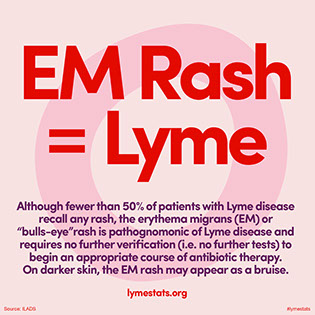
Although there is no evidence that cat-associated mites (S. scabiei or N. cati) are vector competent for the transmission of Bartonella species, rat mite (Ornithonyssus bacoti) and pigeon mite (Dermanyssus spp.) transmissions of B. henselae and B. quintana, respectively, have been suspected [7,8]. Due to an acute-onset illness and presumed tick attachment in a Lyme-endemic region with the subsequent development of erythema chronicum migrans, Lyme disease was initially suspected in Patient 2. Rapid treatment with doxycycline may have prevented serodiagnostic confirmation of B. burgdorferi transmission, whereas testing for other tickborne pathogens was negative. Although tick transmission of B. henselae has not been proven, organism-specific DNA has been PCR-amplified and sequenced from Ixodes sp. ticks [9], vector competence for Bartonella transmission has been demonstrated in a rodent model [10], and French investigators have recently documented Bartonella spp. bacteremia in patients following tick exposures [11]. Historically, systemic bartonellosis has been reported in immunocompromised patients, such as those with HIV/ AIDS and transplant recipients. Recently, infection with Bartonella spp. has been reported in healthy asymptomatic Brazilian blood donor candidates[12] and in previously immunocompetent patients with chronic neurological or rheumatologic symptoms [2,3,5]. Because Bartonella spp. can infect erythrocytes, endothelial cells, and various macrophage-type cells, including brain-derived dendritic cells in vitro, the spectrum of neurological symptoms attributable to bartonellosis appear to be extremely diverse among patients [1,2]. Physicians should be aware of the rapidly increasing number of Bartonella spp., the large number of proven and suspected arthropod vectors, and the large number of reservoir hosts, all of which are collectively contributing to the enhanced recognition of neurobartonellosis as a medically important emerging infectious disease.

For more on Bartonella:  https://madisonarealymesupportgroup.com/2016/01/03/bartonella-treatment/

https://madisonarealymesupportgroup.com/2017/04/26/bartonella-a-growing-health-concern/

https://madisonarealymesupportgroup.com/2017/05/20/bartonella-endocarditis-opportunistic-infection-in-cancer-patients-and-eye-inflammation/

https://madisonarealymesupportgroup.com/2017/01/04/endocarditis-consider-bartonella/
https://madisonarealymesupportgroup.com/2017/05/11/bartonella-henselae-in-children-with-congenital-heart-disease/


Standing Room Only For New Lyme Test

http://news10.com/2017/07/27/hundreds-attend-blood-clinic-for-new-lyme-disease-test/  News 10 abc  by Lindsay Nielsen, July 27, 2017  (Video here)  Approx. 3 min.

DELMAR, N.Y. (NEWS10) – It’s a brand new test for Lyme disease and other tick-borne illnesses we told you about last year.  (LymeSeq)

On Thursday, the first clinical study was held right in the Capital Region. Dozens were turned away and will have to attend future scheduled blood draw clinics because so many signed up to give blood.

More than 100 people got their blood drawn at the clinic. Some of them have never been tested for Lyme but maybe have symptoms, or some of them have been battling the disease for years.

Lyme disease is a complicated disease and many people experience an array of symptoms like Randy Fox, of Niskayuna, who’s been battling it for years.

“Besides the chronic fatigue, I have neuropathies which are either tingling, sharp pains, dull pains, numbness.”

Fox gave blood at the Stram Center in Delmar with 150 other people from the Capital Region area. It’s all part of a clinical study for a new test called LymeSeq. It’s expected to diagnose 20 different strains of Lyme disease and other co-infections that ticks can carry and giving hope to those suffering.

“To be able to diagnose and treat people earlier so that we don’t have long lasting effects.”

“I have been bitten by ticks so I thought it would be a good idea,” Adrie Fredenburg, of Canajoharie, said.

Fredenburg brought along her husband Steve too.

“As long as it’s going to help, the study is worth it,” Steve Fredenburg, of Canajoharie, said.

George Hagerty, of Lake George, signed up because he’s had multiple tick bites and has tested positive for Lyme disease.

“One of the ticks I pulled off my body was tested positive for BMD and if I pronounce it right it’s Borrelia miyamotoi,” Hagerty said.

It’s another tick-borne illness that has caused Hagerty a lot of pain and limited ability to function.

“I’ll do anything I can to help people not get this wretched disease.”

Vial after vial was collected because of one mother from Phoenix, Arizona who was angry when her daughter was diagnosed with Lyme at age 19 but was never treated.

“Even though she was CDC positive her doctors would not treat her so we decided that we needed a better diagnostic test,” Tammy Crawford, Founder of Focus on Lyme Foundation, said.

Crawford says she has great confidence in Dr. Paul Keim who developed the test. She explains why the Capital Region area was chosen for the clinical study.

“We decided that we were going to cast a wide net and try to bring as many people as we could with Lyme disease. We needed to come where it’s really the most prevalent,” Crawford said.

People can sign up and find info on two more additional clinics being held in the next few weeks by visiting focusonlyme.org.

For more on the test:  https://madisonarealymesupportgroup.com/2017/03/28/lymeseq-new-lymemsids-test-explained/  (Video news story in link)

http://news10.com/2017/07/10/clinical-trial-being-held-for-lyme-disease-test/  Approx. 2 min.


Why We’re Losing To Lyme Disease

http://www.wbur.org/radioboston/2017/07/17/losing-to-lyme (Click link to hear story) Approx. 8:30 Min.  July 17, 2017 Radio Boston

Lyme disease reports have more than doubled since 2005 but the disease remains drastically under-reported. While over 5,000 case of Lyme are reported in Massachusetts each year, there are probably more than 50,000 case a year.

With ticks predicted to be in particular abundance this year, CommonHealth explores the issue in a new series, “Losing to Lyme.”

Guests

Carey Goldberg, host of WBUR’s CommonHealth blog, which tweets @commonhealth.

Dr. David Scales, physician at Cambridge Health Alliance.

This segment aired on July 17, 2017.

**Comment

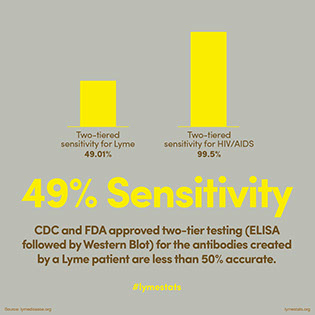
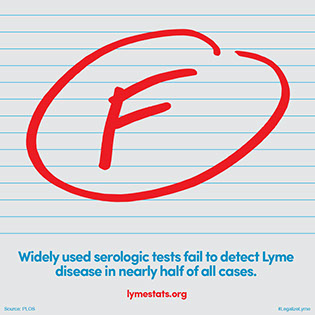
The diagnostic tests for Lyme are abysmal.  And compared to testing for other diseases, Lyme testing is an absolute joke.  I do not call testing that misses over half of all cases to be even remotely acceptable.  https://madisonarealymesupportgroup.com/2017/04/12/comparing-lyme-testing-with-hiv-testing/

Busting Lyme Myths – NYC

Senator Sue Serino’s Lyme and Tick Borne Disease Forum 2017

NYC Senator, Sue Serino of the 41st District, is the Chair of the Senate’s Task Force on Lyme and TBIs.  Task Force members and state leaders in New York are holding awareness events across the state.  One event was a public forum, in the video above, busting prevalent myths surrounding all things TBI related.

Microbiologist Holly Ahern speaks first and educates the public on common Lyme and TBI myths.  Then Dr. Matt Frye, Integrative Pest Management IPM specialist, speaks on myths about ticks.

https://a.pgtb.me/tgZFPJ  Take a Bite Out of Lyme Disease website with more info.

**This is a fantastic talk full of great and accurate information.

My only possible disagreement is that Frye states ticks can not fall & bite from trees.  I’ve heard many patients swear (including the recent video I posted of TV anchor Mike Schneider) they were bit as they sat under a tree on a patio.  https://madisonarealymesupportgroup.com/2017/07/13/tv-anchor-speaks-out-about-lyme-disease/

Besides loving Japanese Barberries (shrub), https://madisonarealymesupportgroup.com/2015/09/30/barberry-friend-or-foe/  ticks at least here in Wisconsin love certain pine trees and I personally know of a family that would hang their laundry on a line outside where the clothes would gather ticks quite possibly from the pine trees that hung over top the line.  They would find the ticks when they dumped the laundry onto the bed.  Both the husband and wife become infected this way.

https://madisonarealymesupportgroup.com/2017/03/13/ticks-found-on-rocks/  This link reveals that ticks can show up in unexpected places like on top of rocks, under picnic tables, and on picnic benches.

As to trees and using logic, if birds and small rodents travel up and down trees 24/7, it only makes sense some are going to drop off and find a blood meal.


Start Treatment if TBI’s are Suspected

http://www.mdedge.com/ccjm/article/141387/dermatology/tickborne-diseases-other-lyme-united-states  Cleveland Clinic Journal of Medicine. 2017 July;84(7):555-567

KEY POINTS

  • Tickborne illnesses should be considered in patients with known or potential tick exposure presenting with fever or vague constitutional symptoms in tick-endemic regions.
  • Given that tick-bite history is commonly unknown, absence of a known tick bite does not exclude the diagnosis of a tick-borne illness.
  • Starting empiric treatment is usually warranted before the diagnosis of tickborne illness is confirmed.
  • Tick avoidance is the most effective measure for preventing tickborne infections.

____________________________________________________________________________

The article delineates symptoms, transmission, reservoirs, testing, and treatment of the following TBI’s:  Rocky Mountain Spotted Fever, Rickettsiosis, Ehrlichioses, Babesiosis, Tickborne relapsing fever, Borrelia miyamotoi, Southern Tick-associated Rash illness, Tularemia, and Tickborne viral infections.

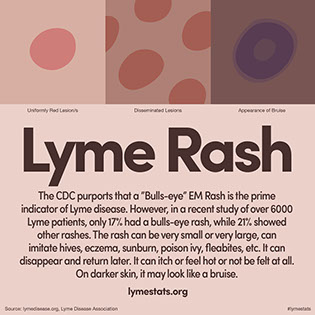
101_emrash316x316

47_rash316x316

I need to address the following statements at the end of the article:

“Knowledge of the geographic locations of potential exposure is paramount to determining which tickborne infections to consider, and the absence of a tick bite history should not exclude the diagnosis in the correct clinical presentation.

Clinicians need to tread carefully here.  Many patients have been denied testing and treatment due to a map.  These maps should be viewed with the same suspicion as the testing.  

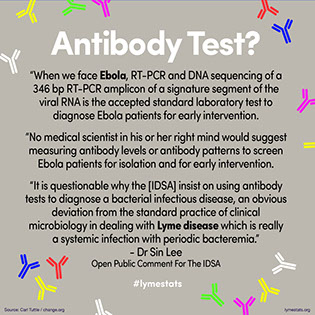
25_antibody316x316

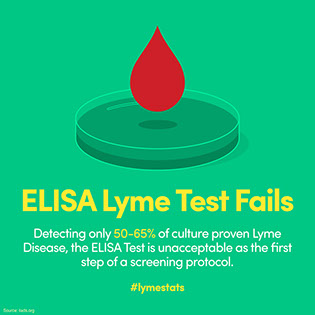
01_test_petri316x316

38_sensitive316x316

Until you tell the fox, squirrel, bird, deer, lizards, and hundreds of other reservoirs to stay put, ticks will be traveling everywhere along with the pathogens they carry.  Since Lyme Disease (borrelia) has been found in every continent except for Antarctia (it will be found there too), you can assume that means ticks are there too.  

I’m glad the authors stated this:

In addition, it is important to recognize the limitations of diagnostic testing for many tickborne infections; empiric treatment is most often warranted before confirming the diagnosis.”132_fail316x316

For those of us in this war, this “empiric treatment” by mainstream medicine is new.  Patient after patient has had to wait for test results before doctors will treat them.  Often, since the testing is so poor, it comes back negative and the patient is sent packing, even if the patient has every symptom in the book.  The next step is for authorities to admit and acknowledge that diagnosis of Tick borne infections is a clinical one.  This means doctors need to learn a whole lot more.  For docs willing to learn, please see:  https://www.lymecme.info

Even the CDC admits the tests suck: https://madisonarealymesupportgroup.com/2017/07/01/good-morning-america-cdc-advises-multiple-lyme-tests-due-to-false-negative-results/ CDC spokesperson at end of video.

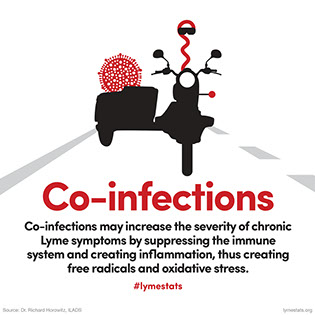
Another very important point needs to be made.  The CDC has pushed this one pathogen for one tick mantra for too long.  Many patients are co-infected making cases infinitely more complex and challenging to treat.  Lyme literate doctors trained by ILADS understand this and treat accordingly.  Until mainstream medicine realizes and admits people can have numerous pathogens, and treat for them, people will not get better.  This is why all the doxycycline in the world will not help some patients.

32_co316x316

One last point is that mycoplasma, Bartonella, and other pathogens are not included here but are quite common in patients.  Many of these pathogens are persistent and are adept at surviving.  More research needs to be done on these co-infections.

Please see:

https://madisonarealymesupportgroup.com/2017/05/01/co-infection-of-ticks-the-rule-rather-than-the-exception/  If ticks are co-infected, so are patients.

https://madisonarealymesupportgroup.com/2017/07/01/one-tick-bite-could-put-you-at-risk-for-at-least-6-different-diseases/

https://madisonarealymesupportgroup.com/2016/03/20/why-we-cant-get-better/