Archive for the ‘Testing’ Category

Upstate NY Disease Expert: Prevention Really Works. Do it.

https://www.newyorkupstate.com/news/2019/05/upstate-ny-lyme-disease-expert-prevention-really-works-do-it.html

Upstate NY Lyme disease expert: Prevention really works. Do it

The black-legged tick, also known as the deer tick, can carry a variety of pathogens, including the bacteria that causes Lyme disease.

The black-legged tick, also known as the deer tick, can carry a variety of pathogens, including the bacteria that causes Lyme disease.

Syracuse, N.Y. — Bryon Backenson has taken ticks head-on since 1992, walking the woods and fields of New York and Connecticut to find, gather and test disease-carrying ticks.

“We go to 150 sites in spring and fall to collect ticks,” said Backenson, New York’s deputy director of communicable disease control. “In the years we’ve been doing this with staff and students, we’ve never had anybody who has gotten a tick-borne disease.”

Ticks, particularly the black-legged or deer tick, carry a variety of diseases. The most common and well-known is Lyme disease, caused by a bacteria carried in the tick’s gut.

Backenson said he and his fellow researchers are living proof that prevention works.

“We practice what we preach,” he said.

He recommends that if you’re going to be in an area likely to have ticks, you do what researchers do:

— Wear light-colored clothes so you can see the dark ticks climbing on you.

— Tuck the bottoms of your pant legs into your socks to make it harder for ticks to reach your skin.

–Check your entire body at least every 24 hours, and remove any ticks you find on your skin.

— Consider using bug repellents that contain DEET for skin and permethrin for clothes. (Researchers in the field have one disadvantage here: They can’t wear bug repellent because they’re trying to catch ticks, not scare them away.)

“As long as people take the proper precautions and end up removing ticks, there’s a really good likelihood you’re not going to get some tick-borne disease,” Backenson said. “If you happen to get the rash from Lyme, or flu-like symptoms that make you suspect Lyme, early doses of antibiotics can cure relatively quickly the majority of cases we see.”

Backenson also said that most tick bites likely don’t lead to disease because the ticks are pulled off before they can ingest blood and inject the bacteria. He said New York has about 8,000 new cases of Lyme disease every year, but he estimates that New Yorkers get 40,000 to 50,000 tick bites every year.

“I firmly believe there are lots and lots of tick bites out there that don’t necessarily lead to disease,” Backenson said.

The health department has several videos on its website about how to keep ticks away, and how to pull them off when they bite.

The peak season for Lyme disease, late spring and summer, is approaching. That’s when the tick nymphs are feeding, and they account for the vast majority of Lyme disease cases. While nymphal ticks are less likely to carry the bacteria than adult ticks, nymphs are much smaller, so people don’t see them to remove in time. Nymphs also tend to be most active in summer, when more people are out in woods and fields.

In much of Upstate, about 25 percent of nymphs carry the Lyme bacteria. That jumps to about 50 percent in adults, which have fed more often than nymphs and have had more chances to get the bacteria from the blood of deer, rodents and other animals.

___________________

**Comment**

A few points:

Ticks are marvelous ecoadaptors and are impervious to the climate as shown by independent Canadian tick researcher John Scott:  https://madisonarealymesupportgroup.com/2018/08/13/study-shows-lyme-not-propelled-by-climate-change/

https://madisonarealymesupportgroup.com/2018/11/07/ticks-on-the-move-due-to-migrating-birds-and-photoperiod-not-climate-change/

“For blacklegged ticks, climate change is an apocryphal issue.” – John Scott

Again, researchers are about statistical significance – not individual significance.  If you are the ONE sorry sucker who gets infected, all the statistics in the world become irrelevant.  Why they state such things is beyond me.  Treat each and EVERY tick bite seriously.  https://madisonarealymesupportgroup.com/2016/12/07/igenex-presentation/ In this link we learn about a little girl that within 4-6 hours has facial palsy, and couldn’t walk or talk.  Some cases escalate quickly.

As far as the bull’s eye rash goes, anywhere from 27-80% get it – hardly a sure thing. IF you have the rash, you HAVE LYME DISEASE.  Period.  If you don’t get the rash, it means nothing.  The rash criteria has kept people from diagnosis and treatment for decades.  Don’t let this happen to you.  The “wait and see” if you develop symptoms approach has not and will not ever work.    If you are bit by a tick, go in immediately and demand treatment.  This could very well save your life and prevent you from chronic life-long symptoms.
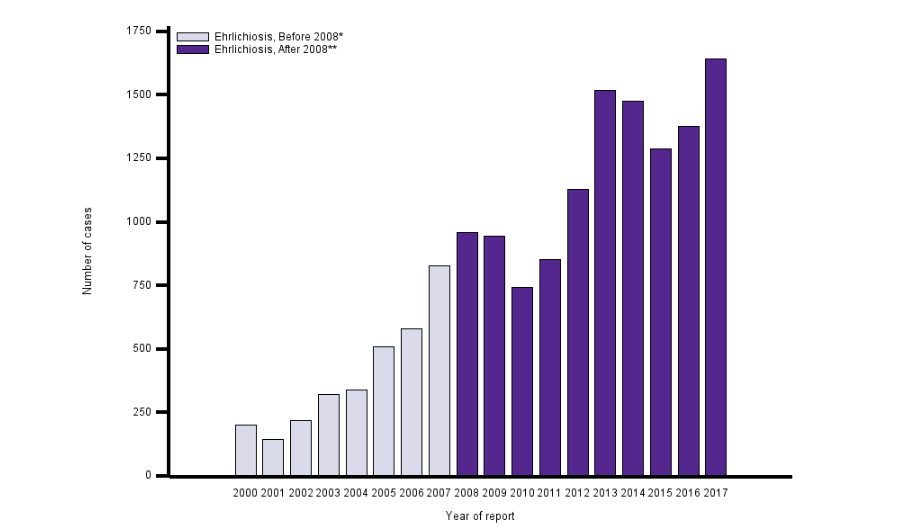


Ehrlichiosis: A Tick-borne Illness That Can Imitate Blood-Related Cancers

https://www.galaxydx.com/ehrlichiosis-tick-borne-infection-imitates-blood-related-cancers/

Ehrlichiosis: A Tick-borne Illness That Can Imitate Blood-Related Cancers


When Lyme Disease Doesn’t Go Away

https://news.columbia.edu/news/when-lyme-disease-doesnt-go-away

When Lyme Disease Doesn’t Go Away

It’s tick season. Here’s what Brian Fallon, the director of Columbia’s Lyme & Tick-borne Diseases Research Center, has to say about combating chronic Lyme disease.
By

Carla Cantor
April 29, 2019

Brian A. Fallon, (VP&S ’85, MPH ’85) spent his early career working with patients whose medical symptoms were a mystery. The Columbia University Irving Medical Center psychiatrist became one of the foremost researchers of hypochondria and somatic disorders, or psychological illness that manifests as physical symptoms.

He might have stayed with that specialty had he not begun in the early 1990s to see a surge in referrals of patients with chronic, unexplained symptoms who had all been healthy—until they got Lyme disease. These patients suffered from chronic pain, fatigue and cognitive problems that had a debilitating effect on their lives. They all had been treated with antibiotics with partial response but then relapsed.

Since such persistent infection was considered impossible, they were told they were hypochondriacs.

“At the time, the medical community was saying that initial antibiotic therapy led to a cure,” Fallon said. “I found this hard to believe given the suffering among these patients. We needed to look further.”

Since 2007 Fallon has headed Columbia’s Lyme & Tick-borne Diseases Research Center, a joint effort by the Global Lyme Alliance, the Lyme Disease Association and the Columbia University Medical Center Board of Trustees. It is the first such academic research center in the country, and its mission is to tackle the core clinical questions of the disease and identify better diagnostics, biomarkers and treatments.

Fallon discusses why this is a pivotal time in the world of Lyme disease.

Book cover of Conquering Lyme Disease

Q. Lyme disease was first reported in the United States in 1977 in the town of Old Lyme, Connecticut.  How far have we come?

A. We still have many unanswered questions, but there has been tremendous progress. We now know the cause of the disease, a bacterium called Borrelia burgdorferi, and its multi-system manifestations. We know many of the biologic tricks the organism uses to evade the human immune response and we know its genetic makeup, as it has been fully sequenced. We know that while most Borrelia are easily eradicated with a standard course of antibiotics, some persist despite treatment. We briefly had a vaccine on the market, which is no longer available, but a new vaccine is now in clinical trials. Despite advances in some areas, there remain serious problems, most prominently that the epidemic of Lyme disease continues to expand both geographically and in the number of new cases—an estimated 400,000 in the United States each year.

Q. What are the symptoms of chronic Lyme disease and how is it diagnosed? What percentage of Lyme sufferers go on to have chronic problems?

A. Most patients do well if the infection is recognized and treated early. In about 10 to 20 percent of cases, patients develop a more severe disease whose symptoms can include debilitating pain, fatigue, headaches, mental fog causing difficulty with memory or finding words, irritability and  sleep disorders. Unfortunately, because our blood tests are antibody-based and can remain positive for years even when infection is no longer present, it is hard to determine whether a patient’s recurrent symptoms are due to persistent infection, a new infection or a post-infectious disorder.

Q. Why does post-treatment Lyme disease affect some people and not others?

A. This is an important question for which we have only preliminary answers. Infection by a more invasive strain of the Borrelia microbe, rather than one that only causes skin manifestations, increases the risk of more severe disease. Certain genetic markers increase the risk of chronic Lyme arthritis. Patients with a history of multiple physical illnesses and other life stressors may have less resilience to infection. And because the tick may transmit other microbes, some patients may have two or more infections.

Q. What are the current treatments for persistent Lyme disease?

A. There are multiple approaches to the treatment of lingering symptoms, but there haven’t been any new, large clinical trials in the U.S. on chronic Lyme-related symptoms in over 10 years. Studies in Europe of early Lyme disease indicate that some of these patients improve without further treatment over the course of one year after initial antibiotic therapy. Patients with chronic symptoms need a personalized approach based on the cause of their symptoms.

Q. Is there hope of finding a cure?

A. Absolutely. With precision medicine approaches, biomarkers are now emerging that appear able to predict who might respond to standard antibiotic therapy and those who might not. This provides an opening for testing new treatment approaches for the latter group, leading to improved long-term outcome.


Dr. Fallon is co-author of Conquering Lyme Disease: Science Bridges the Great Dividewith Dr. Jennifer Sotksy ( VP&S’16,) a fourth-year psychiatry resident at Columbia University Irving Medical Center. (Columbia University Press, 2017 hardcover,  2019 paperback)

For media inquiries or more information, contact Carla Cantor at 212-854-5276 or carla.cantor@columbia.edu.

__________________

**Comment**

  • Again, the erroneous percentages of 10-20% of patients going on to develop persistent symptoms is inaccurate.  There’s a whole lot more of us out here in Lyme-land than that.  Please read:  https://madisonarealymesupportgroup.com/2019/02/25/medical-stalemate-what-causes-continuing-symptoms-after-lyme-treatment/  In a nutshell, microbiologist Holly Ahern points out that the 10-20% the CDC calls PTLDS only includes those patients diagnosed and treated early.  It does not and should not include a large subset of patients (30-40%) diagnosed and treated late.  When you add the two groups together, you get 60% of patients going on to struggle with persisting symptoms.  This is an important detail as it shows the vast numbers struggling as well as the need for high priority research studying this issue.  


  • He discusses strains of borrelia.  I learned something the other day – that borrelia (Lyme) is unique in that bacteria are typically only allowed 1 species name, but due to honoring Willy Burgdorfer, all borrelia are “Lyme.” This little fly in the ointment is a huge reason many are not getting diagnosed.  Current 2-tiered testing only tests for 1 strain. I was told by a researcher to think of the Borrelia burgdorferi sensu lato complex as an umbrella, and the 23 genospecies are dangling from it (soon to be 24, BTW!) This may be why Southerners struggle with getting a diagnosis. STARI may be one of these borrelia that doesn’t fit into the box researchers have created for this night-mare.


  • He also found IV’s give much higher blood levels of drugs than orals, and that the following variables necessitated IV treatment:
    1. Spinal tap shows high inflammation (high protein)
    2. High Sed rate and synovitis (inflammation of synovial membrane)
    3. People sick for more than 1 year
    4. Age over 60
    5. Acute carditis
    6. Immune deficiency
    7. Those who used immunosuppressants
    8. Failed oral treatment


  • If you study this for 1 second you begin to appreciate the complexity of treating this which mainstream doctors still haven’t even accepted.


  • The fact that there haven’t been any new, large clinical trials in the U.S. on chronic Lyme-related symptoms in over 10 years is unacceptable when you consider that this is two times more prevalent than breast cancer.  HELLO?  Where’s the green ribbons and huge institutions raising funds for Lyme research?  Oh, yeah, I remember, our researchers are using their own microscopes in their basements!  https://lymelifescapeswithcaroline.com/2014/03/25/dr-alan-b-macdonald/  MacDonald is shown in the documentary, “Under Our Skin.”  


  • BTW: when MacDonald presented his culture findings (direct testing) at a meeting of the NY State medical society where there were many detractors from Yale & Stoneybrook who didn’t want their patented serological tests to be usurped. They accused him of falsifying his results.  Dr. McDonald then went on to prove conclusively it was Lyme by morphology, silver staining, monoclonal antibodies staining, DNA PCR and finally electron microscopy.  Frustrated, he quit the field and moved to Texas leaving all his old files in Burrascano’s basement until twenty years went by and he became interested again due to Alzheimer’s research & picked up his old files. https://madisonarealymesupportgroup.com/2019/02/22/why-mainstream-lyme-msids-research-remains-in-the-dark-ages/


Biomarker for Chronic Fatigue Syndrome Identified

http://med.stanford.edu/news/all-news/2019/04/biomarker-for-chronic-fatigue-syndrome-identified.html

Biomarker for chronic fatigue syndrome identified

Stanford scientists devised a blood-based test that accurately identified people with chronic fatigue syndrome, a new study reports.
APR 292019

Ron Davis

Ron Davis is the senior author of a paper that describes a blood test that may be able to identify chronic fatigue syndrome.  Steve Fisch

People suffering from a debilitating and often discounted disease known as chronic fatigue syndrome may soon have something they’ve been seeking for decades:

scientific proof of their ailment

Researchers at the Stanford University School of Medicine have created a blood test that can flag the disease, which currently lacks a standard, reliable diagnostic test.

Too often, this disease is categorized as imaginary,” said Ron Davis, PhD, professor of biochemistry and of genetics. When individuals with chronic fatigue syndrome seek help from a doctor, they may undergo a series of tests that check liver, kidney and heart function, as well as blood and immune cell counts, Davis said. “All these different tests would normally guide the doctor toward one illness or another, but for chronic fatigue syndrome patients, the results all come back normal,” he said.

The problem, he said, is that they’re not looking deep enough. Now, Davis; Rahim Esfandyarpour, PhD, a former Stanford research associate; and their colleagues have devised a blood-based test that successfully identified participants in a study with chronic fatigue syndrome. The test, which is still in a pilot phase, is based on how a person’s immune cells respond to stress. With blood samples from 40 people — 20 with chronic fatigue syndrome and 20 without — the test yielded precise results, accurately flagging all chronic fatigue syndrome patients and none of the healthy individuals.

The diagnostic platform could even help identify possible drugs to treat chronic fatigue syndrome. By exposing the participants’ blood samples to drug candidates and rerunning the diagnostic test, the scientists could potentially see whether the drug improved the immune cells’ response. Already, the team is using the platform to screen for potential drugs they hope can help people with chronic fatigue syndrome down the line.

A paper describing the research findings was published online April 29 in the Proceedings of the National Academy of Sciences. Davis is the senior author. Esfandyarpour, who is now on the faculty of the University of California-Irvine, is the lead author.

Providing the proof

The diagnosis of chronic fatigue syndrome, when it actually is diagnosed, is based on symptoms — exhaustion, sensitivity to light and unexplained pain, among other things — and it comes only after other disease possibilities have been eliminated. It is also known as myalgic encephalomyelitis and designated by the acronym ME/CFS.

It’s estimated that 2 million people in the United States have chronic fatigue syndrome, but that’s a rough guess, Davis said, and it’s likely much higher.

For Davis, the quest to find scientific evidence of the malady is personal. It comes from a desire to help his son, who has suffered from ME/CFS for about a decade. In fact, it was a biological clue that Davis first spotted in his son that led him and Esfandyarpour to develop the new diagnostic tool.

We clearly see a difference in the way healthy and chronic fatigue syndrome immune cells process stress.

The approach, of which Esfandyarpour led the development, employs a “nanoelectronic assay,” which is a test that measures changes in miniscule amounts of energy as a proxy for the health of immune cells and blood plasma. The diagnostic technology contains thousands of electrodes that create an electrical current, as well as chambers to hold simplified blood samples composed of immune cells and plasma. Inside the chambers, the immune cells and plasma interfere with the current, changing its flow from one end to another. The change in electrical activity is directly correlated with the health of the sample.

The idea is to stress the samples from both healthy and ill patients using salt, and then compare how each sample affects the flow of the electrical current. Changes in the current indicate changes in the cell: the bigger the change in current, the bigger the change on a cellular level. A big change is not a good thing; it’s a sign that the cells and plasma are flailing under stress and incapable of processing it properly. All of the blood samples from ME/CFS patients created a clear spike in the test, whereas those from healthy controls returned data that was on a relatively even keel.

“We don’t know exactly why the cells and plasma are acting this way, or even what they’re doing,” Davis said. “But there is scientific evidence that this disease is not a fabrication of a patient’s mind. We clearly see a difference in the way healthy and chronic fatigue syndrome immune cells process stress.”

Now, Esfandyarpour and Davis are expanding their work to confirm the findings in a larger cohort of participants. Recruitment for the larger project, which aims to further confirm the success of the diagnostic test, is being done on a rolling basis. Those who are interested in participating should contact clinical research coordinator Anna Okumu.

Doubling up

In addition to diagnosing ME/CFS, the researchers are also harnessing the platform to screen for drug-based treatments, since currently the options are slim.

“Using the nanoelectronics assay, we can add controlled doses of many different potentially therapeutic drugs to the patient’s blood samples and run the diagnostic test again,” Esfandyarpour said.

If the blood samples taken from those with ME/CFS still respond poorly to stress and generate a spike in electrical current, then the drug likely didn’t work. If, however, a drug seems to mitigate the jump in electrical activity, that could mean it is helping the immune cells and plasma better process stress. So far, the team has already found a candidate drug that seems to restore healthy function to immune cells and plasma when tested in the assay. The drug, while successful in the assay, is not currently being used in people with ME/CFS, but Davis and Esfandyarpour are hopeful that they can test their finding in a clinical trial in the future.

All of the drugs being tested are either already approved by the Food and Drug Administration or will soon be broadly accessible to the public, which is key to fast access and dissemination should any of these compounds pan out.

Davis is a member of Stanford Bio-X, the Stanford Cancer Institute and the Stanford Maternal & Child Health Research Institute.

Other Stanford authors of the study are research scientists Neda Nemat-Gorgani and Julie Wilhelmy and research assistant, Alex Kashi.

The study was funded by the Open Medicine Foundation. Davis is the director of the foundation’s scientific advisory board.

Stanford’s departments of Genetics and of Biochemistry also supported the work.

**Comment**
A few things stick out:
  1. This researcher, like those doing the heavy lifting in the Lyme/MSIDS world, are personally vested. They find things because this is more than a job to them. They NEED answers for either themselves or their loved ones.
  2. “Not Looking deep enough,” is a problem in the Lyme/MSIDS world as well. Look deeper!
  3. Due to this man’s work, some patients are finally going to be taken seriously. This is HUGE.
  4. Notice that ME/CFS is a clinical diagnosis just like Lyme/MSIDS. Because testing is so poor or doesn’t exist, patients aren’t believed due to a number or lack of a number on paper. 
  5. I have to think that “eliminating other disease possibilities” is the fly in the ointment with ME/CFS. How can you eliminate Lyme/MSIDS when doctors can’t find it to begin with and they aren’t willing to look deeper?


Data Shows Lyme Disease Has Increased – Even in Areas That Aren’t Endemic

Laboratory Blood-Based Testing for Lyme Disease at a National Reference Laboratory.

Lee-Lewandrowski E, et al. Am J Clin Pathol. 2019.

Abstract

OBJECTIVES: We evaluated trends in Lyme disease (LD) testing at a national reference laboratory.

METHODS: LD screening enzyme immunoassay and Western blot testing data performed at Quest Diagnostics during 2010 to 2016 were analyzed nationally and at the state level.

RESULTS: Overall, 593,800 (11.3%) results were positive of 5,255,636 tests. There was an increase in the rate of positivity over the last 2 years of the study and an increase in the number of positive tests in 2016. Positive tests were observed in all 50 states and the District of Columbia. New York had the most positive tests, whereas Connecticut had the highest positivity rate when normalized to state populations. Some states with historically low rates of LD (eg, Texas, Florida, and California) showed significant increases in testing and positivity rates over time.

CONCLUSIONS: LD testing and positivity have increased in recent years, including in states not historically associated with the disease.

__________________

**Comment**

Please send this around. Nobody should EVER again be told,

“You can’t have Lyme because it doesn’t exist here.”

This study demonstrates it’s in every single state. Period.

Yet, this recent article shows people are still being told they can’t have it:  https://madisonarealymesupportgroup.com/2019/04/22/its-just-crazy-why-is-lyme-disease-treatment-so-difficult-to-find-in-mississippi/