Archive for the ‘Testing’ Category

FDA Recommends Testing For Tick-borne Illness in Donated Blood (A Big Duh)

https://www.boston25news.com/news/fda-recommends-testing-for-tick-borne-illness-in-donated-blood/951893377

FDA recommends testing for tick-borne illness in donated blood

By: Jim Morelli

Updated:

BOSTON – It’s an infection transmitted by ticks that may not make you sick but could kill someone who gets your donated blood. 

It’s called babesiosis and the Food and Drug Administration just came out with strict new recommendations on screening for the parasite causing the disease.

Type O blood is in critically short supply this first holiday weekend of the summer.

“It’s the kind of blood that’s most in demand from hospitals and emergency rooms and trauma situations,” American Red Cross spokesperson Kelly Isenor said. “Right now, only three in every hundred people in the United States donate blood and that number just isn’t enough to keep up with the needs of hospital patients.”

With the Red Cross down to a two-day supply from its normal five.

Medical screening has always been part of the blood donation process, but this month a new recommendation from the FDA includes wholesale testing of donor samples in certain areas of the country for the tick-borne infection babesiosis.

“I’ve seen people get very sick from this and it’s great to avoid that,” Doctor Steven Sloan said. “So I think it’s an excellent move on the FDA’s part.”

Sloan is the medical director of the blood bank at Boston Children’s Hospital, where they’ve been testing blood donations for babesia the past few years — with good reason.

“It is the disease that has caused the most transfusion-transmitted fatalities in the U.S. over the last decade,” Dr. Sloan explained.

The FDA report notes that of the 200 known cases of babesiosis from blood transfusions, 95 percent came from fourteen states and the District of Columbia. Those states include all six in New England.

The report recommends updating health questionnaires in the most-affected states.

“So if a sample tests positive, the first thing is we do not use that blood for any patients. That blood will be discarded,” Sloan said.

Donors testing positive would be deferred from further donation for two years.

Although the FDA report makes clear that it is recommending babesia testing — not requiring it — Sloan predicts every blood supplier will get on board in time.

“So, [it will] probably be another year before most places will be testing for Babesia in this part of the country,” Sloan said.

And yes, that could mean more cases of transfusion-caused babesiosis.

But Sloan says with one positive in every few thousand donations, the risk is still small.

Boston Children’s Hospital says it is in dire need of blood donations. You can find out how to help here.

____________________

For more:  https://madisonarealymesupportgroup.com/2016/12/15/blood-screening-for-babesia/

https://madisonarealymesupportgroup.com/2017/11/27/blood-screening-for-babesiosis-using-enzymatic-assays/

https://madisonarealymesupportgroup.com/2018/03/07/babesia-tests-approved-by-fda-for-screening-purposes/

https://madisonarealymesupportgroup.com/2016/06/02/study-showing-results-testing-babesia-microti/

https://madisonarealymesupportgroup.com/2018/10/11/transfusion-transmitted-babesiosis-one-states-experience/

https://madisonarealymesupportgroup.com/2017/08/08/transfusion-transmitted-babesiosis-in-nonendemic-areas/

https://madisonarealymesupportgroup.com/2017/09/27/premature-infants-develop-babesia-via-blood-transfusion/

Babesia is only one of many.  Authorities are so behind the 8-ball it isn’t funny.  Many of the coinfections that often come with Lyme aren’t even reportable.

They aren’t even acknowledging or looking for them much less testing the blood supply them.

Educating California About Lyme Disease

https://www.yourcentralvalley.com/news/central-valley-today/local-advocacy-for-lyme-disease-awareness/2019803675  (NEWS VIDEO HERE)

In this Newscast, two women from California are advocating for patients and educating others about Lyme disease, something that both are intimately affected by.

The first woman, Jody Hudson, lost her daughter to Lyme recently and since has founded the Alex Hudson Foundation.

The second woman, Jessica Devine, tells her own horror story of delayed diagnosis which has led to severe complications.  I’m thankful she explains that tick attachment time can be much shorter than what “authorities” and mainstream medicine state.

For more on transmission:  https://madisonarealymesupportgroup.com/2017/04/14/transmission-time-for-lymemsids-infection/  Within 4-6 hours little girl developed facial palsy and couldn’t walk or talk after tick bite.

There’s more than the tick we need to be concerned with:  https://madisonarealymesupportgroup.com/2019/04/02/transmission-of-lyme-disease-lida-mattman-phd/

https://madisonarealymesupportgroup.com/2019/05/24/microbiology-professor-im-convinced-lyme-disease-is-transmittable-from-person-to-person/

“I AM CONVINCED THAT LYME DISEASE IS TRANSMITTABLE FROM PERSON TO PERSON.” Lida Mattman PhD


HELP! I’ve Been Bitten By a Tick. Now What?

https://www.lymedisease.org/bitten-by-tick/

LYME SCI: Help! I’ve been bitten by a tick. Now what?

Please go to link for full article written by Lonnie Marcum.  I’ve summarized necessary steps below:

  1. Take a picture of the tick while it’s still attached.  
  2. Remove the tick properly and promptly.  
  3. Place tick on clear tape and take a picture of the front and back.
  4. Put tick in plastic bag with a damp cotton ball, label with name, date, site of bite, and length of tick attachment.
  5. Wash bite area with soap and water, disinfect with rubbing alcohol and apply triple antibiotics ointment or antiseptic.
  6. Identify the tick:  tickencounter.org where you submit the picture and they will identify it for FREE.
  7. Mail tick in to see what pathogens are involved.  If your state doesn’t offer free testing, you can contact IGeneX, Tick Report, or Ticknology.
  8. See your doctor but understand testing at this point is futile as antibodies aren’t picked up in the first 4-6 weeks. Lyme has been and will always be a clinical diagnosis.
  9. ILADS recommends you discuss prophylaxis treatment (20 days of doxycycline – never the 1 dose as the research recommending this is flawed) if you’ve been bitten by a blacklegged tick. Everyone admits early diagnosis and treatment makes all the difference.  The “wait and see approach” has not worked.
  10. Understand that while this particular treatment can prevent Lyme, doxy will not touch many coinfections, so you can still develop symptoms if coinfections are involved.
  11. Write any symptoms that are not normal for you down in a calendar. Take pictures of any visual changes on the body.  Contact doctor asap if any signs appear.
  12. If tick results come back positive, ILADS recommends staying on treatment of 4-6 weeks for early Lyme.  Other confections will necessitate other medications.
How to remove a tick

While this video states it takes 24 hours to transmit, please know, it’s happened within a few hours:  https://madisonarealymesupportgroup.com/2017/04/14/transmission-time-for-lymemsids-infection/

What effective Lyme treatment looks like:  https://madisonarealymesupportgroup.com/2016/02/13/lyme-disease-treatment/

Tick prevention:  https://madisonarealymesupportgroup.com/2019/04/12/tick-prevention-2019/

While ticks are certainly a concern, there are many potential ways this is getting transmitted:  https://madisonarealymesupportgroup.com/2019/05/24/microbiology-professor-im-convinced-lyme-disease-is-transmittable-from-person-to-person/


Microbiology Professor – “I’m Convinced Lyme Disease is Transmittable From Person to Person”

http://www.endowmentmed.org/pdf/endowmentupdatelymes2.pdf

lida-thumb  Dr. Lida Mattman

In this 2006 blast from the past, Dr. Lida Mattman, PhD, and author of “Cell Wall Deficient Forms:  Stealth Pathogens,” states,

“I am convinced that Lyme Disease is transmittable from person to person.”

Mattman has been able to recover live spirochetes of Borrelia burgdorferi (Bb) from mosquitos, fleas, mites, semen, urine, blood, spinal fluid, and tears, indicating the potential to be spread on hands person to person. 

To watch her 2006 presentation:  https://madisonarealymesupportgroup.com/2019/04/02/transmission-of-lyme-disease-lida-mattman-phd/  Transcript included.

In the 90’s, Mattman obtained positive cultures for Bb in 43 out of 47 chronically infected people.  All with Parkinson’s & Alzheimer’s had Bb, and many with MS and ALS had it.

This has been substantiated clinically as well

0-2-2

Quite recently live Bb was found in a genital lesion of a chronically infected female patient:  https://madisonarealymesupportgroup.com/2019/05/11/lyme-found-in-genital-lesion-sexual-transmission-studies-screaming-to-be-done/  Key Quote:

“Our findings demonstrate the complexity of Lyme disease,” said Fesler, a lead author of the published study. “It explains why the disease is more common than one would think if only ticks were involved in transmission.”

Why isn’t an alarm being spread throughout the land?
Because this information isn’t new.  It just keeps getting buried and ignored.

Mattman and her colleague, Dr. Joanne Whitaker, a victim of Lyme disease since childhood, developed a direct test for Bb and were the first to identify the cell wall deficient form of the spirochete.  Interestingly, the CDC has made 2-tier blood serology testing for Lyme a literal mandate, purposely avoiding direct detection:  https://madisonarealymesupportgroup.com/2018/04/03/cdc-deliberately-avoids-direct-detection-testing-methods-for-ld/

There’s a long & sordid history of serology testing for Lyme:  https://madisonarealymesupportgroup.com/2018/04/03/cdc-deliberately-avoids-direct-detection-testing-methods-for-ld/  Excerpt:

It would appear that there has been a deliberate avoidance of direct detection methods and it is believed that these efforts are to insure that the current thirty year dogma remain intact.

We have a dire need to develop rapid detection methods for a serious growing health threat which has the ability to disable its victim as described in the attached letter addressed to the previous Director of the CDC. (Please see attachment in link)

I would like to point out that employees of the U.S. Centers for Disease Control hold patents on metabolomics (Lyme tests).

CDC Employee Patent:  https://www.google.com/patents/EP2805168A1?cl=en

For nearly four decades now the only FDA approved test for Lyme disease is the indirect two-tiered antibody test. Direct detection methods to identify the causative agent responsible for the disease have been avoided, criticized and shelved.

https://madisonarealymesupportgroup.com/2018/12/16/laboratory-testing-for-lyme-disease/  Direct detection laboratory testing (DNA/PCR Sequencing) is used for many infections (Ebola (1), Zika (2), Bartonella (3) etc.) but not Lyme disease.

The shenanigans don’t end there:  https://madisonarealymesupportgroup.com/2017/12/13/suppression-of-microscopy-for-lyme-diagnostics-professor-laane/  Excerpt:

After publishing the 2013 article ‘A simple method for the detection of live Borrelia spirochetes in human blood using classical microscopy techniques’, professor Laane was invited to give a lecture at the 2014 Norvect conference in Oslo. An English patient saved the pdf, so you can still read it, via the link provided.

I was present at that conference and still remember how nervous he was. The reason was that several medical professors complained to his university. He was threatened with losing his job, if he would speak at the conference.

In fact, he did not literally speak – as you can see in the movie below – but used performing arts to show the slides of the spirochetes. Professor Laane was fired anyway and his laboratory was closed down.

According to Lyme patient and advocate Carl Tuttle:
“The CDC is responsible for the current Lyme disease crisis where patients cannot obtain a timely diagnosis through accurate early detection.”
For a great read on Lyme testing:  https://www.lymedisease.org/lyme-disease-test/  In this article you will read that most testing for Lyme is indirect.  Serology testing looks for antibodies to the organism. Another great read:  https://madisonarealymesupportgroup.com/2018/10/12/paving-the-way-for-better-lyme-diagnostic-tests/
 “These serologic tests cannot distinguish active infection, past infection, or reinfection.”

In plain English, these tests don’t show squat, yet have ruled Lyme-land for 40 years like the Iron Curtain.

WHY?

For those of you new to this game, the CDC/IDSA/NIH has spread malicious information about smaller labs that specialize in virology and bacteriology and are CLIA certified, one of the toughest certification standards a lab can undergo.  On their website, the CDC has called these labs, “home-brewed.” They control testing by stating it must be FDA approved.  I actually attended a public meeting at the WI capital where a pediatric doctor quoted right off the CDC website and called the IgeneX Lyme test, “Home-brewed.”  https://www.cdc.gov/mmwr/preview/mmwrhtml/mm6315a4.htm

“Often these are laboratory-developed tests (also known as “home brew” tests) that are manufactured and used within a single laboratory and have not been cleared or approved by FDA. Recently, CDC has received inquiries regarding a laboratory-developed test that uses a novel culture method to identify Borrelia burgdorferi, the spirochete that causes Lyme disease. Patient specimens reportedly are incubated using a two-step pre-enrichment process, followed by immunostaining with or without polymerase chain reaction (PCR) analysis. Specimens that test positive by immunostaining or PCR are deemed “culture positive” (2). Published methods and results for this laboratory-developed test have been reviewed by CDC. The review raised serious concerns about false-positive results caused by laboratory contamination and the potential for misdiagnosis (3).  CDC recommends that laboratory tests cleared or approved by FDA be used to aid in the routine diagnosis of Lyme disease. A complete searchable list of such tests is available online (4).”

I can only guess what it costs a lab to go through the FDA process. Let’s just say these small specialty labs have had it rough.  They have fought tooth and nail just to keep their doors open.

Besides requiring FDA approval, the CDC has also arbitrarily set the criteria of requiring  5 out of 10 bands for a positive test result.

According to Dr. Waisbren, an IDSA founder, in his illuminating book, “Treatment of Chronic Lyme Disease: 51 Case Reports and Essays in Their Regard,” he states,

“The Western Blot studies, which are essentially antibody studies, do seem to be the most positive finding in clinical Lyme disease, but setting an arbitrary level of these antibodies to diagnose a disease that has not been amenable to Koch’s postulates seems open to question.  By the same token, ignoring antibody results unless they meet arbitrary levels seems suspect.  The vast majority of patients in this series showed some Western blot antibody exposure, but many did not meet the arbitrary limits set.”  

And then wisely states,

“We all must remember that in our preset state of knowledge, the diagnosis of Lyme disease is a clinical one.”

This was all written in 2011, yet the only FDA “approved” testing is STILL the abysmal and arbitrary 2-tiered blood serology which only detects antibodies to the organism.

One gets the distinct feeling the CDC wants to control how many patients are accurately diagnosed.
Oh, and also collect money on tests they have patents on.

Little to no work has been done on the transmission of the organism.  Animal studies and the warnings of experienced microbiologists on the potential of human to human transmission since the 80’s have been completely ignored.  Even Canada has recognized congenital transmission:  https://madisonarealymesupportgroup.com/2018/10/05/canada-acknowledges-maternal-fetal-transmission-of-lyme-disease/, largely because a group of women led by a nurse with congenitally infected children pushed the point and collected 33 years of data showing it:  https://madisonarealymesupportgroup.com/2018/06/19/33-years-of-documentation-of-maternal-child-transmission-of-lyme-disease-and-congenital-lyme-borreliosis-a-review/

Here’s another example of work done way back in the 80’s which found Bb in a baby which died during the first week of life due to congenital heart disease which found Bb in the spleen, kidneys, and bone marrow.  The mother developed Lyme during the 1st trimester:  https://experts.umn.edu/en/publications/maternal-fetal-transmission-of-the-lyme-disease-spirochete-borrel

Do we seriously have to battle a chronic illness and keep doing ALL the work by ourselves?

The best description I’ve heard is that Lyme is a, “do it yourself” disease. Very accurate description.

For more on ancient animal studies showing various transmission routes:  https://madisonarealymesupportgroup.com/2017/02/24/pcos-lyme-my-story/

Until these issues are fully and transparently dealt with, we can spray and check for ticks all the day long but still not address the very practical issue of other ways people are getting infected.

Lida H Mattman, PhD, has spent seven decades studying the different forms that bacteria can take. Her contributions to medical science can be summarized best by noting that in 1998 she was nominated for the highest honor attainable in her profession: The Nobel Prize in Medicine. Professor Mattman graduated with a M.S. in Virology from Univ. of Kansas and a Ph.D. in Immunology from Yale. She has taught Immunology, Microbiology, Bacteriology, Virology, Pathology, and for 35 years worked in these fields at various schools and institutions including Harvard Univ., Howard Hughes Institute, Oakland Univ. and Wayne State Univ. where she is Professor Emeritus. She is currently working for the Nelson Medical Research Institute studying the relationship between spirochetes involved in MS, Lyme disease, and ALS.

Diagnosis of Lyme Disease – Johns Hopkins

https://www.hopkinslyme.org/lyme-disease/diagnosis-of-lyme-disease/

Diagnosis of Lyme Disease

Many cases of Lyme disease are initially misdiagnosed. Lyme disease can be difficult to diagnose because early symptoms of fever, severe fatigue, and achiness are also common in many other illnesses. In addition, diagnostic blood tests are not always dependable, particularly in early disease. However, the round expanding red lesion rash is a unique sign that is more specific for Lyme disease, and many times a diagnosis can be made based on the tell-tale erythema migrans rash itself. Yet, it is important to understand that the erythema migrans rash is not always present or recognizable, and symptoms can fluctuate.

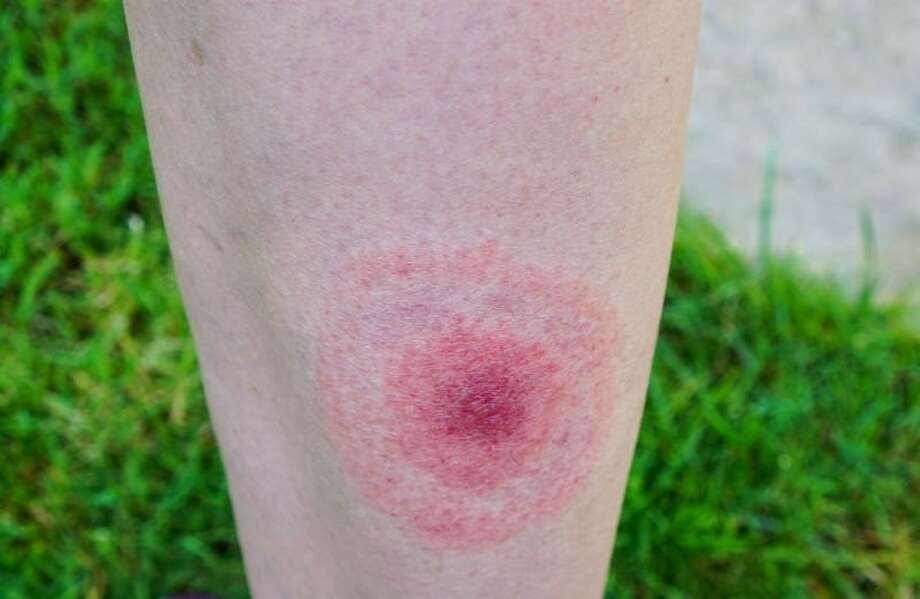
Think the Lyme disease rash is always a bull’s-eye? Think again.
Think it’s a spider bite? Think again.
Please refer to our
poster of varied rash manifestations as a helpful Lyme disease rash identification tool.

Recognizing the Lyme disease erythema migrans rash can be crucial to early diagnosis and treatment.

Despite common belief, the stereotypical ring within a ring bullseye rash is only present in a minority of Lyme disease patients. Instead, the majority of Lyme disease rashes are uniformly red or blue-red and do not have a central clearing or bullseye. Sometimes the site of the tick bite is clearly visible in the center of this lesion. The erythema migrans rash is almost always round or oval and expands over days to a diameter greater than 2”. The Lyme rash is often confused with a spider bite, despite spider bites not expanding in this way.

Though less common, blisters may appear in the center of a Lyme disease rash and can be mistaken for a spider bite or the rash of shingles.

It is important to note that not all infected tick bites successfully transmit Lyme disease. Tick bite reaction may occur due to skin reactions to substances from the tick bite and may be confused with the rash of Lyme disease. Tick bite reactions may last days to weeks, but unlike the Lyme disease rash, tick bite reactions remain small, do not enlarge, and are not associated with fever or other systemic symptoms.

A typical tick bite site reaction is dime-sized or smaller and does not enlarge each day like the erythema migrans rash of Lyme disease.

Bacteria from the Lyme disease rash can disseminate through the bloodstream and create new erythema migrans skin lesions at other sites distant from the initial bite.

What are the Systemic Symptoms of Lyme Disease?

Systemic symptoms of Lyme disease include:

  • Severe fatigue, musculoskeletal pain, neurologic symptoms and cognitive impairment
  • Cardiac problems, including life-threatening inflammation of the heart called carditis
  • Facial palsy, meningitis, and headaches
  • Swollen knees and Lyme arthritis

How do you diagnose the later stages of Lyme Disease?

Disseminated Lyme disease, due to unsuccessful or delayed treatment, can become disabling. The bacteria can leave the skin where it was initially inoculated by the tick and travel through the bloodstream to numerous systems of the body, primarily joints, heart, brain, muscles and the nervous system.

Late disseminated Lyme disease has a wide range of presentations including joint pain, extreme fatigue, neuromuscular pain, cardiac problems, headaches, and other central nervous system dysfunction. There are some distinguishable signs of later stage Lyme disease including facial palsy in the second stage, and swollen knees in the third stage that are somewhat specific for Lyme disease, but not absolutely, because there are other causes of Bell’s Palsy and swollen knees.

Diagnosis can be confirmed by serology blood tests which measure the antibodies that are formed by the immune system in response to the Lyme disease bacterial infection. Collection of cerebrospinal fluid by lumbar puncture may be indicated in neurologic cases that may involve the central nervous system.

Can you use a serology test to diagnose during the first stage of Lyme disease?

Serology antibody tests are generally more helpful for second and third stages of Lyme disease than first stage Lyme disease. Antibodies take weeks to develop, and if the initial presentation of Lyme disease is in the early stage those antibody tests may be falsely negative because the immune system has not yet had enough time to produce antibodies. If a physician is suspicious of Lyme disease but cannot make a diagnosis by the rash, then the antibody test in that first stage should be repeated 3 to 4 weeks later since a Lyme disease diagnosis can be missed with a false negative test in the first few weeks.

The Centers for Disease Control and Prevention (CDC) recommends measuring antibodies by using a two-tier testing process. If an ELISA test is positive, it is then followed by a Western blot test. However, this system can produce some false positive results and high numbers of false negative results, particularly in early infection.

In addition, the immune response to borrelia is heterogeneous, and not all cases are captured by current antibody-based diagnostics. Antibody testing can also be a problem in patients with early disease who are treated with antibiotics. In these cases, a follow up antibody test done after treatment may be negative and never turn positive.

Thus, a negative antibody test does not necessarily rule out Lyme disease and should always be considered in the context of a full health history and clinical assessment.

Current problems with Lyme disease diagnosis & patient care

  • Diagnostic tests cannot yet accurately identify the earliest stage of Lyme disease when making the diagnosis is crucial.
  • The rash is not always present or easily recognized
  • Misdiagnosis and delayed diagnosis can make Lyme disease more difficult to treat and lead to prolonged and debilitating illness
  • Early symptoms can be mistaken for a summer flu
  • Lyme disease can involve several parts of the body, including joints, connective tissue, heart, brain, and nerves, and produce different symptoms at different times.
  • Antibody testing done after early treatment may be negative and never turn positive for some cases
  • Borrelia burgdorferi can evade our protective immune system and trigger immune system dysfunction.
  • No reliable blood test is presently available to measure treatment success, necessitating close clinical follow up and improved physician education.
  • Presently there is no vaccine to prevent Lyme disease.

What is the difference between this “indirect” blood diagnostic test and a “direct” test?

Direct diagnostic tests measure the presence of the bacteria directly and are much more reliable than tests looking for indirect measurement of antibodies that measure a person’s immune response to an infection. Lyme disease diagnoses and disease management would benefit from validated diagnostic tests that directly measure the infection such as a culture, PCR test, or antigen detection tests. Those are the kind of tests relied on in the management of other infectious diseases like HIV, hepatitis C or strep.

Does the time of year matter in the diagnosis of Lyme disease?

Since Lyme disease is a tick-borne infection, the seasonality of the disease is linked tightly to the life cycle and behavior of ticks. May, June, July, and early August are the biggest risk months for acquiring first stage Lyme disease in the US. This is the feeding time for nymph and adolescent ticks which are difficult to see. A viral-like illness in those early summer months might be Lyme disease. There is also some transmission of Lyme disease via adult ticks in the fall and winter and throughout the year anytime the temperature is above 40 degrees, but to a lesser degree.

The risk of acute Lyme disease is more of a year-round risk in more temperate regions such as northern California and the pacific northwest. Later stage Lyme disease, however, can manifest at any time.

Is Johns Hopkins trying to discover new ways to diagnose Lyme disease more directly?

Our Center is working on identifying biomarkers to improve diagnostics and to measure treatment success. Our research also supports the advancement of direct diagnostic tests to directly identify the Lyme disease bacteria.

USE OF THIS SITE

All information contained within the Johns Hopkins Lyme Disease Research Center website is intended for educational purposes only. Physicians and other health care professionals are encouraged to consult other sources and confirm the information contained within this site. Consumers should never disregard medical advice or delay in seeking it because of something they may have read on this website.

____________________

**Comment**

Fairly accurate article but deceiving at the same time.  A few points for consideration:

  1. The emphasis on having a rash is hurting patients. In the first ever patient sample in Lyme, Connecticut, only a quarter had a rash. The percentages vary from 25-80%. Hardly a done deal.  While the rash IS diagnostic for Lyme, not having the rash means NOTHING.
  2. I’m thankful the author states it can disseminate quickly.  This can happen far quicker than mainstream medicine cares to admit.  Case in point:  https://madisonarealymesupportgroup.com/2016/12/07/igenex-presentation/  Within 4-6 hours after tick bite, little girl develops facial palsy and can’t walk or talk. That’s quick.
  3. Treat each and every tick bite as seriously as a heart attack.  This “wait and see” approach has been dooming patients for decades. To wait for a rash to enlarge is pure folly.  Everyone knows and admits early treatment is everything, so why are we WAITING?
  4. The symptoms listed don’t do this monster justice.  People can have severe psychological dysfunction (hallucinations, memory loss, anxiety, rage, and much more).  Please quit putting this into a 1 minute sound bite.
  5. Can we quit talking about the use of abysmal serology testing?  Seriously, throw that sucker into the trash can. We need doctors to become educated. Until a better test is created, this is a clinical diagnosis that needs astutely trained doctors.
  6. IT MATTERS NOT what time of year you become ill.  Not ONE iota.  To state otherwise shows a complete under appreciation for this organism.  It can sequester anywhere in the body and pop out at will.  Plus, there’s much to show there is FAR more at play than ticks:  https://madisonarealymesupportgroup.com/2019/04/02/transmission-of-lyme-disease-lida-mattman-phd/  My initial symptoms were gynecological and in January in Wisconsinhardly tick weather, yet, seriously infected I became:  https://madisonarealymesupportgroup.com/2017/02/24/pcos-lyme-my-story/  Animal studies have existed since the 80’s showing contact transmission, via urine, congenitally, orally, ocularly, via synovial fluid, cow milk, colostrum, and on and on, yet nobody is touching this.  It’s just the Black legged tick, don’t ya know?
  7. Lastly, even ticks are defying the authorities and going everywhere on the backs of birds:  https://madisonarealymesupportgroup.com/2018/11/07/ticks-on-the-move-due-to-migrating-birds-and-photoperiod-not-climate-change/  These ticks are chuck full of pathogens and are infecting people with a plethora of things. We need to admit the polymicrobial nature of this and the fact nobody knows what the cumulative effect is on the human body:  https://madisonarealymesupportgroup.com/2018/10/30/study-shows-lyme-msids-patients-infected-with-many-pathogens-and-explains-why-we-are-so-sick/