Archive for the ‘Rocky Mountain Spotted Fever’ Category

New Rickettsia Species Found in Dogs & Lone Star Ticks in California

https://www.lymedisease.org/new-rickettsia-in-dogs/

Researchers confirm new Rickettsia species found in dogs

By Tracy Peake, NC State

Researchers from North Carolina State University have confirmed that a species of Rickettsia first seen in dogs in 2018 is a new species of bacteria.

The new species, dubbed Rickettsia finnyi, is associated with symptoms similar to those of Rocky Mountain spotted fever (RMSF) in dogs, but has not yet been found in humans.

Rickettsia pathogens are categorized into four groups; of those, spotted-fever group Rickettsia (which is transmitted by ticks) is the most commonly known and contains the most identified species. There are more than 25 species of tick-borne, spotted-fever group Rickettsia species worldwide, with R. rickettsii – which causes RMSF – being one of the most virulent and dangerous.

Symptoms of RMSF in dogs and people are similar, including fever, lethargy and symptoms related to vascular inflammation, like swelling, rash and pain.

“We first reported the novel species of Rickettsia in a 2020 case series involving three dogs,” says Barbara Qurollo, associate research professor at NC State and corresponding author of the new study.

“Since then we received samples from an additional 16 dogs – primarily from the Southeast and Midwest – that were infected with the same pathogen. We were also able to culture the new species from the blood of one of the naturally infected dogs in that group.”

To name a new Rickettsial bacterial species, the bacteria must be cultured, its genome sequenced and published, and the cultures must be deposited in two biobanks so that other researchers can also study it. Qurollo’s group successfully cultured the new species from the infected dog.

Culturing a difficult pathogen

Rickettsia species are difficult to culture because these organisms grow inside of cells,” Qurollo says. “While we haven’t been able to confirm which tick species transmit it yet, we think it may be associated with the lone star tick, because a research group in Oklahoma found R. finnyi DNA in a lone star tick.”

The researchers named the new species Rickettsia finnyi, after Finny, the first dog they found it in.

“By naming it after an individual dog, we wanted to honor all companion dogs that have contributed to the discovery of new pathogens that could cause serious illness in both dogs and humans,” Qurollo says.

The work appears in Emerging Infectious Diseases.

SOURCE: North Carolina State University

________________

https://www.lymedisease.org/lone-star-ticks-california/

Are lone star ticks taking hold in California?

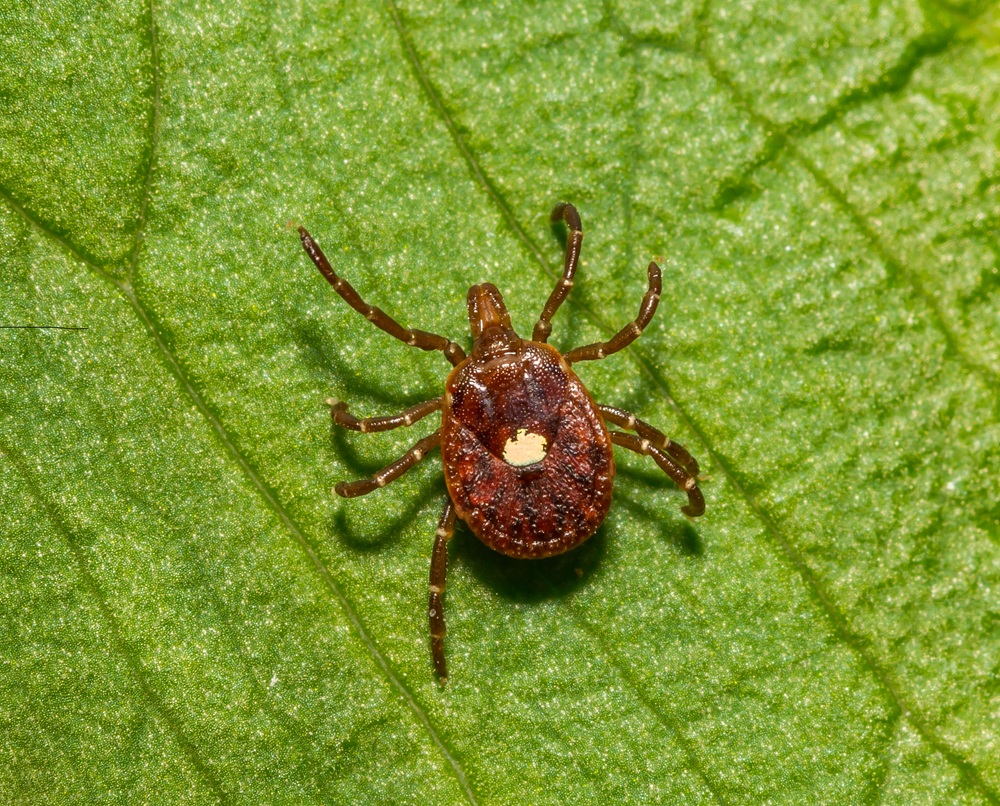
The lone star tick, notorious for spreading disease and causing a red meat allergy called alpha-gal syndrome, has long plagued the eastern United States.

Now, UC Davis researchers warn it may be edging closer to establishing itself in California.

Their study uncovered seventy-six lone star ticks reported across the state, including recent finds in the Bay Area and San Clemente. While field teams in 2024 and 2025 didn’t recover any during surveillance, climate models show coastal California offers prime conditions for the species.

Experts say the tick isn’t officially established yet, but the risk is real. With climate change and increased movement of animals and people, scientists caution that Californians should stay vigilant, check for ticks after outdoor activities, and report unusual sightings.

Click here to read the study in the journal Ticks and Tick-borne Diseases.

______________

**Comment**

Sadly, climate clap trap has taken hold in research because a political tribalism has taken over due to highly competitive, but limited research dollars to be vied for.  “Science” has been wrong about global warming for over 50 years but refuses to admit fault or reform.  

Regarding tick and disease proliferation, independent research has already proven the climate is a mute point as ticks are highly ecoadaptive, yet the narrative continues on like a bad penny.  And nary a word is ever mentioned about our own government experimenting on ticks and dropping them out of airplanes.

Much easier to blame the climate phantom.

RMSF Case Documented in Quebec

https://www.ctvnews.ca/health/article/tick-borne-rocky-mountain-spotted-fever-detected-in-quebec-and-ontario/

Potentially deadly tick-borne illness recorded in Quebec and Ontario

Published: 

Canada’s first known human case of a potentially deadly tick-borne illness has been documented in Quebec.

The Rocky Mountain Spotted Fever case was recently recorded in Quebec’s Eastern Townships. It follows reports from Ontario of infected animals that visited Long Point on Lake Erie.

“Many people with this infection can be on the more severe end of the spectrum,” infectious disease specialist Dr. Isaac Bogoch told CTV’s Your Morning on Monday. “This can cause a very significant illness and can result in hospitalization and death.”

The bacterial illness is carried by several tick species, including dermacentor variabilis, which is also known as the American dog tick. Despite its name, Rocky Mountain Spotted Fever is most common in the eastern United States, where thousands of cases are recorded every year. (See link for article)

_____________

**Comment**

Unfortunately, the article regurgitates the climate change myth.

Ticks are marvelous ecoadapters and will be the last species on planet earth. They have the equivalent of antifreeze in their bodies and will simply find snow or leaf litter to crawl under when conditions become harsh.  In fact, warm winters are lethal to ticks, with overwinter survival dropping to 33% when the snow melted.  This has been substantiated by other researchers as well.  Scott & Scott, 2018, ticks and climate change, JVSM

They need snow cover to survive.

So ‘climate change’ would actually kill ticks.  

If only.

Important excerpt:

If left untreated, the fatality rate can be as high as between 20 to 30 per cent, according to the U.S.-based Cleveland Clinic. When treated with the antibiotic doxycycline, which is also used for Lyme disease, the fatality rate drops to between five and 10 per cent. Early intervention is key to avoid more serious outcomes, which can also include amputation, hearing loss and brain damage.

Sadly, very little real journalism is occurring in the U.S.  Reporters simply take regurgitated information and regurgitate it back yet again perpetuating the cycle of an accepted narrative.  Where are the investigative journalists digging for truth?  Where are the journalists who present all sides of an issue so the reader can form their own opinion?

They are an extinct species.

Antibiotics vs Herbs: One Doc’s Experience

https://www.treatlyme.net/guide/recovery-crystal-ball-of-odds-and-timelines

In my free Lyme Q&A Webinar called Conversations with Marty Ross MD, people ask me questions related to recovery. Here are some of those questions.

  • Do herbal antibiotics work?
  • Do prescription antibiotics work better than herbal antibiotics?
  • How long will it take me to recover from Bartonella, or Babesia, or Borrelia?
  • Can I recover from chronic Bartonella, Babesia or Borrelia?

Video Article

In the video in the top link, I answer these questions based on my extensive twenty year clinical experience treating persistent tick-borne infections like Lyme, Bartonella, and Babesia using the best herbal and prescription antibiotic approaches. What I discuss is based on my experience. Unfortunately the research answering these questions is very limited or even non-existent.  (See link for article and video)

________________

**Comment**

Please remember, this is simply ONE practitioner’s experience.

Dr. Horowitz recommends treating Babesia for 9 months to a year.  I agree with this and it was our experience.

Regarding Lyme disease, I believe it has more to do with how long you have had it as well as how many other coinfections and comorbidities you have.  The more coinfections and comorbidites – the longer it’s probably going to take – particularly the older you are.  Mold, MCAS, allergies, etc. all play a large role in this a – and are as important as the infection(s).  

For reference, it took FIVE years of treatment followed by 3-4 relapses necessitating treatment before we reached ‘remission.’  Maintaining  the immune system is imperative and that means balancing hormones as well as minerals, vitamins, etc.  I guarantee you WILL NOT get better if you live in a moldy environment or do not deal with these other factors.  

For more:

Military Report: Most Frequently Diagnosed Vector-borne Diseases

https://health.mil/News/Articles/2024/01/01/MSMR-Vector-Diseases

Brief Report: The Four Most Frequently Diagnosed Vector-borne Diseases Among Service Member and Non-Service Member Beneficiaries in the Geographic Combatant Commands, 2010–2022

Vector-borne diseases may pose an increased risk for U.S. service members during recurring military training exercises, operations, and response missions, in addition to residence in endemic regions within and outside the continental U.S.1,2 Prior MSMR reports address VBD surveillance, described by surveillance data for 23 reportable medical events, among active duty and reserve component service members.3,4 This report covers a 13-year surveillance period, from January 2010 to December 2022, and provides linear trends of selected VBDs among Armed Forces service and non-service member beneficiaries diagnosed at installations within the Northern Command (NORTHCOM), Africa Command (AFRICOM), Central Command (CENTCOM), European Command (EUCOM), Indo-Pacific Command (INDOPACOM), or Southern Command (SOUTHCOM). Trends of only the four most frequently reported VBDs were evaluated, as Lyme disease, malaria, Rocky Mountain Spotted Fever, and dengue fever comprised 90% (n=5,199) of all 23 VBDs (n=5,750) among Military Health System beneficiaries documented as RMEs during the surveillance period.

Methods

This study includes all MHS beneficiaries from January 2010 through December 2022. Data were acquired from RME records of 23 VBDs from the Defense Medical Surveillance System, limited to the four most-diagnosed VBDs in DMSS during the surveillance period; a full listing of VBD RMEs are available in a prior MSMR report.3 A VBD case was defined as an individual identified through a RME report, classified as “confirmed,” “probable,” or “suspect” by having met specified laboratory or epidemiologic criteria.5

Demographic information including military component (active, reserve, guard), beneficiary status (service members or non-service member), and U.S. Combatant Command at time of diagnoses were included. Non-service member beneficiaries included dependents, former service members, and retirees. MHS beneficiaries diagnosed as a case before the surveillance period were excluded. An individual could qualify as a case once for each RME type. Incidence date was the earliest event date, with classification determined by utilizing all available data, prioritizing confirmed over probable or suspect records.

Results

Click on the table to access a 508-compliant PDF versionClick on the table to access a 508-compliant PDF version

A total of 5,199 confirmed, probable, and suspect cases of Lyme disease (n=3,400), RMSF (n=893), malaria (n=679), and dengue fever (n=227) were identified among MHS beneficiaries from January 2010 through December 31, 2022 (Table). Of those confirmed, probable, and suspect cases, 2,343 were diagnosed in service members and 2,918 were diagnosed in non-service member beneficiaries (data not shown). Lyme disease and RMSF, both caused by tick-borne pathogens, accounted for 83% of cases, while malaria and dengue fever, transmitted by mosquito vectors, comprised the remainder.

Since Lyme disease was the most common VBD of the four diseases evaluated during the surveillance period, trends of confirmed and probable cases of Lyme disease over time by CCMD are presented in the Figure. Confirmed Lyme disease cases peaked in 2012 (n=455) and then gradually decreased over the study period to a low of 75 cases in 2022; probable cases peaked in 2017 (n=53) and steadily decreased to a low of 15 cases in 2022; suspect cases peaked in 2016 (n=73) and progressively declined to a low of 8 cases in 2022 (data not shown). Cases from NORTHCOM represented the greatest number of confirmed and probable Lyme disease cases during the entire surveillance period (Figure). The annual number of confirmed and probable Lyme disease cases from EUCOM were greatest in 2011 and lowest in 2017; Lyme cases were very low in all other CCMDs, ranging from 0 to 6 cases annually (data not shown).

The Atlantic and central regions of the U.S contributed 85% of NORTHCOM’s reported RMSF cases (data not shown). NORTHCOM averaged 30 RMSF cases annually between 2010 and 2016, dramatically increasing to an average of 149 cases between 2017 and 2019 (data not shown). NORTHCOM was only able to confirm 32% of RMSF cases reported during the surveillance period (Table).

Discussion

Lyme disease cases constituted the largest proportion of overall RMEs in this report, with highest numbers occurring in 2012. A substantial proportion of Lyme disease cases were reported from locations in the northeastern U.S., where Lyme disease is known to be endemic: 43% of service members and non-service beneficiaries were diagnosed at NORTHCOM Groton (New London Submarine Base, CT) and NORTHCOM New England. The New London Submarine Base is close to Lyme, Connecticut, where an epidemiological evaluation of a cluster of children with arthritis resulted in the first complete description of the infection in 1976, giving the disease its name.6 Connecticut still ranks in the top 10 states for reported Lyme disease cases.7 No Lyme disease cases were reported in AFRICOM during the surveillance period, because the vectors (Ixodes pacificus and Ixodes scapularis) are not present in the region.

In 2017, the armed forces expanded its RME guidelines to include all spotted fever rickettsioses (SFR), to better align with CDC case definitions.2 Diagnoses and reports of rickettsial diseases at military hospitals and clinics in NORTHCOM (where RMSF is endemic) significantly increased after the surveillance requirement expansion from only RMSF to the broader SFR group. In this review, all SFR cases were RMSF diagnoses (n=893).

Approximately 68% of RMSF cases reported during the surveillance period could not be confirmed. All laboratory tests performed at military health facilities for RMSF were Indirect Fluorescent Antibody (IFA) assay and other antibody tests, and no records of testing with PCR of blood or eschar specimens were found. Definite identification of Rickettsiae is not feasible solely by IFA due to considerable serologic cross-reactivity, particularly when high-endpoint titers are seen for more than 1 rickettsial antigen.8 Increased use of molecular assays (i.e., real-time PCR) can both confirm and offer species-specific diagnosis in a single sample, facilitating identification and management of rickettsial diseases in both service members and non-service beneficiaries.

The observed decline in the incidence of mosquito-borne cases, such as malaria and dengue, among deployed service members over the last decade is likely due to reduced deployments to endemic regions, with the exception of EUCOM.4 Although dengue fever is not represented significantly in EUCOM in this study, there is a rising risk of dengue and other VBDs due to environmental changes and expanding global travel and trade.9,10,11

VBDs often manifest with non-specific symptoms, and when unconfirmed could constitute a number of other infections or health conditions. Lyme disease is frequently misdiagnosed as chronic fatigue syndrome, fibromyalgia, or multiple sclerosis. This non-specificity of symptoms and related issues such as diagnostic availability and cross-reactivity in diagnosis confirmation can pose challenges for accurate case identification and classification, resulting in the major limitations to this study’s findings.

This report summarizes data from electronic reports of RMEs and examines the incidence and geographic distribution of the top four vector-borne infectious diseases among service members and non-service MHS beneficiaries in the CCMDs during a recent 13-year period. Awareness of the risk of these VBDs will help senior leaders develop and employ strategies to decrease avertable medical problems in MHS beneficiaries, maximizing the productivity and readiness of the medical force.

Author Affiliations

Epidemiology and Disease Surveillance Department, U.S. Army Public Health Command–West, Joint Base San Antonio–Fort Sam Houston, TX: Dr. Stidham; Human Health Services, U.S. Public Health Command–Pacific, Tripler, HI: COL Cole; Epidemiology and Analysis Branch, Armed Forces Health Surveillance Division, Defense Health Agency: Dr. Mabila

(See link for article and graphs)

________________

For more:

NYC Ticks Found to Carry 5 Different Infections

https://www.lymedisease.org/nyc-ticks-found-to-carry-5-different-infections/

NYC ticks found to carry 5 different infections