Lyme Disease Vaccine For Humans: Would You Trust It?
https://danielcameronmd.com/lyme-disease-vaccine-for-humans-would-you-trust-it/
LYME DISEASE VACCINE FOR HUMANS: WOULD YOU TRUST IT?
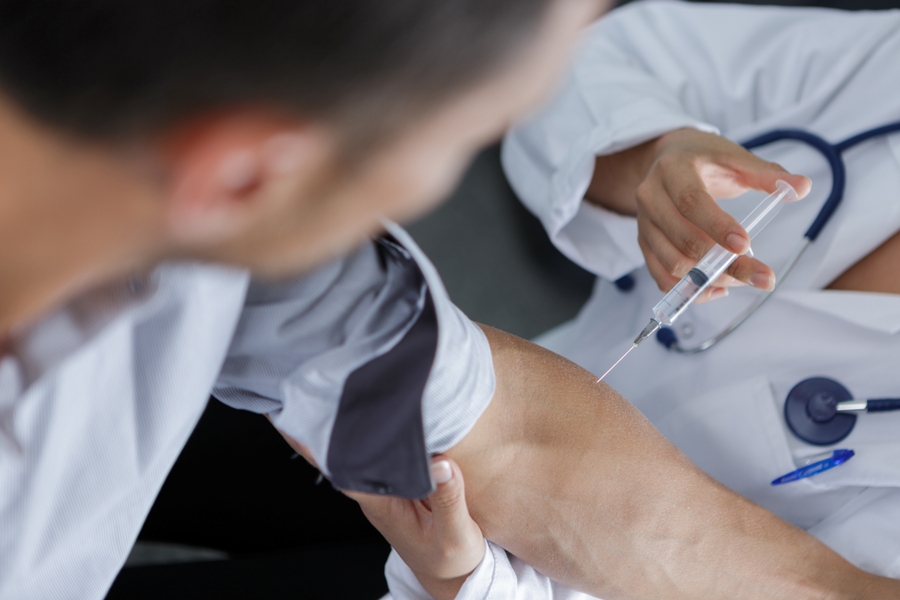
It has been 18 years since GlaxoSmithKlein pulled its preventative Lyme disease vaccine for humans, known as LYMErix, from the market. Now, a new vaccine is currently in Stage 2 clinical trials. This vaccine is also derived, in part, from the same OspA bacterial protein found in LYMErix. This begs the question: Will a new Lyme disease vaccine succeed or suffer the same fate as LYMErix?
LYMErix was reportedly effective at preventing a Lyme disease rash. But the vaccine was only 50% effective at preventing other manifestations of Lyme disease, according to the LYMErix package insert. LYMErix was voluntarily removed from the market due to low demand.
In a survey of 1,015 adults in the U.S., author Matt Motta¹ addresses the question of whether growing concern over climate change and the spread of tick-borne illnesses could increase public acceptance and use of a new Lyme disease vaccine for humans.
Survey respondents were asked, “how likely they are to request to be vaccinated when a Lyme vaccine becomes available for public use?”
The results indicated that “climate change concern is positively and significantly (B = 1.36, p < 0.01) associated with increased vaccination intentions,” the author writes.
Not surprisingly, survey findings showed, “Individuals who live in the Northeast, where Lyme is most prevalent, are more likely to intend to vaccinate (B = 1.35, p < 0.01), while people who place less trust in scientific authorities like the CDC are less likely to do so (B = À1.81, p < 0.01).”
Survey results, however, don’t guarantee the new Lyme disease vaccine for humans will be embraced by the public, writes Mott.
He describes several reasons why LYMErix was removed from the market:
“Low demand for LYMErix may have arisen from several factors, including its cost and the fact that it must be administered in two or three doses to reach high levels of effectiveness.”
“Misinformation about the vaccine’s safety – including the scientifically disputed claim that it can have adverse autoimmune effects – have also been linked to the vaccine being discontinued.”
References:
- Motta M. Could concern about climate change increase demand for a Lyme disease vaccine in the U.S.? Vaccine. 2020.
______________________
**Comment**
Another great example of important research tagged with the unimportant moniker ‘climate change’ regarding the spread of ticks and the diseases they transmit. For the millionth time: https://madisonarealymesupportgroup.com/2018/11/07/ticks-on-the-move-due-to-migrating-birds-and-photoperiod-not-climate-change/
According to tick researcher John Scott, TICKS ARE IMPERVIOUS TO WEATHER.
Please spread the word and don’t be duped by another money grab.
Please note the continuing emphasis on clearance of the rash, which does NOT equate to clearance of a systemic infection, so while the vaccine appears to clear the rash, (which it often does of its own accord anyway) it is only 50% effective against other manifestations of Lyme disease. My guess is they also did not study these patients for long enough to determine if they developed other manifestations.
Regarding Lymerix: https://madisonarealymesupportgroup.com/2018/01/28/the-secret-x-files-the-untold-history-of-the-lymerix-vaccine/
Excerpt:
Quotes from the patients affected by the LYMErix VACCINE:
“…..Smithkline should not be able to destroy people’s lives as they have destroyed mine …”
“… As of May 8, 2000 there were 467 adverse reactions reported to VAERS, and of them 144 had complained of some sort of joint pain. Please do not let this vaccine hurt anymore people. I know SmithKline is trying to get it approved for children, PLEASE DO NOT LET THEM HURT ANYMORE KIDS…”
“….. The FDA let them put this on the market without fully testing it. The longer that this is left on the market, the more people are going to get hurt. Please stop this madness and take it off the market…”
“….. No one else should ever suffer such profound life changes through the administration of a “safe” vaccine. He would have been far better off to get Lyme Disease than to be incapacitated by something we counted on to protect his health!…”
“….Please stop this vaccine from wrecking more lives! !Respectfully submitted…”
Dr. Lapenta also lists 13 patient stories of adverse reactions due to Lymerix that will curl your hair.
Further, this astute article reveals OZ behind the curtain. A shady meeting at Dearborn, Michigan changed Lyme testing criteria so they could make their lucrative, adverse reaction riddled vaccine. Due to this, the sickest patients no longer meet the standard: https://madisonarealymesupportgroup.com/2020/02/10/the-bitter-feud-over-lymerix/
So in answer to Dr. Cameron’s question: “Would you trust a Lyme vaccine?”, the answer isn’t just a “No,” it’s a “Hell No”.
I’m with Weiler: https://madisonarealymesupportgroup.com/2020/09/01/it-is-time-to-reboot-public-health-time-for-a-cdc-niaid-fda-walk-away-movement/
https://madisonarealymesupportgroup.com/2018/07/01/lyme-vaccine-fail-safety-ignored/
https://madisonarealymesupportgroup.com/2020/08/12/what-is-life-like-for-the-vaccine-injured/
The issue regarding vaccines is quite similar to an issue surrounding COVID-19. Unfortunately due to fear, many put so much emphasis on ONE issue they remain blind to 1,000 others. For example, vaccines have injured, maimed and actually killed people. Should fear of disease outweigh these people and their negative outcomes, which includes death, in the annuls of history? Regarding COVID-19, should fear of a virus negate the suffering of people with other issues that are not COVID-19?
We are being told daily that vaccines and COVID-19 trump all other issues. I flat-out disagree.
This lie is a form of bullying.
Vaccination – What’s Trust Got to Do With It?
NVIC co-founder and president Barbara Loe Fisher discusses questions the public is asking about infectious disease and vaccines and changes in public perceptions during the 2020 debate about vaccine science, policy and law.
If you would rather read the commentary: https://www.nvic.org/NVIC-Vaccine-News/September-2020/vaccination-whats-trust-got-to-do-with-it.aspx