Archive for the ‘Psychological Aspects’ Category

Tick Bite Leads to Murder-Suicide

https://www.trialsitenews.com/a/true-crime-as-true-lyme-tick-bite-leads-to-murder-suicide

True Crime as True Lyme: Tick Bite Leads to Murder-Suicide

Investigative Journalist at Trial Site News | In this to change this.
Jul. 24, 2024, 4:30 p.m.

Tortured by Lyme disease, a young man killed his friend and himself. He is not alone.

MARY BETH PFEIFFER

For decades, Lyme disease physicians have seen a small share of late-stage patients with symptoms far beyond the physical ravages of a tick bite. These patients, estimated to be 1 percent of chronic Lyme psychiatric cases, manifest brain disorders so intractable that they become violent, even homicidal.    

Now, a new article in the science journal Heliyon validates these observations and reveals possible mechanisms driving them. It tells the horrific story of a 32-year-old man whose tickborne infection at age 14—one of several—went unrecognized until it was unresponsive to treatment. Failed by short-course antibiotics that mainstream medical guidance swears by, he descended into substance abuse, as many chronic Lyme patients do, to ease his anxiety, depression, and physical pain.

Finally, in the delusional throes of PCP withdrawal, he walked next door, impulsively killed his best friend, stabbed the friend’s father and brother, and turned the knife on himself. He died on a bathroom floor, his mother having tried in vain to stanch two neck wounds.

All of this is a likely outcome of poorly treated Lyme disease under medical protocols that leave even early-treated patients sick—36 percent at six months and 5 percent at fifteen years. While animal studies and a handful of post-mortem reports have illustrated the failure of recommended treatments to quell Lyme disease—using antibiotics in insufficient strength or duration—this study goes further.

For the first time, based on analysis of autopsy samples, it shows both how persisting infection combined with chemical brain changes from substance abuse may have contributed to a disastrous outcome.  (See link for article and study)

________________

**Comment**

It’s stories like these that also make me highly critical of any federal attempt at rectification.

This story is a perfect example of how many go undiagnosed for so long they become recalcitrant.  The picture becomes muddier yet as they seek out ways to simply cope – and in this case turn to harmful drugs which adds a whole other dimension to an already complex picture.

The study thankfully was led by none other than Dr. Robert Bransfield, a literal icon in the world of Lyme and psychiatry.  He’s single-handedly written pretty much all that is known about how Lyme/MSIDS affects the brain.  Even though since 2015 the APA has recommended that evals for mental illness include assessments of ‘locally endemic infectious diseases such as Lyme disease,’ be done, they typically aren’t done.

The study showed that the patient had attached ticks on him at least fifteen times.  At 14 he developed the hallmark summer flu-like illness Lyme is known to cause that his pediatrician considered to be caused by a virus despite an attached tick!  His brain was found to have major inflammation and quinolinic acid – both of which are common in late Lyme disease.  PCP, the illegal drug he took reduces quinolinic acid.

The patient sought but was denied a bed in a substance abuse rehabilitation facility.  PCP withdrawal is known to cause fear, agitation, anxiety, irritability, hallucinations and flashbacks.

For more:

Multiple Borrelia Species in Brain of Man With Chronic Lyme Disease

https://danielcameronmd.com/autopsy-borrelia-brain-lyme-disease/

AUTOPSY REVEALS MULTIPLE BORRELIA SPECIES IN BRAIN OF MAN WITH CHRONIC LYME DISEASE

lyme-disease-brain

Several post-mortem studies have demonstrated the presence of Borrelia spirochetes in the brain and central nervous system of patients with a history of Lyme disease. In this case report, investigators add to the growing evidence that Borrelia spirochete can reside in brain tissue even after prolonged antibiotic treatment.

In their article, “Concurrent Infection of the Human Brain with Multiple Borrelia Species,” Golovchenko and colleagues describe the case involving a post-mortem brain autopsy on a man who suffered for more than 10 years with neurologic and psychiatric symptoms due to Lyme disease.

The patient underwent repeated testing with “borderline positivity for Borrelia infection, followed by the prescription of several antibiotics, which provided no clinical improvements, followed by hospitalization at psychiatric clinics,” the authors state.

CASE REPORT

The 28-year-old patient visited his physician in 2004 after developing an erythema migrans (EM) rash. Subsequently, he was diagnosed with Lyme disease and treated with antibiotics.

However, his condition worsened and he began exhibiting neurological symptoms, including “brain fog,” reduced psychomotor performance and difficulties with concentration and processing of visual and auditory stimuli.

“Here we report the case of a patient who, after being infected by Borrelia and treated with antibiotics continuously, progressed toward neurologic/psychiatric symptoms over the subsequent 13 years.”

In 2017, test results were positive for Borrelia with both IgG and IgM anti-Borrelia antibodies in serum. Several months later, he was admitted to the Psychiatric Department of the University Hospital Olomouc in the Czech Republic.

On February 2018, testing revealed borderline positivity for Borrelia-specific IgM and strong positivity for IgG.

The IgM immunoblot was positive for the presence of OspC from B. afzeliiB. garinii, and B. burgdorferi s.s., and the IgG immunoblot was borderline positive for VlsE from B. afzeliiB. garinii, and B. burgdorferi s.s.

The patient was prescribed a combination of antibiotics which included: minocycline, azithromycin, and hydroxychloroquine.

Spirochetes found in brain tissue of Lyme disease patient

Seven months later, he was hospitalized again and diagnosed with schizotypal personality disorder and somatoform disorder and discharged.

One year later, the patient committed suicide.

“The patient left behind a letter expressing the urgent demand for scientists to analyze his brain for the presence of [Lyme disease] spirochetes.”

An autopsy was conducted.

“PCR analysis was performed on different parts of the brain to determine if Borrelia could be detected in the brain,” the authors state.

Testing confirmed the presence of DNA in 2 spirochete species – B. burgdorferi and B. garinii.

Each Borrelia species, however, was found in different parts of the brain.

“Even though both spirochete species were simultaneously present in human brain tissue, the brain regions where the two species were detected were different and non-overlapping,” the authors explain.

B. burgdorferi was detected in the temporal right lobe, choroid plexus, occipital lobe and parietal lobe. B. garinii DNA was found in the basal ganglia and cerebellum.

Authors conclude:

  • “Our results confirmed the presence of two species of spirochetes from the B. burgdorferi sensu lato complex, B. garinii and B. burgdorferi s.s., in different areas of the human brain.”
  • “Importantly, the DNAs of the two spirochete species were detected in distinct areas of the brain; in no case did we find infection with both in the same brain region.”
  • “The detection of intact spirochetes in autopsy brain specimens of humans after extended treatments and those with a diverse history of disease manifestations, including widely recognized neurocognitive disorders, anxiety, depression, memory loss, brain atrophy, and progressive dementia, illustrates that persistent Borrelia infection can lead to a persistent disorder of the central nervous system (CNS) and the development of [Lyme neuroborreliosis].”
References:
  1. Golovchenko M, Opelka J, Vancova M, Sehadova H, Kralikova V, Dobias M, Raska M, Krupka M, Sloupenska K, Rudenko N. Concurrent Infection of the Human Brain with Multiple Borrelia Species. Int J Mol Sci. 2023 Nov 29;24(23):16906. doi: 10.3390/ijms242316906. PMID: 38069228; PMCID: PMC10707132.

_______________

**Comment**

It’s all right here in purple crayon, yet crickets from public health and mainstream medicine.

For more:

Borrelia in the brain is nothing new.  Research has shown this again and again. 
When is someone going to take it seriously?  


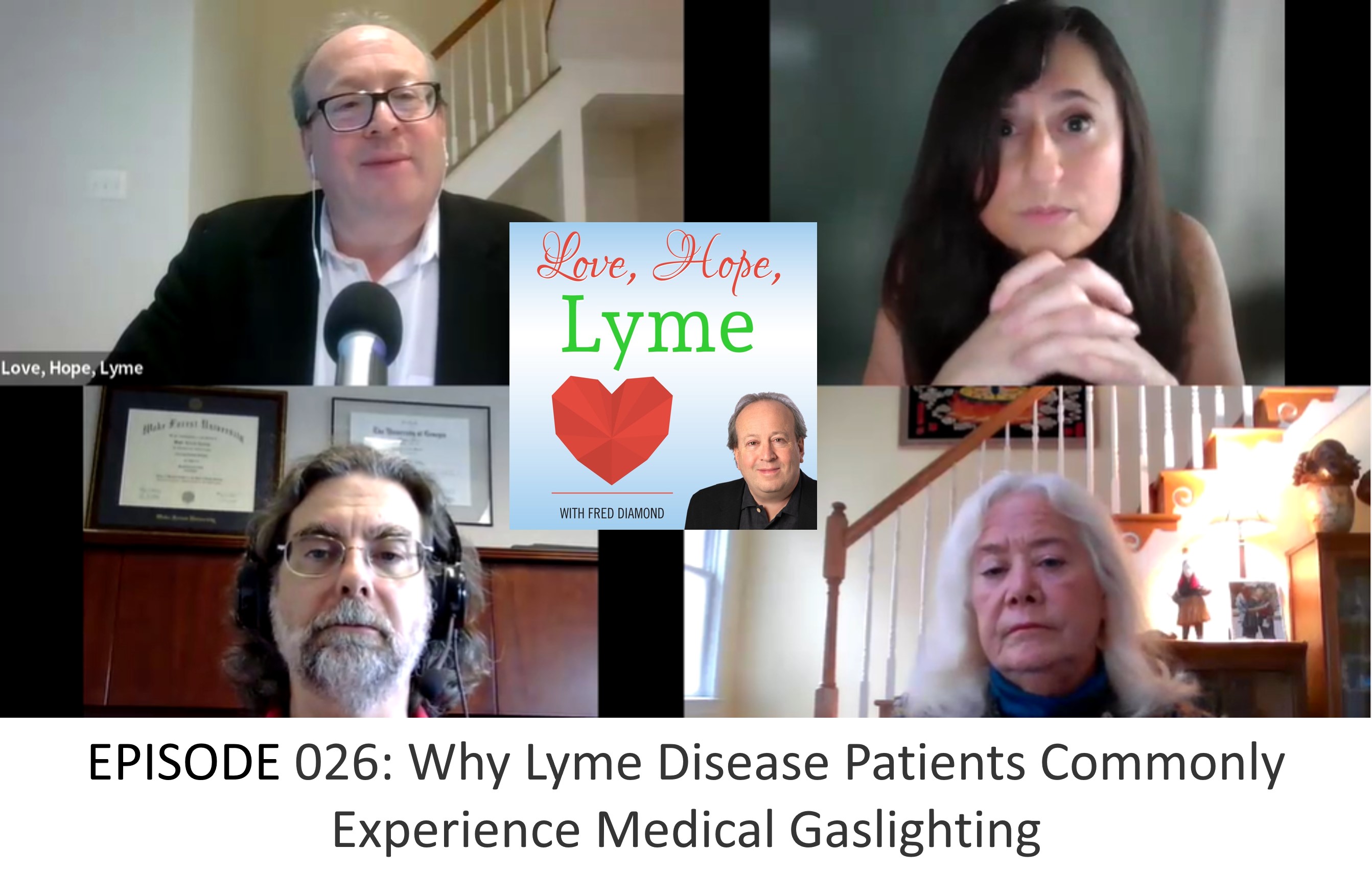
Podcast: Medical Gaslighting, Human Rights, and Lyme Disease

https://www.lymedisease.org/podcast-gaslighting-lyme/

PODCAST: Medical gaslighting, human rights, and Lyme disease

By Fred Diamond

May 1, 2024

When I was researching my book “Love, Hope, Lyme: What Family Members, Partners, and Friends Who Love a Chronic Lyme Survivor Need to Know,” I had no idea that medical gaslighting was something that persistent Lyme survivors had to commonly deal with.

I also had no idea that gaslighting was emblematic of the human rights challenges Lyme survivors have historically dealt with when seeking medical treatment.

I met hundreds of Lyme survivors who shared stories about being dismissed, mocked, and disbelieved by dozens of doctors.

Unfortunately, this gaslighting led to family members disbelieving that their loved ones had the disease, which led to further detachment, alienation, and suffering.

The patient experience

A peer-reviewed, international medical article was published in the journal Healthcare in 2023 called Medical Gaslighting and Lyme Disease: The Patient Experience. I interviewed the authors of the report, Jennifer Fagen, PhD, and Jeremy Shelton, PhD, both from Lamar University in Texas, and Human Rights Advocate Jenna Luché-Thayer, on two episodes of the Love, Hope, Lyme podcast.

The article states “Lyme disease is a recognized public health threat and is a designated notifiable disease. As such, Lyme disease is mandated to be reported by the CDC. Despite this, both acute and chronic Lyme disease have been relegated to the category of ‘contested illnesses’ which can lead to medical gaslighting.

“By analyzing results from an online survey of respondents with Lyme disease, 986 people, we elucidate the lived experiences of people who have been pushed to the margins of the medical system by having their symptoms attributed to mental illness, anxiety, stress, and aging. Further respondents have had their blood tests and rashes discounted and were told that chronic Lyme disease simply does not exist. As a result, a series of fruitless consultations often result in the delay of a correct diagnosis, which has deleterious consequences.”

Challenges with contested illnesses

According to Dr. Fagen, “Contested illnesses are conditions that lack cultural legitimacy as their nature and even their existence is often questioned. Any physical manifestations or symptoms may be deemed purely subjective as they lack objective biological markers. The result is that patients are in the unfortunate position of having to convince medical practitioners that they’re in need of medical attention, often leading to seeing many doctors before receiving a proper diagnosis.

“People with contested illnesses might not qualify for disability, despite their inability to work. Insurance may not cover their treatments and they could be denied the social recognition of their condition.”

She continued, “Despite the fact that there is such a high incidence of them in the US and internationally, and because they often have objective biological markers, such as blood tests and the EM or bullseye rash, it’s really quite counterintuitive that they are considered contested illnesses.”

Ignoring symptoms

The article discussed the wide range of gaslighting techniques used by doctors.

“The most common one by far was doctors just telling their patients, ‘You’re just overreacting to these symptoms,’ which is unfortunate because it doesn’t really address those symptoms at all. It essentially ignores them. Other reactions that we found that were common were implying that the symptoms were psychosomatic,” said Dr. Shelton.

He continued, “Many patients were told there’s just no such thing as chronic Lyme disease. A few people were told that it was fairly common that their symptoms were due actually to mental illness. It’s one thing to say it’s psychosomatic, but it’s a whole other category to say that you actually are suffering from some sort of mental illness.”

“Others were commonly told that their symptoms were due to stress. The common theme that you can see here is that doctors were trying to argue either the symptoms were due to some other cause besides Lyme disease, or that the symptoms were entirely fictitious and just in the person’s head, or they should just learn to live with those symptoms. Of course, that’s not what you want to hear when you go to a medical professional,” Dr. Shelton continued.

Lyme disease and human rights violations

Jenna Luché-Thayer put the findings in the article in the context of the human rights framework. On a special follow up episode of the podcast, she discussed the role of the World Health Organization (WHO) in developing medical codes that are linked directly to how insurance recognizes and reimburses their medical care and how governments track diseases.

She said, “If there is not a [WHO] code for a particular illness or disease or medical condition, it’s very hard to get the recognition, research, financial support, insurance support, Medicare, and Medicaid support to take care of the illness.”

Luché-Thayer formed a voluntary, nonprofit international organization that petitioned the World Health Organization and documented the science as well as the human rights violations related to Lyme disease. WHO expanded the codes to include multiple medical conditions that are caused by Lyme disease, including dementia, demyelinating conditions, Lyme carditis, and the ophthalmic complications from it.

“This is now part of the medical system that’s being integrated across the United States and other countries. People understand the importance of knowing their codes and bringing these codes to the attention of their medical providers. That means that the medical providers understand these codes have been validated, and it greatly helps to validate the multiple complications and chronic conditions disabling and potentially fatal complications from Lyme disease,” said Luché-Thayer.

Lyme survivors had their human rights compromised for decades. On the podcast, we discussed the extremes this might lead to.

“One of the key human rights is the highest attainable standard of health. If you are denied diagnosis and you are being denied treatment, clearly your health human rights are being violated,” she said. “If you are being told, as in a gaslighting situation, that you are not sick, when in fact you are infected with a bacteria that’s going throughout your body, your right to information is being denied. If you are a Lyme patient who has been told that not only are you not sick, but we think you need to go into psychiatric care, and you’re forced into a psychiatric care, then your personal security, which is also another human right, is being violated.”

Using the article for self-advocacy

Dr. Fagen said that one of the survey’s findings is that a patient’s positive blood test did not always influence how likely a doctor was to believe they have Lyme disease. On average, almost 14 doctors were seen prior to receiving a Lyme disease diagnosis. The article can be used as a tool for self-advocacy. (Download the article here.)

“It is important for patients to bring research with them to doctors’ appointments. This article not only contains a good deal of data from peer-reviewed medical journals that validate the existence of chronic Lyme disease, but it also provides data regarding the incidents and types of Lyme disease in our respondent pool. The latter can potentially encourage medical practitioners’ self-reflection if they are employing such techniques,” she said.

Dr. Fagen continued, “It’s also important for Lyme patients to know that these experiences are not uncommon, so they’d be less likely to doubt themselves. We’ve shared the research among medical doctors far and wide globally, including medical doctors who treat Lyme disease and other medical doctors who could perhaps benefit from some education about Lyme disease and Lyme patients’ experiences. We hope this accomplishes those goals.”

Click here to listen to all episodes of the Love, Hope, Lyme Podcast or on YouTube.

Fred Diamond is based in Fairfax, Virginia and can be contacted via Facebook. His popular book, “Love, Hope, Lyme: What Family Members, Partners, and Friends Who Love a Chronic Lyme Survivor Need to Know” is available on Amazon. The e-version of the book is always free to Lyme survivors. PM Fred on Facebook for your copy.

For more:

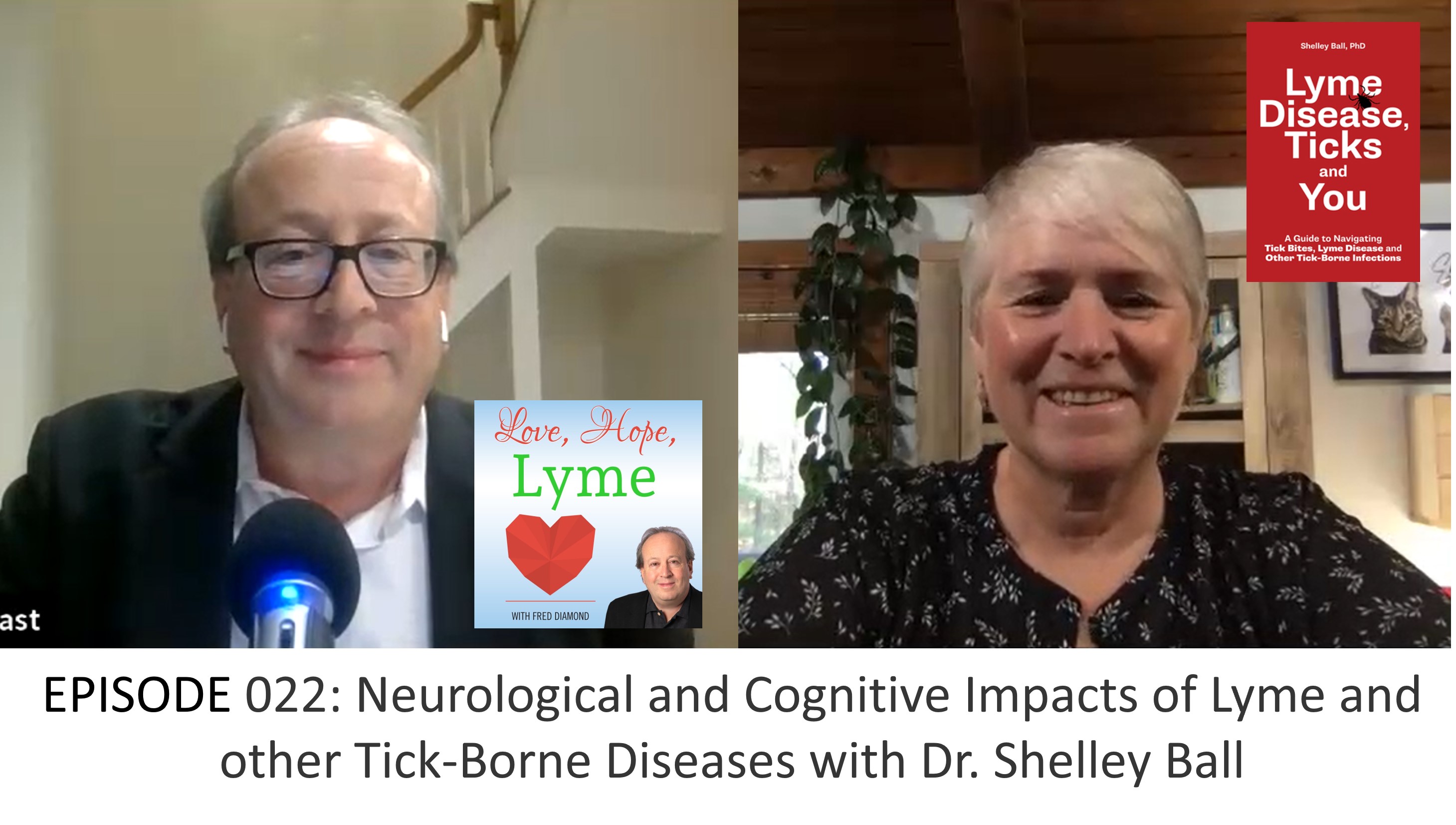
Neurological & Cognitive Issues From Lyme Podcast

https://www.lymedisease.org/podcast-shelley-ball-neurological-lyme/

PODCAST: Neurological and cognitive issues from Lyme

By Fred Diamond

On this week’s Love, Hope, Lyme podcast, biologist and Lyme survivor Dr. Shelley Ball and I discussed neurological and cognitive issues that are common with persistent Lyme disease.

There’s a chapter on neurological issues in my book Love, Hope, Lyme: What Family Members, Partners, and Friends Who Love a Chronic Lyme Survivor Need to Know. I wrote the book to understand what someone in my life with persistent Lyme was going through. Since the neurological issues concerning Lyme are so personal and potentially extreme, the chapter is intentionally light.

Shelley lives in Westport, Ontario, Canada, an area endemic for Lyme, Anaplasma and Babesia. A biologist by trade, she spent a lot of time outdoors doing field work around the world. In addition to Lyme and Bartonella, she also has Babesia odocoilei, which has been shown to be treatment resistant and contributes to “brain on fire” symptoms as well.

After she was diagnosed with Lyme, she dove into researching the disease to understand what was happening to her. She wrote her book Lyme Disease, Ticks and You: A Guide to Navigating Tick Bites, Lyme Disease and Other Tick-Borne Infections to make what she learned more accessible and less complex to the typical Lyme survivor.

Neurological and Cognitive Symptoms

“Neurological symptoms are very challenging,” she said. “I went for several months where I could barely read, which is hard when you must keep working. The brain issues were the biggest for me such as short-term memory loss. When I was in the thick of treatment, I’d be standing in front of somebody I’d known for years, and I couldn’t remember their name.”

She continued, “Executive functions such as just being able to pay your bills, plan your work, stay on schedule, is challenging. It forces you to try to find aids and little tricks and things that you can do to support yourself. They’re essentially like pre-dementia symptoms. Psychiatric issues, which are a huge part of this, can often lead to personality changes.”

She explained that these infections can cross the blood-brain barrier and cause massive inflammation, so you can end up with a permanently inflamed brain.

“We’re essentially suffering from a brain autoimmune issue where your own immune system essentially is attacking your own brain. It’s especially challenging because there are few good treatments for autoimmune conditions. Usually, it’s steroids and similar things. Those are some of the worst things that you can take if you’ve got chronic tick-borne infections.

“You feel this rage rise in you, and you have no control over it. Your brain is inflamed. This is not something that you’re doing. It is happening to you. You literally must find a way to almost step away and manage it when these things flare out.

“Your personality changes,” she continued, “Not only do the people around you see it, but you see it in yourself. You go through a grief period where you grieve for the person that you were, both mentally and in your personality, but also physically, because you’re just not capable of doing the activities that you used to do. These are very tough issues to deal with and sometimes it drives people away.”

Challenges to Treating Neurological Symptoms

Most chronic Lyme survivors struggle with pain, but the neurological issues can be the most challenging.

Shelley said, “There are so many aspects to it. There’s the direct impact on brain tissue, there’s the inflammation, there’s the autoimmunity and the immune component of it. You’re trying to deal with all these things. One of the keys is to try to get that inflammation down.”

“I’ve had some fascinating conversations with other Lyme patients about treatment, because we’ll often have flare-ups, and a lot of people will turn back to antibiotics to manage those flare-ups. They think that maybe those insistent Lyme bacteria have flared up and turned back into spirochetes and we’re back into an active infection.”

Shelley said, “There are other challenges to treatment. One is the isolation of the disease. Lyme patients especially experience this because we are gaslighted by the medical system that we reach out to, to try to regain our health. There is some initial empathy, compassion, and support, but that dwindles. Then you realize that you are very much on your own suffering in silence.”

She said that if you read the science, when the body becomes inflamed, that inflammation overstimulates your brain and puts you into permanent fight or flight mode. This is known as sympathetic dominance or sympathetic overdrive. Interestingly, it stimulates more inflammation. Then you get stuck in this positive feedback loop of inflammation. What it comes down to is trying to break that cycle of inflammation.

On the podcast, she discusses botanicals and neuro-retraining techniques that might be helpful.

Final Thoughts

I asked for her recommendations for how to live a higher quality life while still dealing with Lyme.

Try to find ways to find joy. Lyme patients do a lot of grieving. We’ve lost our physical capabilities; we’ve lost our cognitive abilities. We’ve lost our old personality. Sometimes we lose people in our life who just can’t stay there to support us. I don’t believe in toxic positivity, but gratitude is important to focus on what we do have.”

She offered, “I empathize because this really is a shared disease in the sense that even if our loved ones don’t understand what we’re going through, it impacts them. Stay the course. It’s hellish, to be honest. It’s also an iceberg effect where you will probably only see the tip of the suffering that people are going through with these diseases.”

Click here to listen to all episodes of the Love, Hope, Lyme Podcast or on YouTube.

Fred Diamond is based in Fairfax, Virginia and can be contacted via Facebook. His book Love, Hope, Lyme: What Family Members, Partners, and Friends Who Love a Chronic Lyme Survivor Need to Know is available on Amazon. The e-version of the book is always free to Lyme survivors. Send Fred a private message on Facebook for your copy.

______________

**Comment**

Great information.

For more:

Brain on Fire: Neuropsychiatric Disorders in Children

https://www.lymedisease.org/alain-mass-brain-on-fire/

Brain on fire: neuropsychiatric disorders in children

By Alain Mass, MD

2/13/24

Nearly one in six children between the ages of 2 and 6 years old (17.4%) has a diagnosed mental, behavioral or developmental disorder.

More than 17 million children in the United States have or have had a diagnosable mental illness.

Mental disorders are either primary or secondary. Primary mental illnesses are rather treatable than curable and the treatment is most of the time lifelong.  If you ignore that behind the well-made diagnosis, there may be a deeper reason for the symptoms, you accept the fate of what a primary mental health disorder is about.

The expression “brain on fire” means that the child has only a brain inflammation as opposed to having a true psychiatric disorder, where the psychiatric disorder is only a symptom and not the disease.

The causes of neuroinflammation are numerous and often combined with each other. Many extra-psychiatric conditions may cause psychiatric disorders. The most common ones are infections, auto-immune encephalitis, toxicity including but not limited to mold, heavy metals, or pesticides.  Metabolic or nutritional factors may also contribute to mental disorders.

Lyme disease and neuropsychiatric disorders in children

Children develop more central nervous system symptoms while adults develop more symptoms from the peripheral nervous system.

The most common manifestations of Lyme disease in children are emotional, cognitive and behavioral. The change of personality is definitely the number one symptom of Lyme disease in children.

Lyme disease may be responsible, according to Robert Bransfield, M.D, psychiatrist, for a wide spectrum of neuropsychiatric symptoms. These may include: developmental disorders, autism spectrum disorders, schizoaffective disorders, bipolar disorder, depression, anxiety disorders (panic disorder, social anxiety disorder, generalized anxiety disorder, OCD), intrusive thoughts, eating disorders, sleep disorders, addiction, cognitive impairment, brain fog, seizure disorders, suicide, violence, social withdrawal, depersonalization, dissociative episodes, and derealization. 20-25% of autistic children in the US have been shown to have Lyme disease.

Children may have difficulty with attention and concentration, speed and efficacy of processing information, learning and memory, auditory processing and language expression. Sleep disorder is common or return to bedwetting or loss of daytime bladder control.

Teenagers may have mood swings, depression, suicidal thoughts, personality changes, sleep problems, poor concentration, cognitive disorder, a loss of interest in school and school activities and interest in family values.

Most children who present with cognitive or psychiatric disorders do not remember a tick bite. They are already in the late phase of the disease. The initial phase may be missing.

The symptoms and severity of symptoms can vary from day to day. A child may feel well enough to go to school one day, but not the next. A psychiatric disorder may be the only symptom. Brian Fallon, M.D, Director of the Lyme and Tick-Borne Diseases Research Center at Columbia University, writes, “Psychiatrists who work in endemic areas need to include Lyme disease in the differential diagnosis of any atypical psychiatric disorder.”

Basal ganglia autoimmune encephalitis (PANDAS/PANS)

Auto-immune encephalitis is characterized by an abrupt onset, often from one day to the next and by the correlation in time between the evidence of an infection and a sudden and acute new onset of a neuropsychiatric disorder.

PANDAS refers to encephalitis due to streptococcal infections, whereas PANS to other infections. The diagnostic criteria of PANDAS/ PANS are to have an abrupt, dramatic onset or recurrence of OCD, acute onset of anorexia and/or severe restrictive eating disorders with at least two of the following symptoms.

  • Anxiety, including new onset of separation anxiety, or hyper-alertness.
  • Behavioral regression (baby talk, tantrums),
  • Emotional lability including suicidal depression, hallucination,
  • Irritability, aggression, raging, severe oppositional behaviors.
  • Hypersensitivity to light, noise, or touch. The child may not tolerate his/her clothing
  • Tics, involuntary movements.
  • Handwriting change
  • Deterioration in school performance and cognitive changes, (difficulty focusing)
  • Sleep disturbances (difficulty falling asleep, night terrors, refusal to sleep alone)
  • Urinary frequency or urgency, new onset of bedwetting

Toxicity

Heavy metals (such as mercury and lead), mycotoxins released by mold, and other environmental toxicants are neurotoxic and may also be responsible for neuropsychiatric disorders.

Post COVID 

Anxiety and depression may be common six months after COVID-19 recovery.

Nutritional and metabolic factors

Glutamate, GABA, histamine, oxalate, copper, zinc, selenium, vitamin Bs in excessive or insufficient amounts, the inability to process folic acid as seen in those who have MTHFR mutations,  have also been associated with mental disorders.

Gut inflammation

The gut-brain axis (GBA) consists of bidirectional communication between the central and the enteric nervous system, linking emotional and cognitive centers of the brain with peripheral intestinal functions. Gut inflammation can cause cognitive and mental health disorders, too.

Conclusion

Wondering whether a mental disorder is either primary or secondary, even when the disorder is well categorized as well known mental disease is the only way to give a chance to convert a lifelong, treatable but not curable, mental illness into a curable disease, to relieve from the social and medical burden of a psychiatric illness.

Dr. Alain Mass is board-certified in family medicine, with a practice in Suffern, New York. He is a member of the International Lyme and Associated Diseases Society (ILADS), the International Society of Environmentally Acquired Illnesses (ISEAI), and the PANDAS Physician Network (PPN). His website is massfunctionalmd.com.

For more: