Ms. Marcum sent the following written comments to the Tick-Borne Disease Working Group before its last meeting on December 2.
I’d like to thank the Tick-Borne Disease Working Group for your service. Having served on the Tick Biology, Ecology & Control Subcommittee, I appreciate how hard each of you has worked over the past two years on the 2020 Report to Congress. I respectfully submit the following critique of past NIH clinical trials and offer suggestions for the future.
In the 40+ years since Lyme disease was discovered, there have been four federally funded randomized placebo-controlled treatment trials of patients with persistent symptoms following standard treatment (Klempner 1&2 2001, Krupp 2003 and Fallon 2008).
Despite the fact that two of these trials demonstrated some benefit, the IDSA concluded that there is no benefit to repeated antibiotic therapy.
In fact, the Krupp trial clearly demonstrated improvement in fatigue in the patients who received additional antibiotics. Dr. Brian Fallon corroborated this finding in his study, and also reported patients showed improvement in cognitive functioning, physical functioning and pain levels following additional antibiotic treatment.
Fallon study
Following a thorough review of these four trials Dr. Fallon concludes:
“Based on the evidence cited above, one cannot conclude that repeated antibiotic therapy is ineffective in improving certain symptoms associated with post-treatment Lyme disease syndrome. Nor can it be concluded that repeated antibiotic therapy is robustly effective. One can conclude however that approximately 60% of patients with persistent post-treatment Lyme fatigue may experience meaningful but partial clinical improvement in fatigue with antibiotic retreatment.” (Fallon 2012)
Lyme arthritis is the best understood and most studied manifestation of Lyme disease. Even Dr. Allen Steere, who first described Lyme arthritis in 1979, prescribes longer courses of antibiotics. (Steere 1979)
In 2015 Dr. Steere wrote:
“In our experience, some patients do require longer courses of antibiotic therapy for effective treatment of Lyme arthritis. Thus, if there is mild residual joint swelling after a 30-day course of oral antibiotics, we repeat the oral antibiotic regimen for another 30 days. However, for patients who continue to have moderate-to-severe joint swelling after a 30-day course of oral antibiotics, we treat with IV ceftriaxone, 2gm/day. Although there is trend toward greater efficacy with 4 weeks compared with 2 weeks of antibiotics, there is also a greater frequency of adverse events.” (Arvikar, Steere 2015)
Unfortunately, all four of these trials used the same two antibiotics—doxycycline and IV ceftriaxone. So truthfully, all these trials have shown us one thing—that these antibiotics are not effective in every patient with late stage Lyme.
As the former head of GlaxoSmithKline, Dr. Allen Roses said “The vast majority of drugs—more than 90%—only work in 30 or 50% of the people. Drugs out there on the market work, but they don’t work in everybody.” (Connor 2003)
We’ve learned from Dr. Ying Zhang’s research at Johns Hopkins University that there are multiple other off-label drugs and drug combinations that kill borrelia better than doxycycline in the laboratory. (Feng 2016)
Why is it in the past 10 years the NIH has not looked at alternative treatments for the subset of patients with chronic symptoms post-treatment for Lyme disease?
We are less than a year into the COVID-19 pandemic leaving many patients with persisting symptoms of the virus. Science has not abandoned these “long-haulers,” as they are being called.
Why has the IDSA abandoned patients with Lyme who are left with chronic symptoms following standard treatment?
Within weeks of the CDC announcing the COVID-19 epidemic, the FDA and NIH authorized hundreds of clinical trials using off-label drugs. Some of those drugs have shown promise, some have not. And the search continues today.
Why in 40+ years have we not been able to offer these same resources to patients with Lyme and other tick-borne diseases? And more to my point, why is it that some who sit on this panel, are averse to the idea of helping those who continue to suffer? The entire purpose of the TBDWG was to identify gaps and offer solutions. Not to impede progress.
Lyme arthritis is not the only consequence of late stage Lyme.
When Lyme spreads to the nervous system
Left untreated, Lyme disease can spread to the nervous system leading to neuroborreliosis including: (Logigian 1990)
- meningitis – inflammation of the membranes that cover the brain/spinal cord.
- encephalitis – inflammation inside the brain
- myelopathy – inflammation of the spinal cord
- cranial neuritis – inflammation of the cranial nerves
- neuropathy – inflammation of the peripheral nerves
- Bannwarth’s syndrome – “terrible triad” of meningitis, cranial neuritis and painful neuropathy
As it turns out, the most frequently reported “worst symptoms” in the MyLymeData patient registry are neurological (84%.) The most frequently reported neurological symptoms being memory loss and cognitive impairment, sleep impairment, psychiatric manifestations, headaches, and neuropathy. (Johnson 2018)
Unfortunately, neurological Lyme disease symptoms are largely invisible and difficult to quantify. Thus, many physicians, like Dr. Eugene Shapiro, write them off as psychosomatic. And because the test for Lyme is prone to false-negatives, the IDSA leaves these patients with no treatment options and no hope.
Until recently, there hasn’t been a good measurement for patients with these long-standing neurological symptoms following treatment for Lyme disease. Two studies published in 2019 by renowned researchers—one from Johns Hopkins University, the other from Harvard—have given us quantifiable, physiological reasons for these debilitating neurological symptoms. (Coughlin 2018, Novak 2019)
Changes in the brain
The Johns Hopkins study revealed chemical changes and widespread inflammation in the brains of patients with persistent symptoms following treatment for Lyme disease. The Harvard study showed nerve damage (small fiber neuropathy) and decreased blood flow in the brains that may also contribute to dysautonomia.
The fundamental goal of healthcare is to restore “health” by treating the underlying disease. We need clinical trials designed to address the needs of patients with neuroborreliosis.
When LymeDisease.org polled over 4,000 patients with Lyme, the number one recommendation was that the NIH should emphasize research for diagnosis and treatment of late and chronic Lyme disease. It should also seek ways to reduce treatment failures for early Lyme disease. (Johnson 2019)
The COVID-19 pandemic has taught us much, including what this country can accomplish in a short period—if there is the political will to do so. Yet, for political reasons, the past 20 years of Lyme research sits in a vacuum.
There are two major hurdles in finding an optimum therapeutic end point in treating Lyme disease. 1) a better diagnostic test that is capable of directly detecting active Borrelia burgdorferi infection, and 2) the ability to understand how the presence of tick-borne co-infections (like anaplasma, babesia, ehrlichia, rickettsia and Powassan) may complicate the course of Lyme disease. I would like to see the NIH focus on these hurdles.
My message to those who sit on this panel, wanting to close the door on chronic Lyme, is that in medicine NOTHING is absolute, the science is NEVER settled, and patient care NEEDS to be as individualized as the individual. What works for one may not work for the next. This is why we must listen to our patients. This is why we must continue to conduct research and seek cures.
LymeSci is written by Lonnie Marcum, a Licensed Physical Therapist and mother of a daughter with Lyme. In 2019-2020, she served on a subcommittee of the federal Tick-Borne Disease Working Group. Follow her on Twitter: Email her at: lmarcum@lymedisease.org .
References
Arvikar, S. L., & Steere, A. C. (2015). Diagnosis and treatment of Lyme arthritis. Infectious disease clinics of North America, 29(2), 269–280. https://doi.org/10.1016/j.idc.2015.02.004
Connor, S. Glaxo chief: Our drugs do not work on most patients. The Indep. 2003, 8, 1–2. https://www.independent.co.uk/news/science/glaxo-chief-our-drugs-do-not-work-on-most-patients-5508670.html
Coughlin, J.M., Yang, T., Rebman, A.W. et al. (2018) Imaging glial activation in patients with post-treatment Lyme disease symptoms: a pilot study using [11C]DPA-713 PET. J Neuroinflammation 15, 346. https://doi.org/10.1186/s12974-018-1381-4
Fallon BA, Keilp JG, Corbera KM, Petkova E, Britton CB, Dwyer E, Slavov I, Cheng J, Dobkin J, Nelson DR, Sackeim HA. (2008) A randomized, placebo-controlled trial of repeated IV antibiotic therapy for Lyme encephalopathy. Neurology. 70(13):992-1003. doi: 10.1212/01.WNL.0000284604.61160.2d. Epub 2007 Oct 10. PMID: 17928580.
Fallon, Brian & Petkova, Eva & Keilp, John & Britton, Carolyn. (2012). A Reappraisal of the U.S. Clinical Trials of Post-Treatment Lyme Disease Syndrome. The open neurology journal. 6. 79-87. 10.2174/1874205X01206010079.
Feng J, Shi W, Zhang S, Sullivan D, Auwaerter PG, Zhang Y. (2016) A Drug Combination Screen Identifies Drugs Active against Amoxicillin-Induced Round Bodies of In Vitro Borrelia burgdorferi Persisters from an FDA Drug Library. Front Microbiol. 23;7:743. doi: 10.3389/fmicb.2016.00743. PMID: 27242757; PMCID: PMC4876775.
Hirsch AG, Herman RJ, Rebman A, et al (2018) Obstacles to diagnosis and treatment of Lyme disease in the USA: a qualitative study. BMJ Open 8:e021367. doi: 10.1136/bmjopen-2017-021367
Johnson, L., Shapiro, M., & Mankoff, J. (2018). Removing the Mask of Average Treatment Effects in Chronic Lyme Disease Research Using Big Data and Subgroup Analysis. Healthcare (Basel, Switzerland), 6(4), 124. https://doi.org/10.3390/healthcare6040124
Johnson, L. (2019) Request for Information (RFI): Input on NIH Tickborne Diseases Strategic Plan. https://www.lymedisease.org/nih-lyme-survey-results/
Klempner MS, Hu LT, Evans J, Schmid CH, Johnson GM, Trevino RP, Norton D, Levy L, Wall D, McCall J, Kosinski M, Weinstein A. (2001) Two controlled trials of antibiotic treatment in patients with persistent symptoms and a history of Lyme disease. N Engl J Med. 345(2):85-92. doi: 10.1056/NEJM200107123450202. PMID: 11450676.
Krupp LB, Hyman LG, Grimson R, Coyle PK, Melville P, Ahnn S, Dattwyler R, Chandler B. (2003) Study and treatment of post Lyme disease (STOP-LD): a randomized double masked clinical trial. Neurology. 60(12):1923-30. doi: 10.1212/01.wnl.0000071227.23769.9e. PMID: 12821734.
Logigian EL, Kaplan RF, Steere AC (1990). “Chronic neurologic manifestations of Lyme disease”. N. Engl. J. Med. 323 (21): 1438–44. doi:10.1056/NEJM199011223232102. PMID 2172819.
Novak P, Felsenstein D, Mao C, Octavien NR, Zubcevik N (2019) Association of small fiber neuropathy and post treatment Lyme disease syndrome. PLoS ONE 14(2): e0212222. https://doi.org/10.1371/journal.pone.0212222
Steere AC, Gibofsky A, Patarroyo ME, Winchester RJ, Hardin JA, Malawista SE (1979). “Chronic Lyme arthritis. Clinical and immunogenetic differentiation from rheumatoid arthritis”. Ann. Intern. Med. 90 (6): 896–901. doi:10.7326/0003-4819-90-6-896. PMID 312615.
______________________
**Comment**
But, these same people controlling the Lyme/MSIDS narrative for over 40 years have just been handed 91 MILLION dollars to continue abusing patients: https://madisonarealymesupportgroup.com/2021/01/11/historic-increase-in-lyme-funding-passes-congress-dont-expect-anything-from-it/ (Expect the continued abandonment of neurological Lyme, the denial of persistent infection, and continued abysmal testing. Instead, there will be yet more climate data on ticks and Lyme vaccine development.)
When will we learn?
We can write the most succinct letters with a plethora of scientific references but it’s all moot if we continue to line the pockets of The Cabal.
For more on the backstory: https://madisonarealymesupportgroup.com/2020/09/25/why-should-we-care-about-lyme-disease-a-colorful-tale-of-government-conflicts-of-interest-probable-bioweaponization-and-pathogen-complexity/


 Opinions expressed by contributors are their own.

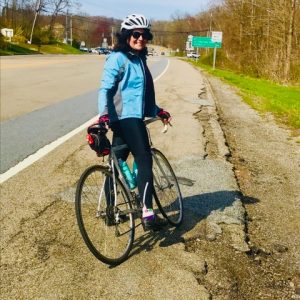 2020 is the year that I have bicycled more than 3,000 miles. It is the year that my oldest takes his disease seriously and pushes forward with treatment, submitting himself to monthly IVIGs that give him nausea and headaches. 2020 is the year that I am totally in love with my husband of 22 years, the year that my dogs are always happy to see me (that’s every year), my daughter becomes a social media genius who helps my son’s band get 100,000 views in one week.