Archive for the ‘Lyme’ Category

IDSA Extends Comment Period & Allows Downloads

https://www.lymedisease.org/idsa-extends-lyme-deadline/

TOUCHED BY LYME: IDSA extends comment period and allows downloads

By Dorothy Kupcha Leland

Aug. 10, 2019

NatCapLyme’s Response to Updated Lyme Disease Guidelines States They are Based on Outdated and Discredited Studies

https://natcaplyme.org/psla/in-no-way-does-natcaplyme-endorse-the-adoption-of-the-idsas-updated-lyme-disease-guidelines/?

In no way does NatCapLyme endorse the adoption of the IDSA’s updated Lyme disease guidelines!

NatCapLyme Submitted Its Response to the IDSA Regarding Their Updated Lyme Disease Guidelines During the Public Comment Period

August 7, 2019

The National Capital Lyme Disease Association (NatCapLyme) is submitting this letter as the organization’s official response to the Infectious Diseases Society of America’s (IDSA) public comment period regarding its draft of their updated Lyme disease guidelines.

Before addressing the guidelines, we would like to comment on the format in which the IDSA provided access to the draft guidelines for review. Specifically, while the document was posted online, the IDSA restricted the ability to download or print the document, thereby requiring the reviewer to read the entire publication online. To expect a reader to fully analyze such a comprehensive and complex document ONLY online was an obvious ploy by the IDSA to make the review of this material as difficult as possible. The Lyme community sees through this disingenuous behavior, as did Forbes Magazine,which published an article on the proposed draft guidelines. After the IDSA denied a request from Forbes and the article’s author to receive a PDF version of the draft guidelines, the author wrote, “Their refusal makes me feel they really don’t want people to comment on their 81-page draft and 203 page supplement.”Engaging in such underhanded behavior distracts from their transparency and greatly harms the relationship with the Lyme community and reinforces the belief that the IDSA is not in touch with or cares about the growing number of patients suffering from Lyme and other tick-borne diseases.

Regarding the proposed updated guidelines, there appear to be only minor changes from the IDSA’s previously published and decades old guidelines.  The new draft is still based on outdated and, in some cases, discredited studies. Patient groups have clearly demonstrated that thousands who suffer from Lyme and associated tick-borne diseases are losing their battle for health and the pursuit of happiness due to the failure of our national and professional institutions to address this growing epidemic in any meaningful way. To paraphrase the great physician, philosopher and scientist Moses Maimonides: there is no point to science without progress.

Meanwhile, the Centers for Disease Control and Prevention (CDC) and National Institutes of Health (NIH) continue to divert their focus to the highly dubious goal of creating a vaccine before developing a reliable test for Lyme or classifying all the strains of the disease. Without these prerequisite measures, the production of an effective vaccine is significantly compromised. Of course, NatCapLyme would like to see a “safe and effective” vaccine brought to market. However, the current effort narrowly focuses on a few strains of Borrelia in a rush to certify a vaccine. This offers only a limited public-health benefit and harbors a serious potential health risk by suggesting to those vaccinated that they are protected from all strains of Lyme and co-infections.

NatCapLyme is a nationally recognized Lyme advocacy organization that continues to hold face-to-face support group meetings. We also have a telephone hotline to take calls from those seeking help regarding Lyme and tick-borne diseases, and each day we are on the phone for hours providing information, references and support.

While the IDSA continues to stand behind outdated and biased research, we see and hear what is really happening across America.

Standing on the front lines of this growing health epidemic, we are told the same story time and time again. At staggering rates, patients report being misdiagnosed, inadequately treated, or worst of all, dismissed by the medical community as “hypochondriacs.” In reality many of these individuals have real bacterial, viral, or parasitic infections ravaging their bodies resulting from a tick bite. Children, who are most at risk, are losing their childhoods and may spend their entire lives chronically ill, never to appreciate one day of good health or happiness. Once healthy adults are losing their livelihoods, because they are now too sick to continue working. Families are bankrupted by escalating medical costs as they try to find an answer to their multi-systemic symptoms and illness.

A 2015 research study published by the Johns Hopkins Bloomberg School of Public Health found that Lyme disease costs the U.S. health care system between $712 million to $1.3 billion to treat each year.

Again, we are only talking about Lyme disease, not other co-infections. Add to that the indirect costs, such as lost wages and taxes, and the total cost of Lyme disease is in the billions each year.

NatCapLyme sees that the updated Lyme disease guidelines proposed by the IDSA are just status quo and woefully inadequate to address the true extent of the tick-borne disease epidemic reeking havoc across the U.S. With an estimated 427,000 new cases of Lyme disease contracted each year, as published by the CDC, and with little progress in the identification, diagnosis and treatment of tick-borne illnesses, NatCapLyme believes that an increasing number of people will become infected and may subsequently remain sick perhaps indefinitely. In reality, thousands of U.S. citizens are being stricken with a potentially life-long debilitating medical condition that is not, or is barely, recognized by the IDSA. Based on the proposed draft guidelines, we believe that the status quo will be perpetuated for years to come.

Tick-borne illness, especially in the chronic form, will continue to be discounted by the vast majority of physicians, government policy makers and researchers as the IDSA clings to the belief that Lyme disease is hard to catch and easy to treat.

Unfortunately, the Lyme community’s past experience with the IDSA demonstrates the serious challenge of achieving significant change. Little progress is made when a professional medical society that promulgates guidelines to diagnosis and treat tick-borne diseases only recognizes and supports the same old cast of researchers who repeatedly test the same old ideas. In an article published by the Washington Post titled https://www.washingtonpost.com/outlook/why-we-shouldnt-take-peer-review-as-the-gold-standard/2019/08/01/fd90749a-b229-11e9-8949-5f36ff92706e_story.html?noredirect=onWord did not find any entries for your table of contents. It states that,

“peer review can act as a shield to protect the status quo and suppress research viewed as radical or contrary to the established perspectives of referees.”  Moreover, “groundbreaking studies by Sir Frank MacFarlane Burnet, Rosalind Yalow, Baruch Blumberg and others were rejected by peer reviewers, yet later led to Nobel Prizes.”

We believe that the key to any progress lies in advancing research in all aspects of the diseases, especially in the development of better diagnostic tools for the detection of all tick-borne diseases. Clearly these guidelines do not do that. We appeal to the IDSA and the research community to expand its focus on emerging and promising research that comes from fresh and new perspectives. It should bring together the best minds and best theories of ALL parties, and require that ALL theories be examined and considered. NatCapLyme believes that true solutions to the dilemma of Lyme and tick-borne infections may be found only when all parties are willing to consider the view that each party holds. Perhaps if we all work together we can forever end this terrible pandemic.

In conclusion, NatCapLyme in no way endorses the adoption of the IDSA’s updated Lyme disease guidelines. The patient community is extremely angry about the lack of scientific and medical progress with respect to Lyme and our masses are growing by the tens-of-thousands each year. This problem is not going away until all parties are invested in creating real solutions that benefit all patients, and society as well. Despite being sick, in pain, exhausted, frustrated and financially drained, we are committed to this cause and will not stop until we regain our health, halt this epidemic, and ensure that these terrible tick-borne diseases do not burden future generations.

https://natcaplyme.org

_______________

For more:  

https://madisonarealymesupportgroup.com/2019/06/27/idsa-aan-acr-2109-draft-lyme-guidelines-public-comments-allowed-until-aug-10-2019/

https://madisonarealymesupportgroup.com/2019/07/09/idsa-lyme-disease-treatment-management-business-as-usual-leaves-those-with-persisting-symptoms-to-suffer-die/

https://madisonarealymesupportgroup.com/2019/07/22/idsas-insincere-request-for-guidelines-feedback/

No One Understands Lyme Disease

https://www.bloomberg.com/opinion/articles/2019-08-07/chronic-lyme-disease-shows-limits-of-modern-medicine

No One Understands Lyme Disease

The sooner experts admit that, the sooner we’ll figure out what’s happening and perhaps prevent a lot of suffering.
Here comes trouble.
Here comes trouble.  Photographer: Bertrand Guay/AFP, via Getty Images

Lyme disease exposes how overrated medicine is. People have come to expect modern science to be able to detect and cure bacterial infections, at the very least – and yet for Lyme, a bacterial disease transmitted by ticks, the tests are shockingly inaccurate, and antibiotic treatment doesn’t always take away the often debilitating symptoms like joint pain, fatigue, brain fog and headaches.

Some doctors admit they aren’t sure of the answer.

Others, self-styled “Lyme literate” doctors, are stepping into the void, often diagnosing based on weak evidence and exposing patients to months or years of potentially harmful antibiotic therapies.

Patients suffering mysterious symptoms can be forgiven for gravitating toward those providers who act like they are sure. The unrealistic expectations are part of the problem.

A frank discussion is hampered by outrage and fear. Media reports often emphasize that the disease is on the rise, with 30,000 reported cases a year in the U.S. and an estimate that the real number is 10 times higher.

Once endemic to New England, and named for a town in Connecticut, Lyme disease is spreading west, south and north. Climate change is blamed for its northward climb, but experts say changes in ecology may explain the expansion into warmer southern climates. A loss of biodiversity is favoring the rodents that provide steady hosts for the disease-carrying ticks.

The good news is that most cases are curable with a course of antibiotics. But outrage followed when, in June, a piece in the New York Times tried to deliver that reassuring message. The author using her own 9-year-old son’s case as an anecdote. Some commenters said the story implied that all cases are curable, when in fact a substantial minority report persistent fatigue and other neurological symptoms.

The “Lyme Wars” documented in a 2013 New Yorker pieceare, if anything, even more heated today.

There is documented evidence that symptoms persist in some people. In mainstream science, this is known as post-treatment Lyme syndrome, and researchers aren’t sure why it happens. It might be that some of the bacteria are able to hide in the body, or the infection triggers the immune system into a long-term state of inflammation.

Providers who presume the infection continues sometimes treat people with antibiotics for months or years, even if patients recall no tick bite and never receive a positive test for Lyme. This may give patients a sense of certainty and the support that can come with a diagnosis. But at a high price; these treatments are often paid out of pocket, and long-term antibiotic use can have broad health repercussions.

Lyme disease testing is imperfect. The standard test detects antibodies to the bacteria, not the bacteria itself, and as the New York Times acknowledged in a column following the story of a boy’s recovery, false negatives and false positives can occur. The fact that the test might be wrong means doctors can’t rule out Lyme as a cause of a patient’s symptoms, even if a test comes back negative – but this hardly counts as acceptable justification for jumping to the conclusion that a patient with fatigue or neurological symptoms has Lyme and not one of dozens of other conditions that can cause such symptoms.

False positives bring their own hazards. The Times cited a study done on Air Force personnel suggesting that Lyme was over-diagnosed, and false positives were leading to unnecessary antibiotic treatments.

The website Science-Based Medicine has some informative pieces warning people of the risk that “Lyme literate” doctors might be wrong in diagnosing chronic Lyme disease, especially in people who have never had a known tick bite or tested positive for the antibodies. Unfortunately, one of the authors used the phrase “fake disease” in a tweet to describe chronic Lyme disease. He amended this to “fake diagnosis.” But “fake” is a loaded word; doctors who diagnosis Lyme don’t like being told they’re faking, and patients with terrible symptoms don’t like it either.

Some mainstream critics compare people who fear chronic Lyme disease with those who fear side effects of standard childhood vaccines despite extensive safety testing. This is ironic, because a vaccine for Lyme was approved back in 1998 but failed, financially, over fear of side effects and inadequate fear of the disease. A Lyme vaccine is widely used on dogs, though.

Like a Greek tragedy, this decades-long war turns on stubbornness and arrogance – on the part of those who dismiss suffering of patients who don’t fully recover, and those who deem themselves more “Lyme literate” than equally knowledgeable doctors who disagree with them.

Humility on both sides might allow some progress. And more research could not only clear up the mysteries and disagreements, but would add to our understanding of infectious disease in general at a time when the power of antibiotics is no longer a given, and infections are becoming an increasing global threat.

This column does not necessarily reflect the opinion of the editorial board or Bloomberg LP and its owners. To contact the author of this story: Faye Flam at fflam1@bloomberg.net

To contact the editor responsible for this story: Philip Gray at philipgray@bloomberg.net

__________________

**Comment**

While I would love to take the middle of the road like the author, because it sounds fair, I can’t.  I know too much. I live this nightmare on steroids and work with others in the same boat on a daily basis.

While I’m sure some are misdiagnosed with Lyme, trust me when I say there are far, far more being misdiagnosed with something else when they have Lyme/MSIDS, and while taking unnecessary antibiotics is never something that should be taken lightly, I would like to remind people that LYME CAN KILL YOU. So, until tests improve, we must trust the clinical diagnosis because Lyme disease has always been a clinical diagnosis. Painting Lyme-literate doctors out to be cavalier is complete bias. These people have chosen to go down a pot-holed riddled path, receiving even more education that costs them in time and money, and that could put them under the Eye of Mordor, which could ultimately force them to close their doors. They take on much risk in treating us: https://madisonarealymesupportgroup.com/2018/12/15/everything-about-lyme-disease-is-steeped-in-controversy-now-some-doctors-are-too-afraid-to-treat-patients/  I write about my own doctor’s experience after the article. He spent $50K out of pocket to protect his practice and he’s far from alone.

Also, the coinfections that often come with Lyme can look exactly like Lyme.

Please remember, people are rarely infected with JUST Lyme. Lyme is the rock star we know by name, but there are plenty of other pathogens that come inside the gut of ticks. Tick bites also stir up pathogens within us – even opportunistic ones that probably would have stayed in check but didn’t due to an overwhelming cytokine storm after a tick bite:  https://madisonarealymesupportgroup.com/2018/10/30/study-shows-lyme-msids-patients-infected-with-many-pathogens-and-explains-why-we-are-so-sick/  Excerpt:

For the first time, Garg et al. show a 85% probability for multiple infections including not only tick-borne pathogens but also opportunistic microbes such as EBV and other viruses.

I’m thankful they included Bartonella as that one is often omitted but definitely a player.  I’m also thankful for the mention of viruses as they too are in the mix.  The mention of the persister form must be recognized as well as many out there deny its existence.

Key Quote:  “Our findings recognize that microbial infections in patients suffering from TBDs do not follow the one microbe, one disease Germ Theory as 65% of the TBD patients produce immune responses to various microbes.”

Testing for ALL of it is abysmal. So, while a person may not have Lyme, they very well could have one of the coinfections instead. Mainstream medicine wouldn’t think of this because they have their heads in the sand and wouldn’t even know where to begin. They just sit back and smugly state, “It’s not Lyme,” when it very well could be Babesia, Bartonella, Mycoplasma, or even MCAS, which is common for Lyme patients.

The website Science-Based Medicine actually resorted to bullying and name calling when I corrected some of their information. No, that website is NOT science based.  Not at all. They are Lyme denialists, pure and simple. I quickly realized they were not going to accept correction on any level and that their minds are entirely already made up on the issue. The childish and unprofessional intensity they used makes me seriously wonder if they are a front organization for the CDC/IDSA. 

And before you roll your eyes – this type of thing is happening all over the place: https://madisonarealymesupportgroup.com/2017/11/02/astroturfing-wikipedia-contradicts-medical-research-90-of-the-time-my-experience-on-linkedin/  Attkisson kicked the giant and they came after her hard after she wrote this.

Unfortunately, the closed mindedness of so many organizations will not allow for this “humility” the author speaks of. It just isn’t going to happen. People have staked their entire careers on the information they are clinging to even as the science is being proven wrong:  https://madisonarealymesupportgroup.com/2019/02/22/why-mainstream-lyme-msids-research-remains-in-the-dark-ages/, https://madisonarealymesupportgroup.com/2019/04/29/is-the-sky-truly-going-to-fall-for-patients-with-the-untreatable-form-of-lyme-disease/.

My advice to the CDC/IDSA/NIH and the website Science-Based Medicine:

“Change before you have to.” – Jack Welch

Is Lyme Disease The Result of a Biological Warfare Experiment Gone Wrong?

https://www.linkedin.com/pulse/lyme-disease-result-biological-warfare-experiment-carnahan-md/?

Is Lyme Disease the Result of a Biological Warfare Experiment Gone Wrong

Jill C. Carnahan, MD

Founder, Medical Director, Flatiron FunctionalMedicine
Is Lyme Disease the Result of a Biological Warfare Experiment Gone Wrong? Why Some Say the Government is Responsible for the Lyme Disease Epidemic

If you read the news a couple of days ago, you may have noticed some intriguing headlines. One read, “House of Representatives Orders Pentagon to Investigate Whether Ticks Were Once Used as Biological Weapons,”1 while another read, “Pentagon May Have Released Weaponized Ticks That Helped Spread of Lyme Disease: Investigation Ordered.”2

In the age of clickbait headlines and fake news, you may have thought that you should pass on such articles. After all, what does the government have to do with ticks other than funding research into tick-borne diseases?

Lyme disease and other tick-borne diseases have been gaining more interest in recent years due to the explosion in tick populations, but it’s still rare to see news about ticks going viral. So, is this just another conspiracy theory? Is there any evidence that the U.S. government was involved in starting the Lyme disease epidemic?

Lyme Disease Makes the Headlines

The U.S. House of Representatives recently passed the 2020 National Defense Authorization Act (NDAA), a defense spending bill for the Department of Defense (DoD). It’s typical for lawmakers to propose amendments to the NDAA at the time of reauthorization every term, and this year was no different.

This year, however, there was an unusual amendment offered by New Jersey Rep. Chris Smith. The amendment, passed by the House by a voice vote, would require the Inspector General of the DoD to conduct an investigation into whether the department experimented with ticks for use as biological weapons from 1950 to 1975.

The investigation would task the Investigator to explore questions such as:

  • What were the parameters of the bioweapons program?
  • Who ordered it?
  • Was there ever any accidental release anywhere or at any time of any diseased ticks?
  • Were any ticks released by design?
  • Did the program contribute to the disease burden?
  • Can any of this information help current-day researchers find a way to mitigate these diseases?

Smith said he was “inspired” by “a number of books and articles suggesting that significant research had been done at U.S. government facilities…to turn ticks and other insects into bioweapons.” One book he mentioned on the debate floor was Bitten: The Secret History of Lyme Disease and Biological Weapons by Kris Newby.

Newby, a science writer at Stanford University, was inspired to write the book after she and her husband suffered from Lyme disease that was misdiagnosed for a year. Frustrated by the politics of the current medical system and lack of answers, Newby set out to find the truth. What she found was so troubling that she called it an “American Chernobyl.”

The True Origin of Lyme Disease?

The mainstream story of Lyme disease is that in the 1970s, several children in and around Lyme, Connecticut became afflicted with a mysterious illness that caused a red, expanding bull’s eye rash and flu-like symptoms. Willy Burgdorfer, a Swiss American scientist, was the first to determine that the disease was caused by a corkscrew-shaped bacterium — a spirochete — of the genus Borrelia.3 The spirochete was later named Borrelia burgdorferi after its discoverer.

Like many other bacterial infections, the treatment is a short course (2-4 weeks) of antibiotics. Problem solved — or is it?

The reality is many people — about 20% of cases according to the U.S. Centers for Disease Control and Prevention (CDC) — experience lingering symptoms in what is known as chronic Lyme disease or post-treatment Lyme disease (PTLD). A more recent analysis suggested that PTLD affects 36% to 63% of treated patients.4

Unfortunately, PTLD is poorly understood and treatment is controversial. Many physicians are unwilling to prescribe longer courses of antibiotics due to CDC guidelines despite findings from numerous studies indicating that the current treatment may not sufficiently eliminate B. burgdorferi or its debris. What is more troubling is that in lab tests, B. burgdorferi was shown to tolerate current Lyme antibiotics doxycycline, amoxicillin, and cefuroxime.5,6,7 Furthermore, B. burgdorferi can develop morphological variants, which could play a role in PTLD.8,9

When Newby and her husband started getting sick, they went through a succession of doctors who dismissed their suffering. One diagnosed them with “a psychosomatic couples thing.” The Newbys had to consult an internet chat room to find a Lyme-literate physician, who finally diagnosed them with Lyme disease and a co-infection called babesiosis.

In total, Newby writes that it took them “a year, ten doctors, and sixty thousand dollars in medical expenses” to get real answers. When she was well enough, Newby began researching the disease, which led to a documentary called “Under Our Skin.” She and the co-producer of the documentary, Andy Abrahams Wilson, struggled to get government Lyme experts from the CDC, NIH, Rocky Mountain Labs, etc. They all declined to be interviewed.

Finally, they met Willy Burgdorfer, the scientist who discovered B. burgdorferi.

“A Shameful Affair”

In their interviews, Burgdorfer confirmed that he had worked on tick-borne bioweapons research. Furthermore, he told Newby and Wilson that the U.S. government knows about PTLD and that the disease is particularly damaging to children’s neurological systems.

He then criticized researchers who receive the most NIH funding for Lyme disease. “The controversy in Lyme disease research is a shameful affair,” he said. “Money goes to people who have, for the past thirty years, produced the same thing: nothing.”

After going through much of Burgdorfer’s laboratory records, Newby discovered a reference to a pathogen he called the “Swiss Agent.” Burgdorfer and his colleagues found the microbe on a trip to Switzerland in 1978. The Swiss Agent, now called Rickettsia helvetica, is a bacterium that was initially thought to only affect animals, although it is now known that it can also cause illness in humans.

Burgdorfer returned to the U.S. with the Swiss Agent and started infecting U.S. ticks with it. It was around this time that a mysterious illness was affecting patients in and around Lyme, Connecticut. When Burgdorfer tested the patients’ blood, he reported that most of them showed “very strong reactions” to the Swiss Agent antigen, indicating that the patients had been infected with the Rickettsia bacteria.

But when further studies showed inconsistencies, Burgdorfer doubted that he had found the right pathogen that caused Lyme disease. About 18 months later (June 1982), he published an article in Science, pinning the disease on a new microbe called Borrelia burgdorferi. The Swiss Agent was never mentioned.

Unanswered Questions About Lyme Disease

Willy Burgdorfer passed away in 2014, and despite combing through existing records, Newby has questions that remain unanswered. Is the Swiss Agent what makes Lyme disease so virulent and persistent? Why was it never mentioned in Burgdorfer’s 100+ journal articles? And what happened to his laboratory records on the Swiss Agent? Is there anyone left who can offer clarity on these highly classified documents?

Symptoms of Lyme Disease

While we wait for answers, it’s important to raise awareness of Lyme disease and its symptoms. If you’ve ever been bitten by a tick, you’ve probably been told by a medical professional or another resource that you shouldn’t worry unless you observe the telltale sign of Lyme disease — an expanding rash (often called erythema migrans in medical terms). It can appear as a solid red blotch or as a bull’s eye, which is a central spot surrounded by clear skin that is in turn encircled by an expanding rash.

According to the American Lyme Disease Foundation (ALDF), it is estimated that the rash occurs in about 80% to 90% of all Lyme disease cases. Though this number is also controversial, with some saying that the rash is only present in about 30% of all cases.

Even if we go by the conservative estimate, that means that the rash is not observed in up to 20% of Lyme disease cases.

In such cases, physicians often have a much harder job of diagnosing a patient because Lyme disease is also known as the “great imitator.”10 It can mimic nearly every complex disease known, including those that are multisystemic. Lyme disease has often been misdiagnosed as:

  • Alzheimer’s disease
  • Schizophrenia
  • Multiple sclerosis
  • Fibromyalgia
  • Chronic fatigue syndrome
  • Rheumatoid arthritis

This mimicry, in addition to the unreliable diagnostic tests currently available have a compound effect in increasing the difficulty of diagnosing Lyme disease.

Decades of research on the disease have resulted in hundreds of symptoms, including many that were once deemed “rare” or “unusual.” But all of the symptoms come from a similar process, argues Dr. Stephen Buhner in his book Healing Lyme. He writes, “The most important thing to understand about Lyme disease is that the bacteria have an affinity for collagenous tissues. This is at the root of every symptom they cause.”

For example, B. burgdorferi can attach to myelin sheaths that surround your nerve fibers and break them down. The demyelination, Buhner states, is the root cause of most of the neurological symptoms observed in Lyme disease patients.

“Every symptom someone gets comes from a similar process,” Buhner writes.

This means that if the collagen structures of the body are protected, the symptom picture should disappear.

So what are some of the other symptoms of Lyme disease? According to the ALDF, Lyme disease occurs in three stages: localized early (acute) stage, early disseminated stage, and late stage. Patients can experience overlapping symptoms and they also may not go through all three.

Localized Early (Acute) Stage

The early stage of Lyme disease occurs within the first few hours to weeks after a tick bite. In addition to the rash, flu-like symptoms are often present, which include:

  • Suddenly feeling “under the weather”
  • Swollen lymph glands near tick bite
  • Fever
  • Chills
  • Headache
  • General muscle pain
  • Fatigue
  • Weakness

Naturally, this stage of Lyme disease is also the easiest to treat because the infection has not yet spread throughout the body.

Early Disseminated Stage

The early disseminated stage of Lyme disease occurs several weeks after the tick bite. The spirochetes have begun to spread throughout the body, which results in:

  • Increased severity of flu-like symptoms of the early stage
  • Multiple rashes not at the bite site
  • Vision changes
  • Severe fatigue
  • Fever of 100°F to 102°F
  • Pain, weakness, or numbness in limbs
  • Facial paralysis
  • Multiple enlarged lymph glands
  • Abnormal pulse
  • Sore throat
  • Stiff, aching neck
  • Short-term memory loss

Even with many of these symptoms, it is possible to test negative for Lyme disease on the standard tests, the enzyme-linked immunosorbent assay (ELISA) and the Western Blot. Both tests measure the level of antibodies to B. burgdorferi, but it can take up to six weeks for the body to produce them at a detectable level. This means that even if you are infected and have all or many of the symptoms listed above, it can be “too early” for you to test positive for Lyme disease.

Late Stage

If left untreated, the symptoms of Lyme disease progress in severity and can become debilitating in many people. At this stage, B. burgdorferi has spread throughout the body, causing symptoms in multiple systems. The symptoms of late-stage Lyme disease include:

  • Severe headaches
  • Arthritis
  • Dizziness, vertigo
  • Bilateral hearing loss over time
  • Cognitive dysfunction
  • Seizures
  • Sleep disorders (no sleep, always sleep)
  • Multiple ischemic strokes
  • Respiratory distress syndrome
  • Elevated liver enzymes
  • Atrioventricular block
  • Loss of sense of taste
  • Various nephritic syndromes
  • Recurrent, spontaneous episodes of loss of consciousness

As previously mentioned, there are hundreds of symptoms that can be attributed to Lyme disease. It’s also possible that just one of these is the only presenting symptom in a Lyme disease patient.

Could the Theory of Weaponized Ticks be True?

The theory of tick weaponization alleges that scientists in U.S. bioweapons programs infected ticks with pathogens during the Cold War and that the arthropods either escaped or were released. Government bioweapons programs aren’t new, and there are records of open-air tests conducted in the 1950s through the 1970s by the U.S. government. In one instance, the U.S. Army released a fungus called Aspergillus fumigatus at the Norfolk Naval Supply Center to see if the mostly African American workforce was more susceptible to infection.1112

At one point during the cold war, the U.S. and the Soviet Union reportedly had enough germ weapons to “kill everyone on earth.”13 And Newby writes in her book that she believes Willy Burgdorfer was one of the scientists tasked with breeding infected ticks that can be used as biological weapons.

While it’s true that Willy Burgdorfer worked with ticks and tick-borne bacteria, it’s important to note that there are major scientific inaccuracies with Newby’s claims. Specifically, her claims appear to be tainted to some degree by confirmation bias. Newby implies that B. burgdorferi was inserted into ticks by humans for the purpose of weaponizing them. However, this ignores the fact that the bacteria’s genome was detected in the mummified remains of a Tyrolean Iceman named Őtzi, who is estimated to be 5,300 years old.14 Suggesting that these microbes have long infected humans. There is also evidence that the bacteria was present in preserved ticks dating back to the 18th century.15

It’s clear that B. burgdorferi existed in North America long before the bioweapons programs. In fact, a 2017 report from Yale School of Public Health states that B. burgdorferi “is ancient in North America, [and has been] circulating silently in forests for at least 60,000 years…the ongoing Lyme disease epidemic was not sparked by a recent introduction of the bacterium or an evolutionary change.”16

Still, this does not rule out the possibility that something could have been done to increase the virulence of B. burgdorferi. Yes, Borrelia spirochetes have likely existed for ages. But B. burgdorferi’s ability to hide from the immune system is likely of a recent origin. Also, knowing that many ticks carry more than one pathogen, it’s entirely possible that other bacteria, such as rickettsia, could complicate the diagnosis of and increase the resilience of Lyme disease.

Although I encourage a healthy level of skepticism regarding this theory, Newby’s book and Congressman Smith’s amendment could help raise interest in efforts to find an effective treatment for chronic Lyme disease and stop this epidemic. For far too long, doctors and patients have been trapped by our government’s minimal effort to deal with the crisis, and it’s time to put a stop to it.

If you’ve been bitten by a tick and are experiencing any of the symptoms listed above, I highly recommend consulting a functional medicine practitioner or a Lyme disease specialist to get an accurate diagnosis and begin treatment if necessary.

Now it’s time to hear from you. What are your thoughts on the tick weaponization theory? Have you or a loved one been affected by Lyme disease? If so, were you able to find an effective treatment? How was your life affected by the diagnosis? Share your thoughts in the comments below!

References:

  1. https://www.cnn.com/2019/07/17/politics/lyme-disease-amendment-investigation/index.html
  2. https://www.newsweek.com/pentagon-weaponized-ticks-lyme-disease-investigation-1449737
  3. https://www.ncbi.nlm.nih.gov/pubmed/7043737
  4. https://journals.plos.org/plosone/article?id=10.1371/journal.pone.0116767
  5. https://aac.asm.org/content/59/10/6288
  6. https://www.ncbi.nlm.nih.gov/pubmed/26038747
  7. https://aac.asm.org/content/59/8/4616
  8. https://www.ncbi.nlm.nih.gov/pubmed/19843691
  9. https://www.ncbi.nlm.nih.gov/pubmed/25806811
  10. https://www.ncbi.nlm.nih.gov/pubmed/3292999
  11. https://www.washingtonpost.com/archive/politics/1977/03/09/army-conducted-239-secret-open-air-germ-warfare-tests/b17e5ee7-3006-4152-acf3-0ad163e17a22/?noredirect=on&utm_term=.6933885fac54
  12. https://www.nytimes.com/1994/01/25/opinion/the-worry-germ-warfare-the-target-us.html
  13. https://www.nytimes.com/2001/09/04/world/us-germ-warfare-research-pushes-treaty-limits.html
  14. https://www.nature.com/articles/ncomms1701
  15. https://www.bmj.com/content/311/7018/1478
  16. https://publichealth.yale.edu/article.aspx?id=15651

_______________________

**Comment**

Bioweaponization by definition means you take something found in nature (borrelia) and tweak it in a lab making it harder to find and treat. This was done to Mycoplasma, the number one confection of Lyme disease according to Dr. Garth Nicolson:  https://madisonarealymesupportgroup.com/2015/08/12/connecting-dots-mycoplasma/

I’m not sure why some people are getting hung up on the fact that borrelia was found in Otzi.  Yes, we know this, but it doesn’t mean they couldn’t have taken that pathogen, tweaked it in a lab and changed it in fundamental ways. Also, they could have created a sort of hybrid with other pathogens.

A glaring issue that “authorities” are still not taking into account is the fact we seem to be infected with many things.  How did these things get in us?  Did the tick transmit it directly, did the tick bite cause a perfect storm within our bodies so that opportunistic infections all of a sudden became virulent, or a combination of both and then some?  The point is – nobody has a clue and few are even thinking about it, yet this is reality out here in Lyme land.  https://madisonarealymesupportgroup.com/2018/10/30/study-shows-lyme-msids-patients-infected-with-many-pathogens-and-explains-why-we-are-so-sick/

“Authorities” also haven’t dealt with the fact borrelia is pleomorphic (changes shapes to avoid detection and treatment). There are two studies to date that show in vitro, that doxycycline pushes the spirochete into the non cell wall form – yet, crickets in mainstream medicine, and they keep handing out doxy like Chiclets.

Then there’s the issue of all the strains of borrelia – with testing only picking up ONE strain. Are there other strains we don’t even know about? This issue is why a vaccine is a literal joke. It’s like trying to hit a moving target. It’s also what makes testing an absolute joke as well. Another moving target. Meanwhile, patients are still being told, “It’s all in your head.”  https://madisonarealymesupportgroup.com/2017/09/21/its-all-in-your-head-until-finally-a-lyme-diagnosis/


We need a full-fledged investigation by those without conflicts of interest into what they were and are doing to ticks.

Military Eyes Bug-Repellent Coating To Replace Permethrin in Uniforms

https://www.military.com/daily-news/2019/08/02/military-eyes-bug-repellent-coating-replace-permethrin-uniforms.html?

Military Eyes Bug-Repellent Coating to Replace Permethrin in Uniforms

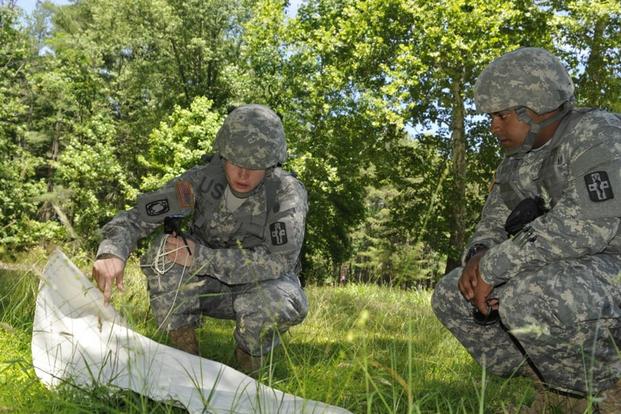
Army Reserve Spc. Susan Muir and Army Reserve Sgt. Sean Tynes, a preventive medicine specialist, trap and draw ticks for testing of Rocky Mountain spotted fever and Lyme disease at Lake Hurst at Joint Base McGuire-Dix-Lakehurst, June 11, 2015. (U.S. Army/Spc. Samuel Al-Nimri)

The Defense Department is exploring a replacement for permethrin, the bug repellent and insecticide that is soaked into most military combat uniforms.

Officials declined to provide details on the new product, which is still being tested and evaluated, but said it may be used “at a lower toxicity level” and last a uniform’s lifetime. Permethrin lasts through about 50 launderings.

“We are looking at new chemistries,” said Lt. Cmdr. James Dunford, a medical entomologist at the Uniformed Services University of the Health Sciences in Bethesda, Maryland, speaking with reporters on a call Wednesday to promote the Defense Health Agency’s “Bug Week.”

“We are working on a new chemical … that would also include environmental factors like sweat, ultraviolet light and abrasion, so we are trying to make it last longer,” added Dr. James English, a global health specialist with the Uniformed Services University, addressing several of the shortcomings of permethrin that cause it to lose its bug-fighting powers.

“DoD is always actively engaged in testing new products, methodologies and technologies to enhance the efficacy of the vector-borne disease protection we can provide for our service members. Any time we find a better tool … we are going to add it to our tool box,” English said.

The Pentagon’s marked its second annual “Bug Week” July 27 to Aug. 3 to raise awareness of the slew of disgusting diseases carried by bugs and provide information to service members and their families on preventing illness.

According to the Defense Department, Lyme disease continues to be the top domestic threat to U.S. troops when it comes to bug-borne diseases, with illnesses carried by mosquitoes being the major challenge overseas.

“Outdoor activities like farming, camping and military training exercises in grasslands or edges of the forest increase chances of these pathogens’ transmission,” Army Maj. Elizabeth Wanja of the Uniformed Services University for Health Sciences said in a news release.

The most ubiquitous vector-borne disease in the United States by far is Lyme, with more than 30,000 diagnosed cases of Lyme reported to the Centers for Disease Control and Prevention each year and estimates of infections as high as 300,000 annually.

From 2010 to 2016, the U.S. armed forces saw 721 confirmed cases and 3,266 suspected cases of Lyme, as well as 64 cases of Rocky Mountain spotted fever and 14 cases of ehrlichiosis — all carried by ticks.

Also from 2010 to 2016, the services saw 346 confirmed and 475 suspected cases of malaria, 86 cases of dengue, 78 cases of chikungunya and 52 cases of Zika.

Other diseases on the rise in the U.S. include the rare Powassan virus, with 33 cases across the U.S. in 2017. This illness, carried by the deer tick, affects the human nervous system, causing respiratory complications and brain swelling. And alpha-gal syndrome, which can be caused by a bite from the lone star tick, can cause a red meat allergy in humans.

To prevent infections, the Defense Department takes a “three-pronged approach,” English said.

This includes proper wearing of uniforms — “tucking your pants into your boots, long sleeves” — caring for uniforms so they maintain their insecticide impregnation and taking preventive medications for diseases such as malaria before and during deployment to endemic countries.

Officials say the key to preventing infection off-duty is to maintain similar practices. They recommend using an effective repellent containing DEET, IR3535 or oil of lemon eucalyptus, all of which the CDC classifies as providing “reasonably long-lasting protection,” wearing proper clothing (again, long pants and long sleeves) and conducting tick checks after being in grassy areas and woods.

“The more time you spend outside, the more likely you are to pick up ticks. The best way to prevent it is to not get them in the first place,” English said.

According to English, ticks need roughly 24 hours to transmit a disease, so if one is found on the body, remove it carefully, using tweezers to grasp it and pull away gently and “straight out in slow motion.”

Do not, he said, use a hot match to make it release or smother it with Vaseline or baby oil.

“None of that works and, in fact, all that does is make them regurgitate if they get trauma like that, and it can either [lead to] an infection or the pathogen can be vomited when it otherwise it wouldn’t,” he said.

To prevent mosquito-borne illnesses, deprive them of their breeding grounds, Dunford added. This means eliminating all standing water in yards and using environmentally friendly mosquito dunks in bird baths or fountains. Being aware of the potential for standing water has been especially important in a year that has seen extensive flooding at military bases, he said.

“As far as mosquitoes go, aedes aegypti [mosquitoes that carry dengue, Zika and other tropical diseases] don’t fly more than a block in their entire life, so if you are getting bit at your home in the daytime, they probably are breeding within a block of your home … even in something as small as a bottle cap full of water,” English said.

Again, wear protective clothing and use repellents, he added.

While several of these diseases are curable, many are not, and they not only pose a threat to readiness, given the symptoms and related down-time, they can carry long-term consequences.

In July, military researchers wrote a case study in the journal Military Medicine about a 24-year-old Army officer and U.S. Military Academy graduate who was discharged after exposure to Lyme disease resulted in chronic inflammation of his knees, rendering him unfit for duty.

In 2016, the Military Health System confirmed 156 cases of Zika, including five cases in pregnant beneficiaries. The Zika virus can cause severe birth defects in children, including microcephaly, a condition where a baby’s head is much smaller than normal that is linked to developmental and intellectual delays, seizures and other disabilities.

The Defense Department’s relationship with ticks made headlines earlier this month, thanks to an amendment to the proposed House national defense authorization act that seeks to determine whether the Pentagon has experimented with ticks and insects to spread disease.

Sponsored by Rep. Christopher Smith, R-New Jersey, the legislation would require the Pentagon inspector general to investigate the “possible involvement of DoD biowarfare labs in the weaponization of Lyme disease in ticks and other insects” from 1950 to 1975.

Smith said he was inspired to write the amendment based on several books, including “Bitten: The Secret History of Lyme Disease and Biological Weapons” by Kris Newby, that claim DoD research may have played a role in spreading Lyme.

“My amendment tasks the DoD Inspector General to ask the hard questions and report back,” Smith said in a news release.

Defense officials said Wednesday that the goal in studying Lyme and other tick-borne diseases is to prevent them.

Department spokeswoman Heather Babb said that the Pentagon cannot comment on Smith’s proposed legislation. But, she added, “DoD takes extreme care in all of our research programs to ensure the protection of our personnel and the community.”

— Patricia Kime can be reached at Patricia.Kime@Military.com. Follow her on Twitter @patriciakime.

__________________

**Comment**

First, Powassan is not rare:  https://madisonarealymesupportgroup.com/2019/07/27/maine-resident-contracts-rare-tick-borne-illness-that-can-cause-brain-infections-death-state-cdc-says-but-its-not-rare/  Please read comment after article.

For more on the bioweaponization issue:  https://madisonarealymesupportgroup.com/2019/08/04/lyme-disease-amendment-passes-house-tells-dod-ig-to-investigate-the-bioweaponization-of-ticks/

https://madisonarealymesupportgroup.com/2019/07/19/biological-warfare-experiment-on-american-citizens-results-in-spreading-pandemic/

Regarding the DoD “taking extreme care to ensure our protection,”  https://madisonarealymesupportgroup.com/2019/07/31/tick-expert-admits-to-working-on-ticks-dropping-them-out-of-airplanes/  Dropping tweaked lab ticks from airplanes is not being careful!

More on permethrin:  https://madisonarealymesupportgroup.com/2018/05/27/study-conforms-permethrin-causes-ticks-to-drop-off-clothing/

https://madisonarealymesupportgroup.com/2019/06/16/study-shows-effectiveness-of-factory-treated-permethrin-impregnated-clothing-works/

Bug sprays: https://madisonarealymesupportgroup.com/2019/07/01/what-you-need-to-know-about-bug-sprays/

Tick Prevention: https://madisonarealymesupportgroup.com/2019/04/12/tick-prevention-2019/