Archive for the ‘Lyme’ Category

Heavy Metal Detoxification Could Aid in Treatment of Chronic Lyme Disease

https://www.bca-clinic.de/en/heavy-metal-detoxification-could-aid-in-treatment-of-chronic-lyme-disease/

Heavy Metal Detoxification Could Aid In Treatment of Chronic Lyme Disease

Sufferers of chronic Lyme disease often have a defective immune response when taking the antibiotics needed to help cure them of the disease. This lowered immune system response can be caused by the Lyme disease itself, or by other internal problems such as heavy metal toxicity. The role of heavy metal detoxification in the treatment of chronic Lyme disease has been a point of study for many experts. Some have posited that heavy metal toxicity and Lyme disease go hand-in-hand, and that heavy metal detoxification could help in the long-term treatment of the chronic illness.

Lyme disease is a tick-borne illness that can cause the infected person to experience a wide array of symptoms such as numbness in the limbs, memory loss, dissipated cognitive function, flu-like symptoms and chronic headaches. Antibiotics are generally used to treat both short and long-term Lyme disease, but due to the attack on the body, sufferers also have weakened immune systems that can lead to antibiotics having less efficacy.

Although more research needs to be done on certain stressors and their correlation with antibiotic resistance in Lyme disease patients, promise has been shown in heavy metal detoxification therapy.

Heavy metal toxicity and Lyme disease

Heavy metal toxicity is the build-up of certain heavy metals in the body that can cause a range of problems such as chronic fatigue, depression and other mental health issues, digestive issues and altered cognitive function. It’s also worse in people who have the MTHFR (Methylene tetrahydrofolate reductase) gene mutation, as this mutation leads to problems with the body’s natural methylation process. The methylation process helps keep things functioning at an optimal level by removing certain stressors such as bacteria, pollutants and heavy metals.

When heavy metal toxicity is present in a person suffering from Lyme disease and the MTHFR gene, the treatment of Lyme disease becomes that much more difficult. To help the body process antibiotics, heavy metal detoxification could play a vital role in helping to smooth things along.

The first and simplest way is through diet. What a person eats has a lot to do with how the body functions, and when certain toxins are present in large amounts, as with the case of heavy metal toxicity, the body does not function at the optimal level. Adding foods rich in vitamins and minerals will encourage heavy metal detoxification throughout the body. Good foods to eat are organic fruits and vegetables such as wild blueberries, tomatoes and lemons; cilantro and garlic; and green tea. To avoid increasing ingestion of heavy metals, it’s good to avoid certain foods such as fish, alcohol and brown rice (because of its high levels of arsenic).

Image by Geralt on Pixabay: The human body needs to run at its most optimal for antibiotics to work properly.

Chelation therapy for Lyme patients

Another process used to help rid the body of its overload of heavy metals is chelation therapy. Chelation is a type of chemical process used by doctors for patients whose heavy metal toxicity is too severe to be tackled by diet alone. The process involves the medication ethylenediaminetetraacetic acid (EDTA). EDTA is given intravenously for direct contact with the bloodstream. 

When the drug enters the bloodstream, it finds the minerals in the body that attribute to the overall heavy metal detoxification and attaches to them. Once the EDTA has attached itself to the heavy metals it sought out throughout the body, it then begins the process of detox. The compound created by EDTA’s attachment to the minerals is then passed through the body, eventually leaving through the urination process. This is especially important for sufferers of Lyme disease because it contributes to the body’s overall absorption and use of the antibiotics needed for treatment.

Hyperthermia therapy for Lyme patients

As understanding of alternative treatments for Lyme disease is low, patients recovering from the disease are often solely reliant on the strength and efficacy of the antibiotic course they take. That is why their body needs to be running at its best for the antibiotics to work as they should. Hyperthermia is a process used to help lower antibiotic resistance, thus making the treatment more effective for Lyme patients.

Hyperthermia is the process of heating the body internally until a fever breaks. When a fever is present, white cells in the body work overtime to help combat infection. This actually helps antibiotics attack and kill the Lyme bacteria, because the cells designed to fight the disease and elicit an immune response react much faster than if the body was at its regular temperature.

How to treat chronic Lyme disease

Antibiotics are the most efficient treatment of chronic Lyme disease, but there are a variety of ways to help treat both acute and severe cases in conjunction with medication. Supplements aid in the body’s natural processes so that when a Lyme disease patient takes the antibiotics they need to fight the disease, the body is ready to fight. Things such as Vitamin B6, zinc, magnesium and 5MTHF all aid in the proper function of the body. These supplements can affect the way people with the MTHFR gene combat Lyme disease because those vitamins and minerals can duplicate the processes of a normal MTHFR gene. In sufferers of Lyme disease, this encourages the body to complete its natural methylation process with close to full efficacy.

Image by Daily Nouri on Unsplash: Supplements aid in the proper function of the body’s systems.  

Another way to help the antibiotics do their job is through the use of infrared saunas while doing an antibiotic course. The infrared sauna helps to sweat out heavy metals and other toxins trapped in the body. The heat also helps quicken the metabolic rate, which can aid in quick digestion (and passing) of certain things that aren’t necessary in optimal health. Some studies even go so far as to suggest that sweating can cause the body to get rid of more toxins than the passing of toxins through urine, but both are effective ways of ridding the body of harmful chemicals that can decrease the efficacy of antibiotics used in the treatment of Lyme disease.

*This article is based around the expertise of BCA’s new doctor, Dr. Hollenhorst, who specialises in pain management and heavy metal detoxification. If you have any questions regarding how heavy metal detoxification and chelation therapy could help patients with Lyme disease, please email us at info@bca-academy.com*

Featured image by Vegan Liftz on Unsplash 

Broad Range of Presentations For Lyme Carditis Cases

https://danielcameronmd.com/broad-range-of-presentations-for-lyme-carditis-cases/

BROAD RANGE OF PRESENTATIONS FOR LYME CARDITIS CASES

In their article “Risk factors for Lyme Carditis: A case-control study,” published in Preventive Cardiology, researchers from Stony Brook University Hospital described a wide range of Lyme carditis cases seen between 2010 – 2016.¹ Out of 247 patients admitted for Lyme disease, 18 met the inclusion criteria for Lyme carditis.

“[Lyme carditis] is caused by direct invasion of myocardial tissue by spirochetes and an immunological host response causing lymphocyte inflammation,” writes Marcos.¹

Furthermore, “B. burgdorferi has a predisposition to cause inflammation of the atrioventricular (AV) node resulting in variable conduction abnormalities.”

The 18 patients with possible Lyme carditis were predominantly Caucasian males with a mean age of 44.5 years (range was 24-79).

All of the patients met the CDC surveillance case definition for Lyme disease. One patient had an erythema migrans (EM) rash with negative blood tests.

The remaining 17 individuals had 2-3 IgM specific bands for Lyme disease. Of these, 5 presented with an EM rash and 11 had 5 or more IgG bands, explains Marcos.

“The most common symptoms at presentation were chest tightness, dizziness, and dyspnea on exertion and symptoms had been present for 4-30 days,” writes Marcos.

The 18 patients exhibited a wide range of abnormal EKG findings:

4 – AV block (2nd and 1st degree AV block)
6 – Right bundle branch conduction abnormalities
2 – New onset of atrial fibrillation
3 – T wave inversion
1 – Sinus bradycardia with ST elevation
2 – Prolonged QT interval

The authors were not able to address the outcome as the study was retrospective.

Marcos and colleagues were able to find a growing number of Lyme carditis cases in the literature. The most common presentation involved atrioventricular conduction abnormalities. Others included: right bundle branch block (RBBB), left bundle branch block (LBBB), widening of the QRS complex, AV dissociation, atrial fibrillation, ventricular dysfunction, fulminant myocarditis, and cardiac arrest.

“The spectrum of ECG abnormalities in [Lyme disease] may be broader than that previously suspected,” the authors conclude. “Clinicians should be aware of these ECG abnormalities that may be a sign of [Lyme carditis] in hyperendemic areas.”

References:
  1. Marcos LA, Castle PM, Smith K, Khoo T, Morley EJ, Bloom M, Fries BC. Risk factors for Lyme carditis: A case-control study. Eur J Prev Cardiol. 2019 Sep 19:2047487319876046.

___________________

For more:  https://madisonarealymesupportgroup.com/2019/11/29/increasing-burden-of-lyme-carditis-in-united-states-childrens-hospitals/

https://madisonarealymesupportgroup.com/2019/02/21/diagnosis-treatment-of-lyme-carditis/

https://madisonarealymesupportgroup.com/2019/11/04/suspect-lyme-carditis-start-empiric-antibiotics-case-report-suggest-and-lyme-carditis-is-not-rare/

https://madisonarealymesupportgroup.com/2018/07/09/with-unexpected-death-autopsies-should-look-for-lyme-carditis/

Excerpt:  “Lyme expert Dr. Daniel Cameron has done a nice job of summarizing five cases in a blog. http://danielcameronmd.com/autopsy-study-reviews-cases-due-to-sudden-cardiac-death-from-lyme-disease/
Cardiac Tropism of Borrelia burgdorferi: An Autopsy Study of Sudden Cardiac Death Associated with Lyme Carditis. (March 2016)
http://ajp.amjpathol.org/article/S0002-9440(16)00099-7/abstract
Excerpt:

“Fatal Lyme carditis caused by the spirochete Borrelia burgdorferi rarely is identified. Here, we describe the pathologic, immunohistochemical, and molecular findings of five case patients.”

https://madisonarealymesupportgroup.com/2019/05/15/lyme-carditis-presenting-as-atrial-fibrillation/

https://madisonarealymesupportgroup.com/2018/02/22/new-lyme-cme-course-available-lyme-carditis-more-than-blocked-beats/

https://madisonarealymesupportgroup.com/2019/06/04/how-vector-borne-diseases-impact-heart-health/


Can Treating Mast Cells Help Neurological Lyme?

https://www.lymedisease.org/mast-cells-neurological-lyme/

07 JAN 2020

“With all things being equal, the simplest explanation tends to be the right one.” ― William of Ockham

For a review that explains the book a bit:  https://arogayoga.com/never-bet-occam-book-review/

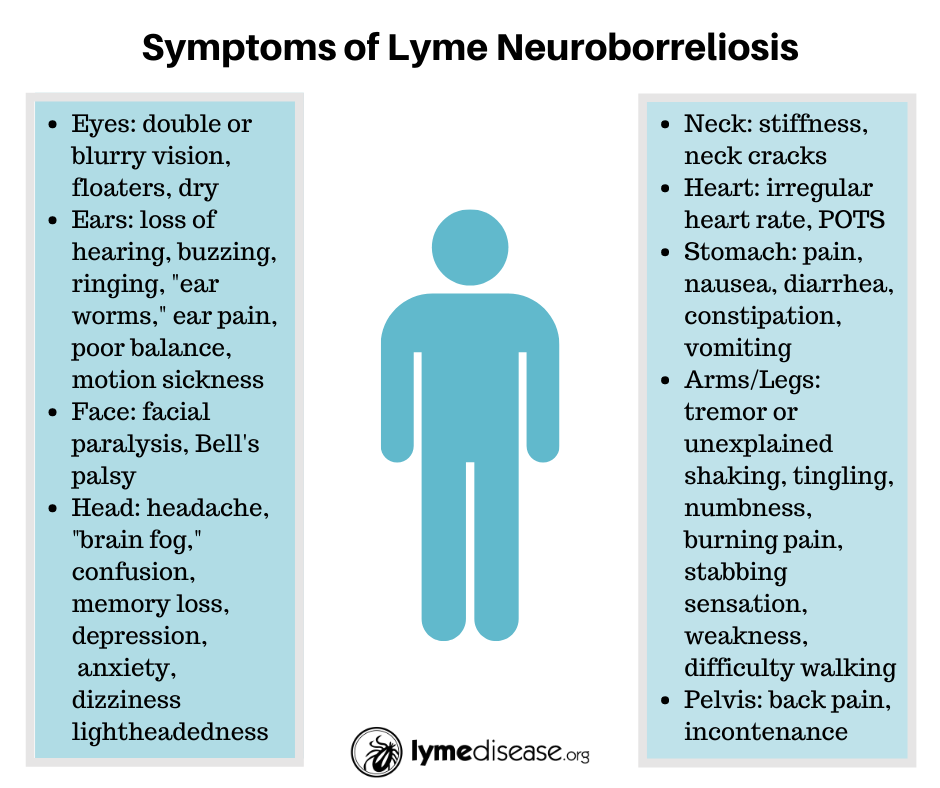
In essence, Lyme/MSIDS messes up the immune system and causes wide-spread inflammation. Due to this, many suffer with sensitivities, from food to their environment.  The body over reacts to these things as if it’s being attacked, causing a wide variety of symptoms, making life miserable.

For more on MCAS:  https://madisonarealymesupportgroup.com/2018/12/29/mcas-triggers-symptoms-how-to-cope/

https://madisonarealymesupportgroup.com/2018/12/29/mcas-lyme-msids-2018-ilads-convention/

https://madisonarealymesupportgroup.com/2019/08/20/mast-cell-activation-syndrome-an-alert-to-psychiatrists/

https://madisonarealymesupportgroup.com/2019/05/08/9-proven-treatments-for-mast-cell-activation-syndrome-plus-a-surprising-new-comer/

https://madisonarealymesupportgroup.com/2018/03/13/mcas-lyme-msids/

https://madisonarealymesupportgroup.com/2018/03/26/the-agony-of-mcas/

https://madisonarealymesupportgroup.com/2017/03/23/rebecca-keith-on-mcas-parasites-lymemsids/


Reminder: WI Lyme Patients Contact Legislators to Stop AB313

This is a plea from Jeannette Wheat the former head of the Madison Group and an experienced medical professional.

Hello All People with Lyme,

I have written before about this bill, AB313, but now it is becoming urgent.

The WI Senate has already passed this bill and it will likely be passed in the Assembly if people don’t get active and contact their state Assembly people right now!

This bill will essentially create a new IDSA Lyme Guidelines committee, Infectious Disease Society of America, except that it will be WI based.

I am attaching the bill to this email, but just to give you a glimpse into it, a couple of the tasks assigned to this committee are to make recommendations to the legislature to make policy (ie law) about diagnosis and treatment of Lyme disease in Wisconsin and the Insurance Commissioner of the State of WI will be one of the committee members!  Just think for a moment how that will work against people with Lyme.

We all know how damaging the IDSA Guidelines are and how opposed to the ILADS, International Lyme and Associated Diseases Society, Guidelines they are. We just can’t let that happen in WI! Please contact your WI Assembly person NOW!!! This is likely to voted on in the next week or two.

The Senate has already passed this. So don’t bother to contact your state Senator about this now. If you don’t know who your representative is or how to contact them, here is a link to a page where you can input your address and it will find him/her for you.

https://legis.wisconsin.gov/ It says “Who are my legislators?” On my browser this shows up on the lower, right side of the page.

Tell your representative that the diagnosis and treatment of Lyme disease is not a state issue and that the insurance commisioner should not be involved in deciding how to diagnose or treat Lyme disease.  Tell them this committee thing has already been done with disasterous outcomes by the IDSA.  Tell them to vote NO on this bill- AB313!

Please take action now!  Your ability to be diagnosed and receive treatment for Lyme disease in WI is at risk!

Thank you, Jeanette Wheat, RPh MBA, and long time Lyme sufferer, support group leader (in days gone by)  and advocate..

For more:  https://madisonarealymesupportgroup.com/2019/11/06/wisconsinites-a-reminder-to-please-write-oppose-assembly-bill-ab313-today/

Exact wording of the bill: Assembly Bill 313

AB 313, previously LRBs 1652 and 3362 – Establishes a sixteen-member Tick-Borne Disease Study Committee to create a report for the legislature on consensus-based recommendations for policy changes on awareness, prevention, surveillance, diagnosis, reporting, and treatment of Lyme Disease.

This bill would allow Governor Evers to appoint a 16 member advisory panelto offer recommendations on how doctors diagnose and treat Lyme disease.

Many of us have explained to our representatives about the potential for that bill to go side-ways since nothing about Lyme/MSIDS is agreed upon in the medical community as well as the fact that appropriate Lyme guidelines already exist.

This bill is huge government overreach – telling doctors how to diagnose and treat patients.

All of the Lyme literate doctors I spoke with oppose this bill for numerous reasons – one of which is the fact this bill could seriously interfere with the way they currently treat patients as well as could increase scrutiny of their medical practice. They are already under severe scrutiny with many having to pay fines to the state medical board:  https://madisonarealymesupportgroup.com/2012/03/04/dr-hoffmann-updated/  My own doctor spent over 50K to protect his practice against such a witch hunt.

All we have to do is look across the state border to see problems in Minnesota:  https://madisonarealymesupportgroup.com/2019/11/17/minnesota-medical-board-reinstates-sanctions-on-controversial-lyme-disease-treatment/


Martine McCutcheon: Star Diagnosed With Serious Infection – Symptoms of Condition

https://www.express.co.uk/life-style/health/1223608/martine-mccutcheon-health-latest-lyme-disease-symptoms-uk-rash-me

Martine McCutcheon health: Star diagnosed with serious infection – symptoms of condition

Martine-McCutcheon-Lyme-disease-and-ME-1223608

Martine McCutcheon has been suffering with her illness (Image: Getty)

MARTINE MCCUTCHEON, famous for playing EastEnders’ Tiffany Mitchell, revealed how her health struggle made her life a “living hell”. Battling two conditions, the actress – who also starred in Love Actually – fell into a dark depression trying to manage her illnesses.
Martine McCutcheon, 43, was first diagnosed with Chronic Fatigue Syndrome (ME) in 2011, and then was later diagnosed with Lyme disease. ME is a long-term illness that causes an overwhelming feeling of tiredness, and Lyme disease is an infectious bacterial condition passed on from being bitten by an infected tick…. (See link for article)
____________________
This article states England ranks as one of the worst nations in Europe for Lyme disease:  https://www.express.co.uk/news/uk/1124081/lyme-disease-south-east-england-london-kent-essex-sussex-symptoms-Mario-Stanchev.  However, it has nothing to do with the climate as the article contends, but rather to migrating birds and the amount of light ticks need to molt (photo period):  https://madisonarealymesupportgroup.com/2018/11/07/ticks-on-the-move-due-to-migrating-birds-and-photoperiod-not-climate-change/