Archive for the ‘Lyme’ Category

That Summer Flu Might Be Lyme, Not Coronavirus – You Don’t Want Either

https://www.marketwatch.com/story/that-summer-flu-might-be-lyme-disease-not-coronavirus-you-dont-want-that-either-2020-05-28

Opinion: That summer flu might be Lyme disease, not coronavirus — you don’t want that either

Delaying treatment can lead to severe, potentially debilitating symptoms

Are deer becoming even bolder this spring?

Summer is field season for ecologists like me, a time when my colleagues, students and I go out into fields and woods in search of ticks to study the patterns and processes that allow disease-causing microbes — primarily bacteria and viruses — to spread among wildlife and humans.

That field work means we’re also at risk of getting the very diseases we study. I always remind my crew members to pay close attention to their health. If they get a fever or any other signs of sickness, they should seek medical treatment immediately and tell their doctor that they may have been exposed to ticks.

When summer flu-like illnesses develop in anyone who spends time outdoors in areas where ticks are common, tick-transmitted diseases like Lyme disease should be considered a likely culprit.

This summer, however, the global emergence of the novel coronavirus and COVID-19 is presenting a whole new set of challenges for diagnosing Lyme disease and other tick-borne illnesses. (See link for article)

____________________

For more:  https://madisonarealymesupportgroup.com/2016/02/13/lyme-disease-treatment/


Bell’s Palsy Can Lead To Nonflaccid Facial Palsy

https://danielcameronmd.com/bells-palsy-can-lead-to-nonflaccid-facial-palsy/

BELL’S PALSY CAN LEAD TO NONFLACCID FACIAL PALSY

Bell’s palsy typically presents as flaccid facial palsy, where one or both sides of the face drops. However, Bell’s palsy can also lead to nonflaccid facial palsy. Lyme disease can cause either flaccid or nonflaccid facial palsy (NFFP).

There is a broad range of findings. “Nonflaccid facial paralysis is a spectrum of hypokinetic and hyperkinetic movement,” writes Markey and colleagues in the journal Otolaryngology.¹

Hypokinetic movement involves less movement, while hyperkinetic movement involves more movement.

“Clinically, this manifests as contraction of the orbicularis oris muscle simultaneous with eye closure or blinking and/or contraction of the orbicularis oculi during speaking or chewing,” explains Rubin in the Handbook of Clinical Neurology.² Orbicularis oris muscles are the group of muscles in the lips that encircles the mouth.

“Patients affected by NFFP often have a narrowed palpebral fissure, prominent and misoriented nasolabial fold, neck and face tightness, and mentalis dimpling,” writes Miller and colleagues in the journal Facial Plastic Surgery & Aesthetic Medicine.³  “These muscles can make a smile asymmetry.”

Lyme disease can cause either flaccid or nonflaccid facial palsy. CLICK TO TWEET

A narrowed palpebral fissure is a narrowing of the eye opening between the eyelids. Mentalis are the chin muscles.

Bell’s palsy can lead to NFFP in 15–30% of patients, writes Miller. “Other common causes of NFFP include Ramsay Hunt syndrome, acoustic neuroma resection, Lyme disease, trauma, autoimmune disease.”

Patients can suffer from NFFP with significant functional, aesthetic, psychological, and social impairments,” writes Miller.

To view photos of patients with both flaccid and nonflaccid facial palsy, visit “The spectrum of facial palsy: The MEEI facial palsy photo and video standard set.”

Treatment of nonflaccid facial palsy

There is a wide range of treatments for NFFP including:

  • Physical therapy
  • Muscle relaxants
  • Facial massage
  • Acupuncture
  • Myectomy
  • Neurectomy
  • Botox

Editor’s note: I have treated Lyme disease patients in my practice with nonflaccid facial palsy and have seen first hand the “significant functional, aesthetic, psychological, and social impairments” it can cause, as described by Miller.

References:
  1. Markey JD, Loyo M. Latest advances in the management of facial synkinesis. Curr Opin Otolaryngol Head Neck Surg. 2017;25(4):265-272.
  2. Rubin D. Chapter 17 – Normal and abnormal spontaneous activity in the Handbook of Clinical Neurology. edited by Kerry H. Levin, Patrick Chauvel. Vol Volume 160, 2019, Pages 257-279: Science Direct; 2019.
  3. Miller MQ, Hadlock TA. Beyond Botox: Contemporary Management of Nonflaccid Facial Palsy. Facial Plast Surg Aesthet Med. 2020;22(2):65-70.

_____________________

**Comment**

The most important treatment NOT mentioned is anti-microbial treatment for Lyme disease.

In my experience, symptoms go away or lessen considerably with antimicrobial treatment.  From personal experience I can tell you I would have wasted a lot of money and time had I tried to treat each symptom with adjunctive therapies.  Of course if the symptom is debilitating it would probably be worth it, but many symptoms come and go throughout treatment, but good, effective antimicrobial treatment has always been and will always be where you should spend your money first.

What Nesting Songbirds Tell Us About Lyme Disease in Canada

https://danielcameronmd.com/what-nesting-songbirds-tell-us-about-lyme-disease-in-canada/

WHAT NESTING SONGBIRDS TELL US ABOUT LYME DISEASE IN CANADA?

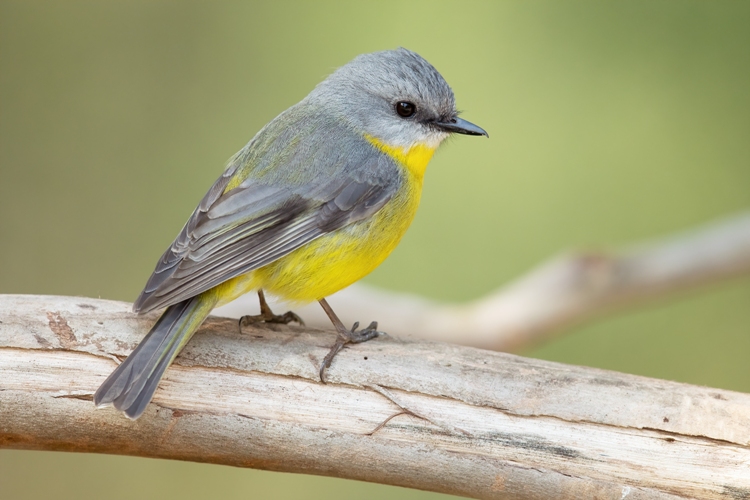
There are Canadian residents who develop Lyme disease without having ever left the country. So, how are they contracting the disease? Researchers have shown that migratory birds can carry ticks into Canada from other regions.

But now, a new study reports that nesting songbirds may confirm what Canadians have long believed – Borrelia burgdorferi-infected deer ticks have already established residency in Canada.

“We estimate that migratory birds disperse 50 million to 175 million I. scapularis [deer] ticks across Canada each spring, implicating migratory birds as possibly significant in I. scapularis range expansion in Canada,” writes Ogen and colleagues.¹

A study by Scott et al., however, finds that migratory songbirds, specifically, can disperse ticks into “new areas hundreds of kilometers away from their original source.”²

“This indicates that many I. scapularis-carrying migratory birds in spring have destinations far north in Canada, including some farther north than the current region of climatic suitability for I. scapularis,” the authors write.

Scott and colleagues studied nesting songbirds to determine whether established populations of deer ticks existed in Canada since nesting birds stay in close proximity to their nest in June and July.

READ MORE: Lack of knowledge about Lyme disease in Canada

“Short runs ensure that the eggs in the nest stay warm and protected from predators,” Scott writes in the article, “Monitoring of Nesting Songbirds Detects Established Population of Blacklegged Ticks and Associated Lyme Disease Endemic Area in Canada.”

“Additionally, during the fledging period, ground-foraging songbirds make hasty flights near the nest, and promptly return to feed their young,” Scott writes.

A new study looking at nesting songbirds finds established deer tick populations in Canada. CLICK TO TWEET

Researchers looked at deer ticks collected from nesting songbirds. To demonstrate an established population, they needed to find 6 individual ticks from a specific area. Moreover, they needed to find ticks from 2 of the 3 life stages (i.e., larva, nymph, and adult).

They found 63 black-legged [deer] nymphal ticks and 1 black-legged larval tick. In addition, they found 2 life stages from a single bird within a single year. One was a larva tick and two were nympal ticks.

Nearly half of the deer ticks collected were infected with Borrelia burgdorferi s.s., the causative agent of Lyme disease. According to the authors, “14 (42%) of 33 of black-legged tick nymphs tested were positive.”

The author’s approach was novel. Over a two-month period, they could pinpoint an established population of ticks.

The authors made three recommendations

  1. “Any individuals frequenting this area should take extra precautions to avoid tick bites, and do full-body tick checks at the end of the day.”
  2. “Because Borrelia burgdorferi sensu stricto is pathogenic to humans, anyone who is bitten by a tick or has Lyme disease symptoms should seek medical attention.”
  3. “Since chronic Lyme disease is a pernicious, debilitating infection, healthcare practitioners must take special steps to screen symptomatic patients for this incapacitating spirochetosis.”
References:
  1. Ogden NH, Barker IK, Francis CM, Heagy A, Lindsay LR, Hobson KA. How far north are migrant birds transporting the tick Ixodes scapularis in Canada? Insights from stable hydrogen isotope analyses of feathers. Ticks Tick Borne Dis. 2015;6(6):715-720.
  2. Scott JD, Pascoe EL, Sajid MS, Foley JE. Monitoring of Nesting Songbirds Detects Established Population of Blacklegged Ticks and Associated Lyme Disease Endemic Area in Canada. Healthcare (Basel). 2020;8(1).

______________________

**Comment**

This study once again shows ticks don’t need any help from the climate to travel.  They just hop on the backs of birds, rodents, and lizards and go wherever they go.

As to seeking medical attention after obtaining a tick bite – this is great advice but not all practitioners appreciate the seriousness of infection and very well might tell you to “wait and see.”  This “wait and see” advice has been the downfall of many patients who could have avoided long-term illness had they treated prophylactically.  

For more:  https://www.ilads.org/research-literature/lyme-disease-basics-for-providers/

Excerpt:

Prophylaxis and Treatment

A Tale of Two Pandemics: Lyme & COVID-19. Dr. Bransfield

 Approx. 1 Hour

A Tale of Two Pandemics: Lyme and COVID-19

Dr. Bransfield discusses the similarities and differences between the two pandemics of Lyme Disease and COVID-19, with a particular emphasis on their neuropsychiatric manifestations. Viral infections have been associated with mood changes, psychosis, changes in neuromuscular function and even demyelinating processes, as has Lyme Disease, particularly neuroborreliosis. He examins the connections, such as they are known to date, and answers questions live during the webinar.

_____________________

**Comment**

If you are unfamiliar with Dr. Bransfield, you are in for a treat.  He is one of the few psychiatrists who studies the psychiatric effects of Lyme/MSIDS.

For more:  https://madisonarealymesupportgroup.com/2018/04/15/ld-the-brain-podcast-with-dr-bransfield/

https://madisonarealymesupportgroup.com/2018/03/09/aggressiveness-violence-homicidality-homicide-lyme-disease/

https://madisonarealymesupportgroup.com/2018/04/23/can-infectious-disease-physicians-help-prevent-violence/

https://madisonarealymesupportgroup.com/2020/01/06/a-clinical-diagnostic-system-for-late-stage-neuropsychiatric-lyme-borreliosis-based-upon-an-analysis-of-100-patients/

https://madisonarealymesupportgroup.com/2017/06/20/suicide-lyme-and-associated-diseases/

https://madisonarealymesupportgroup.com/2020/03/12/psychiatric-diagnosis-cannot-be-given-solely-based-upon-the-absence-of-physical-laboratory-or-pathological-findings/

https://madisonarealymesupportgroup.com/2018/08/25/neuropsychiatric-lyme-borreliosis-an-overview-with-a-focus-on-a-specialty-psychiatrists-clinical-practice/

https://madisonarealymesupportgroup.com/2018/07/05/suicide-poses-a-complicated-risk-in-those-with-infectious-diseases/

https://madisonarealymesupportgroup.com/2017/01/17/lymemsids-and-psychiatric-illness/


How To Survive When Your Entire Family Has Lyme

 Approx. 1 Hour

#245: Stephanie Silverberg, IMFT/ART – How to Survive When Your Entire Family Has Lyme

In this episode you will learn three main things:

1) Why you should consider a functional medicine doctor for your Lyme Journey
2) Why you should never accept a psychiatric diagnosis from an endocrinologist
3) How allowing “the bottom to fall out” gives you the opportunity to find out what is important in your life

Stephanie Silverberg got acutely sick about three years ago. Neurological symptoms progressed to the point where she was bed bound for three months. Consultations with specialists didn’t yield any results, and it wasn’t until she visited a functional medicine doctor that she was able to start to regain her health and begin her lyme journey. She works as a marriage counselor in Ohio.

___________________

For More:  https://madisonarealymesupportgroup.com/2020/04/17/whats-a-lyme-patient-to-do-when-fear-hits/

https://madisonarealymesupportgroup.com/2020/02/15/lyme-disease-and-fear-the-only-way-out-is-through/

https://madisonarealymesupportgroup.com/2015/10/18/psychiatric-lymemsids/

https://madisonarealymesupportgroup.com/2020/03/12/psychiatric-diagnosis-cannot-be-given-solely-based-upon-the-absence-of-physical-laboratory-or-pathological-findings/

https://madisonarealymesupportgroup.com/2018/06/04/ld-diagnosis-took-forever-because-of-mental-health-stigma/

https://madisonarealymesupportgroup.com/2017/11/01/lyme-mental-illness-dr-jane-marke/