Archive for the ‘Lyme’ Category

GI Issues With Lyme Disease

https://www.globallymealliance.org/blog/gastrointestinal-issues-with-lyme-disease

When patients consider taking long-term antibiotics for persistent Lyme disease, they need to weigh risks and benefits of treatment. Gastrointestinal risks can include the possibility of a C.diff infection, or candidaovergrowth, which is a yeast infection that occurs not just in typical places you imagine but also in the gut. A good Lyme Literate Medical Doctor (LLMD) will put a patient on probiotics and a specific diet to mediate these risks, or may decide to go the intravenous route to take pressure off the gut.

Medication is not the only way that the gut can be impacted by Lyme disease; the infection itself can cause gastrointestinal issues. In his book How Can I Get Better? An Action Plan for Treating Resistant Lyme & Chronic Disease, Richard I. Horowitz, MD notes that Lyme and co-infections can cause inflammation leading to issues such as abdominal pain, nausea, gas, bloating, constipation, diarrhea, or reflux disease, with occasional vomiting. He writes, “…a review of gastrointestinal and liver problems associated with tick-borne diseases found that in 5 percent to 23 percent of those with early Lyme borreliosis, patients presented with varied gastrointestinal symptoms, such as nausea, vomiting, abdominal pain, anorexia with loss of appetite, and hepatitis, and some even had symptoms of an enlarged spleen and liver.”[i] And that’s just in early Lyme—in later stages of the disease, spirochetes(Lyme bacteria) can burrow deeper into the gastrointestinal tract, causing more damage. Other tick-borne diseases can also cause their own gastrointestinal issues, often overlapping with Lyme symptoms when the patient is co-infected.

Because every case of tick-borne illness is different, some Lyme patients may not experience any gastrointestinal symptoms. When I was at my sickest with Lyme disease, babesiosis, ehrlichiosis, possible bartonella, and chronic active Epstein-Barr virus, I used to joke, “Well, at least my stomach feels okay.” Because I wasn’t experiencing abdominal pain or vomiting, I figured my stomach was the one part of my body that had gotten off easy.

In fact, many of the symptoms I experienced in other parts of my body, including joint and muscle pain, migraine headaches, fever, and fatigue, were directly related to weakness in my gut caused by disease. Unbeknownst to many people—myself included before I got sick—the gut is a major player in the immune system. Dr. Horowitz writes that the “GI tract houses 80 percent of our immune system and 70 percent of our lymphocytes, making it the first line of defense against infections.” He goes on to explain that “…the gut can hold as many as 100 trillion microbes, referred to as the microbiome.” The bacteria in each person’s unique microbiome “help to supply essential vitamins; fight dangerous pathogens; keep the immune system in balance and modulate autoimmune disease (like MS and rheumatoid arthritis); modulate hormones, appetite, weight, glucose metabolism, and diabetes; modulate cardiovascular risk, neurological and psychiatric diseases (like Parkinson’s and schizophrenia); affect epigenetics, modulate cancer risk and affect inflammatory reactions in the body, including allergies, asthma, Crohn’s disease, and colitis.”i

An imbalanced microbiome can lead to intestinal permeability, commonly called “leaky gut syndrome.” This can allow toxins pass into the gut, causing inflammation and changes in flora; it’s similar to what happens when the blood-brain barrier is compromised. A 2020 study done by researchers at Johns Hopkins University School of Medicine, Northeastern University, and University of California San Diego found that the gut microbiome of post treatment Lyme disease patients was distinctly different than the gut microbiome of healthy subjects.

Whether Lyme patients experience gastrointestinal symptoms or not, their microbiome is impacted by their infection(s), their medications, and their diet. A weakened microbiome means a weakened ability to heal. As Lyme patients, we can help strengthen our microbiome by taking probiotics to replace good bacteria that are killed by antibiotics (some patients also take an anti-fungal medication, which can have anti-spirochetal effects, too), and by sticking to “The Lyme Diet.” Gluten and sugar are particular menaces to the microbiome, and your doctor may also recommend other dietary changes or nutritional supplements to help you maintain gut health. As I’ve come to learn, it is central to overall health!

[i] Horowitz, Richard I., MD. How Can I Get Better? An Action Plan for Treating Resistant Lyme & Chronic Disease. New York: St. Martin’s Griffin, 2017 (327, 328-9).

A Quick Tour of the New IDSA Lyme Disease Guidelines

https://www.change.org/p/the-us-senate-calling-for-a-congressional-investigation-of-the-cdc-idsa-and-aldf/u/29231613?

A Quick Tour of the New (IDSA) Lyme Disease Guideline

JUN 20, 2021 — 

Please see the email below sent to Dr. Paul Auwaerter of the Infectious Diseases Society of America.

FYI…per the link below:

Pending approval by the court, the TORREY v. IDSA is now an anti-trust lawsuit against a single defendant: The Infectious Diseases Society of America.

https://www.lymedisease.org/idsa-lyme-lawsuit-update-pfeiffer/

———- Original Message ———-

From: CARL TUTTLE <runagain@comcast.net>
To: “pauwaert@jhmi.edu” <pauwaert@jhmi.edu>, “alexa011@mc.duke.edu” <alexa011@mc.duke.edu>, “thomas.fekete@temple.edu” <thomas.fekete@temple.edu>, “editor2@webmd.net” <editor2@webmd.net>
Cc: All members of the NH Lyme Study Commission, “governorsununu@nh.gov” <governorsununu@nh.gov>
Date: 06/19/2021 12:28 PM
Subject: A Quick Tour of the New Lyme Disease Guideline

MEDSCAPE COMMENTARY
 
A Quick Tour of the New Lyme Disease Guideline
https://www.medscape.com/viewarticle/951589
Paul G. Auwaerter, MD

June 14, 2021

Excerpt:

“Of importance, the guideline goes out of its way to cite the lack of evidence for performing Lyme disease tests, specifically routine testing in cases where there’s no evidence or link to Lyme disease. Examples include someone who is asymptomatic after a tick bite, even when they have a neurologic condition such as amyotrophic lateral sclerosis, multiple sclerosis, Parkinson’s disease, dementia, or any kind of new-onset seizures or psychiatric illness. In children, behavioral and developmental disorders don’t warrant assessing a Lyme disease serology.

June 19, 2021

The IDSA Foundation
1300 Wilson Boulevard Suite 300
Arlington, VA 22209
Attn:  Paul Auwaerter, vice chair of the IDSA Foundation

Dear Dr. Auwaerter,

In reference to your recommendation not to test for Lyme disease in children with behavioral and developmental disorders are you aware of the following article?

Study detects tick-borne illness in teens hospitalized for depression
https://www.lymedisease.org/hospitalized-teens-lyme-depression/

Ten patients were diagnosed with DSM-5 Major Depressive Disorder, seven were additionally diagnosed with Generalized Anxiety Disorder, and three had made serious suicide attempts.

Ten adolescents picked at random with mental illness severe enough that they required institutionalization—nine of them had evidence of tick-borne infections and nine had evidence of autoimmune encephalitis.

____________________________________

Dr. Auwaerter… It sounds to me like your recommendation “not to test for Lyme” might not be sound advice after all which begs the question; how many other patients currently in the healthcare system being treated for neurologic conditions are actually dealing with untreated Lyme disease and/or co-infections?

A response to this inquiry is requested.
Respectfully submitted,

Carl Tuttle
Hudson, NH

Member of Governor Chris Sununu’s Lyme Disease Study Commission
http://www.gencourt.state.nh.us/statstudcomm/details.aspx?id=1515&rbl=1&txtbillnumber=hb490
Cc: All members of the NH Lyme Disease Study Commission

THOMAS FEKETE, M.D., FIDSA CHAIR of the IDSA Foundation

Barbara D. Alexander, MD, MHS, FIDSA, President IDSA

A Quick Tour of the New Lyme Disease Guideline
This transcript has been edited for clarity. Hello. This is Paul Auwaerter for Medscape Infectious Diseases, speaking from Johns Hopkins…

The Red Ring: Live Q & A With Cast and Crew on Lyme Documentary

http://  Approx. 39 Min

The Red Ring Q & A

About This Event:
 
Lyme disease is more than a seasonal scare. In reality, it is a growing epidemic impacting millions in over 65 countries world wide. The Red Ring seeks to raise awareness and dispel the stigma that Lyme is not something to be concerned about. The director, Joonas Berghäll, who suffers from chronic Lyme disease and other tick-borne infections, seeks a cure for his illness.
 
Joonas meets with numerous patients, doctors, researchers and experts from around the world in search for an answer to the core questions:
  • Why is the illness not taken seriously?
  • Why are there hundreds of millions of people suffering?

______________________

**Comment**

For some answers to those questions:  

Lyme, Tularemia, Rickettsia, & Other Bacteria Found on Children’s Masks

**UPDATE, Nov. 2021**

Watch a series of brief videos where Tyson Gabriel, an industrial hygienist, safety engineer, and risk manager who trains doctors and has 20 years of experience implementing exposure prevention plans in industry, and is lead researcher for his team, examined each mask study on the CDC’s website.  Also see these reports.

Florida Press Release, Parents Cultured Children’s Masks And Found Lyme Disease, Tularemia, Rickettsia, and Other Bacteria

June 18, 2021

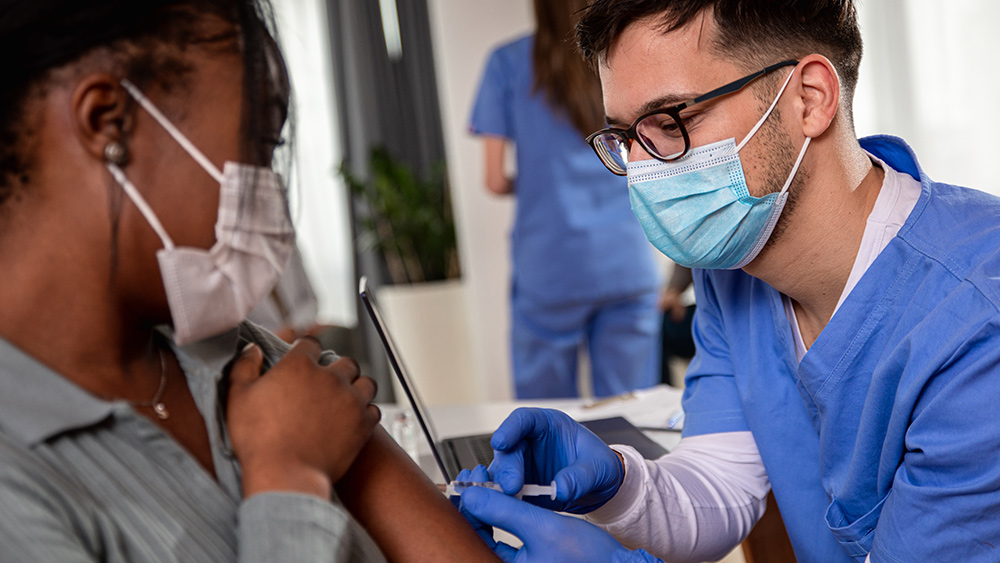
The press release dealt with a group of Florida parents who sent cultures of their children’s (ages 6-11) masks, worn at school for 6-8 hours, to a lab. The masks were freshly laundered before they were worn for the day. One adult mask was submitted who works as a cosmetologist.  Also see this news report.

The Lab report using proteomics to extract proteins from the masks to sequence them revealed the following:

While this might be surprising to some, this website has posted on the dangers of mask usage from day one as well as the fact Fauci himself initially stated they weren’t effectiveyet people are still wearing them!

  • A 2014 study of hospital workers wearing surgical masks in a Bangkok hospital found their masks to be saturated with Staphylococcus aureus (found on some of the masks in the Alachua study) and the fungus Aspergillus.
  • Another study of hospital workers in China from 2019 observed that after more than six hours of use, masks worn by medical personnel also contained viruses, including adenovirus, bocavirus, respiratory syncytial virus, and influenza viruses.
  • Studies have shown that pathogen density on masks grows exponentially after two hours of use. Source

The final nail in the coffin should have been after the Danish mask study  a randomized, controlled trial on thousands of people.  But it didn’t matter.  The spin doctors used their power to shout it down, and any other information showing the dangers and ineffectiveness of mask usage. Merely posting the study got me kicked off LinkedIn.  So much for a free exchange of ideas in the era of COVID.

 
While a Florida appeals court has already ruled that the mask mandate in Alachua County is presumptively unconstitutional because it violates bodily autonomy, the rest of the country is still in question. The Boston Globe is already advocating their use for the flu season. 
 
For Lyme/MSIDS patients, this information should reinforce what we already know.  Ticks are not the sole perp transmitting “tick-borne illness,” and we need much more work done on this issue.  
 
Lida Mattman, the expert on the cell wall deficient forms has stated she believes Lyme is transmitted by fomites, (an inanimate object or substance that is capable of transmitting infectious organisms from one individual to another). But the spin doctors shouting down anti-mask science have also shouted down any work on sexual and congenital transmission. When I asked Elizabeth Burgess if I could interview her, as she has done much work in the past on animal transmission at the University of Wisconsin, she refused – still affected by nearly losing her job and the bullying that occurred for her controversial findings decades ago.
 
Further, Mattman did groundbreaking work on Lyme testing. Her Gold Standard Culture Method has disappeared thanks to the concerted suppression on microscopy. In 2004 she already claimed that she could not find any uninfected blood in the USA anymore.  
 
And now Lyme, Tularemia, and Rickettsia have ALL been found on the masks of children?  
This should cause us all to pause and consider.

For more on guidelines harming children:  https://www.greenmedinfo.com/blog/how-covid-19-school-guidelines-are-harming-kids . It became clear early on that children and teens are at very low risk from COVID-19, with a 99.997% survival.

Please consider signing the petition to lift COVID guidelines at school:  https://standforhealthfreedom.com/action/lift-school-covid-guidelines/


Tick Season 2021: Why Researchers Are Focusing on Staten Island Backyards

https://www.silive.com/news/2021/06/tick-season-2021-heres-why-researchers-are-focusing-on-staten-island-backyards.html

Tick season 2021: Here’s why researchers are focusing on Staten Island backyards

STATEN ISLAND, N.Y. — For the last four years, researchers from Columbia University have been studying the rise in tick populations and Lyme disease on Staten Island — and the work continues this summer as they drag for ticks, set up hair traps and place trail cameras in residents’ backyards.

The researchers are studying both parks and residential areas to better understand the ecology of ticks and the risk of tick-transmitted diseases in urban environments. And ticks are now being found across all of Staten Island, not just in the southernmost parts.

Most notably, the Asian longhorned tick continues to spread across the borough.

(See link for article)

___________________

**Comment**

For more on Diuk-Wasser’s work.