Upcoming screenings of Lyme documentary “The Quiet Epidemic”
Sept. 15, 2022
Do you remember the story of then-12-year-old Julia Bruzzese? The young Lyme sufferer was in a wheelchair, amidst the throngs of people greeting Pope Francis during his 2015 visit to New York City.
On live TV, the Pontiff reached out his hands to bless Julia—and suddenly, the young girl and her Lyme-inflicted challenges made the national news.
However, that was neither the beginning nor the end of Julia’s Lyme story.
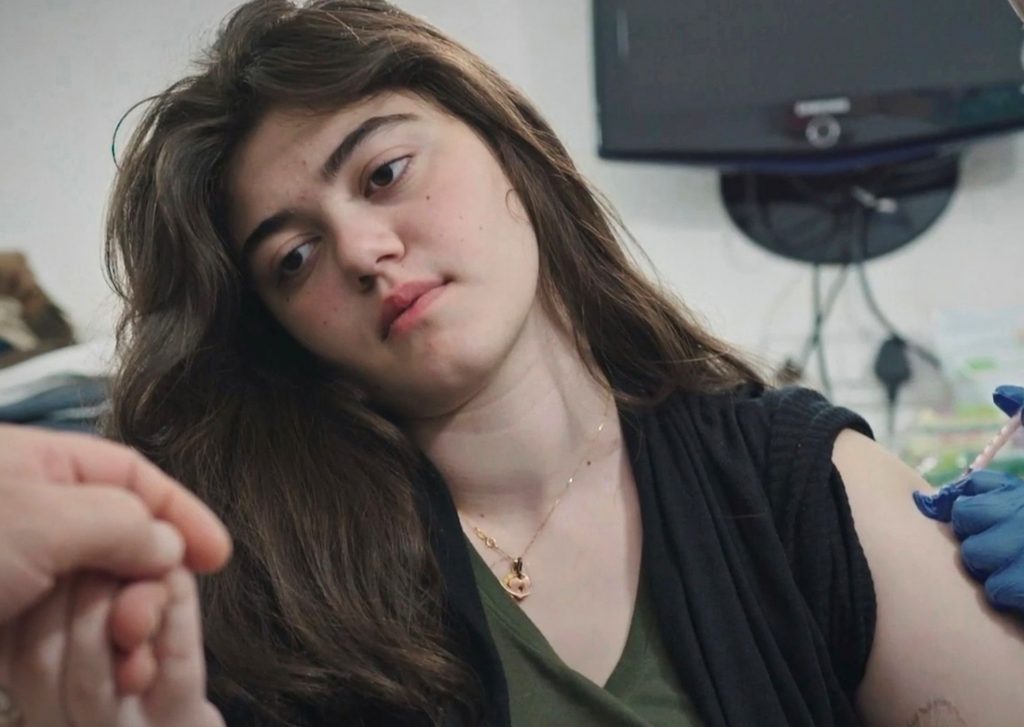
Much more of it is revealed in THE QUIET EPIDEMIC, a compelling documentary that calls the treatment of Lyme disease “one of the most controversial, divisive, and vicious medical debates in medicine today.”
The film portrays the journey of Julia and her dad, Enrico, through the months and ultimately years of seeking help. It depicts the frustrations shared by many people trying to ascertain whether or not they have Lyme disease. And explains the barriers to treatment that most people with the tick-borne illness encounter.
In the film, Enrico says that when he asked Julia’s doctor if his ailing daughter might possibly have Lyme disease, the answer was a firm no.
“Like Lyme disease was a bad word”
“She went from being this wonderful supporting doctor, willing to try anything, to adamant no, impossible, this is not it…It was almost like, as if we were using profanity, like Lyme disease was a bad word.”
The film also features the late Dr. Neil Spector, a top cancer researcher who literally lost his heart to Lyme disease. Unrecognized Lyme disease caused so much cardiac damage that he needed a transplant. After recovering from that surgery, he applied the lessons of cancer research to investigating precision medicine for Lyme and Bartonella. Considered a true hero in the Lyme community, sadly, Dr. Spector passed away in June 2020.
Others interviewed for the film include Dr. Richard Horowitz, Dr. Ken Liegner, Dr. Steven Phillips, and investigative reporter Mary Beth Pfeiffer.
The filmmakers, Lindsay Keys and Winslow Crane-Murdoch, met while they were patients of the same Lyme-treating doctor. They decided to team up on a documentary to expose the grim truths about Lyme disease—and to look for answers.
The film premiered in May at the Hot Docs Film Festival in Toronto, Canada, and now is making its way around the US.
How you can watch the film
There will be two in-person screenings at the Woodstock Film Festival in New York on September 30 and October 1. If you can’t make it there in person, the festival offers a virtual screening available Sept. 30-Oct. 2.
On the opposite coast, there will be two in-person screenings at the Mill Valley Film Festival (near San Francisco) on October 8 and 10, with virtual screenings Oct. 5-16.
Future screenings include Indianapolis, IN; New Haven, CT; and St. George, Utah.
Again, the purpose of posting this information is two-fold: 1) general education 2) the implications upon research, particularly research on tick/disease proliferation regarding “climate change.”
Recently, it’s been admitted that an Alzheimer’s Cabal has controlled the prevailing research for decades, effectively thwarting other ideas including treatments by singularly focusing upon amyloid and tau. Further, scientists with rock star status have been accused of doctoring images, fake data, and plagiarism in Alzheimer’s and cancer research.
Lyme/MSIDS patients usually understand this regarding Lyme/MSIDS but they often fall prey to believing tickborne illness is the only disease that is political.
Enter “climate change”
This website has posted numerous articles regarding how “climate change” is also extremely political and is being used to promote fear so the public agrees with and supports the vast amounts of money being diverted to support a disastrous, ineffective, and dangerous climate agenda which is also part and parcel of “the great reset”. One such money grab includes government subsidizedwind turbines. Not only have they collapsed and caught on fire, health complaints have led to a lawsuit which has led to their demolition, but the danger remains due to toxic emissions, noise pollution, pulsing air sensations in life forms, insomnia, headaches, body aches, and other issues not to mention reducing home values. Now, a study from Germany shows that offshore wind farms are projected to impact primary production and bottom water deoxygenation in the North Sea. Turbines are unsafe for marine ecosystems as well as the human and animal microbiome, yet the false narrative continues with Biden determined to put massive offshore wind farms on the ocean. A spike in whale and dolphin deaths has prompted calls for investigation into the impact offshore wind projects have on marine life.
Go here to read about power lobbyists for turbines getting to politicians to push industry-friendly bills which completely ignores those suffering ill health.
Similarly to COVID and Lyme/MSIDS, “climate change” is politically and emotionally based, and numerous experts have pointed out the many flaws.
The study analyzed data from heat, drought, floods, hurricanes, tornadoes and ecosystem productivity, and could not plot a trend either way. While many state we’ve never seen flooding like we have in recent years… the report found the opposite.
Research dollars diverted to climate issues is not only dishonest, but also stops money from going to extremely worthy topics such as the impact of migratory birds, photoperiod, land usage, and of course testing and improved diagnostics, effective treatments, and transmission studies (what other bugs transmit, sexual, congenital, etc).
Please don’t fall for the age-old tactic currently being used to divide and conquer us using fear and hate. It is imperative level heads prevail and that we continue to question what is being touted from the top-down. It is this author’s experience that whenever discussion and debate are prohibited – red flags should immediately appear and cause us to scrutinize the prevailing narrative. Further, we should all be alerted to the fact that an anti-globalism sentiment is forcing powerful globalists into a corner which almost assuredly means an engineered disaster is about to strike to make a political point to keep the narrative alive.
But also read this important piece tying geoengineering with Morgellons as well as with the spiker silk polymers being sprayed that we are all breathing in that are related to the development of biodefense therapeutics, nanotech and biotech applications, transdermal vaccine delivery, biosensing applications, brain computer interface, creation of synthetic neurons and synthetic biology. They also share the same proteins that are being found in the rubbery white clots found in humans after getting the COVID shots.
Advances in Social Sciences Research Journal – Vol. 9, No. 8
Publication Date: August 25, 2022
DOI: 10.14738/assrj.98.12935
Herndon, J. M., & Whiteside, M. (2022).
Collapse of Earth’s Biosphere: A Case of Planetary Treason
J. Marvin Herndon
Transdyne Corporation, San Diego, CA 92131 USA
Mark Whiteside
Florida Department of Health, Key West, FL33040 USA
ABSTRACT
Earth’s life support systems are breaking down, including the stratospheric ozone layer, which protects all higher life on the planet from deadly ultraviolet radiation. This breakdown is a direct result of human activities including the large-scale manipulation of processes that affect Earth’s climate, otherwise known as geoengineering. We present further evidence that coal fly ash, utilized in tropospheric aerosol geoengineering, is the primary cause of stratospheric ozone depletion, not chlorofluorocarbons, as “decreed” by the Montreal Protocol. The misdiagnosis was a potentially fatal mistake by mankind. Coal fly ash particles, uplifted to the stratosphere, are collected and trapped by polar stratospheric clouds. In springtime, as these clouds begin to melt/evaporate, multiple coal fly ash compounds and elements are released to react with and consume stratospheric ozone. Contrary to the prevailing narrative, the stratospheric ozone layer has already been badly damaged and now increasingly deadly ultraviolet radiation, UV-B and UV-C, penetrates to Earth’s surface. Our time is short to permanently end all geoengineering activities, and to reduce and/or eliminate all sources of aerosolized coal fly ash, including first and foremost the jet-sprayed emplacements into the troposphere that are systematically breaking down Earth’s support systems and poisoning life on this planet.
At the end of the study they conclude:
All geoengineering must cease. All sources of aerosolized coal fly ash must be reduced and eliminated. Tropospheric jet-spraying of coal fly ash and any other particulate matter must cease and desist. That is necessary to salvage what we can of Earth’s vital life support systems, including the stratospheric ozone layer.
Once again, the magician’s use of the old ‘slight of hand’ trick is making the public blindly accept an untruth while ignoring other lines of inquiry. Geoengineering, like dual-use research are causing untold harm to people and the environment.
The geoengineering umbrella sometimes includes methods of removing carbon dioxide from the atmosphere, such as mass tree planting and carbon capture and storage technology. But attention is usually focused on the more theoretical and even more controversial approaches, including solar radiation management which includes spraying toxic aerosols such as sulphatesor nanoparticles into the stratosphere to reflect some of the sun’s energy back into space, however, there is already evidence that aerosols sent into the air by humans are changing water cycles, monsoon seasons, and can lead to acid rain. And according to the IPCC, such techniques would also likely reduce global precipitation. The UN Human Rights Council’s Advisory Committee says all research and development of solar radiationmodification, particularly stratospheric aerosol injection, should be banned because it “can endanger human rights in the most extensive and unimaginable way”.
Another approach includes ocean fertilization, which governing bodies of the Convention on the Prevention of Marine Pollution by Dumping of Wastes and Other Matterlong ago agreed to block – the idea of adding nutrients such as iron or nitrogen to the ocean surface to stimulate phytoplankton photosynthesis that in turns stores more carbon deep in the sea – and now intend to regulate four techniques with “the potential for deleterious effects that are widespread, long-lasting or severe”. They have also been looking at the impact of solar engineering.
Another approach which many scientists are stating is ‘insane’ and ‘needs to be stopped,’ manipulates Arctic sea ice by pumping saltwater into the ocean.
What they all have in common is their grandiosity in assuming the right to “affect a large swathe of the globe.”
If you have been harmed by faulty Lyme disease tests, please consider taking the following survey as TruthCures moves forward with legal remedies for the harm caused by the lack of a valid Lyme disease diagnostic:
Laura Hovind’s letter to the Chair of the NH Lyme Disease Study Commission:
Dear Representative Cushman,
Thank you for your interest in improving Lyme disease diagnostics and advocating for the rights of Lyme sufferers in New Hampshire and beyond. I am the founder of a 501(c)3 action-oriented, patient-led Lyme organization called TruthCures. Our singular focus is rectifying the fraudulent case definition which was adopted by the CDC and FDA to facilitate late-phase trials and approval of SmithKline/Yale’s vaccine, LYMErix.
Without the falsified case definition and reverse-engineered testing scheme, they would not have been able to claim efficacy in phase III LYMErix trials. Despite the vaccine having been withdrawn after three years, the fraudulently adopted diagnostics remain, nearly three decades later. The result of this fraud is that the sickest patients are unable to obtain a Lyme diagnosis. Worse still, the perpetrators have spent decades propagating disinformation about Lyme to cover their tracks. They downplay the disease’s seriousness, dismiss victims as “loonies” or hypochondriacs, and abuse their power to ensure the current dire situation of zero-care is perpetuated.
In June 1994, the FDA’s Vaccines & Related Biologics Product Advisory Committee (VRBPAC) held a meeting where the stated primary question was, “Is the CDC case definition for Lyme disease appropriate for a pivotal efficacy trial?” Participants of that meeting included CDC and FDA officers, and representatives of all three pharmaceutical companies that had Lyme disease vaccines in development, among others.
Raymond Dattwyler, a researcher/physician from State University of New York – Stony Brook stated that seronegative patients are sicker: “The ones that failed to mount a vigorous immune response tended to do worse, clinically. So, there was an inverse correlation between the degree of serologic response and the outcome. So, individuals with a poor immune response tend to have worse disease.” He was arguing that the proposed testing scheme—to require a broad spectrum of borrelial antibodies for positive diagnosis—was antithetical to the science which had demonstrated those who produced few or no Lyme antibodies were sicker. The CDC published this fact in the January 25, 1991 “Lyme Disease Surveillance Summary” by the Centers for Disease Control Division of Vector-Borne Infectious Diseases. They described the difficulty in diagnosing Lyme disease using the serology methods available at the time. They found “no association between the [1988] case definition and seropositivity” but that late Lyme arthritis cases were associated with seropositivity. That means the CDC was well aware of seronegative Lyme disease. In other words, an indeterminate proportion of victims would not be able to test positive despite being infected.
Allen Steere, credited as one of the discoverers of Lyme disease, concurred. Steere’s 1993 report, “Association of Treatment-Resistant Chronic Lyme Arthritis with HLA-DR4 and Antibody Reactivity to OspA and OspB of Borrelia burgdorferi” went a step further, describing a genetic association between a high-antibody response and the arthritis outcome. Arthritis patients with specific “HLAs” showed an antibody response while only one of the patients with meningitis, neuroborreliosis or a bullseye rash (which by itself is diagnostic of Lyme disease) showed antibody reactivity. “When single serum samples from 80 patients with Lyme arthritis were tested, 57 (71%) showed antibody reactivity to recombinant Osp proteins; in contrast, none of 43 patients who had erythema migrans or Lyme meningitis (P < 0.00001) and 1 of 5 patients who had chronic neuroborreliosis but who never had arthritis (P = 0.03) showed antibody reactivity to these proteins.”
Lyme disease diagnostics were rigged to identify those cases that are genetically predisposed to mount a strong immune response and experience minor symptoms of arthritis. Meanwhile, the meningitis and neuroborreliosis cases—those who now identify as “chronic Lyme” victims—were left to fend for themselves without a diagnosis, treatment, or even belief from doctors that they are actually sick. Documents that support these claims are linked within my Website page, https://www.truthcures.org/testing-fraud How has the CDC perpetuated the fraudulent diagnostic scheme? In a bizarre exercise of circular logic, their Lyme serum repository screens samples using their bogus case definition. All research, all new test kits, all vaccine trials, all inclusionary/exclusionary criteria for anything Lyme-related is corrupted and excludes the people who are sick. Unless the CDC case definition is rectified, we will forever be trapped in the false reality created by SmithKline, Yale, and a cadre of scientists who sought to profit from the Lyme epidemic without regard for human suffering.
TruthCures met in 2019 with the Assistant U.S. Attorney and FBI Healthcare Fraud Unit in Boston. We were encouraged to seek whistleblower representation, but we are not convinced a qui tam case is viable, due to the public disclosure bar and other issues. We continue to seek legal representation so we can pursue justice for all victims in whatever type of action is most expedient. In addition to legal pursuits, I am interested in working with any individuals or entities committed to righting this horrendous wrong. Please feel free to contact me by email or by phone if I can be of any assistance with the work of your commission. In addition, Carl Tuttle, a member of the commission, is a friend, and he understands much of what I’ve laid out for you here. Thank you very much, Laura Hovind CEO/Executive Director, truthcures.org
There have been untold numbers of patients harmed by faulty testing besides Lyme/MSIDS patients. For example, while Biden just declared the COVID pandemic over during a “60 minutes” interview, Medpage Today is still decrying that hundreds are still dying from the virus every day. Oh really?
They obviously have forgotten that the COVID PCR test which the entire house of cards is built upon is faulty in every sense of the word and should not be used to declare case numbers or deaths as it can’t distinguish between COVID and the flu or even variants. And, then there’s the whole “died with” vs “died from” debacle. Please remember that thousands die from the flu every single year, although all numbers are suspect because the CDC has been caught in numerous scams regarding data manipulation.
Our state of WI had nearly 8,500 applications, approx. 6,500 awards, to the tune of nearly 44 MILLION dollars. Yes people, this is big business with lots of money flowing around and lots of reasons to lie about cause of death.
He also warned the FDA of Pfizer’s faulty trial methodology for the COVID shots but was simply ignored.
Lee filed an anti-trust law suit of $57 million against the CDC for deliberately suppressing the use of an accurate DNA direct diagnostics for Lyme disease.
BTW: corrupt health ‘authorities’ vilify any test they don’t have a vested interest in – including CLA-certified Lyme tests which are far more sensitive.
Dr. Alan MacDonald is an Ivy League educated Medical Doctor who worked as a hospital pathologist in the eastern Long Island, New York area at the outset of the modern Lyme disease pandemic. He and his pioneering work were first featured on episode 171 of the Tick Boot Camp Podcast.
In this comprehensive interview, Dr. MacDonald discusses his groundbreaking and yet to be published research findings on topics such as the Lyme disease connection to suicide, brain cancer, Leukemia, dementia, Alzheimer’s disease, and Parkinson’s disease, in addition to how acute Lyme disease disrupts liver function and why and how Lyme disease testing is flawed.
PS you can also view an exclusive Tick Boot Camp presentation created by Dr. MacDonald with photos of Lyme under a microscope and descriptions highlighting the various topics discussed in this interview
McDonald has truly done ground-breaking work but has been vilified by many of his own colleagues who seemingly can’t think outside the box or accept new information. Go here to watch other videos where he shows parasitosis (Neural Larval Migrans) within MS patients as he discovered nematode worms, eggs and both larval forms and mating adult pairs present in the brain and spinal fluid of MS patients. These videos are circa 2016 and are revolutionary yet are quietly collecting dust and simply ignored in mainstream research.
At 5 min and 51 sec into the 2016 London lecture, you will see the discovery of worms in the brain and spinal fluid of EVERY MS patient tested. He also explains the difficulty in finding these worms as they move from one area to another.
These worms cause inflammation and damage in the CNS on their own but also infect us with Lyme and other infections.
CLICK HEREto view the research poster of Dr. MacDonald’s discovery of filarial (small roundworms) in the central nervous system of MS patients at their time of death.
CLICK HERE to view the research poster of Dr. MacDonald’s discovery of tapeworm larva and developing juvenile tapeworms in the central nervous system of MS patients at their time of death.
What this means regarding treatment, is that if you are one of those patients with these worms, you need to disable/kill the worms to get to the borrelia/MSIDS inside them. Anthelminitics such as ivermectin and Albenza are used to kill worms as well as natural medicines; however, this must be done under the supervision of a doctor as the inflammation and herxheimer reactions can be very great.
For some patients, addressing worms is a game-changer. Consider talking to your LLMD about it.