Archive for the ‘Inflammation’ Category

FREE Webinar: Microbial Induced Autoimmune Inflammation as a Cause of Mental Health Disorders in Adolescents

FREE Webinar

Microbial Induced Autoimmune Inflammation as a Cause of Mental Health Disorders in Adolescents

Dec. 5, 2022

2 PM EST/8PM Central European Time (Amsterdam, Berlin, Rome, Stockholm, Vienna)

FREE for members & non-members

Presenter: Daniel A. Kinderlehrer, MD

Register here:  https://us02web.zoom.us/webinar/register/WN_fvmm9RSOTDGOG4G8LyD1OQ

For more:

Some Scientists Now Say Alzheimer’s is an Autoimmune Disease But Ignore the Root Cause to Market New Drugs & One Doctor’s Program to Reverse Cognitive Decline

https://www.theepochtimes.com/health/is-the-commonly-accepted-cause-of-alzheimers-wrong-expert-its-an-autoimmune-disease

Scientists Say Alzheimer’s Is an Autoimmune Disease, Not Result of Amyloid Plaque

Nov 16 2022

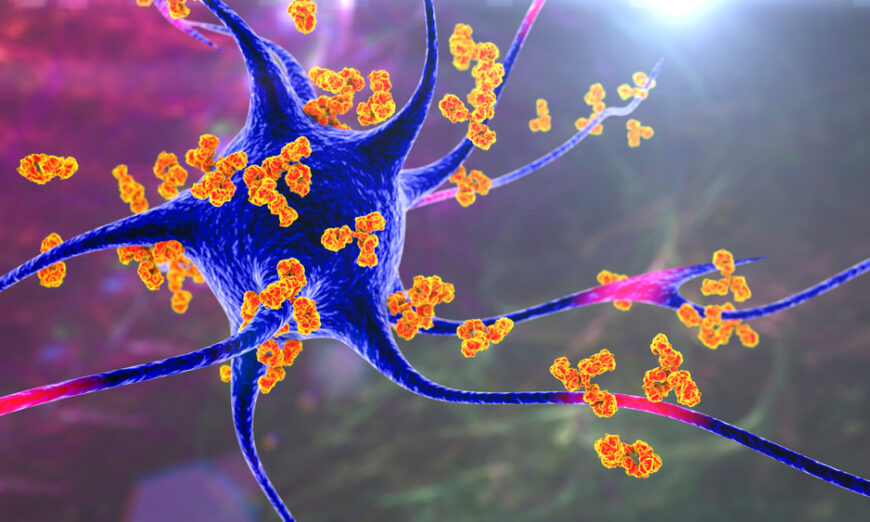
Not long ago, some Canadian scientists clearly put forward a different explanation for the cause of Alzheimer’s disease—they suggested that Alzheimer’s may be an autoimmune disease.

Alzheimer’s May Be an Autoimmune Disease

According to statistics from the World Health Organization (WHO), there are about 50 million dementia patients in the world, with 10 million new cases every year; it means that about one person is diagnosed every three seconds.

Over the years, the “amyloid hypothesis” has been widely accepted among various theories of the cause of Alzheimer’s disease, but it has also been controversial as some phenomena in patients with Alzheimer’s do not fit the hypothesis. For example, people with amyloid plaques in their brains may not have Alzheimer’s. Besides, there are still many uncertainties about the clinical benefit of drugs targeting the elimination of amyloid beta.

Recently, Canadian scientists published a post saying that the amyloid beta found in the brains of Alzheimer’s patients is actually a substance released by the body’s immune response. They further speculate that Alzheimer’s is an autoimmune disease centered on the brain.  (See link for article)

_______________

**Comment**

Lyme/MSIDS patients should already be familiar with this refrain because it’s exactly what they say causes chronic/persistent Lyme disease – that old, wonky immune system strikes again.

The problem with this is it completely bypasses the root cause that can be treated, thereby helping that wonky immune system and perhaps even preventing the wonkiness from happening. In my opinion, which has plenty of research to back it up, infections are to blame for both diseases which means all the immune modulating drugs on the planet are not going to fix it. Don’t get me wrong, immunomodulators have their place and can really help with symptoms, but again, won’t deal with the root issue: infections.

You would think researchers would learn from past mistakes, but alas, the same drivers of error (money and power) are still at play.

Rather than researching diseases for true answers to alleviate patient misery, diseases are studied as potential income earners with Big Pharma to create the next hot drug or lucrative “vaccine.”  The same tune continues to be played on the same harp.

So rather than deal with the root of these diseases (infections) in which cheap, already existing antimicrobials can be repurposed, scientists carefully craft it to “autoimmune” diseases where sexier, more expensive, new drugs can be created – of which they will patent and profit from.  Sound familiar?

While I’m glad they finally quit blaming amyloid beta as the culprit, they are still far from real answers that will help real people.

_______________

https://media.mercola.com/ImageServer/Public/2022/November/PDF/recode-protocol-pdf.pdf

Case Study Reveals How Cognitive Decline Can Be Reversed

Analysis by Dr. Joseph Mercola
Nov. 20, 2022

STORY AT-A-GLANCE

  • A case report of 100 patients diagnosed with cognitive decline using the ReCODE protocol showed both subjective and objective improvements in all participants
  • The ReCODE protocol, which involves identifying the drivers of cognitive decline (such as pathogens, toxins and metabolic changes), then targeting those in a personalized program that includes dietary and lifestyle changes, allows your brain to create and maintain synapses again, thereby treating the root of the problem
  • A hallmark of neurodegenerative diseases such as Alzheimer’s is that proteins are aggregated and are typically misfolded
  • By inducing ketosis, improving insulin sensitivity and supporting the mitochondria, you can often regain the ability to refold or proteolyze misfolded proteins
  • Electromagnetic field exposures, such as that from cellphones and Wi-Fi, may play an important role in Alzheimer’s, as it triggers high amounts of oxidative stress and damage to proteins and DNA

Alzheimer’s disease, which is the most common form of dementia, eventually leads to the inability to carry out even the most basic of bodily functions, such as swallowing or walking. It is ultimately fatal, as conventional treatment options are few and universally ineffective.

Like autism among children, Alzheimer’s among seniors has reached epidemic proportions, with no slowdown in sight. On the contrary, evidence suggests the trend is worsening. In 2022, Alzheimer’s affects more than 6 million Americans,1 and 1 in 3 seniors dies with dementia or other demention. By 2050, Alzheimer’s diagnoses are projected to reach 13.8 million.2,3

While the U.S. Centers for Disease Control and Prevention lists the disease as the seventh leading cause of death in the U.S.,4,5 statistics published in the journal Neurology in 2014 revealed Alzheimer’s is vastly underreported on death certificates. In reality, the disease likely killed 503,400 American seniors in 2010,6 making it the third leading cause of death, right behind heart disease and cancer.7

The good news is that contrary to conventional claims, there are ways to prevent and even treat this tragic disease — not by drugs, but by diet and other lifestyle changes.

Dr. Dale Bredesen, professor of molecular and medical pharmacology at the University of California, Los Angeles School of Medicine, and author of “The End of Alzheimer’s: The First Program to Prevent and Reverse Cognitive Decline,” has identified a number of molecular mechanisms at work in Alzheimer’s, and created a novel program called ReCODE to treat and reverse it.8

100-Patient Case Report Sheds Light on Treatment Options

One of Bredesen’s publications is a case report9,10 of 100 patients using the ReCODE protocol. He had previously published three case reports, each involving just 10 patients. This fourth case report contains 100 patients treated at 15 different clinics across the U.S., all of which have documented pre- and post-cognitive testing.

Not only did all show improvement in symptoms, some of them also showed improvement in their quantitative electroencephalographs (EEGs). Others who underwent magnetic resonance imaging (MRI) with volumetrics also showed objective improvement.

“By all the criteria, these people showed improvement, subjective and objective,” Bredesen says. This is no small thing, as there is no conventional treatment that can reverse Alzheimer’s. There have been many drug trials to date, but all have failed to reverse the disease. As noted by Bredesen:

“There are a couple of medications, Aricept, Namenda … but these have a very, very modest impact. The most important thing is their improvement is not sustained. They don’t change the outcome of the disease. You get a little bump in improvement, then you go right back to declining.

The most important part of the [ReCODE] protocol … is that the improvement is sustained. You’re actually going after the root cause of what is causing the cognitive decline. That’s a big difference.”

Alzheimer’s Is a Protective Response to Inflammation

If one were to summarize Bredesen’s approach in one sentence, it would be “to improve the ratio between synaptoblastic and synaptoclastic activity, which is the brain’s ability to create new synapses versus destroying them.” In other words, the treatment allows your brain to create and maintain synapses again. Bredesen explains:

“The molecular biology of this disease shows that what we call Alzheimer’s disease is actually a protective response. It’s essentially a scorched-earth retreat.

You’re pulling back and saying, ‘We’re not going to let this insult kill us, so we’re going to scorch the earth so it (whether it’s bacteria or something else) cannot take advantage … of what’s there.’ You’re literally downsizing [your synapses]. As long as those insults are going on, you will be downsized.”

Beta-amyloid is a protein that is highly correlated with Alzheimer’s. However, all attempts at removing it have failed to improve the condition. Clearly, beta-amyloid in and of itself is not the primary cause, so simply getting rid of it is not the answer.

In Bredesen’s paper, he discusses the role of beta-amyloid as an antimicrobial peptide (AMP). Importantly, AMPs are critically important for host immunity. They target organisms such as bacteria, mycobacteria, viruses, fungi and protozoa. He explains:

“Here is the trick. It turns out amyloid beta is really part of the innate immune system. Its antimicrobial effect was first discovered and published by professor Robert Moir and professor Rudy Tanzi at Harvard.

This thing actually has, again, a protective response. Not only is it an AMP, but it also binds some toxins. For example, mercury, other divalent metals like iron and things like that. [Amyloid beta] has multiple effects. It is part of your response to insult.

When you take that into account, you realize it’s fine to remove amyloid, but please don’t do it before you remove all the insults. We’ve seen numerous people now who have had the amyloid reduced and gotten worse because the ongoing insults are still there.”

In 2019, the drug company Biogen halted its Phase II clinical trial for aducanumab, a drug designed to remove beta-amyloid, and this is the typical story for these kinds of drugs. And then a major trial of yet another approach to amyloid removal, the BACE inhibitor CNP520, was halted because the drug was associated with increased cognitive decline and brain atrophy.11

The Protein Refolding Process Is Impaired in Alzheimer’s

About one-third of the proteins your body makes on any given day are misfolded. Thankfully, your body has a mechanism by which those misfolded proteins are refolded. Heat-shock proteins play a central role in this process, and if the misfolding is too severe, the heat-shock proteins help remove them altogether.

In fact, heat-shock proteins are a corollary of autophagy, the process by which your body cleans out damaged organelles. This relates to Alzheimer’s, because the refolding process is one of several factors that need to work in order for your brain to function. As noted by Bredesen:

“In all of these different neurodegenerative diseases, whether you’re talking about Alzheimer’s, Huntington’s, Lou Gehrig’s disease, Parkinson’s disease or Lewy body, they all feature proteins that are aggregated and that are typically misfolded. They are not degraded appropriately.

You lose not only the ability to fold but the ability to degrade these proteins. That is a critical piece. In fact, just recently, an article came out on a common neurodegenerative condition, newly described, which is called LATE, which is limbic-predominant, age-related TDP-43 encephalopathy.

In other words, this is a little bit like Alzheimer’s … [LATE] features TDP-43, which is a protein that is involved in numerous things, including protein folding … We lose that [protein-folding] ability as we start to downsize [synapses], as you don’t have an appropriate energy, you don’t have the appropriate trophic support.

You don’t have the appropriate hormonal and nutritional support … When we target ketosis, when we target insulin sensitivity, when we target mitochondrial support, that typically allows you to generate the appropriate ability to refold misfolded proteins …

You can induce the heat-shock response … by doing this combination of sauna and then [going] into the cold and then back to the sauna and then back to the cold …

You are recurrently activating this critical response [by doing that]. There’s no question it is going to be important, especially in ALS, but likely in all of the neurodegenerative conditions.”

The Link Between Protein Folding and Cell Death

As noted by Bredesen, there are three kinds of autophagy: macro-autophagy, micro-autophagy and chaperone-mediated autophagy. Each offers a slightly different way to repair, remove or recycle damaged organelles within the cell.

Specific proteins, for example, can be targeted for chaperone-mediated autophagy. Bredesen recounts findings of research he did to ascertain the linkage between protein folding and programmed cell death (apoptosis, where the entire cell is killed off and removed):

“If you fail to reform these [misfolded proteins], you literally activate an entire system that initially stops producing more protein. It’s basically saying, ‘We’re not keeping up with this. We’re going to shut this down.’ It attempts to refold. Then it attempts to destroy the proteins if it can’t refold them.

Then ultimately, if it cannot … keep up … it literally activates programmed cell death through specific caspases … This is something where you want to intervene upstream; understand why this is happening. And then if you’re unable to keep up with this, now, at least increase your heat-shock proteins so that you can refold. In this case, you prevent the induction of programmed cell death.”

Unfortunately, a vast majority of people do not have well-functioning autophagy, for the simple reason that they’re insulin-resistant. If you’re insulin-resistant, you cannot increase your adenosine 5′ monophosphate-activated protein kinase (AMPK) level, which prevents the inhibition of mammalian target of rapamycin (mTOR), and mTOR inhibition is one of the primary drivers of autophagy.

The Case for Cyclical Fasting

While autophagy is clearly of critical importance, you don’t want to be in continuous autophagy. You also need to cycle through the rebuilding phase. One of the ways in which you can control this is through cyclical fasting. Bredesen typically recommends an intermittent fasting approach.

“You want to use appropriate fasting and an appropriate diet to activate this autophagy,” Bredesen says. “We recommend … 12 to 14 hours [of fasting] if you are apolipoprotein E4-negative (ApoE4-negative) … If you are ApoE4-positive, you’d want to go longer — 14 to 16 hours. There’s nothing wrong with doing a longer fast …

The reason we suggest longer for the ApoE4-positives [is because] if you are ApoE4-positive, you are better at absorbing fat. It tends to take longer to enter autophagy …

Typically, we recommend it about once a week. But again, a longer fast once a month is a good idea. It depends a lot on your body mass index (BMI). What we found is people who have higher BMIs respond better to this fasting early on. They’re able to generate the ketones.

If you lose both the carbohydrates and the ketones, you end up [feeling] completely out of energy … We are very careful when people are down below 20 on their BMI, especially the ones 18 or below. We want to be very careful to make sure to cycle them [in and out of ketosis] once or twice a week …

These are the ones where, often, exogenous ketones can be very helpful early on … Measure your ketones. It’s simple to do. We want to get you into, ultimately, the 1.5 to 4.0 millimolar [range for] betahydroxybutyrate. That is the goal.”

Test Your Ketones

So, to recap, while dementia patients with excess weight tend to respond favorably to cyclical fasting, at least initially, underweight patients may experience cognitive decline, as they’re simply too underweight to produce ketones in response to the fasting. For those who are underweight, Bredesen recommends using a ketone supplement such as medium-chain triglycerides (MCT) oil.

If that doesn’t bring you into the desired ketone level (1.5 to 4.0 mmol), or if it’s adversely affecting your low-density lipoprotein (LDL) particle number, he might recommend exogenous ketones — either ketone esters or salts. “We’d like to look at your LDL particle number and use that to titrate, to make sure that your LDL particle number is not too high,” he says.

To test your ketones, I recommend KetoCoachX.12 It’s one of the least expensive testing devices on the market right now. Another good one is KetoMojo. KetoCoach, however, is less expensive, the strips are individually packed and the device is about half as thick as KetoMojo’s, making it easier to travel with.

Energy Demands Are Not Met in Neurodegenerative Diseases

Nutritional ketosis, in which your body produces endogenous ketones (water-soluble fats), is important for all neurodegenerative diseases, but it’s not a complete cure-all. Bredesen explains:

“What we’ve come to realize from the research over the years is that neurodegenerative diseases, whether Alzheimer’s … macular degeneration … Lewy body, Parkinson’s or ALS, they all have one thing in common. They are related to specific subdomains of the nervous system.

Each of these has a unique requirement for nutrients, hormones, trophic factors, et cetera … In each case, there is a mismatch between the supply and the demand. For most of your life, you’re keeping up with that demand. With all of these diseases, you have a repeated or a chronic mismatch between the support and the requirement.

In Parkinson’s disease, it’s quite clear. You can create Parkinson’s disease simply by inhibiting mitochondrial Complex I. That specific subdomain of motor modulation, which is what Parkinson’s is all about, is the thing that is the most sensitive to reductions in mitochondrial Complex I support.

Therefore, when people have this, you need to bring the supply back in line with the demand. A critical way to do that is to supply the appropriate ketosis — the appropriate energy.

Now, if the person is continuing to be exposed to whatever chemicals are inhibiting Complex I — and it’s typically … mold-related biotoxins or organic toxins such as paraquat or glyphosate — as long as these are ongoing, you’re going to get very temporary relief.

The goal here is both to get rid of what is inhibiting Complex I and to flood the system, to help the system by giving appropriate support for the energetics … With Alzheimer’s, we’re really talking about a mismatch in trophic support. You’ve got this ongoing need as you’re making neuroplasticity.”

Why Late-Night Eating Is Ill Advised

Although I am not ApoE4-positive, I prefer fasting for 16 hours a day, essentially narrowing my eating window to just four to six hours. I also make sure to eat my last meal three to six hours before bedtime. One of the reasons for this advice is because avoiding late-night eating will increase your nicotinamide adenine dinucleotide (NAD+) levels, which are important for a variety of bodily functions.

Importantly, it will also reduce nicotinamide adenine dinucleotide phosphate (NADPH), which is essentially the true cellular battery of your cell and has the reductive potential to recharge your antioxidants. The largest consumer of NADPH is the creation of fatty acids.

If you’re eating close to bedtime, then you’re not going to be able to use the NADPH to burn those calories as energy. Instead, they must be stored some way. To store them, you have to create fat, so you’re basically radically lowering your NADPH levels when you eat late at night because they are being consumed to store your extra calories by creating fat.

Bredesen’s protocol includes this strategy as well. He calls his approach “KetoFlex 12/3,” because it generates mild ketosis and is flexible diet-wise. It can be done whether you’re a vegetarian or not. The 12/3 stands for a 12-hour minimum fast each day, and eating the last meal three hours before bedtime.

Certain supplements, including berberine, resveratrol, curcumin, quercetin and fisetin also boost autophagy, and can be used in addition to the nutritional timing. Bredesen explains:

“Sirtuin-1 (SIRT1) was identified as a critical molecule, both for longevity and has been studied extensively for its effects on longevity, but also for its effects on Alzheimer’s disease …

ApoE4 actually enters the nucleus and downregulates the production of this critical molecule, so you can see one of its many effects on Alzheimer’s disease. Well, when SIRT1 is made, it is actually made in an autoinhibitory fashion. It’s just like having a gun in a holster. It’s not active … NAD activates the SIRT1.

So does resveratrol. This is why people take resveratrol [or] nicotinamide riboside. These are both activating this program, which is moving you from … more of a pro-inflammatory approach to a longevity approach — a change in your metabolic pattern. That includes activating things like autophagy and also having an anti-Alzheimer’s and a pro-longevity effect …

[Q]uercetin also has an interesting impact on senescent cells … I think that that’s going to turn out to be an important way to impact a number of age-related conditions, including neurodegeneration.”

The drawback, and the reason you cannot rely on supplements alone, is that the bioabsorption of these polyphenols, like quercetin for example, is quite low. Oftentimes, you cannot absorb enough to get the full benefits.

Limit Electromagnetic Field Exposures

There’s also convincing evidence showing electromagnetic field exposures (EMFs) such as that from cellphones and Wi-Fi play an important role. Bredesen agrees, and recommends his patients limit such exposures. In summary, EMFs activate your voltage-gated calcium channels, allowing the release of excess nitric oxide and superoxide in the cell, resulting in the creation of peroxynitrite.

Peroxynitrite causes similar damage to your DNA as ionizing radiation. It also damages your stem cells, mitochondria, proteins and cell membranes. Poly-ADP ribose polymerase helps repair DNA damage by extracting an adenosine diphosphate (ADP) molecule from NAD. Approximately 100 to 150 NAD are required to repair a single DNA break.

While this process works quite well, problems arise when continuous DNA damage requiring continuous PARP activation occurs, as this ends up decimating your NAD+ level. Bredesen adds:

“This is a critical area. The big problem we’ve had with this so far is that we can measure your NF-κB activation; we can measure your status of hormones, nutrients, magnesium, on and on and on. Typically, with our approach, we measure 150 different variables.

There is no simple way to measure the effect of EMF on a given person’s nervous system. I look forward to the day when we can do a test and say, ‘Aha. This person has 27.2 on their effects on their voltage-gated calcium channels because of EMFs.’ Because then we’ll really be able to alter that.

For now, the best we can say is — just as we go after biotoxins and chemotoxins — [EMF] is a physical toxin. The best we can say is, ‘Minimize that to the extent you can.’ You can certainly measure the exposure. We just don’t have a good way yet to measure its effect on your brain.”

More Information

There’s no decline in sight for Alzheimer’s, at least in the foreseeable future, so it would behoove most people to just assume you’re headed for it and take action now, regardless of your age, to prevent it. When it comes to Alzheimer’s, prevention is surely far easier than trying to treat it once it has set in. As noted by Bredesen:

“This is all about prevention and early reversal. Those are the people where we see virtually 100% response. This is why I think there needs to be a global effort to decrease the burden of dementia. We’re just now starting a clinical trial. We’ve been trying to get institutional review board (IRB) approval for years …

It has finally been approved, so we’re starting a trial with Dr. Ann Hathaway, Dr. Deborah Gordon and Dr. Kat Toups, who are all seeing patients. We’re very excited to see what the trial will show with this approach. Because certainly, anecdotally, we’re hearing it all the time.

As you mentioned, we just published a paper a few months ago on 100 patients who showed documented improvement … I’m convinced we could, today, if everyone got an appropriate prevention, make this a very rare disease.”

Bredesen’s case report13 is open access, so you can download and read the full study. His book, “The End of Alzheimer’s: The First Program to Prevent and Reverse Cognitive Decline,” also provides the details, and would be a valuable reference in anyone’s health library.

You can also learn more about Bredesen and his work by following him on Facebook, Twitter or visit his website, drbredesen.com. Last but not least, read his book, “The First Survivors of Alzheimer’s: How Patients Recovered Life and Hope in Their Own Words,” which features first-person accounts from patients diagnosed with Alzheimer’s who beat the odds and improved.

– Sources and References

NSAIDs: Unsafe for Chronic Pain

https://www.paintreatmentdirectory.com/posts/nsaids-unsafe-for-chronic-pain

NSAIDs: Unsafe for Chronic Pain

NSAIDs: Unsafe for Chronic Pain

The Problem

If you take any of the following nonsteroidal anti-inflammatory drugs (NSAIDs) for pain relief you are putting your life at risk: aspirin, celecoxib (Celebrex), diclofenac (Cambia, Cataflam, Voltaren-XR, Zipsor, Zorvolex), ibuprofen (Motrin, Advil), indomethacin (Indocin), naproxen (Aleve, Anaprox, Naprelan, Naprosyn), oxaprozin (Daypro), piroxicam (Feldene). This may come as a shock to you. After all, these drugs have been around for decades and many are available over the counter.

It has long been known that NSAIDs increase the risk of potentially fatal stomach and intestinal adverse reactions including bleeding, ulcers, and perforation of the stomach or intestines. These events can occur at any time during treatment and without warning symptoms. Elderly patients are at greater risk for these adverse events. Aspirin alone causes over 3000 deaths annually in the United States.

NSAIDs, except for aspirin, increase the risk of a potentially fatal heart attack or stroke, according to an FDA advisory issued in July, 2015. The FDA warned that “those serious side effects can occur as early as the first few weeks of using an NSAID, and the risk might rise the longer people take NSAIDs”. “There is no period of use shown to be without risk,” says Judy Racoosin, M.D., M.P.H., deputy director of FDA’s Division of Anesthesia, Analgesia, and Addiction Products. People who already have cardiovascular disease, particularly those who recently had a heart attack or cardiac bypass surgery, are at greatest risk. However, “Everyone may be at risk – even people without an underlying risk for cardiovascular disease,” says Racoosin.

Heavy or long term use of NSAIDs can also cause kidney damage.

Unfortunately, another widely available over the counter pain reliever, acetaminophen (brand name Tylenol) also carries significant risks. If used long term at higher than recommended doses or in individuals whose liver function is compromised, acetaminophen can cause liver failure. Liver failure is fatal without a liver transplant. Acetaminophen is the most frequent cause of liver failure in the United States today.

The Solution

With prescription opioids becoming increasingly restricted due to concerns about addiction, as well as growing evidence that they may cause more pain over the long term, what can a chronic pain patient do?

Fortunately, there are many safe and effective natural treatments for chronic pain. Here are some things you can take for pain relief: medical marijuana, CBD oil, kratom (a Southeast Asian herb that the FDA and DEA are currently trying to ban based on false allegations that it is unsafe), wild lettuce, turmeric, omega 3 fatty acids, homeopathic remedies such as arnica, ruta or hypericum, magnesium, vitamin D3 and many other herbs and nutrients. Here are some things that you can do: acupuncture, biofeedback, chiropractic, EMF treatment, exercise, hypnotherapy, low level laser therapy, massage, nutritional therapy, physical therapy, psychotherapy and much more. Some combination of these treatments can not only reduce your pain, they just might heal the underlying problem and eliminate your pain for good. 

To find out more about safe alternatives for pain relief, visit the online Alternative Pain Treatment Directory

Check out our recommended pain relief products HERE

Check out our alternative pain treatment providers HERE

To continue receiving important information about pain treatment, sign up for our free e-newsletter HERE

___________________

**Comment**

Lyme/MSIDS patients often cope with intractable, grueling pain.  The stuff that stops you in your tracks & brings life to a grinding halt leaving you a shell of your former self.

I have found the following to be of great help:

For more: 

Why Chronic Lyme Treatment Fails – A Review With Strategies

https://www.treatlyme.net/guide/why-chronic-lyme-treatment-fails

Why Chronic Lyme Treatment Fails – A Review with Strategies

By Dr. Marty Ross

Why Lyme Disease Treatment Fails Image

About Fifteen Percent of People with Chronic Lyme

This article is about the reasons people remain ill with chronic Lyme disease even after taking one to two or even more years of herbal or prescription antibiotics. In my experience, this seems to be about 15 percent of people with chronic Lyme disease. The other 85 percent of people do have various degrees of recovery – most getting very well.

Lyme literate medical doctors (LLMDs) have very limited science to guide us about why treatment works or fails – and what the best treatment options are. The last United States National Institutes of Health funded human trials looking at treating Lyme were nearly 20 years ago. We do know from a study conducted by the MyLymeData project of LymeDisease.org that the best chance of recovery is provided by a year or more of antibiotics and working with an LLMD. You can read more about the MyLymeData studies, including those on alternative medicine outcomes versus antibiotic outcomes in What Works? Navigating Prescription & Alternative Medicine Lyme Treatments.

With the lack of human studies, most of the science I use to guide my treatment decisions comes from laboratory, non-human experiments. Fortunately, these experiments provide insights about herbal and prescription treatment options that can work in many. These experiments also provide a number of theories about what can work for treatment and why people do not recover even with long-term antibiotics.

How to Avoid Chronic Lyme Treatment Failure

Before I review the treatment failure theories, let’s discuss what steps you should take to have a successful Lyme recovery.

Kill Germs AND Correct All Body Wide Imbalances

Treating Lyme is complicated. The infection triggers an immune system cytokine reaction that affects most organs and systems of the body. In my experience, the great majority of people can recover if they address each of the steps in The Ross Lyme Support Protocol. This protocol is designed to kill Lyme and coinfection germs and to correct all of the sleep, immune system, detoxification, inflammation and hormonal imbalances created by Lyme. If your treatment did not work, but you only took herbal or prescription antibiotics alone, look at The Ross Lyme Support Protocol to see all of the areas you should have addressed that provide the best chance of recovery.

Find and Treat Mold Toxicity

Chronic mold toxicity looks just like chronic Lyme disease. Make sure you do not have this problem. And if you do – correct it. See Mold and Lyme Toxin Illness for more information.

Theories & Strategies About Lyme Treatment Failure

There are a number of theories why people remain ill even after getting rid of mold toxins and treating with a comprehensive regimen that kills germs and addresses all imbalances identified in The Ross Lyme Support Protocol. The reasons include:

  • Borrelia (Lyme) persisters
  • autoimmune disease triggered by the Lyme infection
  • disruption of a healthy gut microbiome
  • germ debris
  • limbic system brain holding of the illness
  • tissue damage from the infection
  • chronic inflammation and immune dysfunction
  • learned illness behavior and/or somatic disorder
Persisters

The Borrelia persisters theory is an in-vogue and relatively new idea about why treatments do not work. The idea is: under assault from antibiotics (RX or herbal) some of the Lyme germs go into a persister hibernation state. These persisters do not respond to regular antibiotics. We will have to see in time if addressing persisters does help to prevent or correct treatment failures. In my practice, all of my current treatments include antimicrobial approaches to address persisters.

For more information about persisters and how to address them see How to Treat Persister Lyme & Bartonella.

Autoimmune Disease

Through a process known as molecular mimicry, the immune system may attack tissues with protein and molecular parts that look just like parts of Lyme. At this time there is not a Lyme specific way to address this. But for some – using Low Dose Naltrexone (LDN) can regulate or reverse the autoimmune attack.

For more information about LDN see Low Dose Naltrexone (LDN) & Lyme.

Disruption of Healthy Gut Microbiome

Treating Lyme with herbal or prescription antibiotics disturbs the healthy balance of good germs and microbes in the gut. The germs that live in the intestines are called the gut microbiome. These include healthy bacteria, viruses, parasites, yeasts and fungae. To put the amount of microbes in perspective, over 90 percent of the genetic material in human bodies come from the microbes in the gut!

We allow these germs to live in us because they serve a purpose. Studies show these microbes regulate the immune system, signal healthy brain function, digest food, remove toxins and things we are allergic to and provide many other healthy body regulating functions.

The theory is antibiotics disturb the healthy gut microbiome leading to ongoing body-wide illness. It is not clear yet how best to address this issue or if the gut disruption really does cause ongoing illness.

One treatment option is to create a healthy gut microbiome using probiotics. Another one is to replace the dysfunctional microbiome through a stool transplant – also called fecal microbiota transplant (FMT). However, FMT is regulated by the US Food and Drug Administration (FDA). At present it is only allowed for treatment of C. difficile bacteria overgrowth in the intestines. And there has not been any research done about whether it could change the outcome of those with chronic Lyme disease.

Treating Lyme is about balancing risks and benefits. The benefit of using herbal and prescription antibiotics is decreasing or eliminating the Lyme or coinfection (like Bartonella or Babesia) germs leading to improved health. But the risk of doing so is disturbing the gut microbiome.

See Probiotic Strategies in Lyme Disease Treatment for information about probiotics and C. Difficile Diarrhea: Prevention & Treatment for more information about FMT.

Germ Debris

The immune system is supposed to break down and get rid of dead germs and their parts including DNA, RNA, proteins and fats. One theory why people remain ill is that the immune system does not get rid of all the borrelia germ debris. The debris triggers an ongoing immune inflammatory response. At this time there is not a treatment I am aware of for this possible problem.

Limbic System Brain Holding of The Illness

The limbic system is a part of the brain that regulates our emotional responses and behaviors. This includes fight-or-flight responses, fear, and survival behaviors like feeding the young and reproduction.

For some in Lyme the limbic system becomes overly reactive leading to a brain holding of illness. This causes some of the ongoing symptoms like pain or even fatigue. Much of this is unconscious.

There are a number of programs that can help reprogram the limbic system brain holding of the illness. Two of the more popular programs are the Gupta Program and Annie Hopper Dynamic Neural Retraining System. Many of my patients have found benefit from these practices. Short of doing these programs, developing a meditative mindfulness practice can help too. Counseling may also help to decrease emotional reactivity.

Tissue Damage

Another theory is Lyme and the immune reaction to it lead to ongoing tissue damage and injury even when the infection is gone or under control. This leads to pain, neurologic and brain dysfunction, mitochondria cell energy factory dysfunction and even immune dysfunction.

My current approach to repairing muskuloskeletal tissue injury and peripheral nerve injury is to use the peptide BPC-157. For brain injury I also add the peptide Cerebrolysin. See Repair & Restore with Peptides in Lyme Disease or Mold Toxin Illness for more information about peptides and BPC-157. For people with low energy I work to repair the mitochondria. See How to Fix Mitochondria & Get Energy in Lyme Disease.

Chronic Inflammation and Immune Dysfunction

Under this theory, Lyme infection sets off an ongoing immune inflammation reaction that takes on a life of its own – causing more inflammation and immune dysfunction. One reason this could happen is due to an imbalance between what is known as Th1 and Th2/Th17 parts of the immune system. Th1 is made up of immune cells that attack germs like T white blood cells and macrophages. Th1 is the immune system offense squad. Th2/Th17 is made up of B white blood cells that make antibodies, mast cells involved in allergies and histamine production, and immune barrier cells that line the mucous and skin membranes designed to keep germs out. Think of Th2/Th17 as the immune system defensive squad. If Th2 and Th17 get too active they release inflammatory cytokines that lead to many ongoing Lyme type symptoms and they can suppress Th1 and its germ fighting abilities.

In my practice I work with LDN I mentioned above to increase TReg cells that create balance between Th1 and Th2/Th17. Another option is to use the peptide TB4 Frag. For more information about these treatment options see Repair & Restore with Peptides in Lyme Disease or Mold Toxin Illness and Low Dose Naltrexone (LDN) & Lyme.

Learned Illness Behavior and/or Somatic Illness

These are two psychological conditions. I list them here to be thorough, but I am concerned that many non-LLMDs use these diagnoses to say Lyme disease is in a person’s head instead of acknowledging and treating them for a physical illness. In my experience, it is a rare person with chronic Lyme that has one of these conditions contributing to their illness. Counseling is helpful if one of these occurs.

Disclaimer

The ideas and recommendations on this website and in this article are for informational purposes only. For more information about this, review the sitewide Terms & Conditions.

References

  1. Bobe JR, Jutras BL, Horn EJ, et al. Recent Progress in Lyme Disease and Remaining Challenges. Front Med (Lausanne). 2021;8:666554. Published 2021 Aug 18. doi:10.3389/fmed.2021.666554 (View)
  2. Cabello FC, Embers ME, Newman SA, Godfrey HP. Borreliella burgdorferi Antimicrobial-Tolerant Persistence in Lyme Disease and Posttreatment Lyme Disease Syndromes. mBio. 2022;13(3):e0344021. doi:10.1128/mbio.03440-21 (View)
  3. Fallon BA, Sotsky J. Conquering Lyme Disease: Science Bridges the Great Divide. New York: Columbia University Press; 2018.
  4. Sanabria-Mazo JP, Montero-Marin J, Feliu-Soler A, et al. Mindfulness-Based Program Plus Amygdala and Insula Retraining (MAIR) for the Treatment of Women with Fibromyalgia: A Pilot Randomized Controlled Trial. J Clin Med. 2020;9(10):3246. Published 2020 Oct 11. doi:10.3390/jcm9103246 (View)

About the Author

Marty Ross, MD is a passionate Lyme disease educator and clinical expert. He helps Lyme sufferers and their physicians see what really works based on his review of the science and extensive real-world experience. Dr. Ross is licensed to practice medicine in Washington State (License: MD00033296) where he has treated thousands of Lyme disease patients in his Seattle practice. 

Marty Ross, MD is a graduate of Indiana University School of Medicine and Georgetown University Family Medicine Residency. He is a member of the International Lyme and Associated Disease Society (ILADS) and The Institute for Functional Medicine.

For more:

Seeking to Unlock the Mysteries of Lyme Arthritis

https://www.lymedisease.org/unlock-mysteries-lyme-athritis/

Seeking to unlock the mysteries of Lyme arthritis

By Richard Harth
Biodesign Institute at Arizona State University

A nature lover from early childhood, Karie Behm found peace and renewal through hiking and cross-country running. She spent much of her time exploring the forested terrain of her native Kansas, as well as Minnesota and Colorado, during family vacations.

She did not suspect that on one unremarkable day, microscopic, corkscrew-like pathogens known as spirochetes would stealthily invade her body, causing a succession of painful, debilitating and perplexing disease symptoms. It would take physicians over six years to untangle the mystery.

Behm had contracted Lyme disease, following a tick bite.

A recent doctoral graduate from the School of Molecular Sciences and the Biodesign Institute at Arizona State University, Behm has devoted her energies to unlocking some of the secrets of Lyme disease, a tenacious ailment affecting some 500,000 Americans every year.

“People have finally come to the realization that Lyme disease has been around a long time and has been affecting a lot of people who have been chronically ill and couldn’t get help,” Behm says. “Patient advocacy groups have been working tirelessly for the last 20 years to try to bring attention to this problem. It’s not a little thing and it’s not a joke. It can affect you your entire life.”

Studying the disease that debilitated her

Behm came to ASU in 2016, with a personal goal in mind — to study the disease causing her often incapacitating symptoms. A highly motivated scholar and researcher, she managed to convince her advisor, Debra Hansen, of the importance of studying this underreported and misunderstood ailment.

Behm and Hansen, both researchers with the Biodesign Center for Applied Structural Discovery (CASD), then consulted Petra Fromme, director of the center and an authority on the structural characterization of proteins, including those associated with infectious disease.

The team hatched a plan to study Lyme arthritis, a pervasive symptom found in many Lyme disease cases. “Petra loves students who share her passion,” Behm says.

“During my first interview with her, she got really excited about how the lab’s structural techniques could be applied to Lyme disease.” Prior to her arrival at the lab, Behm, working independently, had already completed an NSF proposal to study Lyme disease.

The project gathered momentum when Behm conducted a literature search, identifying a suite of proteins believed to decorate the surface of Borrelia burgdorferi, the bacterial parasite transmitted by a tick bite that causes Lyme disease.

Drawing on a recent award from ASU Women and Philanthropy, the team is advancing its efforts by using a powerful method known as cryo-EM to observe membrane proteins found on the surface of the Borrelia parasite in stunning detail.

A remarkable discovery

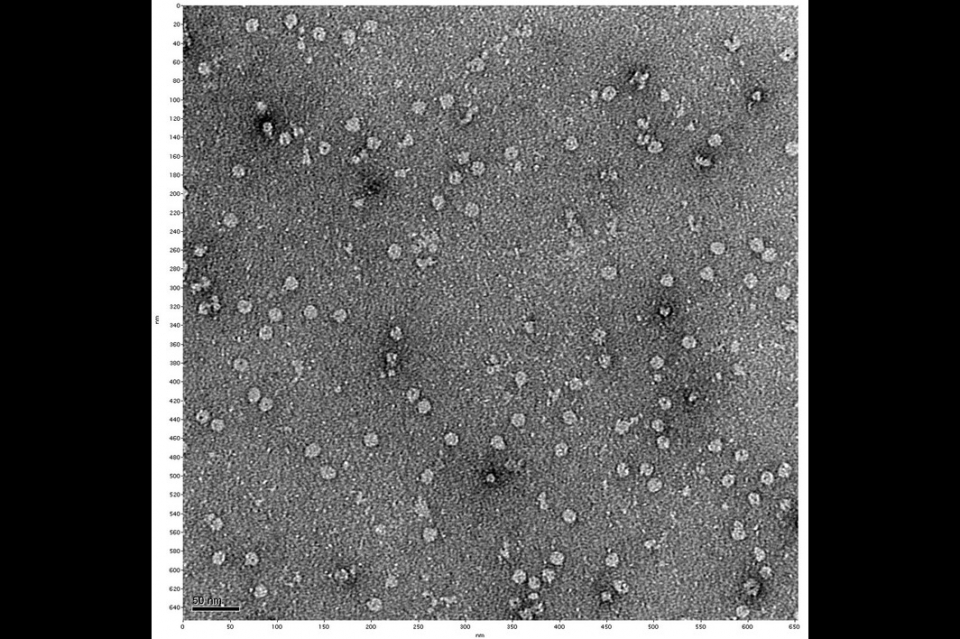
Eureka moment: Behm’s negative stain electron microscopy image, offering the first visual evidence of a membrane pore identified by the researchers. This pore may provide an attractive therapeutic target for future drug design against Lyme arthritis. Photo courtesy Biodesign Institute.

The research has already led to a remarkable discovery. One such membrane protein, known as BBA57, binds to copies of itself to form a complex at the membrane surface. The result appears to be a portal to and from the cell’s interior — a pore.

The discovery arrived late one night in the lab, in the form of fresh electron microscope images. It was the culmination of years of dogged research and opens the door to effective therapies against Lyme disease, and potentially other serious afflictions as well.

Of the 100 or so membrane proteins recognized in B. burgdorferi, BBA57 is special. Its presence is linked to Lyme arthritis, a painful, untreatable and often lifelong affliction occurring in 20% of Lyme disease patients.

The discovery of the membrane hole may be a turning point, as it provides an ideal site to attack Lyme arthritis by designing a drug that can plug up the pore.

“This project aims to discover the first structure of the major protein responsible for Lyme arthritis, BB57, which forms a pore-like structure in the membrane,” Fromme says. “When we unravel the structural basis for Lyme arthritis, new drugs can be developed to fight the condition and prevent the lifelong suffering of hundreds of thousands of patients.”

Climate change and Lyme disease

The bacteria responsible for Lyme disease are carried in the saliva of several tick varieties. In the Northeast and upper Midwestern U.S., the disease is transmitted by the blacklegged tick (Ixodes scapularis), and by the western blacklegged tick (Ixodes pacificus) along the Pacific Coast.

Lyme-carrying ticks operate by stealth. They are not able to fly or jump, instead finding their targets through a process known as questing. Resting atop grasses or shrubs, the ticks hold fast to leaves or grass using their lower legs. The upper pair of legs is kept outstretched, awaiting an unsuspecting passerby. When a suitable host brushes past the place where the tick lies in wait, it quickly climbs onto the host and locates a place to bite and feed on blood.

Ticks may attach themselves to any part of the human body but are often found in well-concealed regions, including the groin area, armpits and scalp. Once a tick has attached and begun feeding, it usually takes 36–48 hours for the Lyme bacteria to be transmitted.

While Borrelia bacteria can cause severe illness in their human hosts, in a diabolical twist, they may improve the tick’s fitness by modifying its central nervous system, extending the length of time the tick spends questing and making it more resistant to extremes of temperature and dryness. To make matters worse, many Lyme disease patients become co-infected with other pathogenic microbes lurking in ticks.

Another area of concern is the fact that reported cases of the disease have roughly doubled since 1991. This is likely due to a combination of factors, including more awareness of the disease and better diagnostic approaches. But there is also mounting evidence that the geographic range over which Lyme-carrying ticks wander may be expanding due to climate change.

Disease of a thousand faces

Many factors may affect the timing and nature of symptoms of Lyme disease, which typically begin three to 30 days following infection. Such symptoms may include fever, chills, headache, fatigue, muscle and joint aches, and swollen lymph nodes, with or without an accompanying rash.

One reason Lyme disease is so vexing to properly diagnose is that it can manifest in many ways in different patients. While 70% of Lyme cases develop the signature circular rash according to reporting, even this figure remains a topic of fierce controversy, and the CDC believes there may be a significant overreporting of rashes. This is because without the rash, Lyme cases are less likely to be diagnosed and treated in a timely manner by physicians.

Should the telltale rash known as erythema migrans occur, it will appear at the site of the tick bite, expanding gradually over several days. The rash may feel warm to the touch but is usually not painful or itchy. The rash sometimes clears as it enlarges, producing a characteristic bullseye appearance, but can assume different shapes, if it is present at all.

An array of further symptoms can develop days or months after infection, including facial palsy; neck stiffness; severe headache; intermittent pain in tendons, muscles, joints and bones; heart palpitations or an irregular heartbeat (known as Lyme carditis); nerve pain and inflammation of the brain and spinal cord; episodes of dizziness; and shortness of breath.

Behm recalls the perplexing constellation of symptoms at the start of her illness: “As a younger teenager, I had random medical issues that came up that just didn’t seem to make sense,” she says.

“There were visits to a lot of medical facilities. They knew something was wrong but couldn’t figure out what it was. I got passed around to specialists until I was officially diagnosed my senior year of high school.”

Lyme arthritis can cause severe pain and permanent joint damage

Approximately one in four Lyme disease patients may develop Lyme arthritis, involving chronic joint pain and swelling, particularly the knees and other large joints. The disorder occurs when the Lyme disease bacteria migrate to joint tissues, causing inflammation.

If left untreated, Lyme arthritis causes permanent damage to joints. While knees are the most commonly affected area, other large joints may be involved, including the shoulder, ankle, elbow, jaw, wrist or hip.

Following diagnosis, Lyme disease is treated with a course of antibiotics, which can work to eliminate the spirochete bacteria and gradually relieve symptoms. Yet, there is an important caveat: time is of the essence.

“The existing treatments generally don’t work if you’ve been infected more than two to six months prior,” Hansen says.

By this time, “the bacteria have disseminated in your body, and go into a persistent, antibiotic-resistant form. So if you’re diagnosed six years later, like Karie, and you’re treated for the disease, that treatment probably doesn’t work because the bacteria are resistant,” she says.

The result can be a collection of symptoms referred to [by some] as Post-Treatment Lyme Disease Syndrome. The causes are varied and remain poorly understood. It may be that the bacterium has changed form and sequestered itself in ways that evade detection. In other cases, autoimmune responses may be involved. To date, no treatment exists for these common complications.

Roughly 70,000 people in the U.S. each year experience lifelong, untreatable Lyme disease. Among these are some 42,000 who develop Lyme arthritis. Currently, physicians have had little to offer such patients, but that may be about to change.

Protein components of Lyme unmasked

Using electron microscopy, Behm, Hansen and Fromme were able to zero in on a protein that had been identified in previous research as an essential element in the process leading to Lyme arthritis. This work had been carried out by Dr. Uptal Pal, a Lyme disease authority from the University of Maryland, who is now collaborating with the ASU group.

The Lyme disease protein complex at the membrane surface of B. burgdorferi is comparatively large, tricky to crystallize and not easily amenable to X-ray crystallography, the conventional gold standard for protein structural analysis. Instead, a relatively new and powerful method known as cryo-EM, ideal for large proteins, was used.

Cryo-EM, a groundbreaking method for investigating 3D protein shapes, has racked up a long list of impressive achievements since 2017, when its discoverers were awarded the Nobel Prize in Chemistry. Nevertheless, the new study marks the first time it has been applied to the study of Lyme disease.

The technique involves flash-freezing solutions of proteins or other biomolecules in vitreous ice, then bombarding them with electrons to produce images of individual molecules suitable for electron microscopy. The images are used to reconstruct the 3D structure of the molecule, an essential step in understanding how proteins work, how their dysfunction (or use by pathogens) can trigger disease and how drugs may be custom engineered to target them.

Molecular mugshot spurs eureka moment

Peering at the specimens through electron eyes, the researchers began to produce a molecular portrait of the suspect believed to be responsible for Lyme arthritis, through the acquisition of thousands of cryo-EM snapshots.

Research by Pal had already shown that strains of Borrelia engineered to lack BBA57 did not produce Lyme arthritis, though the reasons for this remained obscure. It was only through the work of Behm and her team that a plausible mechanism gradually came into focus.

In addition to complex sample preparation, thousands of images had to be carefully assembled. Often, it seemed the researchers were feeling their way through the dark. But late one evening in the lab, a new set of negative stain electron microscopy images were developed, and the results were riveting. At long last, the team had pictures with just enough resolution to make out what unmistakably appeared as a small hole in the membrane, composed of protein subunits.

It was the break they had been waiting for, after three years of work.

The team had theorized that perhaps Borrelia causes Lyme arthritis by transporting some disease factor from within the cell, out into the extracellular environment. And here, before their eyes, was the transport tunnel likely used as a passageway from inside the cell to outside, into the host’s bloodstream.

“Debbie, Petra and I were all there, having a late-night meeting when we saw the images. And everyone shouted, ‘Yay!’” Behm recalls.

The elusive pores they had long suspected had materialized with unmistakable clarity.

The race for a cure

The most gratifying news for the group was not simply that their hard work was rewarded with an important insight into the structure of BBA57, but that the finding suggests a promising approach for preventing Lyme arthritis.

The basic idea is simple: Design a drug that plugs up the hole on the Borrelia membrane surface. But to accomplish this, the protein structure of BBA57 will require much more refinement.

The team has calculated that the images of a million pores will be needed to visualize the protein with sufficient resolution to permit drug design. The researchers are using the new award from ASU Woman and Philanthropy to achieve this feat, collecting the mass of images that will permit structural determination down to the locations of atoms.

Achieving atomic resolution will allow the researchers to see where each of the roughly 800,000 atoms making up each pore-forming molecule are situated.

“We’ll know the position of each of those atoms, and that kind of intimate detail is enough to be able to computationally look for drug binders, with existing drug libraries,” Hansen says.

Teaming up with Pal, the researchers are pursuing long-term funding through a $3 million grant proposal to NIH, due to begin as early as 2023. The funding will be contingent on the early results the group is producing now, so the pace of study is hectic.

Once the final structural determination of a given protein has been made, drug companies can take the 3D data and use high-performance computers to begin designing drugs to act on it.

The long and winding road ahead

BBA57 is just one protein active in Lyme disease. Many others exist, and once they have been characterized, may also be targeted by smart drugs. The possibility of preventing Lyme disease altogether may be on the horizon, and the general approach pursued by Behm and her colleagues may be applicable to other tick-borne diseases or, possibly, other spirochete afflictions, such as syphilis, yaws and relapsing fever.

Having suffered through the ups and downs of this enigmatic illness, Behm is doubly committed to finding answers. She describes the early days of her pitched battle with the disease as a mixture of fear and determination.

Behm continues her explorations of Lyme disease at her new position as ORISE Fellow at the CDC in Atlanta.

__________________

**Comment**

I have numerous issues with this article:

  1. Lyme arthritis IS treatable.  Please see the comment section after the article:  https://madisonarealymesupportgroup.com/2022/05/04/why-do-some-people-develop-severe-lyme-arthritis-others-dont/  I must also add that chelation (pulling heavy metals out of the body) is another strategy I am currently using. I have also found the following form of curcumin completely eradicated my pain. Dealing with inflammation is a must.
  2. Minimum transmission times have never been studied and to continue to regurgitate the mantra that it “usually takes 36-48” hours for it to happen is causing untold suffering.
  3. There is often more than Lyme at play and transmission time can be within minutes.
  4. “Climate change” has NOTHING to do with tick and disease proliferation but continues to be chanted like a mantra from research institutions who depend upon government grants.  It is part of a much larger scheme for power and money.
  5. Pigeon-holing symptoms happening three-30 days after infection is mythology also dooming thousands.  Nothing is said about psychological issues often experienced.
  6. It is a complete LIE that 70% develop the EM rash. It is highly variable & often not there.
  7. We need to drop the PTLDS label like a bad habit.  It does not explain a huge subset of patients but is still being used to put patients into a four-cornered box.
  8. To throw out that 70,000 in the US experience untreatable Lyme is complete guesswork.  According to this, the actual number is much, much higher.  No research is done on this group.  They simply don’t exist because mainstream medicine/research, led by the nose by the CDC/NIH/IDSA, don’t believe chronic/persistent Lyme exists.  Nobody even talks about the coinfections and the ramifications of having both.
  9. While researchers are riveted on finding/creating an expensive pharmaceutical “smart” drug (with patents to go all around making everyone wealthy) to plug up the elusive “pore” or conduit through which supposedly arthritis is created from, they ignore cheaper, safer, options such as nutraceuticals which desperate Lyme patients have had to discover, often on their own, to be effective.  Unfortunately, this myopic patent-oriented thinking is the “new norm” in research – even led by a patient who should know better due to the prolific and blatant corruption in all things in Lymeland.