Archive for the ‘Babesia’ Category

Artesunate on Short Term Memory in Lyme Borreliosis

http://www.medical-hypotheses.com/article/S0306-9877(17)30288-8/fulltext

Lyme borreliosis is associated with memory deficits. While this may be related to cerebral infection by Borrelia bacteria, it may also be caused by concomitant co-infection by Babesia protozoa. The anti-malarial artemisinin-derivative artesunate has been shown to be effective against a number of Babesia species and to have efficacy against human cerebral malaria. We hypothesised that concomitant administration of artesunate in Lyme borreliosis patients would help alleviate the severity of self-reported short-term memory impairment. This hypothesis was tested in a small pilot study in which patients were treated with both an intravenous antibiotic and oral artesunate (20 mg four times per day); treatment was associated with a reduction in the severity of short-term memory difficulties (P ≃ 0.08). In light of these findings, we recommend that a formal randomised, placebo-controlled study be carried out.


For more on Babesia:  https://madisonarealymesupportgroup.com/2016/01/16/babesia-treatment/

More on Lyme:  https://madisonarealymesupportgroup.com/2016/02/13/lyme-disease-treatment/

Start Treatment if TBI’s are Suspected

http://www.mdedge.com/ccjm/article/141387/dermatology/tickborne-diseases-other-lyme-united-states  Cleveland Clinic Journal of Medicine. 2017 July;84(7):555-567

KEY POINTS

  • Tickborne illnesses should be considered in patients with known or potential tick exposure presenting with fever or vague constitutional symptoms in tick-endemic regions.
  • Given that tick-bite history is commonly unknown, absence of a known tick bite does not exclude the diagnosis of a tick-borne illness.
  • Starting empiric treatment is usually warranted before the diagnosis of tickborne illness is confirmed.
  • Tick avoidance is the most effective measure for preventing tickborne infections.

____________________________________________________________________________

The article delineates symptoms, transmission, reservoirs, testing, and treatment of the following TBI’s:  Rocky Mountain Spotted Fever, Rickettsiosis, Ehrlichioses, Babesiosis, Tickborne relapsing fever, Borrelia miyamotoi, Southern Tick-associated Rash illness, Tularemia, and Tickborne viral infections.

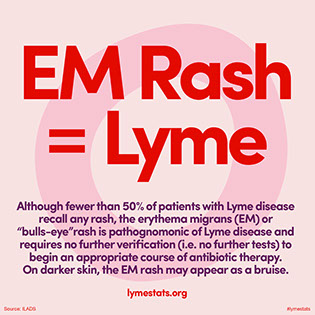
101_emrash316x316

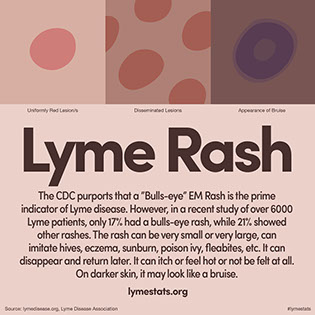
47_rash316x316

I need to address the following statements at the end of the article:

“Knowledge of the geographic locations of potential exposure is paramount to determining which tickborne infections to consider, and the absence of a tick bite history should not exclude the diagnosis in the correct clinical presentation.

Clinicians need to tread carefully here.  Many patients have been denied testing and treatment due to a map.  These maps should be viewed with the same suspicion as the testing.  

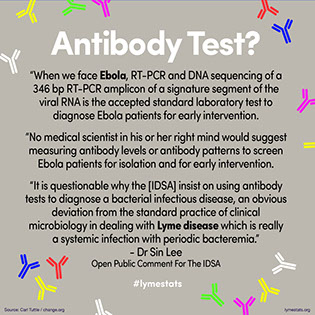
25_antibody316x316

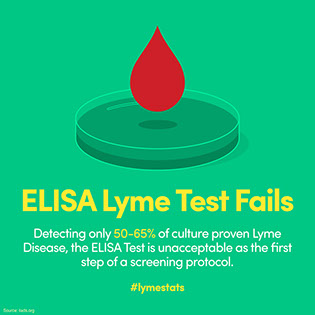
01_test_petri316x316

38_sensitive316x316

Until you tell the fox, squirrel, bird, deer, lizards, and hundreds of other reservoirs to stay put, ticks will be traveling everywhere along with the pathogens they carry.  Since Lyme Disease (borrelia) has been found in every continent except for Antarctia (it will be found there too), you can assume that means ticks are there too.  

I’m glad the authors stated this:

In addition, it is important to recognize the limitations of diagnostic testing for many tickborne infections; empiric treatment is most often warranted before confirming the diagnosis.”132_fail316x316

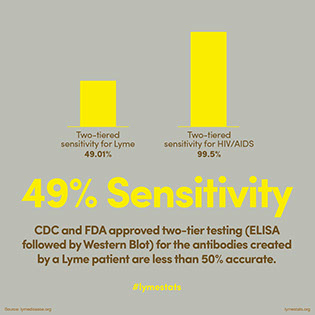
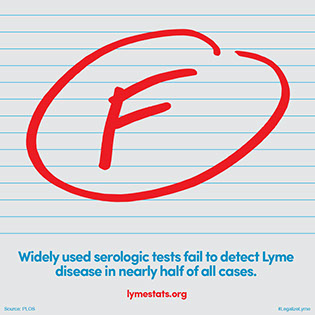
For those of us in this war, this “empiric treatment” by mainstream medicine is new.  Patient after patient has had to wait for test results before doctors will treat them.  Often, since the testing is so poor, it comes back negative and the patient is sent packing, even if the patient has every symptom in the book.  The next step is for authorities to admit and acknowledge that diagnosis of Tick borne infections is a clinical one.  This means doctors need to learn a whole lot more.  For docs willing to learn, please see:  https://www.lymecme.info

Even the CDC admits the tests suck: https://madisonarealymesupportgroup.com/2017/07/01/good-morning-america-cdc-advises-multiple-lyme-tests-due-to-false-negative-results/ CDC spokesperson at end of video.

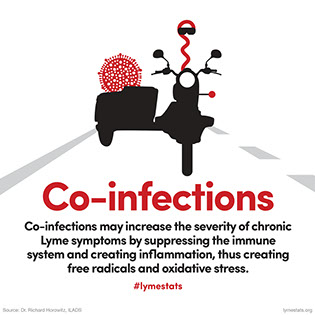
Another very important point needs to be made.  The CDC has pushed this one pathogen for one tick mantra for too long.  Many patients are co-infected making cases infinitely more complex and challenging to treat.  Lyme literate doctors trained by ILADS understand this and treat accordingly.  Until mainstream medicine realizes and admits people can have numerous pathogens, and treat for them, people will not get better.  This is why all the doxycycline in the world will not help some patients.

32_co316x316

One last point is that mycoplasma, Bartonella, and other pathogens are not included here but are quite common in patients.  Many of these pathogens are persistent and are adept at surviving.  More research needs to be done on these co-infections.

Please see:

https://madisonarealymesupportgroup.com/2017/05/01/co-infection-of-ticks-the-rule-rather-than-the-exception/  If ticks are co-infected, so are patients.

https://madisonarealymesupportgroup.com/2017/07/01/one-tick-bite-could-put-you-at-risk-for-at-least-6-different-diseases/

https://madisonarealymesupportgroup.com/2016/03/20/why-we-cant-get-better/


Wolbachia – The Next Frankenstein?

Transmission electron micrograph of Wolachia within an insect cell

Credit:  Public Library of Science/Scott O’Neill

The latest in the effort for world domination over bugs and the diseases they carry is Wolbachia, a Gram-negative bacterium of the family Rickettsiales first found in 1924 and in 60% of all the insects, including some mosquitoes, crustaceans, and nematodes (worms). For those that like numbers, that’s over 1 million species of insects and other invertebrates. It is one of the most infectious bacterial genera on earth and was largely unknown until the 90’s due to its evasion tactics. It’s favorite hosts are filarial nematodes and arthropods.

Wolachia obtains nutrients through symbiotic relationships with its host. In arthropods it affects reproductive abilities by male killing, parthenogenesis, cytoplasmic incompatibility and feminization. However, if Wolbachia is removed from nematodes, the worms become infertile or die. These abilities are what make it so appealing for insect controlcytoplasmic incompatibility, which essentially means it results in sperm and eggs being unable to form viable offering.

http://www.slideserve.com/babu/wolbachia  (Nifty slide show here)

It also makes it appealing for use in human diseases such as elephantiasis and River Blindness caused by filarial nematodes, which are treated with antibiotics (doxycycline) targeting Wolbachia which in turn negatively impacts the worms. Traditional treatment for lymphatic Filariasis is Ivermectin but they also use chemotherapy to disrupt the interactions between Wolbachia and nematodes. This anti-Wolbachia strategy is a game-changer for treating onchocerciasis and lymphatic filariasis.  https://www.sciencedaily.com/releases/2017/03/170316120451.htm

Lyme/MSIDS patients often have nematode involvement.

https://microbewiki.kenyon.edu/index.php/Wolbachiahttps://www.psychologytoday.com/blog/emerging-diseases/200902/tick-menagerie-lyme-isnt-the-only-disease-you-can-get-tick  Both Willy Burgdorfer, the discoverer of the Lyme bacterium, as well as Richard Ostfeld, an animal ecologist found nematode worms in ticks. Since then, some provocative research involving nematodes, Lyme/MSIDS, dementia, and Alzheimer’s has been done.

https://madisonarealymesupportgroup.com/2016/06/03/borrelia-hiding-in-worms-causing-chronic-brain-diseases/https://madisonarealymesupportgroup.com/2016/08/09/dr-paul-duray-research-fellowship-foundation-some-great-research-being-done-on-lyme-disease/https://madisonarealymesupportgroup.com/2016/07/10/greg-lee-excellent-article-on-strategies-for-neurological-lyme/https://madisonarealymesupportgroup.com/2015/10/18/psychiatric-lymemsids/

https://www.scientificamerican.com/article/how-a-tiny-bacterium-called-wolbachia-could-defeat-dengue/  Yet, according to many, Wolbachia is the next eradicator of Dengue Fever and possibly Malaria, chikungunya, and yellow fever because it stops the virus from replicating inside mosquitoes that transmit the diseases. The approach is also believed to have potential for other vector-borne diseases like sleeping sickness transmitted by the tsetse fly.  Evidently, Wolbachia does not infect the Aedes aegypti mosquito naturally, so researchers have been infecting mosquitoes in the lab and releasing them into the wild since 2011. The article states it hopes that the method works and expects infection rates in people to drop and hopes that the mosquitoes will pass the bacterium to their offspring, despite it disappearing after a generation or two of breeding and needing to “condition” the microbes to get them used to living in mosquitoes before injecting them. They also state Wolbachia is

“largely benign for mosquitoes and the environment,” and “To humans, Wolbachia poses no apparent threat.”

Their work has shown that the bacterium resides only within the cells of insects and other arthropods. They also state that tests on spiders and geckos that have eaten Wolbachia mosquitoes are just fine and show no symptoms. An independent risk assessment by the Commonwealth Scientific and Industrial Research Organizatioin (CSIRO), Australia’s national science agency, concluded that,

“Release of Wolbachia mosquitoes would have negligible risk to people and the environment.”

Interestingly, trials are underway in Vietnam, Indonesia, and now Brazil.

They state that scaling up operations to rear enough Wolbachia mosquitoes is too labor-intensive and in Cairns they are going to put Wolbachia mosquito eggs right into the environment. Evidently, other researchers are wanting to release genetically modified (GMO) mosquitoes that carry a lethal gene, and they’ve done it, and it’s causing an uproar:   http://america.aljazeera.com/articles/2013/11/9/genetically-modifiedmosquitoessetoffuproarinfloridakeys.html

http://www.naturalnews.com/2017-07-25-googles-sister-company-releasing-20-million-mosquitoes-infected-with-fertility-destroying-bacteria-depopulation-experiment.html  As of July 14, 2017, Google’s bio-lab, Verily Life Sciences,  started releasing Wolbachia laced mosquitoes in California as part of project, Debug Fresno to reduce the mosquito population.

http://www.greenmedinfo.com/blog/research-exposes-new-health-risks-genetically-modified-mosquitoes-and-salmon  Numerous studies show unexpected insertions and deletions which can translate into possible toxins, allergens, carcinogens, and other changes.  Science can not predict the real-life consequences on global pattens of gene function.

Even the European count decides CRISPR plants are GMOS and should be subjected to the same controls:  https://www.technologyreview.com/the-download/611716/in-blow-to-new-tech-europe-court-decides-crispr-plants-are-gmos/

“It means for all the new inventions … you would need to go through the lengthy approval process of the European Union,” Kai Purnhagen, an expert at Wageningen University in the Netherlands, told Nature.

So, why question the use of Wolbachia as a bio-control?

For Lyme/MSIDS & chronically ill patients, 3 words: worms and inflammation.

Dogs treated for heart worm (D. immitis) have trouble due to the heart worm medication causing Wolbachia to be released into the blood and tissues causing severe Inflammation in pulmonary artery endothelium which may form thrombi and interstitial inflammation. Wolbachia also activates pro inflammatory cytokines. Pets treated with tetracycline a month prior to heart worm treatment will kill some D. immitis as well as suppress worm production. When given after heart worm medication, it may decrease the inflammation from Wolbachia kill off.
http://www.critterology.com/articles/wolbachia-and-their-role-heartworm-disease-and-treatment

The words worms and inflammation should cause every Lyme/MSIDS patient to pause. Many of us are put on expensive anthelmintics like albendazole, ivermectin, Pin X, and praziquantel to get rid of worms and are told to avoid anything causing inflammation due to the fact we have enough of it already. We go on special anti-inflammatory diets and take systemic enzymes and herbs to try and lower inflammation.   https://madisonarealymesupportgroup.com/2016/04/22/systemic-enzymes/

Seems to me, many MSIDS/LYME patients when treated with anthelmintics, will have Wolbachia released into their blood and tissues causing wide spread inflammation, similarly to dogs.

And that’s not all.

According to a study by Penn State, mosquitoes infected with Wolbachia are more likely to become infected with West Nile – which will then be transmitted to humans.

“This is the first study to demonstrate that Wolbachia can enhance a human pathogen in a mosquito, one researcher said.

“The results suggest that caution should be used when releasing Wolbachia-infected mosquitoes into nature to control vector-borne diseases of humans.” “Multiple studies suggest that Wolbachia may enhance some Plasmodium parasites in mosquitoes, thus increasing the frequency of malaria transmission to rodents and birds,” he said.

The study states that caution should be used when releasing Wolbachia-infected mosquitoes into nature. https://www.sciencedaily.com/releases/2014/07/140710141628.htm

So besides very probable wide spread inflammation, and that other diseases may become more prevalent due to Wolbachia laced mosquitoes, studies show Wolbachia enhances Malaria in mosquitos. Lyme/MSIDS patients are often co-infected with Babesia, a malarial-like parasite that requires similar treatment and has been found to make Lyme (borrelia) much worse. It is my contention that the reason many are not getting well is they are not being treated for the numerous co-infections.  Some Lyme/MSIDS patients have Malaria and/or Babesia as well as Lyme.

Regardless of what the CDC states, all the doxycycline in the world is not going to cure this complicated and complex illness.

Lastly, with Brazil’s recent explosion of microcephaly, the introduction of yet another man-made intervention (Wolbachia laced mosquitos) should be considered in evaluating potential causes and cofactors. And while the CDC is bound and determined to blame the benign virus, Zika, there are numerous other factors that few are considering – as well as the synergistic effect of all the variables combined. Microcephaly could very well be a perfect storm of events.
https://madisonarealymesupportgroup.com/2016/12/21/how-zika-got-the-blame/https://madisonarealymesupportgroup.com/2016/03/04/health-policy-recap/https://madisonarealymesupportgroup.com/2016/03/08/fixation-on-zikapolio/

I hate bugs as much as the next person, but careful long-term studies of Wolbachia are required here.

https://www.ncbi.nlm.nih.gov/pubmed/20394659  “Despite the intimate association of B. burgdorferi and I. scapularis, the population structure, evolutionary history, and historical biogeography of the pathogen are all contrary to its arthropod vector.

In short, borrelia (as well as numerous pathogens associated with Lyme/MSIDS), is a smart survivor.

While borrelia have been around forever with 300 strains and counting worldwide, epidemics, such as what happened with Lyme Disease in Connecticut are not caused by genetics but by environmental toxins – in this case, bacteria, viruses, funguses, and stuff not even named yet.

Circling back to Wolbachia.

Hopefully it is evident that many man-made interventions have been introduced into the environment causing important health ramifications: Wolbachia laced mosquitoes and eggs, GMO mosquitoes including CRISPR, and in the case of Zika in Brazil, whole-cell pertussis vaccinations (DTap) for pregnant women up to 20 days prior to expected date of birth, a pyriproxyfen based pesticide applied by the State in Brazil on drinking water, as well as aerial sprays of the insect growth regulators Altosid and VectoBac (Aquabac, Teknar, and LarvX, along with 25 other Bti products registered for use in the U.S.) in New York (Brooklyn, Queens, Staten Island, and The Bronx) to combat Zika. “We feel it’s critical that the scientific community consider the potential hazards of all off-target mutations caused by CRISPR, including single nucleotide mutations and mutations in non-coding regions of the genome … Researchers who aren’t using whole genome sequencing to find off-target effects may be missing potentially important mutations. Even a single nucleotide change can have a huge impact.”  http://articles.mercola.com/sites/articles/archive/2017/06/13/crispr-gene-editing-dangers.aspx?utm_source=dnl&utm_medium=email&utm_content=art3&utm_campaign=20170613Z1_UCM&et_cid=DM147520&et_rid=2042753642

All of this is big, BIG business.

Is the introduction of Wolbachia another puzzle piece in the perfect storm of events causing or exacerbating human health issues?

BTW:  Since 2017, ZAP Males® which are live male mosquitoes infected with the ZAP strain, a particular strain of the Wolbachia bacterium have a time-limited registration allowing them to be sold for five years in the District of Columbia and the following 20 states: California, Connecticut, Delaware, Illinois, Indiana, Kentucky, Massachusetts, Maine, Maryland, Missouri, New Hampshire, New Jersey, Nevada, New York, Ohio, Pennsylvania, Rhode Island, Tennessee, Vermont, and West Virginia.

Infected males mate with females, which then produce offspring that do not survive. (Male mosquitoes do not bite people.) https://www.ncipmc.org/connection/?p=4065

The jury’s still out, but it’s not looking good – particularly for the chronically ill.

2600% Increase in Babesia in 12 Years in Wisconsin

CDC Reports 2600% Increase in Tick-Borne Babesiosis Infections in Wisconsin in 12 Years

It is not just a bad summer for ticks — it has been a bad decade for the spread of tick-borne infections. New surveillance from the CDC reports rapid expansion and increase in cases of babesiosis, a sometimes life-threatening disease, in Wisconsin.The CDC compiled the new report from surveillance conducted every three years during the period between 2001 through 2015. During that time, electronic surveillance came online to provide faster, more thorough, case reports. While a boost in case counts as monitoring methods improve is sometimes due to under-reporting, the CDC says the increase in Wisconsin is due to an actual uptick in cases — not just better reporting.

Total confirmed babesiosis case counts (N = 294) initially reported directly and electronically through the Wisconsin Electronic Disease Surveillance System (WEDSS),* Electronic Laboratory Report (ELR) — Wisconsin, 2001–2015.Image via MMWR

What Is Babesiosis and Why Should You Be Concerned?

The black-legged tick Ixodes scapularis transmits the Babesiosis bacteria. This is the same tick that spreads Lyme disease, anaplasmosis, and recently the more immediately deadly Powassan virus.

These ”black-legged ticks”, Ixodes scapularis, are capable of spreading babesiosis, Lyme disease, anaplasmosis, and Powassan disease, this small arthropod packs powerful poison.Image by Jim Gathany/CDC

Babesia microti, a relative of the parasite that causes malaria, causes the babesiosis infection. While some people have no symptoms when infected, in others, the illness can be fatal. Symptoms of babesiosis include fatigue and weakness, nausea, diarrhea, and often a high fever. More severe complications include kidney damage and heart failure.

Because babesiosis is spread by I. scapularis, the geographic range of the infection is expanding along with the tick. While ticks are the agent, or “vector,” that spreads the bacteria, rodents like white-footed mice are the reservoir culprits who carry the disease. Ticks are infected when they feed on mice, and in turn, ticks infect white-tailed deer, that then become the primary hosts for tickborne infections carried by black-legged ticks.

The blacklegged tick (Ixodes scapularis) is widely distributed in the northeastern and upper midwestern United States.Image via CDC

Here are some of the findings of the new babesiosis report:

  • The length of time between infection to symptoms can be about two weeks, with 96% of cases reported between April and October.
  • Between 2001 and 2015, there were 430 cases reported in Wisconsin. Of those, laboratory testing confirmed 68%. For the victims with confirmed cases, 158, or 65%, were hospitalized, and three people died as a result of the infection.
  • Of the 108 patients with probable babesiosis, 24% were hospitalized, and none died.
  • Wisconsin did not begin screening its blood supply for the babesiosis parasite until 2016. Before that, three cases of the infection spread through transfusion with contaminated blood.

The threat is rising. Between the years of 2001–2003 and 2004–2006, there was a 400% increase in the mean annual incidence of babesiosis cases. The rate rose incrementally after that until it jumped again between 2007–2009 and 2010–2012 with a 235% increase.

Overall, the incidence rose 2600% between 2001–2003 (o.03 mean annual incidence) and 2013–2015 (0.80 mean annual incidence).

Number and incidence of reported confirmed babesiosis cases by 3-year interval and percentage confirmed using polymerase chain reaction (PCR) — Wisconsin, 2001–2015. Mean annual incidence is the average number of cases per 100,000 residents in a single year.Image by MMWR, July 7, 2017/66(26);687–691

The number of counties reporting the incidence of babesiosis rose from 20 to 46 between 2011 and 2015.

Geographic distribution of confirmed cases of babesiosis per 100,000 residents by county of residence — Wisconsin, 2001–2005, 2006–2010, and 2011–2015.Image by MMWR, July 7, 2017/66(26);687–691

This report and physical observations of ticks on hunter-harvested deer, support the finding that the range of the black-legged tick has expanded rapidly, and will continue to do so with a warming climate and clearance of forest stands. As essential the ticks, so go the infections they transmit to humans.

Study authors write: “Babesiosis cases in Wisconsin are increasing in number and geographic range. These trends might be occurring in other states with endemic disease, similar suburbanization, and forest fragmentation patterns, and warming average temperatures.”

If you have reason to believe a tick could have bitten you, and experience symptoms, contact your doctor. Prompt treatment is important. The best defense to tick infection is offense — use repellent containing DEET, stay clear of tick territory, wear long sleeves, and pants — and most important, shower and check for ticks each time you return from time in the wild — or just your backyard.

With warming temperatures, ticks are getting worse — readiness is the best way for you, and family members, to avoid infection.


**For more on Babesia:  https://madisonarealymesupportgroup.com/2016/01/16/babesia-treatment/

https://madisonarealymesupportgroup.com/2011/09/25/the-babesia-checklist-copyrighted-2011-james-schaller-md-mar-version-20/

https://madisonarealymesupportgroup.com/2016/12/15/blood-screening-for-babesia/

https://madisonarealymesupportgroup.com/2016/06/17/babesia-cure/

https://madisonarealymesupportgroup.com/2016/12/05/babesia-cure-update/

https://madisonarealymesupportgroup.com/2016/10/31/the-gift-that-keeps-giving-wisconsin-organ-donor-gives-babesiosis-to-two-recipients/

One Tick Bite Could Put You at Risk For at Least 19 Different Diseases

http://www.businessinsider.com/deer-tick-can-carry-lyme-disease-powassan-virus-babesiosis-and-more-2017-6 by Kevin Loria, June 28,2017

The deer tick, also known as the blacklegged tick, is a fascinating but nasty little creature, and it’s spreading.

The tiny arthropods carry Lyme disease — the serious illness that we most associate them with — but that’s not the only pathogen they spread.

“One thing that people really need to be aware of is that Lyme disease is not the only pathogen that’s out there — there’s quite a few of them, [including] probably quite a few that we haven’t discovered yet,” says Rafal Tokarz, an associate research scientist at Columbia University’s Mailman School of Public Health.

And the deer tick, which as far as we know carries more illnesses than any other tick, “has been expanding its range enormously in the last 30 years,” says Durland Fish, professor emeritus of epidemiology at the Yale School of Public Health. Before the early 70s, it was largely unknown outside the Northeast, but now it has spread north, south, and west.

The diseases that we know deer ticks spread are all serious:

1. Lyme disease, which is transmitted by ticks infected with the bacterium Borrelia burgdorferi, infects roughly 300,000 Americans every year. It can be treated with antibiotics if caught early, but can cause severe inflammation, nerve, and joint pain,among other symptoms, if left untreated.

2. When people are infected with babesiosis, parasites infect and destroy red blood cells. Not everyone shows symptoms but it can be life-threatening for some at-risk patients. It’s “like tick-borne malaria,” says Fish, and is the most important contaminant of the blood bank right now, he says.

3. Anaplasmosis is spread by another bacteria carried by deer ticks. It usually shows up a week or two after a bite and can cause fever, headaches, nausea, and general malaise, among other symptoms. If untreated it can be severe, leading to hemorrhage, renal failure, and for a small fraction of even healthy patients, potentially can be fatal.

4. Deer ticks can also spread the Borrelia miyamotoi bacteria, which Fish says is similar to the one that causes Lyme. Symptoms include joint pain, fatigue, fever, chills, and headache.

5. A relatively recently discovered disease that’s spread by deer ticks as well as dog and Lone Star ticks is ehrlichiosis, caused by a bacteria in the same family as the one responsible for Rocky Mountain spotted fever. Symptoms often present like the flu.

6. Powassan virus has been around for a while but has received more attention recently, especially since the deer tick (which frequently bites humans) started spreading it — the ticks that transmitted the first reported cases in the 1950s rarely bite people. Unlike Lyme, which often takes many hours or even a couple days before it’s transmitted, Powassan infection can occur in as little as 15 minutes. Not everyone who gets bitten by an infected tick gets sick, but if they do, it’s a serious problem since there’s no treatment. In those (still rare) cases, Fish says that there’s about a 50% chance of permanent neurological damage and a 10% chance of death.

The broad range of potential conditions means that doctors don’t even necessarily know what to look for. Even worse, “ticks can frequently be co-infected with more than one pathogen,” says Tokarz. That’s especially true in certain locations, like on Long Island. One bite could transmit both Lyme disease and babesiosis, conditions that would normally be treated quite differently.

It’s also possible that having two or more illnesses could change the way the disease manifests. “We still don’t know whether co-infection exacerbates a disease or doesn’t make a difference,” says Tokarz.”Studies have shown both.”

Unfortunately, we don’t have any good way to control ticks and to stop the ongoing expansion, which will lead to more people getting sick.

In the places where people are at risk of picking up a tick “it is a very important, very severe problem, but the only thing that can be done is to educate people on the dangers of coming into contact with ticks,” says Tokarz.

If you get one on you, pull it off right away — don’t bother with urban legends about needing to burn it off. And protect yourself if you are going to be hiking or spending time in a place where ticks are common. Use permethrin-treated clothing for outdoors work and use insect repellent that contains DEET.

________________________________________________________________________________________

**My letter to the author**

Dear Mr. Loria,

Thank you for your piece on ticks and the pathogens they carry. I just wanted to add to your list; however, as there are many more pathogens carried by ticks. Also, they are discovering a variety of ticks carry pathogens, and if you think about it logically for a moment, ticks have similar habits and mouth parts, and require blood meals to survive, which technically makes every tick suspect. Unfortunately, geographical maps and entomology information (which ticks spread what) have been used to deny patients diagnosis and treatment. A doctor will look at the CDC map and claim, unequivocally, that since such and such isn’t supposed to be in that state, it isn’t TBI’s (tick borne infections). https://madisonarealymesupportgroup.com/2016/09/24/arkansas-kids-denied-lyme-treatment/ and then eventually they have to admit they are wrong: https://madisonarealymesupportgroup.com/2017/03/02/hold-the-press-arkansas-has-lyme/

How many went undiagnosed through the years?

https://www.lymediseaseassociation.org/about-lyme/other-tick-borne-diseases

  • Babesiosis
  • Bartonellosis
  • Borrelia miyamotoi
  • Bourbon Virus
  • Colorado Tick Fever
  • Crimean-Congo hemorrhagic Fever
  • Ehrlichiosis/Anaplasmosis
  • Heartland Virus
  • Meat Allergy/Alpha Gal
  • Pacific Coast Tick Fever: Richettsia philipii
  • Powassan Encephalitis
  • Q Fever
  • Rickettsia parkeri Richettsiosis
  • Rocky Mountain Spotted Fever (RMSF)
  • SFTS: Severe Fever with Thrombocytopenia Syndrome 
  • STARI: Southern Tick-Associated Rash Illness
  • Tickborne meningoencephalitis
  • Tick Paralysis
  • Tularemia

I run a physical support group here in Wisconsin, 4th in the nation for TBI’s, and nearly all of us are co-infected, and while Tokarz states he doesn’t know whether coinfection exacerbates a disease, we all do. http://danielcameronmd.com/babesia-and-lyme-its-worse-than-you-think/.  Each pathogen necessitates different medications so the CDC mono therapy of doxycycline won’t do a thing against many of the other pathogens.

Babesia can increase the severity of Lyme disease. Coinfected patients were more likely to have experienced fatigue, headache, sweats, chills, anorexia, emotional lability, nausea, conjunctivitis, and splenomegaly more frequently than those with Lyme disease alone. [7]
Babesia can also increase the duration of illness with Lyme disease. Babesia patients can remain symptomatic for years with constitutional, musculoskeletal, or neurological symptoms. One study found that 50% of coinfected patients were symptomatic for 3 months or longer, compared to only 4% of patients who had Lyme disease alone. [7] Meanwhile, one-third of patients with a history of both Babesia and Lyme disease remained symptomatic an average of 6 years. [2]

“The clinical pictures for 3 out of our 4 coinfected patients included a large number of symptoms, and 1 coinfected patient had persistent fatigue after treatment,” according to a study by Steere and colleagues. [8]”

https://madisonarealymesupportgroup.com/2016/03/20/why-we-cant-get-better/

https://madisonarealymesupportgroup.com/2017/05/01/co-infection-of-ticks-the-rule-rather-than-the-exception/

https://madisonarealymesupportgroup.com/2014/11/14/studies-show-why-its-tough-to-treat-lyme-and-co/

https://madisonarealymesupportgroup.com/2015/05/08/interview-with-dr-horowitz/

For a fantastic book on all of this and more, read science journalist and past Executive Editor of Discover Magazine, Pam Weintraub’s work, Cure Unknown: Inside the Lyme Epidemic. http://www.astralgia.com/pamelaweintraubresume18.pdf

Sincerely,
Alicia Cashman
Madison Lyme Support Group
https://about.me/lymecoordinator56
lymecoordinator56@gmail.com
https://madisonarealymesupportgroup.com