Archive for the ‘Activism’ Category

Raising Red Flag Over Lyme

https://www.suncommunitynews.com/articles/the-sun/raising-red-flag-over-lyme/

Raising red flag over Lyme

Eagle Lake resident warns public to take disease seriously

BY MARCH 1, 2019

________________

**Comment**

  1. We still don’t know everything about why some become chronically ill, and while delays in diagnosis are a factor, treatment failures have been documented since the beginning:  https://madisonarealymesupportgroup.com/2019/02/22/why-mainstream-lyme-msids-research-remains-in-the-dark-ages/
  2. There is also the issue of there being more subsets of patients besides “acute” and PTLDS:  https://madisonarealymesupportgroup.com/2019/02/25/medical-stalemate-what-causes-continuing-symptoms-after-lyme-treatment/
  3. Until the pleomorphic and polymicrobial nature of Lyme/MSIDS is recognized, patients are doomed:  https://madisonarealymesupportgroup.com/2018/10/30/study-shows-lyme-msids-patients-infected-with-many-pathogens-and-explains-why-we-are-so-sick/
  4. Blood tests for Lyme/MSIDS is abysmal, missing over half of all cases.  There has been a concerted suppression of microscopy and other forms of testing:  https://madisonarealymesupportgroup.com/2018/10/12/direct-diagnostic-tests-for-lyme-the-closest-thing-to-an-apology-you-are-ever-going-to-get/, https://madisonarealymesupportgroup.com/2019/02/27/should-lyme-patients-rico-lawsuit-include-yale/
  5. Climate change has NOTHING to do with this:  https://madisonarealymesupportgroup.com/2018/08/13/study-shows-lyme-not-propelled-by-climate-change/, https://madisonarealymesupportgroup.com/2018/11/07/ticks-on-the-move-due-to-migrating-birds-and-photoperiod-not-climate-change/

“The authorities have been using tick expansion and climate change to get research dollars. Climate change is a popular topic right now, and that is a great source of funding for related research. However, any research on ticks and climate change is inconclusive––in essence, there is no validity. The long-range, futuristic projections and statistical models are bogus science because blacklegged ticks have already been found in northern Canada. In fact, we documented blacklegged ticks on migratory songbirds in northern Alberta dating back to 1998. Any allocation of government funding for ticks and climate change research is a complete waste of taxpayers’ money. It will not help Lyme disease patients one iota.”  Independent Canadian tick researcher, John Scott

Few LLMD’s take insurance forcing patients to pay expensive long-term bills out of pocket. Insurance companies are the ones coming after doctors who dare to treat in a way that is outside the CDC guidelines of essentially 21 days of doxycycline:  https://www.dailykos.com/stories/2012/01/29/1059800/-Wisconsin-Lyme-doctor-gets-reprieve?  Once they flag a doctor they nit-pick until they find any little thing:  https://sciencebasedmedicine.org/chronic-lyme-vip-daniel-cameron-disciplined-by-new-york-medical-authorities/

The Lyme Wars are far from over.

https://madisonarealymesupportgroup.com/2017/10/24/lyme-wars-part-1-julias-story/

https://madisonarealymesupportgroup.com/2017/10/25/lyme-wars-part-2-kyra-overcomes-chronic-lyme-diagnosis/

https://madisonarealymesupportgroup.com/2017/10/26/lyme-wars-part-3/

https://madisonarealymesupportgroup.com/2017/10/27/lyme-wars-part-4/

https://madisonarealymesupportgroup.com/2017/10/28/lyme-wars-part-5-coinfections/
 

Jacksonville Family Shares Daughter’s 9-Month Diagnosis of Rare Disease Which Isn’t Rare (Lyme)

https://www.actionnewsjax.com/news/local/jacksonville-family-shares-daughters-9-month-diagnosis-to-lyme-disease/929972299  News Video here

Jacksonville family shares daughter’s 9 month diagnosis of rare disease

By: Brittney Verner , Action News Jax

Updated:

A local mom whose daughter was diagnosed with a rare disease is now warning other parents to be on the lookout if their kids have the same symptoms.

Cynthia Donalson said it took them almost 9 months to find out their daughter was diagnosed with Lyme disease.

Donalson said for almost a year her daughter Anna who’s now 14 has been fighting to live a normal and healthier life.

“She had suffered off and on with stomach issues. She went from being 117 pounds to 104 pounds,” Donalson.

She said it started last March and that’s when they started to seek medical attention.

“She saw a gastroenterologist at Wolfson‘s had several trips to the emergency room. They tried everything and could not find anything,” Donalson said.

She said by the end of the summer she was 85 pounds. Last December a doctor diagnosed Anna with Lyme disease. The disease is caused by bacteria and is transmitted through a bite from an animal or insect.

“It was horrible to watch because she was basically disintegrating in front of me,” Donalson said.

Anna said it’s unclear where she got Lyme disease but she spent a lot of time at soccer fields diving in dirt and she believes she could have been bitten unknowingly.

Dr. Aylin Ozdemir, who is a pediatric integrative medicine doctor diagnosed Anna. Ozdemir said Lyme disease can often be difficult to diagnose.

“In many cases patients don’t even remember a tick bite so then they become patients with a myriad of symptoms, then somebody needs to connect the dots. Even the Centers for Disease Control and Infectious Disease Society of America confirms that we don’t have a good sterile-logical blood marker to diagnose Lyme disease and they fall short,” Ozdemir said.

The disease is curable and Donalson is warning other parents whose kids may have similar symptoms not to give up until they find a solution.

The Center for Disease and Control said, “People treated with appropriate antibiotics in the early stages of Lyme disease usually recover rapidly and completely.”

“Pursue, don’t give up, keep looking for help,” Donalson said.

___________________

**Comment**

Where to even begin…..

  1. Lyme IS NOT RARE!  It is twice as common as breast cancer and six times more common than HIV/AIDS.  https://www.lymedisease.org/mylymedata-lyme-disease-prevalence/.
  2. Regarding Lyme disease being curable, research has shown treatment failures since the beginning of time:  https://madisonarealymesupportgroup.com/2019/02/22/why-mainstream-lyme-msids-research-remains-in-the-dark-ages/
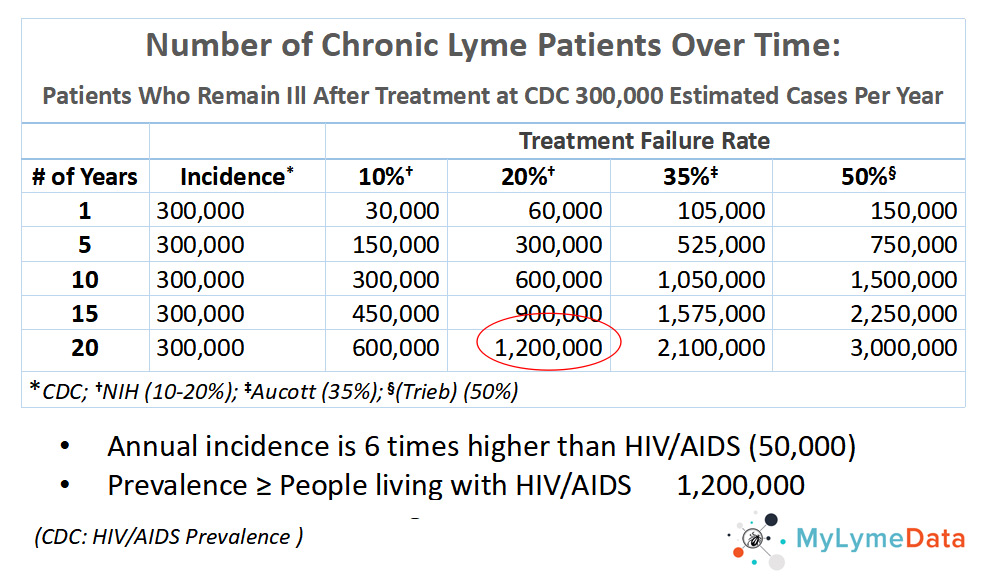
  3. When the CDC reports numbers they are “only talking about INCIDENCE of Lyme disease — the number of new cases each year. What about prevalence of Lyme disease — the number of people who remain ill over time?  The chart below shows Lyme disease prevalence based on the annual incidence of the disease using different assumptions about treatment failure rates. Patients diagnosed and treated early generally respond well to treatment. However, treatment failures ranging from 10-35% have been reported in early disease and higher rates are reported for late disease.”  https://www.lymedisease.org/mylymedata-lyme-disease-prevalence/.

    Chronic Lyme Disease is a big problem

    Lyme disease prevalence cases over time

  4. Regarding soccer fields, a research team has discovered the best place to find ticks is along the edges of soccer fields with woodlines, i.e. virtually every soccer field in Wisconsin: https://madisonarealymesupportgroup.com/2019/03/06/alumnus-works-to-protect-people-from-west-nile-virus-lyme-disease/
  5. “Late stage” Lyme can occur within two weeks after tick bite.  Bob Giguere of IGeneX told our support group the story of a little girl who developed facial palsy and lost the ability to walk & talk within 4-6 hours of tick bite (2).  Whether or not you label that escalating case “late stage” or not, the infection was able to cross the blood brain barrier and cause severe symptoms in short order.  https://madisonarealymesupportgroup.com/2019/02/22/why-mainstream-lyme-msids-research-remains-in-the-dark-ages/
  6. FWY:  Lyme is alive and well in the South and it’s been there a long time:  https://madisonarealymesupportgroup.com/2018/05/31/no-lyme-in-the-south-guess-again/.  Dr. Masters fought tooth and nail to get Lyme recognized in the South:   https://madisonarealymesupportgroup.com/2017/10/06/remembering-dr-masters-the-rebel-for-lyme-patients-who-took-on-the-cdc-single-handedly/  (This happened in the late 80’s!)
  7. I had to flip back to the date of this article just to make sure my eyes read that this was written this month and in the year 2019.  Wow! is all I can say….

Sjogren’s Syndrome: Clinical Benefits of Low-dose Naltrexone Therapy

https://ldnresearchtrust.org/sites/default/files/sjogrens%20publication.pdf

Sjogren’s Syndrome: Clinical Benefits of Low-dose Naltrexone Therapy

Scott Zashin 1

1. Rheumatology, University of Texas Southwest Medical Center, Dallas, USA Corresponding author: Scott Zashin, szashin823@aol.com


Abstract

Sjogren’s Syndrome is a chronic autoimmune disorder that causes the inflammation of the lacrimal and salivary glands, resulting in dryness of the eyes and mouth. In addition, fatigue and musculoskeletal pain, often described as aching, is very common. Treatment directed toward alleviating the fatigue and pain associated with Sjogren’s is currently very limited. This report describes a case of a 47-year-old female with suspected Sjogren’s based on long-standing dry eyes, dry mouth, joint pain, fatigue, elevated measures of inflammation, and a positive rheumatoid factor. She failed standard therapy but improved clinically with low-dose naltrexone therapy.

Introduction

Low-dose naltrexone (LDN) is a unique compound that has pain-relieving and anti- inflammatory properties. Limited studies have shown benefit in helping relieve the pain in patients with fibromyalgia and improving disease activity in autoimmune conditions such as inflammatory bowel disease and multiple sclerosis. As a result, it seems reasonable that the medication might be useful in Sjogren’s Syndrome, an autoimmune condition that is associated with pain and inflammation.

Case Presentation

A 47-year-old female was diagnosed with Sjogren’s Syndrome six years ago by another rheumatologist, based on her history of eye and mouth dryness. She was found to have a negative rheumatoid factor at that time, but her sedimentation rate by modified Westergren (erythrocyte sedimentation rate, ESR) was recorded as low as 48 and as high as 61 (normal: less than 20 mm/h). Her C-reactive protein (CRP) was 1.74 (normal less than 0.80 mg/dl). Two years ago, she saw a second rheumatologist who agreed with the diagnosis of Sjogren’s Syndrome. At that time, her rheumatoid factor was now elevated at 69 IU/ml (normal: less than 14 IU/m/). Her antinuclear antibody (ANA) and Sjogren antibodies (SS-A and SS-B) were absent. Her anti-CCP antibody and 14.3.3 ETA protein were normal. Her ESR was 48 and her CRP was 1.42. Past medical history included a diagnosis of fibromyalgia. She also had a history of breast cancer that had been in remission for 20 years, a generalized seizure disorder, and elevated liver tests with normal biopsy. Additional medical issues included symptoms of neuropathy, anxiety, and depression. A prior sleep study did not reveal evidence of sleep apnea. She first came to see this author 18 months ago, seeking another opinion, with complaints of fatigue, severe musculoskeletal pain, as well as dryness of her eyes and mouth.

Her daily medications to help with her symptoms of Sjogren’s Syndrome and fibromyalgia included Lexapro, Restasis, meloxicam 15 mg, vitamin D3, magnesium, tramadol 100 mg daily prn, salagen 5 mg tid prn, and hydroxychloroquine 400 mg daily. Her exam demonstrated widespread trigger points affecting both sides of her body, above and below her waist. Her blood work was remarkable for an ESR of 37 and a CRP of 0.77. Her alanine aminotransferase (ALT) was 40 U/L (normal 6-29 U/L).

She elected to try low-dose naltrexone (LDN), which was compounded using a short-acting filler and started at 1.5 mg daily with instructions to increase the medication weekly by 1.5 mg. She came back to see me two weeks after starting the medication and was taking 3 mg daily. She stated that she felt terrific. Her lab was remarkable for a normal ESR of 25 and a CRP of 2.33. Her ALT was normal.

She was seen in follow-up 16 months ago and remained on 3 mg of naltrexone. She felt well but complained of neuropathic pain. Her ESR was now 20. CRP was not ordered. Her ALT was 31 U/L. She was seen in follow-up 14 months ago and remained on 3 mg of naltrexone and continued to feel well without stiffness or pain. She noted that, previously, it would take her all day to feel better. Her ESR remained at 20 and CRP was only minimally increased at 0.87.

She was then seen in follow-up 11 months ago with complaints of increased achiness. She had widespread tender points. She was given a short course of corticosteroids with symptomatic improvement in place of meloxicam. Naltrexone was increased on that visit to 4.5 mg. On the day of that visit, her ESR was 40 and CRP was 25.7 ( current normal value less than 8 mg/L). She was again seen in follow-up nine months ago, doing well on 4.5 mg of naltrexone. Hydroxychloroquine was discontinued a few weeks earlier due to a prolonged QTc interval. Her ESR was back down to 20 and CRP was down to 10.9.

Overall, the patient noted significant clinical benefit with her fatigue and pain within two weeks of starting low-dose naltrexone but no significant change in her dry eyes or mouth. She continues to do well on low-dose naltrexone four months after stopping hydroxychloroquine due to the electrocardiogram (EKG) abnormalities. While her symptoms improved, what is most interesting about this case is that her clinical improvement was associated with an improvement in her inflammatory markers.

Discussion

In the initial pilot study that used low-dose naltrexone in the treatment of fibromyalgia, the baseline sedimentation rate was a significant predictor of clinical response to LDN [1]. It was of interest to note that this patient’s dramatic clinical response to LDN correlated with an improvement in her ESR. It is postulated that low-dose naltrexone has a beneficial effect on the immune system due to the following mechanisms.

Low-dose naltrexone blocks mu-, delta-, and other opioid receptors. These receptors are present in the cells of the immune system. This inhibition may result in an upregulation of endorphins, which in addition to decreasing pain, may have a beneficial effect on the immune abnormalities by suppressing cell growth [2].

Low-dose naltrexone inhibits microglia activity. Microglia are immune cells in the central nervous system that, when stimulated, produce inflammatory products that may be associated with pain, fatigue, cognitive dysfunction (brain fog) sleep, and mood disorders. Low-dose naltrexone inhibits toll-like receptors that are found in microglia cells. As a result, the production of inflammatory substances declines with resulting symptomatic improvement [3- 4]. The inhibition of these toll-like receptors has been postulated to be responsible for the effectiveness of hydroxychloroquine, a standard therapy in diseases such as Sjogren’s Syndrome and systemic lupus.

Overall, LDN is well-tolerated. The 50 mg standard dose of naltrexone is Food and Drug Administration (FDA) approved in the treatment of alcohol dependence and for inhibiting the effects of opioids. Low-dose naltrexone is sometimes used to help alleviate the symptoms of patients with chronic conditions, including fibromyalgia [1], Crohn’s disease [5-6], and multiple sclerosis [7]. The use of LDN at this low dose and for these indications is considered “off-label” use. In other words, it has not undergone the rigorous testing needed to get the approval of the FDA. Side effects include but are not limited to vivid dreams (most patients take the medication in the evening, but morning dosing of the medication may help with this issue). Patients may experience a reduction in pain relief from narcotics for at least six to 24 hours after taking low-dose naltrexone. In addition, low-dose naltrexone should not be used in patients who are currently receiving opioid analgesics due to the possibility of acute opioid withdrawal. The medication should be avoided until it is felt that the narcotics are out of the patient’s system. Those patients taking thyroid replacement may require a lower amount of thyroid medication so periodic monitoring is indicated. The elevation of liver enzymes is a potential risk with naltrexone treatment but is not felt to be common with low-dose therapy. Other potential side effects may include but are not limited to gastrointestinal disturbances, such as stomach cramps and diarrhea, agitation, anxiety, flu-like symptoms, and headaches. The drug should be compounded with short-acting fillers, so calcium carbonate should be avoided. The most common starting dose is 0.5 mg daily in the evening and increased weekly up to a target dose of 4.5 mg. The drug can be started at higher doses. The drug should be stopped at a minimum of 24 hours prior to the time narcotics may be needed for pain relief for a scheduled surgical procedure. In my practice, I will ask patients to temporarily discontinue low-dose naltrexone 72 hours in advance of taking narcotics if the patient is new to therapy, to ensure pain relief [8-11].

Conclusions

Based on a Medline review, this is the first peer-reviewed case report of a patient with Sjogren’s Syndrome who was treated with low-dose naltrexone and obtained clinical benefits. As a result of this case, further study is needed to determine if low-dose naltrexone will subsequently prove to be a useful medication for treating Sjogren’s Syndrome.

Additional Information

Disclosures

Human subjects: Consent was obtained by all participants in this study. Conf licts of interest: In compliance with the ICMJE uniform disclosure form, all authors declare the following: Payment/services info: All authors have declared that no financial support was received from any organization for the submitted work. Financial relationships: All authors have declared that they have no financial relationships at present or within the previous three years with any organizations that might have an interest in the submitted work. Other relationships: I prescribe low dose naltrexone to patients in my medical practice.

References
  1. Younger J, Mackey S: Fibromyalgia symptoms are reduced by low-dose naltrexone: a pilot study. Pain Med. 2009, 10:663-672. 10.1111/j.1526-4637.2009.00613.x
  2. Wang D, Sun X, Sadee W: Different effects of opioid antagonists on μ-, δ-, and κ-opioid receptors with and without agonist pretreatment. J Pharmacol Exp Ther. 2007, 321:544-552.10.1124/jpet.106.118810
  3. Younger J, Parkitny L, McLain D: The use of low-dose naltrexone (LDN) as a novel anti-inflammatory treatment for chronic pain. Clin Rheumatol. 2014, 33:451-459. 10.1007/s10067-014-2517-2
  4. Watkins LR, Hutchinson MF, Ledeboer A, Wieseler-Frank J, Milligan ED, Maier SF: Glia as the ‘bad guys”: implications for improving clinical pain control and the clinical utility of opioids. Brain Behav Immun. 2007, 21:131-146. 10.1016/j.bbi.2006.10.011
  5. Smith JP, Stock H, Bigaman S, Mauger D, Rogosnitzky M, Zagon I: Low-dose naltrexone therapy improves active Crohn’s disease. Am J Gastroenterol. 2007, 102:820-828.
  6. Raknes G, Simonsen P, Smabrekke L: The effect of low-dose naltrexone on medication in inflammatory bowel disease: a quasi experimental before-and-after prescription database study. J Crohns Colitis. 2018, 12:677-686.
  7. Gironi M, Martinelli-Boneschi F, Sacerdote P, et al.: A pilot trial of low-dose naltrexone in primary progressive multiple sclerosis. Mult Scler. 2008, 14:1076-1083.10.1177/1352458508095828
  8. Low dose naltrexone. (2018). Accessed: 2018: http://www.lowdosenaltrexone.org/.
  9. LDN Research Trust. (2018). Accessed: 2018: https://www.ldnresearchtrust.org/.
  10. Dickson, Windham, Smith, et al.: The LDN Book . Linda Elsegood (ed): Chelsea Green Publishing, White River Junction, VT; 2016.
  11. Moore E, Wilkinson S: The Promise of Low Dose Naltrexone Therapy. McFarland & Company Inc, Jefferson NC; 2009

_________________

For an overview of Sjogren’s:  https://www.hopkinsrheumatology.org/rheumtv/sjogrens-syndrome-disease-overview/  (3 Min Video)  Please notice symptoms are quite similar to Lyme/MSIDS.  

Sjögren’s Syndrome is an autoimmune disease that is found primarily in women, where inflammation at the salivary and lacrimal glands causes dryness of the eyes and mouth. However, it’s also a systemic disease that affects the entire body, producing joint pain and fatigue, and damaging internal organs. As many as four million Americans suffer from Sjögren’s Syndrome, which often overlaps with other rheumatic diseases making it very common to misdiagnose or overlook. Unfortunately, many patients are not diagnosed on time, which makes it much more difficult to treat. In this video, the Director of the Jerome L. Greene Sjögren’s Syndrome Center, Dr. Alan Baer, discusses the symptoms and problems that many patients with Sjögren’s Syndrome face.

If you search the internet with the words Lyme & Sjogren’s, tons of blogs will pop up with people with both. There isn’t much if any science on the two, however. This is another problem with research in Lyme-land – nobody is studying the effects of Lyme triggering or in conjunction with other syndromes within the body.  A big problem.

Excerpt from The Lyme Book:  http://www.lymebook.com/beg_signs_symptoms.pdf

Lyme disease can trigger autoimmunity, so some people will present with rheumatoid arthritis, lupus, Sjogren’s, Hashimoto’s thyroiditis or any number of autoimmune diseases. It may not be that these diagnoses are incorrect; it may just be that the Lyme infection has unbalanced the immune system sufficiently to trigger the autoimmune mechanism. Where there is autoimmune disease with sufficient evidence of Lyme disease (either through lab work or clinically), treating the Lyme will often improve, if not eliminate, the autoimmunity.

The key concept to grasp here is that of underlying cause. Western medicine has somehow distanced itself from the quest for discovery of the underlying cause of illness. As is the case with bromyalgia or chronicfatigue syndrome, the diagnosis describes a set of symptoms but does not explain why they occur.

For more:  https://madisonarealymesupportgroup.com/2016/12/18/ldn/

https://madisonarealymesupportgroup.com/2018/10/30/ldn-an-overview-of-clinical-applications/

https://madisonarealymesupportgroup.com/2017/06/12/ldn-reduced-pro-inflammatory-cytokines-in-fm-after-eight-weeks/

https://madisonarealymesupportgroup.com/2018/05/18/bullseye-low-dose-naltrexone-lyme-disease-documentary/  Very informative documentary put out by the LDN Research Trust on Lyme/MSIDS.  Dr. Horowitz, Dr. Toups, Dr. Schweig, Dr. Windham, Dr. Holtorf, & Dr. Schwarzback, speak on everything from testing, to diet, to inflammation, and how LDN can help Lyme/MSIDS patients.

https://madisonarealymesupportgroup.com/2018/07/16/low-dose-naltrexone-for-lyme-living-with-lyme-podcast/

https://madisonarealymesupportgroup.com/2019/01/16/ldn-cbd/


Lyme Workshop Deadline Today & Upcoming events

Don’t forget today, Monday, March 18, 2019 is the DEADLINE to register for the Lyme workshop.  Details in link:  https://madisonarealymesupportgroup.com/2019/02/16/wisconsin-lyme-workshop-in-march/

Also, our next support group meeting will be April 13, 2019 at 2:30.  A support group member has graciously agreed to share what he’s learned about tips for gut health and how you can implement these practical ideas yourself at home.

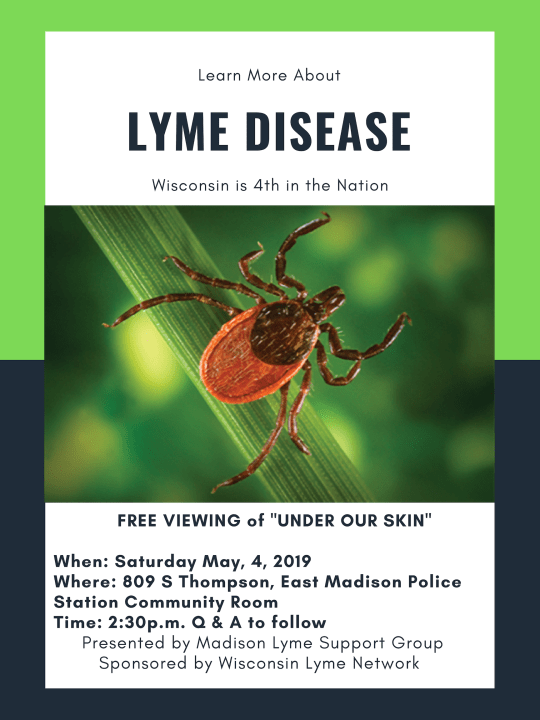
Our last meeting of the year in May, Lyme Awareness Month, will be a FREE viewing of “Under Our Skin,” the best primer on Lyme disease on the market.  I hope to bring copies of the poster in April for all of you to help distribute.  It’s a great event to bring family, friends, and anyone who needs to be educated.

Mark Jason Lim


FDA Medical Adviser: ‘Congress is Owned by Pharma’

https://finance.yahoo.com/news/congress-big-pharma-money-123757664.html  (Click on link for News story)

FDA medical adviser: ‘Congress is owned by pharma’

Associate Editor
Yahoo Finance


Pharmaceutical companies are under the spotlight with congressional hearings on the cost of drug prices and allegations of the industry’s role in the opioid crisis.

Dr. Raeford Brown, a pediatric anesthesia specialist at the UK Kentucky Children’s Hospital and chair of the Food and Drug Administration (FDA) Committee on Analgesics and Anesthetics, has been openly critical of big pharma and the lack of proper oversight from the FDA.

Despite many politicians, particularly declared presidential candidates, beginning to speak out against big pharma, Brown does not think that anything will come out of it “because Congress is owned by pharma.”

“The pharmaceutical industry pours millions of dollars into the legislative branch every single year,” he told Yahoo Finance. “In 2016, they put $100 million into the elections. That’s a ton of money.”

‘It’s really about Congress’

5c801a88260000f903fe0aa4.png.cfContributions from the pharmaceutical and health products industry during the 2017-2018 election cycle. (Photo: screenshot/OpenSecrets)

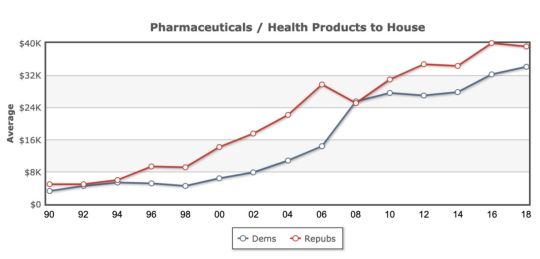
OpenSecrets, a website operated by the nonpartisan Center for Responsive Politics, tracks money in U.S. politics. It ranked the top 20 members of the House and the Senate that have received the most campaign contributions from the pharmaceutical and health products industry during the 2017-2018 election cycle.

The website defines the industry as including “not only drug manufacturers but also dealers of medical products and nutritional and dietary supplements.”

5c88f02420000043046edc37.png.cf

Sen. Heidi Heitkamp, (D-N. Dak)., leaves the Capitol after a vote on Thursday, June 14, 2018. (Photo By Bill Clark/CQ Roll Call)

During the ‘17-’18 election cycle, Kevin McCarthy, now the House minority leader after midterms, received the second-highest amount of funds in Congress. The California-based politician received a total of $380,350 in campaign contributions, with a large sum coming from pharma companies such as Abbott Laboratories (ABT), Pfizer (PFE), Johnson & Johnson (JNJ), Eli Lilly (LLY), Amgen (AMGN), and Merck (MRK).

“I’m really much more concerned because Congress is supposed to have oversight for the FDA,” Brown said. “If the FDA isn’t going to hold pharma accountable, and Congress is getting paid to not hold pharma accountable, then it really doesn’t matter who the president is because it’s really about Congress.”

5c8016da2300001c0422cab9.png.cf

Democrats and Republicans alike benefit from Big Pharma donations.  (Photo: screenshot/OpenSecrets)
Paul Ryan (R-Wis.), the former speaker of the House, was ranked 10th among members of Congress. He received $222,070, seeing most of the funds coming from Merck.

Fourteen out of the top 20 recipients in the House were Republicans.

Beto O’Rourke (D-Texas), a former congressman who almost upset Senator Ted Cruz (R-Texas) in the 2018 midterms, was 18th on the list. O’Rourke, seen as a potential 2020 Democratic presidential candidate, received $171,255.

Dems top list of big pharma Senate donations

5c80168b250000010580d5eb.png.cf

Democrats and Republicans alike benefit from Big Pharma donations. (Photo: screenshot/OpenSecrets)

In the Senate, notable names include Orrin Hatch (R-Utah), Kirsten Gillibrand (D-N.Y.), and Senate Majority Leader Mitch McConnell (R-Ky.).

Hatch received $238,289 in donations, with Merck being the biggest donor among manufacturing companies. McConnell, ranked 12th among senators on the list, received $149,113, with Eli Lilly being the prevailing big pharma company.

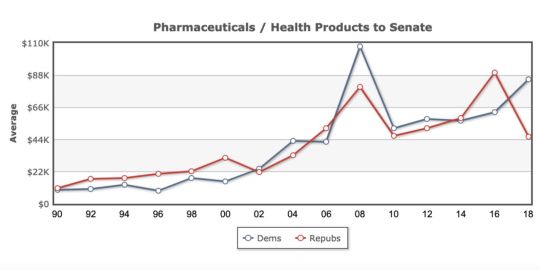
Fifteen out of the top 20 recipients in the Senate were Democrats.

Gillibrand, a Democratic candidate for president in the 2020 election, was ranked 11th on the list.

Over half of the big pharma money she received during the 2017-2018 cycle came from Pfizer, with Amgen, AbbVie (ABBV), and Johnson & Johnson also in the mix. Overall, she received a total of $151,197 from the pharmaceutical/health product industry.

Gillibrand announced in February 2019 that she and Senator Sherrod Brown (D-O.H.) were introducing legislation that would “penalize pharmaceutical companies believed to be engaging in price gouging without cause, leading to price spikes for patients who rely on medication to treat diseases ranging from cancer to addiction.”

5c8015b5250000d902c8bbf9

Democratic presidential candidate Sen. Kirsten Gillibrand (D-N.Y.) on Monday, Feb 25, 2019.  (AP Photo/Manuel Balce Geneta)

Minnesota senator and Democratic presidential candidate Amy Klobuchar (D-Minn.) has repeatedly stated in public appearances that she will not be bought by big pharma.

“In Minnesota and across the country, no place has been immune from the devastating effects of opioid abuse,” Sen. Klobuchar said in a statement to Yahoo Finance. “In my state, deaths from prescription drug abuse now claims the lives of more Minnesotans than homicides or car crashes. We need to continue to work together to tackle the scourge of opioid addiction that continues to take lives each day.”

At the same time, thanks to the U.S. campaign finance system, Klobuchar has also received money from some of the companies contributing to the opioid epidemic.

According to OpenSecrets, Klobuchar received $65,491 in campaign funds during the 2017-2018 election cycle, with $8,500 coming from pharmaceutical companies. Abbott Laboratories was her biggest pharma donor at $8,000.

‘If we don’t change … it will happen again’

5c8015872500001c0580d5ea.png.cf

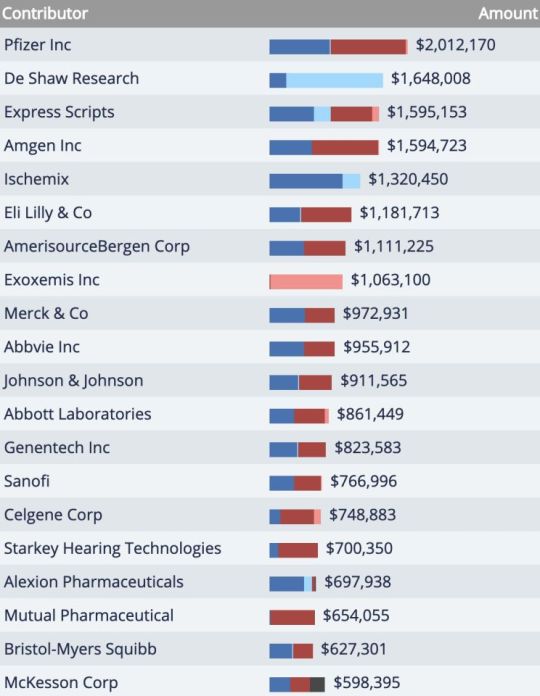
Democratic medical adviser:  ‘Congress is owned by pharma’  Top pharma contributions in the 2017-18 election cycle by company.  (Photo:  screenshot/OpenSecrets)

Purdue Pharma is one company that has come under fire as of late, as it faces roughly 2,000 lawsuits, including one by the state of Massachusetts that alleged that it “created the [opioid] epidemic and profited from it through a web of illegal deceit.”

Although Senator Richard Burr (R-N.C.) isn’t among the top 20 senators in big pharma money, he did receive the largest sum of donations from Purdue in the 2017-2018 election cycle, a total of $6,000. Since 2007, Purdue has contributed $170,250 to his campaigns, according to Kaiser Health News.

As a result of the lawsuits, Purdue Pharma is exploring filing for bankruptcy. Filing for Chapter 11 protection “would halt the lawsuits and allow Purdue to negotiate legal claims with plaintiffs under the supervision of a U.S. bankruptcy judge,” Reuters reported this month.

The lawsuit is only one part of the massive opioid epidemic plaguing the country, which Brown said derives from the pharmaceutical industry’s desire to make a profit.

“If we don’t change the regulatory process for opioids, it will happen again,” Brown said.

Adriana is an associate editor for Yahoo Finance. Follow her on Twitter @adrianambells.