Archive for the ‘Activism’ Category

Sauna For Prevention of Cardiovascular & Alzheimer’s Disease & For Detoxification

 Approx. 25 Min.

Dr. Jari Laukkanen on Sauna Use For the Prevention of Cardiovascular & Alzheimer’s Disease

This podcast features Jari Laukkanen, M.D., Ph.D., a cardiologist and scientist at the Institute of Public Health and Clinical Nutrition, University of Eastern Finland, Kuopio. Dr. Laukkanen has been conducting long-term trials looking at the health effects of sauna use in a population of over 2,000 middle-aged men in Finland. The results? Massive reductions in mortality and memory disease in a dose-response fashion at 20-year follow-up. In this almost 25-minute episode, we talk about…

  • 00:00:37 – The association between sauna use and fatal cardiovascular outcomes
  • 00:00:37 – The inverse association between cardiovascular-related deaths and all-cause deaths.
  • 00:02:00 – How men that used the sauna 2-3 times per week had a 27% lower cardiovascular-related mortality than men that used the sauna 1 time per week
  • 00:02:15 – How men that used the sauna 4-7 times per week had a 50% lower cardiovascular-related mortality than men that used the sauna one time per week.
  • 00:02:50 – The confounding factors Dr. Laukkanen and his colleagues had to adjust for, such as physical exercise, cholesterol, obesity, smoking, alcohol consumption, socioeconomic status.
  • 00:03:26 – The various types of cardiac-related deaths their reductions were shown in, including coronary artery disease, sudden cardiac death and more.
  • 00:05:00 – How one of the major mechanisms by which sauna use improves heart health is by reducing blood pressure and incident hypertension.
  • 00:05:40 – The mechanisms by which the sauna lowers blood pressure, which can occur via balancing of the autonomic nervous system, improvements in blood vessel function, decreases in arterial stiffness and compliance of arteries.
  • 00:06:17 – The increases in heart rate seen with sauna use that make it similar to moderate aerobic exercise in some ways (up to 150 beats/min!).
  • 00:06:56 – How time spent in the sauna was one of the more important factors for risk reduction with at least 20 minutes per session in a 174 F (79C) 4-7 times per week being a “sweet spot.”
  • 00:09:29 – The inverse, dose-response relationship between sauna use and all-cause mortality: 24% for 2-3 times per week, 40% for 4-7 times.
  • 00:10:00 – His newest study that now shows a reduction in risk in a similar dose-response fashion for dementia and Alzheimer’s disease by around 65% for the most frequent sauna users.
  • 00:10:18 – The way sauna use increases heat shock proteins which repair damaged proteins and prevent protein aggregates and how this could end up being at least one potential molecular mechanism at play.
  • 00:13:03 – How sauna use increases growth hormone by 200-330%.
  • 00:14:10 – The patterns of sauna use and especially whether to sauna before or after you weight train.
  • 00:15:55 – The effect of sauna on mood which may be from improvements in cardiorespiratory fitness and possibly endorphins as well.
  • 00:18:39 – How sauna improves heart rate variability.
  • 00:20:04 – Cold-water immersion after sauna and a few cautionary words for extreme contrast therapy in people with a pre-existing heart condition that is currently unstable.

Further, Dr. Mary Shackelton, MPH, ND talks about skin as a pathway for detoxification and how important it is to sweat on a weekly basis. Infrared saunas are one of the most effective ways of releasing toxins from deep within one’s tissues.

 Approx. 5 Min

__________________

For more:  https://madisonarealymesupportgroup.com/2019/03/31/how-to-detox-naturally-for-healthy-aging/

https://madisonarealymesupportgroup.com/2015/12/06/tips-for-newbies/

https://madisonarealymesupportgroup.com/2019/01/26/lyme-herxheimer-reactions-dr-rawls/

https://madisonarealymesupportgroup.com/2019/01/07/your-liver-is-your-detox-organ-heres-why-how-to-support-it/

https://madisonarealymesupportgroup.com/2018/02/24/top-3-lyme-detox-myths-busted-dr-rawls/

https://madisonarealymesupportgroup.com/2018/03/02/dmso-msm-for-lyme-msids/

https://madisonarealymesupportgroup.com/2018/01/03/the-invisible-universe-of-the-human-microbiome-msm/  Briefly, MSM stands for Methylsulfonylmethane and is 34% sulfur by weight. Sulfur plays a crucial role in detoxification and is an important antioxidant for producing glutathione. If you aren’t getting enough sulfur, glutathione can not work. Even if you have a diet rich in sulfur (think cabbage, onions, garlic, broccoli, etc – essentially the stinky veggies – and many other food items as well) your body still could use supplementation.

https://madisonarealymesupportgroup.com/2019/03/14/melatonin-benefits-uses/  Besides helping sleep, melatonin is known for protecting the brain. Research has shown starting to supplement in middle age protects against Alzheimer’s, reduces the risk of Parkinson’s, shrinks the size of the infarct area in a stroke, minimizes brain swelling & dysfunction after head injury, and increases the “longevity protein” SIRT1.


Global Lyme Alliance Doing Kick-butt Research

https://globallymealliance.org/press-releases/global-lyme-alliance-reveals-several-drugs-drug-combinations-show-success-treating-lyme-disease/?

GLA’S PIONEERING RESEARCH FUNDING STRATEGY RESULTS IN PROMISING OUTCOMES THAT HELP PATIENTS SUFFERING FROM LONG-TERM LYME DISEASE

STAMFORD, CONN (April 12, 2019)—Global Lyme Alliance’s commitment to identify and fund innovative and promising Lyme disease research is unrivaled. A vital component to GLA’s leadership role in Lyme disease research is its success with early-stage funding. Discovering and supporting researchers who are new to Lyme but bring years of relevant disease work or are at the beginning of their careers, helps distinguish GLA’s approach to finding the evidence-based answers that will ultimately help patients.

In 2009, on a limited research budget, GLA had decided to proactively recruit scientists and fund research in new areas to further the understanding of Borrelia burgdorferi (the Lyme bacteria) that could lead to an improved diagnostic test and ultimately, a cure, for Lyme disease. GLA’s objectives were to:

  1. determine if the antibiotic evading technique of bacteria, like Escherichia coli, is being used by the Lyme bacteria and therefore explain the typical patient experience of symptom improvement followed by symptom relapse
  2. determine if such persistent or dormant cells were protected within biofilms
  3. identify existing drugs from a vast FDA library and find novel new treatments to eliminate persister (non-growing) and growing Lyme bacteria which could be a cure
  4. identify the surface proteins of the persister form of the bacteria to improve the current diagnostic tests. The first step in achieving these objectives was to fund a study conducted by Ying Zhang, M.D. at Johns Hopkins University in early 2010, to see if the Lyme bacteria could form persister or dormant cells in the test tube; and if they did, to proceed with the other aforementioned aims

Based on early findings of the Zhang/Johns Hopkins study that showed that the Lyme bacteria could ‘morph’ into persisters, GLA then recruited Kim Lewis, Ph.D., Director of the Antimicrobial Discovery Center at Northeastern University, who is an expert in the area of bacterial persistence and antibiotic tolerance. GLA worked with Dr. Lewis on developing a multi-year study design and agreed to fund it. This study would ultimately confirm the ability of Lyme organisms to become persisters and went on to then find existing and new drugs to kill these persister (non-growing) forms. Both Northeastern and Johns Hopkins were running parallel, independent experiments and drug discovery protocols backed by GLA.

By 2018, Dr. Ying Zhang and his team at Johns Hopkins made significant strides:

  • Confirmed the existence in vitro of the dormant, persister Lyme bacteria
  • Showed how the Lyme bacteria goes dormant and changes its protein composition and shape when exposed to antibiotics and then grows again when antibiotic treatment is stopped
  • Identified its protein components and a new diagnostic tool to recognize persistence in patients
  • Used high-throughput drug discovery and drug efficacy testing programs
  • Identified a powerful combination of Daptomycin + Cefuroxime + Doxycycline to eliminate growing and non-growing forms of the bacteria and identified essential oils from spice and culinary herbs (g., oregano, cinnamon bark, and clove bud) which also serve to eliminate persister bacteria as well as biofilm-like forms

By 2018: Dr. Kim Lewis and his team at Northeastern University, independently, also made considerable findings:

  • Confirmed the existence in vitro of the dormant, persister Lyme bacteria
  • Showed how the Lyme bacteria goes dormant when exposed to antibiotics and then springs back to a form capable of growing again
  • Using a separate drug screening tool, identified Daptomycin, Mitomycin C (an anticancer agent) and Ceftriaxone as a possible drug combination to eliminate dormant and growing cells
  • Discovered through Dr. Lewis’ pipeline discovery program that Disulfiram, used for treating alcoholism, was extremely effective in culture and in mice in to killing burgdorferi in all forms
  • Discovered an antibiotic through his proprietary approach to screen soil bacteria, known as Hygromycin A that could kill the Lyme bacteria in vitro and in mice
  • Proved that in vitro, Vancomycin was more powerful in clearing all forms of the Lyme bacteria than Doxycycline

The complete path from initial seed funding to results that will impact patients follows.

GLA Initial Seed Funding (2013)

  • GLA is the first to identify Dr. Lewis as a scientific expert looking at bacterial persister cells, antibiotic tolerance, and novel therapies who could apply his knowledge to the study of Lyme disease
  • GLA helps design and funds Dr. Lewis’ multi-year study, “Persister Cells and Antibiotic Tolerance in Bb” to investigate whether burgdorferi forms antibiotic-tolerant persister forms

GLA Annual Lyme Disease Research Symposium (2014)

  • In 2014, through regular progress reports to GLA Scientific Advisory Board and presenting at GLA’s annual Lyme Disease Research Symposium, Dr. Lewis shares his initial findings from GLA-funded study. At the Symposium are other top scientists, including Dr. Brian Fallon, Dr. Armin Alaedini, and Dr. John Aucott
  • Lewis finds that B. burgdorferi can go dormant to evade antibiotics and then restart replication once antibiotics are removed. He had then performed an initial screen of FDA drugs for novel compounds that could target persister forms of the Lyme bacteria
  • Lewis was honored at Global Lyme Alliance Greenwich Gala, along with Ying Zhang, M.D., Ph.D., of Johns Hopkins University for their work in discovering Borrelia persisters

Published Findings (2015): The Lyme bacteria morphs to evade antibiotics

  • Lewis publishes landmark paper on persisters in Antimicrobial Agents and Chemotherapy, “Borrelia burgdorferi, the Causative Agent of Lyme Disease, Forms Drug-Tolerant Persister Cells”, based on GLA funding from 2013. He showed that antibiotics killed most lab-grown B. burgdorferi, with a small surviving population that tolerated drug treatment. His team found that Mitomycin C efficiently killed persisters
  • Lewis noted that persisters play dead and then reawaken once treatment is completed in the context of recurrent urinary tract infections. “They start multiplying again, he explains, “and you get this relapsing, chronic infection.” It is possible a similar situation and explanation exists for chronic Lyme disease; however, more research is needed to test this hypothesis

GLA Fosters Collaboration & Continues Funding (2016, 2017, 2018)

  • In 2016, GLA funds Dr. Lewis’ well-regarded study “Discovery of new antibiotics and combinations”
  • Initial findings include results using Disulfiram (an FDA-approved drug for the treatment of chronic alcoholism and Hygromycin A (an antibiotic derived from soil bacteria)
  • In 2017 and 2018, a top Lyme-treating physician starts implementing Dr. Lewis’ findings using Disulfiram to treat post-treatment Lyme disease patients. To date, on a limited number of patients, Disulfiram is proving very promising
  • GLA-funded researcher and Lyme-treating physician Dr. Brian Fallon of Columbia University designs a clinical study to determine therapeutic efficacy of Disulfiram in 2019
  • Thanks to four years of financial backing by GLA, Dr. Lewis is able to deliver ground-breaking discoveries in Lyme disease, in particular, persisters and novel treatments, enabling him to attract attention from additional private foundation donors. This enables Dr. Lewis greater opportunity to investigate new therapies for chronic Lyme patients

Published Findings (2018): Vancomycin is the strongest antibiotic in treating Lyme disease

  • In 2018, Dr. Lewis publishes important paper on novel therapies in Antimicrobial Agents and Chemotherapy, “Identifying Vancomycin as an Effective Antibiotic for KillingBorrelia burgdorferi“, based on GLA funding.
  • Lewis’ team found that Vancomycin was effective against in vitro cultures of growing B. burgdorferi. However, this class of drugs is not expected to work on stationary persister cells, in which growth is very slow, and cell wall synthesis is expected to be minimal. Unexpectedly, when tested on stationary B. burgdorferi, they found that cell wall synthesis still occurred, and could be blocked by Vancomycin.
  • To extend their studies to an in vivo model, the group treated burgdorferi-infected, immunodeficient mice for five days. They found that Vancomycin and Ceftriaxone each completely blocked bacterial growth, compared with partial eradication by Doxycycline. These studies suggest that more effective antimicrobial drugs, used early in infection, may prevent or reduce the occurrence of persisting infection.

Clinical Trials & Helping Patients (2019)

  • In 2019, GLA helps facilitate clinical trials leveraging Dr. Lewis’ findings with respected Lyme-treating physicians. Clinical trials performed under the guidance of GLA’s rigorous peer-reviewed process will ensure valid results, to most effectively impact patients.

Lyme disease is extremely complex, and the challenge to understand it and ascertain how to most successfully treat patients impacted by it is a herculean task. Through an aggressive and innovative research strategy, backed by a world-renowned Scientific Advisory Board and top-notch in-house science team, GLA is finding the answers.


About Global Lyme Alliance
Global Lyme Alliance is the leading 501(c)(3) organization dedicated to conquering Lyme and other tick-borne diseases through research, education and awareness. GLA has gained national prominence for funding some of the most urgent and promising research in the field, while expanding education and awareness programs for the general public and physicians. We support those around the globe in need of information about tick-borne diseases. Learn more at GLA.org.

____________________

**Comment**

Credit should be given where credit is due.  GLA is kicking butt in the world of Lyme/MSIDS research.

Currently, Disulfiram is being used on numerous Lyme/MSIDS patients in Mexico and many more in the U.S. with pretty astounding results. The herxes can be surreal so it takes an experienced practitioner, but, it has action against  malaria, HIV, cancer and Lyme (borrelia):

Malaria:

HIV:

Cancer:

Lyme (borrelia):

Do not self-treat. Talk to your practitioner about these findings and work with him/her.  While Disulfiram (Antabuse) is cheap, it can cause vast die-off and an inflammatory response that could put you in the ER.

Is Lyme Disease Sexually Transmitted?

https://www.bca-clinic.de/en/is-lyme-disease-sexually-transmitted/

Is Lyme Disease Sexually Transmitted?

Lyme disease is primarily transmitted by ticks; that much most people know. The link between the words ‘Lyme’ and ‘ticks’ is cemented in the public consciousness, so much so that in 2018, many will instinctively conjure images of ticks when they hear or read something concerning Lyme disease. This is certainly progress. The enigmatic disease was only discovered a mere 43 years ago, although it has been around for centuries. Since its discovery in the town of Old Lyme, Connecticut, the disease has had a hard time being taken seriously, or at least being considered as the debilitating threat it undoubtedly is. Now that Lyme is finally becoming more visible in the mainstream medical community, patients and doctors alike are looking at ways it can be transmitted. One of the areas up for discussion is the possibility of sexual transmission.

Many severe and extreme conditions can be transmitted sexually, and everyone is aware of the dangers of prominent STDs like AIDS, HIV, syphilis, gonorrhoea and herpes. But could Lyme disease also join the line-up of threats? It was previously thought that any type of human-to-human Lyme transmission was impossible, and only specific types of tick could spread the disease. Borrelia burgdorferi is the bacteria responsible for causing Lyme; it’s carried by deer ticks in North America, and sheep ticks in Europe. It is estimated that as many as one in three ticks are contaminated with Borrelia, making the likelihood of catching Lyme in tick-populated areas quite high. Many people dismiss Lyme disease as they believe it’s easy to tell if you’ve been bitten by a tick or not. However, it is not altogether straightforward. Ticks will often seek out sheltered or hard-to-reach places on the human body before biting, and their saliva is laced with a paralytic agent that further minimises the risk of detection.

BCA-clinic - couple
While the medical community put a lot of effort into researching, treating and attempting to cure common STDs, the research into whether Lyme disease can be sexually transmitted is very limited.

The appearance of a distinctive bullseye rash is one of the most concrete indicators of Lyme disease, although it can be quite hard to spot, and never appears in the first place in a minority of cases. This rash is accompanied by flu-like symptoms as the disease spreads in its acute stage. When these symptoms subside, the bacteria settle into the body, and the condition mutates into its chronic stage, which is notoriously hard to both diagnose and treat, and remains a point of contention between Lyme experts and other medical professionals. If the offending bacteria remains in a person’s system for many years, then it’s logical to assume that they can potentially transmit Lyme disease to their sexual partner(s) at any point during the prolonged infection. Therefore, it’s crucial to know if and how this type of transmission is possible.

According to the CDC (the Centres of Disease Control and Prevention), the case is crystal clear: their website officially states that ‘there is no credible scientific evidence that Lyme disease is spread through sexual contact’, going so far as to say that ‘the biology of the Lyme disease spirochete is not compatible with this route of exposure’. However, the CDC hasn’t got a great track history of Lyme expertise. Their position on the chronic form of Lyme is still a grey area at best, and their website also states that, in relation to the transmission of Lyme disease from mother to child during pregnancy, ‘no negative effects on the foetus have been found’. In fact, the transmission of Lyme during pregnancy is well-documented by Lyme experts and researchers, and although it’s a rare scenario, it is still possible.

BCA-clinic
The CDC say that there is no discernible evidence that Lyme disease can be sexually transmitted, experts have theorised that it is a possibility.

So how do the experts see it? Dr. Carsten Nicolaus, head of Lyme specialists BCA-clinic in Augsburg, thinks that the question is not easily answered, and although it’s a probability, the risk seems very low. He cites a study conducted by Marianne Middelveen and Dr. Ray Stricker in 2014, which confirmed the presence of Borrelia burgdorferi in the genital secretions of Lyme-positive heterosexual couples. In one case, a couple was found to secrete an identical strain of Lyme spirochete in their separate samples, strongly indicating that the bacteria can be transmitted through unprotected sex. However, the study conducted is far too small to be of any diagnostic use; although the findings are interesting and alarming, more research and studies need be conducted to produce a concrete answer.

In theory, certainly, sexual transmission of Lyme disease is possible. The corkscrew-shaped Lyme spirochete shares many traits with Treponema pallidum, the microbe that causes syphilis. The latter is well-versed in the sexual transmission pathway, and has honed the method to near perfection. Borrelia has repeatedly been shown to be both opportunistic and insidious in the way it infects and survives in its host; it follows that if the opportunity for a new method of infection arose, it would almost certainly take it. As Lyme disease becomes more visible all over the world, it is important to remember that we know startlingly little about it, in comparison to other disorders. As such, it is crucial that meticulous study and tests continue, so we can rule out certain methods of transmission, or devise new ways to fight them.

_________________

**Comment**

Although this was written 4 months ago, it still demands an answer.

Isn’t it interesting that the small 2014 study barely raised eye-brows except for in the Lyme world?  That should tell you something right away.

Authorities don’t want to know the answer to this question because first they’d have to admit stupidity & that they were wrong, and second, they’d have to do something about it….and heaven forbid either of those two things happen.

I’m quite open about the fact I believe I got this STD from my infected husband. All my initial symptoms were gynecological, it’s just I didn’t know anything about Lyme/MSIDS at the time. I went down the rabbit-hole of transmission fairly quickly in my journey due to my own case and I write about it, with tons of links to studies and experts disagreeing with the accepted narrative here: https://madisonarealymesupportgroup.com/2017/02/24/pcos-lyme-my-story/

Nothing is going to happen unless we demand it to happen. I find it highly interesting that at the first whiff of Zika being sexually transmitted, authorities followed through and it was the shot heard around the world – even though mosquitoes can’t even carry it in Wisconsin and many, many other states.

Here’s the map of places in the U.S. where the mosquitoes capable of transmitting Zika live:

skeetermap_3d30eb2906fee062c217d550899919fa.fit-560w

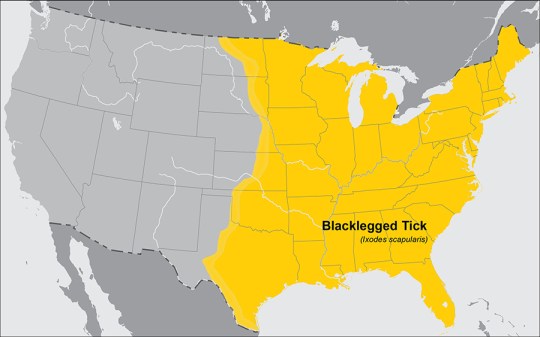
Here’s where the black legged tick able to transmit Borrelia burgdorferi and B. mayonii (which cause Lyme disease), Anaplasma phagocytophilum (anaplasmosis), B. miyamotoidisease (a form of relapsing fever), Ehrlichia muris eauclairensis (ehrlichiosis), Babesia microti (babesiosis), and Powassan virus (Powassan virus disease) lives:

lgmap-blacklegged_tick

Here’s where the American dog tick capable of transmittingTularemia and Rocky Mountain spotted fever lives:

CS4_Tick Basemap_v8.ai

Here’s where the brown dog tick capable of transmitting Rocky Mountain spotted fever lives:

CS4_Tick Basemap_v8.ai

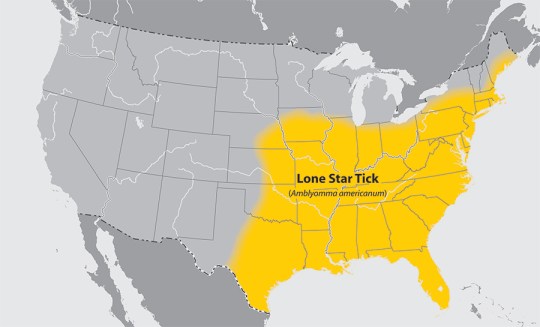
Here’s where the lone star tick capable of transmitting Ehrlichia chaffeensis and Ehrlichia ewingii(which cause human ehrlichiosis), Heartland virus, tularemia, and STARI live:

lgmap-lone_star_tick-2

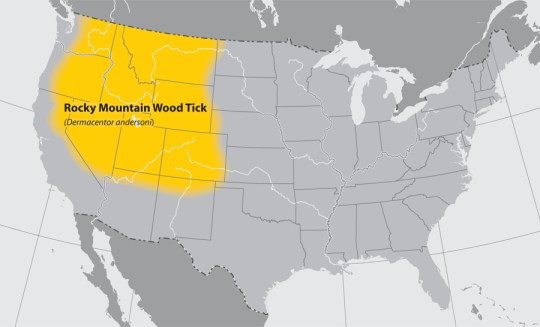
Here’s where the Rocky Mountain wood tick capable of transmitting Rocky Mountain spotted fever, Colorado tick fever, and tularemia lives:

CS4_Tick Basemap_v8.ai

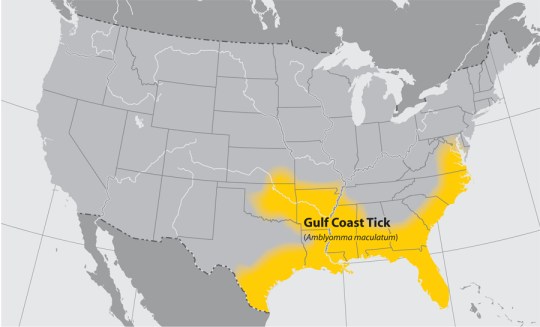
Here’s where the Gulf Coast tick capable of transmitting Rickettsia parkeri rickettsiosis, a form of spotted fever lives:

CS4_Tick Basemap_v8.ai

And lastly, where the Western black-legged tick capable of transmittingAnaplasmosis and Lyme disease lives:

CS4_Tick Basemap_v8.aiTick distribution maps found:  https://www.cdc.gov/ticks/geographic_distribution.html

In total – 7 types of ticks spreading deadly diseases in every single state in the U.S. but we know more about a tropical disease that in 80% of those who contract it have ZERO symptoms, and 1 out of 5 will have mild symptoms that last a week.  https://madisonarealymesupportgroup.com/2016/12/21/how-zika-got-the-blame/. Call me crazy, but the disparity of risk between the two diseases couldn’t be greater.

Not to mention that migrating birds are transporting ticks worldwide:

https://madisonarealymesupportgroup.com/2019/03/09/danish-study-shows-migrating-birds-are-spreading-ticks-their-pathogens-including-places-without-sustainable-tick-populations/

https://madisonarealymesupportgroup.com/2019/04/11/african-tick-found-on-untraveled-u-k-horse/

https://madisonarealymesupportgroup.com/2018/06/08/hemorrhagic-fever-virus-found-on-ticks-on-migratory-birds/

https://madisonarealymesupportgroup.com/2017/08/17/of-birds-and-ticks/

https://madisonarealymesupportgroup.com/2016/10/02/the-role-of-birds-in-tickborne-illness/

https://madisonarealymesupportgroup.com/2018/11/05/hawk-found-carrying-asian-long-horned-tick-the-one-that-drains-cattle-of-all-their-blood/

I literally could go on and on with this….

Time to focus on things that are side-lining Americans.

NY TV Reporter Tells Her Own Lyme Disease Story

https://www.lymedisease.org/new-york-tv-reporter-tells-her-own-lyme-disease-story/

New York TV reporter tells her own Lyme disease story

https://www.localsyr.com/news/local-news/living-with-lyme-newschannel-9-reporter-nicole-sommavilla-opens-up-about-her-health-journey/1914141778

4 Min News Video here of Ms. Sommavilla’s story.  

____________________

**Comment**

Again, we need to keep sharing our stories until authorities listen and change things.  Another great example of a person who NEVER saw the tick or rash.  With all the people I work with – hardly anybody does, yet they make it sound as if it’s a prerequisite.  Please know the percentages seeing the rash very from 27-80% – hardly a sure thing:  https://madisonarealymesupportgroup.com/2019/02/22/why-mainstream-lyme-msids-research-remains-in-the-dark-ages/  And in the 1st ever patient group in Lyme, Connecticut, only a quarter had the rash.

Notice how severe this case is.  I assure you there are thousands more just like this that never got the proper diagnosis.

Thank God for doctors WHO USE THEIR GOD-GIVEN BRAINS!

For a wonderful 5-part series by NBC NY on Lyme/MSIDS:

https://madisonarealymesupportgroup.com/2017/10/24/lyme-wars-part-1-julias-story/

https://madisonarealymesupportgroup.com/2017/10/25/lyme-wars-part-2-kyra-overcomes-chronic-lyme-diagnosis/

https://madisonarealymesupportgroup.com/2017/10/26/lyme-wars-part-3/

https://madisonarealymesupportgroup.com/2017/10/27/lyme-wars-part-4/

https://madisonarealymesupportgroup.com/2017/10/28/lyme-wars-part-5-coinfections/


Neuro-Lyme is Like Hitting My Head Against a Fog Wall

https://www.lymedisease.org/starling-fog-wall/

Neuro-Lyme is like hitting my head against a fog wall