Whether you suspect you have Lyme disease, have recently been diagnosed, or have been struggling with chronic symptoms for a long time, we know you have questions — lots of them. You’ve come to the right place for answers.
The author of the best-selling book, Unlocking Lyme, Dr. Bill Rawls isn’t just a Lyme-literate medical doctor (LLMD) — he also knows firsthand where you’re coming from: In the middle of his successful OB-GYN career, Dr. Rawls’ life was interrupted by Lyme disease and fibromyalgia. In his journey to overcome it, he explored nearly every treatment possible – from conventional medicine to a range of alternative therapies — until he finally discovered what worked.
Since his recovery more than a decade ago, Dr. Rawls has helped thousands of patients find their path to healing from Lyme disease and related chronic illness. Now, he’d like to help you. Come with your questions, and he’ll answer as many of them as possible.
In this Webinar, Dr. Rawls will discuss:
The best and worst lab tests and evaluations for diagnosing Lyme disease and common coinfections
When and how to safely use antibiotics and other conventional treatments
The most effective herbs, foods, and natural remedies for overcoming chronic Lyme
How to identify and cope with Lyme flare-ups, relapses, and Herxheimer reactions
Expert guidance on easing your worst symptoms, including chronic fatigue, pain, brain fog, and neurological and cardiac symptoms
Numerous other insights and answers throughout the live Q&A with Dr. Rawls
Gender bias is now a widely recognized problem in research. Sometimes this happens because women haven’t been studied in the first place. Even when they have been included in the research, their results may not be analyzed separately from those of men. Because of this, we don’t know much about how women differ from men in how they contract a disease, are diagnosed, or respond to treatment.
Is this an issue in Lyme disease? Are women more likely to get Lyme disease, more difficult to diagnose, or more prone to treatment failure? We decided to launch a research study using data from the MyLymeData patient registry. To kick off the study, we asked Dr. Raphael Stricker to explain how males and females with Lyme disease might differ. His video presentation is included below.
Lyme Disease Gender Differences
Dr. Stricker identified four major areas in Lyme disease where males and females are not alike:
Women may attract more ticks and have more atypical Lyme rashes than men (Josek 2019).
Commercial two-tier Lyme testing favors men over women, because men have more positive ELISA tests and more positive Western blots (Feder 1992, Rebman 2015, Schwarzwalder 2010).
Women have an exaggerated response to Borrelia infection, with more inflammatory and inhibitory cytokines than men. This may promote the evolution of chronic Lyme disease. (Jarefors 2006).
Women may have a higher treatment failure rate.
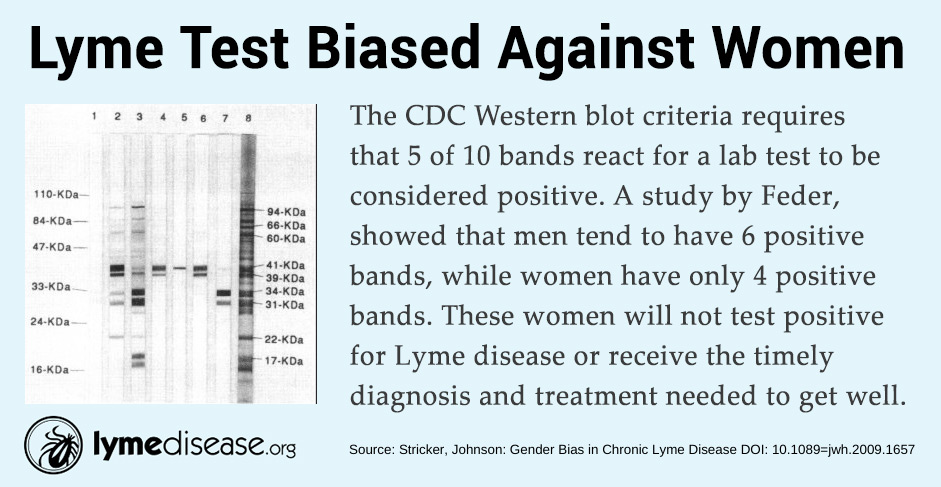
Lyme Tests Are Biased To Detect More Males
The CDC Western blot criteria requires that 5 of 10 bands react for a lab test to be considered positive. A study by Feder, showed that men tend to have 6 positive bands, while women have only 4 positive bands. These women will not test positive for Lyme disease or receive the timely diagnosis and treatment needed to get well (Stricker, Johnson 2009).
Lyme Disease Prevalence — Almost Twice As Many Females As Males
According to the CDC, most reported surveillance cases are male—58% males vs 42% females. The CDC statistics also show a bimodal distribution of Lyme disease — with children and adults over 50 reporting the most cases. Both of these assumptions have recently been called into question by other big data studies.
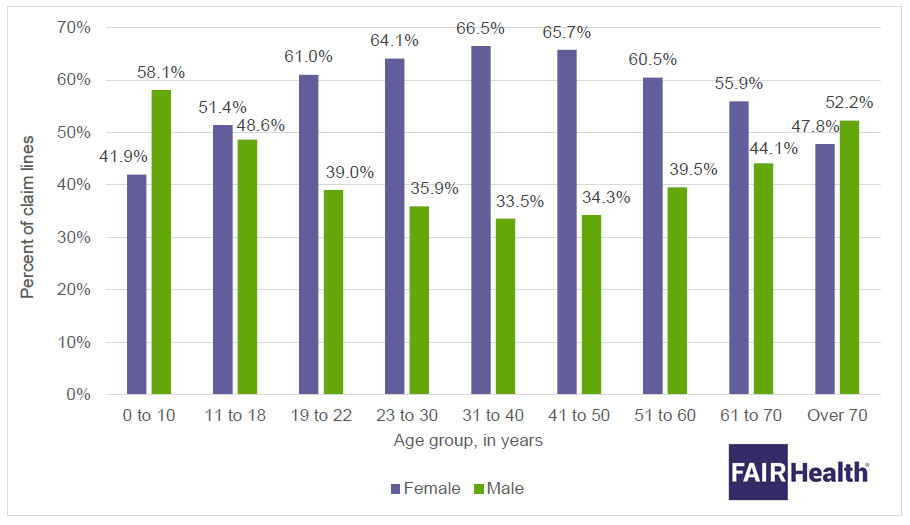
For example, FAIR Health, one of the largest insurance claims data bases, recently released a report on Lyme disease that shows more insurance claim lines with Lyme disease diagnoses were submitted for females than males and females do not have a bimodal age distribution. In fact, between the ages of 23-50, there were almost twice as many females as males with Lyme disease. (FAIR Health 2019).
According to CDC data for 2017, among patients with reported confirmed and probable cases of Lyme disease, males predominated over females by 58 percent to 42 percent—nearly the opposite of FAIR Health findings.
— FAIR Health 2019.
FAIR Health researchers conclude that the difference between their statistical observations and those of the CDC stats may be due to the fact that FAIR Health data is from clinical practice, while CDC-reported cases are inherently skewed toward diagnosis based on lab tests. This result is similar to the findings reported in a Harvard study using Quest Lab data for Lyme disease. That study found that while males were more likely to have positive lab test results, overall, more females contracted the disease (Lee-Lewandrowski 2019).
Both the FAIR Health and Quest lab study support Dr. Stricker’s observation that Lyme lab tests favor males over females in terms of positive results. They also suggest that there may be considerable variation between the sexes in Lyme disease.
Fair Health report on Lyme disease prevalence — For some ages (23-50), there were almost twice as many females as males with Lyme disease.
Research studies often exclude women because of pregnancy-related concerns. Or, they may simply neglect to take the extra step of evaluating differences between the sexes. Often what we “know” in science is based on men who participated in a study or averages across the sexes. As a result, we know very little about women. The end results is that “data can be sexist” as the Gates Foundation points out in its 2019 Annual Letter (Gates Foundation 2019).
Looking at the broader issue of gender bias in women, we are just now beginning to understand sex-based differences that may be key in medicine (Epstein 2019). For example, women having heart attacks are diagnosed less timely. Women are also 50-75% more likely than men to have adverse side effects from drugs (Epstein 2019). A recent article in Nature found that male and female mice have remarkably divergent biological pathways for pain – driven in part by distinct immune cell types and hormones (Dance 2019). Males and females also may respond to pain medications differently. As a result, drug companies are thinking about sex-specific pain treatments. Should we be looking at sex-specific antibiotics in Lyme disease?
Eighty-three percent of patients with persistent Lyme disease that are enrolled in MyLymeData are female. Our team of researchers is exploring MyLymeData to see what the data so graciously donated by patients might yield on the topic of gender bias in Lyme disease. We will be sure to keep you posted.
The MyLymeData Viz Blog is written by Lorraine Johnson, JD, MBA, who is the Chief Executive Officer of LymeDisease.org. You can contact her at lbjohnson@lymedisease.org. On Twitter, follow her @lymepolicywonk. If you have not signed up for our patient-centered big data project, MyLymeData, please register now.
The American Medical Association (AMA) spent over $20.4 million in 2018. It is a massive lobbying group whose objective is to maximize doctors’ earnings, interests, and protections under law. It has a track record of putting its interests before patients’ interests.
In June 2019, the AMA adopted a policy to focus on pressing states to pass laws that remove the vaccine decision from parents of children as young as 12 for the purpose of overriding parental objections to vaccines.
The AMA’s focus undermines natural rights and federal law which requires parents to be informed of vaccine information including risks and benefits prior to the distribution of a vaccine.
The AMA’s focus undermines natural rights cemented into U.S. law by U.S. Supreme Court precedents affirming long-standing cultural norms of the primary role of parents in the custody, care, and nurture of their children.
The AMA is a professional association whose agenda is to maximize its member physicians’ interests by shaping and directing health care policy, public health policy, and industry profitability. The parent’s interest is to make the best decisions for the individual child. The vaccine decision must remain with the child’s parents.
It Is Unconstitutional and Anti-American to Remove a Parent’s Right to Direct Healthcare Decisions for Our Children
The undersigned citizens of the United States respectfully request that state senators, state representatives and assembly people, and governors of the great states commit to affirming and upholding our medical, parental, and patient rights to make the decisions that affect the health and well-being of ourselves and our children.
The American Medical Association (AMA) voted in June 2019 to make it a mission to remove “the barrier” of “refusnik parents” to all children receiving all childhood vaccinations. It seeks to allow minor children as young as 12 years of age to provide their own consent in contravention of parental authority. Existing federal law—42 U.S. Code § 300aa–26—and Supreme Court precedent—Parham v. J.R. and Troxel v. Granville—make parental rights paramount to all other interests. This same federal statute establishes a compensation program for vaccine injury and death, plus unprecedented liability protection for vaccine manufacturers and the health care professionals who administer vaccines, because there is sufficient risk and established harm caused by vaccinations to justify and necessitate such a program.
Mandatory childhood vaccinations are used for preventative purposes in healthy children, not for emergency medical necessity, so such laws removing parental rights do not pass the “compelling state interest” test required to lawfully restrict a fundamental freedom. Any law that limits basic human rights—such as parental rights and informed consent to medical intervention—must undergo rigorous scrutiny and be shown to be strictly necessary, more than legitimate or important, narrowly focused on the cause of the problem, and the least restrictive of all methods. In the case of vaccines, passing strict scrutiny would require a public health emergency during a widespread “epidemic” and address the specific disease outbreak in question. It’s an overreach, and not strictly necessary, to remove parental knowledge and consent to all mandatory childhood vaccinations. The AMA is a professional association whose objective is to protect the interests of its member physicians. In the event of harm caused by healthcare decisions made in breach of parental authority, neither the AMA nor implicated physicians will be liable. The child’s parents will still be financially responsible (not to mention grievously disconsolate).
Parents, as the ultimate stakeholders, are the most invested in, and must continue to direct the decisions that determine, the child’s health and well-being. Removing parents from health decisions will jeopardize the child’s health and threaten the parent-child relationship and familial integrity. It is well established in natural, divine, and religious laws, and upheld in long-standing historical and cultural norms of the Western world that parents play the primary role in the upbringing and nurturance of our children. The alternative is medical authoritarianism and abhorrent to Americans. Please represent us and stand for the encompassing and inherent freedoms that define who we are.
Corruption in Global Health Care May Exceed $1 TRILLION
Analysis by Dr. Joseph Mercola
January 08, 2020
STORY AT-A-GLANCE
Dishonesty and fraud in the health care system, including its academic and research communities, are significant barriers to the implementation of universal health coverage, yet this corruption is rarely if ever discussed, let alone addressed in any meaningful way
The less transparent a health system is, the more corrupt it becomes. Weak adherence to the rule of law and few accountability mechanisms further invite corruption and, with it, health system performance, quality and efficiency plummet
The amount of corruption found in any given system is dependent on three variables: Monopoly on the supply of a product or service, the level of discretion enjoyed by suppliers, and the supplier’s accountability to others
Three factors governing the engagement in corrupt practices in the health care system are: being in a position of power; financial, peer and/or personal pressures; and cultural acceptance of corruption. In order for anticorruption measures to succeed, these three factors all need to be addressed
Drug research is beset by an astoundingly high incidence rate of scientific misconduct, with 72% of retracted drug studies being retracted due to things like data falsification, fabrication, unethical conduct and plagiarism
Investigations assessing the prevalence of scientific fraud and/or its impact show the problem is widespread and serious, to the point of making most of “science-based” medicine a genuine joke. Conflict of interest is another pervasive problem that threatens the integrity and believability of most studies.
We’ve been repeatedly faced with study findings that are clearly tainted with industry bias. For example, a 2014 study1,2,3 funded by the American Beverage Association purported to have found that diet soda makes you lose more weight than drinking no soda at all.
Its findings blatantly contradicted a massive body of research demonstrating that artificial sweeteners disrupt your body’s metabolism and lead to greater weight gain than regular sugar.
Scientific Fraud Has Lethal Consequences
Another example is Dr. Don Poldermans’ fraudulent beta blocker study, which is suspected of having led to the deaths of as many as 800,000 Europeans. I wrote about this scandal in “Beta Blockers Killed 800,000 in 5 Years — Good Medicine or Mass Murder?”
The discredited paper had a profound influence as it served as the basis for establishing the use of beta blockers in noncardiac surgery patients as “standard of care.”4 Poldermans — who was fired for scientific misconduct in 2011 — was also the chairman of the committee that drafted that guideline.5
This case is a sobering example demonstrating the need for maintaining strict scientific integrity, and why the issue of conflicts of interest really needs to be more widely understood and addressed. Sadly, there are enough cases like this to fill several books.
Scientific misconduct can have a very real impact on your health, or someone you love, as doctors routinely use published research to implement or alter treatment protocols. As noted in a 2012 paper in the American Journal of Medicine:6
“Recent allegations of fraud committed by one of the most prolific researchers in perioperative medicine, Don Poldermans, have left many clinicians in a state of disbelief …
The effects of fraud in perioperative medicine are particularly caustic owing to a profound domino effect. Many investigators devoted their academic careers to following the footsteps of investigators such as Poldermans.
Similarly, funding agencies supported this line of enquiry, incurring significant cost and expense. Most importantly, hundreds of patients were exposed to treatments that may have been harmful in an effort to advance this research agenda …
Because research misconduct in perioperative medicine can be so damaging, we present strategies to prevent such events in the future. Without such reform, fraud in research may very well continue. The price for such misconduct is simply too great to pay.”
Conflicts of Interest Threaten Public Health
Disturbingly, conflicts of interest are present at all levels, including our most prestigious public health agencies, as discussed in my November 19, 2019, article, “CDC Petitioned to Stop Lying About Pharma Funds.”
While the U.S. Centers for Disease Control and Prevention has long fostered the perception of independence, claiming it does not accept funding from special interests,7 the agency has in fact made itself beholden to the drug industry by accepting millions in corporate donations through its government-chartered foundation, the CDC Foundation, which funnels those contributions to the CDC after deducting a fee.8
Several watchdog groups — including the U.S. Right to Know (USRTK), Public Citizen, Knowledge Ecology International, Liberty Coalition and the Project on Government Oversight — recently filed a petition,9 urging the CDC to cease making these false disclaimers.10
According to the petition,11 the CDC accepted $79.6 million from drug companies and commercial manufacturers between 2014 and 2018 alone. Since its inception in 1995, the CDC Foundation has accepted $161 million from private corporations.
The CDC is supposed to be a public health watchdog. It has tremendous credibility within the medical community, and part of this credibility hinges on the idea that it’s free of industry bias and conflicts of interest.
By accepting money from drug companies and vaccine makers, one has to wonder whether that money might be having an impact on the agency’s health recommendations, as investigations have repeatedly and consistently shown that funding plays an enormous role in decision-making and research outcomes.
Corruption in Global Health Is an Open Secret
In a December 7, 2019, article12 in The Lancet, Dr. Patricia Garcia — affiliate professor of global health at Cayetano Heredia University in Lima-Peru and a former minister of health13 — points out that “Corruption is embedded in health systems.”
In it, she argues that dishonesty and fraud in the health care system as a whole, including its academic and research communities, is “one of the most important barriers to implementing universal health coverage,” yet this corruption is rarely if ever discussed, let alone addressed in any meaningful way.
“Policy makers, researchers, and funders need to think about corruption as an important area of research in the same way we think about diseases. If we are really aiming to achieve the Sustainable Development Goals and ensure healthy lives for all, corruption in global health must no longer be an open secret,” Garcia writes.14
“Corruption is an open secret known around the world that is systemic and spreading. Over two-thirds of countries are considered endemically corrupt according to Transparency International … Corruption in the health sector is more dangerous than in any other sector because it is literally deadly …
It is estimated that, each year, corruption takes the lives of at least 140,000 children, worsens antimicrobial resistance, and undermines all of our efforts to control communicable and non-communicable diseases. Corruption is an ignored pandemic.”
Corruption Is a Cancer
In her paper, Garcia summarizes the history of corruption, how it got started and what allows it to spread. As a general commonsense rule, the less transparent a health system is, the more corrupt it becomes.
Weak adherence to the rule of law and few accountability mechanisms further invite corruption into its midst and, with it, health system performance, quality and efficiency plummet.
“It is estimated that the world spends more than US$7 trillion on health services, and that at least 10–25% of global spending is lost directly through corruption, representing hundreds of billions of dollars lost each year.
These billions lost to corruption exceed WHO’s estimations of the amount needed annually to fill the gap in assuring universal health coverage globally by 2030. However, the true cost of corruption for people is impossible to quantify because it can mean the difference between wellness and illness, and life and death,” Garcia writes.
3 Variables That Influence Corruption
Garcia cites research showing the amount of corruption found in any given system is dependent on three variables:
Monopoly (M) on the supply of a product or service
The level of discretion (D) enjoyed by suppliers
The supplier’s accountability (A) to others
The amount of corruption (C) can thus be expressed as: C = M + D – A.
“This equation shows that the more concentrated a supply of a good or service is, the higher the discretionary power of those that control the supply is, and the lower their accountability to others is; therefore the amount of corruption will be higher,” Garcia writes.15
“Unfortunately, these are the characteristics of health systems. The complexity of the system, high public spending, market uncertainty, information asymmetry, and the presence of many actors (i.e., regulators, payers, providers, consumers and suppliers) interact at different levels, increasing susceptibility to corruption.”
Corruption also presents itself in a variety of ways. Bribery, extortion, theft, embezzlement, nepotism, the exertion of undue influence, favoritism, medical services done for financial gain rather than medical necessity, kickbacks, price inflation, manipulation of data and fraudulent billing are all examples given by Garcia.
Scientific fraud and misconduct also belong on this list. As detailed in “Why Your Doctor’s Advice May Be Fatally Flawed,” drug research is beset by an astoundingly high incidence rate of scientific misconduct, with 72% of retracted drug studies being retracted due to things like data falsification, fabrication, unethical conduct and plagiarism.16,17
Only 28% of retracted drug studies were retracted due to actual errors. Medical research also has a severe replication problem, with a vast majority of studies being impossible to replicate.
How Can We Control Corruption?
Corruption can be controlled, but it requires both good governance and a change in social norms, which can be difficult to achieve. Garcia explains:18
“Transparency International theorize that if institutions were strong, people wouldn’t even be tempted to participate in corruption.
The second group of theories, those concerning the way that people think, focus on the way people process rule breaking or an individual’s decision to engage in corruption. This process can be represented by the following equation:
Bp>Cpsy + pp (Ccrim + Csoc) + Cfav
In this equation, Bp represents the perceived benefit of an act of corruption, Cpsy the psychological costs, pp the perceived probability, Ccrim the criminal costs, Csoc the social costs to the individual, and Cfav the costs of doing the corrupt act.
From this equation, a corrupt act is more likely to happen if the perceived benefit (Bp) is higher than the sum of the psychological costs (or how the person will feel, which has to do with their personal values), the perceived probability of the criminal costs and social costs to the individual (which has to do with social norms), and the costs of doing the corrupt act (how easy or difficult it would be).
This theory highlights the importance of social norms. Experts agree that the two theories converge because social norms are assured through institutions. The challenge is how can strong institutions be created, and how can social norms be changed, to fight corruption?”
3 Factors That Govern Corrupt Practices
She also cites research suggesting the three factors governing the engagement in corrupt practices in the health care system are:
Being in a position of power — Systems with poor oversight invite abuse of power
Financial, peer and/or personal pressures
Cultural acceptance of corruption
In order for anticorruption measures to succeed, these three factors all need to be addressed. Anticorruption measures suggested by experts include the following:19
Strengthening accountability
Improving data
Improving supervision
Improving salaries
Providing incentives to reward good performance and sanctioning poor performance
Increasing transparency (active disclosure of how decisions are made and performance measures)
Community involvement and providing a platform for citizen feedback
Detection and enforcement by law enforcement
Enhancing financial management
Managing conflicts of interest
Improving policies and processes for investigations and the penalization of corrupt acts
Using technology platforms for active surveillance
Crowdsourcing information
The use of big data, data mining and pattern recognition to identify fraud or abuse profiles
Still, Garcia notes that when searching the academic literature, she found “an absence of evidence on what works to reduce corruption in the health sector,” and there’s no data showing how well any of these measures actually work.
“There are already several authors who have highlighted open research questions that need to be addressed: we need to start working on them,” she says, adding: “We can start by designing and testing anti-corruption interventions for the health sector, for global health. We could start from the bottom up, taking small steps.
We need rigorous research methods to prove or disprove that a strategy works. Addressing and ending corruption will require the participation of researchers from several disciplines and multiple approaches, and the commitment of funders to supporting serious research. Corruption in global health should not continue as an open secret, it has to be confronted and brought to light.”
Death by Modern Medicine
For all the scientific breakthroughs we’ve been gifted with over the past century, modern medicine still leaves an awful lot to be desired, and the corruption permeating the whole system is one of the primary reasons for why it delivers such abysmal results.
In her book, “Death by Modern Medicine,”20 Dr. Carolyn Dean talks about how, for well over a century, the treatment of symptoms with drugs has dominated the definition of “health care.” It’s a deliberately schemed and manipulated paradigm that’s been packaged and sold through:
The insurance industry’s (including Medicare’s and Medicaid’s) methodology for payment, which doesn’t recognize nutritional care or proven naturopathic approaches to health care
Direct-to-consumer drug advertising
Influencing physicians and other health care providers through gifts, honoraria for speaking engagements, and financial support for training programs, which is simply another form of advertising
Intense lobbying by PhRMA — a leading biopharmaceutical trade group — and individual drug makers
The end result is a sickness industry that kills an enormous amount of people each year. In 2000, Dr. Barbara Starfield published a paper21 showing 225,000 Americans die each year from iatrogenic causes, meaning their death is caused by a physician’s activity, manner or therapy.
I read her article in the print in the July 2000 copy of JAMA and from it created the viral meme that took off, yet has rarely been attributed to me, that doctors were the third leading cause of death. Ironically, Starfield herself died from a medical error over 10 years later, when she suffered a lethal reaction to an inappropriate antiplatelet drug.
Remarkably, matters have not improved one whit since then. Research22 published in 2013 estimated that preventable hospital errors kill 210,000 Americans each year, and a 2016 study23published in the BMJ estimated that medical errors kill 250,000 Americans each year.
That’s an annual increase of about 25,000 people from Starfield’s estimates, and these numbers may still be vastly underestimated, as deaths occurring at home or in nursing homes were not included.
Indeed, when they included deaths related to diagnostic errors, errors of omission and failure to follow guidelines, the number of preventable hospital deaths skyrocketed to 440,000 per year, which begins to hint at the true enormity of the problem.
Many Medical Procedures and Treatments Are Unnecessary
Overtesting and overtreatment are part of the problem and corruption plays a role here as well. Instead of dissuading patients from unnecessary or questionable interventions, the system rewards waste and incentivizes disease over health. According to a PLOS ONE report24 published in 2017, 20.6% of all medical care is unnecessary, including:
22.0% of prescription medications
24.9% of medical tests
11.1% of procedures
The top three most commonly cited reasons by doctors for overtreatment were:
Fear of malpractice (84.7%)
Patient pressure/request (59.0%)
Difficulty accessing medical records (38.2%)
A majority of respondents (70.8%) also agreed that unnecessary procedures are more likely to be performed when the doctor profits from them, and “Most respondents believed that de-emphasizing fee-for-service physician compensation would reduce health care utilization and costs.” To learn which tests and interventions may do more harm than good, browse through the Choosing Wisely website.25
Exercising Good Judgment in an Era of Conflicting Interests
Ultimately, the take-home message here is that even if a drug or treatment is “backed by science,” this does not guarantee that it’s safe or effective. Likewise, if an alternative treatment has not been published in a medical journal, it does not mean it is unsafe or ineffective.
On the whole, modern medicine grossly undervalues and often flat out ignores the influence of diet and lifestyle factors such as sleep, exercise, time-restricted eating and exposures to the sun and nature (which are beneficial) and electromagnetic fields and toxins (which are harmful).
This is why it’s crucial to have a philosophical framework to assist you in evaluating health and medical recommendations. Consider the funding and look for evidence of replication and the building of consensus through time.
Anytime you’re trying to address a health issue, make full use of all the resources available to you, including your own sense of common sense and reason. Since it is well established that most drugs do absolutely nothing to treat the cause of disease, it would be prudent to exercise the precautionary principle when evaluating a new drug claim, as it is likely to be flawed, biased or worse.
Also, if you’re facing a health challenge, seeing a competent conventional physician to rule out a serious condition is just the beginning. It would be in your best interest to also identify a qualified natural health consultant, someone who really understands health at a foundational level, to make sure you’re addressing the root of your problem.
According to Mary Beth Pfeiffer, an investigative journalist writing the book, “The First Epidemic,” which is about ticks and the diseases they carry, scientific debate on tick borne illness is tightly controlled by a cabal – most of which work at the CDC
It has become blatantly obvious that the CDC will go to great lengths to insure that Lyme disease remains within its narrow definition in order to fit the vaccine model. Chronic Lyme does not fit any vaccine model.
The CDC has long known about the virulence and persistence of this spirochete focusing on a vaccine as the cure-all to this world wide epidemic. The late stage/chronic Lyme community has become collateral damage for a vaccine market in the course of a government sponsored initiative as Baxter’s phase III clinical trials are underway.
The CDC has aligned itself with institutions/researchers with a bias against persistent infection and has misused its authority by inappropriately allotting government funds to Mass General Hospital (Dr Alan Steere) and New York Medical College (Dr Gary Wormser) as identified in the following communications.
The Principle Investigators of the two previous Lyme vaccines: Allen C. Steere for SmithKlineBeecham’s LymeRix and Gary Wormser for Connaught’s vaccine (which never made it to market) have conceptualized a disease that would enable vaccine development. The one-size-fits-all Lyme treatment guideline (lead author: Gary Wormser) matches the conceptualized disease.
A preventive vaccine for Lyme disease would not satisfy the FDA if a chronic persistent infection and seronegative disease exist. Post-treatment Lyme disease syndrome is simply a fabricated medical condition disguising treatment failure.
It remains questionable that a Lyme disease vaccine is practical for an infection that produces a lack of immunological memory (unlike Measles, Mumps etc.) so the Wormser study fabricating a six year strain-specific immunity makes perfect sense for the marketing/acceptance of such vaccine as identified in a letter to Editor in Chief, Ferric C. Fang, M.D. Infection and Immunity.
“PEOPLE AVOID AN HONEST ACADEMIC DEBATE. INSTEAD THEY REVERT TO AUTHORITIED INFORMATION AND BULL S _ _ _ , WHICH MEANS SOMETHING THAT IS SHORT OF LYING.” PETER GOTZSCHE
HERE ARE SOME THINGS I NOW KNOW FOR SURE, THINGS I WISH I’D KNOWN, LOOKING BACK ON MY LYME JOURNEY
As the saying goes, “hindsight is 20/20.” It’s easy for us to look back from the vantage point of experience and say, “I wish I’d done X,” or “If only I could have known Y.” It isn’t always so easy to see those options when we’re living our daily lives, making real-time decisions based on the information we have at the moment.
When I look back across my 20-year health journey, I recall many points of confusion, fear, and desperation. I remember the mixed messages from health professionals. I think back on the skepticism from those who were supposed to help me. I recollect the disbelief in myself, in what my body was telling me. I know so much now that I wish I’d known then. And while I can’t change my past, I hope I can use it to help make another patient’s health journey a little easier.
Here are some things I now know for sure, things I wish I’d known at various crucial points of my own journey:
I really was sick.
When I first developed a rash, and then hypoglycemia, and then a debilitating flu at age 19, I was not going crazy. I was not stressed. I was not run down. I did not need to exercise more. The symptoms were not psychosomatic. I had been bitten by a tick and was sick with real physical illnesses, namely Lyme and two of its co-infections Babesia and Ehrlichia. It would be another eight years until I was properly diagnosed. That delay was so extensive in part because of the disbelief or just plain ignorance of many health professionals. Naturally, I believed them too.
If I had been accurately diagnosed promptly, my whole life would have been different.
I was bitten by a tick in 1997, and perhaps again in 2001 or 2002, but I wasn’t tested for tick-borne diseases until 2005. Testing is faulty now and was even faultier then, so even if I’d been tested for Lyme or co-infections, I might have gotten a false negative and been told I was well.
But I also might have gotten a true positive. If I’d seen a Lyme Literate Medical Doctor (LLMD)—or even known that such a specialist existed then—they might have made a clinical diagnosis right away. I might have taken just three weeks of recommended antibiotics and been fine.
Instead, I developed chronic infections that, 20 years later, are in remission but by no means cured. I went through years of intense antibiotic therapy, including intravenous antibiotics, and I’m still on medications to this day. I don’t live my life with regret, but I would regret it if you were in the same position and didn’t learn from my story. If you discover a tick bite, or have symptoms of tick-borne illness, you don’t have to suffer for years without treatment. You can find a good LLMD in your area and get a head start on your return to wellness.
If a loved one has symptoms and doesn’t know about Lyme disease, or doesn’t know how to find a doctor, offer to go through the process with them. Remember that Lyme patients are often frightened, anxious, and even neurologically impaired. They need real help when it comes to navigating their path.
Lyme Literacy improves over time.
I don’t blame the many health practitioners who missed my case in 1997, because tick-borne disease wasn’t on the radar then. I believe that if I presented now with the same symptoms as I did in 1997, at least one of those practitioners would think about the possibility of tick-borne disease. Thanks to media coverage, increased awareness and education efforts, and, unfortunately, the expanding number of cases, Lyme literacy has greatly improved in the last 20 years. That should give us hope for the future.
Healing is not linear.
It took me a long time to get diagnosed. Therefore it took me a long time to get well. Along the way, there were many bumps in the road, and even some large potholes. Once I was diagnosed, I figured I’d take medicine and slowly get better, as one would from bronchitis or a sinus infection. But that’s not how it works with tick-borne disease. It can take a while for your LLMD to figure out the best treatment protocol for you since each case is unique. You will likely experience a nasty Herxheimer reaction, which means you will feel worse before feeling better. As I discussed in my Gratitude for the Long Game post, the journey through tick-borne disease is an up and down process like a spiraling helix that ultimately stretches towards wellness.
Not everyone will get it.
Lyme patients often spend time and energy they don’t have trying to convince doctors and loved ones that they really are sick. Once they are diagnosed, they may feel a sense of validation, but that doesn’t mean that everyone will immediately understand what they’re going through. I still knew people who didn’t believe me, those who thought my doctor was a quack, those who thought I just needed to “push through it.” These people didn’t understand that Lyme is complicated and comes in myriad forms; they didn’t want to hear about chronic illness and asked, “Aren’t you over that yet?”
At first, I wasted a lot of energy trying to convince these people of the truth. But eventually I realized, I don’t need them to understand. The only people who really need to get it are my doctor and me. I’m focused now on the people in my life who do want to understand, the folks who have offered unconditional support. I stopped worrying about the others. I don’t need their approval.
I came to understand that many of those people were well-intentioned, but were reacting out of fear or ignorance. Some of them did come around. My own family’s understanding of tick-borne illness blossomed alongside my own as they eventually read the books, watched the documentaries, attended the conferences, and accompanied me to doctor’s appointments. So while I have no more time to lavish on the doubters, I do hope that one day they will see the light.
No two cases are alike.
Every case of tick-borne disease is different; that means every treatment protocol is different, too. Patients write all the time to ask me what particular medication I took. But it doesn’t help for me to say which medications I’ve taken. Fact is, I’ve used many different combinations over time but never a single magic cocktail. That’s because what worked for me might not work for you, and vice-versa. It can be easy to think, “Well antibiotic X worked for her in five weeks, so it should work for me too.” Or, “My friend got better from Lyme in one month, so my son should, too.” It’s imperative to remember that each case is unique. Be patient with yourself, or with your loved one, knowing that each body heals at its own pace.
It gets better.
When I was bedridden with exhaustion, migraines, aching joints, and insomnia, I never, ever believed I could have gotten as well as I have. I am heading into the new decade still managing my tick-borne illnesses, but I’m doing it in the context of a full and happy life. Reflecting on my past has given me gratitude, wisdom, and resilience, and those tools will help me see clearly as I step into 2020. May your vision also be clear, and your new year bright!
Opinions expressed by contributors are their own.
Jennifer Crystal is a writer and educator in Boston. Her memoir about her medical journey is forthcoming. Contact her at lymewarriorjennifercrystal@gmail.com.