The Quiet Epidemic Film Presentation at the U.S. Capitol November 20th
Carl Tuttle
Hudson, NH, United States
Oct 29, 2024
The Quiet Epidemic Film Presentation at the U.S. Capitol
Please join us on Capitol Hill for a special presentation of the award-winning documentary The Quiet Epidemic
Hosted by Senator Richard Blumenthal, with a special appearance by Chris Meloni, Actor & Global Lyme Alliance Celebrity Ambassador
Since the earliest days of production, the team and supporters behind The Quiet Epidemic hoped the film might one day screen on Capitol Hill, and that moment has arrived.
Please join us for a free and open to the public presentation of The Quiet Epidemic on Wednesday, November 20th, from 5:30 PM to 9:00 PM, at the U.S. Capitol. The film will be preceded by a reception and followed by a discussion and Q&A with the film’s subjects, experts and actor Chris Meloni.
While the event is free to attend, RSVPs via Eventbrite are required for entry. You’ll find a PDF invitation attached to this email which includes the RSVP link—please circulate this widely, as our team is prohibited from promoting the event on social media. Details regarding the exact venue location within the Capitol will be sent to all registrants via Eventbrite approximately one week prior to November 20th.
The Quiet Epidemic team would like to thank our generous sponsors who have made our Capitol Hill events possible: LymeLight Foundation, Global Lyme Alliance, Sarena Snider, Project Lyme, NatCapLyme and lymeLNK. Among our sponsors are The Quiet Epidemic Executive Producers Phyllis & Scott Bedford—founders of LymeLight Foundation—and Sarena Sarena, each of whom generously supported the creation of the film itself, the film’s festival tour and release, and our team since the very beginning.
Please share the Eventbrite link and the attached PDF with anyone in your network who may wish to attend this event—especally those in the Washington D.C. area. We also encourage you to invite your representatives and include a brief statement about the impact Lyme has had on your life, and the prevalence in their state.
This is a culminating moment for The Quiet Epidemic film and impact campaign, nine years in the making. Thank you for being a part of this journey and for making it possible in so many ways! We hope to see you in D.C.
Over 30 U.S. Schoolchildren Died Suddenly This Week As Deaths Surge Among COVID-Vaxxed
Fact checked by The People’s Voice Community
October 12, 2024Baxter Dmitry
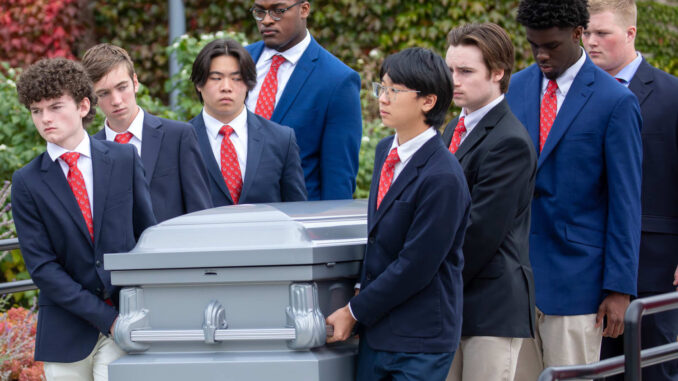
At least thirty US school children whose parents were told the COVID mRNA shots were “safe and effective” died suddenly and unexpectedly in the US this week as the death toll continues surging among the vaccinated and boosted.
Many of the children died of medical emergencies including cardiac arrest and strokes as doctors warn they are now regularly witnessing “once-in-a-lifetime” disorders in children.
“This is the new normal… turbo cancers, died suddenly. My friend lost three friends in one week! Turbo cancers like this were virtually non-existent before the COVID shots,” explained MIT scientist and vaccine researcher, Steve Kirsch.
How long before we as a society can have an open and honest discussion about what is happening to the Covid-vaccinated before our eyes? (See link for article)
A large scale study from Korea revealed that the Pfizer and Moderna COVID shots have the greatest cardiac risk.
Dr. Brian Hooker’s damning testimony against all vaccines “My name is Dr. Brian Hooker, and I am a vaccine safety scientist serving as a chief scientific officer of Children’s Health Defense. I’m also the father of a severely vaccine injured adult son.
Next slide, please. This slide shows the expansion of the infant child vaccination schedule since 1962, as recommended by the CDC. Multivalent vaccines are counted based on the number of disease antigens. For example, the MMR vaccine counts as three doses. In 1962, children received five vaccine doses, and in 1986, the schedule expanded to 25 doses of five different vaccine formulations.
Shortly after the passage of the 1986 National Childhood Vaccine Injury Act, the law was amended to essentially erect a liability shield protecting vaccine and the schedule expanded dramatically. By 2023, 73 doses of 16 different vaccine formulations were given to children up to age 18.
The FDA approved these formulations individually only with minimal and inadequate safety testing, and the CDC has never tested the cumulative effect of the vaccine schedule on childhood health outcomes. However, independent researchers have assessed the outcomes of vaccinated versus unvaccinated children. Next slide, please.
This slide shows the results of a paper that Neil Miller, a medical journalist, and I published in the journal Sage Open Medicine in 2020. Here, only vaccines given during the first year of life were considered. Any child who received one vaccine or more during the first year of life was considered vaccinated, and any child who received no vaccines during the first year of life was considered unvaccinated.
Deidentified records were taken directly from three medical practices in different locations within the US. The odds ratios or likelihood of a diagnosis is shown on the graphic. This demonstrates that vaccinated children were at least twice as likely to be diagnosed with developmental delays, ear infections, and gastrointestinal disorders.
The likelihood of an asthma diagnosis among the vaccinated group was 4.5 times higher than the unvaccinated group. Next slide, please. Affirming and extending these results is a study completed by Joy Garner of the control group that was published in the International Journal of Vaccine Theory Practice and Research in 2022.
Here, a control group of over 1,800 unvaccinated children recruited from 46 different states in the US were compared to the national average rates of the listed disorders. The national averages represent a population of children where 99.7% of the participants are vaccinated. Incidence of each disorder is shown as a percentage of each group of children on the graphic.
For each of the autoimmune, neurodevelopmental, and other disorders considered, the unvaccinated group fares much better with incidence rates between four and 20 times lower than their vaccinated counterparts. Next slide, please.
This is a comparison of the myocarditis diagnosis rates following the COVID-19 mRNA vaccines given during the pandemic. The first graphic on this slide is from a paper published by Mazzari et al. in the Journal Plus Medicine in 2022. It shows the incidence of myocarditis and pericarditis diagnoses within seven days of receiving either the first or second dose of the Moderna vaccine versus the unvaccinated control group, four males between 12 and 39 years of age.
The second graphic on the slide is from a paper published by Mvorak et al in the New England Journal of Medicine in 2021. It shows the incidence of myocarditis within 30 days of receiving the second Pfizer vaccine in the general population, as well as for 16 to 19 year old boys compared to unvaccinated controls.
Myocarditis is a serious disorder and 76% of all cases following COVID vaccination, as reported by VAERS, requires emergency care and or hospitalization. CDC significantly downplays myocarditis as a side effect of the vaccine. Vaccine injury is neither minor nor rare.
The 1986 National Childhood Vaccine Injury Act requires that the Department of Health and Human Services report to Congress on the state of vaccine safety in the U.S. every two years. It’s been almost 40 years since the 1986 act was passed, and HHS has never submitted a vaccine safety report to Congress.
Federal authorities are derelict in their duty to protect the people of the United States from debilitating and often life-changing vaccine adverse events. Thank you.”
BBC FINALLY acknowledge vaccine harms… but three years too LATE
Bev Turner on GB News
Oct. 27, 2024
BOOM!
Further damning vaccines is the fact that infant deaths due to vaccines are never listed on death certificates, but are listed as SIDS(sudden infant death syndrome) due to the lack of ICD (International Classification of Diseases) codes, sanctioned by the CDC and the WHO. Coroners can’t choose to list a death as due to a vaccine even if they wanted to because no code exists for it.
Sudden Infant Death Syndrome or SIDS remains the leading cause of death for infants in the U.S.
This remains the perfect cover-up for vaccine deaths.
The youngest death from Pfizer COVID shot is a 5-month-old who died within 24 to 48 hours after injection. The youngest death after Moderna COVID shot is a one-year-old. Source
Same story in both cases: found dead in the crib a couple of days after their injection.
Brazil faces same problems with Lyme disease as seen in the USA
An article published in the Brazilian Journal of Microbiology entitled “Brazilian borreliosis with special emphasis on humans and horses” examines the growing number of cases in Brazil of Lyme disease, referred to, in that country, as the Lyme-like or Baggio-Yoshinari Syndrome (BYS).
The authors take an in-depth look at BYS and how it compares to Lyme disease (LD) found in the United States. Although there are slight differences between the diseases, BYS and LD share similarities on many fronts. [1] “Despite the increasing number of suspect cases, this disease [BYS] is still neglected in Brazil by the medical and veterinary communities,” writes Basile and colleagues.
BYS causes some of the same symptoms seen in Lyme disease, such as erythema migrans, arthritis, neurological symptoms and cardiac disease. Both are difficult to diagnose.
“The disease is often unrecognized, especially at secondary or tertiary stages when patients do not remember what occurred months or years before the current disease,” stated Basile. “Certainly, many cases of unrecognized chronic neurological or articular disease are in fact cases of BYS not identified and treated at early stage.”
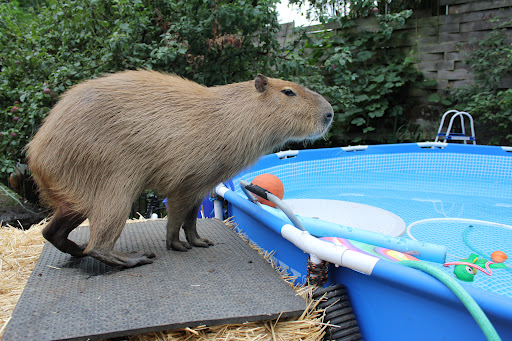
The capybaras, a popular Brazilian house pet, is a known reservoir for ticks infected with the Lyme-like or Baggio-Yoshinari Syndrome (BYS).
The Brazilian disease can also be multisystemic. “Baggio-Yoshinari Syndrome has been reported to cause neurological, cardiac, ophthalmic, muscle, and joint alterations in humans.” Furthermore, it has been associated with a high morbidity “due to the presence of symptom recurrence, severe reactive manifestations such as autoimmunity, and the need for prolonged treatment.”
According to Basile and colleagues, the disease progresses with recurrences, “especially if antibiotic treatment is initiated later than three months after infection.” Thus, treating the disease in its early stages is critical.
Cystic forms have been described, as well. “Because motile and spiral spirochetes were never isolated or cultured in Brazil, researchers from LIM-17 assumed that the etiological agent in Brazil was present in cystic form.”
The Brazilian patients may also be suffering from co-infections, as investigators identified other microrganisms in the blood of BYS patients. Tests showed “the occurrence of microorganisms with morphological structures similar to Mycoplasma spp., Chlamydia spp., and non-flagellated spirochetes in the peripheral blood of patients with BYS who were seropositive for B. burgdorferi sensu lato,” according to Basile. “Those patients exhibited negative serology for Mycoplasma spp. and Chlamydia spp.”
Additionally, laboratory testing for BYS is unreliable. There is a low sensitivity and specificity with the ELISA, enzyme immunosorbent assay, or western blotting for B. burgdorferi, in part because these tests utilize antigens from B. burgdorferi stricto sensu from the Northern Hemisphere.
Domestic pets have been described as potential reservoirs for ticks carrying the disease. The capybaras, a large rodent and popular house pet in Brazil, has been identified as a likely reservoir and is thus a threat in spreading the disease.
Wild and domestic animals can be infected. “Studies indicate that LB [Lyme borreliosis] in horses has clinical signs similar to the disease in humans, including fever and lethargy, arthritis, polysynovitis, lameness, muscle stiffness, abortion, meningitis, cranial neuritis, radiculoneuritis and encephalitis, uveitis, and premature death of foals,” according to Basile.
The authors’ findings reminds us that the challenges faced in the United States in gaining recognition for a disease that is growing in numbers and has the potential to cause chronic, debilitating illness is not unique to our country. The Brazilian patients suffering from the Lyme-like or Baggio-Yoshinari Syndrome are struggling to conquer the same obstacles.
“Lyme disease is a condition of extreme importance because it is a zoonosis that causes physical and psychological sequelae in affected individuals. It remains poorly investigated in Brazil, especially in the field of veterinary medicine. Therefore, studies describing the unique aspects of the disease in Brazil and the etiological agents found are needed.”
References:
Basile, R.C., et al., Brazilian borreliosis with special emphasis on humans and horses. Braz J Microbiol, 2016.
Update: Oliveira from the Ministry of Health, Brasilia, DF, Brazil was not able confirm Lyme-like borreliosis in Brazil in a letter in the journal Travel Medicine and Infectious Disease.1 “The interpretations of the results have not followed those recommended by the CDC.” writes Oliveira. Only three cases of Lyme-like borreliosis were identified. “This evidence reinforces the hypothesis that Lyme borreliosis does not occur in Brazil.” writes Oliveira.
de Oliveira SV, Faccini-Martinez AA, Cerutti Junior C. Lack of serological evidence for Lyme-like borreliosis in Brazil. Travel Med Infect Dis. 2018.
This is the case of a 40-year-old immunocompetent, female patient presenting with a “polymorphic persistent syndrome after a possible tick bite” (SPPT), a syndrome officially recognized by the French High Authority for Health (HAS). This patient presented with polymorphic symptoms and was unable to walk without a walker. Only ceftriaxone was effective. She experienced several episodes of remission and relapse, when treatments were started and stopped.
Finally, it was possible to achieve a prolonged final remission, persisting for 3 years after the last anti-infective treatments had been stopped. See link for full article
______________
**Comment**
A very interesting case study on a poor woman who like most Lyme/MSIDS patients have been through hell and back. Thankfully, Dr. Christian Perrone came the the rescue and now this woman has her life back.
ICYMI: Dr. Paul Requests Information on DHS & CISA’s Participation at Election Day Cybersecurity Conference
WASHINGTON, D.C. – U.S. Senator Rand Paul (R-KY), Ranking Member of the Senate Homeland Security and Governmental Affairs Committee, sent a letter to Department of Homeland Security (DHS) Secretary Alejandro Mayorkas requesting additional information regarding DHS’s and the Cybersecurity and Infrastructure Security Agency’s (CISA) attendance at a homeland security conference in Atlanta, Georgia and participation in a large-scale cybersecurity exercise on Election Day.
The letter notes over the past several months, foreign adversaries have sought to undermine confidence in our election through a series of cyberattacks aimed at the electoral process. The American public is appropriately concerned with the integrity of our election system. However, rather than monitoring cyberthreats that may occur relative to the election, senior federal officials plan to spend Election Day participating in a four-hour “Critical Infrastructure Tabletop” led by CISA staff, followed by a networking reception.
“If bad actors were looking to mess with electronic voting, this exercise would create a reasonable cover and method. If the actors wanted to rig electronic voting and needed an excuse to explain “anomalies” in the vote count, or to explain a sudden shut-down of key voting precincts, the cyber-exercise would provide those explanations.”
CODA: You might be interested in reading the Wikipedia entry for the group, AFCEA, which is sponsoring the cyber-security exercise. It reads in part:
“Armed Forces Communications & Electronics Association International (AFCEA), established in 1946, is a nonprofit membership association serving the military, government, industry, and academia as a forum for advancing professional knowledge and relationships in the fields of communications, information technology, intelligence and global security. AFCEA provides a forum for military, government, academic and industry communities with altogether more than 30,000 members. AFCEA supports local chapters, sponsors events, publishes a magazine, promotes STEM education and provides member benefits.
SIGNAL is a monthly AFCEA news magazine covering topics on command, control, communications, computers, intelligence, surveillance and reconnaissance (C4ISR); information security; cybersecurity; research and development; artificial intelligence, machine learning, big data, cloud technologies, electronics; and homeland security.

 Madison Area Lyme Support Group