Support H.R. 3817 – Protect Workers & Public From Parkinson’s Disease
|

|

|
|
https://www.thecut.com/2019/07/what-happens-when-lyme-disease-becomes-an-identity.html
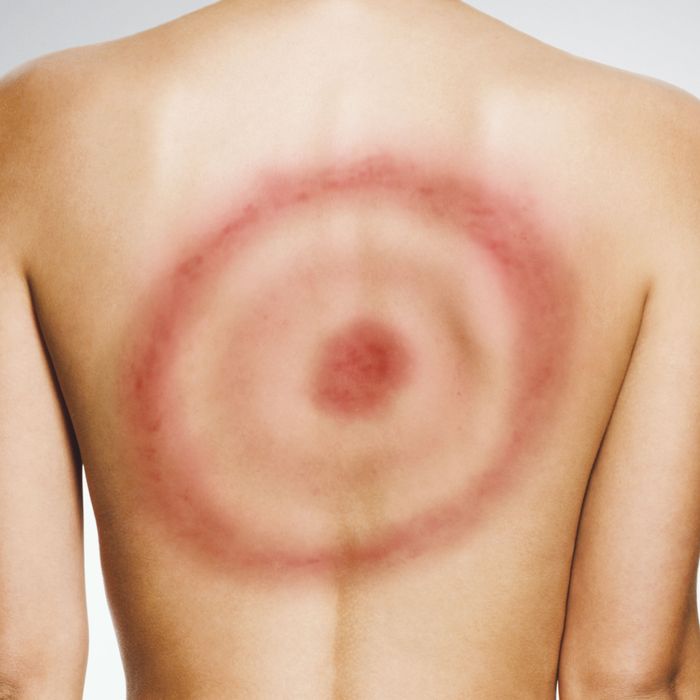
Polly Murray, in the 1960s and ’70s, was a mother of four with an old house on several acres in Lyme, Connecticut. In the summer, her kids built forts in the woods; they ice-skated on frozen cow ponds in the winter. The Murrays had an idyllic life in the country. They also had enormous rashes, strange joint swellings, and recurrent fevers.
One son wound up in the infirmary at boarding school, unable to lift his leg. Another had to have the fluid drained from his knee. Murray was constantly taking herself or her husband or one of her kids to a doctor — but none of the doctors ever had answers, nor did they seem especially interested in finding any. So Murray took the search upon herself. In The Widening Circle, her 1996 memoir, she reproduces extracts from her diary (“Monday, July 28: Todd had a fever of 100 again for two days and a severe jaw ache; he said it hurt to open his mouth … The attack lasted for five days”). The record Murray gathered is a testament to both the relentlessness of the symptoms and her own relentlessness in tracking them. Her husband compares her to “the lonely hero of a Hitchcock movie”: isolated, embattled, and disbelieved.
Soon, though, Murray started to hear other stories like hers. Her area, it appeared, had a cluster of juvenile-rheumatoid-arthritis cases. She called the state’s health department and met with Dr. Allen Steere, a rheumatologist doing a fellowship at Yale. He pored over her pages of notes. On the car ride home, Murray wept with joy: Steere didn’t have any answers, but he had listened. He wanted to find out what was wrong. By 1976, the condition Murray had observed had become known as Lyme disease.
“Lyme disease was a disease born of advocacy,” Dr. Paul Auwaerter told me. Auwaerter, whose lab focuses on Lyme and other tick-borne diseases, is the clinical director of the Division of Infectious Diseases at Johns Hopkins University School of Medicine. Back in the ’70s, Murray and her fellow Connecticut mothers had to fight for attention. Their experience left behind a powerful legacy, Auwaerter said, a sense that perhaps “the medical establishment didn’t really listen initially or were trying to be dismissive.”
Decades after Polly Murray kept her diary of symptoms, the spirit of advocacy associated with Lyme disease endures. But while Murray’s efforts were ultimately vindicated by medical science, a new fight — for the recognition of something known as “chronic Lyme,” which can encompass a vast range of symptoms and need not be linked to any tick bite — has grown into a phenomenon often untethered from scientific method or peer review. The chronic-Lyme community has a new agenda, one that was visible at last fall’s Global Lyme Alliance Gala in New York, where supporters gathered at Cipriani heard a speech from Real Housewife of Beverly Hills Yolanda Hadid. (See link for article)
*This article appears in the July 22, 2019, issue of New York Magazine.
________________
**Comment**
As you can imagine, this article makes the case that chronic/persistent Lyme isn’t backed by science.
All I can say, is take a look at this, Molly: Peer-Reviewed Evidence of Persistence of Lyme:MSIDS copy
https://madisonarealymesupportgroup.com/2019/06/12/bb-microscopy-a-pictures-worth-1000-words-how-bb-evades-the-immune-system/ There is a video in this link showing Bb’s ability to get into and out of the blood stream & lymphatic system quickly demonstrating its ability to go anywhere in the body to colonize.
We desperately need this work done to shut the naysayers up: https://madisonarealymesupportgroup.com/2018/04/13/chronic-lyme-post-mortem-study-needed-to-end-the-lyme-wars/
Then there are the thousands upon thousands whose symptoms persist despite standard treatment. Are they all mad? I don’t think so, and it’s time “science” started listening.
https://cris.nifa.usda.gov/cgi-bin/starfinder/0?

Current Research Information System
Item No. 1 of 1
ACCESSION NO: 1018841 [Full Record]
PROJ NO: MIN-17-G35 AGENCY: NIFA MIN
PROJ TYPE: AFRI COMPETITIVE GRANT PROJ STATUS: NEW
CONTRACT/GRANT/AGREEMENT NO: 2019-67013-29406 PROPOSAL NO: 2018-08456
START: 15 APR 2019 TERM: 14 APR 2020
GRANT AMT: $30,000 GRANT YR: 2019
AWARD TOTAL: $30,000
INITIAL AWARD YEAR: 2019
INVESTIGATOR: Andow, D.; Pires Paula, DE, .
PERFORMING INSTITUTION:
UNIV OF MINNESOTA
ST PAUL, MINNESOTA 55108
CRITERIA FOR ENVIRONMENTAL RISK ASSESSMENT OF EXOTIC GENERALIST ARTHROPOD BIOLOGICAL CONTROL AGENTS
NON-TECHNICAL SUMMARY: Generalist arthropod biological control agents (GABCAs) can be an important pest control alternative, enabling greater production with less use of chemical pesticides. Because of a lack of suitable environmental risk assessment (ERA) methodology to assess biosafety, their use has lagged behind other applications of biological control. Due to the technical complexity involved in developing this methodology, this proposed conference is preceded by an independently funded 15-month pre-conference process of structured online discussions performed by an international multidisciplinary panel of experts with stakeholders. The long-term goal of this proposal is to identify criteria to support an improved ERA methodology for exotic GABCAs, focusing on predators. Supporting objectives are to identify knowledge gaps, generate and disseminate knowledge in this neglected area, sensitize the broader scientific community to this need, build scientific capacity, especially among the new generation of scientists, communicate and partner with stakeholders, and support public policies to regulate the safe use of exotic GABCAs. Stakeholders will be involved in key steps to assure that products are practical and have potential to be adopted by those interested in using/producing/regulating exotic GABCAs for pest control. The proposed 1½-day conference consists of a half day symposium to present the results of the pre-conference activities, followed by a one day satellite meeting for contributed talks and discussions to address controversies and identify future needs. The conference will be integrated in or in parallel with the ESA 2019 annual meeting to enable participation of the wider entomological community.
OBJECTIVES: This conference proposal has as a long-term goal to identify criteria and methodologies to support environmental risk assessments (ERA) of exotic generalist arthropod biological control agents (from now on referred to as GABCAs) on non-target species and their associated ecosystem services. To achieve this goal, we will rely on the experiences and expertise of national and international experts and take advantage of and harmonize with previous guidelines already proposed for ERA of biological control agents (BCAs). The conference we propose here will be the culmination of a 15-month process to build a community of experts to focus on key issues to develop criteria and methods that could be used in an ex-ante (pre-release) ERA for exotic GABCAs, focusing on predators. Supporting objectives are to:(a) build a consensus around scientifically-sound methods to assess the environmental risks of introducing and using exotic GABCAs for pest control;(b) identify knowledge gaps in the ERA methods;(c) generate and disseminate knowledge in this neglected area;(d) sensitize the broader scientific community to the need to develop an ERA methodology for exotic GABCAs;(e) build scientific capacity, especially among the new, less established generation of scientists, to contribute to this issue;(f) communicate and partner with stakeholders so they are aware of these developments and in the future can make environmentally friendly commercial and regulatory decisions;(g) support public policies to regulate the safe use of exotic GABCAs within the existing context of BCA-ERA.
https://www.treatlyme.net/guide/antabuse-disulfiram-chronic-lyme-disease-treatment

Disulfiram: Wikipedia
This is mainly a video article. You will need to listen to the whole video for my thoughts on Antabuse (disulfiram) as a new treatment for chronic Lyme disease. Below this video I provide additional points I did not mention during Conversations with Marty Ross MD on 7/18/19 when I recorded these comments.
https://www.workerscompensation.com/news_read.php?id=33193
07/25/19
On Monday, the FDA issued a press release announcing the approval of generic versions of the drug Lyrica (pregabalin). Those of us operating in the workers compensation industry are all too familiar with Lyrica. It’s a high-priced medication utilized for the treatment of pain related to nerve damage, and its inclusion within Workers’ Compensation Medicare Set-Asides (WCMSAs) has become more common and problematic in recent years. You may recall that last October, we published a detailed blog article on the inclusion of Lyrica within WCMSAs submitted to CMS for approval. However, our concerns mounted when CMS’ published its most recent WCMSA reference guide in January, 2019, which specifically noted Lyrica as an example in the WCMSA Reference guide for off-label medication inclusion, as
Example 1: Lyrica (Pregabalin) is cited in MicroMedEx for an off-label medication use related to neuropathic pain from spinal cord injury, and a number of scientific studies indicate that Pregabalin shows statistically significant positive results for the treatment of radicular pain (a type of neuropathic pain). Spinal cord neuropathy includes injuries directly to the spinal cord or its supporting structures causing nerve impingement that results in neuropathic pain. Lyrica is considered acceptable for pricing as a treatment for WCMSAs that include diagnoses related to radiculopathy because radiculopathy is a type of neuropathy related to peripheral nerve impingement caused by injury to the supporting structures of the spinal cord.
Lyrica was initially approved by the FDA in December of 2004 for a single indication of neuropathic pain associated with diabetic peripheral neuropathy. Lyrica was developed by Pfizer, a large pharmaceutical manufacturing company. Over the course of the next fourteen years, Pfizer was successful in securing FDA approval for additional indications including fibromyalgia, neuropathic pain associated with spinal cord injury, post-herpetic neuralgia and adjunctive therapy for adult patients with partial onset seizures. In addition, Lyrica has seemed to gain medical acceptance for the treatment of low back pain and radiculopathy in an off-label capacity, hence the inclusion of this medication in many CMS approved WCMSAs, as we mentioned in our earlier blogs. Pfizer’s patent protection for Lyrica was scheduled to expire in December of 2018. However, in November of 2018, Pfizer secured a six-month patent extension for a new pediatric indication of Lyrica. At that time, there was a collective sigh of disappointment, because news of the patent extension meant that a generic version of Lyrica would be delayed.
In Monday’s press release, the FDA announced that it had approved generic drug applications for pregabalin submitted by eight manufacturers: Alembic Pharmaceuticals, Alkem Laboratories, Amneal Pharmaceuticals, Dr. Reddy’s Laboratories, InvaGen Pharmaceuticals, MSN Laboratories Ltd., Rising Pharmaceuticals, Inc., Sciegen Pharmaceuticals and Teva Pharmaceuticals. The multitude of manufacturers who are entering the market at this early stage could have significant implications for the price of pregabalin in the coming months. A common regulatory scenario for generic drugs is that the first generic manufacturer to secure FDA approval of a generic drug application will receive a 180-day period of marketing exclusivity. During this 180-day period of exclusivity, other generic manufacturers are precluded from entering the market. The potential for six months of exclusive generic drug marketing was incorporated into the Hatch-Waxman Amendments in 1984 with the best of intentions. The exclusivity period was established to stimulate the development of generic medications in an effort to lower drug costs. In more recent years, however, the award of exclusivity to a generic manufacturer has come under fire because exclusivity can have the unintended result of delaying the entrance of the generic product into the market. Generic manufacturers sometimes enter into reverse payment arrangements with the brand name manufacturer, whereby the generic manufacturer accepts payment from the brand name manufacturer in exchange for an agreement to delay the production of the generic product for a certain length of time. In the pharmaceutical industry, these agreements are known as “pay-to-delay” or “pay-for-delay” arrangements.
In the case of pregabalin, the FDA did not grant a period of generic exclusivity to a single manufacturer. This will likely produce favorable market conditions over the next few months, as these eight manufacturers will begin to distribute the generic pregabalin products. With several manufacturers entering the market sooner rather than later, the increased competition for market share will likely result in price decreases over the course of the next several months. Of course, we’ll continue to monitor the average wholesale price (AWP) of pregabalin products and post noteworthy developments here on our blog. Pregabalin will be available in generic formulations of all commercially available formulations of Lyrica: 25mg, 50mg, 75mg, 100mg, 150mg, 200mg, 225mg and 300mg capsules. It will also be available as a 20mg per ml oral solution.
By Leah King
Courtesy of MedVal
 Madison Area Lyme Support Group