Archive for July, 2018

First RMSF Death in Wisconsin

https://www.dhs.wisconsin.gov/news/releases/071018.htm

FOR IMMEDIATE RELEASE
July 10, 2018
CONTACT: Jennifer Miller, 608-266-1683
Elizabeth Goodsitt, 608-266-1683
Jo Foellmi, 608-785-5753

DHS Confirms Death of a La Crosse County Resident from Rocky Mountain Spotted Fever

State and local health departments urge residents to take precautions to protect against tick bites

The Wisconsin Department of Health Services and the La Crosse County Health Department today announced the first documented death from Rocky Mountain spotted fever (RMSF) in the state.

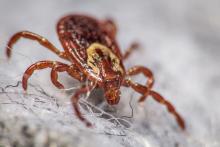
RMSF is rarely reported in Wisconsin and most commonly occurs in the central and southeastern regions of the United States. Most tickborne diseases transmitted in Wisconsin are spread by the blacklegged (or deer) tick; RMSF, however, is spread by the bite of the American dog (or wood) tick (Picture Attached). Early symptoms of RMSF can be mild and typically include fever, headache, nausea, vomiting, rash, and stomach pain. If left untreated, however, a RMSF infection can rapidly develop into a serious illness.

dog-tick-closeup-rocky-mountain-spotted-fever

American dog tick, which can transmit RMSF

“We are saddened to learn of this death and encourage Wisconsin residents to take steps to protect themselves and their families from tick bites while enjoying the outdoors,” said Karen McKeown, State Health Officer.

  • Use an insect repellent with at least 20% DEET or another EPA-registered repellent according to the label instructions.
  • Use 0.5% permethrin products on clothing, socks, and shoes according to label instructions.
  • Stay on trails and avoid walking through tall grasses and brush.
  • Wear long sleeves and pants, and tuck pants into socks and shirts into pants to avoid ticks crawling under clothing.
  • Check your entire body for ticks after being outdoors.
  • Take a shower as soon as possible after coming in from outdoors.
  • Place clothes in the dryer on high heat for 10 minutes to kill any ticks on clothing.
  • Use a veterinarian-prescribed tick prevention treatment on pets.

Of the illnesses spread by ticks in Wisconsin, Lyme disease is the most common, but ticks can also spread anaplasmosis, ehrlichiosis, and more rarely RMSF and Powassan virus. Many people who contract a tickborne disease do not recall a tick bite, so it’s also important to be aware of the common symptoms of tickborne disease such as fever, rash, headache, body aches, and fatigue.

Most diseases spread by ticks in Wisconsin, including Lyme disease, anaplasmosis, ehrlichiosis, and RMSF, can be effectively treated with antibiotics, making early diagnosis critical. If symptoms develop after a tick bite or after possible tick exposure, see a health care provider.

__________________

**Comment**

Story here:  http://amp.wisn.com/article/wisconsin-woman-dies-from-rocky-mountain-spotted-fever/22108466

Jo Foellimi, a La Crosse County public health nurse, said the woman was bit while camping in western Wisconsin in early May.  The woman was diagnosed with RMSF in mid-June and died days later.  Foellimi said the woman was in her late 50s but declined to identify her.

More on RMSF:  https://madisonarealymesupportgroup.com/2018/06/12/georgia-mom-warns-others-after-son-contracts-rocky-mountain-spotted-fever-after-tick-bite/

https://madisonarealymesupportgroup.com/2015/08/13/severe-case-of-rmsf-had-to-remove-patients-arms-and-legs/

https://madisonarealymesupportgroup.com/2017/06/10/two-deaths-from-rmsf-indiana-has-tbis/

Treatment is doxycycline:  https://www.uptodate.com/contents/treatment-of-rocky-mountain-spotted-fever  Empiric therapy with doxycycline should be started if the diagnosis of Rocky Mountain spotted fever (RMSF) is suspected, even if the symptoms are mild.

New Effort For Lyme Disease Vaccine Draws Early Fire

https://www.msn.com/en-us/health/medical/new-effort-for-lyme-disease-vaccine-draws-early-fire/ar-AAzNCA7

New Effort for Lyme Disease Vaccine Draws Early Fire

By Sumathi Reddy

Efforts to bring a vaccine for Lyme disease to the market have run aground amid heated debate over the years.

Now, a European company is in the early stages of creating a vaccine for the increasingly common tick-borne disease. Lyme disease patient-advocacy groups—who disagree with the protocols used by most doctors for the diagnosis and treatment of Lyme disease—are already raising concerns.

The Centers for Disease Control and Prevention estimate that there are more than 300,000 new cases of Lyme a year, about triple the rate from two decades ago. Most cases are in the Northeast, mid-Atlantic region and Upper Midwest states, but the disease is spreading across the country.

When blacklegged or deer ticks infected with the Borrelia burgdorferi bacterium bite humans, they can transmit Lyme disease, which typically causes flu-like symptoms such as a fever, headache, muscle and joint aches, and sometimes a ring-like skin rash. If untreated, the infection can spread and cause more serious health problems, including arthritis, heart palpitations and brain inflammation.

Ticks that transmit Lyme disease can also transmit other pathogens causing less-common diseases such as anaplasmosis and babesiosis.

In March, Valneva SE, a company based in France, announced initial Phase 1 clinical trial results after testing its proposed vaccine in 180 healthy adults who took the vaccine with no serious side effects. The study also showed that the vaccine stimulated an immune response, says David Lawrence, chief financial officer of the company.

Later this year it intends to start a Phase 2 clinical trial to determine the dosing of the vaccine. The U.S. Food and Drug Administration granted the vaccine candidate a fast-track status last year. Still, Mr. Lawrence estimates that it will take at least five years for a product to be commercially available.

The vaccine is similar to Lymerix, the vaccine that was manufactured by SmithKline Beecham, now GlaxoSmithKline, from 1998 until it was withdrawn from the market in 2002. The vaccine had a 78% efficacy rate after three doses were taken. The company voluntarily withdrew it after class-action lawsuits that alleged it caused side effects such as arthritis. The lawsuits were settled in 2003 with the company agreeing to pay attorney fees and costs associated with the cases.

“Lymerix was approved by FDA in December 1998 and was voluntarily discontinued in February 2002 due to low demand,” says a spokeswoman for GSK. “Currently there are no plans to bring it back.”

The data evaluated by the FDA supported the safety and effectiveness of Lymerix, the agency says.

Mr. Lawrence of Valneva says there are two main differences with the French company’s proposed vaccine. One, it protects against six strains of Lyme disease, whereas the old vaccine protected against only one, he says. And, to assuage concerns about side effects, the company cut a gene sequence in the vaccine that had been identified in some scientific papers as possibly related to arthritis—though no evidence emerged of arthritis related to the vaccine.

The company intends to test the vaccine in children as well as adults.

Lyme disease patient-advocacy groups—a powerful lobby that experts say has stopped previous vaccine efforts—are raising doubts.

“The last Lyme vaccine that came out had significant safety concerns,” says Lorraine Johnson, CEO of LymeDisease.org, a nonprofit patient advocacy group. “The feeling in the community is that whoever is going to be putting together [a vaccine] ought to be dialoguing with the community and ought to be transparent about the process.”

Ticks can cause co-infections and other diseases and the vaccine may offer a false sense of complacency, she says.

“We don’t feel that there has been enough research done to answer the questions as to what occurred with the prior vaccine,” says Patricia Smith, president of the Lyme Disease Association Inc., a New Jersey-based national nonprofit group, which raises money for Lyme research, education and patient support. “The vaccine that is now in development is something with the same base. There were a lot of patients that thought they were harmed from that vaccine. It’s very problematic.”

Many doctors and medical experts say there was never any evidence that the old vaccine caused serious side effects such as arthritis or neurological problems. They say a vaccine would greatly limit the spread of Lyme disease.

“There’s a lot of general tick prevention advice, such as using DEET and other insect and tick repellent, doing tick checks, and wearing long trousers and long sleeves. But despite that we still have abundant cases of Lyme disease every year,” says Paul Auwaerter, a professor of medicine at Johns Hopkins University School of Medicine and president of the Infectious Diseases Society of America.

It makes sense to have a vaccine for people in parts of the country where Lyme disease rates are high and for people who are outdoors a lot, he says.

Gregory Poland, director of the vaccine research group at Mayo Clinic in Rochester, Minn., published a 2011 study in the journal Clinical Infectious Diseases detailing what happened with the previous Lyme vaccine and lessons learned from it.

Lymerix, he says, “was actually very effective” but multiple factors led to its withdrawal.

The vaccine required taking three shots over a year and took two tick seasons to become effective, he says, and then would require periodic booster shots. Also, it couldn’t be used in children. The recommendations for taking the vaccine were vague, so it was unclear who should get it and insurance companies weren’t required to cover its cost. But anti-vaccine sentiments ultimately did it in, he says.

“In this country you can protect your dog with a vaccine for Lyme disease but you can’t protect yourself or your child,” says Dr. Poland. “We have a public health problem in this country with a disease that has short-, mid- and long-term consequences and for which all other prevention methods are wholly inadequate.”

Several Lyme disease vaccines similar to Lymerix are available for dogs.

Sam Telford, a professor of infectious disease and global health at Tufts University, helped discover the mechanism that led to the development of Lymerix and ran one of the clinical trials that tested it.

He is now part of a group of biotech professionals who have formed an alliance and want to bring back the vaccine and distribute it as a nonprofit.

“There’s a lot of legal issues that may prevent reviving the product as a generic,” he says. “There are many things that we can do to prevent Lyme disease but there’s nothing like a vaccine to reduce the incidence of any infection.”

Write to Sumathi Reddy at sumathi.reddy@wsj.com

____________

**Comment**

Death Count listed here (number of each in parenthesis):

  1. Hypertensive Cardiovascular Disease (54) 1 DAY AFTER THE SECOND DOSE
  2. Hypertensive & Cardiovascular Arteriosclerotic Disease (63) 3 DAYS AFTER THE FIRST DOSE
  3. Arthritis, Neurological Symptoms, and Suicided (43) 7 MONTHS AFTER THE 2nd DOSE
  4. Anemia, Thrombocytopenia, with Myelofibrosis diagnosis (69) 7 MONTHS AFTER THE FIRST DOSE AND DIED 6 MONTHS LATER AN UNKNOW TIME AFTER THE 3rd DOSE
  1. ARTHRALGIA (322)
  2. MYALGIA (227)
  3. PAIN (196)
  4. ASTHENIA (167)
  5. FEVER (126)
  6. FLU SYNDROME (124)
  7. INJECTION SITE PAIN (117)
  8. RASH (85)

One doctor stated that 21 patients developed severe arthritis after receiving the LYMERIX vaccine:  http://www.yourlawyer.com/topics/overview/lymerix

Dr. Marks lead the clinical trials for Lymerix’s competitor, the OspA vaccine produced and then abandoned by Aventis Pasteur.  He states:

“In my opinion,” he told FDA officials, “there is sufficient evidence that Lymerix is causally related to severe rheumatologic, neurologic, autoimmune, and other adverse events in some individuals. This evidence is such as to warrant a significantly heightened degree of warnings and possible limitations or removal from marketing of Lymerix.”  http://www.lymediseaseassociation.org/index.php/about-lyme/controversy/vaccine/261-lymerix-meeting  (Go to link for an entire dirty laundry list of shenanigans)

Dr. Stricker writes about the problem with the research here:
https://madisonarealymesupportgroup.com/2018/07/01/lyme-vaccine-fail-safety-ignored/

Lyme Advocate Carl Tuttle writes about how antibody tests were deliberately stripped of important bands to facilitate vaccine development, leaving many patients unable to ever test positive:  https://madisonarealymesupportgroup.com/2018/06/07/the-lyme-vaccine-russian-roulette/  He also points out how principle investigators of Lyme vaccines (Allen C. Steere & Gary Wormser) have flagrant conflicts of interest by sitting on the CDC Lyme guideline panel and purposely matching the definition of the disease to vaccine development.

In a vile cesspool of conflicts of interest are university patent holders, drug companies, and the FDA itself as another patent holder. It generated 40 million dollars before it was yanked. (2008, Drymon)  https://madisonarealymesupportgroup.com/2017/07/01/pbs-lyme-vaccine/

  • The article states that ticks can transmit other pathogens that cause “less-common” diseases such as anaplasmosis and babesiosis.  Yes, they can but no, they are NOT less common.  Frankly, no one really knows because as this article states, only 6 are required to be reported.  There are 18 and counting diseases transmitted by ticks:  https://madisonarealymesupportgroup.com/2018/07/10/we-have-no-idea-how-bad-the-us-tick-problem-is/
  • Interestingly, “to assuage concerns about side effects,” they cut a gene sequence that had been identified in some scientific papers as possibly related to arthritis—though no evidence emerged of arthritis related to the vaccine…..yet, VAERS reported 322 people with arthralgia, or JOINT PAIN.  I also listed one doctor who personally reported that 21 patients developed arthritis after the vaccine.  Hello?  Then, 227 reported Myalgia (muscle pain) and another 196 reported generalized pain.  
That’s a whopping 745 people with PAIN after the vaccine!  322 with specific joint pain.
  • Let’s talk about Sam Telford of Tufts for just a moment.  Please see that he regularly publicly speaks out and has vested interests as delineated above by running a clinical trial for Lymerix as well as by forming an alliance to bring the vaccine back.  In this rebuttal Zubcevik rebutted by Telford to a talk given by Dr. Nevena Zubcevik,  http://www.mvtimes.com/2016/07/13/visiting-physician-sheds-new-light-lyme-disease/ he remarks that there is no research that negates the validity of the “well-known” grace period of 24 hours of tick attachment before the transmission of Lyme Disease.  He also believes that two doses of doxy will do the trick and then goes on to remark that ILADS has no expertise with tick biology or tick-pathogen interactions and that their recommendations are opinions with no factual basis.  He goes on to talk about things like “negative fitness factor” and that pathogens “go to sleep” during winter months, and that “very elegant, peer-reviewed molecular analysis” exists about heat pulses to bacteria in test tubes.
A wonderful reminder that scientists can be quite guilty of myopia.
It’s also a clear reminder that the Lyme Wars still exist for good reasons.

First, I’m no “tick expert,” but one thing I do know:  ticks don’t understand the word “grace.”  We also know for sure that some tick-borne viruses can be transmitted in mere minutes.  There has NEVER been a study showing minimum attachment time to transmit Lyme or many other pathogens:  https://madisonarealymesupportgroup.com/2017/04/14/transmission-time-for-lymemsids-infection/  Also, within that link is the fact that a little girl couldn’t walk or talk within 6 hours of tick attachment.  (She’s far from alone)

SIX HOURS.

As to the two doses of doxy:  https://madisonarealymesupportgroup.com/2017/03/24/one-pill-of-doxy-only-reduces-prevalence-of-rash-not-lyme-disease/

Dr. Cameron states:  “Only been one study (Nadelman et al) on the effectiveness of 1 pill of doxycycline and only found a reduction in the number of erythema migraines (EM) rashes compared to the placebo group. According to him, the IDSA 1 pill of doxy approach started in 2006 despite the fact that three previous prophylactic antibiotic trials for a tick bite had failed.”

According to Cameron, Nadelman’s study had several other limitations:

  • “It was not designed to detect Lyme disease if the rash were absent.
  • The six-week observation period was not designed to detect chronic or late manifestations of Lyme disease.
  • It was not designed to assess whether a single dose of doxycycline might be effective for preventing other tick-borne illnesses such as Ehrlichia, Anaplasmosis, or Borrelia miyamotoi.”

I highly, highly doubt that adding one more pill is going to be any different.

For a great read on why the Lyme Wars exist:  https://madisonarealymesupportgroup.com/2018/06/28/the-science-isnt-settled-on-chronic-lyme/


Pediatricians State New WHO AEFI Guidelines Put Children’s Lives at Risk & 200 Evidence-based Reasons Not to Vaccinate

https://www.moneylife.in/article/new-guidelines-from-who-put-childrens-life-at-risk-paediatricians/54601.html

New Guidelines from WHO Put Children’s Life At Risk: Paediatricians

Moneylife Digital Team
06 July 2018

Two leading paediatricians in India have urged the World Health Organization (WHO) to urgently revise its manual on classification of Adverse Events Following Immunization (AEFI), warning that the new guidelines put children’s life at risk.

This needs to be done “urgently in the interest of child safety,” Doctors Jacob Puliyel at St Stephen’s Hospital in Delhi, and Pathik Naik of Children Hospital in Surat, say in a report published in the prestigious journal ‘F1000Research’

Under WHO’s revised manual on AEFI, only those adverse reactions observed during clinical trials of a vaccine, should be classified as vaccine related. All new serious adverse reactions including deaths seen during post-marketing of the vaccine should be considered as ‘coincidental’ or ‘unclassifiable’, and the vaccine should not be blamed.

The WHO has also changed the definition of “causal association,” the doctors say. Under the revised guidelines, if there is an alternate explanation for the adverse event, or another factor is involved, causative association with vaccine should not be made.

“In other words, if after vaccination, a child with an underlying congenital heart disease develops cardiac failure, it would not be considered causally related to the vaccine.”

The revised classification by WHO “is a major step backward for patient safety,” the authors say, adding, “This could embolden vaccine manufacturers to be more reckless with regard to adverse reactions.”.

Puliyel and Naik note that the Global Advisory Committee on Vaccine Safety has documented many deaths in children with pre-existing heart disease after they were administered the pentavalent vaccine (combined diphtheria, tetanus, pertussis, Hib, and hepatitis-B vaccine).

“Under WHO’s new definition of causal association, these deaths would not be acknowledged as related to vaccination.”

Both Sri Lanka and Vietnam governments withdrew the pentavalent vaccine following the deaths of five children in Sri Lanka and 12 in Vietnam soon after vaccination.

But WHO investigating teams declared that the deaths were ‘unlikely’ to be related to vaccination, the report says. 

The authors point out that a new study in India, showed that the switch from DPT (diphtheria, tetanus, pertussis) to pentavalent vaccine almost doubled the deaths following vaccination.

“A large number of these deaths could have been avoided had the AEFI manual not been revised.”

According to their report, the consequence of India adopting WHO’s new classification can be seen from the causality assessment of 132 serious AEFI cases uploaded on the website of the Ministry of Health and Family Welfare. Of the total AEFI cases, 54 babies died and 78 survived,

“but not even one death was classified as vaccine-related. Nearly all the deaths were simply classified as unclassifiable or coincidental.”

Vaccines are drugs used as a preventive measure, given to healthy persons.  Adverse events following immunization must be monitored more carefully than other drugs, the authors note.

“A credible immunization safety evaluation and monitoring system is essential for the success of immunization programmes.”

Adverse reaction and deaths may not show up as significantly increased in small safety studies. However, records of all deaths and serious adverse events following vaccinations should be maintained and periodically reviewed for safety signals.

According to the authors, WHO’s new AEFI classification scheme “that allows for an outright denial of any new causative association with vaccination” could fall foul of Article 2 of the European Convention on Human Rights. Adverse reaction and deaths may not show up as significantly increased in small safety studies. However, records of all deaths and serious adverse events following vaccinations should be maintained and periodically reviewed for safety signals.

“Paradoxically, the AEFI algorithm is said to be for vaccine safety,” says Puliyel. “Perhaps we need a scheme for public safety rather than vaccine safety.”

Please see:

200 Evidence-Based Reasons NOT To Vaccinate – FREE Research PDF

http://cdn.greenmedinfo.com/sites/default/files/gmipub_58635_anti_therapeutic_action_vaccination_all.pdf  Written By:  GreenMedInfo Research Group

Also, Lyme/MSIDS patients need to consider vaccinations very carefully as vaccines have reactivated latent infections:  https://madisonarealymesupportgroup.com/2017/12/02/scottish-doctor-gives-insight-on-lyme-msids/…..young women who fell ill after their HPV vaccination, which seems to have stimulated a latent Lyme infection to reactivate.

https://madisonarealymesupportgroup.com/2016/04/24/gardasil-and-bartonella/   Asymptomatic girls after receiving Gardasil activated dormant Bartonella which was confirmed by testing.

Dr. Klinghardt in this article states that many patients improve after dealing with retroviruses which can be acquired from vaccines:  https://madisonarealymesupportgroup.com/2018/06/23/the-role-of-retroviruses-in-chronic-illness-a-clinicians-perspective/  An unintended source of retroviruses are some vaccines as reported in Frontiers in Microbiology in January 2011.

Since retroviral contaminated vaccines was first reported to the CDC, NIH, FDA, and other government agencies in 1991 by American immunologist Elaine DeFreitas, the government did absolutely nothing for over two decades until the FDA approved technologies developed by the Cerus Corporation in 2014 to clean up the problem.

Microbiologist Judy Mikovitz sounded the alarm and was viciously persecuted:  https://madisonarealymesupportgroup.com/2017/10/15/vaccines-and-retroviruses-a-whistleblower-reveals-what-the-government-is-hiding/

But unless your ear is to the ground, you probably didn’t even hear about it.  Yet many are probably dealing with it.

Data suggests that 6% of the U.S. population is harboring a retrovirus in their bodies that can develop into an acquired immune deficiency. It began with trials of polio vaccines and yellow fever vaccines given in the early 1930s. This is when the first recorded cases of Chronic Fatigue Syndrome and autism appeared. It involved the use of laboratory mice to prepare vaccines for human use. Retrovirus exposure intensified in the 1970s as new vaccines and pharmaceutical products were developed. These retroviruses and related infectious agents are now associated with dozens of modern chronic illnesses – perhaps nearly all of them. In these diseases, infection leads to inflammation — and unresolved inflammation can lead to chronic disease.

Even though 20 million Americans are likely to be infected, not everyone will develop serious illness.  Retroviruses in the human body are like sleeping giants. They are quiet until they are activated in immune deficient people.  Once activated, they create diseases such as Myalgic Encephalomyelitis, also called Chronic Fatigue Syndrome (ME/CFS), Chronic Lyme disease, Chronic Lymphocytic Leukemia, autism spectrum disorder (ASD), numerous cancers, and a wide range of other autoimmune, neuroimmune, and central nervous system diseases. 

These retroviruses can be passed between family members through body fluids.

It is not unusual to find a family where everyone tests positive for a retrovirus, but only one person is experiencing a retrovirus-related illness. Symptom free carriers are common in human retroviral infections.
And our government hid it.

Do your research on vaccines and think long and hard about it as acquiring Lyme/MSIDS can be the trigger that activates retroviruses and vice a versa.


We Have No Idea How Bad the US Tick Problem Is

https://www.wired.com/story/we-have-no-idea-how-bad-the-us-tick-problem-is/
AUTHOR: MEGAN MOLTENIMEGAN MOLTENI
SCIENCE
7.04.18

WE HAVE NO IDEA HOW BAD THE US TICK PROBLEM IS

WHEN RICK OSTFELD gets bitten by a tick, he knows right away. After decades studying tick-borne diseases as an ecologist at the Cary Institute of Ecosystem Studies in Millbrook, New York, Ostfeld has been bitten more than 100 times, and his body now reacts to tick saliva with an intense burning sensation. He’s an exception. Most people don’t even notice that they’ve been bitten until after the pest has had time to suck up a blood meal and transfer any infections it has circulating in its spit.

Around the world, diseases spread by ticks are on the rise. Reported cases of Lyme, the most common US tick-borne illness, have quadrupled since the 1990s. Other life-threatening infections like anaplasmosis, babesiosis, and Rocky Mountain spotted fever are increasing in incidence even more quickly than Lyme. Meat allergies caused by tick bites have skyrocketed from a few dozen a decade ago to more than 5,000 in the US alone, according to experts. And new tick-borne pathogens are emerging at a troubling clip; since 2004, seven new viruses and bugs transmitted through tick bite have shown up in humans in the US.

Scientists don’t know exactly which combination of factors—shifting climate patterns, human sprawl, deforestation—is leading to more ticks in more places. But there’s no denying the recent population explosion, especially of the species that carries Lyme disease: the black-legged tick.

“Whole new communities are being engulfed by this tick every year,” says Ostfeld. “And that means more people getting sick.

Tick science, surveillance, and management efforts have so far not kept pace. But the country’s increasingly dire tick-borne disease burden has begun to galvanize a groundswell of research interest and funding.

In 1942, Congress established the CDC specifically to prevent malaria, a public health crisis spreading through mosquitoes. Which is why many US states and counties today still have active surveillance programs for skeeters. The Centers for Disease Control and Prevention uses data from these government entities to regularly update distribution maps, track emerging threats (like Zika), and coordinate control efforts. No such system exists for ticks.

Public health departments are required to report back to the CDC on Lyme and six other tick-borne infections. Those cases combined with county-level surveys and some published academic studies make up the bulk of what the agency knows about national tick distribution. But this data, patchy and stuck in time, doesn’t do a lot to help public health officials on the ground.

“We’ve got national maps, but we don’t have detailed local information about where the worst areas for ticks are located,” says Ben Beard, chief of the CDC’s bacterial diseases branch in the division of vector-borne diseases. “The reason for that is there has never been public funding to support systematic tick surveillance efforts.

That’s something Beard is trying to change. He says the CDC is currently in the process of organizing a nationwide surveillance program, which could launch within the year. It will pull data collected by state health departments and the CDC’s five regional centers about tick prevalence and the pathogens they’re carrying to build a better picture of where outbreaks and hot spots are developing, especially on the expanding edge of tick populations.

The CDC is also a few years into a massive nationwide study it’s conducting with the Mayo Clinic, which will eventually enroll 30,000 people who’ve been bitten by ticks. Each one will be tested for known tick diseases, and next-generation sequencing conducted at CDC will screen for any other pathogens that might be present. Together with patient data, it should provide a more detailed picture of exactly what’s out there.

Together, these efforts are helping to change the way people and government agencies think about ticks as a public health threat.

“Responsibility for tick control has always fallen to individuals and homeowners,” says Beard. “It’s not been seen as an official civic duty, but we think it’s time whole communities got engaged. And getting better tick surveillance data will help us define risk for these communities in areas where people aren’t used to looking for tick-borne diseases.”

The trouble is that scientists also know very little about which interventions actually reduce those risks.

“There’s no shortage of products to control ticks,” says Ostfeld. “But it’s never been demonstrated that they do a good enough job, deployed in the right places, to prevent any cases of tick-borne disease.”

In a double-blind trial published in 2016, CDC researchers treated some yards with insecticides and others with a placebo. The treated yards knocked back tick numbers by 63 percent, but families living in the treated homes were still just as likely to be diagnosed with Lyme.

Ostfeld and his wife and research partner Felicia Keesing are in the middle of a four-year study to evaluate the efficacy of two tick-control methods in their home territory of Dutchess County, an area with one of the country’s highest rates of Lyme disease. It’s a private-public partnership between their academic institutions, the CDC, and the Steven and Alexandra Cohen Foundation, which provided a $5 million grant.

Ostfeld and Keesing are blanketing entire neighborhoods in either a natural fungus-based spray or tick boxes, or both. The tick boxes attract small mammal hosts, which get a splash of tick-killing chemicals when they venture inside. They check with all the human participants every two weeks for 10 months of the year to see if anyone’s gotten sick. By the end of 2020 the study should be able to tell them how well these methods, used together or separately on a neighborhood-wide scale, can reduce the risk of Lyme.

“If we get a definitive answer that these work the next task would be to figure out how to make such a program more broadly available. Who’s going to pay for it, who’s going to coordinate it?” says Ostfeld. “If it doesn’t work then perhaps the conclusion is maybe environmental control just can’t be done.”

In that case, people would be stuck with pretty much the same options they have today: protective clothing, repellants, and daily partner tick-checks. It’s better than nothing. But with more and more people getting sick, the US will need better solutions soon.

________________

**Comment**

Great article pointing out the scary fact that only 6 pathogens transmitted by ticks are being reported on.  There are currently 18 pathogens and counting…..so the numbers are woefully inadequate.

Here’s the list so far:  https://madisonarealymesupportgroup.com/2017/07/01/one-tick-bite-could-put-you-at-risk-for-at-least-6-different-diseases/

Babesiosis
Bartonellosis
Borrelia miyamotoi
Bourbon Virus
Colorado Tick Fever
Crimean-Congo hemorrhagic Fever
Ehrlichiosis/Anaplasmosis
Heartland Virus
Meat Allergy/Alpha Gal
Pacific Coast Tick Fever: Richettsia philipii
Powassan Encephalitis
Q Fever
Rickettsia parkeri Richettsiosis
Rocky Mountain Spotted Fever
STARI: Southern Tick-Associated Rash Illness
Tickborne meningoencephalitis
Tick Paralysis
Tularemia

And the number keeps growing…..but nobody’s keeping score.

Bartonella henselae Neuroretinitis in Patients Without Cat Scratch

https://www.ncbi.nlm.nih.gov/m/pubmed/29962482/

Bartonella henselae neuroretinitis in patients without cat scratch.

Celiker H, et al. Jpn J Infect Dis. 2018.

Abstract
Cat-scratch disease (CSD) is a syndrome which is characterized by lymphadenopathy, fever, and skin lesions in association with a cat scratch or bite. Bartonella henselae is the primary bacterial agent responsible for CSD. Here we report serologically proven atypical presentation cases of B henselae neuroretinitis. In this study, three neuroretinitis patients were evaluated. Animal contact histories, ocular examinations, systemic work-up, clinical findings, and treatment compliance of the patients were assessed. All the patients denied a history of a cat or any animal contact, or of having CSD findings. Serologic testing with indirect immunofluorescence assay (IFA) was used for diagnosis of Bartonella neuroretinitis. IFA test results were positive for all patients. Two of the patients were treated with antibiotics. Optic disc edema and macular exudates resolved gradually, and at their last follow-up visits, all the signs had disappeared. There was no disease recurrence after finishing treatment. Serious complications were seen in the untreated patient. In conclusion, even though there may be a lack of systemic signs and symptoms of CSD in a patient with neuroretinitis, B henselae infection should be considered.

______________

**Comment**

This article points out an extremely important point – Bartonella is spreading without a history of cat or animal contact, which begs the question:

HOW DID THEY GET IT?

I just posted this today and commented that many Lyme/MSIDS patients have Bartonella yet authorities are denying tick involvement:  https://madisonarealymesupportgroup.com/2018/07/10/infective-endocarditis-associated-with-bartonella-henselae-a-case-series/

https://madisonarealymesupportgroup.com/?s=Bartonella+Treatment  Here we see far more than ticks carry Bart:

Arthropod vectors including fleas and flea feces, biting flies such as sand flies and horn flies, the human body louse, mosquitoes, and ticks; through bites and scratches of reservoir hosts; and potentially from needles and syringes in the drug addicted. Needle stick transmission to veterinarians has been reported. There is documentation that cats have received it through blood transfusion. 3.2% of blood donors in Brazil were found to carry Bartonella in their blood. Bartonella DNA has been found in dust mites. Those with arthropod exposure have an increased risk, as well as those working and living with pets that have arthropod exposure. 28% of veterinarians tested positively for Bartonella compared with 0% of controls. About half of all cats may be infected with Bartonella – as high as 80% in feral cats and near 40% of domestic cats. In various studies dogs have close to a 50% rate as well. Evidence now suggests it may be transmitted congenitally from mother to child – potentially leading to birth defects.

Is this getting any media coverage?  Nope.  Yet we STILL hear about Zika…..despite the fact mosquitoes here in Wisconsin can’t even carry it!  And according to 2017 CDC data, only SEVEN cases were reported through “presumed” local mosquito transmission in Florida and Texas:  https://www.cdc.gov/zika/reporting/2017-case-counts.html

So the question begs to be asked, why are my tax dollars going toward a disease that can’t even be acquired in the state of Wisconsin, yet no work is being done on Bartonella, yet nearly every Wisconsin patient I work with has it?  

Oh, and it can kill you…..