Archive for January, 2018

New Lyme Tests Could Offer Quicker, More Accurate Detection

https://news.rutgers.edu/new-lyme-disease-tests-could-offer-quicker-more-accurate-detection/20171206#.WlzTVug-c2Y

New Lyme Disease Tests Could Offer Quicker, More Accurate Detection

Updated methods would help doctors decide when to prescribe the antibiotics used to clear the infection and help avoid severe long-term health problems
New tests are at hand that offer more accurate, less ambiguous test results that can yield actionable results in a timely fashion.
“Improved tests will allow for earlier diagnosis, which should improve patient outcomes.” – Steven Schutzer
 New tests to detect early Lyme disease – which is increasing beyond the summer months – could replace existing tests that often do not clearly identify the infection before health problems occur.

In an analysis published on December 7 in Clinical Infectious Diseases, scientists from Rutgers University, Harvard University, Yale University, the National Institute of Allergy and Infectious Diseases of the National Institutes of Health and other academic centers, industry and public health agencies say new diagnostic methods offer a better chance for more accurate detection of the infection from the Lyme bacteria.

“New tests are at hand that offer more accurate, less ambiguous test results that can yield actionable results in a timely fashion,” said Steven Schutzer, a physician-scientist at Rutgers New Jersey Medical School and senior author. “Improved tests will allow for earlier diagnosis, which should improve patient outcomes.”

Lyme disease is the most common tick-borne infection in North America and Europe. There are currently over 300,000 cases of Lyme disease annually in the United States alone, and the disease is increasing and spreading into new regions. Lyme disease frequently, but not always, presents with a bull’s-eye rash. When the rash is absent, a laboratory test is needed.

The only FDA-approved Lyme disease tests, based on technology developed more than two decades ago, rely on detecting antibodies that the body’s immune system makes in response to the disease. These antibody-based tests are the most commonly used tests for Lyme disease and are the current standard.

Lyme disease rash
Lyme disease frequently, but not always, presents with a bull’s-eye rash. When the rash is absent, a laboratory test is needed.
One problem, however, is that many people produce similar – called “cross-reactive” – antibodies in response to other bacteria not associated with Lyme disease, which causes confusing results and makes test accuracy more difficult.

“New tests are more exact and are not as susceptible to the same false-positive or false-negative results associated with current tests.” said Schutzer.

Schutzer and his colleagues say more accurate testing would help doctors decide when to prescribe the antibiotics used to clear the infection and help avoid severe long-term health problems. Antibody tests, can take three weeks or more for the antibody levels to reach a point where the tests can pick up a positive result.

Those involved in the paper joined forces after meeting at Cold Spring Harbor Laboratory’s Banbury Center, a nonprofit research institution in New York.  The meeting organized and chaired by Schutzer and John A. Branda, assistant professor of pathology at Harvard Medical School, focused on current Lyme disease tests and new scientific advances made in increasing the accuracy of the diagnosis.

“This meeting and paper resulting from it are particularly significant,” said Jan Witkowski, professor in the Watson School of Biological Sciences at Cold Spring Harbor Laboratory who along with Nobel Laureate James Watson asked Schutzer to lead several symposia. “The participants noted that there are greatly improved diagnostic tests for Lyme disease that can be implemented now, and that the way is open to the development of further tests.”

______________

**Comment**

The article fails to mention these “better tests” and the abstract fails to do so as well, except to say that next-generation serodiagnostic testing, focusing on methods that are currently available or near-at-hand, can now overcome or circumvent many of the past drawbacks.  Abstract found here:  https://academic.oup.com/cid/advance-article-abstract/doi/10.1093/cid/cix943/4706288?redirectedFrom=fulltext

Those of us in Lyme-land have known for decades that better testing is available, it’s just mainstream medicine refuses to use them.  I know of a patient who after testing negative on the CDC two-tiered testing, went to a Lyme literate doctor who used the extended Western Blot from IgeneX and tested positive.  When she showed up with proof in hand, the regular doctor announced that test was faulty, threw it into the trash, and then without permission, retested her again with the CDC two-tier testing.  When the patient showed up at a follow-up appointment, the doctor smugly announced she did not have Lyme because the second CDC test was again negative.

This is the type of thing Lyme/MSID patients are used to and what we advocates warn folks of.  Do not expect a regular doctor, at this point in time, to embrace any testing methods other than the CDC two-tiered testing.  They will even tell you they are FDA-approved which is only half the story.  The FDA does not require approval for labs that do not sell test kits (such as IGeneX).  There are all sorts of laboratory standards and IGeneX is a CLIA-certified high complexity testing lab with on site inspections by state and federal inspectors every two years in states that have the most stringent lab requirements (New York, and California).  They are a small lab specializing in bacteriology and virology – not a monopoly that tests for everything from staph to strep.

Go here for IGeneX accreditations, certifications, and licenses:  https://www.igenex.com/why-igenex/licenses-accreditations/  You can print these out and attempt to show your general GP; however, I wouldn’t hold my breath despite the concrete evidence.

Rivoting here a moment, I remember attending a public forum at the WI capital where a pediatric doctor called the IGeneX test, “Home brewed,” obviously deriving that particular wording from here:  https://www.igenex.com/why-igenex/licenses-accreditations/

I assure you, CLIA has tough standards and would not allow a lab to exist if it didn’t cut the muster.  The problem, once again, is that doctors are woefully uneducated and fall back on quick articles like these to pass judgement, rather than studying the issue for themselves.  This lack of due diligence has unfortunately affected thousands of people who are sent home and denied treatment due to a negative test.  

Lyme patients and advocates have been screaming bloody murder for years over the conflicts of interest and CDC testing monopoly.  Go here for the sordid story:  https://crymedisease.wordpress.com/2016/02/28/the-conspirators-they-own-the-patents-and-changed-the-testing/   (spoiler alert – they own the patents to the tests)

http://truthbetoldx81.blogspot.com/2017/06/biggest-medical-fraud-in-history-of.html

https://on-lyme.org/en/sufferers/lyme-stories/item/261-unprecedented-claim-against-the-cdc-over-lyme-tests   The CDC commitment to the national study abruptly stopped with no reasons given. However, it appears the CDC is focusing on developing their own newly patented test rather than supporting a group of innovators that compete with the CDC patents.

https://madisonarealymesupportgroup.com/wp-content/uploads/2018/01/09bc3-uos2_claim_references_2.pdf  The CDC denies patent holding despite it being right here in purple crayon.

In conclusion and purposely focusing on the silver lining, this article will hopefully poke the scientific world from its 40 year nap and be a reminder that the outcome of the most prevalent vector-borne disease on the planet has been stymied by a lack of diagnostic testing and that more accurate testing is required.  

Hopefully it will also begin the breakup of the love-affair the CDC has for two-tiered testing.

For more on testing:

https://www.lymedisease.org/lyme-basics/lyme-disease/diagnosis/

https://madisonarealymesupportgroup.com/2016/12/07/igenex-presentation/

https://madisonarealymesupportgroup.com/2017/10/17/igenex-introduces-3-new-lyme-tests/

https://madisonarealymesupportgroup.com/2017/08/15/reliability-of-lyme-testing/

https://madisonarealymesupportgroup.com/2017/04/12/comparing-lyme-testing-with-hiv-testing/

Scary Side of Childhood Strep

https://www.washingtonpost.com/news/parenting/wp/2018/01/03/out-of-the-blue-the-scary-side-of-childhood-strep/?utm_term=.9c0483c2a253  by Deanne Haines Jan. 2018

I almost didn’t take my 7-year-old son, Luke, to the doctor right away when he experienced a sudden onset of excessive blinking. He had just started a new school and was having trouble adjusting so I figured the stress of trying to fit in was producing this psychological habit.

I had no idea at the time his tics were the result of a strep infection I never even knew he had. Thankfully, our pediatrician made the correct diagnosis and treatment began immediately. My son was one of the lucky ones.

Kristin Kutz’s daughter, Abigail, came home from her first day of third grade excited and eager to go back. “Best day ever!” she exclaimed. The next day — out of the blue — she cried uncontrollably, insisting she couldn’t go back to school even though she didn’t know why. This dramatic, uncharacteristic behavior kept up for weeks. A nurse eventually found strep in her system.

Extroverted and happy is how Tammy Dalsin described her 10-year-old daughter, Ella, until one November evening — just one week after completing antibiotic treatment for strep. That night — forever burned into Dalsin’s memory — is when Ella abruptly developed strange, obsessive compulsive disorder- or OCD-like behavior, resulting in a four-month nightmare of frustrating doctor visits until finally receiving a diagnosis of PANDAS.

PANDAS stands for Pediatric Autoimmune Neuropsychiatric Disorders Associated with Streptococcal Infections. PANDAS occurs when a strep infection sets off a misdirected immune response in the child’s brain. Instead of fighting the infection, the immune system attacks the basal ganglia — a part of the brain that controls emotions and movement. This can result in extreme obsessive-compulsive characteristics, tics and other debilitating behavior.

“If it comes out of the blue and you’re struck by how odd it is, that’s a sign it may be PANDAS,” says Susan Swedo, chief of the Pediatrics & Developmental Neuropsychiatry Branch at the National Institute of Mental Health. Swedo and her team first identified PANDAS in 1998.

“Parents tell us PANDAS changes their child so dramatically it’s almost like their child is gone, and somebody else took her place,” Swedo says.

That’s exactly how Dalsin felt in 2011 when Ella all of a sudden couldn’t get herself to walk through a doorway.

“We were going from the garage into the house, and she kept going up and down the steps. She couldn’t make herself go in. She grabbed her hair with both hands and was screaming and crying. She was panicking because she didn’t know what was happening to her,” Dalsin said.

Ella’s symptoms got progressively worse. Her mind reeled with obsessive-compulsive thoughts, such as needing to touch the wall 10 times, otherwise something bad would happen. Ella was wrought with anxiety and could barely function. She missed weeks of school and had to quit hockey — a sport she loved to play. A visit to the pediatrician provided no answers. It wasn’t until the Dalsins did their own extensive Internet research that they discovered a probable cause.

“We read the PANDAS description, and it sounded exactly like her. We were convinced,”  Tammy Dalsin said.

Unfortunately, PANDAS isn’t easily diagnosed.

“It’s harder to recognize,” says Kiki Chang, director of PANS Psychiatry Research at Stanford University Medical Center, “because mild cases get missed and some of the major cases, too, because they get misdiagnosed as primary psychiatric illness.”

Many doctors are still unfamiliar with PANDAS, a relatively new disorder. Others refuse to believe it even exists, not accepting that an infection could be the cause of a behavioral disorder.

That explains the Dalsins’ hellish few months of unproductive doctor visits, including to a neurologist, psychologist and psychiatrist, before a different child psychiatrist confirmed their suspicion of PANDAS. Finally, Ella could start her long road to recovery.

Nine-year-old Abigail’s PANDAS also went undiagnosed by the first physician she saw — a psychiatrist. After the initial visit, he was ready to refer Abigail to a special school for children with severe mental disorders. Abigail’s parents sought a second opinion. This time a registered nurse ran blood tests and found strep in Abigail’s body, recognizing PANDAS was probably the cause of her abrupt onset of crying outbursts and refusal to go to school.

Abigail did return to school more than a month later, but she often ran out of the classroom to hide — one time hiding in a school kitchen cupboard where no one could find her for hours. Abigail’s handwriting skills decreased dramatically, and she started refusing to eat — two common PANDAS symptoms.

Experts say PANDAS affects 1 in 200 children and is “definitely present in every elementary school in the country,” Swedo said. She says it may go unnoticed, though, because children often try to hide their symptoms.

While not every child who gets strep develops PANDAS, family history of autoimmune illnesses and anxiety increase the risk.

PANDAS treatment consists of antibiotics to fight the infection along with cognitive behavioral therapy and/or antidepressants. The longer the child goes with untreated PANDAS, however, the more serious the symptoms and more intense treatment is needed.

“We’re working with Departments of Health in several states to increase awareness by both parents and clinicians. If we can help pediatricians recognize and treat PANDAS in its early stages, it can make a huge difference in that child’s life,” Swedo says.

Take it from me. My son was in the pediatrician’s office no more than 10 minutes when the term PANDAS was mentioned. The immediate antibiotics and simple behavioral therapy were just a blip in the road for my son — who now at age 13 barely remembers the experience.

It’s a very different story for Ella and Abigail, whose PANDAS was not caught until much later. After months of intense therapy, Ella was put on long-term antibiotics and continues to take antidepressants six years later. Diagnosed in October 2016, Abigail still suffers relapses and continues working with health professionals to completely eradicate her symptoms. Her outbursts have decreased, and she’s beginning to eat normally.

Every little bit of progress brings hope to her family that there is life after PANDAS.

Deanne Haines is a freelance writer and mother of three from Wisconsin.

Follow On Parenting on Facebook for more essays, news and updates. You can sign up here for our weekly newsletter. Join our discussion group here to talk about parenting and balancing a career.

____________

**Comment**

A highly respected LLMD here in Wisconsin has found that 80% of his PANS kids also have Lyme/MSIDS (borrelia and other coinfections).  There’s much that is still unknown about this life-changing illness but tick borne illness (TBI’s) can definitely cause or exacerbate PANDAS/PANS.

The take home: do your own research, ask questions, and don’t allow egotistical medical professionals to patronize you by telling you that you or your child are making it all up. Call them to the carpet. If they refuse to help, go elsewhere, to someone who will listen to you and believe you.

For more:  https://madisonarealymesupportgroup.com/2017/06/30/child-with-lymemsidspans-told-by-doctors-she-made-it-all-up/

https://madisonarealymesupportgroup.com/2017/10/01/panspandas-steroids-autoimmune-disease-lymemsids-the-need-for-medical-collaboration/

https://madisonarealymesupportgroup.com/2017/12/01/guidelines-for-treating-pans-its-real/

https://madisonarealymesupportgroup.com/2017/10/08/misdiagnosed-how-children-with-treatable-medical-issues-are-mistakenly-labeled-as-mentally-ill/

https://madisonarealymesupportgroup.com/2017/10/09/today-is-panspandas-awareness-day/

Risk of Ticks and LD a Year-round Issue in New Brunswick (and everywhere else)

https://globalnews.ca/news/3883133/risk-of-ticks-and-lyme-disease/

Risk of ticks and Lyme disease a year-round issue in New Brunswick

A New Brunswick tick research expert and a Fredericton man are warning New Brunswickers to check themselves and their loved ones for ticks throughout the winter to prevent Lyme disease. Ticks can strike at any time, even if there’s snow on the ground. Global’s Adrienne South reports.

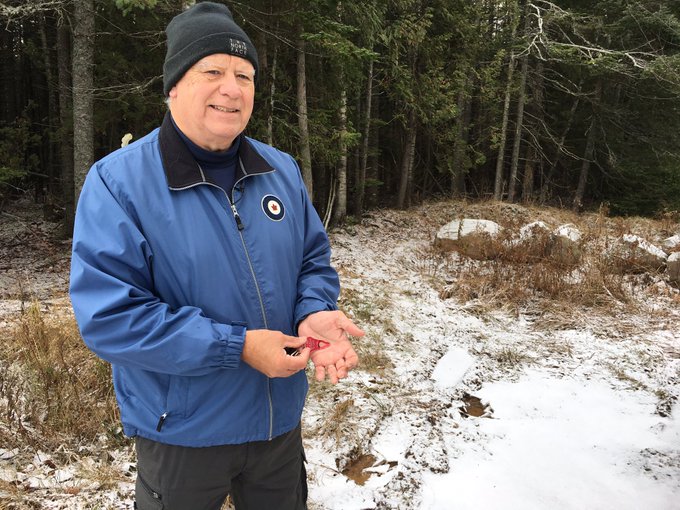
Research biologists are warning New Brunswickers to be extra cautious when it comes to checking themselves, their loved ones and pets for ticks this winter in an effort to combat Lyme disease.

Dr. Vett Lloyd, a biologist at Mount Allison University biologist, told Global News that the risk of infection is just as prevalent in the winter as any other time of the year.

“We’re seeing more ticks every year and that’s true of ticks in the winter as well,” Lloyd said.

“It’s worse this year than it was last year.  The ticks are not going away.

READ MORE: New blacklegged tick risk areas identified in New Brunswick

Lloyd said it’s essential for New Brunswickers to check themselves for ticks.

Experts I spoke with confirmed ticks are a problem any time of the year and are warning New Brunswickers to check for ticks after spending time outside in wooded areas @Global_NB

 Lloyd said even when there’s snow on the ground the sun can warm parts of the ground where the ticks are hiding just under the surface of the soil.  She said when areas of snow melt the ticks can come up and will be hungry and looking for people or animals to feed from.

“There’s no real off-season any more,” Lloyd said.

“Saying there are less [ticks] than in the spring and the fall doesn’t really help you if the one that was out there found you.  If you’ve been outside you absolutely have to check yourself and make sure there are no ticks hitching a ride in on you.”

Brian McEwing of Fredericton said he was out geocaching on on a mid-November day in 2011 when he was bit by a tick that tested positive for Lyme disease.

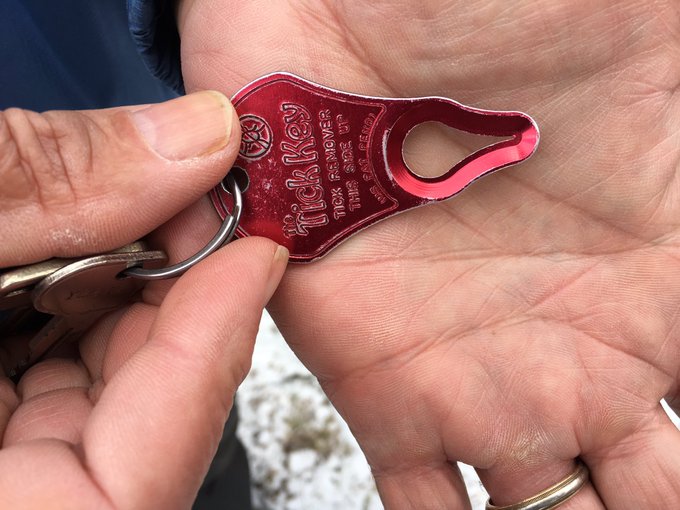
McEwing said he was only about a hundred metres into a woodlot area in Fredericton, close to major roadways, when it happened.  Although he didn’t notice it at the time because he was wearing heavy winter clothes, he said the next morning he found that tick half-way burrowed into his left arm.

View image on TwitterView image on Twitter
 

A Fredericton man wants New Brunswickers to be sure to check themselves for ticks year-round, even if there’s snow on the ground @Global_NB

 After removing most of the tick, McEwing said he visited his doctor who prescribed him a ten-day dose of antibiotics and sent the tick away to a lab for testing.

McEwan said he did some research that suggested 30-days of antibiotics was more effective in treating Lyme and asked his doctor for more antibiotics.  He said he was fortunate to have noticed the tick early and has never displayed any signs or symptoms of the disease.

He said he was surprised to realize that ticks could survive outdoors with snow on the ground.

View image on Twitter
 

Brian McEwing says he was out for a walk in November 2011 in Fredericton when he was bit by a tick that later tested positive for Lyme disease @Global_NB

“I thought they’d die or hibernate or something, so I was quite surprised,” McEwing said.  “I was shocked.  I just thought once you had snow on the ground…that the chances of picking up a tick would be next to zero, but I found out since [then] they can be active year round.


McEwing said that while the province has announced there are five high risk regions in New Brunswick with denser populations of black legged ticks in the province, he said ticks can be anywhere and people need to be alert.

“I don’t put a lot into this hot spot thing, I think the message really to get out to people is really that you can pick up a tick anywhere.  Whether it’s a hot spot area or not, I think they’re literally everywhere in the province.”

Dr. Lloyd said Lyme disease can also be harder to diagnose in winter  because the symptoms are always “non-specific” and can easily be confused with the flu.

“Certainly if you come down with flu symptoms in the winter, the first thing you are going to think, and probably the first thing your doctor will think is the flu.  That’s unfortunate, we have to get used to the fact that you can get ticks and there’s a risk of Lyme disease year-round,” Lloyd said.

_____________

**Comment**

Great, candid article, and frankly an example of what should be circulating about ticks and LD rather than the typical, “Ah, don’t worry, it’s just out East,” or “Ah, it’s winter, ticks aren’t active.”

Ticks will be the last living thing on planet earth.

For more on ticks in cold weather:  https://madisonarealymesupportgroup.com/2016/01/20/polar-vorticks/ (great video)

Ticks in general:  https://madisonarealymesupportgroup.com/2017/10/27/israeli-kids-get-lyme-disease-from-ticks-in-caves/

https://madisonarealymesupportgroup.com/2017/07/30/ticks-found-on-eyeball-buttocks-and-penis/

https://madisonarealymesupportgroup.com/2017/03/13/ticks-found-on-rocks/

https://madisonarealymesupportgroup.com/2017/08/17/of-birds-and-ticks/

https://madisonarealymesupportgroup.com/2017/12/03/biologists-at-sf-state-dig-into-ticks-and-ld/

https://madisonarealymesupportgroup.com/2017/10/21/mom-got-rocky-mountain-spotted-fever-while-picking-pumpkins/


Diagnosis and Management of Lyme Neuroborreliosis

https://www.ncbi.nlm.nih.gov/m/pubmed/29278020/

Diagnosis and management of Lyme neuroborreliosis.

Halperin JJ. Expert Rev Anti Infect Ther. 2018.

Abstract

The nervous system is involved in 10-15% of patients infected with B. burgdorferi, B. afzelii and B. garinii. This review will address widespread misconceptions about the clinical phenomenology, diagnostic approach and response to treatment of neuroborreliosis. Areas covered: Improvements in diagnostic testing have allowed better definition of the clinical spectrum of neuroborreliosis, with lymphocytic meningitis and uni- or multifocal inflammation of peripheral/cranial nerves predominating. Despite widespread concern that post-treatment cognitive/behavioral symptoms might be attributable to persisting infection or aberrant inflammation within the central nervous system a large body of evidence indicates this is extremely improbable. Importantly, recent studies show most neuroborreliosis can be treated with fairly brief courses of oral antibiotics. All high-level evidence confirms that prolonged courses of antibiotics carry harm with no commensurate benefit. Expert commentary: Lyme disease in the US, and corresponding disorders in Europe, are well defined neuro-infectious diseases that are highly responsive to antibiotic therapy. Although the nervous system is slow to recover after insults (e.g. persistent facial weakness after appropriately treated facial nerve palsy) there is no evidence that prolonged post-treatment neurocognitive symptoms are related to nervous system infection – either as a triggering event or as a cause of ongoing symptoms.

 _____________

**Comment**

While I would love to read this in its entirety for amusement, I refuse to pay $1 let alone $90 for 24 hour access.

Just from the abstract it is evident that it is another great example of why a medical condition never makes forward progress.  “Experts” like Halperin refuse to rethink the paradigm.

  • This article focuses only on borrelia, a formidable foe alone, an absolute shape-shifting beast on steroids when coupled with Babesia, Bartonella, Anaplasma, and other critters.  The one disease, one drug paradigm needs to go straight into the garbage can, and until this happens we are doomed.
  • The 10-15% patient statistic with nervous system involvement also needs to go straight into the can.  Nobody has a clue on numbers on any of this.  If the CDC goes from 30,000 new cases to over 300,000 new cases a year, I think we need to wave the white flag and admit our ignorance.
  • Without reading the entire faulty article, I have a deep rooted suspicion that this “review” is based on other deeply flawed articles and studies from the past made by the Cabal.  https://madisonarealymesupportgroup.com/2017/01/13/lyme-science-owned-by-good-ol-boys/ and https://madisonarealymesupportgroup.com/2017/12/06/ahern-flawed-lyme-policies-diagnostics-and-treatment/
  • Diagnostic testing has not improved with the CDC even stating numerous tests might be needed:  https://madisonarealymesupportgroup.com/2017/07/01/good-morning-america-cdc-advises-multiple-lyme-tests-due-to-false-negative-results/
  • A recent study states that treating prophylactically if TBI’s are suspected is warranted: https://madisonarealymesupportgroup.com/2017/07/12/start-treatment-if-tbis-are-suspected/.  Also see:  https://www.lymedisease.org/lyme-basics/lyme-disease/diagnosis/, and https://madisonarealymesupportgroup.com/2017/09/02/microbiologist-holly-ahern-on-lyme-disease-how-did-we-get-here/.
  • The definition of the clinical spectrum of neuroborreliosis is not better.  While it is true that more is being reported on, there is absolutely no consensus on any sort of definition.
  • The persisting infection/aberrant inflammation issue is not over just because Halperin reviews old Cabal manuscripts and claims there is a “wide body of evidence.”  As they say, Garbage in, garbage out.
  • Brief courses of antibiotics do work for some people, typically acute cases; however, there is much to indicate that many relapse and continue to have symptoms.  To say otherwise indicates bias of the highest sort.
  • His usage of “high-level evidence” also indicates an extreme personal bias indicating that the rest of us poor fools have low-level evidence.  Please, I know a slam when I hear one.  Nobody in Lyme-land is arguing that antibiotics do not have risks.  Many if not most treatments have risks, including drinking water; however, as with any disease state, the doctor and patient must discuss and weigh the risk/benefit ratio for sure.  An IDSA Founder, Dr. Waisbren, successfully used high powered IV antibiotics and wrote a book on 51 tough cases.  All improved.  https://madisonarealymesupportgroup.com/2017/07/09/idsa-founder-used-potent-iv-antibiotics-for-chronic-lyme/  Again, there are so few studies looking at long-term antibiotic benefit on Lyme/MSIDS that this statement is premature and misleading.  I work with people on a daily basis who state they wouldn’t be alive today without the very treatment he is slamming, and trust me, we would all love an effective treatment with fewer risks!  
  • The “expert commentary” is only expert in my opinion if it takes into account numerous physicians who have actually treated complicated Lyme/MSIDS cases over decades of time, who are open-minded, are willing to change, and are continually studying, listening and learning from others.  Halperin fails on many accounts.  Keep reading below to see why.
  • This review is nothing more than a regurgitation of ancient, unscientific, and biased opinion.

In this interview  Halperin repeats the common myth that Lyme takes 24-49 hours or more to be transmitted  https://madisonarealymesupportgroup.com/2017/04/14/transmission-time-for-lymemsids-infection/, that it is primarily an Eastern problem  http://steveclarknd.com/wp-content/uploads/2013/11/The-Confounding-Debate-Over-Lyme-Disease-in-the-South-DiscoverMagazine.com_.pdf (go to page 6 and read about Speilman’s maps which were faulty but have ruled like the Iron Curtain), and that you typically have flu-like symptoms https://madisonarealymesupportgroup.com/2017/02/24/pcos-lyme-my-story/ (My initial symptoms were gynecological).  He treats everyone with 2-4 weeks of antibiotics.

A quick search reveals Halperin commonly serves as an “expert” witness in medical malpractice cases defending physicians accused of failing to diagnose Lyme.  

Here’s a lengthy article Article Kicking and LLMDs Personal View coauthored by Halperin which states,

“Advocacy for LD has become an increasingly important part of an anti science movement that denies both the viral cause of AIDS and the benefits of vaccines and that supports unproven (sometimes dangerous) alternative medical treatments.”  

Oh, and somehow patients, advocates, and their doctors pose a threat to public health.

 Here’s a few telling Halperin quotes:
QUOTE-  “When physicians who diagnose chronic Lyme disease obtain laboratory tests to provide support for their diagnoses, they often rely heavily on “Lyme specialty laboratories.” Such laboratories may perform unvalidated in-house tests that are not regulated by the Food and Drug Administration, or they may perform standard serologic tests interpreted with the use of criteria that are not evidence-based.1” Source
 
QUOTE-  “Antibiotic therapy can cause considerable harm to patients treated for chronic Lyme disease or post–Lyme disease symptoms.” Source
 
QUOTE-  “Although anecdotal evidence and findings from uncontrolled studies have been used to provide support for long-term treatment of chronic Lyme disease,18-20 a response to treatment alone is neither a reliable indicator that the diagnosis is accurate nor proof of an antimicrobial effect of treatment.” Source
 
QUOTE-  “It is highly unlikely that post–Lyme disease syndrome is a consequence of occult infection of the central nervous system.” Source

The Invisible Universe Of The Human Microbiome & MSM

 NPR 2013

The next time you look in a mirror, think about this: In many ways you’re more microbe than human. There are 10 times more cells from microorganisms like bacteria and fungi in and on our bodies than there are human cells. But these tiny compatriots are invisible to the naked eye. Artist Ben Arthur gives us a guided tour of the rich universe of the human microbiome.

https://articles.mercola.com/sites/articles/archive/2018/01/03/gut-microbiome-probiotics.aspx?  Dr. Mercola Jan., 2018

Story at-a-glance

  • Because 70 to 80 percent of your immune system resides within your gastrointestinal tract, optimizing your gut microbiome is a worthwhile pursuit that will have far-reaching effects on your physical health and emotional well-being
  • A vital first step toward balancing your gut flora is to eliminate sugar from your diet, especially sugars found in processed foods
  • Eating fermented foods such as kefir, kimchi and sauerkraut, as well as consuming prebiotic foods like garlic, leeks and onions, can help create an optimal environment for beneficial gut bacteria, while decreasing disease-causing bacteria, fungi and yeast
  • Taking a probiotic or sporebiotic supplement can also be beneficial, especially during and following antibiotic treatment, because it helps restore and promote healthy gut flora
  • Your gut bacteria can influence your behavior and gene expression, and has also been shown to play a role with respect to autism, diabetes and obesity

__________________

All Lyme/MSIDS patients should be on a good pro and prebiotic as well as lowering or avoiding sugars, eating a whole-food based diet, and avoiding processed food.  Some will do well eliminating gluten and/or dairy.  We are all so different – what works for one may not work for another, but all are worth trying.

In my quest, I’ve been studying DMSO and MSM.  For that information:  https://madisonarealymesupportgroup.com/2018/03/02/dmso-msm-for-lyme-msids/

Briefly, MSM stands for Methylsulfonylmethane and is 34% sulfur by weight.  Sulfur plays a crucial role in detoxification and is an important antioxidant for producing glutathione.  If you aren’t getting enough sulfur, glutathione can not work.  Even if you have a diet rich in sulfur (think cabbage, onions, garlic, broccoli, etc – essentially the stinky veggies – and many other food items as well) your body still could use supplementation.

For me it was a game-changer.

https://lyngenet.com/msm-wonder-supplement-sinus-digestive-lung-esophageal-health/ By Lyn-Genet Recitas, NMT, Sports Nutritionist, Holistic Health Pracitioner, RYT

Recitas, author of “The Plan,” calls MSM the wonder supplement for your gut.  It can alleviate allergy symptoms, helps with detoxification, eliminates free radicals, and improves cell permeability.  She states that with given time, MSM will start to actually repair damage caused by leaky gut – a common problem with Lyme/MSIDS patients.  It can also help the body’s ability to absorb nutrients from food.  Many Lyme patients struggle with paralysis of the gut where the muscles of the stomach and intestines stop being efficient.  MSM helps this muscle tone as well.

My personal observation after starting MSM

I started out with 1/4 tsp of distilled crystals in about 2 oz of water, since it has a bitter taste.  After studying it, I learned the distillation process is the best one and if you want to find sources easily go here:  http://www.optimsm.com/brands/ You should see the OptiMSM patent on the product.  I happened to get the 16 oz tub of crystals at the Vitamin Shoppe but as you can see there are many brands available. (As always, I don’t make a dime on any of this and have no connection what so ever to any product line)

Within three days I noticed my nails growing faster.  Within a week, about 50% of my pain was gone.  Now this is a big deal as this pain has been resistant to nearly everything I’ve tried over the years.

After this reduction in pain, I increased the dose to 1/4 tsp twice a day and then ultimately to my final dose of 1/2 tsp twice a day in 2 oz of water.

**update** I had to pull back on amount for a few weeks as my body was detoxing and I broke out like a teenager on my face, back, and chest.  All I can say is it does help detoxify as clearly seen on my skin.  After reducing the dose for a month or so I easily went back to my full dose of 1/2 tsp once a day.  Everyone’s different and requires different doses.  Take the lowest amount to achieve desired results.

I have to report that my pain is completely gone on some days with a fraction returning on other days.

For a great MSM guide:  http://msmguide.com/

http://www.nutraceuticalsworld.com/contents/view_breaking-news/2017-04-25/decades-of-discovery-summarized-in-new-msm-review/  This article gives a current 2017 review of MSM as well as studies and 195 references.

MSM has been studied for decades.

It is recommended to start at a low initial dose and allow the body to acclimate.  You can slowly increase the dose after a week.  It is also stated that those with chronic conditions may take up to 6 or more months to notice a difference.

You can also get MSM in creams, gels, and lotions for topical application – as well as pills.  Make sure you read about the other ingredients and if the MSM is made from distillation.  Like any other supplement, the devil’s in the details.

I’ve had patients report back to me that MSM has been a game-changer for them too.  Considering the fact it’s cheap, helps with pain and inflammation, helps with detoxification and helping the gut, it is one item I can suggest to anyone to try.

MSM is derived from DMSO and has many similar properties plus DMSO has many all of its own worth investigating.  DMSO takes more knowledge to use so please read that article above in detail as it’s a penetrating agent and will drive anything and everything into your body.  If using topically you want it to completely dry before anything touches it and your hands, utensils and everything it’s stored in must be clean and preferably glass.  DMSO should never be stored in plastic.