https://www.cbc.ca/news/canada/manitoba/tick-bourne-lyme-disease-service

‘Virtual clinic’ of specialists focused on Lyme disease diagnosis, treatment expected to open early next year

Program will connect primary health providers, patients to specialists to help treat tick-borne illnesses

Black-legged ticks can spread Lyme disease and other tick-borne illnesses. A new provincial program is intended to help diagnose and treat those illnesses by connecting patients and primary-care physicians with specialists. (Bertrand Guay/AFP/Getty Images)

Winter may be around the corner, but Manitoba health officials are already focused on treating a summer hazard — tick-borne illnesses like Lyme disease.

A “virtual clinic” of medical health officers focused on better diagnosing and treating tick-borne illnesses, first announced by the Manitoba government last June, is expected to be operating by early next year, says Dr. Richard Rusk, the province’s medical health officer for communicable disease control.

“If you have someone with multiple issues and symptoms and they don’t really come up with a clear diagnosis, then they are lost — so how do you look after this group?” said Rusk.

It’s estimated as many as 1,000 Manitobans may be suffering from tick-borne illness and need help getting diagnosed and treated.The tick-borne collaborative care service, which the province said in a June media release is intended to “streamline and improve health services for patients who show symptoms of late Lyme disease and other emerging tick-borne illnesses,” will receive $240,000 a year. The program will gather a round table of experts in a tele-health format to help diagnose and treat patients.In 2018, there were 70 reported cases of Lyme disease, with  28 confirmed cases and 26 probable cases, according to the province.

Symptoms, which typically appear from three to 30 days following the bite of an infected black-legged tick, can include fever and muscle aches, but if untreated, infection can spread to the joints, heart and nervous system, according to the province’s website.

Rusk says tick-borne illnesses can be difficult to diagnose, and the new collaborative program is meant to help primary physicians by connecting them with specialists.

“It often involves intense evaluations, which is why your average family physician won’t be able to do this,” he said.

Dr. Richard Rusk is the lead on a virtual system that will link family doctors with a team of medical specialist to better diagnose and treat patients struggling with tick-borne illnesses like Lyme disease. (Jaison Empson/CBC)

“The team consists of an infectious disease specialist, a neurologist, an internal medicine specialist, a rheumatologist, a psychiatrist and physiatrist, so it’s a fairly high-level group of specialists,” said Rusk. A primary health care nurse and pharmacist will also be on the team.

Some patients who are already working with an internal medicine specialist are starting to be seen by the other medical experts as a trial run of the program. But software and administrative details are still being worked out before the official rollout of the virtual clinic.

“We’re looking to take in 10-12 patients a month, because it’s complex and each patient probably takes about two hours just with the internal medicine specialist, never mind the other experts,” says Rusk.

He says the Manitoba tick-borne collaborative care service will also be part of the Canadian Lyme Disease Research Network.

Dr. Kieran Moore is the Ontario medical health officer tasked with bringing together a cross-country network of university researchers, medical specialists, and patients  to fill gaps when it comes to research, diagnosis, treatment and education.

“We’ve got a lot of catch-up on education on the clinical signs and symptoms, as well as testing reliability and treatment pathways,” says Moore, who is also a professor of family and emergency medicine at Queen’s University.

There are plans to include Manitobans in research efforts, but that is still two or three years away.

“We have to get protocols set in [Ontario] and then in Halifax, and then we will expand,” said Moore.


https://www.holtorfmed.com/mental-illness-hashimotos-disease/?

Is it Mental Illness or Hashimoto’s Thyroiditis?

Hashimoto’s thyroiditis is a common cause of hypothyroidism that is often misdiagnosed as depression or other mental health conditions.

Updated September 2019

Imagine having all the symptoms of a major mental illness such as manic depression, paranoid schizophrenia, psychotic depression, or even a bipolar disorder. One day you wake up with overflowing physical energy, even feeling severely anxious, with a rapid heartbeat, profuse sweating, trembling hands, and diarrhea, and you can’t stop losing weight. Then soon enough, without warning, your energy plummets. You feel like a slug, are constipated, your hair starts falling out, you gain weight no matter how little you eat, and you are severely depressed. You may have difficulty swallowing, sound hoarse, and feel like you have swallowed something that wont go down. And then, suddenly, your old symptoms return, and you feel anxious, sweaty, trembling, and panicky. This cycle can repeat itself again and again.

While your symptoms resemble a mental health issue, they could be signs of Hashimoto’s thyroiditis, one cause of hypothyroidism. Hashimoto’s thyroiditis, also known as autoimmune thyroiditis or simply “Hashimoto’s, is caused by an autoimmune disorder. In this case, the body’s immune system sees the thyroid gland as a foreign body and begins to attack, damaging and killing thyroid cells along the way. As the cells are damaged or destroyed, they release their stored thyroid hormone, causing classic hyperthyroid symptoms such as anxiety, panic attacks, shaking hands, sweating, and a racing heart.

Each autoimmune attack causes more and more damage to the thyroid gland until, ultimately, the gland is no longer able to produce adequate thyroid hormones. Every cell in the body needs thyroid hormones, so a deficiency can wreak havoc on the entire system, causing depression, weight gain, severe fatigue, brain fog, memory loss, and even overall body aches.

With such a dramatic swing in symptoms, it’s easy to see how Hashimoto’s disease could be misdiagnosed as a mental illness like manic depression or bipolar disorder.

And it happens much too often. A 1987 study found that as many as 15% of patients admitted to a psychiatric hospital for depression actually were suffering from some level of hypothyroidism.

Learn more about Hashimoto’s here.

Symptoms of Hashimoto’s

At first, Hashimoto’s can produce little to no symptoms. But as the disease progresses, the body will cycle between hyperthyroid symptoms and hypothyroid symptoms, until ultimately the patient becomes permanently hypothyroid. Symptoms vary based on whether the thyroid is under attack or at rest, but can include:

  • Anxiety
  • Panic attacks
  • Insomnia
  • Unexplained weight gain or weight loss
  • Diarrhea or constipation
  • Feeling excessively cold or hot
  • Weakness and fatigue
  • Muscle and join pain or achiness
  • Hair loss
  • Irregular periods
  • Difficulty concentrating or thinking clearly, confusion, forgetfulness
  • Hoarseness, difficulty swallowing, or a tight feeling in the throat

Get the full list of thyroid disease symptoms here.

Getting the Right Diagnosis

Thyroid hormone lab tests such as the TSH, Free T4, Free T3 and Reverse T3 can diagnose hypothyroidism or hyperthyroidism, but to get a clear picture of a potential autoimmune thyroid disease, you must check for increased antibodies that are specific to thyroid proteins. These include thyroid peroxidase (TPO) and antithyroglobulin; however, it’s important to know that these antibodies can be at normal levels and a patient still have hashimoto’s disease. It can also be useful to check levels of thyroid stimulating immunoglobulin (TSI), which can be seen in Graves’ disease, another autoimmune thyroid disorder.

Get a FREE downloadable thyroid panel lab slip here.

Proper Treatment for Hashimoto’s

If lab tests or symptoms indicate Hashimoto’s, it is important to begin treatment as soon as possible to help avoid further damage to the thyroid gland. In addition to thyroid hormone replacement therapy, the following treatments options should be explored.

  • Supplements such as selenium can help lower antibody levels while strengthening the immune system
  • Treatment of any chronic bacterial or viral infections can also be important in managing autoimmune thyroid disease. Often, these infections can initiate the immune system dysfunction
  • Regulating the immune system can make a very positive difference in autoimmune disorders like Hashimoto’s. Medications including low-dose Naltrexone and gamma-globulin, can help balance immune system activity and reduce attacks.

Getting the Care You Deserve

The violent swings of Hashimoto’s disease can be very frightening, not only for the patient who has the autoimmune disease, but also for friends and family who watch their loved one struggling, but with proper diagnosis and treatment, the symptoms of Hashimoto’s can be resolved.

At Holtorf Medical Group, our physicians are trained to provide you with cutting-edge testing and innovative treatments to properly diagnose and treat your autoimmune thyroid disease, optimize your health and improve your quality of life. If you have been diagnosed with Hashimoto’s, but aren’t getting the treatment you need or if you have symptoms associated with thyroid dysfunction, call us at 877-508-1177 to see how we can help you!

Resources

1. Kent Holtorf, MD. “Understanding Local Control of Thyroid Hormones: (Deiodinases Function and Activity).” https://www.nahypothyroidism.org/deiodinases/
2. Kent Holtorf, MD. “Thyroid Hormone Transport.” https://www.nahypothyroidism.org/thyroid-hormone-transport/
3. Kent Holtorf, MD. “Diagnosis of Hypothyroidism: Are we getting what we want from TSH testing?” https://www.nahypothyroidism.org/how-accurate-is-tsh-testing/
4. Kent Holtorf, MD. “Why Doesn’t My Endocrinologist Know All of This?” https://www.nahypothyroidism.org/why-doesnt-my-doctor-know-all-of-this/

5. Dana L. Mincer; Ishwarlal Jialal. “Hashimoto Thyroiditis.” https://www.ncbi.nlm.nih.gov/books/NBK459262/
6. LDN Trust. “Conditions that are helped by Low Dose Naltrexone (LDN).” https://www.ldnresearchtrust.org/conditions

How HMG Has Helped Others: Patient Testimonial

After seeing 3 other doctors (over a 5 year period) for Hashimoto thyroid disease treatment, I finally found Dr. Holtorf (thank God!). I could write paragraphs on what I’d been through but the bottom line is that I finally found a doctor that is not only a good listener, compassionate & kind, but one who actually thinks “outside the box”.

For those of us who don’t respond in a conventional manner to medications, old school “by the book” endocrinologists have repeatedly patted us on the back & said, “Your TSH is fine”, just keep doing what you’re doing. In the meantime, I for one, was sleeping 16 hours a day, spent my life in a mind fog & was fatigued beyond belief (I even slept in my car during my lunchbreaks at work).

Dr.Holtorf immediately asked the right questions, patiently waiting through my confusion & tears, and made changes to my medication regime that truly turned things around for me.

I can’t say enough good things about him as a doctor & a caring person. – Ilene G.

_________________

**Comment**

Every Lyme/MSIDS patient I work with has messed up thyroid issues. In fact, one infected patient felt nearly well just by addressing the thyroid.

Notice the article talks about the importance of dealing with bacterial and viral infections. Often, when you deal with the infection(s), your many symptoms can just disappear; however, it’s important you partner with your ILADS-trained doctor to sleuth out your deficiencies and then supplement what your own body isn’t producing.

Most doctors are not privy to appropriate thyroid testing. Within this article there is a printable thyroid panel slip. The link will direct you to a great article explaining all the different elements in the panel as well as a downloadable slip you can take to your doctor. All of the required tests have a black X by them. I highly advise you to take advantage of this if you haven’t addressed your thyroid.

Also, please see another great read by Holtdorf on lies endocrinologists tell patients:  https://madisonarealymesupportgroup.com/2019/10/26/5-thyroid-lies-your-endocrinologist-may-try-to-tell-you/  In the comment section I give a trick my doctor uses to determine if you need additional T3 as sometimes our bodies aren’t able to properly convert T4 into T3. Many feel this is a genetic issue.  Conventional medicine states our bodies will do this naturally; however, according to this article, 15% of the population can’t convert.  I’m one of them: https://www.healthcentral.com/slideshow/thyroid-patients-and-t3  T3 is important because it delivers oxygen and energy to your cells, tissues, glands, and organs. More than 12 studies have shown the benefit of adding T3 to T4.

Many patients upon adding T3 were able to:

  • shed unwanted pounds
  • reduce cholesterol
  • have greater energy
  • have less brain fog
  • have less mood swings
  • be less depressed
  • regain supple skin
  • regain hair loss
  • reduce joint pain
The tiny thyroid hormone shouldn’t be neglected. Many thyroid symptoms look exactly like Lyme/MSIDS. Treat the thyroid and symptoms may disappear entirely.

https://globallymealliance.org/highlights-from-ilads-2019/?

By Jennifer Crystal

A RECAP OF THE 20TH ANNUAL ILADS CONFERENCE

From November 1 to 3, I had the opportunity to attend the 20thannual International Lyme and Associated Diseases Society (ILADS) conference in Boston. Tick-borne disease can feel isolating for patients and caregivers, and for doctors who are trying to help them in areas where Lyme isn’t historically endemic. However, the conference assured me that the Lyme community is not only thriving, but making great strides on behalf of its most important members: patients like you and me.

In the coming months, I’ll be writing in-depth blog posts on specific topics covered at the conference. For now, I want to share my general takeaways:

NEW TREATMENT METHODS

Antibiotics have long been the standard course of treatment for Lyme and other tick-borne diseases (sometimes used in conjunction with other types of medications, including antimalarials for certain co-infections). We know unequivocally that antibiotics kill borrelia burgdorferi, the Lyme bacteria. In fact, Eva Sapi, Ph.D., Director of the Lyme Disease Program and Professor in the Biology and Environmental Science Department at the University of New Haven, showed images of Lyme spirochetes being treated with penicillin. First they wiggled, coiled, and fought the treatment, but eventually, they disappeared.

Despite the efficacy of antibiotics against Lyme, they have their limits, especially in patients with late-stage infections. Dr. Sapi’s research has demonstrated that Lyme bacteria can create biofilms (like a greasy buildup, similar to dental plaque) that form around the bacteria, acting as a barrier against antibiotics. Furthermore, some patients who receive antibiotic treatment still experience ongoing symptoms, or a relapse of symptoms, after finishing the standard antibiotic treatment protocol (known as Post Treatment Lyme Disease Syndrome). Therefore, researchers and doctors are exploring new methods of treatment. Leading Lyme expert Kenneth Liegner, M.D., a Board-certified internist with additional training in pathology and critical care medicine, said the solution is “not denial but design of more effective and less costly treatments.”

Based on research (funded by Global Lyme Alliance) by Kim Lewis, Ph.D., Director of the Antimicrobial Discovery Center at Northeastern University, and on work by Stanford University researchers, some LLMDs are trying the antimicrobial drug Disulfiram.More commonly known as Antabuse, this medication is used to treat alcoholism and has proved highly effective against Lyme disease. It may possibly undermine biofilms, and it also seems to help treat babesia. Dr. Liegner has published his experience with three cases in which he used Disulfiram. He and other doctors are seeing great success with it, with some patients enjoying enduring remission (feeling well for at least six months after treatment). However, there can be serious side effects that should be discussed with your LLMD, and there are still a lot of unanswered questions about the drug. My sense from speaking with doctors is that there will probably be at least another year or two of research before we have definitive answers on this drug, but early news is promising.

An antibacterial drug that also got a lot of buzz at ILADS was Dapsone. Richard Horowitz, MD, author of Why Can’t I Get Better: Solving the Mystery of Lyme and Chronic Disease and its sequel, is studying the effects of antibiotics and Dapsone both in combination and alone. He and Phyllis Freeman, Ph.D., Associate Professor of Biology and Curriculum Coordinator of Biology in the Department of Life and Physical Sciences at Fisk University, have published results of these studies in the International Journal of General Medicine. For further information, read this GLA press release on drugs and drug combinations that show success in treating Lyme.

Another alternative to antibiotics that is being studied is phage treatment.Phages are viruses that infect bacteria. In his talk, “Specific Phages as New Strategies for Diagnostics and Treatment,” Louis Teulieres, M.D., Ph.D., of the Department of Infection, Immunity, and Inflammation at the University of Leicester, said phages are used in molecular biology in many countries; one was found for borrelia in Sweden.

UP-AND-COMING DIAGNOSTIC METHODS

While it’s unlikely that we’ll be able to treat Lyme by injecting a live virus into the body, phages may be useful as a diagnostic tool. If phages don’t find bacteria, they die, so their ability to live is a good indicator of whether Lyme bacteria are present. Dr. Teulieres and his team are working on creating a phage-based diagnostic test.

Other researchers are working on biology-based diagnostic tools. James Collins, Ph.D., of the Institute for Medical Engineering at the Massachusetts Institute of Technology, who is associated with the Broad Institute, also of MIT, Harvard and The Wyss Institute, is looking at using human cells as programmable technology. His company Sherlock Biosciences is teaming with Sabeti Labs to create a paper-based diagnostic tool that can be used in a doctor’s office. This type of detection was used in diagnosing the Zika virus, and scientists are now looking at applying it to tick-borne diseases. While the project is still 12-18 months from initial clinical trials, it’s exciting to know that possibilities for better diagnostics are on the horizon.

COLLABORATION, WITH TANGIBLE RESULTS

As described in “The Lyme Wars” (New Yorker, 1 July 2013) the Lyme community is polarized, and even within each camp, there hasn’t always been harmony or good communication. In her talk,“One Health: Forming Collaborations that Transcend Disciplinary Boundaries,” Cheryl Stroud, D.V.M, Ph.D. said doctors and researchers can sometimes get stuck inside their respective professional “silos”. They do important work side by side but don’t have the opportunity to see or discuss what the other is doing despite proximity in the field. She encouraged conference attendees to “step out of [their] silos and see the big picture.” This is the mission of the One Health Commission, which Dr. Stroud chairs.

The Centers for Disease Control and Prevention defines One Health as “… a collaborative, multisectoral, and transdisciplinary approach—working at the local, regional, national, and global levels—with the goal of achieving optimal health outcomes recognizing the interconnection between people, animals, plants, and their shared environment.” As a veterinarian who sees a lot of tick-borne disease, Dr. Stroud feels she has important information to share with our Lyme doctors, and vice-versa. She encouraged LLMDs to broaden their intake questionnaires to include animal exposure (a patient’s dog may have been carrying a tick, or the patient may have bartonella henselae, also known as cat scratch fever).

This big-picture collaboration is something Kristen Honey, Ph.D., P.M.P. is working on as Vice-Chair of the Department of Health and Human Services (HHS) Tick-Borne Disease Working Group, established by the United States Congress in 2016. Through her role with HHS, Dr. Honey co-founded Lyme Innovation, whose mission is “to solve the critical prevention, diagnostic, treatment, and rehabilitation challenges in the Lyme disease field.” Dr. Honey stressed the importance of putting patients at the center of this problem solving, stating that “the lived experience of a patient or caregiver is equally as valuable as an MD with credentials. When we put the patient at the center, we get better outcomes.”

In December 2018, HHS’s Chief Technology Officer hosted the first-ever Lyme Innovation Roundtable, bringing together 80 Lyme leaders including patients, clinicians, researchers, caregivers, and policymakers. In the last year, Lyme Innovation has focused on creating patient-powered technology and innovation, including the Lyme Symptom Tracker app, co-created with Trial X and Global Lyme Alliance. Lyme Innovation helped bring the TICK (Ticks: Identify, Control and Knockout ) Act to the U.S. Congress. Recently renamed the Kay Hagan TICK Act bill in honor of Senator Kay Hagan (D-NC), who passed away in late October from complications of the tick-borne Powassan virus, the bill seeks to improve research, prevention, diagnostics, and treatment for tick-borne diseases, and includes a request for $100M for tick research. Just as the ILADS conference concluded, the Senate Health Committee voted unanimously to advance this legislation; it nows moves to the full Senate.

Moving forward, Dr. Honey notes the importance of collaboration between industry, non-profits, academia, patients, and patient advocates. I feel confident she will continue to lead the charge on bringing people together to effect positive change. She ended her talk by saying, “I look forward to co-creating solutions with you,” and later offered a smaller session, “Together, Transforming Lyme Anecdotes into Data and Action,” where she opened up a dialogue with attendees, asking what they most needed from the government (answers included funding and a standardized reporting protocol). Dr. Honey seems committed to creating innovation and finding funding that will help patients get and stay well.

Overall, I left the conference feeling incredibly hopeful. I first attended an ILADS conference in 2012, and I am so pleased with the progress that has been made in the interim. As Dr. Horowitz said, 

“Researchers out there doing work on biofilms and persisters allow clinicians like me to make advances. We’re very close to a durable answer.”


jennifer crystal_2Jennifer Crystal is a writer and educator in Boston. Her memoir about her medical journey is forthcoming. Contact her at lymewarriorjennifercrystal@gmail.com


____________________

**Comment**

Please learn about Disulfiram before considering it. This $40 drug caused me to go into psychosis and probably cost me $20K overall:  https://madisonarealymesupportgroup.com/2019/10/14/november-2019-lyme-support-meeting-oct-meeting-canceled-due-to-reaction-to-disulfiram/

https://madisonarealymesupportgroup.com/2019/10/15/disulfiram-psychosis-update/

https://madisonarealymesupportgroup.com/2019/10/27/disulfiram-psychosis-update-2/


https://www.newarkadvocate.com/story/news/local/2019/09/11/lyme-disease-cases-increase-county-so-do-frustrations/

As Lyme disease cases increase in Licking County, so do frustrations

NEWARK – More than two times as many cases of the tick-borne Lyme disease have been reported to the Licking County Health Department thus far this year, as compared to all of 2018. And the amount confirmed is even more noteworthy.

There were 17 suspected, two probable and three confirmed cases last year for a total of 22. Through Wednesday morning, there were 52 total cases, with the vast majority being confirmed.

In 2017, it was 16 suspected and 10 confirmed for a total of 26 cases.

A 2017 alert, issued by Gale Neville, Licking County Health Department Infectious Disease Nurse, said that prior to 2010, there were no known established populations of blacklegged ticks, or deer ticks, in Ohio. Since then, the tick has been found in at least 60 Ohio counties including Licking, and spreads Lyme disease through its bacteria-infected bite.

Typical symptoms include fever, headache, fatigue and a characteristic “bulls-eye” skin rash. Most cases can be treated successfully with a few weeks of antibiotics. But if untreated, the infection can spread to joints, the heart and the nervous system.  Early treatment is key for the disease, so the quicker it’s detected, the better the outcome for the patient.

“Because Lyme disease symptoms are common to many other illnesses, including common viral infections, and because Lyme disease transmission is fairly new to Ohio, it is often mis-diagnosed and under-reported,” Licking County health commissioner Joe Ebel said last month. “Increased public education and (medical) provider awareness results in higher case counts. However, a Lyme diagnosis is sometimes missed until the symptoms have progressed.”

Local residents dealing with the disease have expressed their frustrations about how misunderstood the disease is and how long it often takes to diagnose it, often with debilitating results.

Amanda Johnson’s daughter Emery, a freshman at Granville, was diagnosed with Lyme disease in the third grade and now has Juvenile Idiopathic Arthritis. She is the oldest of her four children.

“She was at a local week-long summer camp after her second grade year, and we picked her up and immediately drove to Hilton Head,” Johnson recalled. “Well, there was a red, raised area on her hand. When we got there, it was swollen and huge. We took her to Urgent Care, and it was the classic bulls-eye rash. They gave her some cream.”

After a week at the beach, the whole hand was swollen, and Emery came back and started third grade, but her teacher could immediately tell something was wrong.

“She was tired, lethargic, freezing,” Amanda said. “We suspected Lyme disease, and had talked to a mom whose daughter had it.” But medical providers would not test for it until eventually, the Johnsons went to Cleveland, where Emery was diagnosed with the arthritis.

And later, she was finally diagnosed with Lyme disease at Cincinnati Children’s Hospital. After six weeks of medicine, Emery’s teacher finally noticed a change.

“She said, ‘your daughter is a totally different student,” Amanda said. “I wish I would have known more. She was almost in a daze for a whole year.”

Johnson, now a financial advisor for Edward Jones, worked for 18 years in medical sales and was a dietician.

“I quit my job for four months, because we were constantly in doctor appointments,” Amanda said. “My husband and I spent thousands, because a lot of it was out of pocket. Some of the medications made her violently ill. It was very frustrating. We went through injections, infusions, EKGs and MRIs.”

Emery’s hand joints are permanently damaged, but she leads a fairly normal life. However, the arthritis still flares up, and she still goes to a specialist.

“They didn’t want her playing sports, but we wanted her to, so she could become herself,” Amanda said. She currently plays freshman and reserve volleyball at Granville.

Kristy Hawthorne, administrative assistant for the Licking County Soil and Water Conservation District. has had to scale back her active life after being diagnosed with Lyme disease in July.

“I went to Urgent Care on July 1, and got the results back July 7,” Hawthorne said. “I had one blood draw, which they ran multiple tests off of. I’m not sure exactly when I contracted it. I live out in the country and am outside a lot for work. So I’m prone to be in areas where ticks are at. I’d been bitten before. I drive by that sign on Route 16 warning about ticks, but I never thought it would affect me.”

The bullseye rash was on a different part of her body from where the bite was, she said. Through her research, she found that about 30 percent of cases do not have the bullseye rash. She also learned about nymphs, a smaller version of the tick, which was found on her.

“The smaller nymphs are more concerning, because nymphs are the size of a pinhead,” Hawthorne said. “They’re very small, they’re tougher to spot and they stay attached longer.”

She did 28 days of antibiotics treatment, but was still having the symptoms.

“The fatigue mimics the flu,” Hawthorne said. “I’m very active but I’ve had to pull back. It’s changed my life. I went to a doctor of infectious disease specialist, and he said I didn’t have the three things they look for in Lyme disease: swollen joints, Bell’s Palsy or heart arrhythmia.”

Eventually, her family physician found had she had low thyroid levels, and her Vitamin B12 and Vitamin D were down.

“I’ve increased my intake to help with the fatigue, muscle and joint soreness,” Hawthorne said. “It will take a few weeks to be effective. I have to be mindful of my self care. I have to eat healthy and listen to my body.”

It’s been quite the education for Hawthorne and Johnson, who have conducted plenty of their own research. There are support groups on Facebook.

“I have a friend who has it who avoids natural sugars, like in fresh fruits,” Hawthorne said. “Another friend had a daughter who had symptoms, but wasn’t diagnosed until a year later.

“If you think you have it, have a good conservation with your doctor and ask for the test,” Hawthorne said. “Try to get the word out about it to medical professionals. I’ve started my own health journal. It’s a misunderstood disease, and nothing is really clear cut.”

Johnson said she had two mothers call her this summer who were at their wits end, because they suspected their kids had Lyme disease. Ultimately, one of them did, and one of them didn’t.

“I want to help other people,” she said. “We have seen the light. She (Emery) does not have cancer and she’s not dying. We’ve tried to make the most out of a bad situation.”

“Follow your gut,” Johnson added. “Don’t stop. Walk into your doctor’s office and say, ‘I want myself, or my child, tested.’ You may have to pay out of pocket, but pay out of pocket. If you or they have a rash, or don’t have a rash, if you or they have a fever, or unexpected stiffness or joint pain, get tested. It’s just a blood test, not bone marrow.”

Olivia Biggs, public information officer for the Licking County Health Department, said they have tried to stay ahead of things.

“We started educating the medical providers in 2017 with Health Alert Network (HAN) messaging about the emergence of Lyme,” she said.  “The biggest thing we noticed early on during our suspected Lyme disease investigations were that cases had no listed travel outside of Licking County. Further information collected suggested exposures occurring in Licking County.

“This was something new regarding Lyme disease and something we continued to monitor to see if it was legit. We did establish that it was legit here in the county,” Biggs added. “And not long after that, ODH (Ohio Department of Health) started to address the emergence of blacklegged ticks in Ohio.”

Biggs said numbers of cases reported will rise as awareness is raised, for both the public and health providers.

“We expect it, but it’s best to accurately diagnose our patients,” she stressed. “The only way to get the data is if providers test for it and we get positives.”

Tick-borne diseases (Anaplasmosis, Babesiosis, Lyme disease and Rocky Mountain spotted fever) mostly occur during spring and summer, although blacklegged ticks are active and may transmit disease the year around in Ohio. Suspected or confirmed cases should be reported to the health department within one day of a diagnosis. It is essential there is both clinical and laboratory evidence of infection, the health department said.

dweidig@newarkadvocate.com

740-328-8557

Twitter: @noz75

CDC tick bite prevention tips

  • Avoid ticks by walking in the center of trails and avoiding wooded and brushy areas with high grass and leaf litter.
  • Repel ticks on skin and clothing by using repellent that contains 20 percent or more DEET, picaridin, or IR3535 on exposed skin for protection that lasts several hours. Always follow product instructions. Parents should apply this product to their children, avoiding hands, eyes, and mouth.
  • Use products that contain permethrin on clothing. Treat clothing and gear, such as boots, pants, socks and tents with products containing 0.5% permethrin. It remains protective through several washings.
  • Find and remove ticks from your body by bathing or showering as soon as possible after coming indoors (preferably within 2 hours) to wash off and more easily find ticks that are crawling on you. Conduct a full-body tick check using a hand-held or full-length mirror to view all parts of your body upon return from tick-infested areas. Parents should check their children for ticks under the arms, in and around the ears, inside the belly button, behind the knees, between the legs, around the waist, and especially in their hair. Examine gear and pets.
  • Ticks can ride into the home on clothing and pets, then attach to a person later, so carefully examine pets, coats, and day packs. Tumble dry clothes in a dryer on high heat for 10 minutes to kill ticks on dry clothing after you come indoors.

________________

**Comment**

With all the information coming out on ticks and the illnesses they carry, patients are still not believed, and are denied testing and treatment.  Many doctors will give you disinformation on what you have to have in order to be infected.  Please know Lyme disease can mimic over 300 diseases and look very differently from person to person.

This shouldn’t still be happening, but it still is.

My best advice is to completely bypass mainstream medicine which is still in a coma regarding tick borne illness.  Get to an ILADS trained doctor right away where you stand a chance of getting better.

Also, please note the statement, “We did establish that it was legit here in the county…And not long after that, ODH (Ohio Department of Health) started to address the emergence of blacklegged ticks in Ohio.”

This is key.

Someone has to be the first to report it. Until then, patients are not believed: https://madisonarealymesupportgroup.com/2016/09/24/arkansas-kids-denied-lyme-treatment/  Here’s what the bone-headed director of infectious disease program had to say:

“We don’t have Lyme Disease in Arkansas, we have the ticks that transmit Lyme Disease but we don’t have any recorded cases of Lyme Disease.” 

So because they didn’t have any “recorded” cases of Lyme, these children couldn’t have Lyme disease.
This is still a glaring problem.


https://www.bca-clinic.de/en/is-rickettsia-the-same-as-lyme-disease/

Is Rickettsia The Same As Lyme Disease?

What Is Rickettsia?

Rickettsial diseases or rickettsioses are infections caused by various bacteria belonging to the genus Rickettsia. These bacteria are transmitted through the bites of certain hard-bodied ticks and some other arthropods. Rickettsial diseases are not to be confused with rickets, which is a condition affecting the bones and resulting from vitamin D deficiency.

The infections caused by Rickettsia bacteria have traditionally been classified into two groups: spotted fever and typhus. However, they’re sometimes divided into further categories. Either way, all groups include species of pathogens that can infect humans. Although Rickettsia bacteria can be found worldwide, the most common rickettsial illnesses are normally contracted in Africa and Asia.

Lyme disease is also transmitted to humans by ticks. It’s the most common tick-borne illness in the northern hemisphere. However, Lyme isn’t a rickettsial disease, since it’s caused by a bacterium of a different genus: Borrelia burgdorferi.

However, the same tick that carries Rickettsia bacteria might also be infected with Borrelia burgdorferi. Therefore, it’s possible to contract both illnesses via one tick bite. Therefore, the answer to question ‘is Rickettsia a Lyme co-infection?’ is that yes – rickettsiosis can be a potential co-infection of Lyme disease.

What Are The Symptoms of Rickettsia Diseases?

Some of the most common rickettsial diseases are Rocky Mountain spotted fever, anaplasmosis, ehrlichiosis and typhus. All of these are generally difficult to diagnose. Some of them rarely cause symptoms, and most of them only cause moderate illness even when symptomatic. However, certain forms of spotted fever and typhus may be fatal if left unrecognised and untreated. The sooner these illnesses are diagnosed, the easier they are to treat using antibiotics.

The clinical presentation of rickettsial diseases varies greatly. Even infections caused by the same species of bacteria may produce different symptoms in different patients. Nonetheless, the most common symptoms include

  • fever
  • headache
  • fatigue
  • malaise
  • nausea
  • vomiting
  • rashes and eschar (a piece of dry and dark dead skin at the site of the bite). These tend to develop within two weeks after the bacteria have entered the body.

African tick bite fever is one of the mildest forms of rickettsiosis. Patients usually present with fever, headache, muscle pain and an eschar shortly after contracting the disease during a visit to southern Africa.

Fever is a common symptom of all rickettsial diseases.


Mediterranean spotted fever is a serious and potentially life-threatening illness. It’s prevalent in the Mediterranean region, including northern Africa. In addition to fever, rashes and an eschar are typical signs of the illness.

Patients with Rocky Mountain spotted fever often experience fever, headache, nausea, and stomach pain. A rash at the site of the bite is also commonly seen, but eschars aren’t usually present.

The only common symptom of murine or endemic typhus is fever. About half of all patients also develop a rash. Scrub typhus can be contracted in Asia, and it’s characterised by a severe fever, headache and muscle pain. An eschar, cough, enlarged lymph nodes and encephalitis (inflammation of the brain) may also occur in some patients.

The symptoms of ehrlichiosis and anaplasmosis are similar to those of other rickettsial diseases. However, they’re also known to significantly reduce white blood cell count in affected people.

Is Rickettsia The Same As Lyme Disease?

Rickettsiosis and Lyme disease share several symptoms in their early stages, such as fever, headache, fatigue, malaise and muscle pain. Moreover, all of these symptoms also overlap with those of the flu and other non-specific viral infections, making diagnosis even more challenging.

The only distinctive sign of Lyme disease is the circular bull’s eye rash that develops around the tick bite within a few weeks. However, the rash can also appear elsewhere on the body, and in 20-30% of patients it’s not seen at all.

The diagnosis of Lyme and rickettsial diseases is usually based on a combination of factors, including signs, symptoms, patient history and laboratory tests. Unfortunately, currently there aren’t any completely reliable diagnostic tests available for Lyme disease: in the first weeks after infection, there’s a 60% rate of false negative results. Serological assays for rickettsiosis are more reliable, but these can take 10–12 days to provide a decisive result.

Tests such as serological assays are required to identify rickettsiosis.

What To Do If You Think You’ve Been Infected With Rickettsia

Ticks are very tiny, and their bites aren’t painful. Many people don’t even realise they’ve been bitten.

It’s important to note that being bitten by a tick doesn’t mean you’ve contracted an illness. In fact, out of the approximately 800 different tick species in the world, less than 60 can transmit infections to humans and animals. Most types of tick also have to be attached to the host’s body for an extended period of time in order to pass on any bacteria.

Nevertheless, you must see your doctor if you have a fever and any other flu-like symptoms or a rash shortly after being bitten by a tick. You should also arrange a medical appointment if you don’t recall being bitten but you do experience some suspicious symptoms within a few weeks of returning from a high-risk area. Be sure to tell your doctor about your recent travels, so that they can evaluate the probability of a tick-borne infection and order any appropriate diagnostic tests.

_______________

**Comment**

According to information written in Carl Tuttle’s petition against the IDSA, he mentions an article that indicates the persistent form of Lyme disease might be caused by another organism altogether.

https://www.lymedisease.org/lymepolicywonk-is-persistent-lyme-disease-caused-by-another-organism-identified-by-dr-willy-burgdorfer-over-35-years-ago-why-hasnt-anyone-looked-into-it/  By Lorraine Johnson Oct 12, 2016

Excerpt:

“The STAT article reports that both Jorge Benach and Allen Steere now say it is time to take a closer look at Rickettsia helvetica’s role in Lyme disease. Benach says the research “should be done” because public health concerns warrant a closer look.”

Tuttle also discusses correspondence between Dr. Alan Steere and Willy Burgdorfer dating back to 1980 discussing serological results of sera tested for various Rickettsia and the Swiss Agent (cgP-09) and (TC P-17) being identified in a number of patients:  https://www.dropbox.com/s/777uylhnlc6ytgc/Correspondence_from_Allen_C_Steere_to_Dr_Burgdorfer_regarding_decoded_results_of_serological_tests_against_rickettsia_1980%20%20%20%20%281%29.pdf?dl=0

And according to Allison Caruana, President of The Mayday Project, borrelia associated with Lyme disease are unlike other borrelia, as these organisms are known for an amorphous slime layer:  https://madisonarealymesupportgroup.com/2019/10/29/the-scientific-connection-between-stari-chronic-lyme/

She states:

“Dr. Willy Burgdorfer reviewed and tested patient blood samples from Dr. Anderson for C9P09, which is a rickettsial helical Mycoplasma; P09 being a Rickettsia bellii and C9 being a Mycoplasma (FIG. 2).35 This is further supported by the theory that an endosymbiotic infection produces spirochetes that are uncultivable Mycoplasmas, which are also called spirochetes. 1, 22, 31, 32

The “Swiss Agent” is documented by Dr. Willy Burgdorfer (FIG. 3),25 who also wrote a speech on “Pandora’s Box”.5 Although the Swiss Agent paper is associated with the suspected African Swine Flu, Dr. Willy Burgdorfer appears to be famous for leaving clues throughout his work regarding Lyme disease. Upon reviewing the structure of the Lyme disease “Swiss Agent” and the “Pandora Giant Virus”, there is a striking resemblance that deserves further examination.”

I don’t think we actually know precisely what the agent(s) causing Lyme disease is. This would explain why it can’t be picked up in current testing and why many fail treatment.

While it’s true that the early stages can often yield unspecific symptoms, an experienced eye will be able to diagnose a patient with tick borne illness.  Also, please remember that in some patients their only symptoms are psychological: https://madisonarealymesupportgroup.com/2015/10/18/psychiatric-lymemsids/  Any acute onset behavior changes should be suspect. Please don’t mess around with mainstream medicine should this occur. Get to an experienced and recommended ILADS practitioner who understands the mental illness aspect of tick borne disease.

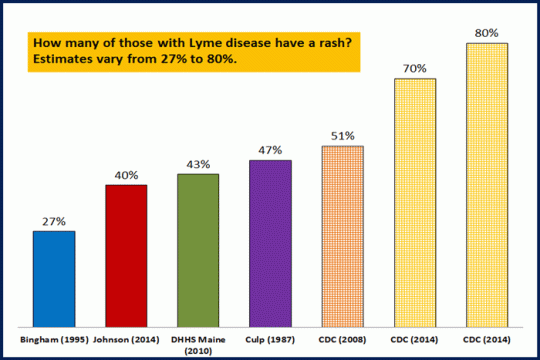
Regarding the “classic” bullseye rash, please know that while it is diagnostic of Lyme disease, in the first ever patient sample, only a quarter had it:  https://madisonarealymesupportgroup.com/wp-content/uploads/2019/02/1976circularletterpdf.pdf

Here this nifty table shows that anywhere from 27-80% get it depending upon who’s counting:  https://www.lymedisease.org/lymepolicywonk-how-many-of-those-with-lyme-disease-have-the-rash-estimates-range-from-27-80-2/

Rashes-larger-blog-3

The article’s statement that 20-30% of patients don’t get the rash must be taken from the inaccurate CDC count which is always abysmally low.  No one I work with gets the rash.  No one!

Please read this well written article on why we need to stop treating tick-borne illness like a typical infectious disease:

https://madisonarealymesupportgroup.com/2019/08/01/why-we-need-to-stop-treating-lyme-disease-like-a-typical-infectious-disease/

More on Rickettsia:  https://madisonarealymesupportgroup.com/2019/08/12/tick-borne-pathogens-bartonella-spp-borrelia-burgdorferi-sensu-lato-coxiella-burnetii-rickettsia-spp-may-trigger-endocarditis/

https://madisonarealymesupportgroup.com/2019/07/21/human-seroprevalence-of-tick-borne-anaplasma-lyme-and-rickettsia-species-in-northern-california/

Seventeen (6.8%) samples were seropositive for antibodies against at least one pathogen: five for A. phagocytophilum, eight for B. burgdorferi, and four for Rickettsia spp.

https://madisonarealymesupportgroup.com/2019/01/03/tick-bite-in-ear-gave-uk-teacher-rickettsial-typhus-infection/