I posted on this before, but this short, ‘must see’ 7 minute video explains it all.
**UPDATE**
Obviously the above video has been censored, and while I can not find the exact 7 minute talk, I encourage you to watch this 3 minute talk where he reveals much of the same information.
From 2003 to today, the CDC has illegally held and maintained a patent on the virus and the test which means the CDC has an illegal monopoly, restrained trade, and violated both the Sherman and Clayton Acts.
There is much to indicate the Center for Disease Control (CDC) and the National Institute of Allergy and Infectious Diseases (NIAID), led by Dr. Fauci, knew and willfully engaged a foreign interest to carry forward the exploitation of their proprietary technology after the U.S. Supreme Court rendered it illegal after a 2013 ruling.
Fort Derrick was shut down by the CDC for the exact same safety violations violated by the Wuhan Institute that Dr. Fauci spent nearly 4 million dollars of taxpayer money on to circumvent the 2013 moratorium on coronavirus research.
True cases of COVID-19 have never been independently verified due to the CDC’s illegal actions. There is no confirmed serology or immunologic evidence to suggest we are in a pandemic, which violates our rights.
Any governor who suspended civil liberties prior to March 15, 2020 due to the “threat” of a pandemic is guilty of violating the domestic terrorism provision under the Patriot Act Section 802.
Authorities have ignored a real pandemic caused by Lyme disease and the many coinfections that come with it. They have rigged the diagnostic test for their own patent purposes and continue to control a rigged narrative keeping people from proper diagnosis and treatment. This travesty has gone on for over 40 years without a sign of changing, despite an investigation into the bioweaponization of ticks being dropped from airplanes.
PROTECTING PUBLIC HEALTH CAN NOT HAPPEN UNTIL GOVERNMENT ENTITIES ENTRUSTED WITH PUBLIC HEALTH ARE NO LONGER ALLOWED TO OWN PATENTS AND DIRECTLY COMPETE WITH THE PRIVATE SECTOR. THE CONFLICTS OF INTEREST, COLLUSION, AND FRAUD MUST END.
SUCCESSFUL TREATMENT FOR LYME ARTHRITIS AFTER KNEE SURGERY
This published case report by Wright and colleagues features what the authors believe is the “first patient with late Borrelia burgdorferi sensu stricto arthritis-related prosthetic joint infection. They suggest “the case highlights how early, prompt diagnosis and adequate antimicrobial therapy may obviate the need for additional aggressive orthopedic surgical intervention.”
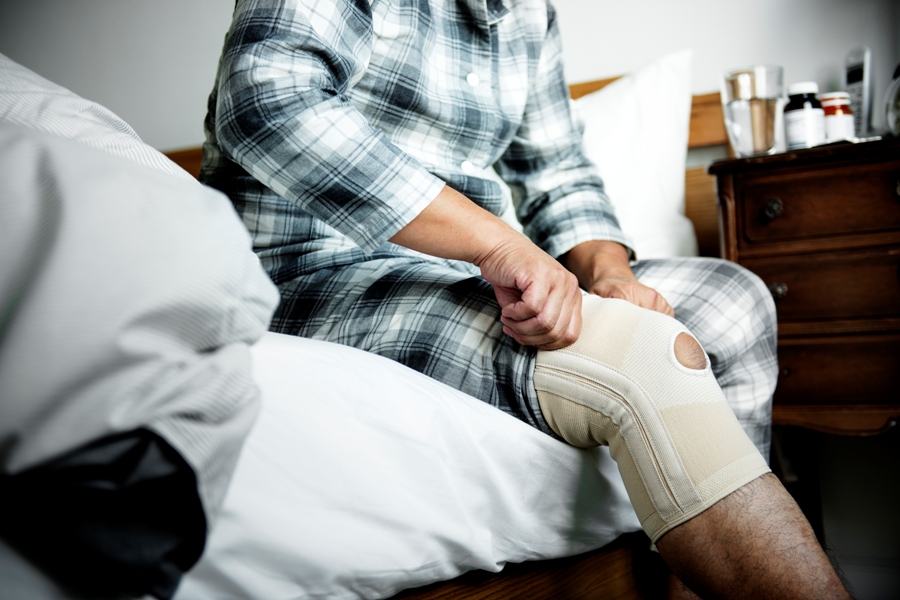
Doctors described a 67-year-old avid outdoorsman who received treatment for Lyme arthritis after having had knee surgery. Ten months earlier, the man had received a partial knee replacement for his left knee due to advanced single compartment degenerative arthritis.
Over a 3-month-period, the man developed progressive left knee pain and swelling. He later presented with a moderate joint effusion but did not have an erythema migrans rash, warmth, instability, or significant pain with range of motion.
There was no history of a tick bite or trauma to the knee nor was there evidence of joint effusion, infection, or Baker’s cyst.
Aspiration of his knee revealed turbid purulent pleocytosis with 91.8% neutrophils, elevated C-reactive protein, and a positive Borrelia burgdorferi polymerase chain reaction (PCR).
Serologic tests were positive for an elevated erythrocyte sedimentation rate (ESR), C-reactive 0.7, and a positive B. burgdorferi antibody enzyme immunoassay (EIA) test and 10 of 10 immunoglobulin G (IgG) Western blot bands were reactive.
Lyme arthritis diagnosis
Based on the detection of B. burgdorferi sensu stricto DNA by PCR, clinicians diagnosed the man Lyme arthritis, a particular type of periprosthetic joint infection (PJI).
The diagnosis was based on criteria established by the Musculoskeletal Infection Society and the Infectious Disease Society of America (IDSA).
“Although there was no communicating sinus tract or direct result from traditional microbiological culture, our patient met these criterion for PJI based upon elevated synovial fluid leukocyte count (>3000 cell/µL), elevated synovial neutrophil count (>65%), purulence, and evidence of a microorganism with identification to the level of genus and species,” according to Wright and colleagues from the Division of Infectious Disease, Department of Medicine, Memorial Medical Center in York, Pennsylvania.
The authors summarized their concern over the seriousness of a PJI. “Periprosthetic joint infection is a devastating complication following joint arthroplasty that causes significant morbidity with an estimated cumulative incidence of 1% – 2% for both hips and knees,” the authors write.
IDSA treatment guidelines not applicable
Wright and colleagues concluded that the IDSA recommendations were not applicable to this patient. They cited two guidelines that would have limited the types of treatment to oral antibiotics and duration to no more than four weeks. These included:
“Late Lyme arthritis can usually be treated successfully with antimicrobial agents administered orally (e.g., doxycycline, amoxicillin, or cefuroxime) for 28 days in adult patients without evidence of neurologic disease.”
“Previous studies have also been published demonstrating the efficacy of once-daily ceftriaxone (2 gram dose) for 14 or 28 days in the treatment of late Lyme disease.”
Successful treatment with antibiotics
The 67-year-old man received treatment for Lyme arthritis which included antibiotics rather than undergoing surgical incision and drainage or excision arthroplasty. Twice daily, 100 mg of oral doxycycline was initiated empirically for a week until testing confirmed the diagnosis. The treatment was converted to a six-week course of daily intravenous 2 grams of ceftriaxone.
The antibiotic treatment for Lyme arthritis was successful.
“Clinically, the patient had cessation of his knee pain, resolution of joint effusion, normalization of synovial infection and inflammatory parameters, and negative end-of-therapy detection of B. burgdorferi DNA by PCR,” according to Wright.
However, the authors cautioned that their strategy of prolonged intravenous antibiotics might not be effective in other types of joint arthroplasties.
“Although this patient’s clinical outcome was achieved without the need for surgical incision and drainage or staged excision arthroplasty procedure, it is unclear whether this same strategy would produce similar results in patients with other types of joint arthroplasties,”
Are there any other cases of arthroplasties that might be prevented by antibiotic therapy? More than 82,660 patients underwent total knee arthroplasty (TKA) across the Medicare and United Health Care populations from 2009 to 2011 at a cost exceeding $10 billion per year. [2]
Authors’ Conclusion
“This case highlights how early prompt diagnosis and adequate antimicrobial therapy may obviate the need for additional aggressive orthopedic surgical intervention,” stressed Wright.
“This case also highlights the value of an aggressive need to further investigate and interpret unexpected findings in clinical practice.”
Wright WF, Oliverio JA. First Case of Lyme Arthritis Involving a Prosthetic Knee Joint. Open Forum Infect Dis, 3(2), ofw096 (2016).
Cohen JR, Bradley AT, Lieberman JR. Preoperative Interventions and Charges Before Total Knee Arthroplasty. J Arthroplasty, (2016).
Fallon BA, Keilp JG, Corbera KM et al. A randomized, placebo-controlled trial of repeated IV antibiotic therapy for Lyme encephalopathy. Neurology, 70(13), 992-1003 (2008).
Cameron DJ. Consequences of treatment delay in Lyme disease. J Eval Clin Pract, 13(3), 470-472 (2007)
____________________
**Comment**
I wish there were more doctors questioning and overriding the extremely limited CDC Lyme “Guidelines” as they are inadequate for nearly everyone – unless it’s an acute case.
The Florida Keys Mosquito Control District (FKMCD) has given Oxitec, a corporation we have reported on in the past, permission to unleash some 750 million GMO mosquitos in Monroe County, Florida, over the next two years.
This “trial,” as they are calling it, will commence at some point in 2021, despite objections from more than 2,000 Florida residents who wrote in to oppose the proposition prior to its approval.
Many locals had petitioned for a referendum to decide whether or not to proceed with what Jaydee Hanson, policy director for the International Center for Technology Assessment and Center for Food Safety, described as a “Jurassic Park experiment.”
Back in 2016, voters overwhelmingly rejected a proposed GMO mosquito trial over Key Haven. This time, voters are not being given a voice at all, and neither Oxitec nor the FKMCD has indicated where this latest batch of GMO mosquitoes will even be released.
“With all the urgent crises facing our nation and the State of Florida – the COVID-19 pandemic, racial injustice, climate change – the administration has used tax dollars and government resources” to release GMO mosquitoes over Florida, Hanson warned in a statement.
EPA did not even look at potential risks, nor did it calculate environmental impact
Financially backed by the Bill & Melinda Gates Foundation, Oxitec has been experimenting with GMO mosquitoes for years, which it claims may help to eradicate mosquito populations in places like Africa where they are said to be spreading malaria.
Oxitec has attempted to conduct trials outside of America, where restrictions are generally looser. But now it has permission to release GMO mosquitoes right here in America, a first with completely unknown implications.
“What could possibly go wrong? We don’t know because EPA (Environmental Protection Agency) unlawfully refused to seriously analyze environmental risks, now without further review of the risks, the experiment can proceed,” Hanson adds.
Barry Wray, Executive Direct of the Florida Keys Environmental Coalition, is similarly perturbed and demanding a remedy. He warned at a recent meeting that the FKMCD has “an obligation to our community, not a vendor that’s products are risky and untrustworthy.”
Many members of the local community have urged the FKMCD to reject Oxitec’s field trial application, noting a dearth of relevant data that in any way suggests the trial will be safe or effective. But thus far they have made minimal headway.
“The release of genetically engineered mosquitoes will needlessly put Floridians, the environment and endangered species at risk in the midst of a pandemic,” says Dana Perls, food and technology Program Manager at Friends of the Earth.
“This approval is about maximizing Oxitec’s profits, not about the pressing need to address mosquito-borne diseases.”
Ed Russo, President of the Florida Keys Environmental Coalition, agrees, noting that the FKMCD does not have the resources to properly manage this process.
“Why have they not acquired the appropriate amount of insurance as well as performance and maintenance bonds?” he asked at the meeting.
“Their evasive answers and lack of management skills are an indictment of their unprofessionalism and arrogance which speaks loudly of an unprepared regulatory process.”
One of the biggest threats is that the GMO mosquitoes will breed and create hybrid wild mosquitoes that end up worsening the spread of mosquito-borne diseases. These GMO mosquitoes may also end up becoming more resistant to insecticides than wild mosquitoes.
There is further evidence to suggest that biting females will be released, despite objections from Oxitec that this will not happen. These biting females would put humans at risk of attack and infection, without their informed consent.
For more related news about untested GMOs being released into the wild, be sure to check out GMO.news.
The timing of this could not be more questionable. If this happens, lines will be blurred on yet another confounding factor in relation to COVID-19. ‘Authorities’ will only be too happy to blame any and all negative outcomes on COVID and NOT on released GMO mosquitoes – which again is another experiment with an unknown outcome.
Geneticist and virologist Jonathan Latham, Executive Director of the Bioscience Resource Project and editor of Independent Science News, has spoken out about the fallacy of industry talking points in the past.
“It means for all the new inventions … you would need to go through the lengthy approval process of the European Union,” Kai Purnhagen, an expert at Wageningen University in the Netherlands, told Nature.
Emma Haapaniemi, a co-author of the Karolinska Institute study, explained why this is such a concerning find.
“By picking cells that have successfully repaired the damaged gene we intended to fix, we might inadvertently also pick cells without functional p53.” Dysfunctional p53 is a major cancer risk; nearly half of ovarian and colorectal cancers can be connected to a disruption in p53. Many other types of cancer, like lung, pancreatic, stomach, liver and breast cancers, can also be attributed to p53 problems.
“If transplanted into a patient, as in gene therapy for inherited diseases, such cells could give rise to cancer, raising concerns for the safety of CRISPR-based gene therapies,” Haapaniemi added.
“It is essential that national regulatory authorities and international organizations get on top of this — really get on top of it,” says Kenneth Oye, a political scientist at the Massachusetts Institute of Technology and lead author of the Science commentary. “We need more action.” The US National Research Council has formed a panel to discuss gene drives, and other high-level discussions are starting to take place, but Oye is concerned that regulatory changes may happen only after a high-profile gene-drive release, in other words, after it’s too late. (For a five minute audio of reporter Kerri Smith investigating the meteoric rise of CRISPR click on the link above.
On top of those difficulties, scientists do not know how all of this will affect ecosystems and are unclear if the gene drives could spread to closely related species.
Noam Prywes, PhD candidate in chemistry at Harvard, claims that CRISPR/Cas-9-based gene drives will
“add a twist – introducing one gene drive after another to correct unforeseen consequences as they are discovered,” and that “decisions by researchers would become permanently written into the genomes of entire wild populations.” He also adds that there are alternative ways to wipe out local populations of mosquitoes carrying disease that are much safer.
In this same vein, David Burwitz of Tel Aviv University, feels that gene drive research should be classified to prevent weapon development, and he’s not alone. http://nextstageprep.com/gene-drivesthis-next-weapon-mass-destruction/ In theory, a terrorist could create a handful of insects with a gene for making a toxin, and power it with a gene drive. Pretty soon, all of these insects would make the toxin, and every insect bite would be lethal. However, according to Austin Burt, who proposed the theoretical method for making gene drives, the gene drives only work in sexually reproducing species, unlike the vast majority of genetically engineered microbes which produce asexually and they’ve only been shown to work for one generation – so far.
New Case Report: Neuropsychiatric Symptoms and Bartonella-Associated Skin Lesions
A new case report co-authored by Galaxy Diagnostics scientists highlights the importance of bartonellosis being considered as a differential diagnosis when patients present with neuropsychiatric symptoms and skin lesions.
History
Bartonellosis is an emerging multi-system vector-borne disease caused by one or more bacteria belonging to the Bartonellagenus. Common Bartonella species infections such as cat scratch disease (CSD) or trench fever are often described as acute and, in the case of CSD, self-limiting in the medical literature. However, chronic symptoms and severe disease related to the heart, joints, and central nervous system (CNS) are increasingly described by researchers.
A 2019 publication by Dr. Breitschwerdt, chief scientific officer and co-founder of Galaxy Diagnostics, his team at NC State University, and a group of collaborating physicians described a boy diagnosed with PANS (Pediatric Acute-onset Neuropsychiatric Syndrome) who was found to have Bartonella henselae in his bloodstream. The boy’s severe neuropsychiatric symptoms and skin lesions resolved in association with antibiotic treatment directed at B. henselae.
Bartonella species primarily occupy two niches in their host: the skin and the vascular endothelium (lining of the blood vessels). Vectors such as fleas, ticks, lice, and biting flies give Bartonella a vehicle to enter the skin and then the local blood and lymphatic vessels. The bacteria then travel through the bloodstream, in association with a relapsing bacteremia, to other areas of the body, potentially causing a wide variety of symptoms that can span months, years and possibly decades.
Newly Published Research
A new set of cases described by Dr. Breitschwerdt and a multi-institution collaborative team provide further evidence for neuropsychiatric and dermatological manifestations of bartonellosis in pediatric (< 18 years old) patients.
Dr. Breitschwerdt explained,
“Based upon the limited case reports and this case series, it is imperative to design studies that will determine if, or to what extent, Bartonella species might contribute to concurrent cutaneous [skin] lesions in patients with neuropsychiatric symptoms.”
At the same time as the team at NCSU has been advancing this symptom research, a team from Fujita Health University School of Medicine in Japan has been advancing the signaling work. They found a protein secreted by Bartonella species that activates the vascular endothelial growth factor (VEGF) pathway.
Where Do We Go From Here?
The pathophysiology of Bartonella species infections in people is complex. While the past 30 years of research has helped elucidate how persistent infections may occur, understanding why the host response differs and “atypical” symptoms develop in certain patient populations requires further research. Furthermore, research on these “atypical” manifestations may lead to the development of more accurate tools for Bartonella testing.
More research is needed to document both if Bartonella species might contribute to skin lesions in patients with neuropsychiatric symptoms and the mechanisms by which this might occur. We speculate that long-standing microvascular injury induced by these bacteria may result in chronic inflammation, local mast cell activation and collagen injury.
We encourage dermatologists and veterinarians to consider vector and animal exposures in patients with unusual or unexplained cutaneous lesions and consider testing these patients for Bartonella species infection.
We have found that advances in the understanding of skin lesions so far has been serendipitous, such as when a veterinarian’s own animal develops skin lesions and there are enhanced opportunities to collect samples. The more scientific inquiry is systemized across human and animal health (One Health), the faster our understanding of any potential association between Bartonella species infections and skin lesions will grow.
Breitschwerdt, E. B. et al. (2019). Bartonella henselae bloodstream infection in a boy with pediatric acute-onset neuropsychiatric syndrome. Journal of Central Nervous System Disease, 11. doi:10.1177/1179573519832014 https://journals.sagepub.com/doi/10.1177/1179573519832014
Maluki, A. et al. (2020). Imaging analysis of Bartonella species in the skin using single‐photon and multi‐photon (second harmonic generation) laser scanning microscopy. Clinical Case Reports, 2020, 1-7. doi:10.1002/ccr3.2939 https://onlinelibrary.wiley.com/doi/full/10.1002/ccr3.2939
Tsukamoto, K. et al. (2020). The Bartonella autotransporter BafA activates the host VEGF pathway to drive angiogenesis. Nature Communications, 11, 3571. doi:10.1038/s41467-020-17391-2 https://www.nature.com/articles/s41467-020-17391-2
Every few months, Jennifer Crystal devotes a column to answering your questions. Do you have a question for Jennifer? If so, email her at lymewarriorjennifercrystal@gmail.com.
Do you usually feel a tick bite? Does it itch?
Ticks are sneaky little creatures. You don’t feel them bite, because they inject an anesthetic when they do. Less than 50% of Lyme patients recall a tick bite or rash. This is also because ticks tend to bite in hard-to-spot places such as the scalp, the groin, the armpits, the belly button, and behind the ears. The bite site or rash can itch, but doesn’t always. And while a bull’s-eye rash is a tell-tale sign of Lyme disease, not all Lyme rashes, known as erythema migrans or EM, present as such. They can be spotty or blotchy, appearing any time from immediately after a bite to months or years later, in different parts of the body. My own rash was a series of red dots on my forearm. They weren’t raised, and didn’t itch. I didn’t give them much pause; neither did the nurse at the summer camp where I was working. Years later, after I was already bedridden with multiple symptoms, bull’s-eye rashes appeared on both of my elbows.
The bottom line is, if you have any kind of rash, it’s best to get it checked out by a Lyme Literate Medical Doctor (LLMD), but you also should not look to a rash as the only indicator of Lyme disease. Instead you should be on the lookout for flu-like symptoms like fatigue, muscle and joint aches, fever, and headache. It is always better to be safe than sorry with Lyme. See an LLMD, and take antibiotics if you suspect Lyme, even if you end up doing so prophylactically.
When you were bedridden, were you sleeping a lot?
You would think the answer to this question would be yes, and I wish it was. That is to say, I was exhausted, and certainly needed the sleep. I could barely muster the strength to walk to the mailbox, or up a flight of stairs. I was too tired to concentrate on books or TV. It felt like the worst case of the flu I ever had, and all I wanted to do was sleep.
But I couldn’t. This was one of the most frustrating parts of battling Lyme, babesia, and ehrlichia; my body could not get the rest it so desperately needed. Sure, I got physical rest from lying in bed, and occasionally, when I got lucky, I nodded off for a bit. However, most days—and nights—my brain would not shut off. I would lie awake praying for sleep, trying every calming exercise possible: meditating, listening to relaxing music, counting sheep. When I did sleep, I had hallucinogenic nightmares that left me even more tired.
I finally saw a sleep doctor who did both neurofeedback and cognitive behavioral therapy. I was able to sleep better at night—though my crazy dreams never fully went away—and was able to nap in the afternoons. Once I started getting adequate rest, my body was able to heal.
What is the best treatment for migraines?
I talked about dealing with headaches stemming from tick-borne illness in my post “Not All Headaches are Alike: What’s Causing Yours?”. Migraines can result not just from Lyme but from other tick-borne illnesses such as babesia or bartonella. Babesia is a parasite that drains oxygen from the red blood cells. This symptom called, “air hunger” can cause excruciating headaches; I used to get migraines several times a week. Over-the-counter painkillers did nothing for them. Prescription migraine medication helped in the short-term, as did rest. It helped to stay away from screens when I felt a migraine coming on.
But my migraines didn’t really ameliorate or disappear until I adequately treated the infections that were causing them. For me, this meant years of antibiotic treatment for Lyme disease and months of anti-malarial treatment for babesia, but everyone’s protocol is different. Now I only get a migraine once in a blue moon, usually when I’ve pushed myself too hard physically or neurologically. Then I know it’s time to slow down and get some sleep.
Jennifer Crystal is a writer and educator in Boston. Her memoir about her medical journey is forthcoming. Contact her at lymewarriorjennifercrystal@gmail.com.
For #2, I completely agree that the BEST treatment for migraines and headaches caused by tick-borne illness is appropriate treatment. Get to the root cause of the pain. This goes for pain anywhere and everywhere within the human body. Drug levels are also important. True story: the pharmacist didn’t tell me they ran out of 500mg tablets of Azithromycin and switched my prescription to 250mg – meaning I should have been taking TWO tablets, not one. Not knowing this, I continued to take one tablet and suffered with the worst shoulder pain known to mankind. When I finally figured it out and started again with the full dose, guess what? Yep. PAIN GONE. POOF! This shows the importance of blood levels. This is also something to keep in mind generally throughout treatment. It is my opinion that many are not on high enough levels and by switching that up, you can make good progress. I’ve seen this over and over with patients who don’t seem to be responding. Dr. Burrascano talks about this important topic here: https://madisonarealymesupportgroup.com/2018/12/28/the-history-of-lyme-disease-dr-burrascano/ (Video in ILADS link within article) I highly recommend you watch the entire video, but I highlight it here: https://madisonarealymesupportgroup.com/2019/02/22/why-mainstream-lyme-msids-research-remains-in-the-dark-ages/ Another nuance he discusses is “cycling” antibiotics – meaning, once you have become symptom-free for 2-3 months, you stop all drugs and wait. If symptoms return you hit it hard again with antimicrobials until symptom-free status is achieved. He states that he and many of his patients became symptom-free for good after