https://grow.foodrevolution.org/?  Watch Trailer Here & Register to Watch it for Free

An environmental film about solutions

Join in this exclusive free screening of Rosario Dawson’s award-winning documentary that many are calling the environmental film the world has been waiting for. With the planet on the brink of ecological disaster, and chronic disease rates skyrocketing, this is a story of real-world SOLUTIONS.

It will warm your heart, fill you with hope, and inspire you to take action.

Soil scientists estimate that at the rate we are depleting our farmland, we could have fewer than 60 years of soil left on Earth.

Can we feed the world without destroying the planet?

The answer depends on what we do now!

The good news is, there ARE solutions. The Need To GROW takes you inside the hearts and innovations of three very different leaders — an 8-year-old girl challenges the ethics of a beloved organization — a renegade farmer struggles to keep his land as he revolutionizes resource-efficient agriculture — and an accomplished visionary inventor faces catastrophe in the midst of developing a game-changing technology.

Narrated by Rosario Dawson (Marvel’s The Defenders, The Lego Batman Movie), The Need To GROW delivers an epic story of solutions and the struggle to implement them. It will make you laugh, make you cry, give you chills, and inspire you to participate in the restoration of the Earth.

“No human being on the planet should miss this film.”

— Society of Voice Arts and Sciences

“Perhaps the best film on sustainability I have ever seen.”

— Teddy Grouya, Founding Director – American Documentary Film Festival

“I loved this movie…it was one of those environmental movies that gave me hope.”

— Todd James, Global News

https://chrismasterjohnphd.com/covid-19/finally-confirmed-vitamin-d-nearly-abolishes-icu-risk-in-covid-19

Finally Confirmed! Vitamin D Nearly Abolishes ICU Risk in COVID-19

By Chris Masterjohn PhD, Nutritional Science

September 3, 2020

The first randomized controlled trial (RCT) of vitamin D in COVID-19 has just been published. The results are astounding: vitamin D nearly abolished the odds of requiring treatment in ICU. Although the number of deaths was too small to say for sure, vitamin D may actually abolish the risk of death from COVID-19.

The Vitamin D Treatment Protocol

The vitamin D was provided as oral calcifediol, also known as calcidiol, 25(OH)D, and 25-hydroxyvitamin D.  The treatment in this RCT was soft capsules of 532 mcg 25(OH)D on day 1 of admission to the hospital, followed by 266 mcg on days 3 and 7, and then 266 mcg once a week until discharge, ICU admission, or death.

This is equivalent to 106,400 IU vitamin D on day 1, 53,200 IU on days 3 and 7, and 53,200 IU weekly thereafter. If this were given as daily doses, it would be the equivalent of 30,400 per day for the first week, followed by a maintenance dose of 7,600 IU per day.

Version 6 of the Food and Supplement Guide for the Coronavirus

I have now released Version 6 of The Food and Supplement Guide for the Coronavirus to reflect the new study on vitamin D. Purchases of the guide are greatly appreciated, as they help sustain my work on this newsletter and will help me start finishing my Vitamins and Minerals 101 book. (See link for article)

_____________________

For more:  https://madisonarealymesupportgroup.com/2020/07/29/researchers-investigating-possible-link-between-vitamin-d-deficiency-and-covid-19/

https://madisonarealymesupportgroup.com/2020/07/07/why-you-may-need-more-vitamin-d-especially-now/

https://madisonarealymesupportgroup.com/2018/03/12/the-importance-of-vitamin-d-k-and-magnesium-for-lyme-msids-patients/

https://madisonarealymesupportgroup.com/2020/07/02/experts-criticize-government-review-of-vitamin-d-for-covid-19/


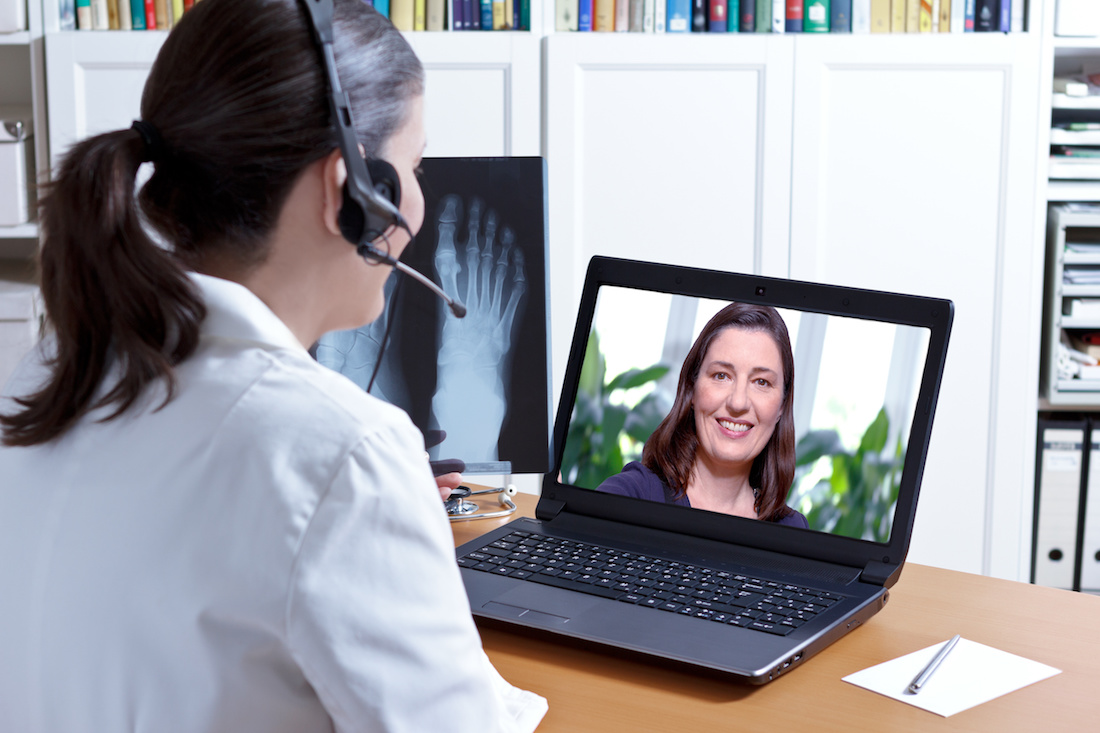
https://www.thedoctors.com/articles/your-patient-is-logging-on-now–the-risks-and-benefits-of-telehealth-in-the-future-of-healthcare/

Your Patient Is Logging on Now: The Risks and Benefits of Telehealth in the Future of Healthcare

doctor headset xray laptop patient

Long before the COVID-19 pandemic struck, telemedicine was part of the standard delivery of care in the U.S., but used very rarely. By the end of April, telemedicine visits had skyrocketed to nearly one million visits per week.1 (By telemedicine, we mean live remote visits with a clinician, as opposed to telehealth, a broader term encompassing telemedicine plus remote monitoring, asynchronous data collection, and a variety of other incorporations of technology into nonclinical patient and professional health-related areas.)

Many patients and physicians have discovered that they appreciate the conveniences of virtual healthcare, and its support of the physician-patient relationship.2 They’ve considered how telemedicine increases access to care (for some patients) while decreasing infection risk, not only in a pandemic but during routine flu season or for immunocompromised patients. Though telemedicine’s near future is clouded by uncertainties regarding reimbursement,3 state-to-state licensing hassles, and privacy issues, for the long haul, telemedicine is here to stay.

Sweeping benefits from telehealth are still emerging—and so are its risks. Reduced infection risk and increased access to care are possible with recognition that telemedicine is not a panacea: Telemedicine is a helpful adjunct to in-person care, when supported by best known practices.

Executive Summary

By David L. Feldman, MD, MBA, CPE, FAAPL, FACS, Chief Medical Officer of The Doctors Company Group

A study released by the American Medical Association (AMA) in February 2020, just before the pandemic hit the U.S. hard, reveals that telemedicine visits with physicians had already doubled from 2016 to 2019.4 Still, the pandemic has led to an unprecedented spike in usage. Telemedicine is here to stay, but exactly how it will be incorporated into evolving community standards of care is the question driving discussion and argument within many specialties.

Foreseeable Major Benefits

  • Increases access to care for most patients, including many patients in rural locations, patients who struggle to cover the peripheral costs of an in-person visit (transportation, childcare, time away from work, etc.), and patients with chronic conditions.
  • Enhances the ability to manage chronic conditions by making more frequent contact easier. This management is already supported by at-home devices that record blood pressure, blood sugar, and other essential data points.
  • Reduces infection risks, not just for COVID-19, but for post-op patients, patients who are immunosuppressed, etc.

Foreseeable Major Risks

  • The remote exam’s inherent limitations mean physicians must know when to ask patients to come in to avoid missed diagnoses.
  • Increases cyber liability, especially when providers are seeing patients from a variety of devices in a variety of locations.
  • Privacy issues come in high-tech forms: Is the video visit interface HIPAA compliant? And in low tech forms: Conversations may be interrupted by household members at either end.
  • Decreases access to care for some patients: Half of U.S. seniors do not have internet access.5 On the other hand, some hospitals serving low-income populations have found that when remote visits are available via mobile device, and don’t require a computer, a surprising number of patients can access telemedicine visits.6 That said, many communities do not have sufficient internet bandwidth; some patients are prevented by a language barrier or lack of technological savvy from accessing a telemedicine portal.
  • Reimbursement is uncertain: Pre-pandemic, “Low reimbursement for telehealth was viewed as a critical disincentive,” say the authors of an opinion piece in JAMA, because “Without payment, it would be difficult for clinicians to afford to provide the service, despite data from previous studies suggesting clinicians were broadly supportive about its use.”7

(See link for article)

_____________________

Important excerpt:

Without the proper security controls in place, a provider’s private conversation or exchange of information with a patient could be found via a Google search. A hacker could shut down a network after pocketing a provider’s cell phone. Patient information could be stolen through a network device with minimal security controls. Any device connected to the network can provide an entry point—physical access to the practice is not required.

doi: 10.1097/MOH.0000000000000606. Online ahead of print.

Human babesiosis: recent advances and future challenges

Affiliations expand
Abstract

Purpose of review: As human babesiosis caused by apicomplexan parasites of the Babesia genus is associated with transfusion-transmitted illness and relapsing disease in immunosuppressed populations, it is important to report novel findings relating to parasite biology that may be responsible for such pathology. Blood screening tools recently licensed by the FDA are also described to allow understanding of their impact on keeping the blood supply well tolerated.

Recent findings: Reports of tick-borne cases within new geographical regions such as the Pacific Northwest of the USA, through Eastern Europe and into China are also on the rise. Novel features of the parasite lifecycle that underlie the basis of parasite persistence have recently been characterized. These merit consideration in deployment of both detection, treatment and mitigation tools such as pathogen inactivation technology. The impact of new blood donor screening tests in reducing transfusion transmitted babesiosis is discussed.

Summary: New Babesia species have been identified globally, suggesting that the epidemiology of this disease is rapidly changing, making it clear that human babesiosis is a serious public health concern that requires close monitoring and effective intervention measures. Unlike other erythrocytic parasites, Babesia exploits unconventional lifecycle strategies that permit host cycles of different lengths to ensure survival in hostile environments. With the licensure of new blood screening tests, incidence of transfusion transmission babesiosis has decreased.

_____________________

https://www.medscape.com/viewarticle/934602

Rise in Babesiosis Cases, Pennsylvania, USA, 2005–2018

David Ingram; Tonya Crook

Emerging Infectious Diseases. 2020;26(8):1703-1709. 

Abstract

Babesiosis is an emerging infection in the state of Pennsylvania, and clinicians need to be made aware of its clinical manifestations as well as the risk factors associated with severe disease. Before 2010, our tertiary academic center in central Pennsylvania previously saw zero cases of babesiosis. We saw our first confirmed case of Babesia infection acquired in Pennsylvania in 2011; we recorded 2 confirmed cases in 2017 and 4 confirmed cases in 2018. All 4 cases from 2018 were thought to be acquired in southcentral Pennsylvania counties, whereas prior reports of cases were predominately in the southeast and northeast counties of the state.

_________________

**Comment**

Out of 352 patients in the second study, some of which were duplicates, they reviewed patient charts and only identified 8 cases using CDC criteria.  This continues to be a problem as CDC testing misses many cases, and many do not meet the stringent criteria which in many cases is arbitrary.  The study also noted that there were inconsistencies in the way blood smears and PCR testing were ordered.  

Important to note: most were immunocompetent.

Symptoms: (numbers in parenthesis show how many patients had it):

  • fever (6/8) 
  • malaise (5/8)
  • myalgias or arthralgias (2/8)
  • anorexia (2/8),
  • rash (1/8),
  • headache (1/8),
  • nausea or vomiting (1/8)
  • diarrhea (1/8)
  • respiratory failure (1/8)

The most common laboratory abnormalities:

  • anemia (seen in all patients)
  • thrombocytopenia (7/8)
  • transaminitis (7/8) – high liver counts can lead to liver damage
  • hyperbilirubinemia (7/8) excess bilirubin can cause jaundice
Importantly: concurrent Lyme disease was noted in half (4/8) of patients.

Patients were screened for Lyme disease by using ELISA; if the result was positive, then a Western blot was performed. Patients had Lyme disease diagnosed if they had positive ELISA results and positive IgM or IgG results on Western blot.

I can guarantee you more patients had Lyme but were omitted due to abysmal testing. This has been going on for over 40 years.

Six of the 8 patients were classified as having severe infection with parasitemia >10%. Four of the 6 patients with severe infection had co-infection with Borrelia burgdorferi (Lyme disease). The 2 nonsevere patients did not have co-infection.

This agrees with previous findings that concurrent infection makes for more severe disease for a longer duration of time:  https://madisonarealymesupportgroup.com/category/babesia-treatment/

  • Most (7/8) patients received a combination of azithromycin and atovaquone 
  • 3 received clindamycin and quinine.  Of these 3 patients, 1 patient received clindamycin and quinine alone for the duration of their therapy, and 2 patients were switched to azithromycin and atovaquone because of persistent parasitemia. Two of the patients who received clindamycin and quinine (1 of whom was switched to azithromycin and atovaquone) also required blood or platelet transfusions. Five patients underwent red cell exchange transfusions.
  • Average duration of treatment was 18.1 days. The average duration of parasitemia was 9 days.
  • They only had exact date of clearance for 3 of the 8 patients

The authors admit that due to focusing on specific Babesia-related codes, they probably missed patients that were co-infected.  

Once again they erroneously bring up the climate as a factor in tick expansion (therefore disease expansion).  This has been proven to be a faulty assumption:  https://madisonarealymesupportgroup.com/2018/11/07/ticks-on-the-move-due-to-migrating-birds-and-photoperiod-not-climate-change/

They correctly state there is a steady rise in Babesia throughout the U.S.  They also state that the geographic spread could be favored by prior establishment of Lyme disease and that coinfection in mouse reservoirs increases Babesia transmission.

They also rightly maintain:

clinicians must maintain a high index of suspicion in patients with a nonspecific febrile syndrome despite absence of tick bite history or lack of an immunocompromising condition. Evaluation for co-infections, particularly co-infection with B. burgdorferi, should be considered given patients with co-infection appear to have more severe disease.

Herein lies the problem.  Testing for all of this remains abysmal.  Without accurate tests most doctors are just going continue to say, “It’s all in your head.”  And they will continue to get away with it.  

Most mainstream doctors are not even considering coinfection and continue to view this through a myopic tunnel-vision where they believe people are only infected with one pathogen.  


https://globallymealliance.org/summer-flu-symptoms-could-it-be-lyme-disease-or-covid/

gla_summer-flu_lyme-symptoms_blog

SHARED SYMPTOMS CAN MAKE IT HARD TO DIAGNOSE THE ACHES AND PAINS TYPICALLY ASSOCIATED WITH THE FLU

Summer means heading outside. Especially after months of quarantining, the outdoors provides a much-needed escape, from a simple walk around the block to summer sports. Yet why do you suddenly feel as though you are coming down with a summer “flu”? With the coronavirus pandemic dominating the news, every sneeze, cough or headache makes you wonder if you have COVID-19. But chances are there’s another culprit: Lyme disease. With many overlapping symptoms, how do you know? It’s even harder with children, who may have a difficult time articulating how they feel.

Although most people associate Lyme disease with a distinctive red bulls-eye rash, many never develop one. And fewer recall seeing a tick. So if you come down with non-specific flu-like symptoms within a few weeks of being in outdoor areas where ticks are found, this ranges everywhere from your back yard to neighborhood park, your symptoms could be the first sign of Lyme or another tick-borne illness.

The most common symptoms in acute (aka: early localized) Lyme disease are the ones people are most familiar with. Because they are symptoms often shared with other illnesses, including COVID-19, it’s important to recognize that they could mean Lyme and you should see a Lyme-treating physician right away.

  • Erythema migrans (EM) rash
  • Fever
  • Fatigue
  • Aches
  • Chills
  • Swollen lymph nodes
  • Other flu-like symptoms

Symptoms in early disseminated Lyme disease may occur days to months after infection, in which the bacteria have begun to spread. There is a wide range of possible symptoms at this stage, including:

  • Severe headaches and neck stiffness
  • Arthritis, especially in the knees or other large joints
  • Muscle aches and pains
  • Heart palpitations or shortness of breath (Lyme carditis)
  • Facial paralysis on one or both sides (also known as Bell’s palsy)
  • Numbness or tingling in the hands or feet
  • Extreme fatigue

When you look at common symptoms of COVID-19 there is a distinct overlap. The following are common COVID-19 symptoms per the Centers for Disease Control and Prevention (CDC):

  • Cough
  • Shortness of breath or difficulty breathing
  • Fatigue
  • Muscle or body aches
  • Headache
  • New loss of taste or smell
  • Sore throat
  • Congestion or runny nose
  • Nausea or vomiting
  • Diarrhea

While Lyme is a year-round problem, summer is the peak season for tick trouble. Black-legged (deer) ticks are in their hungry nymph stage. They are about the size of a poppy seed and can be difficult to see on clothing or skin. Because they are so tiny and their bite painless, these ticks are generally not detected. They also tend to attach to the body in areas you can’t readily see, like the armpits, scalp, groin and behind the knee.

This year, with the global emergence of coronavirus, early Lyme disease might be mistaken for COVID-19, since the illnesses share a number of symptoms—a low-grade fever, head and body aches, chills and fatigue. This can make it more difficult to diagnose someone for Lyme who has not noticed a rash or was unaware they ever had a tick bite.

Two key differences in symptoms with COVID-19 are respiratory impact (coughing and difficulty breathing) as well as loss of taste and smell— symptoms not typically associated with Lyme.

If your flu-like symptoms last a few days without signs of improvement, contact your doctor and request that you be tested for Lyme and other tick-borne diseases. Since early detection is key, it may be helpful to see a Lyme literate medical doctor versed in their complex symptomatology of tick-borne diseases. Although current diagnostic tests are unreliable, it’s still a good idea to get tested, and ask about taking a prophylactic course of antibiotics.

When Lyme is diagnosed and treated in its early stages, most individuals recover completely. But delays in treatment can lead to more severe, debilitating health problems, months or even years later, including potentially fatal heart conditions, painful arthritis, neurological and cognitive issues including trouble with memory or concentration.

Of course, the best way to prevent Lyme is to Be Tick AWARE™ and protect yourself from any and all tick bites. For more on Lyme disease, prevention, detection, diagnosis, treatment, and patient support services visit GLA’s BeTickAware.org page to access videos, fact sheets, and a host of educational materials to help keep you and your family safe from tick-borne diseases.

While COVID-19 is a serious health threat, Lyme and other tick-borne diseases are another menace to be on the lookout for.

Additional COVID-19 and Lyme Disease Resources:

GLA POV: Parallel Pandemics: COVID-19 and Lyme Disease
Blog: Q&A on COVID-19 and Lyme Disease with LLMD
Blog: Personal Patient Experience with COVID-19 and Lyme Disease
Video: Webinar with Dr. Cameron and Lyme-COVID-19 patient
Letter: GLA CEO Addresses COVID-19 and GLA Community
Letter: GLA Chairman on What We Can Learn from COVID-19 Response

____________________

**Comment**

Great article and yet another reminder to take ticks seriously and treat your clothes with permethrin and your skin with either Deet or Lemon Eucalyptus.  Take a shower immediately after being outdoors and check for ticks.  For more:  https://madisonarealymesupportgroup.com/2019/04/12/tick-prevention-2019/  (It’s also very important if you have pets to use tick repellents on them as well if they go outdoors.  Pet owners have a much greater risk because pets bring them into the house where they find humans to bite)

 
I guess what I’m saying is that for simplicity we often try and put things in boxes, but I often tell patients that the only box Lyme/MSIDS fits into is Pandora’s.  I once heard a quote:
 
Everything isn’t Lyme, but Lyme can be anything.

Another helpful quote is:

You either have 20 diseases or you have Lyme disease.  Dr. Jemsek
 
If you suspect tick-borne illness, print and fill out the Horowitz questionnaire which has been validated.  It is FAR more accurate than CDC 2-tier testing which misses over half of all cases:  https://madisonarealymesupportgroup.com/wp-content/uploads/2016/01/symptomlist.pdf
 
In my opinion, every doctor should give suspecting patients this checklist along with testing and they should explain that testing misses many cases.  Getting a negative does not mean you aren’t infected, it just means the test couldn’t pick it up.  The cut-off level is arbitrary and the test is insensitive.  An experienced doctor told me that the sickest patients never test positive.  Another thing Lyme doctors often do is give a “provoking agent” like herbs or antibiotics so that the dead organisms are often now picked up on the blood test.