Earlier today I wrote about helping my husband try to unravel his crazy dreams.  This article shows this is not an individual occurrence but that many with neuro-Lyme struggle with it.

https://globallymealliance.org/sleep-perchance-dream/

August 2, 2018

To Sleep, Perchance to Dream

by Jennifer Crystal

GLA writer and Lyme Warrior, Jennifer Crystal writes about her experience with “crazy dreams” as a result of neurological Lyme disease

Last night I had a dream that a college friend and I were attending a wedding. People from all walks of my life were there. I was running around trying to take care of my cousin’s baby while figuring out how to get on a boat.

When I later described the dream to a friend, she said, “That’s crazy!”

The dream did not seem crazy to me, given how crazy my dreams had once been as a result of neurological Lyme disease. When the Lyme bacterium, called a spirochete, crosses into the brain, it can cause a host of sleep disturbances, including insomnia and hallucinogenic dreams. My Lyme doctor said it was like the spirochetes had made the needle in my brain get stuck. He meant Lyme was making it impossible for me to sleep and, when I finally did doze off, causing vividly detailed rapid fire dreams—many of which were recurring. Some came in levels (there was a dream about me telling someone else about a previous dream); some that were so “active” that I woke up with sore muscles, more exhausted than when I went to bed. Inflammation in the brain caused by tick-borne illness is the reason for these sleep disturbances.

So dreams, like the one I described to my healthy friend, may have seemed crazy to her. But for a chronic neurological Lyme patient like me, it’s about as normal as I can hope to get. The dreams involved no major trauma, which often happens in the worst nightmares. There were no levels to the dream. That is, it wasn’t a lucid dream—I didn’t have the power to change the dream while I was experiencing it, something that often happens when the spirochetes are running rampant in my brain. Nor were they occurring at a hallucinogenic, rapid fire rate. The images were fuzzy and nonsensical, as most healthy dreams are.

Nights like the latter are a blessing to me now, 21 years after getting a tick bite that gave me Lyme disease, Ehrlichia and Babesia, and 10 years after suffering a relapse that brought me to the lowest point of these sleep disturbances.

Let me give you an example of one of my vivid, detailed dreams, recorded in my journal in 2005 (edited for clarity-notes are in parentheses):

I was driving to pick up my brother (I don’t really have a brother) in a police station that looked like a warehouse. The Dave Matthews song “Warehouse” was going through my head in the dream (and still is now that I’m awake). I was watching this scene like a movie. I saw my “brother” open a window upstairs and look down to see me in my car. It was like watching a detective movie. I realized he was able to open the window because it was a very old and rundown building that didn’t have air conditioning. Then I was no longer watching the dream as an observer, but was acting in as myself. I went upstairs to my “brother’s” office. He was on the phone with a Mrs. Vance who’d said she’d sent a check that had never arrived. When my “brother” said, “we send the money directly to the families,” I thought this was some kind of funeral home. Then I saw Mrs. Vance’s check  on the desk in front of me and also an envelope from her with $750 cash. I knew that $150 had been owed and that my” brother” was pocketing the other $600. When he hung up I started to say, “I won’t tell anyone,” but thought better of it because I thought he might kill me if he realized I knew what he was up to. He looked sort of wild and had these big sunglasses on. I said I was at a wedding and had come to pick him up because we needed someone who was good at having fun and pulling pranks and we knew he’d be the right person. He got excited and said, “Let’s go.” We went down the stairs and I realized he was the only one in the building. I asked if he always worked this late (even though it was still light out) and he said, “Well last week I only worked 98 hours.” We got outside and got in my car. I started driving but I couldn’t hit the brakes very well and kept almost crashing. I turned in to a gas station and said, “See, the turning radius isn’t even very good on this car, I can’t turn in to get to the right side of the pump.” My “brother” directed me. Then I was still in the dream, but once again not acting in it but instead watching it from afar like a scene. I said, “Wait, if I were in this dream, I wouldn’t want to have that” brother” with me because he’s bad.” So I replayed it so when he was on the phone I said, “I’m just going to go bring the car around.” Then I ran out and ran down the stairs and got in the car and locked the doors. I was trying to drive away before he came downstairs.

This is a good example of a detailed dream that has levels (at times I was in it, and at times I was observing it) and also one that becomes lucid (when I decide to change the course of the dream). Like most Lyme patients, I woke up so exhausted after a night of 15-20 of these types of dreams—all as detailed as this one, sometimes with a soundtrack or narration playing over them—that I didn’t have time or energy to process them. They were just another symptom that made it impossible for me to get the rest I needed. Most days, I woke up feeling hungover, like my brain was as a pinball machine.

For me and for other Lyme patients I’ve talked to, these crazy dreams are often mixed with hallucinogenic nightmares. For me, they involved trauma I’d never experienced in real life. I’d be burned alive or shot in an elevator. I’d be raped, sodomized, or stabbed. I always survived even though I shouldn’t have. I was afraid to tell anyone the details of those nightmares; I thought people would judge me for coming up with such ideas, or shake their heads and walk away because they didn’t want to hear about such horror.

With the help of my therapist, I found meaning in some of my dreams, such as the recurring one I described in this previous post. I learned that my nightmares were symbolic, too. The trauma in them were manifestations of things that had actually happened to my body. I wasn’t literally raped or sodomized, but my body had been violated, burned, and almost killed by spirochetes. And despite all odds, I had survived.

Eventually, with a combination of medications, neurofeedback, cranial sacral therapy, cognitive behavioral therapy, and talk therapy, I got to a point where the dreams were still intense but not quite as detailed or awful or fast, at least not every night. I still have nights with rapid fire hallucinogenic nightmares, but they are the exception now, no longer the norm. And while the nightly activity in my brain is still busier than the average person’s, it’s manageable. The other night, I even woke myself up laughing in my sleep. There is light—even joy—at the end of the endless nights.


jennifer crystalOpinions expressed by contributors are their own.

Jennifer Crystal is a writer and educator in Boston. She is working on a memoir about her journey with chronic tick-borne illness. Contact her at jennifercrystalwriter@gmail.com

_______________
**Comment**
While I don’t remember my dreams (they pale in comparison to my husband’s) I remember feeling guilty because I seemed to spend more time with my infected husband than I did with my three teenagers whom we were homeschooling.
The reason for all this time spent talking with my husband on a daily basis was due to the crazy, hallucinogenic dreams he had which made him believe I was having an affair.  I’d get up in the middle of the night to use the bathroom and he’d awaken and accuse me of just coming home from somewhere – obviously having an affair. (Please understand I was a homeschool mom who pretty much was home 24/7 teaching children!  If I left the house it was for activities with the children or the grocery store.)  
The arguments and craziness that this caused in our marriage is beyond believable.  We were seriously two crazy people trying to life in a paradigm that makes nightmares look normal.  
This complex illness causes needless divorces & family upheaval due to this erratic, unbelievable behavior.  Even though both of us were infected, our symptoms were very different – with his having more psychological manifestations.  Thankfully, I dug into the literature and read about neuro-Lyme and psychiatric manifestations.  I read everything I could get my hands on by Drs. Bransfield, Marke, and Frid.  I learned that rage, hallucinations, depression, and even suicide can be a part of the Lyme/MSIDS picture.  I learned about the importance of effective treatment that kills pathogens while strengthening the immune system and properly detoxing the body from the dead debris.
Reading articles like Jennifer’s takes me back to a frightening time in my journey, but I’m happy to report those days are long gone and that effective treatment along with the hard work of discussing problems/issues as they came up worked.  (Please type “Lyme Disease treatment” into the search bar for more info)
We are still together after all these years with a new appreciation for life we never would have had without this valley.
https://madisonarealymesupportgroup.com/2017/02/24/pcos-lyme-my-story/  All my initial symptoms were gynecological and I believe many of these TBI’s can be transmitted sexually.

The following article is a reminder that we must be ever diligent about what we put into and onto our bodies and I would add into our minds.  It’s also a reminder that we need to consider everything we are taking and understand the possible synergistic effects of those substances.  It’s common for patients to not be completely honest with their medical professionals about everything they are taking.  They will be open about all the pharmaceutical agents but they often are reticent to mention the so-called “natural” substances as they fear the potential negative reactions; however, this is a mistake from numerous standpoints – 1) trained professionals can only truly help if they know everything the patient is taking 2) “natural” substances have effects as well 3) the combination or synergy of everything we are taking might interact into what Dr. Brogan calls “The Cocktail Effect.”

Be honest with yourself and your practitioners.

Also, remember that people have vested interests and it’s often about sales not you.  Only you truly care about you.  Take the time to learn.  Ask your pharmacist questions.  Learn.  Never quit learning.  It won’t be wasted.

And lastly, if you’ve read anything I’ve ever written, it’s become clear that scientists and researchers have vested interests as well.  And these interests do not concern primarily you.  Their heads have been turned by the bombshells in the corner:  money & power.

https://kellybroganmd.com/the-cocktail-effect/?

The Cocktail Effect

Be skeptical.

Be very skeptical when you are delivered platitudes of reassurance about the safety of chemicals and pharmaceutical products from those who stand to profit from their sales. It can take more than a decade for signals of harm to trickle into consciousness.  We have an even more complex problem at play here: scientists are not doing the right types of studies.

I specialized, in residency and fellowship, in the “safety” of psychiatric medications during pregnancy and breastfeeding. After memorizing every study on the subject, I furrowed my brow and said, “Hold on a minute…these studies aren’t asking the right questions!” They ask – are babies born on time, are they big or small, and are they born with ten fingers and ten toes.

In today’s modern day toxic soup, these questions miss the mark of establishing the risk of chronic disease and neurodevelopmental delay and dysfunction. These studies tend not to control for important variables of biochemical individuality such as inflammatory markers, the gut microbiome, and obesity. And they definitely don’t ask questions about synergy.

What’s Synergy?

It’s the dynamic effects of toxicants in combination. It’s the new toxicology. One that acknowledges that even low doses of chemicals, particularly when combined, can sabotage cellular processes. It also acknowledges the role of hormones in this reaction, from cortisol to estrogen.

A powerful new study published in Nature Communications meets the science head on, exploring the Cocktail Effect. It looks at the effect of a synthetic estrogen in the birth control pill  on the toxicity of a pesticide. The endocrine disrupting potential of the more than 150,000 chemicals in our environment may have the capacity to disrupt our metabolism when combined with pharmaceutical exposures as common as oral contraceptives.

Delfosse et al are the first to identify how this can happen by showing that independent chemical molecules can help each other plug into the same hormonal receptor and activate it in a supercharged way. The amazing fact is that these chemicals have this hormonal effect at doses at which they are inactive when separate. In their non-user-friendly jargon, they state:

Our results suggest that the formation of ‘supramolecular ligands’ within the ligand-binding pocket of nuclear receptors contributes to the synergistic toxic effect of chemical mixtures, which may have broad implications for the fields of endocrine disruption, toxicology and chemical risk assessment.

What this means is that one chemical/toxicant can make you more vulnerable to another, as we have seen with glyphosate, the active ingredient in Roundup, and that multiple chemicals can wreak more havoc than individual chemicals alone.

Here’s one more reason to ditch birth control, go organic, and clean up your products!

_________________

**Comment**

Great, great reminder.  If you haven’t begun this life “clean up” process, take a deep breath and realize it took you decades to develop your habits.  It’s going to take some time to change them.  Please, don’t beat up on yourself now, just start.  Take one thing and then when you are able, take another thing.

I remember feeling so overwhelmed when I first found out both my husband and I were infected with numerous tick borne illnesses.  I knew we were at the precipice of something monumental and my mind went crazy with the implications – from how we were going to pay the monumental out-of-pocket medical bills, to the implications of homeschooling 3 teenagers (something we were already doing but now were ill & broke to boot), to the timing of the plethora of medications, to considering dietary, and other changes that needed to be made.  It seriously made me want to scream in frustration as I was having trouble remembering why I walked into a room!  The insomnia was maddening and I couldn’t handle stress at all.  The pain sent me to the fetal position in bed, and trying to unravel my husband’s hallucinations made me feel as if I stepped into a Sci-Fy novel of the worst kind – the kind where reality and fantasy are inseparable.

So just begin by putting one foot in front of the other.


https://jameslyonsweiler.com/2018/08/05/why-do-scientists-and-physicians-lose-objectivity-when-it-comes-to-vaccines/

Why Do Scientists and Physicians Lose Objectivity When It Comes to Vaccines?

by jameslyonsweiler

A RECENT NY TIMES opinion piece shed bright light on an issue that has bothered me since I decided to write a chapter on vaccines in “Cures vs. Profits”. The piece, written by Melinda Wenner Moyer, has a strange, but safe title – “Anti-Vaccine Activists Have Taken Vaccine Science Hostage”. Given the title, one would expect the same old tired tropisms about the vaccine risk aware community.

However, in reading the opinion piece, the forces at work are clearly scientists and physicians themselves, who, as Moyer correctly points out, censor themselves against speaking about vaccine risk out of fear of criticism from other professionals:

Scientists are so terrified of the public’s vaccine hesitancy that they are censoring themselves, playing down undesirable findings and perhaps even avoiding undertaking studies that could show unwanted effects. Those who break these unwritten rules are criticized.

So why the title? Why blame the public? If the public develops vaccine risk awareness because scientists make them aware of vaccine risk, that’s a success for science and research, not a failure. Why does Moyer, and the vaccinologists who, at every turn, introduce bias into studies, and inject bias into so-called systematic reviews, all to hide vaccine risk, then try to blame those for whom the risk was nevertheless manifest (the vaccine injured and their families)?

These are the families who carry the burden of the cost – despite the professionals’ efforts to minimize the perception of vaccine risk, when in reality those scientists and physicians are responsible to not taking the necessary steps to minimize vaccine risk itself?

Reading the opinion piece, it is clear than the thin veil of denialism is gone. Cochrane Nordic published a scathing review https://ebm.bmj.com/content/early/2018/07/27/bmjebm-2018-111012 of an allegedly independent and unbiased systematic review published by Cochrane on HPV vaccine safety – which means there are a growing number of scientists and phyisicians who will no longer play by what Moyer calls “unwritten rules”. [Read my review of the Cochrane review:  https://jameslyonsweiler.com/2018/05/18/biased-cochrane-report-ignores-flaws-in-hpv-vaccine-studies-and-studies-of-hpv-type-replacement/]

To my fellow scientists and to physicians who know they should speak up, now is the time. The opinion piece cites Paul Offit, an MD who is infamous for making ludicrously unsupported claims (aluminum might be a nutrient because stillborn infants have more aluminum than healthy newborns is one). Moyer cites Offit as saying that “researchers should handle findings differently when there’s a chance they might frighten the public”.

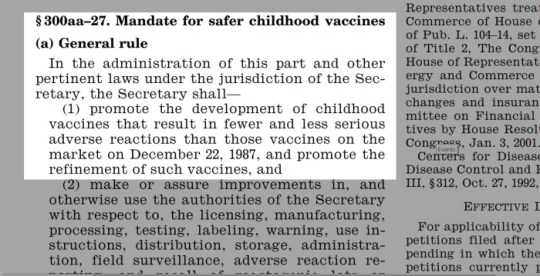
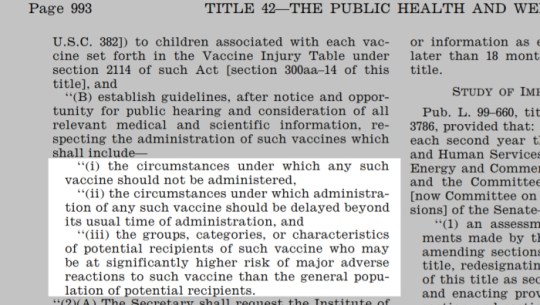
No. Researchers should stand atop building and mountains and declare their knowledge of vaccine risk – and demand that the Congressional mandates in 1986 to identify those most at risk and make vaccines safer be enforced before the public gives up on artificial immunization entirely.

safermandate

Because the alternative is to stand by for another 15 years as ACIP gleefully and irresponsibly adds more vaccines to the pediatric schedule using weak vaccine science – underpowered correlation studies that fail to detect adverse event and that are overcooked to make serious adverse events disappear so as to not scare the public – all the while chronic illnesses such as asthma, autoimmune diseases, ADHD, autism, autoimmune diabetes all rip across the trusting public – all conditions with links to vaccines which “unwritten rules” state we should not make the public aware of – all so they can continue to trust those who are misleading them.

susceptible

In the Times piece, Offit is also represented as holding what to some is a correct view: that low-powered studies perhaps should not be published. Of course, those low-powered studies cited by IOM that failed to detect an association between vaccines and autism – the five that were actually four studies, one with 97 and 196 patients… perhaps those should not have been published? (I’ve done power calculations for any impressive positive odds ratio – 3/4 studies cited by IOM failed to have power enough to detect an association if one did, in fact, exist. That research is now under peer review).

To those of my colleagues who will no longer bow to the unwritten rules that have caused you to hide in fear, I salute you. We must work together to create a future in which vaccines are treating like any other topic, before new unwritten rules are put into place about side effects of other pharmaceutical products, like psychotropic medicines, and before clinical trials are routinely conducted without acquiring informed consent from patients, as is now permitted under the 21st Century Cures Act if those conducting the trial determine – prior to the study – that the medical procedure or treatment comes with low risk for those unwittingly enrolled without their consent.

I made a simple commitment to myself when I embarked on my journey of writing “Cures vs. Profits” – it was intended to be a celebration of the very best advances in biomedical research. That commitment was simply this: If I found anything negative, I would remain objective, and report the bad with the good, as any true scientist would.

Since writing the book, I found more than I cared to know about the ills of vaccine safety research – and the design of vaccines. For example, although we know that pathogens carry unsafe epitopes with high similarity to human proteins that can cause autoimmunity… but they are not excluded from vaccines. And although we know that that pediatric dosing of aluminum in vaccines is far higher per body weight in the first six months of life than the amount received from breastmilk and formula, and we know that aluminum accumulates in the brain, the vaccination of newborns on day one with 250 mcg of aluminum hydroxide continues – even in the NICU – in spite our #NICUChallenge for anyone to produce a study that shows the safety of injection of 250 mcg of aluminum in the NICU population. No such studies have been sent our way.

Those professionals who are interested in joining who would the safety of numbers, you can also join Physicians for Informed Consent https://physiciansforinformedconsent.org – an organization of members who are wise enough to realize that many parents stop vaccinating after an early bad experience, learning the hard way that their child may have higher risk than others. This increased risk is either due to de novo mutations or to inherited risk – and that the right for parents to choose (aka exemptions) therefore provide a safeguard against widespread vaccine injury.

You will also find informative material at World Mercury Project’s Kennedy News and Views https://worldmercuryproject.org/what-we-do/kennedy-news-views/– although sometimes characterized as “Anti-vax” (what else?) when in reality they provide a counterpoint to the now clearly admitted misinformation campaign designed to warp the public’s view of vaccine risk.

A great number of articles at Age of Autism http://www.ageofautism.com will inform those willing to read decades of critical thought from people who are extremely well-informed and intelligent – and who are motivated to protect people from harm.

For a more entertaining approach, visit The Highwire on Facebook or YouTube and subscribe. A related resource is ICANDECIDE.org with important, well-researched white papers that set the record straight.

If you would like a purely academic resource, visit this searchable database companion to my book “The Environmental and Genetic Causes of Autism”.

Other useful resources are

Vaccine Guide

JB Handley’s Blog

VaccinePapers.org

Ginger Taylor’s List (last count 151 papers)

dennet1

https://globallymealliance.org/meet-researcher-kim-lewis-ph-d/

July 27, 2018

Meet the Researcher: Kim Lewis, Ph.D.

MEET THE RESEARCHER IS A BLOG SERIES TO INTRODUCE GLA-FUNDED LYME DISEASE RESEARCHERS MAKING A DIFFERENCE IN THE FIGHT AGAINST LYME DISEASE.


#MEETTHERESEARCHER
NAME: Kim Lewis, Ph.D.
TITLE: University Distinguished Professor; Director, Antimicrobial Discovery Center; Department of Biology
INSTITUTION: Northeastern University

Dr. Lewis is one of the foremost scientists tackling Lyme disease. In 2015, Dr. Lewis’s published report in Antimicrobial Agents and Chemotherapy confirms GLA/Johns Hopkins original findings that the bacterium that causes Lyme disease forms dormant persister cells, which are known to survive antibiotics. He identified compounds for eliminating persister bacteria, and is also investigating the role of the microbiome in chronic Lyme disease.

lyme disease research
Dr. Kim Lewis, far right, with Drs. Ying Zhang, Klemen Strle, Nicole Baumgarth and Brian Fallon at GLA’s 2018 Research Symposium

GLA: What motivated you to focus on Lyme and tick-borne disease research?

KL: The challenge of a tough unsolved problem, and the promise of finding a cure for Lyme disease.

GLA: What discovery has been most gratifying?

KL: We identified two compounds that are highly active, and selective, against Borrelia burgdorferi in a mouse model of Lyme disease. These compounds hold the promise to rapidly treat acute Lyme and diminish development of PTLDS. If a dormant pathogen is contributing to PTLDS, these selective compounds will be able to eradicate the remaining bacteria. Finally, mixing these compounds into a bait may interrupt the cycle of transmission and eradicate Lyme disease.

GLA: Are you confident we’ll find a cure?   

KL: Yes. It is important to develop therapies that will work irrespective of the causes of PTLDS, and that is what we are focusing on.

GLA-funded research grants with Dr. Lewis include:

“Persister Cells and Antibiotic Tolerance in Borrelia burgdorferi” (2013-14)
“Formation of Persisters in Bb and Their Elimination” (2014-15)
“Discovery of New Antibiotics and Combos” (2016-17)
“Treatment of Lyme Disease” (2015-16, 2017-18)

Hear Dr. Lewis discuss his finding on Chronic Lyme disease:

https://globallymealliance.org/news/making-strides-chronic-lyme-disease/embed/#?secret=PnAn7cK0oM

PUBLISHED LYME DISEASE RESEARCH

(a sample)

Borrelia burgdorferi, the Causative Agent of Lyme Disease, Forms Drug-Tolerant Persister Cells Bijaya Sharmaa, Autumn V. Browna, Nicole E. Matlucka, Linden T. Hub and Kim Lewis   Antimicrob. Agents Chemother. August 2015 vol. 59 no. 8 4616-4624 

________________

For More:  https://madisonarealymesupportgroup.com/2016/10/31/news-story-on-researcher-kim-lewis-and-chronic-lyme/

https://madisonarealymesupportgroup.com/2015/07/07/promising-new-research-for-persisting-lyme/

https://madisonarealymesupportgroup.com/2017/11/03/lyme-bug-stronger-than-antibiotics-in-animals-and-test-tubes-now-study-people/

https://madisonarealymesupportgroup.com/2016/06/03/good-news-stanford-lyme-working-group/

https://madisonarealymesupportgroup.com/2015/12/14/closing-in-on-the-8/

Ceres Nanosciences’ Point-of-Care Nanotrap® Lyme Antigen Test System Granted Breakthrough Device Designation by U.S. Food and Drug Administration

Press Release: Ceres Nanosciences, Inc., Manassas, Virginia

July 12, 2018
http://www.ceresnano.com/press-release-breakthroughhttp://www.ceresnano.com/press-release-breakthrough

Ceres Nanosciences (Ceres) announced today that is has received Breakthrough Device designation from the U.S. Food and Drug Administration (FDA) for its new point-of-care Nanotrap® Lyme Antigen Test System.

Under the Breakthrough Device program, formerly the Expedited Access Pathways program, the FDA works with a test developer to reduce the time and cost from development to approval.

The Ceres’ Nanotrap® Lyme Antigen Test System is a powerful diagnostic test that is intended to be available in point-of-care settings, like a physician’s office or a walk-in clinic. Requiring only a patient’s urine sample, it will deliver results to the physician and patient at the earliest stages of infection, when treatment is most successful.

“We’re truly grateful to receive the FDA’s Breakthrough Device designation for the Nanotrap® Lyme Antigen Test System,” said Ross Dunlap, Chief Executive Officer of Ceres Nanosciences. “This will accelerate our delivery to patients of a much needed test for Lyme disease, a devastating and increasingly common infectious disease that can cause irreparable harm if not detected and treated early on.”

To achieve Breakthrough Device designation, a device must demonstrate compelling potential to provide more effective diagnosis for life-threatening or irreversibly debilitating diseases. In addition, the device must meet at least one of the following criteria: represent breakthrough technologies; no approved or cleared alternatives exist; offer clinically meaningful advantages over existing approved or cleared alternatives; or the availability of which is in the best interest of patients.

About Ceres Nanosciences, Inc.

Ceres Nanosciences is a privately held company, located in Prince William County, Virginia, focused on the development of research and diagnostic products using its unique and proprietary Nanotrap® particle technology. The Nanotrap® particle technology provides powerful biomarker capture and biofluid sample processing capabilities for a wide array of diagnostic applications and sample handling needs. The Nanotrap® particle technology was invented at George Mason University and developed under funding from the National Institutes of Health (NIH). With support from the NIH, the Defense Advanced Research Projects Agency (DARPA), the Bill and Melinda Gates Foundation, and the Commonwealth of Virginia, Ceres is focused on incorporating this technology into a range of innovative diagnostic products. Learn more at www.ceresnano.com http://www.ceresnano.com

Press Contact:

Ross M. Dunlap
Ceres Nanosciences, Inc
1.800.615.0418 ext. 202
rdunlap@ceresnano.com mailto:rdunlap@ceresnano.com

_________________

**Comment*

Direct quote from Ceres:  http://www.ceresnano.com/nanotrap-lyme-test

The Nanotrap® Lyme Antigen (LA) Test is a novel, high sensitivity, DIRECT test for Lyme that will provide valuable information to assist a physician in diagnosing and treating Lyme disease at most stages of infection.

So this is not the end all.  People are going to slip through cracks here as well.  Please keep this in mind.

While using urine samples to directly detect Bb, (other tests use indirect testing by testing for antibodies), it relies on Bb being in the urine.  We all know Bb is a stealth organism that goes where it pleases – Often where it can’t be found.

For more:  https://madisonarealymesupportgroup.com/2017/08/15/reliability-of-lyme-testing/

https://madisonarealymesupportgroup.com/2017/08/15/emerging-lyme-tests/

Samuel Shor, MD, FACP: We’re involved in the study of 2 tests that are very promising. One is called the Nanotrap, which looks at a highly specific protein called OspA that is found across multiple strains of Borrelia. And what this technology does is super concentrate, in a urine sample, the presence of this protein and then further tests it, and, it’s 1000-fold more sensitive than the standard Western Blot. In our 2015 paper that was published in the Journal of Translational Medicine, in the preliminary erythema-migrans patients—who are very often negative in the ELISA test because they haven’t had the time to respond immunologically—24 out of 24 were positive with the Nanotrap test.

So it looks better but it’s not perfect…..