Remdesivir For COVID-19 – Not Backed By Results
https://articles.mercola.com/sites/articles/archive/2020/06/17/covid-19-medication.aspx?
The New COVID-19 Medication Isn’t Backed by Results
The HighWire does a deep dive into Anthony Fauci’s NIH-Funded study of Remdesivir, the new Covid treatment darling approved by the FDA today, and uncovered some shocking discoveries.
June 17, 2020
STORY AT-A-GLANCE
- Results from trials for the newest COVID-19 drug have disappointed. The first was stopped because of an adverse event; with the second, the WHO reported that more people died on the drug than off it; and the third investigation has significant problems with how the study was conducted
- Gilead appears unfazed, insisting the drug is effective. The drug company is giving 940,000 vials of the drug to the U.S. government; the combination of scarcity and “generosity” will help set the price
- Potential price gouging doesn’t upset scientists as much as the idea that a noneffective drug will be used; results from another study showed that using a combination of other drugs was effective
Big Pharma companies have worked hard to portray themselves as benevolent corporations that pour billions of dollars into the creation of drugs and vaccines. Biotech giant Gilead Sciences is no different. They manufacture remdesivir, the newest drug being hyped to treat SARS-CoV-2, which is discussed above in The High Wire video by Del Bigtree from Informed Consent Action Network.
The director of the National Institute of Allergy and Infectious Disease (NIAID), Anthony Fauci, along with the media, has been making public statements that cannot be scientifically supported.
In a press conference April 29, 2020, Fauci discussed the preliminary results of a remdesivir trial, and claimed the drug has a “clear-cut positive effect in diminishing the time to recovery. This is really quite important for a number of reasons.”1
Yet, the data from scientific studies do not support his claims. He went on to say that while a “31% improvement doesn’t seem like a knock-out 100%, it is a very important proof of concept, because what it has proven is that a drug can block this virus.”
Remdesivir Trial Stopped Early for ‘Benefit’
The most recent data on remdesivir were published in The New England Journal of Medicine (NEJM).2 Researchers concluded that the drug worked better than a placebo in reducing the amount of time it took adults to recover from COVID-19 while hospitalized. The study was stopped early for benefit.
However, as Peter Gøtzsche from the Institute for Scientific Freedom wrote, the benefit was not a reduction in mortality but, rather, in shortened hospital days — from 15 to 11 days.3 Bigtree and Gøtzsche (in the video) also pointed out there were several problems with the research design and, consequently, the data.4
The release of the study generated enthusiasm and triggered immediate action across many countries, including the U.S. The U.S. Food and Drug Administration issued an emergency use authorization May 1, 2020, for remdesivir, as the drug had not been approved for use. They said:5
“While there is limited information known about the safety and effectiveness of using remdesivir to treat people in the hospital with COVID-19, the investigational drug was shown in a clinical trial to shorten the time to recovery in some patients.”
Health and Human Services Secretary Alex Azar praised the speed at which the FDA approved the drug for emergency use, calling it “seamless cooperation between government and private industry” and an uncommon approval “two days after the National Institutes of Health’s clinical trial showed promising results …”6
Gøtzsche7 began his written commentary by comparing the expense of remdesivir to Tamiflu, both of which have been touted for treating their respective illnesses. Swiss drug maker Roche claimed Tamiflu, used for influenza, could shorten hospital admissions by 61% and reduce the use of antibiotics to treat respiratory tract infections by 55%.
When the data were finally available for review, however, it turned out that the claims could not be supported. When Tamiflu is used at the first sign of symptoms, it only shortens the length of the illness by 17 hours. In a seemingly parallel journey, the data from the study published in the NEJM appears to have been manipulated to generate statistically significant results, as detailed by Bigtree.
Bigtree points out that Bill Gates said we need a “miracle” treatment that is 95% effective:8 Yet, as Bigtree says, and as has been documented by the CDC,9 the Centre for Evidence-Based Medicine at the University of Oxford10 and corresponding studies,11 the majority of healthy people will recover from SARS-CoV-2 without any secondary effects.
The Results Don’t Live Up to the Promise
So, is Gates referring to the need for a 95% cure of the 5% who experience severe disease, since the majority don’t experience significant illness? This must happen to stop the production of a vaccine that will not have the time to undergo placebo-controlled, double-blind randomized studies to prove safety, which Fauci clearly believed was needed in February 2020:12
“We urgently need a safe and effective treatment for COVID-19. Although remdesivir has been administered to some patients with COVID-19, we do not have solid data to indicate it can improve clinical outcomes. A randomized, placebo-controlled trial is the gold standard for determining if an experimental treatment can benefit patients.”
In the video, Bigtree outlines the progress of the study, which includes several challenges:
- The study evaluating the efficacy of remdesivir was designed as an “adaptive, randomized, double-blind, placebo-controlled study” performed by the NIAID, headed by Anthony Fauci.13 An adaptive study can be changed to protect patients when the results are obvious. This happens, for instance, if the participants receiving the intervention are doing so well that those on the placebo are moved to the intervention.
- Although Bigtree mentions a seve-point scale, the researchers wrote the initial measurement was an eight-point scale to evaluate the participant results, one of which was death.
- While Fauci has been claiming this study is a double-blind, placebo-controlled design, the placebo that was used was a lyophilized formulation containing hydrochloric acid or sodium hydroxide. The placebo group, in Bigtree’s words, is receiving a known poison — not saline.
- One month after the study began, they increased the participants from 197 to 220 and then to 286 in each arm of the study: One received remdesivir and the other got the “placebo.” At this point, there were 572 participants. By the end of the study they had increased the total group to 1063.14
- It was also noted that with the rising number of participants, if the group ran out of the hydrochloric acid placebo, they could substitute normal saline. As Bigtree pointed out, if the trial ran out of the substance being used as a placebo, they could use what should have been used in the first place, a substance without a known effect.
In the middle of the study (April 20, 2020), the researchers changed the primary outcome measures from eight15 to just three, none of which included measurement of mortality. The idea for the drug was to keep people from dying, but the researchers stopped measuring that important outcome. The final criteria were:16
- Hospitalized, not requiring supplemental oxygen — no longer requires ongoing medical care
- Not hospitalized, limitation on activities and/or requiring home oxygen
- Not hospitalized, no limitations on activities
Gøtzsche Believes the Results of the Study Are Suspect
The increasing number of participants, the “placebo” and the reduction in primary outcome measurements resulted in the conclusion that: “Remdesivir was superior to placebo in shortening the time to recovery in adults hospitalized with Covid-19 and evidence of lower respiratory tract infection.”17
However, as Gøtzsche pointed out, physicians use highly subjective data to determine when their patient can be discharged home. He also reports that viral load was not measured by the research team and he questions how an antiviral can be successful if it doesn’t decrease viral load.
Gøtzsche believes the researchers violated “good scientific practice to fish for subgroup results that tell a better story. But this is what the two Danish professors did.”18 He went on to describe the difference between what the Danish researchers were proclaiming and what’s evident from the statistical analysis, writing:
“What is important is that the trial statisticians tested if the primary outcome was different in the various patient categories, those who did not need oxygen, those who needed oxygen, those who needed noninvasive ventilation, and those who needed invasive mechanical ventilation or extracorporeal membrane oxygenation (the most severely ill patients).
There was no difference, which makes it even worse that the two Danish professors embarked on a fishing expedition in the data focusing on only 23 deaths in subgroup 5 out of a total of 86 deaths …”
Other Remdesivir Studies Don’t Yield Positive Results
During the same time period, another team evaluated the use of remdesivir in patients with severe COVID-19. They conducted a randomized, double-blind, placebo-controlled, multicenter trial and enrolled patients who were 18 years and older with lab-confirmed infection in 10 hospitals in China.19
The patients had an oxygen saturation of 94% or less and radiologically confirmed pneumonia. The primary endpoint measurement was how long it took for clinical improvement, measured up to 28 days. Adverse events were reported in 66% of those receiving remdesivir versus 50% of those getting the placebo.
The drug was stopped early in 12% of the patients for adverse effects after researchers found there was no statistically significant clinical benefit to receiving it.
Before the release of the remdesivir study published in The New England Journal of Medicine and the second study in The Lancet, Bloomberg20 reported that the World Health Organization accidentally posted results of a third study.
While the summary was removed, details were published that showed “the drug wasn’t associated with patients getting better more quickly; and 13.9% of patients getting the drug died, versus 12.8% getting standard care.”
Gilead Sciences quickly took action. Infectious disease expert Frederick Hayden, who was involved with the study, told a reporter, “That is not correct. My interpretation of them is not consistent with that headline.”21
Gilead said the study was stopped because of low enrollment, adding that the “trends in the data suggest a potential benefit for remdesivir, particularly among patients treated early,” and it was expected that the following two studies would “add to a growing but still inconclusive body of evidence for remdesivir.”
Gilead appeared to be referring to the study published in The Lancet, whose authors concluded that the drug was not effective, as well as the subsequent study published in The New England Journal of Medicine, which had several problems with the data.
Remdesivir Hype Lining Gilead’s Pockets
On the same day The Lancet study was published — the one whose authors concluded the drug was not effective — Gilead announced “positive data emerging from the National Institute of Allergy and Infectious Disease (NIAID) study.”22 This implies the company may be relying on the court of public opinion, which is swayed by public relations, as opposed to scientific data.
The Alliance for Human Research Protection23 reports that Fauci has a vested interest in the development of remdesivir, and it was he who declared the results to be “highly significant.” When he was asked about the results of the study published in The Lancet, he dismissed it as “not adequate.”
Between the public relations campaign and the excitement Gilead has generated in investors and the public, they may reap a significant financial reward. The company has set up distribution in 127 countries and is expecting to begin commercial sales in June. The drug was initially developed as a potential treatment against Ebola using $79 million in U.S. funding.24
The company donated 940,000 vials to the U.S. federal government, which is in turn sending them to state health departments. However, it is not enough to treat all patients.
The state of Virginia is holding a lottery for the most severely ill patients, while doctors in Alabama have set up a task force to identify those who should receive it. The initial scarcity and apparent “generosity” will likely help Gilead set its price on the medication.
Yet it’s not the potential for price gouging that upsets most scientists. William Haseltine, a scientist whose life’s work is studying viruses and who helped lead the government’s response against HIV/AIDS, explains:
“Remdesivir doesn’t work at all, as far as I can tell, or has only a minor effect. It is comparable to Tamiflu and maybe not even as good.”25
You Have At-Home Choices
Buried in the hype of remdesivir was another recently released published study in The Lancet,26which showed that a combination of interferon beta-1b, lopinavir–ritonavir, and ribavirin was a safe and effective method of reducing viral shedding and lowering hospital admissions in those who had confirmed mild-to-moderate COVID-19.
You have options to protect your health and potentially lessen the severity of the infection if you do get sick. On my Coronavirus Resource Page you’ll find some of the latest news stories and my top tips to help combat the virus. These include ensuring adequate serum levels of vitamin D, getting enough sleep, protecting your gut microbiome and using micronutrients that have demonstrated antiviral effects.
- 1 YouTube, Breaking: Remdesivir Study Manipulated?
- 2, 14, 17 New England Journal of Medicine, 2020; DOI: 10.1056/NEJMoa2007764
- 3, 4, 7, 15, 18 Scientific Freedom, June 1, 2020
- 5, 6 Food and Drug Administration, May 1, 2020
- 8 GatesNotes, April 30, 2020
- 9 Centers for Disease Control and Prevention
- 10 The Centre for Evidence-Based Medicine, May 19, 2020
- 11 Eurosurveillance, 2020;25(12)
- 12 NIH New Release, February 25, 2020
- 13, 16 Clinical Trials, February 21, 2020
- 19 The Lancet, 2020;395(10236):P1569
- 20, 21 Bloomberg, April 23, 2020
- 22 Gilead, April 29, 2020
- 23 Alliance For Human Research Protection, May 6, 2020
- 24, 25 The Intercept, May 26, 2020
- 26 The Lancet 2020;doi.org/10.1016/S0140-6736(20)31042-4
_______________________
**Comment**
Remdesivir isn’t cheap. In fact, this article states it costs $320 per vial and will be sold for $3,120 per 6 vial treatment: https://www.thegatewaypundit.com/2020/06/stunning-faucis-remdesivir-costs-9-per-dose-will-sold-3000-per-dose-china-company-linked-soros-will-also-mass-produce-drug/ That’s a lot of money for a drug that hasn’t even been shown to lower viral load.
Hydroxychloroquine in the other hand costs $1 per treatment, while chloroquine costs a measly 30 cents! https://madisonarealymesupportgroup.com/2020/05/11/podcast-evidence-supporting-hcq-azithromycin-for-covid-19/
The article also points out an ugly conflict of interest web between Gilead, the manufacturer of Remdesivir and UNITAID which Soros, Gates, and the Clinton Health Access Initiative, are large investors – with Drs. Fauci and Birx associated with the Clinton Health Access initiative. And of course, Dr. Fauci has worked with Gilead for a long, long time. Government employees should not be allowed to have financial ties to manufacturing companies and then turn around and make public health policy.
For more: https://principia-scientific.org/a-tale-of-2-drugs-deep-state-chose-money-power-over-lives/
Excerpt:
Approximately $70 million in U.S. taxpayer funding began Gilead’s partnership with the U.S. Army, Centers for Disease Control and Prevention (CDC) and National Institutes of Health (NIH) to develop remdesivir. Initially for treating Ebola, it failed to show benefit and was shelved. If remdesivir is used to treat COVID-19, Gilead shareholders, not the taxpayers, will profit.
Early results of the first clinical trial of remdesivir against placebo in coronavirus showed modest benefits, according to The New York Times. Surviving patients given remdesivir were discharged four days sooner than patients given placebo, though no criteria were given for determining improvement. Death rates were not significantly different. About 25% of patients receiving remdesivir had potentially severe side effects, including multiple organ dysfunction, septic shock, acute kidney injury and low blood pressure. Another 23% showed evidence on lab tests of liver damage.
Gilead’s own press release revealed the side effect of acute respiratory failure in 6% of patients in the remdesivir five-day treatment group, and 10.7% of patients in the 10-day treatment group, clearly ominous findings with a drug designed to treat respiratory failure caused by COVID-19.
Dr. Steven Nissen, a Cleveland Clinic cardiologist who has conducted dozens of clinical trials, explained to The New York Times:
“The disclosure of trial results in a political setting, before peer review or publication, is very unusual. Scientists will need to see figures on harms associated with the drug in order to assess its benefits. … This is too important to be handled in such a sloppy fashion.”
Going back to 1997, Donald Rumsfeld chaired the Board of Directors at Gilead and after 2001 he held share packages valued at $5-25 Million. Gilead originally developed Tamiflu. George P Shultz, US Secretary of State also was on the board. He sold stocks at a value of more than $7 million. CA governor’s Pete Wilson’s wife also sat on the board.
“‘I don’t know of any biotech company that’s’ so politically well-connected [as Gilead],‘ Andrew McDonald, of the analyst firm Think Equity Partners, told Fortune.” (Source: “Virus Mania, How the Medical Industry Continually Invents Epidemics Making Billion Dollar Profits At Our Expense”)
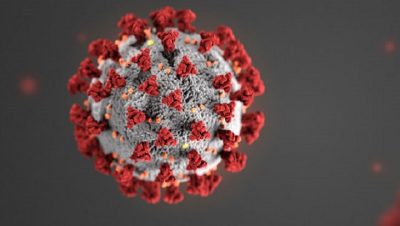


 Pregnant women might normally be the last to receive a new coronaviurs vaccine, but a new study may push them to the head of the line.