Archive for the ‘Uncategorized’ Category

Three Surprising Things I Learned About Asian Longhorned Ticks – The Tick Guy, Tom Mather

https://tickencounter.org/tick_notes/three_surprising_things

Three SURPRISING Things I Learned About Asian Longhorned Ticks

By Tom Mather

Late in the evening Sunday August 12. Only 4 more TickSpotters pictures left to look at today. But wait, what’s THAT one. This TickSpotter had sent in something different; a simple picture of a suspicious-looking tick found on their dog after a walk earlier that day in a Staten Island (NY) park. Definitely genus Haemaphysalis, but which one of the 3 possible species: one mainly feeds on rabbits, one on birds, and the third is a presumably still rare but recently recognized exotic invader from Asia – the longhorned tick. It couldn’t be that one, could it? Well, maybe. We emailed the submitter about the possibilities and asked them to mail the tick in to the lab for a closer examination. They did. It was!! The Asian longhorned tick. It was my first.

Since then, TickSpotters have sent additional suspicious-looking ticks — from Somerville NJ, Harrison NY, Front Royal VA, Newtown PA…a bit unprecedented. Our TickSpotters crowd-sourced survey only had 3 Haemaphysalis spp. submissions over the past 2 years, presumably the rabbit type, yet here were 5 in just 3 weeks. It was late in the summer of 2018 and something new was happening in the world of ticks…and I thought to myself “this TickGuy needs to know more”. That’s when the idea of a field trip popped into my head—”let’s go find some longhorned ticks.”

After securing the probable tick encounter location on Staten Island, ITM project manager Steve and I headed south. We arrived at our destination early; it was going to be a hot day. Vials and tweezers in hand, we hurriedly unfurled our tick flag and drag, and within 20 feet of getting out of the car, pretty much still in the parking lot, our drag was already covered with microscopic tick larvae. “These must be Lone Stars”, I boldly announced. “We’ll collect some and check under the microscope later;” we needed to keep moving if we hoped to encounter those rare longicornus ticks.

But it was only one more short pull of the drag when Steve announced, “I think I have one”! It was, but it was weird. This one was a partially-engorged female tick. You don’t usually collect partially-engorged ticks on a tick drag. We were just fifty feet from the car, and less than 5 minutes into our longhorned tick collecting field trip; and it all just seemed, well, strange. I now had no idea what to expect next…but, boy was this FUN!

Soon we were joined by post-doc Maria Pilar, a graceful Argentinian scholar working with Maria Diuk-Wasser at Columbia on a project to better understand where, how and why people encounter ticks. She’d been working the Staten Island parks and backyards all summer – and had become a bit of a longicornus expert. Or at least a more experienced collector than Steve and me. Good to have her with us. We turned off the main path and onto a narrow trail into the woods. Still getting more larvae and an occasional larger tick, too. But now it felt more like the hunt was on.


In a few minutes, we emerged onto a wider grassy path with shady edges. This would become our classroom for the rest of the morning, a one hundred meter stretch of various grasses and shrubs. We were picking up more ticks now—mostly adult females, 4,5,6 … they were starting to accumulate in my collecting vial. They seemed to prefer shade over sun but then I spotted one questing on a stem right along the edge of the path about a foot from ground level, head pointing down. A curious questing pose; American dog ticks tend to quest head up. This one turned quickly to climb a little higher on the stick, it’s front pair of legs outstretched in hopeful anticipation that I might come closer. After that one, I started to look more closely.

That’s when a dark patch on a grass seed-head caught my eye. Most people would have thought they were seeds. But this was my first big surprise of the day, and something Pilar and Steve had never seen either; these were larval ticks — 50, 75, 150 – motionless, tightly clumped, seemingly knitted together almost like the overlapping scales on a snake, but tiny. And once we saw a few of these clumps, we started seeing them everywhere. In certain grassy patches there would be one every couple of feet—each of these likely the product of a single female egg batch. I thought,

“this is not a rare tick, at least not here.”

Surprise #1: Longicornus larvae hang out together on the tips of grasses, but like a bomb, they explode when something brushes by.

Even though I had spotted the adult female, and the larvae clumps, it seems my eyes aren’t what they used to be. As I was picking larger-than-larvae nymph stage ticks off of the flag, I tried separating what I thought were nympal Lone Star ticks from what I thought were nymph longhorned ticks. I even put them into separate vials. It seemed that I had collected twice as many Lone Stars than longhorned nymphs but when I checked under the microscope, I had some re-sorting to do, and as it turned out I had collected about equal numbers of both types of nymphs. Lone Star nymphs were still the fastest moving ticks but when they’re sitting still you really have to look hard at the mouthparts to tell them apart.

Surprise #2 – Without magnification, nymphal Asian longhorned ticks look very similar to nymphal Lone Star ticks.

Nymphs — Left: Asian longhorned tick, Right: Long Star tick
But my biggest surprise of the day was in witnessing first hand just how extensive this infestation appears to have become in presumably a fairly short period of time. First recognized just about one year ago on a single sheep at a single location in New Jersey, now we were wandering about one of several fairly extensive parks on Staten Island surrounded by a massive residential community in one of the most densely urban settings in the United States. We were passing dog walkers and day hikers all pretty much minding their own business and completely unaware of what we were finding. But what we were finding was all three active life stages of this longicornus tick…pretty much everywhere we looked. The edge of the parking lot, along walking trails, in the woods.
Surprise #3 – Asian longhorned ticks are way more established than I expected to find.
We know this tick is a little different than the ones we’re more familiar with – like, it doesn’t need a male to fertilize its eggs. There’s so much we don’t know though, like will it readily feed on humans and pets, what germs might it carry and transmit, will it be susceptible to tick prevention products? We had started the day wondering if we would find anything on our field trip, and in only 6 hours finished the day just wondering. Looks like we have a new tick, now found in 9 states, but from what we learned on this one field trip, that’s not likely to be where the reach of this tick stops, or where this story ends either.

______________

For more:  https://madisonarealymesupportgroup.com/2018/07/19/rutgers-racing-to-contain-asian-longhorned-tick/

https://madisonarealymesupportgroup.com/2018/08/08/an-invasive-new-tick-is-spreading-in-the-u-s/

https://madisonarealymesupportgroup.com/2018/08/30/experts-still-worried-about-this-new-tick-since-it-doesnt-carry-lyme-disease-yet/

Here’s a home video of a female Asian Longhorn tick by Gloria Kim, a NJ resident:


ILADS Speaker Spotlight

 Approx. 1 Min

Chicago ILADS Conference Speaker Spotlight: Linda Williams, MD

To Register:

https://customer274405b6f.portal.membersuite.com/events/ViewEvent.aspx?contextID=8f4f278a-0078-cca7-3115-

Registration is now open for the 19th ILADS Annual Conference Tick-Borne Diseases and the Immune System, which will be held at the Chicago Sheraton Grand Hotel.  This event is intended for medical professionals including MDs, DOs, NDs, PAs, NPs, RNs, LCSWs, DCs, psychologists, and other professionals assisting Lyme and related disease patients in their treatment.

On Thursday, November 1, 2018, two one-day tracks will be offered:  Lyme Fundamentals and Experimental Treatments for Tick-Borne Diseases.  Our three-day Scientific Conference will be held on Friday through Sunday, November 2-4, 2018.

All registration fees include CME, EXCEPT for Thursday’s Experimental  Treatments for Tick-Borne Diseases.  CME hours will be announced as soon as they are confirmed by our CME providers.

We encourage you to also register for our fundraising event, the Pioneer in Lyme Award Dinner, on Friday, November 2, 2018, from 6:00 pm to 9:00 pm (please note that registration for this dinner is separate from registration for the conference).  The cost is $350 per person (a large proportion of this amount is tax-deductible).  This year we are honoring the contributions made by Dr. Kenneth B. Liegner of Pawling, NY.

On Thursday evening, November 1, 2018, ILADS member Dayna Wolfe, MD, will give a Handpans performance (the ticket price goes toward raising funds for ILADEF).  A reception sponsored by IGeneX will follow.  Please join us. For more on Handpans, please see   https://www.youtube.com/watch?v=6oremFnbgO0. Tickets are available for yourself and guests.


Pans, Autism, & the Immune System: An Interview With Expert Neurologist Dr. Richard Frye

http://www.neuroimmune.org/frye/pans-autism-and-the-immune-system-an-interview-with-expert-neurologist-dr-richard-frye

Dr. Richard Frye is a pediatric neurologist and Chief of The Division of Neurodevelopmental Disorders at Phoenix Children’s Hospital. He’s recognized as an expert on the treatment of autism.

Could you summarize the results of your recent study, “Intravenous Immunoglobulin For The Treatment Of Autoimmune Encephalopathy In Children With Autism”?

Our study recently published in Translational Psychiatry showed that a subset of children with autism spectrum disorder (ASD) who did not respond to standard interventions had autoantibodies in their blood targeting brain tissue which might qualify them for the diagnosis of autoimmune encephalopathy (AIE). The majority of children with ASD had elevated levels of autoantibodies measured by the Cunningham Panel™ (Moleculera Labs, Oklahoma City, OK) along with an elevation in the activation of calcium calmodulin dependent protein kinase II (CaMKII). A few patients had other brain targeted autoantibodies associated with AIE, such as voltage-gated calcium channels autoantibodies.

Some of the patient qualifying for the diagnosis of AIE were treated with intravenous immunoglobulin (IVIG) and their symptoms were monitored with two widely-used validated behavioral questionnaires, the Aberrant Behavior Checklist (ABC) and the Social Responsiveness Scale (SRS). Overall, IVIG was found to improve scores on both the ABC and SRS questionnaires and the great majority of parents reported improvements in additional symptoms related to ASD. The majority of patients experienced side effects from the IVIG treatment but most of the time these were mild and limited to the time around the infusion period. We were also able to divide the patients who received IVIG into those that demonstrate a positive response on the behavioral questionnaires and those that did not. This allowed us to determine if autoantibody titers of the Cunningham Panel™ collected prior to IVIG treatment could predict which individuals would response to IVIG. We found that, overall, the Cunningham Panel™ could predict which individuals would response to IVIG treatment with over an 80% accuracy rate and that the anti-dopamine receptor D2L and anti-tubulin antibodies were particularly sensitive to predicting response to IVIG treatment. 

What initially led to your interest in considering immune-mediated factors in autism? 

I have built my clinical practice with a vision of discovering new treatments for children with ASD. Some children with ASD do not respond to standard treatments or even new novel treatments and many times a standard medical workup does not reveal any additional obvious treatment targets. Such patients need to be investigated further to determine if there are other factors preventing them from developing skills or causing disruptive behaviors. For me, integrating an investigation of immune factors into my practice was the next step for further determining treatable factors for children with autism.

Do you have a sense for the percentage of children with autism who also have AIE?

The study describes 82 patients that were screened for AIE. This was about 8% of the patients seen in my autism clinic during the study period. 60% of these children were believed to probably have AIE, or about 5% of the children seen in my autism clinic. The percentage of the other 92% of patients seen in my autism clinic that might also have AIE is not known but it is very likely that a significant percentage of these children may have AIE. Many of these children were not investigated further because of various reasons including insurance coverage of testing, parental preference and/or difficultly in drawing blood. Further studies that systematically evaluate the general ASD population for AIE so we have a better understanding of the number of children with ASD that may benefit from treatment for AIE.

While acceptance of post-infectious autoimmune encephalopathy and pediatric acute-onset neuropsychiatric syndrome (PANS) continues to grow, there seems to be a bias within the medical community against considering PANS in children with autism. Would you agree or disagree with this statement and do you have a sense for why this might be? 

I believe that the idea that there are physiological abnormalities underling ASD which can be treated is novel concept that is faced by significant skepticism. Also many are skeptical that children with ASD can recover from their disorder at all. This skepticism, I believe, it based on an old concept of children with neurodevelopmental disorders having a “static encephalopathy” in which it is believed the brain is damaged and cannot improve. As new research connects neurodevelopmental and neurobehavioral disorders such as ASD with abnormal physiology and treatments that target these physiological abnormalities, evidence will become more compelling. As treatments are shown to improve function in disorders which previously had few effective treatments, I believe more people in the medical community will embrace treatments that help children with neurodevelopmental disorders.

Some physicians have questioned the validity of the Cunningham Panel due to the fact that many children with autism have positive results. The conclusion by some is that this means the test is producing false positive results. How would you respond to this? 

In our study 57% of the children we tested were positive for the Cunningham panel as we defined a positive test. We set a more stringent criteria as compared to others. For our clinical practice, the Cunningham panel is considered positive when one or more autoantibodies are elevated AND CaMKII is elevated. One of the reasons we examined the predictability of the Cunningham panel is to validate and refine the accuracy of the Cunningham panel. Our study points to two particular autoantibodies which appear to predict response. Since the components of the Cunningham panel have been developed based on converging animal and human basic research, it is very clear that these components are very likely to be very meaningful. It is likely that different components (or combination of components) will identify different subgroups of neurobehavioral, neuropsychiatric and/or neurodevelopmental disorders. Further studies are needed to further refine the most accurate use of interpreting the components of the Cunningham panel.

Do you ever treat children who did not have an abrupt or acute onset of neuropsychiatric symptoms, and if so, do they respond similarly to children who did have an abrupt onset? 

Abrupt onset of neurological, behavioral or psychiatric systems as well as abrupt loss of previously acquired skills are red flags for an underlying metabolic or immunological disorder. All three cases described in our recent paper had abrupt onset of symptoms and approximately one-third of children with ASD are estimated to have neurodevelopmental regression. However, there are children without a history of an abrupt onset of systems who also respond to immune and metabolic treatments that target medical abnormalities usually associated with an acute onset of disease. Thus, I do not usually use the history of abrupt symptoms onset to guide my workup. Treatments I prescribed are guided by biomarkers.

What is your approach to managing children with autism who develop neuropsychiatric symptoms? How does this differ from your approach to those without autism? 

I have found that many children with neuropsychiatric symptoms without ASD have similar metabolic and immune abnormalities as those with ASD. I use the same approach for such children and have had successes in improving their symptoms and ability to function.

Is there any research you’re working on currently that you’d be willing to tell us about?

At this time I am working with several collaborators on the interaction between metabolism and the immune system. Emerging research demonstrates connections between the immune system and metabolism, both mitochondrial disorders and oxidative stress. We have recently published a review article on mitochondrial dysfunction in autism which discussed this (https://www.ncbi.nlm.nih.gov/pubmed/30039193) and previously Dr Rossignol and I published a review article outlining the evidence for connection between these abnormalities in the brain of children with ASD (https://www.ncbi.nlm.nih.gov/pubmed/24795645). I think this is a promising area of research which may pave the way for new treatment targets.

You’ve published “Autism Spectrum Disorder in The Emergency Department: Looking Beyond Behavior.” What should ER physicians, primary care providers, and specialists be considering when a patient with autism presents with acute behavioral or neuropsychiatric symptoms? 

It is very important to consider that there may be medical issues that can be driving behavioral decompensation. These medical abnormalities do not have to be complicated immune and/or metabolic abnormalities but may be more basic problems such as sleep disruption, gastrointestinal disorders and/or anxiety which may need to be evaluated and addressed. There may also be other underlying more complicated metabolic and/or immune disorders, so it is important to consider referring the child to a practitioner experienced in looking into these treatable abnormalities. Most importantly, it is important to have a vision of try to treat the underlying biological cause of the symptoms rather than just treating the behavior with medications to suppress it. Indeed, disruptive behavior may be signaling that something that is not obvious needs to be addressed and suppressing this signal may simple make a untreated medical problem worse by allowing it continue and progress without appropriate treatment.

-The Foundation For Children With Neuroimmune Disorders thanks Dr. Richard Frye for taking the time to allow FCND Founder and President Anna Conkey to interview him. 

___________________

I Know You’re In There: Restoring Balance preview

Published on Aug 15, 2018

Sometimes our struggles shape who we are! But don’t you wish we didn’t have to struggle so much with our children who are on the spectrum? This is a 90 second clip of Ryan Hinds who is recovered from autism. Ryan’s parents were told there was no recovery from autism. There was no cure. There was no hope. The “experts” said Ryan should be institutionalized. But they were wrong. Ryan’s recovery was not miraculous. It was the result of having his medical illness treated. Ryan now works as an aerospace engineer. And what his parents wanted most for their son actually happened…he is happy, has friends, and leads a typical life. You can preview Ryan’s recovery story called I KNOW YOU’RE IN THERE on Amazon or at http://a.co/a7PiCyQ
Ryan’s recovery story is just one of the many in the documentary RESTORING BALANCE: AUTISM RECOVERY https://www.restoringbalanceautism.com/  (Many helpful videos and information in this link)
_________________
According to a prominent Wisconsin LLMD, 80% of his Autistic and PANS patients have tick borne disease as well.  Please see:  https://madisonarealymesupportgroup.com/2017/12/01/guidelines-for-treating-pans-its-real/

Mayo Clinic Holds Teenager Hostage -Why We Need the Parental Rights Amendment

https://parentalrightsfoundation.org/

Here we go again.

Just when I started to think nothing would surprise me anymore, the Mayo Clinic in Minnesota held a teenager hostage a la Justina Pelletier, working to cut her parents out of the picture and take control of the girl’s healthcare for themselves.

According to a series of articles published by CNN, https://www.cnn.com/2018/08/13/health/mayo-clinic-escape-1-eprise/index.html 18-year-old high school senior Alyssa Gilderhus suffered a brain aneurism on Christmas, 2016. Her prognosis for survival was grim, “a 2% chance.” But through four brain surgeries over the next month, neurosurgeons at the Mayo Clinic literally saved her life.

Unfortunately, things took a turn for the worse when she was transferred to the rehabilitation unit on January 30. It wasn’t a medical relapse, though. Rather, the hospital’s treatment of and respect for Alyssa and her family took a nosedive.

It was Justina Pelletier all over again. Only this time, things would be different.

1. Difference One: Alyssa Gilderhus Is 18 Years Old, and a Legal Adult.
Justina Pelletier was only 14 for most of her 16-month ordeal. Before Boston Children’s could take power over Justina, they only had to wrench it away from her parents, something sadly too easy a thing to do. The hospital accused them of “medical neglect” and the state took it from there.

But to get power over Alyssa, the Mayo Clinic had to first wrest authority from the patient herself, and then away from her parents as next in line.

“From my 25 years of experience, a judge is going to say, ‘why isn’t the family the first and best choice here?’ and it had better be a good reason,” adjunct professor and Minneapolis attorney Robert McLeod is quoted as saying in part 2 of the CNN report.

2. Difference Two: Alyssa’a Parents Had the Pelletiers’ Experience to Learn From.
When Justina was taken by Boston Children’s, such a “medical kidnapping” was unheard of in the public eye. But today, such things rarely occur without someone mentioning Justina. In this case, friends of Alyssa’s parents told mom Amber Engebretson about the Pelletiers’ experience.

According to the CNN report, Amber reached out to Linda and Lou Pelletier by phone. They told her what to watch for if the hospital was trying to take over her daughter’s care. That night on Facebook Amber wrote, “OMG I am SICK. This is what is happening…. I am so scared.”

But recognizing what they were up against allowed Amber and husband Duane to go into action to save Alyssa from her prison.

3. Difference Three: Alyssa Escaped.
Once the state of Massachusetts took custody of Justina, they left her in the care of Boston Children’s hospital to be treated as the hospital thought best. Locked away in the psych ward, Justina languished under their abuse for more than a year.

Duane Engebretson was not about to watch Alyssa suffer the same fate. So on February 28, 2017, he managed to trick her “guard” nurses into letting him roll Alyssa’s wheelchair to the lobby to accommodate an elderly grandmother who couldn’t make it all the way to the room. Only the grandmother wasn’t in the lobby. They needed to meet her in the parking lot.

Only she wasn’t in the parking lot, either. But Alyssa’s mother was, and sped away as soon as her daughter was in the car.

The hospital security officer called the Police. Deputies searched for the family, who hid out on the road and got their daughter a second opinion at a South Dakota hospital. But eventually the police came to see the situation for what it was.

“That’s one doctor’s opinion against another, and that doesn’t have anything to do with law enforcement at all,” Chris Vasvick, a Martin County (Minnesota) deputy told CNN.

As it turns out, the hospital was trying to take guardianship of Alyssa. They had made attempts in multiple counties, but couldn’t get a judge to sign off on giving them—and not the parents—control. Had the Mato clinic doctors succeeded, Alyssa might still be in their “care.”

All About Parental Rights

As shocking as this story is, it isn’t a true parental rights case. Alyssa, as an adult, was being held illegally against her will, and from a legal standpoint her parents’ view has nothing to do with it. That they helped her escape provides good drama that would make a good movie. But it isn’t about parental rights.

On the other hand, the fact that this happens as frequently as it does, and that it is that much easier for the hospital if the patient is a child – that is all about parental rights, and demands a closer look.

By federal statistics, some 97% of all parents never abuse or neglect a child. So why is it so easy for a hospital to intrude into the parent-child relationship if a parent disagrees with what the doctors think a child needs?

The doctor is a professional, with certain knowledge and skills. Parents are wise to find the services of a good one when needed. But at the end of the day, “natural bonds of affection lead parents to act in the best interests of their child.” (Parham v. J.R., 442 U.S. 584 (1979), emphasis added)

Sadly, Alyssa’s story, like that of Justina, should serve as a warning to parents: know your doctor. Know your rights. Don’t ignore the red flags. Get that second opinion.

And continue to stand with us as we promote policies and model legislation to preserve the right of parents to make the best, most informed medical decisions for their children, without undue state—or medical—intrusion.

Sincerely,

Michael Ramey
Director of Communications & Research

_________________

**Comments**

Due to the polarization of Lyme/MSIDS, this could easily happen to a child with tick-borne illness.  I’m sure it’s happened already.  Don’t let it happen to you.  Learn about the Parental Rights Amendment and continue to stand up for your children.

For more:  https://madisonarealymesupportgroup.com/2017/04/20/why-we-need-the-parental-rights-amendment/

https://madisonarealymesupportgroup.com/2017/02/21/parental-rights-in-medical-settings/

https://madisonarealymesupportgroup.com/2018/04/05/pa-dentist-threatens-parents-for-not-scheduling-their-childs-dental-cleaning/

https://madisonarealymesupportgroup.com/2017/08/24/dutch-lyme-patients-accused-of-child-abuse/

https://madisonarealymesupportgroup.com/2017/06/30/child-with-lymemsidspans-told-by-doctors-she-made-it-all-up/

https://madisonarealymesupportgroup.com/2018/05/29/more-abuses-against-parental-rights/

https://madisonarealymesupportgroup.com/2017/10/12/parental-rights-come-from-the-state-says-law-professor-james-dwyer/  James Dwyer, law professor at the prestigious College of William and Mary, believes your parental rights come from the State. And what the State can give, the State can take away.

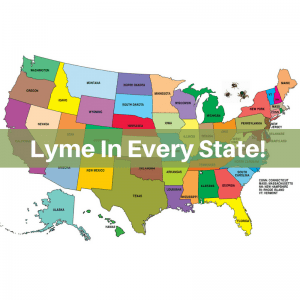
Lyme Found in All 50 States

https://www.lymedisease.org/lymesci-lyme-all-states/

LYME SCI: Lyme has been found in all 50 states and is on the rise

Quest Diagnostics has released its findings from over six million Lyme disease lab tests taken over the last seven years.  Quest’s report says Lyme has been detected in all 50 states and the District of Columbia—and that the number of cases continues to rise nationwide.  This report provides the first national analysis of Lyme disease based on laboratory data. (See here for similar data based on insurance claims.)

A Decided Spike 

According to Quest’s report, 60% of Lyme disease cases occur in the Northeastern United States, with a decided spike in the last few years.

Pennsylvania registered the most positive test results in the nation, with 10,001 cases in 2017, followed by six New England states (Connecticut, Maine, Massachusetts, New Hampshire, Rhode Island and Vermont) reporting another 11,549 cases combined.

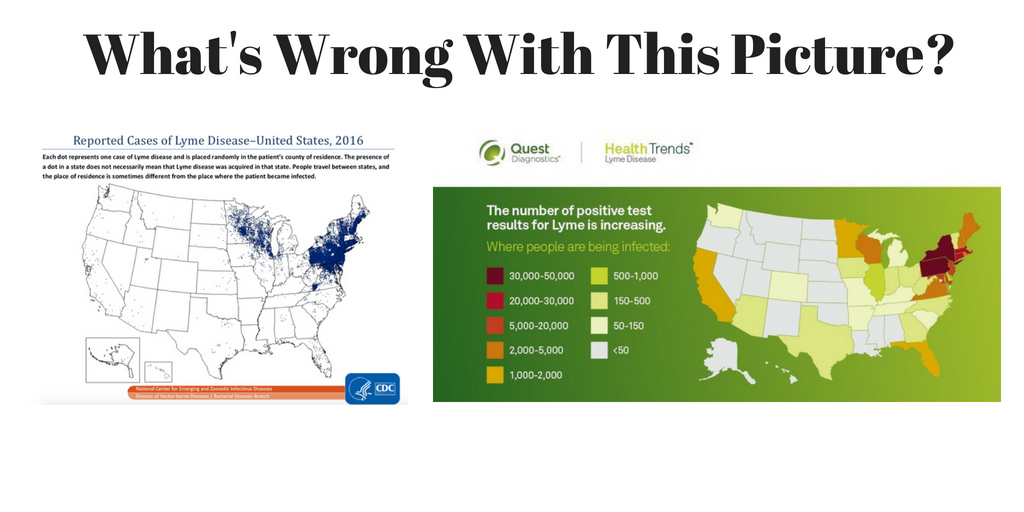
More surprising to me was the exponential increase in the number of positive test results found in California and Florida, two states often dismissed by the CDC as not having very much Lyme disease.

What’s most disturbing about these numbers is the huge discrepancy between the positive test results and the number of cases reported by the CDC.

Let me break it down…

First, let’s look at the big picture by comparing the CDC map (each dot represents one CDC positive case), and the Quest map showing the number of positive test results. Note, the Northeast looks pretty similar between the two maps, but what is going on in the South and West? Why such glaring discrepancy?

Now let’s compare Quest’s numbers to the latest CDC data.

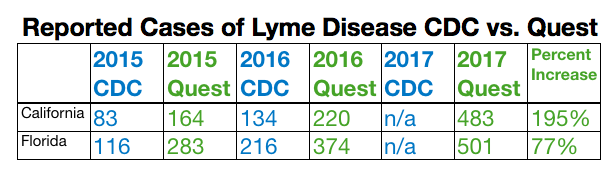
In 2015, Quest found 164 cases of Lyme disease in California—while the CDC acknowledged only 83 cases. (California has mandatory lab reporting of Lyme disease. So, those cases from Quest were reported to state officials—and then what happened?)

That same year, Quest found 283 cases in Florida while the CDC reported 116.

In 2016, Quest again shows twice the CDC totals for California, but an even bigger gap emerges in Florida, with Quest reporting three times as many as the CDC. See below:

And look at 2017! According to Quest, California’s positive Lyme tests increased 195% over the two-year period from 2015 to 2017. Florida showed a 77% increase over the same time span. (CDC figures for 2017 are not yet available.)

And, keep in mind, Quest is only one of many laboratories in the U.S. What about positive Lyme tests from other labs?

Ticks are spreading

LymeDisease.org’s own research project, MyLymeData, has also detected discrepancies between the CDC-reported cases and the number of patients with positive tests for Lyme in the South and West. [See LYMEPOLICYWONK: Why Doesn’t the CDC Count Lyme Disease Cases in the South and the West? Everybody Else Does.]

The spread of Lyme disease makes sense with the latest NIH report showing the Ixodes scapularis tick, the primary source of Lyme disease, being found in nearly 50 percent more U.S. counties in 2015 than was detected in 1996.

Further confirming the increasing spread, a recent citizen science study also found Ixodes scapularis ticks in 83 counties (in 24 states) where these ticks had not been previously recorded. But why?

Dr. Harvey Kauffman, of Quest Diagnostics, says,

“Our data show that positive results for Lyme are both increasing in number and occurring in geographic areas not historically associated with the disease. We hypothesize that these significant rates of increase may reinforce other research suggesting changing climate conditions that allow ticks to live longer and in more regions may factor into disease risk.”

It’s past time to take ticks seriously

Lyme disease is only one of 16 tick-borne disease found within the United States. How many other illnesses are being undiagnosed and/or underreported? Is there also a 10-fold difference in reporting of anaplasmosis, babesiosis, rickettsiosis and other tick-borne pathogens, including viruses?

The CDC recently acknowledged that 75% of all reported vector-borne illnesses come from ticks, and of those, most are cases of Lyme disease

Underreporting of Lyme and other tick-borne diseases is a huge problem. It’s time to fix it.

LymeSci is written by Lonnie Marcum, a Licensed Physical Therapist and mother of a daughter with Lyme. Follow her on Twitter: @LonnieRhea  Email her at: lmarcum@lymedisease.org .

Reference:

New Quest Diagnostics Data Shows Lyme Disease Prevalence Increasing and is Now Present in New U.S. States

_________________

**Comment**

According to an independent tick expert, Dr. Kauffman’s hypothesis of climate change driving ticks and Lyme is not only unsubstantiated but part of a nefarious plot being used to rationalize why nothing has been done about Lyme/MSIDS for decades.  https://madisonarealymesupportgroup.com/2017/08/14/canadian-tick-expert-climate-change-is-not-behind-lyme-disease/

Warmer weather actually reduces tick populations.  The climate models have numerous flaws as well:  https://madisonarealymesupportgroup.com/2018/08/13/study-shows-lyme-not-propelled-by-climate-change/  Researcher John Scott shows ticks are marvelous ecoadaptors and will seek out and use leaf litter and snow when conditions are harsh.  Migrating birds are serving as transits for ticks and distributing them all over the word.

https://madisonarealymesupportgroup.com/2018/08/09/why-the-cpis-article-on-how-a-climate-skeptic-is-holding-up-tick-borne-illness-research-is-dead-wrong/   Ticks have been found on beaches, in caves, underneath picnic benches, on rocks, on birds and other animals, blown into swimming pools, falling off trees, and I’ve found them climbing my walls.  “Tick guy” Tom Mather demonstrates ticks surviving 24 hours in 3 degree temps:  https://madisonarealymesupportgroup.com/2016/01/20/polar-vorticks/

https://madisonarealymesupportgroup.com/2018/07/16/ticks-that-carry-lyme-disease-are-spreading-fast/  According to Associate professor, Nate Nieto,

“People should be aware of ticks and tick-borne disease, even when they may think there’s not a recorded incidence of a tick in a county,” Nieto said. “These things, they’re not obeying borders. They’re going by biology. If they get moved there by a deer or bird or people or pets, they’re going to establish themselves and start growing.”

https://madisonarealymesupportgroup.com/2018/07/26/tickborne-diseases-confronting-a-growing-threat/  (For a bullet point list of issues that need to be researched regarding TBI’s please read my comment after the article.  Climate data has not helped patients at all.  Please understand my list is far from complete.)

Climate change regarding Lyme/MSIDS/ticks is as Scott says,

a red herring.