Archive for the ‘Uncategorized’ Category

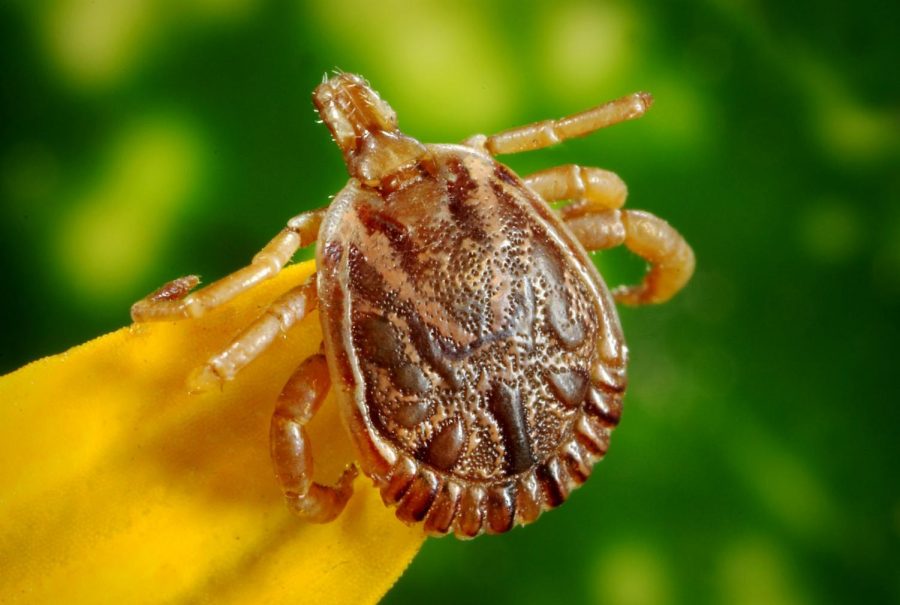
Understanding Disease Transmission in Ticks

https://dailyevergreen.com/38060/news/understanding-disease-transmission-in-ticks/

Understanding disease transmission in ticks

Study may help find ways to prevent future spread of pathogens

Understanding+how+immune+responses+affect+disease+transmission+could+be+the+first+step+toward+eventually+developing+a+preventative+treatment+for+tick-born+illnesses%2C+researchers+say.

Understanding how immune responses affect disease transmission could be the first step toward eventually developing a preventative treatment for tick-born illnesses, researchers say.
CAMERON SHEPPARD, Evergreen contributor
October 2, 2018


Research at WSU to understand how the mechanisms of tick immune systems operate could help uncover ways to affect how ticks carry and transmit diseases, many of which affect humans.

One type of tick, Ixodes scapularis, can transmit at least seven different diseases from feeding on the blood of a host, a number that is relatively high when compared to other bugs and insects that carry disease, said Dana Shaw, microbiologist and researcher at WSU.

Shaw said the I. scapularis’ high vector competency or ability to carry and transmit diseases, is what caught her attention. She wanted to study how the immune system of a tick operates to understand what mechanisms affect a tick’s ability to spread disease.

Shaw said much of what is known about the mechanisms and chemical pathways of arthropod immune systems comes from research done with Drosophila, a genus of fruit fly.

With the Drosophila, the biochemical pathway leading to an immune system response to certain gram-negative microbial infections is triggered by the presence of transmembrane peptidoglycan recognition proteins, or PGRPs.

In other words, the PGRPs are necessary to trigger an immune system response to these infections in the Drosophila.

Genome sequencing research done on the I. scapularis tick previous to Shaw’s study had indicated that transmembrane PGRPs and other downstream molecules were not present in I. scapularis ticks as they were in the Drosophila.

This led Shaw and colleagues to ask how the biochemical pathways that cause an immune response in the I. scapularis were being triggered without the presence of molecules similar to transmembrane PGRPs and other downstream molecules in the Drosophila.

Shaw’s research group is now hypothesizing that the immune response in ticks is triggered by a cellular reaction known as the unfolded protein response, or UPR.

After analyzing the transcriptional response of a sample of I. scapularis ticks, Shaw’s team found 14 genes that indicated the potential for a UPR activation in the event of an infection with the Anaplasma phagocytophilum pathogen.

In humans, it is known as known as granulocytic anaplasmosis, and can cause respiratory failure, organ failure or death in its late stages.

To test the hypothesis that UPR activation would trigger an immune response to infection, the researchers used tick cell lines that had been infected with A. phagocytophilum. Before infecting the tick cells, a sample set of cells underwent a process known as transcriptional knockdown.

Kristin Rosche, scientific assistant at WSU, said transcriptional knockdown blocks specific RNA from creating the proteins it would normally create. In this case, it was used to block the UPR genes in I. scapularis ticks.

After measuring and comparing the survivability rate of pathogens in the tick cells that had their UPR genes blocked to the tick cells that had not undergone transcriptional knockdown, it was evident that blocking the UPR did alter the infectious burden A. phagocytophilum had in the cells.

“Whether this is through an innate immune response or not is not yet known,” Shaw said. “We are still in early stages of the UPR project and we cannot draw any hard conclusions with our preliminary evidence.”

What this research may have uncovered is knowledge about a new immune signaling pathway that could affect a tick’s ability to carry and transmit pathogens.

Rosche said this research is significant because tick habitats are changing and expanding to new areas, and tick-borne diseases are difficult to diagnose and treat.

This research is a step toward developing preventatives for certain tick-borne illnesses, even if that possibility is far away.

“This research is necessary in order to have other people take the next steps,” Rosche said.

______________

**Comment**

  1. We are currently at 18 and counting diseases spread by ticks:  https://madisonarealymesupportgroup.com/2017/07/01/one-tick-bite-could-put-you-at-risk-for-at-least-6-different-diseases/
  2. The black legged tick is not the only transmitter of disease.
  3. While this new work presents some hopeful possibilities, let us never forget that the black legged tick is not the only way people can get infected and much, much more work needs to be done on vectors and transmission.  Willy Burgdorfer, the one who first “discovered” Borrelia, burgdorferi, the causative agent of LD, became infected while working in the lab when Bb infected rabbit urine got into his eye.  https://madisonarealymesupportgroup.com/2017/02/24/pcos-lyme-my-story/  Nobody talks about that inconvenient truth, or the fact there’s 33 years of data on congenital transmission:  https://madisonarealymesupportgroup.com/2018/06/19/33-years-of-documentation-of-maternal-child-transmission-of-lyme-disease-and-congenital-lyme-borreliosis-a-review/.  There is evidence to suggest sexual transmission of Lyme:  https://f1000research.com/articles/3-309/v3.  This was done in 2014 and no follow up studies have been done.

Why wouldn’t research on sexual transmission be done on the most common vector borne disease?  

This is the million dollar question that remains unanswered.


Tickology Video Series – Everything You Want to Know About Ticks & Prevention

Entomologist Larry Dapsis, Deer Tick Project Coordinator, of Cape Cod Cooperative Extension presents information about numerous types of ticks and the diseases they carry in the following Tickology video series.

Tickology

 Approx. 9 Min

Tick Identification & Ecology

Take aways:

  1. Female American Dog Tick is easy to spot as she has a creamy white wide spot up by the head.
  2. Female Lone Star tick has a bright white spot in the center of her back.
  3. Female Deer Tick has a bright red abdomen.
  4. A lot of this info is shared again in part 3 below where I have more notes.

 Approx. 12:30 Min.

Tick Borne Diseases

Take aways:

  1. He considers the American Dog Tick more of a nuisance than a threat.  I disagree.  Just ask anyone who’s ever had RMSF or Tularemia, both of which can kill you.
  2. The Deer Tick (Black legged tick) is endemic in 80 countries and has been here for thousands of years.
  3. Lyme is found in 49 out of 50 states in the U.S. (absent only in Hawaii)
  4. In 2016 the CDC adjusted Lyme prevalence to 300,000 new cases of Lyme a year.
  5. Martha’s Vineyard has more cases than anywhere in the universe.
  6. Risk of infection is year round.
  7. Largest risk is from the nymph as they are smaller and the bite is difficult to detect.   He is finding about 25% to be infected with Lyme.  50% of adults are infected.
  8. In Massachusetts, children ages 5-9 have the highest rates of infection.  Adults aged 50-70 has a surge of infection as well.
  9. Babesiosis, similar to Malaria, can be passed via blood transfusion with 50% of Massachusetts cases found in the south eastern part of the state and virtually found in some degree in every county in the state.
  10. Anaplasmosis (HGA) can look similar to Lyme and is more broadly distributed in Mass.
  11. All these diseases are steadily increasing.  95% of cases are aged 65 and older.
  12. Borrelia miyamotoi, related to Lyme, is a relapsing fever.  3% of Cape Cod ticks have it but is expected to increase.
  13. Powassan can put you in the hospital with brain swelling.  They did surveillance and found Powassan in 4 out of 6 site sites with infection rates as high as 10% in the tick population.  In reading the literature, he feels it has been on Cape Cod for thousands of years but it hasn’t been on medical radar.

  Approx. 8 Min.

Lone Star Tick – The New Tick in Town

Part 3 of the Tickology video project.

Take aways:

  1. The Lone Star Tick, normally considered a Southern tick, is in Cape Cod, and has moved North, and yes, is in Wisconsin.
  2. The adult female has a white dot on her back
  3. These ticks can run and are aggressive, fast & will actually chase you.  
  4. While he mentions a warming climate, independent Canadian tick researcher, John Scott, states emphatically temperature has nothing to do with tick expansion:  https://madisonarealymesupportgroup.com/2018/08/13/study-shows-lyme-not-propelled-by-climate-change/
  5. He claims Lone Star ticks have been established in Sandy Neck Beach Park and Shining Sea Bike Trail for a long time – it’s just nobody was looking for them.  I suspect this to be true for many other areas as well.
  6. He claims these areas are “perfect flyways” for migratory birds for transporting ticks.
  7. Lone Star ticks prefer intermediate size hosts.  He put out video surveillance and picked up wild turkeys in areas where these ticks were established.  Rabbits & coyotes are good hosts as well
  8. The adult female lays a cluster of 4,000-5,000 eggs,  which leaves a high concentration of larvae in late summer.  He claims when you find one, it could be a matter of minutes and you could have 200-300 bites.
  9. He claims Lone Star tick larvae do not transmit pathogens.
  10. The adults; however, can transmit Erlichiosis, STARI, Tularemia and Alpha Gal or meat allergy (all animal products).
  11. He claims you will not find deer ticks in an open lawn.  I was told otherwise by Susan Paskewitz, chair of the Department of Entomology at UW–Madison, whose crew is finding them in fields where kids are playing sports, and it’s here as well: https://newyork.cbslocal.com/2018/05/07/ticks-lyme-disease-cdc-putnam-county/
  12. He is finding Lone Star ticks in open spaces.  They don’t mind the heat.  Deer ticks will seek out leaf litter and/or snow when conditions are harsh.

 Approx. 13:22 Min

Permethrin Treated Clothing & Footwear

Take aways:

  1. Natural Pyrethrum is from the Aster Family, & is an extract from a type of chrysanthemum.  It has quick knockdown against insects but no residual control.  Breaks down in sunlight quickly.
  2. They manipulated it so now it has 4 weeks of residual control.
  3. You only use it on clothing and footwear.  He feels treating footwear to be crucial.  If a tick is on a treated surface with permethrin for 60 seconds it will die.  He feels strongly that using this product will reduce your exposure tick bites by upwards of 90%.  It is active thru 6 washings or 45 days which ever comes first.
  4. Pre-treated tick repellent clothing is also available.  EPA testing has shown it is active through 70 washings.  You can also send your clothing to “Insect Shield,” and they will treat your clothing and send it back with the 70 washing claim.  He says it’s about $10 per clothing item.
  5. It’s not the molecule that makes the poison, it’s the dosage.  As far as permethrin goes, there is low mammal toxicity except for cats.  It is 2,250 times more toxic to ticks than to humans.  According to the EPA, permethrin-treated clothing poses no harm to infants, children, pregnant women, or nursing mothers.
  6. Permethrin has low skin absorption and is metabolized quickly.
  7. National Research Council looked at long term exposure on the military wearing permethrin saturated clothing from head to foot for 18 hours a day for 10 years and found no reason for an adverse effect.
  8. The active ingredient is the same ingredient used for treating scabies and head lice and parents smear it on their kids from head to toe.
  9. He demonstrates how to apply it onto clothing and footwear.  Scroll to 10:00.  Make sure to wash these treated cloths away from other clothes.  Remember sunlight breaks it down so it lasts through 6 washings for 45 days, which ever comes first.
  10. He sprays the inside of the legs in case a tick gets underneath.  I tuck my pants into my white sprayed socks so ticks can not get inside.

 Approx. 6 Min

Skin Repellents

Take aways:

  1. The big distinction between repellents is the EPA registration.  Deet, Picaridan, IR 3535, and Oil of Lemon Eucalyptus have EPA registration with data on file for any claim being made.
  2. Go here for the EPA selection guide:  https://www.epa.gov/insect-repellents/find-repellent-right-you  (Fill in the questionnaire)
  3. Go to www.npic.orst.edu for pesticide information.
  4. Go to capecodextension.org for short factual answers on products.
  5. Naturals are not EPA registered so there is no data proving effectiveness.  Not all repel ticks.  Buyer beware.

__________________

For more on tick prevention:  https://madisonarealymesupportgroup.com/2017/05/11/tick-prevention-and-removal-2017/

https://madisonarealymesupportgroup.com/2018/06/06/mc-bugg-z/

https://madisonarealymesupportgroup.com/2018/05/27/study-conforms-permethrin-causes-ticks-to-drop-off-clothing/  “All tested tick species and life stages experienced the ‘hot-foot’ effect after coming into contact with permethrin-treated clothing,” Eisen said. 

https://madisonarealymesupportgroup.com/2018/04/03/fire-good-news-for-tick-reduction/  Study found a 78-98% reduction in ticks.
http://journals.plos.org/plosone/article?id=10.1371/journal.pone.0112174 These data indicate that regular prescribed burning is an effective tool for reducing tick populations and ultimately may reduce risk of tick-borne disease.


Creatures vs Climate: The Tick. Why They are Wrong

https://tvo.org/article/current-affairs/creatures-vs-climate-the-tick

Creatures vs. climate: The tick

Thanks to warming temperatures, ticks are now establishing populations across Ontario — and they’re bringing Lyme disease with them

Ticks are nature’s hitchhikers. They latch on to migratory birds, deer, mice, and other creatures, feed to their heart’s content, and then drop off to moult.

One study suggests that between 50 million and 175 million ticks may be dropped by migratory birds each year across Canada. Wherever they land becomes their new temporary home. Depending on the tick’s age and species, it may lay hundreds or thousands of eggs.

Whether it’s able to lay eggs — and whether they’re able to grow to maturity — is determined in part by what the climate is like where it touches down. In colder weather, ticks tend to grow more slowly, says Kateryn Rochon, an assistant professor of entomology at the University of Manitoba.

“The life cycle is lengthy when you get north because of temperatures, but as that changes and the conditions get better, the ticks can grow more quickly,” says Rochon. “It’s a tough world out there. It’s very likely not to make it to reproduction. But if the conditions are getting better and better, there’s better likelihood of survival, better likelihood of finding a mate, and better chance of making it to reproduction.”

It’s not unusual for ticks to land in areas in the north. What is new is that populations of them are now able to survive and, in many cases, thrive in places they couldn’t before. Species such as the black-legged tick and the American dog tick — both increasingly common in Ontario — carry diseases that can be passed on to humans. The black-legged tick (also called the deer tick), for example, is a carrier of Lyme disease, which, if not detected quickly, can cause fever, headaches, and nerve and tissue damage.

“The thing is, what makes it that all of a sudden ticks have been able to establish?” says Rochon.

Warm weather, moisture, and the availability of food create ideal conditions for the arachnid. Increasingly high temperatures have been linked to increased survival rates for the black-legged and other species of tick.

Although not all ticks flourish at the same temperature, warmer is generally better because it promotes faster growth, says Nicholas Ogden, senior research scientist with the Public Health Agency of Canada.

A tick larva attaches to a host and feeds. After absorbing sufficient energy, it drops off into leaf litter and ages into a nymph. The nymph then finds a host, where it will feed before falling off and developing into an adult.

“Development from egg to larva, engorged larva to nymph, engorged nymph to adult, adult to egg-laying adult are all processes the length of which depends on the ambient temperature,” says Ogden.

The warmer it is, the faster the ticks can move through these stages. A more compressed life cycle means that more of them will survive and establish populations.

And with those populations comes Lyme disease. In 2009, there were just 144 documented cases in Ontario; in 2017, there were 2,025.

Given the fact that temperatures are expected to rise still further, researchers predict that there could be a moderate risk of Lyme disease in all parts of Ontario by 2050.

“What happens first of all is that the ticks spread, and people get tick bites, which isn’t a great problem until the bugs that cause Lyme disease start to become established and transmission cycles start to become established,” says Ogden. “What we have seen is the emergence of not just the tick with climate change, but Lyme disease. We’re seeing exponentially increasing number of cases.”

________________

**Comment**

Rochon and Ogden have obviously missed their own countryman’s work:  https://madisonarealymesupportgroup.com/2018/08/13/study-shows-lyme-not-propelled-by-climate-change/

John Scott, an independent tick researcher in Canada, who also happens to be infected himself, insists that while migratory birds are indeed carrying ticks far and wide, tick survival actually declines in warmer winters as they need the snow cover for protection.

Another issue Rochon and Ogden fail to mention is “photo-period.”

Evidently, ticks have sensory organs that monitor the external environment which includes light. Light wavelength as well as intensity will make the difference from if and when a nymph will molt and if and when an engorged female will lay eggs.  Scott’s in-house tick studies have shown that black-legged ticks require 14 hours of daylight to molt. If ticks can’t molt, they can’t move on to their next life-cycle. Photoperiod is innate and can not be altered by the climate. He states:

“The hypothesis that I. scapularis ticks will expand further north in the Prairie Provinces because of climate change is not only unscientific, but deceiving.”

So light, not climate, is a determining factor in tick survival as ticks will seek out leaf litter and/or snow when weather is harsh for them.

But there’s more.

According to Scott, the issue of climate change is an elaborate plot to keep authorities from digging into the real issues:

“The climate change range expansion model is what the authorities have been using to rationalize how they have done nothing for more than thirty years. It’s a huge cover-up scheme that goes back to the 1980’s. The grandiose scheme was a nefarious plot to let doctors off the hook from having to deal with this debilitating disease. I caught onto it very quickly. Most people have been victims of it ever since.”

“This climate change ‘theory’ is all part of a well-planned scheme. Even the ticks are smarter than the people who’ve concocted this thing,” he says.

Divert our attention from what? I ask.

“From what is not happening medically. In simple terms, the feds have diverted our attention by saying ‘let’s worry about ticks and climate change, put all our funding there and we will solve the problem of Lyme disease’.”  https://madisonarealymesupportgroup.com/2017/08/14/canadian-tick-expert-climate-change-is-not-behind-lyme-disease/

Lemons & Lyme by Stanley Plotkin

https://www.change.org/p/1120418/u/23297377?

Lemons and Lyme by Stanley Plotkin

Carl Tuttle
Hudson, NH

SEP 20, 2018 —
A copy of the letter below was forwarded to the Tick Borne Disease Working Group as the information currently published is an extension of the thirty year racketeering scheme. The mishandling of Lyme disease can be traced back to vaccine development when the infection was classified as “easily diagnosed and treated” Publications prior to Dearborn (1994) painted an entirely different picture. One of those publications from 1977 is highlighted below.

ldmIkyMICnZMVyY-800x450-noPad

The picture attached to this update was found at the following Wikipedia Plotkin page: https://en.wikipedia.org/wiki/Stanley_Plotkin

Letter to Stanley Plotkin regarding the Lyme vaccine:
———- Original Message ———-
From: Carl Tuttle <runagain@comcast.net>
To: stanley.plotkin@vaxconsult.com
Cc: chris.smith@mail.house.gov, collin.peterson@mail.house.gov, ddutko@hanszenlaporte.com, evpdean@upenn.edu, zaoutis@email.chop.edu, JPIDS.EditorialOffice@oup.com
Date: September 19, 2018 at 9:48 AM
Subject: Lemons and Lyme by Stanley A. Plotkin
Journal of the Pediatric Infectious Diseases Society
13 September 2018 P L O T K I N C O L U M N
Lemons and Lyme
https://academic.oup.com/jpids/advance-article-abstract/doi/10.1093/jpids/piy083/5094865?redirectedFrom=fulltext

Stanley A. Plotkin
Emeritus Professor of Pediatrics, University of Pennsylvania, Doylestown

Excerpt:

“It is odd that there is a lobby against the development and deployment of a vaccine against the disease by people who think they are suffering from Lyme infection in a chronic form, the existence of which remains doubtful. They believe that the first vaccine against Lyme disease caused chronic arthritis.”

Sept 19, 2018
Perelman School of Medicine
University of Pennsylvania
3400 Civic Center Boulevard Building 421
Philadelphia, PA 19104

Dr. Plotkin,

“It is odd” that the two principal investigators of the previous Lyme vaccines, Allen Steere for SmithKlineBeecham’s LymeRix and Gary Wormser for Connaught’s vaccine (which never made it to market) have been named in a racketeering lawsuit. (See attached court document)
https://www.dropbox.com/s/18uyrli878ug51m/LymeDisease%20RICO%20Lawsuit.pdf?dl=0
It is believed that Lyme disease was pigeonholed into its current status by the two principal investigators of the previous Lyme disease vaccines as these investigators conceptualized a disease that would enable vaccine development.
A preventive vaccine for Lyme disease would not satisfy the FDA if a chronic persistent infection and seronegative disease exist. The lead author of the one-size-fits-all IDSA Lyme treatment guideline (which matches the conceptualized disease) was the principal investigator of Connaught’s Lyme vaccine, Dr. Gary Wormser. This is a flagrant conflict of interest. Have we been dealing with an antibiotic resistant/tolerant superbug purposely concealed to promote vaccine development?

Forty one years ago Allen Steere knew that antibiotics used to treat Lyme disease were not working:
Lyme arthritis: an epidemic of oligoarticular arthritis in children and adults in three connecticut communities. (1977)
Steere AC, Malawista SE, Snydman DR, Shope RE, Andiman WA, Ross MR, Steele FM.
https://www.ncbi.nlm.nih.gov/pubmed/836338

Excerpt:

“The best treatment for this illness is not clear. Some physicians have reported that penicillin or tetracycline results in disappearance of the skin lesion (41,42), but others find antibiotics ineffective. Four of the patients with expanding skin lesions received penicillin but still developed arthritis.”

A PubMed.gov search will find hundreds of papers reporting persistent Borrelia infection.

I would like to point out the following 1995 case study from Stony Brook Lyme clinic. I understand the patient received thirteen spinal taps, multiple courses of IV and oral meds, and relapsed after each one, proven by CSF antigens and/or PCR. The only way this patient (said to be a physician) remained in remission was to keep her on open ended clarithromycin- was on it for 22 months by the time of publication.

Seronegative Chronic Relapsing Neuroborreliosis.
https://www.ncbi.nlm.nih.gov/pubmed/7796837
Lawrence C.a · Lipton R.B.b · Lowy F.D.c · Coyle P.K.d
aDepartment of Medicine, bDepartment of Neurology, and cDivision of Infectious Diseases, Albert Einstein College of Medicine, and dDepartment of Neurology, State University of New York at Stony Brook, New York, NY., USA
Eur Neurol 1995; 35:113–117 (DOI:10.1159/000117104)

Abstract
We report an unusual patient with evidence of Borrelia burgdorferi infection who experienced repeated neurologic relapses despite aggressive antibiotic therapy. Each course of therapy was associated with a Jarisch-Herxheimer-like reaction. Although the patient never had detectable free antibodies to B. burgdorferi in serum or spinal fluid, the CSF was positive on multiple occasions for complexed anti-B. burgdorferi antibodies, B. burgdorferi nucleic acids and free antigen.
________________________

The following pilot study recently identified chronic Lyme disease in twelve patients from Canada. All of these patients were culture positive for infection (genital secretions, skin and blood) even after multiple years on antibiotics so there was no relief from current antimicrobials. Some of these patients had taken as many as eleven different types of antibiotics.

Persistent Borrelia Infection in Patients with Ongoing Symptoms of Lyme Disease
http://www.mdpi.com/2227-9032/6/2/33

Dr. Plotkin, your commentary published in the Journal of the Pediatric Infectious Diseases Society is little more than perpetuation of a thirty year racketeering scheme to suppress evidence of persistent infection for the purpose of vaccine development. An astute fifth grader with access to PubMed could uncover this blatantly obvious charade.

Carl Tuttle
Lyme Endemic Hudson, NH
Attachment: Lyme Disease RICO Lawsuit Court Document
Cc: Theoklis Zaoutis, MD, MSCE EDITOR-IN-CHIEF
Julie Weber-Roark MANAGING EDITOR
Attorney Daniel Dutko of Hanszen Laporte
The Honorable Chris Smith and Collin Peterson

Head Above Water – Avril Lavigne

Avril Lavigne – Head Above Water (Lyric Video)

Video Created by: Jonah Best
Produced by: Magic Seed Productions

Lyrics:
I’ve gotta keep the calm before the storm
I don’t want less
I don’t want more
Must bar the windows and the doors
To keep me safe to keep me warm

Yeah my life is what I’m fighting for
Can’t part the sea
Can’t reach the shore
And my voice becomes the driving force
I won’t let this pull me overboard

God keep my head above water
Don’t let me drown
It gets harder
I’ll meet you there at the altar
As I fall down to my knees
Don’t let me drown
Don’t let me drown

So pull me up from down below
‘Cause I’m underneath the undertow
Come dry me off and hold me close
I need you now I need you most

God keep my head above water
Don’t let me drown
It gets harder
I’ll meet you there at the altar
As I fall down to my knees
Don’t let me drown
Don’t let me drown
Don’t let me drown
Keep my head above water above water

And I can’t see in the stormy weather
I can’t seem to keep it all together
And I can’t swim the ocean like this forever
And I can’t breathe

God keep my head above water
I lose my breath at the bottom
Come rescue me
I’ll be waiting
I’m too young to fall asleep

God keep my head above water
Don’t let me drown
It gets harder
I’ll meet you there at the altar
As I fall down to my knees
Don’t let me drown
Don’t let me drown
Don’t let me drown
Keep my head above water above water

To find resources on Lyme Disease PREVENTION, educate yourself on doctors and TREATMENT, learn more about the most current scientific RESEARCH…and JOIN OUR FIGHT AGAINST LYME,

Visit http://www.TheAvrilLavigneFoundation.org