Archive for the ‘Uncategorized’ Category

Biofilms: What Are They? How Do They Impact Chronic Infections?

https://www.galaxydx.com/biofilms-bartonella-borrelia-chronic-infections/

By Galaxy Labs

Biofilms: What are they? How do they impact chronic infections?

Why Most Health Commissioners End Up in Bed With Big Pharma

https://articles.mercola.com/sites/articles/archive/2019/07/17/why-health-commissioners-end-up-with-big-pharma.aspx?

Why most health commissioners end up in bed with Big Pharma

Analysis by Dr. Joseph MercolaFact Checked
why health commissioners end up with big pharma

STORY AT-A-GLANCE

  • Past FDA Commissioner Scott Gottlieb is the most recent in a long list of commissioners who have taken jobs with Big Pharma, supporting the impression there may be an underlying agreement between the pharmaceutical industry and those charged with regulating approval of their products
  • While in office, Gottlieb pushed several policies to speed drug approvals and to encourage greater use of biosimilars, generic copies of more expensive biologic drugs used to treat autoimmune diseases and some cancers; Pfizer, on which Gottlieb will serve on the board of directors, is a manufacturer of these drugs
  • The CDC also has a history of leaders who do business with Big Pharma. Dr. Julie Gerberding, head of the CDC until 2009, left and a short while later joined Merck as president of the vaccine division, and CDC director Brenda Fitzgerald resigned after it was revealed she purchased shares in tobacco, drug and food companies while the director of the CDC
  • It may be more important than ever to protect your health. Some of the simplest strategies are to eat a whole food diet, get at least eight hours of quality sleep, exercise daily and move consistently throughout the day

Treatments for medical problems have been used since the beginning of human civilization.1 While many illnesses were thought to be the work of supernatural forces, various ancient civilizations created unique systems for treating individuals using, among other things, herbal remedies.2

Despite a lack of scientific knowledge and use of modern technology, many of these early remedies were useful and are still currently used.3 The beginning of pharmacy practice goes back as far as the Middle Ages.4 However, the industry we know had its roots in the 19th century.

Since then, it has become one of the most profitable and influential industries.5 In the past, many drugs were discovered by accident or through the identification of an active ingredient used in traditional remedies.6

The pharmaceutical industry of the 21st century chooses a different approach, attempting to understand disease and infection at the molecular and physiological level and then targeting the development of drugs based on this knowledge.7

The marriage of experimentation and the Industrial Revolution was likely first undertaken by Merck in Germany as they moved toward the manufacturing and selling of alkaloids. As the industry and their profits grew, George Merck, founder of Merck, declared:8

“We try never to forget that medicine is for the people. It is not for the profits. The profits follow, and if we have remembered that, they have never failed to appear. The better we remember it, the larger they have been.”

History of FDA commissioners and Big Pharma

Merck’s statement from 1950 continues to resonate within the industry as Big Pharma manufacturers, markets and sells medicines to the people and for the people, raking in profits that far outweigh the benefits most experience. This is counter to the role given to the U.S. Food and Drug Administration to protect:9

“[The] public health by ensuring the safety, efficacy, and security of human and veterinary drugs, biological products, and medical devices; and by ensuring the safety of our nation’s food supply, cosmetics, and products that emit radiation.”

After leaving the top leadership position at the FDA, nine out of the last 10 commissioners in the past 33 years have gone on to work for pharmaceutical companies.

This stretch began when Arthur Hayes went on to join E.M. Pharmaceuticals in 1986 after resigning as commissioner in 1983.10 The last to join this group is the most recent FDA commissioner, Scott Gottlieb, who just announced he is joining Pfizer as a member of their board.11

Although none of these moves of past FDA Commissioners to pharmaceutical companies is illegal, the emerging pattern gives the perception of a revolving door, or an unstated agreement between the pharmaceutical industry and those who are charged with regulating the approval of their products.12

The single hold out who did not join any pharmaceutical company was David Kessler, who served as the FDA Commissioner from 1990 to 1997 under past President George W. Bush.13 Kessler went along to serve as the chair of the board of directors at the Center for Science in the Public Interest, a nonprofit nutritional watchdog organization.

He spoke to Quartz, saying he was worried the politicization of the FDA may be seen as a threat to independent, scientific analysis.14 He is not alone. Concerns were raised 34 years ago, in 1985 when the Chicago Tribune reported that Dr. Alexander Schmidt, commissioner under President Nixon, told state regulators:15

“We have more politicization of the agency than is either warranted by rational politics or good for the American people.”


Scott Gottlieb joins ranks with Pfizer

Gottlieb announced his move from FDA commissioner, which he resigned April 5, 2019,16 to the Pfizer board of directors June 27, 2019, on his Twitter account, posting:17

“I’m honored to be joining the board of directors of #Pfizer and working together with more than 90,000 Pfizer colleagues to promote medical innovation, advance patient care, and secure access to better healthcare outcomes for families around the world. @pfizer”

This announcement came just four days after he announced18 he was joining the advisory board at the National Institute for Health Care Management Foundation. The NIHCM press release reported:19

“Gottlieb served under the Trump Administration as the 23rd Commissioner of Food and Drugs from 2017 to 2019, where he improved the efficiency of the regulatory process for novel drugs and medical devices and mobilized action on public health initiatives like teen nicotine use, opioid addiction and drug competition, and promoting affordable access to medicines.”

As Gottlieb splits his time between a nonprofit organization20 “dedicated to transforming health care through evidence and collaboration” and Pfizer pharmaceutical company whose mission is21 “to be the premier, innovative biopharmaceutical company,” it may be difficult to split his focus.

Pfizer gets inside scope on biosimilars

During his term at the FDA, Gottlieb pushed several policies intended to speed up drug approvalsand use the power of the FDA22 to encourage greater use of biosimilars, or generic copied versions of more costly biologic drugs used to treat autoimmune diseases and some cancers.23

One manufacturer of biosimilar drugs is Pfizer, which had complained about perceived roadblocks to making these drugs more available. With Gottlieb on the board of directors at Pfizer, this may help the big company navigate the FDA rules and regulations more easily. Pfizer executive chairman and former CEO said in a statement:24

“Scott’s expertise in health care, public policy and the industry will be an asset to our company and enable our shareholders to continue to benefit from a Board representing a balance of experience, competencies and perspectives.”

Stat News25 reported in 2018 that board members were given cash retainers of $142,500 plus stock expected to be valued at $159,000 in 2019. Gottlieb will be serving on two board level committees, the Regulatory Compliance Committee and Science and Technology Committee.26

Pfizer is now moving more deeply into the treatment of cancer following the acquisition of Array BioPharma and a reorganization establishing businesses in medicine, consumer health care and innovative medicine.27

Sydney Wolfe, a founder of Public Citizen Health Research Group28 had expressed concern about the FDA commissioners ties to industry before Gottlieb joined the agency. Following the announcement Gottlieb would be joining Pfizer, Sidney Wolfe commented to Stat News:29

“This is classic and it’s not surprising. Philosophically, he’s returning to the ecosystem where he’s most comfortable. And he’ll get paid very well for it, too.”

CDC director resigns after conflict of interest revealed

While the FDA is currently in the spotlight, the CDC is not far behind. In 2002 Dr. Julie Gerberding was the first woman to be appointed as a director for the CDC.30 While there she overhauled the structure of the organization causing many of the senior scientists and leaders to leave, as she replaced them with those who had ties to the vaccine industry.

During her years at the CDC, the FDA approved the Gardasil vaccine for human papilloma virus vaccination manufactured by Merck. In 2009, Gerberding left the CDC and later became the president of Merck’s vaccine division.31

In early 2018, Alex Azar was appointed as the Secretary to Health in Human Services. Less than 48 hours later, he accepted the resignation from then CDC director Brenda Fitzgerald after it was revealed she purchased shares in tobacco, drug and food companies while serving as the head of the CDC.32

Her problems in the organization may have started with her unwillingness to address some aspects of the opioid crisis, but Politico33 reported her purchase of tobacco stock after starting at the CDC may have been the last straw.

Following her resignation, the World Mercury Project team, led by Robert F. Kennedy Jr., issued a press release34 discussing Merck’s “statistical gimmicks” to conceal Gardasil risks, falsification of mumps vaccine data and the then upcoming merger between Bayer and Monsanto, which was subsequently granted after the companies agreed to sell $9 billion in assets.35

Pharmaceutical industry uses influence to protect interests

Pfizer may enlist Gottlieb’s help on more than biosimilar drugs. In late 2018, while Gottlieb was in office at the FDA and in what was seen as a slap in the face to President Trump, Pfizer announced it would increase the list prices on 41 different drugs in January 2019. This affected 10% of Pfizer’s portfolio, most of which increased 5%.36

Just eight days after Gottlieb announced his move to Pfizer, Trump promised an executive order to enable the U.S. government to pay lower prices for prescription drugs. The aim is at a “favored nations clause” placing a limit on the cost to the government for any medication not to be greater than the lowest cost to other nations or companies.37

The Affordable Care Act expanded coverage to an additional 16.9 million Americans who were previously uninsured, creating a larger pool of individuals with access to medication.38 However, while the industry had access to a greater number of individuals, there continues to be a push toward “understanding the characteristics of early adopters” of new medications. Researchers wrote:39

“The successful diffusion of new drugs is crucial for both pharmaceutical companies and patients — and of wider stakeholder concern, including for the funding of healthcare provision.”

Trump’s reference in his promised executive order to close the gap in a two-level pricing system for prescription medications is well-known to those who live on the Canadian border. In one evaluation of the 13 largest pharmaceutical companies in the world, 45% of the combined revenue came from sales in the U.S. alone.40

This may be due in part to the difference in pricing. Dr. David Belk evaluated medications and pharmaceutical companies finding a vast difference in price per pill between the U.S. and Canada. For instance, Xarelto 20 mg is $14.37 per pill in the U.S. and $3.07 per pill in Canada.41

However, he points out the costs are in Canadian dollars and the prices for the U.S. are what the pharmacy pays for the drugs and not what the consumer pays, increasing the price difference. And in a look at the 2011 annual report from Pfizer,42 Belk finds on page 17 Pfizer reported $67.4 billion in revenues, $9.1 billion on research and development spending and $19 billion on marketing.

He compared some of these same factors in 13 major pharmaceutical companies finding the amount spent on marketing was about 60% more than what they spent on research.43

However, the pharmaceutical industry may be using the term “research” loosely. As Mariana Mazzucato, Ph.D., University College of London director for Innovation and Public Purpose44discusses,45 78% of the patents approved by the FDA correspond to drugs currently on the market.46

In other words,47 the industry is no longer working toward the innovation of new drugs to treat illness, but instead is expending time and energy to extend patents and use other gimmicks to essentially release the same drug and maintain pricing.

Protecting your health may be more important than ever

It may be more important than ever to protect your health. Some of the simplest strategies are to eat a whole food diet, get at least eight hours of quality sleep, exercise daily and move consistently throughout the day. Steer clear of habits that may negatively impact your health, such as smokingand electromagnetic fields.

It is important to remember just small changes may reap big rewards, so don’t get overwhelmed by the thought of making changes. These links to some of my past articles will help provide tips and guidelines to get started.

________________

For more: https://madisonarealymesupportgroup.com/2019/07/16/house-orders-pentagon-to-say-if-it-weaponized-ticks-and-released-them/

https://madisonarealymesupportgroup.com/2019/07/09/idsa-lyme-disease-treatment-management-business-as-usual-leaves-those-with-persisting-symptoms-to-suffer-die/

https://madisonarealymesupportgroup.com/2018/01/31/another-cdc-conflict-of-interest-director-resigns/

https://madisonarealymesupportgroup.com/2016/11/29/spider-attacks-cdc/  CDC scientists speak out on agency corruption.

https://madisonarealymesupportgroup.com/2017/09/25/speaking-of-fake-science-fifty-seven-million-anti-trust-lawsuit-against-cdc-lyme-tests/  An anti-trust law suit of $57 million is being prepared against the CDC. They are accused of deliberately suppressing the use of an accurate DNA direct diagnostics for Lyme disease.

https://madisonarealymesupportgroup.com/2017/10/06/remembering-dr-masters-the-rebel-for-lyme-patients-who-took-on-the-cdc-single-handedly/  Dr. Masters went over the charts with a fine tooth comb and found huge CDC errors. Another contentious point was the arbitrary cut off date imposed by the CDC which did not pick up serious late-stage symptoms. Another was the CDC’s rejection of many positive blood tests performed in its own lab, as well as other lab work showing “motile spirochetes” in nearly 5% of lone star nymphs. Long story short, after numerous revisions, Masters could never sign onto the bastardized study. The CDC had purposely tossed out data and manipulated the results.

https://madisonarealymesupportgroup.com/2018/01/31/when-als-is-lyme-letter-to-tbi-working-group/  The racketeering scheme to downplay the severity of Lyme disease as identified in the RICO lawsuit should be addressed and documented by the TBD Working Group and not ignored as if this crime does not exist otherwise it will be business as usual at the Centers for Disease Control and we’ll have another thirty years of failure to properly diagnose, treat and control this life-altering infection.

https://madisonarealymesupportgroup.com/2017/12/05/bought-documentary-on-pharma-vaccines-gmos/ “The goal of officials at the U.S. Centers for Disease Control and Prevention (CDC) is to achieve a 90 percent health care worker vaccination rate by 2020, and a key strategy for meeting this goal is to tie a health care facility’s employee flu vaccination rate to the facility’s Medicare and Medicaid reimbursements from the federal government.”


https://madisonarealymesupportgroup.com/2017/09/07/20268/  LYMErix did not produce antibodies. It is a fungal antigen. It activates latent herpesviruses, which are basically the main drivers of the MS and Lupus outcomes. And OspA-induced tolerance to similar TLR2-agonists causing the ALS and Chronic Fatigue outcomes (mycoplasma bear OspA-like antigens). LYMErix vaccine (and the Tuberculosis vaccines) all failed because they caused immunosuppression, no antibodies, and they made the victims more susceptible to other infections.  https://madisonarealymesupportgroup.com/2018/01/28/the-secret-x-files-the-untold-history-of-the-lymerix-vaccine/
https://madisonarealymesupportgroup.com/2017/12/02/still-a-pig-with-lipstick-cdc-removes-link-to-idsa-guidelines/  And you’ll notice that for information about “chronic Lyme disease” and long-term treatment, the CDC page kicks you to the National Institutes of Health website. If you follow the link, you’ll find the same-old, same-old tripe about how long-term treatment doesn’t help, etc. (Based on three statistically puny studies of “chronic Lyme” the NIH funded years ago.)  Perhaps the CDC is trying to make its ties to the IDSA less glaringly obvious.
https://madisonarealymesupportgroup.com/2017/10/12/the-cdc-needs-a-good-dictionary/  The statement “this disease does not occur nationwide” is inaccurate.  According to CDC surveillance reports, Lyme disease has been reported in every U.S. state except Hawaii, and the black-legged tick that transmits Lyme disease has been found in 45 percent of U.S. counties.
https://madisonarealymesupportgroup.com/2016/02/16/a-blast-from-the-past/ The CDC’s treatment of Lyme/MSIDS is perhaps the greatest debacle in medical history. The continued denial, ignorance, and research bias and control is unbelievable.


Metabolites of Prostaglandin Synthases As Potential Biomarkers of Lyme Disease Severity & Symptom Resolution

https://www.ncbi.nlm.nih.gov/pubmed/30121835/

2019 Jan;68(1):7-17. doi: 10.1007/s00011-018-1180-5. Epub 2018 Aug 18.

Metabolites of prostaglandin synthases as potential biomarkers of Lyme disease severity and symptom resolution.

Abstract

BACKGROUND:

Lyme disease or Lyme borreliosis (LB) is the commonest vector-borne disease in the North America. It is an inflammatory disease caused by the bacterium Borrelia burgdorferi. The role of the inflammatory processes mediated by prostaglandins (PGs), thromboxanes and leukotrienes (LTs) in LB severity and symptoms resolution is yet to be elucidated.

OBJECTIVES:

We aim to systematically review and evaluate the role of PGs and related lipid mediators in the induction and resolution of inflammation in LB.

METHODS:

We conducted a comprehensive search in PubMed, Ovid MEDLINE(R), Embase and Embase Classic to identify cell-culture, animal and human studies reporting the changes in PGs and related lipid mediators of inflammation during the course of LB.

RESULTS:

We identified 18 studies to be included into this systematic review. The selected reports consisted of seven cell-culture studies, seven animal studies, and four human studies (from three patient populations). Results from cell-culture and animal studies suggest that PGs and other lipid mediators of inflammation are elevated in LB and may contribute to disease development. The limited number of human studies showed that subjects with Lyme meningitis, Lyme arthritis (LA) and antibiotic-refractory LA had increased levels of an array of PGs and lipid mediators (e.g., LTB4, 8-isoPGF, and phospholipases A2 activity). Levels of these markers were significantly reduced following the treatment with antibiotics or non-steroidal anti-inflammatory drugs.

CONCLUSION:

Dysregulation of prostaglandins and related lipid mediators may play a role in the etiology of LB and persistence of inflammation that may lead to long-term complications. Further investigation into the precise levels of a wide range of PGs and related factors is critical as it may propose novel markers that can be used for early diagnosis.

__________________

**Comment**

Systematic reviews are only as good as the studies they utilize. The area of Lyme research is notoriously controlled by “The Cabal,” a highly vested group of individuals rife with conflicts of interests.

The “limited” number of human studies is two-fold: 1) the entrance parameters into studies requires a positive on the CDC-two tiered testing (which misses half of all cases & leaves out a huge subset of patients) as well as having the EM rash which is highly variable with patients (studies show 25-80% get it, and some not at all), and 2) anyone who doesn’t agree with the long-held CDC/IDSA narrative that Lyme is hard to catch and easy to treat and doesn’t persist, struggles to be heard and published: https://madisonarealymesupportgroup.com/2017/01/13/lyme-science-owned-by-good-ol-boys/  Numerous researchers have told the same sordid tale:

Christian Perronne, physician on the infectious diseases faculty at the University of Versailles-St Quentin, France, states,

“If you try to publish a little bit different from the guidelines, it’s anti-science.”

What researcher in their right mind wants to swim up this stream? Only a few and we are so thankful to have them!

I find it interesting that although patients improve with antibiotics (as clearly stated right here in this article) authorities state antibiotics don’t help. Their studies are rigged for a preconceived outcome. I would not be writing today without numerous long-term antibiotics used judiciously. I can say the same for many other patients. Antimicrobials, of course, are only one prong of treatment and it’s a holistic venture requiring many modalities, experience, and a lot of savvy.

The polarization continues.

Flunk the Lyme Test? Just Wait & Get Sicker

https://globallymealliance.org/news/flunk-lyme-test-just-wait-get-sicker/

from Huffington Post,  January 9, 2017

by Mary Beth Pfeiffer

SIN LEE, A PATHOLOGIST AND SCIENTIST, BELIEVES THE DECK IS STACKED IN THE QUEST TO AIR NEW IDEAS ON LYME DISEASE.

Too many science journals telling him to take his research elsewhere. Too many deftly worded rejections. Too little inclination to engage in a fair fight over the facts and fiction of Lyme disease.

Dr. Lee’s experience is shared by many researchers I have interviewed, in the U.S. and Europe, in five years of writing about a disease on which scientific debate is limited and tightly controlled. Some 380,000 Americans were infected with the tick-borne spirochete in 2015, leaving 20,000, by conservative estimates, with unresolved joint pain, cognitive lapses, fatigue and other problems. Another 232,000 are estimated to be infected annually in Western Europe. Many suffer because of a poor test and delayed diagnoses, issues that have been largely dismissed in mainstream journals.

Lee decided to take on some of the biggest names in Lyme disease, after their Dec. 15 publication of an article, in Nature Reviews Disease Primers, that repeated the doctrines that have ruled Lyme disease care for nearly a generation. But his effort to rebut the article, centering on his call for better early diagnosis, was quickly squelched.

‘’Within days to weeks, [Lyme disease spirochetes] disseminate to other regions of the body or to other organs, the central nervous system, heart or joints.” — Steere article, which endorses waiting for a positive test to treat

“The point raised about requiring newer, better tests for diagnosis is undeniable, and the authors do discuss that,” Primers’ chief editor Mina Razzak wrote in a Dec. 20 email to Lee. “While I agree open dialogue and discussion is needed, this journal is not the best place for that…I am afraid we will not pursue publication of your letter.” Yes we agree there are problems, the editor was saying. Sorry, we won’t let you air them.

Lee, director of Milford Molecular Diagnostics, Milford, Connecticut, had other ideas, however. He posted his challenge on PubMed Commons, an open-access alternative that allows comment by published scientists, where it appeared below the article abstract.

Come back in a few weeks

The 850-word comment argues that Lyme infections have been allowed, even encouraged, to fester. How? Under long-established guidance, repeated in the article, that physicians wait for a positive test before treating patients without the Lyme rash. Lacking a good early test, doctors thus tell non-rash patients who have wrongly tested negative — as 50 to 80 percent of early cases do, the paper admits — to return in awhile, giving the insidious Lyme pathogen time to grow. By then, in what is called the convalescent phase, many patients feel better and do not return, only to be sickened later.

“The authors seem to advise the medical practitioners to not treat Lyme disease patients until the proliferating spirochetes in the host have elicited certain immune responses which can be confirmed by serologic tests,” wrote Lee, capturing the inexplicable logic of a flawed test. “Such practice should not be accepted or continued for obvious reasons.”

The article’s lead author was Allen Steere, who first investigated the disease when it emerged in Connecticut in the 1970s. Others included Gary Wormser, lead author of controversial Lyme treatment guidelines; Frank Strle, another guidelines author, and Paul Mead, an epidemiologist who has specialized in vector-borne diseases at the U.S. Centers for Disease Control and Prevention.

On behalf of the CDC, Mead disputed Lee’s critique.

“CDC encourages prompt treatment of early Lyme disease. The suggestion that CDC is advising medical practitioners to withhold treatment until after the organism has disseminated is [his emphasis] incorrect,” he wrote in an emailed statement. “The recommendations for serologic testing are for patients who already have signs and symptoms suggestive of disseminated infection.”

Lyme disease can be diagnosed early, the CDC website states, ‘in patients who present with [a Lyme] rash.’ It does not say anything about people with symptoms but not the rash.

But patients have symptoms before the disease has disseminated, according to the CDC itself. Its website lists three symptoms of “localized” — or not disseminated — infection: the rash, flu-like symptoms and swollen lymph nodes. However, the agency includes just one symptom to support diagnosis: “During the localized (early) stage of illness, Lyme disease may be diagnosed clinically in patients who present with [a Lyme] rash.” Not the flu, not abnormal lymph nodes.

CDC’s fine line

While the CDC’s website is carefully worded, the paper that Mead signed onto is crystal clear:

“Demonstration of borrelial infection by laboratory testing is required for reliable diagnosis of Lyme borreliosis, with the exception of erythema migrans,” the name for the reddish Lyme rash.

In one venue, namely the article on which he is a co-author, Mead is unequivocal that only tests can diagnose early non-rash infection. In the other, he and the CDC walk a fine line, approving diagnosis for those with the rash, but silent on the rest.

I asked Mead whether the CDC agreed with the article’s contention that a positive test is “required” without the rash, which, a CDC web page says, appears in 60 to 80 percent of cases. He noted that the article refers to “reliably” diagnosing, as opposed to treating, early disease, a distinction perhaps without a difference. He nonetheless left room for treatment based on symptoms.

With regard to empiric treatment of possible early Lyme disease,” he wrote,

“clinicians should consider the patient’s signs and symptoms, the many other diseases that may produce similar symptoms (including other tickborne and non-tickborne infections), and the risks and benefits of presumptive antibiotic treatment.”

Read the entire article on Huffington Post.

_________________

**Comment**

This 2017 deserves our attention because nothing’s changed in Lyme-land since it was written.

The “damned if you do, damned if you don’t,” is flagrant and reminiscent of the book “Catch 22.”

What’s new since then?

Mead pleads guilty to sex abuse:https://boingboing.net/2019/06/04/former-cdc-director-tom-friede.html

Steere is behind the failed Lymerix vaccine which caused many to develop Lyme: https://sites.google.com/site/jerryleonard999/home/allen-steere-psychopath-at-large

Wormser, the lead author of the unscientific 2006 IDSA Lyme disease treatment guidelines, is a pharmaceuticals consultant and lectures as a biowarfare expert.[12]He worked for the private Yale Corporation[13] that worked closely with the biowarfare tick lab across the Long Island Sound from Lyme, Connecticut, which also controlled the initial response to the Lyme Epidemic in the Northeast.  https://sites.google.com/site/jerryleonard999/home/allen-steere-psychopath-at-large

For an informative slide show on Wormser:  https://sites.google.com/site/jerryleonard999/home/gary-wormser-national-security-menace-and-traitor-to-humanity

Strle has been listed as having an intellectual conflict of interest being on the Lyme guidelines panel:  https://www.webwire.com/ViewPressRel.asp?aId=197183

Hmmmmm….. perhaps these issues have something to do with the fact that knowledge and treatment of this disease hasn’t budged in over 40 years.


What Are Lymph Nodes? How Do They Respond to a Bartonella Species Infection?

https://www.galaxydx.com/lymph-nodes-and-bartonella-infections/

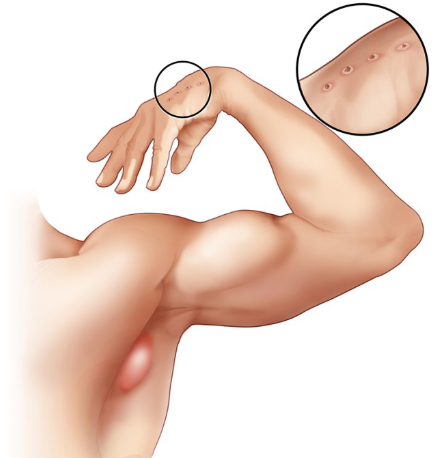
What are lymph nodes? How do they respond to a Bartonella species infection?