Archive for the ‘Uncategorized’ Category

Bartonella vinsonii subs. arupensis in Animals, and Yes – Humans

https://www.ncbi.nlm.nih.gov/pubmed/32071727

2020 Jan 16;34:100652. doi: 10.1016/j.nmni.2020.100652. eCollection 2020 Mar.

Bartonella vinsonii subsp. arupensis infection in animals of veterinary importance, ticks and biopsy samples.

Abstract

Testing for vector-borne pathogens in livestock is largely reliant upon blood and tissue. The role of biopsy samples remains poorly explored for detecting tick-borne bacteria in animals. In a 2-year survey, animals of veterinary importance from farms throughout the northern part of Greece were routinely checked for the presence of biopsy samples. Where detected, either a portion or a biopsy was collected together with whole blood samples and any ticks at the site of the biopsy sample. Molecular testing was carried out by real-time PCR targeting the internal transcribed spacer gene of Bartonella species. A total of 68 samples (28 blood samples, 28 biopsy samples and 12 ticks (nine Rhipicephalus bursa and three Rhipicephalus turanicus)) were collected from goats (64 samples) and cattle (four samples).

  • Eight (11.8%) of the 68 samples were positive for Bartonella species.
  • Of the biopsy and whole blood samples, four (14.3%) of each type were positive for Bartonella species.
  • None of the ticks tested positive for Bartonella species.
  • All pairs of positive biopsy samples/whole blood samples originated from the same animals.
  • Positive samples were identified as

Although many more samples from a much wider spectrum of animal species is required before concluding upon the merit of biopsy samples in the study of tick-borne diseases, the significance of our finding warrants further study, both for clinical consequences in small ruminants and for those humans who are farming infected animals.

____________________

**Comment**

Bartonella vinsonii subsp. arupensis has been found in humans:  https://www.ncbi.nlm.nih.gov/pmc/articles/PMC3358162/

Excerpt:

B. vinsonii subsp. arupensis was first isolated from a bacteremic cattle rancher in Wyoming, USA, in 1999 (). Later studies showed that strains identical to B. vinsonii subsp. arupensis were highly prevalent among deer mice (Peromyscus maniculatus), a strictly North American rodent species frequently found across a wide geographic area, including Wyoming. Similar strains of B. vinsonii subsp. arupensis have not been found in other animals in North America, suggesting that deer mice are natural hosts of this bacterium ().

However, the proposed link between infected mice and B. vinsonii subsp. arupensis infection in humans was challenged when this bacterium was reported in an endocarditis patient in France () and 2 febrile patients in Russia (). The link was further disputed after identification of B. vinsonii subsp. arupensis infection in 2 humans in Thailand () and the subsequent inability to identify this strain or related species among the local rodent population, despite intensive investigation in different parts of Thailand (). B. vinsonii subsp. arupensis was also identified in stray dogs in Thailand (). In addition, B. vinsonii subsp. arupensis–specific antibodies were reported in febrile patients from Nepal (). Together, these reports suggest that the spectrum of animal hosts carrying B. vinsonii subsp. arupensis may be underestimated. We report the identification of B. vinsonii subsp. arupensis in 4 more patients in Thailand.

The 1999 study on the discovery of Bartonella vinsonii subs. arupensis in the human cattle rancher states this:

Excerpt:

The highest level of relatedness was observed with recently characterized strains from naturally infected mice that were coinfected with Borrelia burgdorferi and Babesia microti. We propose the name Bartonella vinsonii subsp. arupensis subsp. nov. as the new subspecies to accommodate these human and murine isolates.  https://www.ncbi.nlm.nih.gov/pmc/articles/PMC85292/

For more:  https://madisonarealymesupportgroup.com/2016/01/03/bartonella-treatment/

 

Study Shows Strep Isn’t the Only Culprit in Autoimmune Encephalopathy/PANS

Study here:  https://www.jni-journal.com/article/S0165-5728(19)30352-2/fulltext  Evaluation of the Cunningham Panel™ in pediatric autoimmune neuropsychiatric disorder associated with streptococcal infection (PANDAS) and pediatric acute-onset neuropsychiatric syndrome (PANS): Changes in antineuronal antibody titers parallel changes in patient symptoms

Following excerpt about study found here:  https://www.somerdelsignore.com/the-lyme-corner/lets-talk-lyme-disease/pans/pandas/somer-delsignore/2020/3/12/study-shows-link-between-lyme-disease-and-pansautoimmune-encephalitis-using-cunningham-antibody-testing

Excerpt: 

The significance of this study assists in broadening the diagnosis of Infectious Triggered Autoimmune Encephalopathy/PANS vs. PANDAS further proving that Strep isn’t the only microbial culprit contributing to this condition and further confirming that autoimmune, neuro-inflammatory conditions can in fact be triggered by Lyme disease. The hope is solidifying an encompassing diagnosis that guides treatment lessening further misdiagnosis of children with psychiatric disorders.

For more:  https://madisonarealymesupportgroup.com/2019/04/09/abstract-bartonella-in-boy-with-pans/

https://madisonarealymesupportgroup.com/2017/06/30/child-with-lymemsidspans-told-by-doctors-she-made-it-all-up/

https://madisonarealymesupportgroup.com/2017/12/01/guidelines-for-treating-pans-its-real/

https://madisonarealymesupportgroup.com/2017/04/11/hidden-invaders-infections-can-trigger-immune-attacks-on-kids-brains-provoking-devastating-psychiatric-disorders/

https://madisonarealymesupportgroup.com/2017/10/01/panspandas-steroids-autoimmune-disease-lymemsids-the-need-for-medical-collaboration/


CDC’s Recommendations For Lyme Epitomize Institutional Bias

https://www.lymedisease.org/maloney-comments-tbdwg/

CDC’s recommendations for Lyme epitomize institutional bias

LDO President’s Comment to the TBDWG

https://www.lymedisease.org/mervine-comments-tbdwg/

Condemned to a life of debilitating illness? There’s a better way.

A Closer Look at the Different Types of Ticks

https://igenex.com/tick-talk/a-closer-look-at-the-different-types-of-ticks-and-how-to-identify-each/

A Closer Look at the Different Types of Ticks

Ticks come in many different varieties that not only look different, but also live in different regions and environments, and can transmit different types of diseases to both people and animals.

The purpose of this article is to provide some basic information about ticks, as well as key details about the various species that you are most likely to encounter in different regions of the United States. If you suspect that you or a loved one has been bitten by a tick of any kind, try to keep it as intact as possible so you can have it tested. Place it in a secure container so it can be evaluated by your healthcare provider, veterinarian, or local vector control for identification.


What Are Ticks?

Ticks belong to a group of animals called arthropods. Like spiders, they fall under the classification of arachnids—a specific type of arthropod with eight legs. Unlike spiders, however, ticks feed on blood from mammals—including people, pets and livestock—as well as birds, reptiles, and amphibians. They have been reported in rural and urban environments around the world, but are most often found in grassy or wooded areas and are typically most active from spring through fall.

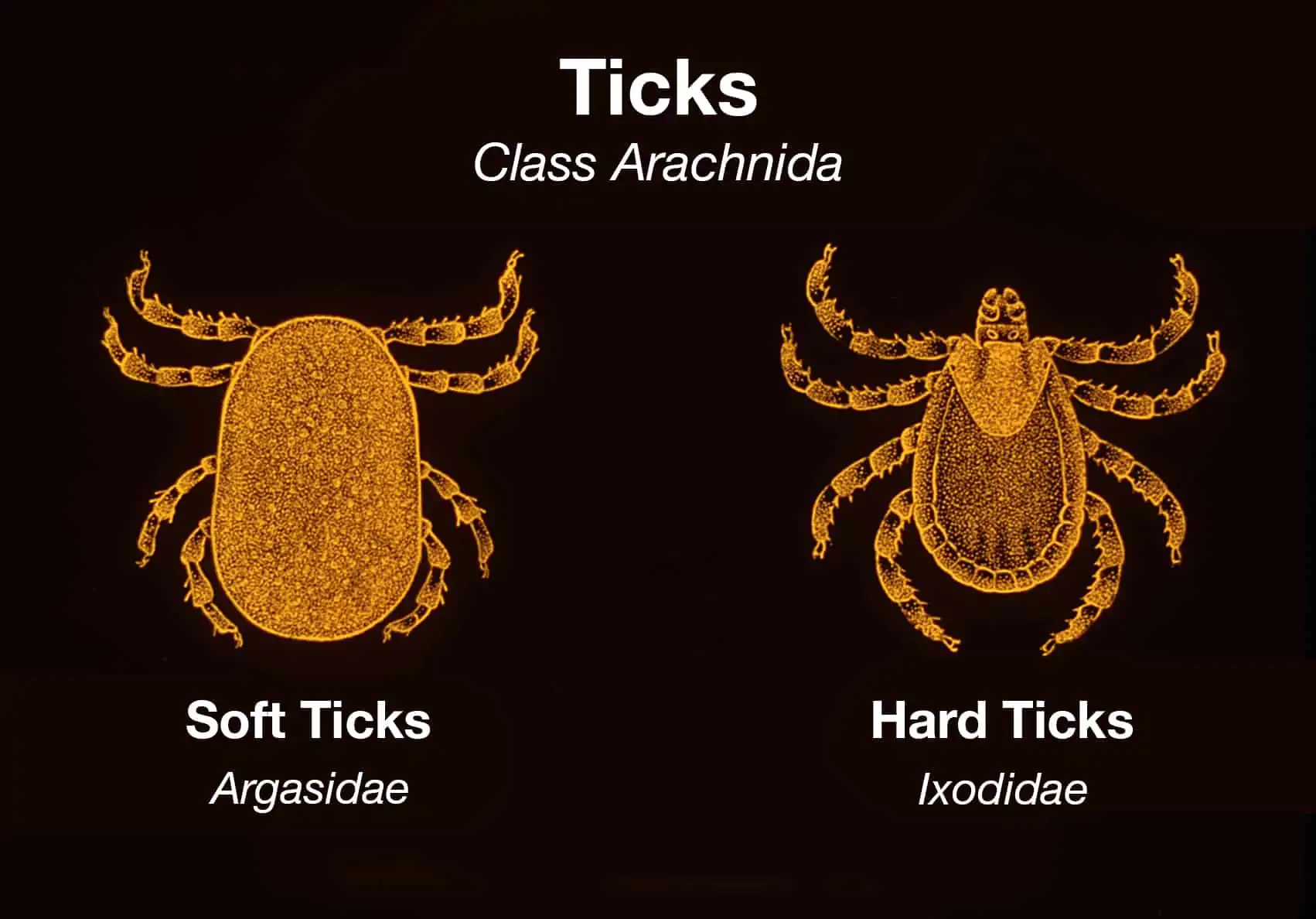
In general, ticks can be divided into two main families: hard ticks (Ixodidae) and soft ticks (Argasidae).

HARD TICKS (IXODIDAE) Hard ticks all share the distinguishing trait of a hard outer shield or black plate, known as a scutum.

SOFT TICKS (ARGASIDAE) Soft ticks do not have a scutum but instead have more rounded bodies.

Both of these families of ticks have species that can transmit diseases to humans; however, the typical length of time required to do so differs just like their feeding habits. Certain hard ticks that carry Lyme disease, for example, typically must be attached for 36 to 48 hours to infect a host, according to the Centers for Disease Control (CDC). Certain soft ticks that transmit Tick-Borne Relapsing Fever (TBRF), however, feed very quickly and can cause disease in humans.


What is the Typical Lifecycle of a Tick?

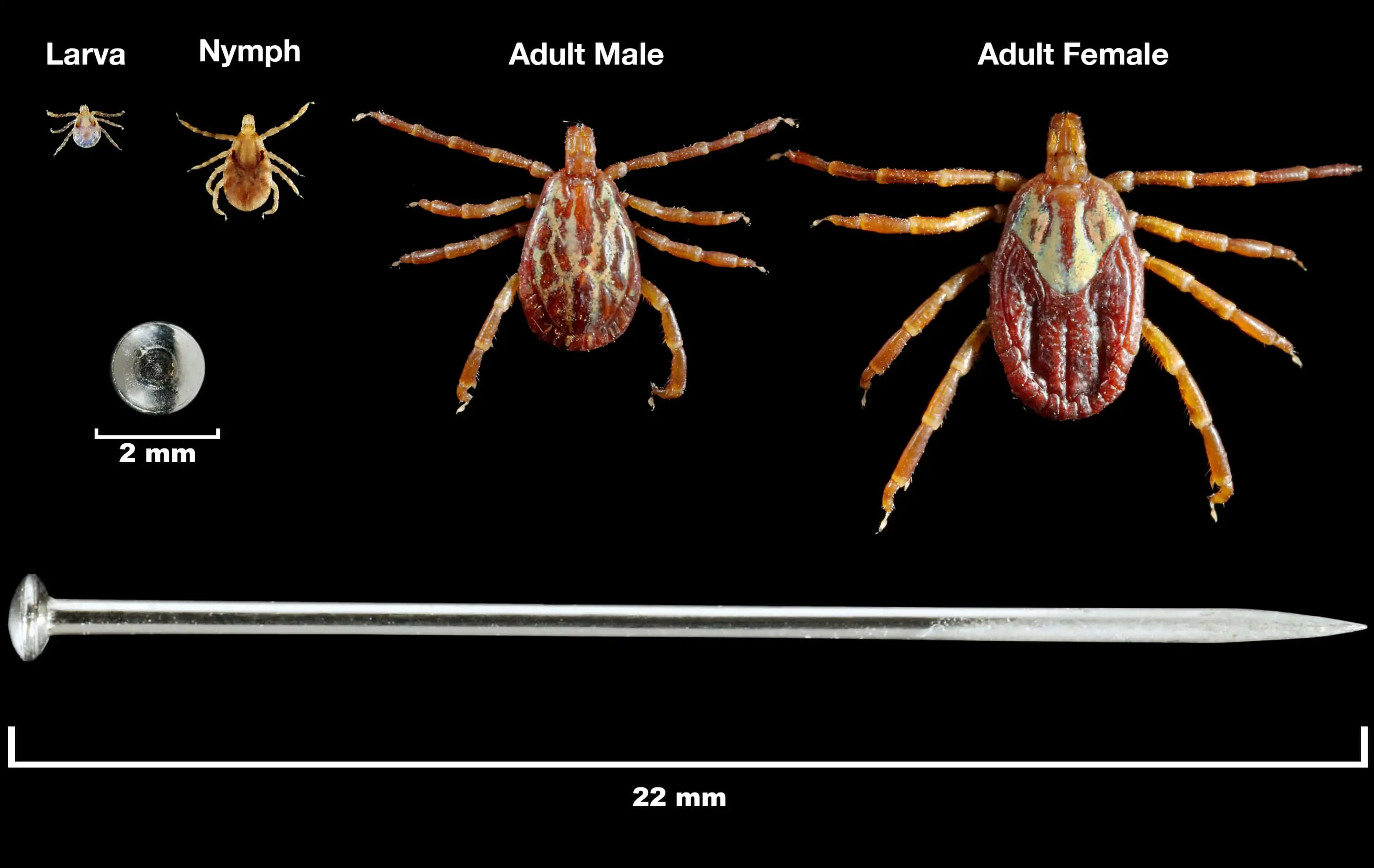
Ticks generally have four stages of life: egg, larvae, nymph and adult.

Eggs, which can number into the thousands, are laid by the female tick. These eggs hatch into larvae, which are also known as “seed ticks.” The larvae typically attach to smaller animals, such as mice and birds.

After several days of feeding, the larvae develop into nymphs, which can then attach to larger hosts and then ultimately turn into adult ticks. Most tick-borne diseases are transmitted by nymphs, which are so small that hosts often don’t see them.

Ticks advance through each of these stages by molting, a process during which they shed their outer skin.

What to Do After a Tick Bite
If you find a tick on you during a tick check, the most important thing to do is remove it immediately. The longer the tick remains attached to the skin, the higher the chances are that it will transmit a disease.
The CDC recommends using fine-tipped tweezers to grasp the tick by the head and pull up with steady, even pressure. They also recommend avoiding folk remedies like burning matches or petroleum jelly, which can cause the tick to regurgitate more pathogens into the bloodstream. As mentioned, you should try to save the tick for testing if possible.
For more information on what to do after a tick bite, read the Tick Talk blog What to Do After You’ve Been Bitten by a Tick.

How to Treat a Tick Bite
Tick bites are an unfortunate occurrence since, once you’ve been bitten, any potential pathogens have already been transmitted.

However, in addition to removing all ticks, saving them for testing, and watching carefully for symptoms of tick-borne diseases, you can perform basic first aid on the bite. Wash the bite site with warm water and soap, rubbing alcohol, or an iodine scrub. You can also watch the site carefully for any rashes, but remember that rash is only a symptom of some tick-borne diseases, and it doesn’t always occur. Even with Lyme disease, the bull’s eye rash only shows up in some patients.
Tick Lifecycle & Size of Adult Ticks Against Nail
Image Source: Dr. Christopher Paddock https://phil.cdc.gov/Details.aspx?pid=10879

What Types of Ticks Transmit Diseases to Humans?

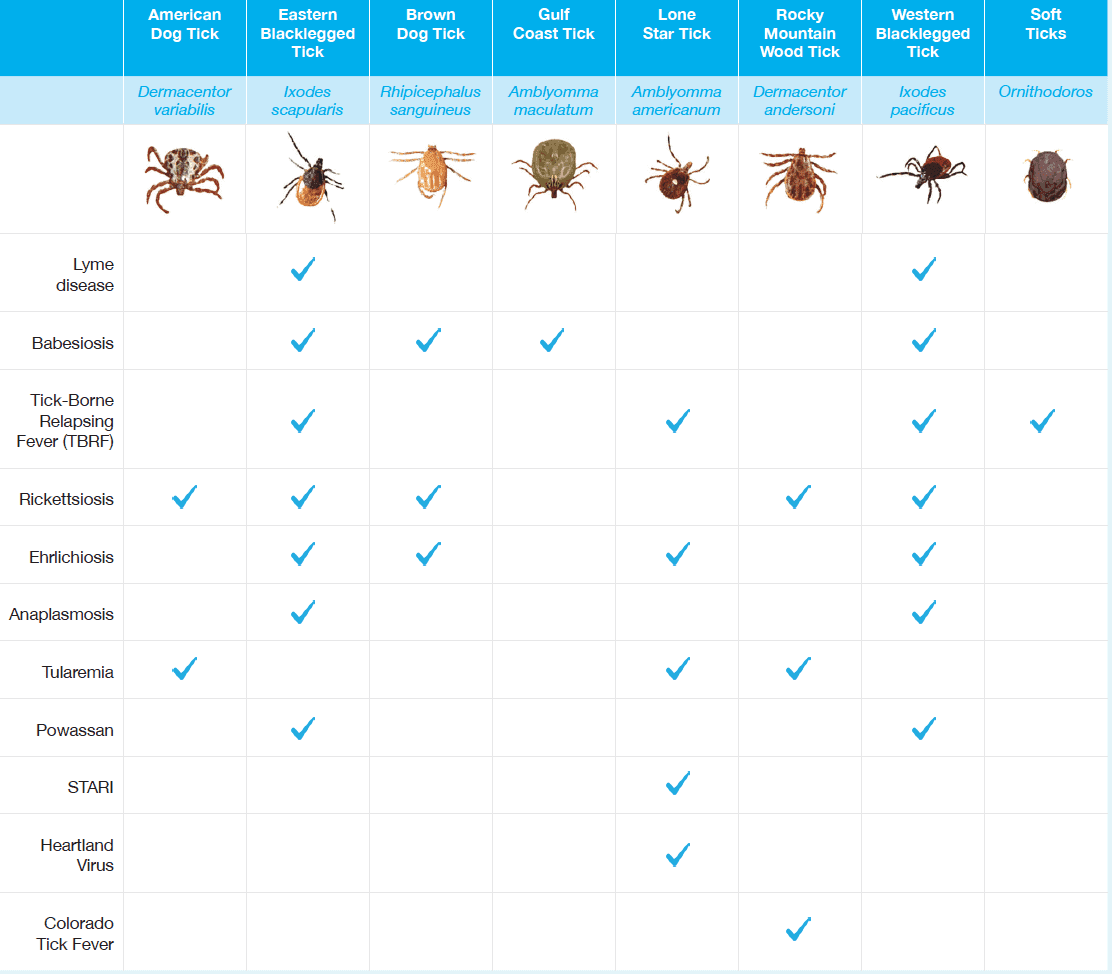
Of the nearly 900 species of ticks that exist in the world, only a select number bite and transmit disease to humans within the United States. The following descriptions provide key facts about each of these different types of ticks, including what each tick looks like at various stages of the lifecycle, some distinguishing characteristics, regions where they’re typically found, and what kinds of ticks carry Lyme disease and other illnesses that can infect both people and pets.

American Dog Tick, Also Known as Wood Tick
Distinguishing Characteristics of the American Dog Tick:
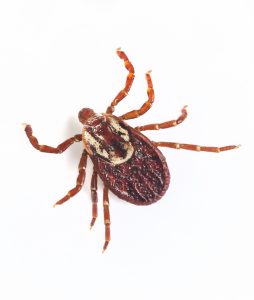
Sometimes called wood ticks, American dog ticks are a type of hard tick that is most often found in tall grass, as well as low-lying brush and twigs. At both adult and nymph stages, these ticks can feed on a variety of mammals, but adult females are most likely to bite humans. The adult females are most easily identified by the large, off-white scutum that starkly contrasts with the rest of their dark-brown bodies.
Diseases Transmitted by the American Dog Tick:
Both nymphs and adults can transmit Rickettsia rickettsia, which causes Rocky Mountain Spotted Fever, and the bacteria that causes Tularemia.
Where the American Dog Tick is Found in the U.S.:
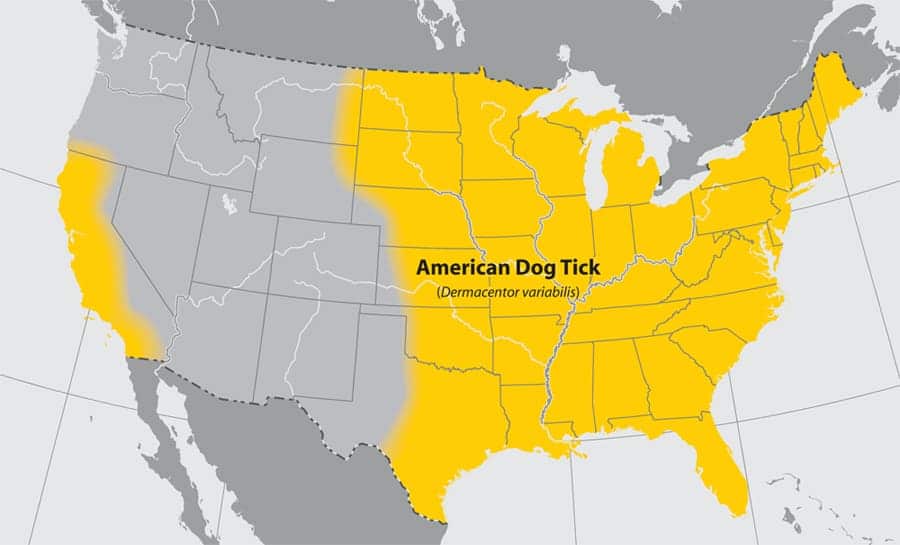
American dog ticks are primarily found east of the Rocky Mountains, although they can also be found in certain areas along the Pacific Coast.Map of American Dog Ticks in United StatesSummary
These days, ticks are more than just an annoyance. One bite can make you sick, even change your life. Taking protective measures is important in order to prevent a tick bite. Reducing tick abundance in your yard, wearing protective clothing, and scanning your body for ticks are all great actions for preventing tick bites. Fortunately, the best way to prevent bites remains the same: Know your ticks and how to avoid them. Here are the most common ticks in the United States.


Additional Resources

References

1. https://www.tickencounter.org/tick_identification/rocky_mountain_wood_tick
2. https://www.cdc.gov/ticks/tickbornediseases/soft-tick.html

____________________

**Comment**

Good, general guide to ticks.  A few corrections:

Black legged ticks also transmit:

  • Tick paralysis (fully engorged female)
  • Mycoplasma spp.  (e.g., M. fermentans)

Lone Star ticks also transmit:

  • Anaplasmosis
  • Rickettsia amblyommatis (endosymbiotic spotted fever group)
  • Tick paralysis (fully engorged female)

Gulf Coast ticks also transmit:

  • Rickettsia
  • Tick paralysis (in dogs)

American Dog ticks also transmit

  • Anaplasma
  • Tick paralysis (fully engorged female)

Ground hog Ticks transmit (not mentioned, but found in the Eastern and Central U.S. – Ixodes cookei)

  • Powassan
  • Lyme disease

Ticks, associated tick-borne pathogens copy 2.pages

I think the most important thing to remember is that ticks move around on other animals and birds.  They are finding tropical ticks in Ontario and vice versa.  A patient should NEVER be told they aren’t infected with something solely because a doctor looked at a geographical map.  These maps are guides that are constantly changing.

I would also like to point out one other fact – Mycoplasma (even the bioweaponized one) is found and transmitted by the deer tick.  Mycoplasma isn’t even acknowledged by mainstream medicine, yet, is a formidable foe:  https://madisonarealymesupportgroup.com/2016/02/07/mycoplasma-treatment/

https://madisonarealymesupportgroup.com/2020/02/25/pathogenic-mycoplasma-infections-in-chronic-illnesses-general-considerations-in-selecting-conventional-and-integrative-treatments/  Similarly to Lyme, Mycoplasma has persister or dormant microorganisms due to biofilm, resistence and other mechanisms.  It is also devoid of a cell wall.  Dr. Nicolson states that 80% of Lyme patients are coinfected with Mycoplasma.  It’s hallmark symptom is fatigue.

Also important to note:

Genes part of the HIV-1 envelope were found in these Mycoplasmas, which means that a person may not get HIV but they may get some of the symptoms.