Archive for the ‘Uncategorized’ Category

Be Aware: Tick Bites Can Cause Lyme Disease, Says Survivor

https://www.connexionfrance.com/index.php/French-news/Health/Be-aware-tick-bites-can-cause-Lyme-disease-says-survivor

Be aware: tick bites can cause Lyme disease, says survivor

Connexion reader Margaret Alderson, 76, says everyone should be aware of tick bites and how they can carry Lyme disease, which is extremely debilitating and often goes undiagnosed – as happened to her.

4 September 2020Connexion reader Margaret Alderson and her husband John in a garden.Margaret Alderson shares her struggle with Lyme disease. By Connexion Journalist

Lyme disease in France: Margaret’s story

After retiring from her job co-ordinating the Erasmus scheme for Middlesex University, she moved to Segonzac in the Dordogne with her husband John, from Ware, Hertfordshire in 2005. She was in excellent health until two years ago when in August 2018, she suddenly fell ill.

“I had dreadful pains in my chest and arm,” she said.

“I thought I was having a heart attack or a stroke. An ECG and blood test at my local A&E revealed that was not the case and I recovered with hefty painkillers. A month later, it happened again but was much worse. My hands would not work and I could hardly walk. Another ECG test showed there were no heart problems. I then saw a neurologist who diagnosed trapped nerves in my elbows and a scoliosis specialist who thought it was a back problem. He wanted to give me a major operation to put rods in my spine.”  (See link for article)

____________________

**Comment**

Sigh…..

40 years and this is where we are still at.

After using this poor woman’s experience, they tout the upcoming Valneva Lyme vaccine.  Please read this article about concerns:  https://madisonarealymesupportgroup.com/2018/12/18/concerns-about-valneva-vla15-lyme-vaccine-trials/

Excerpt:

The OspA based LYMErix vaccine was problematic with 1000+ adverse reactions and ongoing severe complications. According to the US government, the LYMErix vaccine had many health risks and was quite ineffective. Nevertheless, the biotech company Valneva appears to be using a similar OspA-based technology for their VLA15 Lyme vaccine.

So there you have it.  Lyme patients have waited patiently for over 40 years for basically ZERO help from mainstream medicine.  You still need to be tested by CLIA certified labs that are outside mainstream testing AND you still need to see specially trained ILADS (Lyme literate) doctors if you want to regain your health.  Both of these endeavors are typically going to cost patients ‘out of pocket.’ There is very little help or hope from mainstream medicine.  BTW: this type of testing and treatment are maligned by ‘authorities’.  

The deck is stacked and appears to remain stacked against the ever-growing number of infected.
Little has changed in Lyme-land.

New Laboratory Test For Lyme Disease Could Be A Game Changer

https://globallymealliance.org/news/new-laboratory-test-for-lyme-disease-could-be-a-game-changer/

ZEUS Scientific announces FDA clearance of its ZEUS Borrelia Modified Two-Tiered Testing™ algorithm, a paradigm shift in lab testing for Lyme disease.

ZEUS Scientific, a leading global diagnostic solutions company announced the launch of its ZEUS Borrelia Modified Two-Tiered Testing™ (MTTT) algorithm following clearance from the U.S. Food and Drug Administration. Approval of this MTTT algorithm represents a true paradigm shift in laboratory testing for Lyme disease.

Lyme disease, caused by the bacterium Borrelia burgdorferi, is the most common vector-borne disease in the United States and is transmitted to humans through the bite of infected blacklegged ticks. Cases of Lyme disease have exploded since the 1990s to more than 427,000 cases annually and have been found in all 50 states. The number of cases in Europe is also on the rise.

Chris Howard, Chief Commercial Officer at ZEUS Scientific stated, “With nearly 30% of early Lyme disease cases being potentially missed by the current STTT algorithm due to the insensitivity of immunoblot tests(8), we are ecstatic to have successfully improved one of the most challenging aspects of diagnosis: detecting the disease early, before a robust immune response has been developed by some patients.” Howard continued,

“Our ZEUS Borrelia MTTT™ algorithm detected up to 30% more acute Lyme disease cases relative to the STTT, significantly reducing the number of missed clinically positive patient samples(1) while maximizing lab efficiency with fully automatable immunoassays.”

Clinical labs have been burdened by the complexities and subjectivity of immunoblot testing for years, often needing to send these tests out to reference labs, leading to longer turnaround time for test results, increased resource allocation and higher costs.

The advantages of implementing ZEUS Borrelia MTTT™ are as follows. The all-ELISA algorithm is the simple, sensitive and specific alternative that is changing the game in Lyme disease testing.

ZEUS Borrelia MTTT™ Advantages

  • Reduces the number of missed clinically positive patient samples, especially in early Lyme (stage 1 and 2)
  • Removes burden of blots and subjectivity of readings
  • Enables simple and flexible first-tier and second-tier testing
  • Improves overall lab workflow and cost efficiencies, eliminating send-outs
  • Improves turnaround time

“We envisioned a similar MTTT concept more than ten years ago, but were unable to convince regulators of this powerful concept at that time(10). Since then, many other accomplished researchers have repeatedly demonstrated that the MTTT algorithm is clinically more sensitive, yet equally as specific as the STTT algorithm.” stated Mark Kopnitsky, Chief Scientific Officer of ZEUS Scientific. “We are thrilled that we can finally offer this MTTT algorithm to the clinical laboratories and hope to improve their ability to detect cases of early Lyme disease.”

“The prevalence of Lyme disease is growing and is difficult to diagnose early, at a time when patients need it most,” stated Scott Tourville, Chief Executive Officer of ZEUS Scientific. “This testing paradigm shift is a successful response to longstanding clinical and workflow challenges in the laboratory. I am extremely proud of our research and clinical trial teams in making the promise of MTTT a reality. Labs gain fast, accurate results through an efficient protocol, doctors gain higher confidence in diagnostic assessment, and patients achieve better care with appropriate diagnosis.”

Tune in, the ZEUS Borrelia MTTT™ to be Featured on Lifetime Network’s Access Health Series.

Learn more about ZEUS Borrelia MTTT™ for Lyme disease at zeuslyme.com.

_________________

**Comment**

Again, I remain hopefully skeptical. A 30% improvement on an abysmal test isn’t perfect by any means.

Bartonella Found in Ticks, Biting Midges, and Moose

https://pubmed.ncbi.nlm.nih.gov/32757355/

. 2020 Aug 5.

doi: 10.1111/tbed.13762. Online ahead of print.

Bartonella spp. detection in ticks, Culicoides biting midges and wild cervids from Norway

Affiliations expand

Abstract

Bartonella spp. are fastidious, gram-negative, aerobic, facultative intracellular bacteria that infect humans, and domestic and wild animals. In Norway, Bartonella spp. have been detected in cervids, mainly within the distribution area of the arthropod vector deer ked (Lipoptena cervi). We used PCR to survey the prevalence of Bartonella spp. in blood samples from 141 cervids living outside the deer ked distribution area (moose [Alces alces, n = 65], red deer [Cervus elaphus, n = 41] and reindeer [Rangifer tarandus, n = 35]), in 44 pool samples of sheep tick (Ixodes ricinus, 27 pools collected from 74 red deer and 17 from 45 moose) and in biting midges of the genus Culicoides (Diptera: Ceratopogonidae, 120 pools of 6,710 specimens). Bartonella DNA was amplified in moose (75.4%, 49/65) and in red deer (4.9%, 2/41) blood samples. All reindeer were negative. There were significant differences in Bartonella prevalence among the cervid species.

Additionally, Bartonella was amplified in two of 17 tick pools collected from moose and in 3 of 120 biting midge pool samples. The Bartonella sequences amplified in moose, red deer and ticks were highly similar to B. bovis, previously identified in cervids. The sequence obtained from biting midges was only 81.7% similar to the closest Bartonella spp.

We demonstrate that Bartonella is present in moose across Norway and present the first data on northern Norway specimens. The high prevalence of Bartonella infection suggests that moose could be the reservoir for this bacterium.

This is the first report of bacteria from the Bartonella genus in ticks from Fennoscandia and in Culicoides biting midges worldwide.

___________________

**Comment**

Many Lyme patients also have Bartonella.  It is an under-appreciated pathogen:  https://madisonarealymesupportgroup.com/2019/04/24/human-bartonellosis-an-underappreciated-public-health-problem/

It can cause schizophrenia-like symptoms:  https://madisonarealymesupportgroup.com/2019/03/21/bartonella-sudden-onset-adolescent-schizophrenia-a-case-study/

Again, our ‘authorities’ have pigeon-holed Lyme into a singular illness when for many there are numerous pathogens at play, not to mention other important issues like MCAS and mold that need to be dealt with. Also, most doctors are taught that Bartonella is not a big deal and the immune system will just deal with it.  I’ve lost count of how many articles have crossed my desk showing just the opposite to be true.  Bartonella can kill.

Are You a Lyme/MSIDS Patient That Needs Prayer?

Need Prayer?

Hello, my name is Amy Miller and I know first hand the devastation lyme disease and its co-infections can cause. I struggled for many years and know the torment of hopelessness and endless sickness.

Recovered for over 5 years now, I would consider it an honor to encourage and pray for you, to stand in faith for your healing, and to pray hope, wisdom and strength for you as you continue down your road to recovery. Stay Strong and Do Not Give Up!!

Please call 608-206-6272 for prayer.


Do You Feel a Tick Bite? Did You Sleep A lot? How Do You Treat Migraines?

https://globallymealliance.org/dear-lyme-warriorhelp-14/

Copy-of-MyLymeLife_2-6

by Jennifer Crystal

August 27, 2020

Every few months, Jennifer Crystal devotes a column to answering your questions. Do you have a question for Jennifer? If so, email her at lymewarriorjennifercrystal@gmail.com.

Do you usually feel a tick bite? Does it itch?

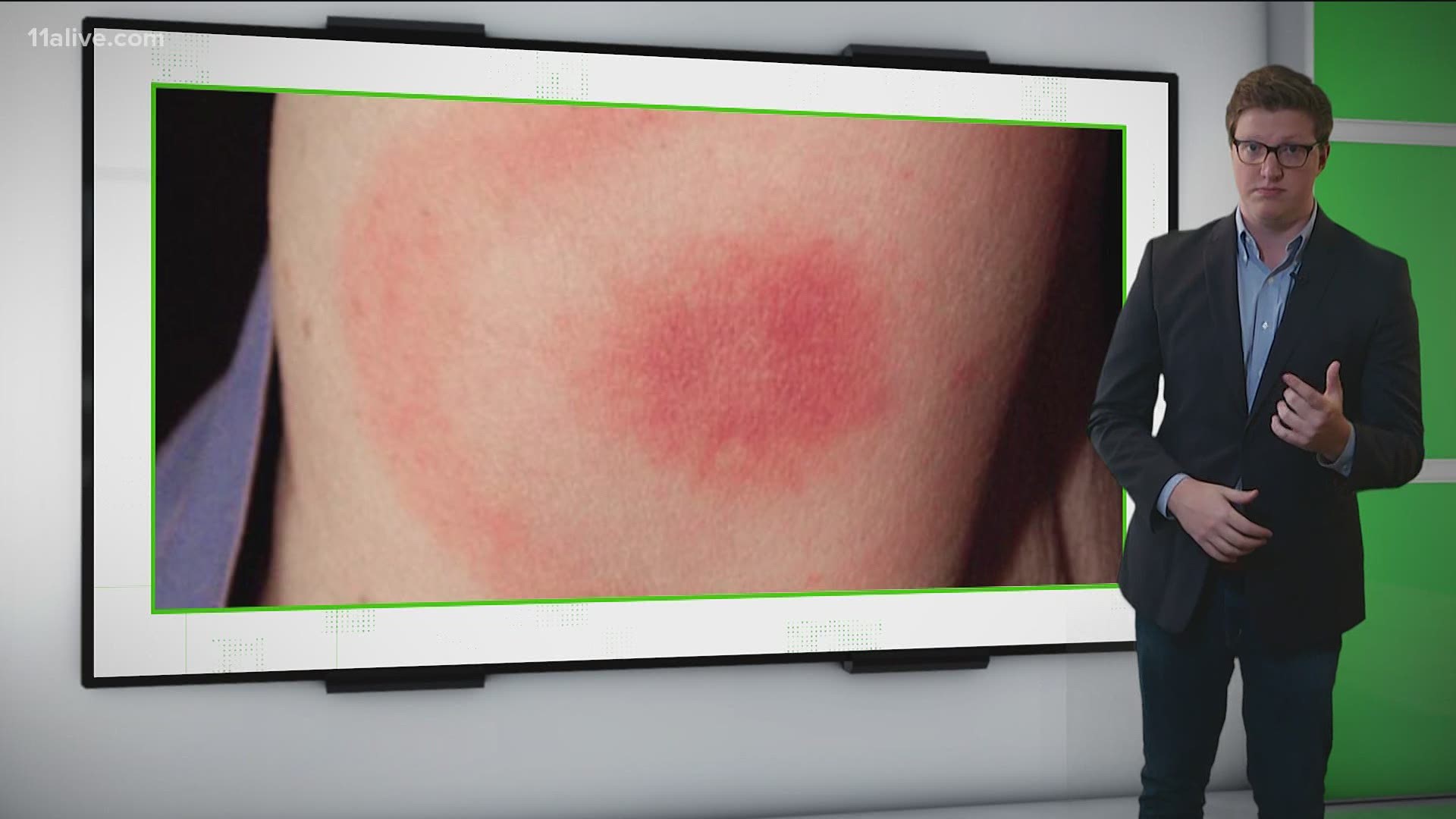
Ticks are sneaky little creatures. You don’t feel them bite, because they inject an anesthetic when they do. Less than 50% of Lyme patients recall a tick bite or rash. This is also because ticks tend to bite in hard-to-spot places such as the scalp, the groin, the armpits, the belly button, and behind the ears. The bite site or rash can itch, but doesn’t always. And while a bull’s-eye rash is a tell-tale sign of Lyme disease, not all Lyme rashes, known as erythema migrans or EM, present as such. They can be spotty or blotchy, appearing any time from immediately after a bite to months or years later, in different parts of the body. My own rash was a series of red dots on my forearm. They weren’t raised, and didn’t itch. I didn’t give them much pause; neither did the nurse at the summer camp where I was working. Years later, after I was already bedridden with multiple symptoms, bull’s-eye rashes appeared on both of my elbows.

The bottom line is, if you have any kind of rash, it’s best to get it checked out by a Lyme Literate Medical Doctor (LLMD), but you also should not look to a rash as the only indicator of Lyme disease. Instead you should be on the lookout for flu-like symptoms like fatigue, muscle and joint aches, fever, and headache. It is always better to be safe than sorry with Lyme. See an LLMD, and take antibiotics if you suspect Lyme, even if you end up doing so prophylactically.

When you were bedridden, were you sleeping a lot?

You would think the answer to this question would be yes, and I wish it was. That is to say, I was exhausted, and certainly needed the sleep. I could barely muster the strength to walk to the mailbox, or up a flight of stairs. I was too tired to concentrate on books or TV. It felt like the worst case of the flu I ever had, and all I wanted to do was sleep.

But I couldn’t. This was one of the most frustrating parts of battling Lyme, babesia, and ehrlichia; my body could not get the rest it so desperately needed. Sure, I got physical rest from lying in bed, and occasionally, when I got lucky, I nodded off for a bit. However, most days—and nights—my brain would not shut off. I would lie awake praying for sleep, trying every calming exercise possible: meditating, listening to relaxing music, counting sheep. When I did sleep, I had hallucinogenic nightmares that left me even more tired.

I finally saw a sleep doctor who did both neurofeedback and cognitive behavioral therapy. I was able to sleep better at night—though my crazy dreams never fully went away—and was able to nap in the afternoons. Once I started getting adequate rest, my body was able to heal.

What is the best treatment for migraines?

I talked about dealing with headaches stemming from tick-borne illness in my post “Not All Headaches are Alike: What’s Causing Yours?”. Migraines can result not just from Lyme but from other tick-borne illnesses such as babesia or bartonella. Babesia is a parasite that drains oxygen from the red blood cells. This symptom called, “air hunger” can cause excruciating headaches; I used to get migraines several times a week. Over-the-counter painkillers did nothing for them. Prescription migraine medication helped in the short-term, as did rest. It helped to stay away from screens when I felt a migraine coming on.

But my migraines didn’t really ameliorate or disappear until I adequately treated the infections that were causing them. For me, this meant years of antibiotic treatment for Lyme disease and months of anti-malarial treatment for babesia, but everyone’s protocol is different. Now I only get a migraine once in a blue moon, usually when I’ve pushed myself too hard physically or neurologically. Then I know it’s time to slow down and get some sleep.

Related posts:

Living with Lyme Brain
To Sleep, Perchance to Dream
What is Air Hunger, Anyway?
Not All Headaches Are Alike: What’s Causing Yours?


jennifer crystal_2

Opinions expressed by contributors are their own.

Jennifer Crystal is a writer and educator in Boston. Her memoir about her medical journey is forthcoming. Contact her at lymewarriorjennifercrystal@gmail.com.


_______________________

**Comment**

Great questions.

For #1, we call that “wired, tired.”  It’s when you would give up your left arm to sleep, but you can’t.  Then there are times when you can literally fall asleep standing up. Both are common with tick-borne illness.  Again, Lyme is only the tip of the spear.  Many patients are infected with numerous pathogens – including parasites.  Parasites are known to cause insomnia and some find this to be even worse during full-moons when there is heightened activity.  If your Lyme treatment isn’t addressing insomnia, please copy this off and discuss parasite treatment with your practitioner:  https://madisonarealymesupportgroup.com/2017/10/03/removing-parasites-to-fix-lyme-chronic-illnesses-dr-jay-davidson/  Some really improve on dewormers like Ivermectin and Albenza (One of Klinghardt’s protocol sis within the link).  Warning: you need to be under the direct supervision of an experienced doctor has dewormers have been known to kill the worms borrelia is hiding in, exposing them now to antibiotic treatment which can cause massive die-off and high levels of inflammation.  https://madisonarealymesupportgroup.com/2016/06/03/borrelia-hiding-in-worms-causing-chronic-brain-diseases/  This is particularly dangerous in the brain:  https://madisonarealymesupportgroup.com/2016/08/09/dr-paul-duray-research-fellowship-foundation-some-great-research-being-done-on-lyme-disease/

For #2, I completely agree that the BEST treatment for migraines and headaches caused by tick-borne illness is appropriate treatment.  Get to the root cause of the pain.  This goes for pain anywhere and everywhere within the human body.  Drug levels are also important.  True story: the pharmacist didn’t tell me they ran out of 500mg tablets of Azithromycin and switched my prescription to 250mg – meaning I should have been taking TWO tablets, not one.  Not knowing this, I continued to take one tablet and suffered with the worst shoulder pain known to mankind.  When I finally figured it out and started again with the full dose, guess what?  Yep.  PAIN GONE.  POOF!  This shows the importance of blood levels.  This is also something to keep in mind generally throughout treatment.  It is my opinion that many are not on high enough levels and by switching that up, you can make good progress.  I’ve seen this over and over with patients who don’t seem to be responding.  Dr. Burrascano talks about this important topic here:  https://madisonarealymesupportgroup.com/2018/12/28/the-history-of-lyme-disease-dr-burrascano/ (Video in ILADS link within article)  I highly recommend you watch the entire video, but I highlight it here:  https://madisonarealymesupportgroup.com/2019/02/22/why-mainstream-lyme-msids-research-remains-in-the-dark-ages/  Another nuance he discusses is “cycling” antibiotics – meaning, once you have become symptom-free for 2-3 months, you stop all drugs and wait.  If symptoms return you hit it hard again with antimicrobials until symptom-free status is achieved.  He states that he and many of his patients became symptom-free for good after
