Archive for the ‘Uncategorized’ Category

How Safe Are Topical NSAIDs Like Voltaren Gel?

https://www.peoplespharmacy.com/articles/how-safe-are-topical-nsaids-like-voltaren-gel

How Safe Are Topical NSAIDs Like Voltaren Gel?

FDA’s warning on doctor-prescribed topical NSAIDs like Voltaren Gel is scary. Are gels as dangerous as oral NSAIDs like ibuprofen or naproxen?

Oral NSAIDS Come With Other Worrisome Side effects:

Americans are in a lot of pain! Medscape provides physicians and other healthcare professionals up-to-date medical news and information. It offered this overview of “Nonsteroidal Anti-inflammatory drug (NSAID) Toxicity” on Sept. 15, 2023:

“More than 70 million prescriptions for NSAIDs are written each year in the United States. With over-the-counter use included, more than 30 billion doses of NSAIDs are consumed annually in the United States alone.”

(See link for article)

_____________

**Comment**

Important article for Lyme/MSIDS patients who deal with excruciating pain.

Many oral NSAIDs can cause heart attacks and strokes, hypertension, irregular heart beats, dizziness, blood clots, fluid retention, heart failure, tinnitus, and liver or kidney damage.

Regarding topical NSAIDs, a Cochrane review for ACUTE pain showed that they provide similar relief as orals with minimal adverse events. So topical NSAIDs used for a short period of time appear to work and are fairly safe; however, less than a year later some of the same authors published a new review for CHRONIC pain which found they only worked for 10% more people than those who got a placebo for osteoarthritis and that there is no evidence for other conditions. While the authors admit the quality of evidence was low, the side-effects were wide ranging but supposedly mild and included:

  • headache
  • diarrhoea
  • drowsiness
  • dyspepsia [heartburn]

Some patients wrote in that they experienced more serious side-effects like stomach pain, abdominal cramps, and high blood pressure.

The article author is puzzled as to why the FDA took so long to allow topical NSAIDs to be sold over the counter when orals have been available OTC despite scary warnings.

For more:


Sharp Rise in Lyme Cases Due to Change in How They Are Reported

https://www.lymedisease.org/sharp-rise-in-lyme-cases/

Sharp Rise in Lyme Cases Due to Change in How They Are Reported

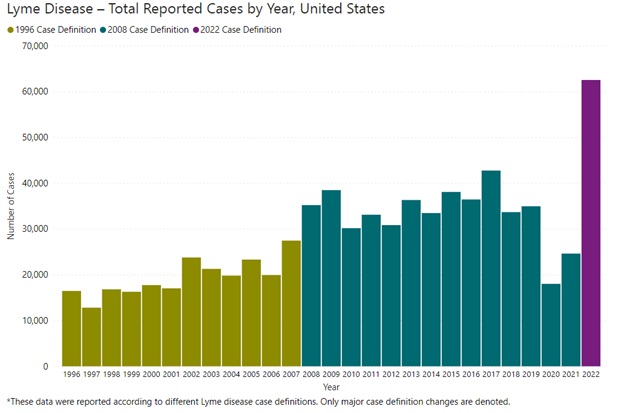
Reported Lyme disease cases in the U.S. rose nearly 70% in 2022. The CDC says it’s not because of a large increase of new infections, but rather because of a change in reporting requirements.

According to the CDC, there were more than 62,000 reported cases in 2022. This was up from about 37,000 a year from 2017 through 2019.

Although the CDC estimates that about half a million people get Lyme disease in the US every year, “reported cases” are those which follow a strict case definition and specialized requirements.

In the past, in order for a Lyme case to be officially counted, local health departments needed to go through a complicated verification process for each case. In 2022, reporting requirements were eased in states the CDC considers “high incidence.” In those states, Lyme cases are now counted based solely on a positive Lyme test.

Read more here:

Centers for Disease Control and Prevention

CNN

______________

**Comment**

Ha, ha, ha….this is a joke.

The chance of getting a positive test is akin to winning the lottery, so numbers in reality are exponentially higher yet.

For more:

It’s important to clearly understand that government sanctioned Lyme testing (like COVID testing) is utterly useless:


Statement From the Physicians Committee on Neuralink’s Purported Patient Implant

Go here to see the eerie and creepy Dawn of Augmented Humanity which exposes Neuralink’s CIA and military roots to it’s developers, whose shocking admissions should cause us all to pause. It all comes back to Harvard scientist, Dr. Lieber’s work, who was found guilty of hiding financial ties to China from federal agencies.  

https://www.pcrm.org/news/news-releases/statement-physicians-committee-neuralinks-purported-patient-implant

Statement from the Physicians Committee on Neuralink’s Purported Patient Implant

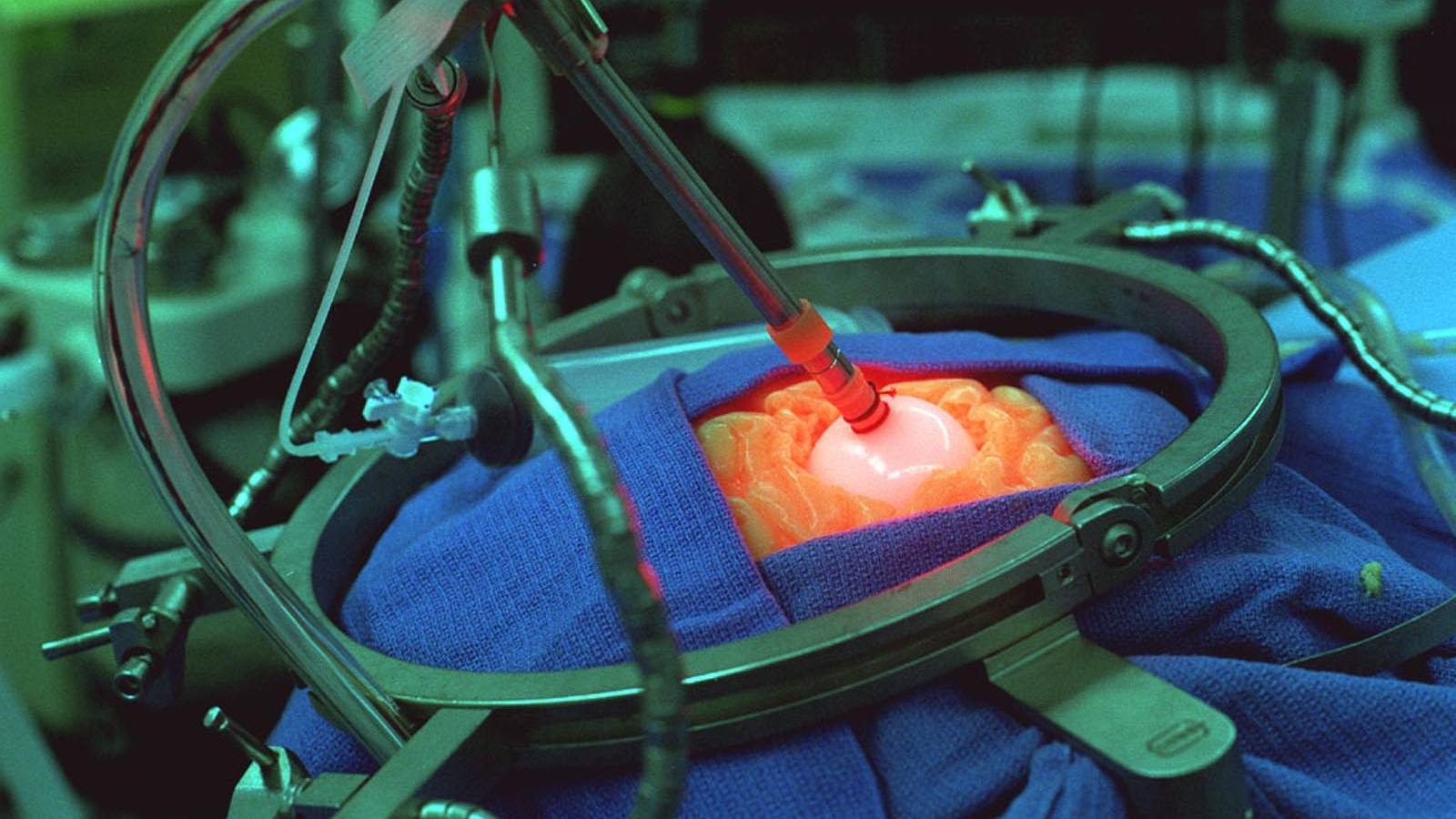
surgery simulation
Photo: Getty Images

On January 29, 2024, Elon Musk claimed on his social media platform X that a patient had received an implant from Musk’s brain-computer interface company Neuralink “and is recovering well.” The statement has not been independently verified. It is important to remember that Musk has a long track record of misleading the public about Neuralink’s supposed developments. In addition, Neuralink has a well-documented history of conducting unnecessary, sloppy experiments in monkeys, pigs, sheep, and other animals that raise serious concerns about the safety of its device. Past experiments revealed serious safety concerns stemming from the device’s invasiveness and rushed actions by company employees. In addition, a significant number of medical devices approved for clinical trials fail to ever make it to the market. As such, the public should continue to be skeptical of the safety and functionality of any device produced by Neuralink.

According to a March 2023 news report, which cited Neuralink employees, the U.S. Food and Drug Administration (FDA) itself “raised safety concerns” related to “device’s lithium battery; the potential for the implant’s tiny wires to migrate to other areas of the brain; and questions over whether and how the device can be removed without damaging brain tissue.”

In addition, Musk’s true intentions for Neuralink are disturbingly clear. He has repeatedly said the goal of the company is “to achieve a symbiosis with artificial intelligence,” which is not necessarily in line with developing treatments for patients.

The Physicians Committee continues to urge Elon Musk and Neuralink to shift to developing a noninvasive brain-computer interface. Researchers elsewhere have already made progress to improve patient health using such noninvasive methods, which do not come with the risk of surgical complications, infections, or additional operations to repair malfunctioning implants. Noninvasive devices are already demonstrating the ability to improve quality of life for older adults and elderly patients, translate brain activity into intelligible speech, and assist paralyzed patients.  (See link for article)

_____________

**Comment**

The article has a timeline of the controversy surrounding the more than 1,500 monkeys Neuralink had killed in experiments involving the brain-computer interface, and yet in May 2023, the FDA approved Neuralink’s request for permission to pursue human trials!

Buyer Beware!

For more:

Medical Gaslighting and Lyme Disease: The Patient Experience

healthcare-12-00078

Medical Gaslighting and Lyme Disease: The Patient Experience

Jennifer L. Fagen 1, *, Jeremy A. Shelton 2 and Jenna Luché-Thayer 3

Abstract:

Even though there are approximately half a million new cases of Lyme disease in the US annually, according to the CDC, it is often undiagnosed or misdiagnosed, which can result in a chronic, multisystemic condition. Lyme disease is a recognized public health threat and is a designated “notifiable disease”. As such, Lyme disease is mandated to be reported by the CDC. Despite this, both acute and chronic Lyme disease (CLD) have been relegated to the category of “contested illnesses”, which can lead to medical gaslighting. By analyzing results from an online survey of respondents with Lyme disease (n = 986), we elucidate the lived experiences of people who have been pushed to the margins of the medical system by having their symptoms attributed to mental illness, anxiety, stress, and aging. Further, respondents have had their blood tests and erythema migrans (EM) rashes discounted and were told that CLD simply does not exist. As a result, a series of fruitless consultations often result in the delay of a correct diagnosis, which has deleterious consequences. This is the first study that addresses an extensive range of gaslighting techniques experienced by this patient population.

(See top link for entire paper)

_____________

For more:

Review: Borrelia Miyamotoi

https://danielcameronmd.com/review-borrelia-miyamotoi/

REVIEW: BORRELIA MIYAMOTOI

borrelia-miyamotoi

Borrelia miyamotoi is an emerging tick-borne illness that is transmitted by the deer tick. The most common symptoms of a B. miyamotoi infection include fever, fatigue, headache, chills, myalgia, arthralgia, and nausea.

In their article, “Human Borrelia miyamotoi Infection in North America,” Burde and colleagues discuss the frequency and location of infection in ticks and people, clinical presentation and complications, diagnosis, treatment, and prevention.

Prevalence of B. miyamotoi

B. miyamotoi-infected ticks have been reported throughout the northeastern, northern Midwestern, and western United States. They’ve also been detected in all Canadian provinces except Newfoundland and Labrador.

The prevalence of Borrelia miyamotoi infections is difficult to determine, since the illness is not nationally reportable in the U.S. but reportable in only a few states including Connecticut, Maine, Massachusetts, Minnesota, New Jersey, Vermont, and Wisconsin. And, confirmation of the diagnosis depends upon laboratory testing, which is not always available.

Furthermore, diagnosis can be challenging. “The discrepancy between diagnosed and undiagnosed infection is probably even greater for B. miyamotoi, a tick-borne disease that lacks an easily identifiable clinical marker, such as the erythema migrans rash, and is less well known by health care workers and the general public,” the authors write.

Transmission

B. miyamotoi can be transmitted to humans through the bite of an infected black-legged (deer) tick. Several studies have found that it may be transmitted through blood transfusions, as well.

The B. miyamotoi pathogen can be transmitted from an infected female tick to her eggs, which may result in some larval ticks harboring the infection and transmitting it to a host. “Other larvae become infected after taking a blood meal on an infected mouse reservoir host, molt to the nymphal stage, and then transmit infection to another mouse or human,” they write.

Symptoms & Treatment

B. miyamotoi symptoms can be non-specific and an individual may appear to have a viral-like illness with fever, chills, headache, myalgia, fatigue, arthralgia, and gastrointestinal complaints, according to the authors.

“The most striking clinical feature of B. miyamotoi is relapsing fever with an initial febrile episode followed by a period of wellness and then one or more additional febrile episodes,” the authors write.

Some studies have found that the “average time between relapses was 9 days with a range of 2 days to 2 weeks.”

However, not all individuals develop relapsing fever. “In the largest case series of B. miyamotoi cases in the US, only 2 of 51 cases (4%) developed relapsing fever.”

READ: Don’t Rely on Relapsing Fever to Diagnose B. miyamotoi 

Treatment of B. miyamotoi disease typically involves using the same antibiotics to treat Lyme disease: doxycycline, tetracycline, erythromycin, penicillin, and ceftriaxone. However, there have been no trials to evaluate the effectiveness of these treatments.

Co-infections worsen disease

Co-infections can worsen the illness. There have been reported cases of B. miyamotoi co-infection with B. burgdorferi and/or Babesia microti.

“Previous studies have found that coinfection of B. burgdorferi with either Babesia microti or with Anaplasma phagocytophilum are often associated with more severe disease compared with that caused by B. burgdorferi infection alone,” the authors write.

Testing for the infection can include blood smear, polymerase chain reaction (PCR), and/or antibody detection.

Authors’ Conclude:

“The possibility of B. miyamotoi infection should be considered in any patient with a febrile illness who resides in or has recently traveled to a region where Lyme disease is endemic, especially during the late spring, summer, or early fall.”

References:
  1. Burde J, Bloch EM, Kelly JR, Krause PJ. Human Borrelia miyamotoi Infection in North America. Pathogens. 2023 Apr 3;12(4):553. doi: 10.3390/pathogens12040553. PMID: 37111439; PMCID: PMC10145171.

_______________

For more:

Since Borrelia miyamotoi is not a reportable illness to the CDC, no one has any clue about prevalence but reports are coming in continually that it’s highly likely to be a much bigger problem than ‘authorities’ believe.
It was recently discovered that:

Also, Borrelia miyamotoi has been in California ticks for a long time:

https://madisonarealymesupportgroup.com/2018/02/15/b-miyamotoi-in-ca-ticks-for-a-long-time/

The following case shows how you can become infected while traveling:  https://madisonarealymesupportgroup.com/2020/10/24/a-case-of-borrelia-miyamotoi/