Archive for the ‘Treatment’ Category

Post-COVID Reactivation of Latent Bartonella: A Case Report & Literature Review

https://bmcinfectdis.biomedcentral.com/articles/10.1186/s12879-024-09336-7

Case Report

Open access

Published: 

Post-COVID reactivation of latent Bartonella henselae infection: a case report and literature review

Yanzhao Dong, Ahmad Alhaskawi, Xiaodi Zou, Haiying Zhou, Sohaib Hasan Abdullah Ezzi, Vishnu Goutham Kota, Mohamed Hasan Abdulla Hasan Abdulla, Alenikova Olga, Sahar Ahmed Abdalbary & Hui Lu

Abstract

Cat scratch disease (CSD) is caused by Bartonella henselae (B. henselae) and presents as lymphadenopathy following close contact with cats. However, in context of the global COVID-19 pandemic, clinical manifestations of CSD may vary, posing new challenges for healthcare professionals. Here we describe a case of a 54-year-old male with painful left upper arm mass, which gradually resolved until he was infected with COVID-19. The mass then rapidly progressed before admission. Meanwhile, pulmonary symptoms including pleural effusion emerged simultaneously. The cause was undetermined with routine blood culture and pathological test until the next generation sequencing (NGS) confirmed the presence of B. henselae. We believe this case is the first to report localized aggravation of CSD after COVID-19 infection and hopefully, offers treatment experience for clinicians worldwide.

_______________

**Comment**

On a personal note: both my husband and I required Bartonella treatment for a relapse after COVID.  What the abstract does not mention is if this patient received the mRNA gene therapy shot which would complicate matters even more. Since his presentation was in January of 2023, he very well could have had multiple shots.

While the case report was about a severe Bartonella manifestation, please know Bartonella can present a million different ways.  Please read:  https://madisonarealymesupportgroup.com/2019/04/24/human-bartonellosis-an-underappreciated-public-health-problem/

For more:

May: Lyme Disease Awareness Resources

Lyme Disease Awareness Month 2024

May is Lyme Disease Awareness Month, a time dedicated to increasing public knowledge about Lyme disease. This month emphasizes awareness on preventing tick bites, recognizing symptoms, and promoting early detection. 

Go here for nifty downloadable posters to share with others.

Go here for more prevention & printouts on how to identify and properly remove ticks, how to protect your pets and yard, learn about Lyme symptoms, as well as get guest blogs on various topics, a community action calendar, and Lyme statistics.

Go here for a free special issue of Lymetimes.

Topics within:

  • All things Mast Cell Activation Syndrome (MCAS)
  • Healing Guide for environmental toxins, Lyme, and EMF’s
  • Connection between mold illness and MCAS
  • Hidden ingredients in pills
  • History of LymeDisease.org

Go here for Upcoming Lyme Awareness Events.

Go here for tick prevention.

Jadin Protocol for ME/CFS, Chronic Lyme & Q Fever

http://

Protocol for ME/CFS, Chronic Lyme, & Q Fever

Cécile Jadin, MD

8/2/23

Microbiome Prescription

Transcript available in Youtube link.

For more:  https://cfsremission.com/2023/08/02/video-presentation-of-dr-jadins-current-protocol-for-me-cfsvideo-presentation-of    Within this link is the following information as well as shortened videos and helpful information including a list of treatments.

Important point:  treatment duration is 1-3 YEARS.

Dr. Jadin’s protocol has been used for over 25 years with a high success rate (90%).

Cécile Jadin is a MD with decades of clinical experience treating ME/CFS applying and evolving a protocol that she inherited from her father’s time at the Pasteur Institute of Tropical Medicine.  She talks about Obligated Intracellular Organism or OIO. This term may be unfamiliar to many, for some background readings see this Research Topic on Frontiers.

Remission is the Target, not who is right

Patients and their MDs can go down two path, the paths actually run besides each other.

  • Follow Cécile Jadin process and protocol precisely
  • Follow Cécile Jadin process but use iterative sets of suggestions from Microbiome Prescription. By that, pick 1-2 of the top CFS tagged antibiotics, then at the end of first month, take a new microbiome sample and start with the secondary CFS tagged antibiotics (while waiting for the results).

The latter approach can be tried without prescription antibiotics because it identifies probiotics (that often produces natural antibiotics) and herbs (with antibiotic characteristics) and thus allows self-treatment for those without a cooperative medical professional. This no-antibiotics approach will likely work slower for most people. I discourage self-treatment, but often there is no alternative. My first choice is keeping strictly to clinical experience using the microbiome suggestions to select between clinical alternatives.

Go here for Dr. Jadin Resources which includes much more detail about the treatment

For more:

Returning to Nature Helped Heal This Lyme Survivor

https://www.lymedisease.org/returning-to-nature-after-lyme/

Returning to nature helped heal this Lyme survivor

By Fred Diamond

When I was researching my book Love, Hope, Lyme: What Family Members, Partners, and Friends Who Love a Chronic Lyme Survivor Need to Know, I had no idea how traumatizing being out in nature could be for some persistent Lyme disease survivors. Even seeing a deer on the side of the road could be triggering.

But I met some people who have attributed embracing the nature they once loved as helpful in healing while still maintaining tick prevention habits.

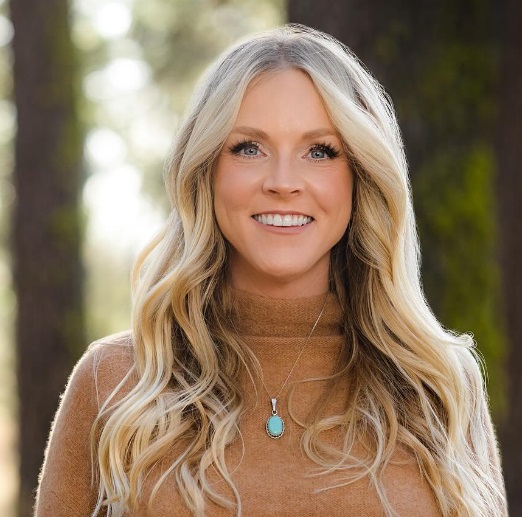
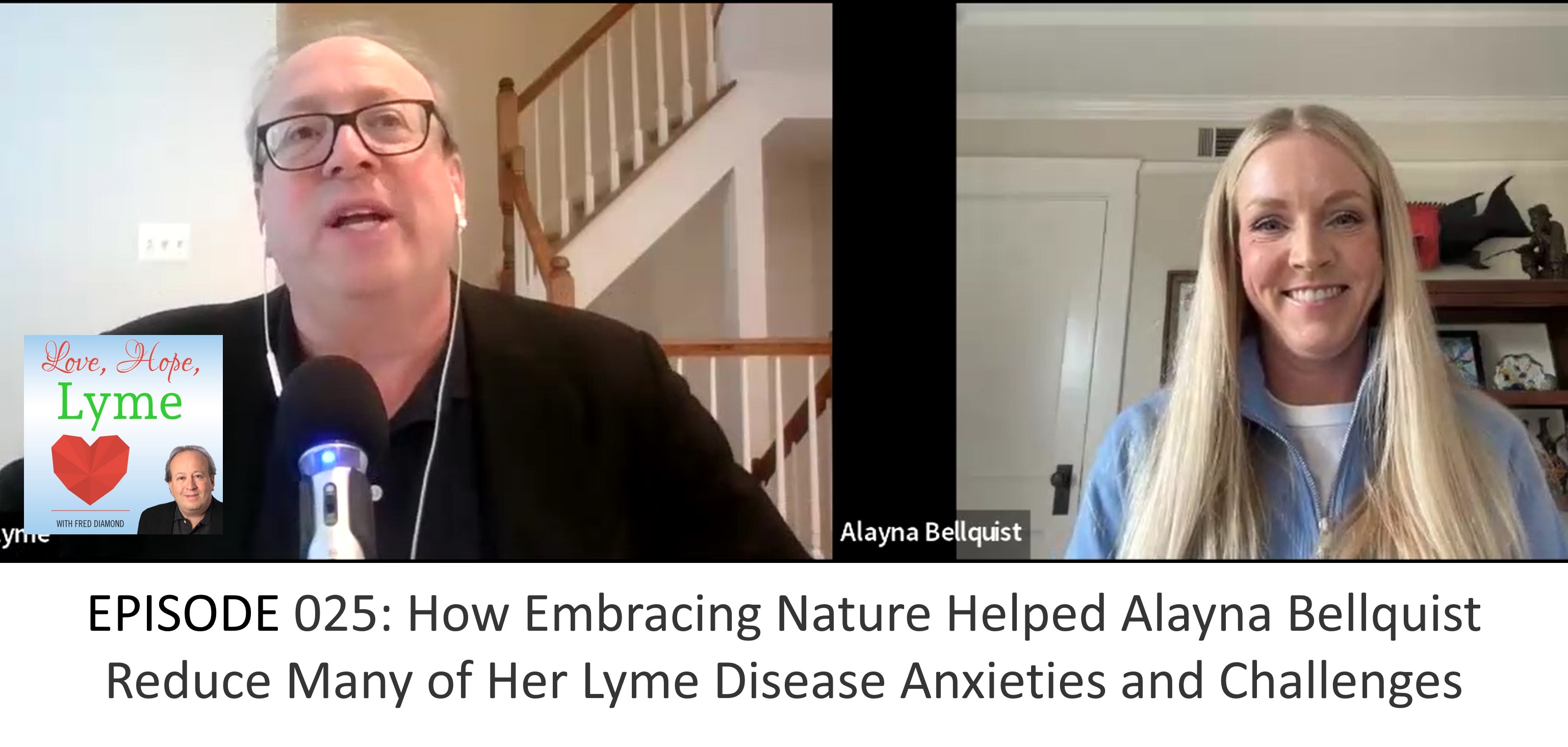
One such person, marine scientist Alayna Bellquist, discussed on my Love, Hope, Lyme podcast how she was able to reduce her Lyme anxieties and challenges by fully embracing her love for the sea and horseback riding as critical to her recovery.

“I’m a classic Lyme person in that I was very overachieving, very people-pleasing, very go, go, go. I live in San Diego, had a relatively frantic life (before being infected),” she said.

Although she was bitten by tick in Southern California, she said she was not tick aware growing up.

“I grew up on Vancouver Island where no one ever spoke about Lyme. I had no tick awareness until I moved to Southern California, and it came up a bit more,” she said.

She said she was bitten when riding her horse, noticed the infection, and immediately sought antibiotic treatment, which mildly helped. In 2020, her symptoms increased, and she became bedridden for a year. Although she tried a lot of conventional and alternative healing methods, and did mental and emotional work, it was getting back into the nature she loved that accelerated her healing.

“Fearing nature is understandable when you have Lyme, but I think that mindset is dangerous. I want chronic Lyme survivors to know that getting back into nature can be helpful, while, of course, ensuring you take proper precautions,” she advised.

Missing nature was brutal, but led to healing

“Before I got sick, horseback riding was a big part of my identity. I was a marine scientist and a horseback rider. Every minute I wasn’t working, I wanted to be on the back of a horse. I’ve been nature and animal oriented my whole life,” she said. “There was no limit to how much time I could spend around them.”

She said becoming bedridden and not being out in nature was brutal.

“Having had worked in fisheries for 20 years, I learned that nature always heals, given the chance. Nature is inherently resilient and heals from devastation that you cannot even grasp. These are principles that people are not really taught,” she said.

“Growing up in Vancouver Island, there’s nature everywhere and we are a part of it. I learned that if certain species, such as white sharks, can be in such terrible shape for a long time and then recover, that principle can apply to me, too.”

She said since the bond with nature was so intrinsic to her, she did not realize how fearful of it Lyme survivors might be.

“There is a lot in science to back the healing properties of doing that, especially for your nervous system,” she said.

“My nervous system was 100% fried when I was bitten. I was running all of time and had chronic anxiety and a racing heart. My stomach was always in knots. I also had Babesia, but sitting on the earth, calming my nerves, taking the time to look at the stars healed me. I know it’s so basic, but I never looked at the stars before,” she said.

“Being back in nature, while at the same time ensuring that I am preventing another tick bite, has been the most important to my recovery,” she said.

Getting back into nature healed her

“If you want to bring a species back from depleted numbers, you work on the ecosystem. You work on the things that depleted its resiliency. If there’s pollution or problems in the food chain or warming oceans, for instance, those are the things that you address so that the species can flourish,” she said.

“I asked myself, ‘What are the things that are attacking my ability to heal?’ People-pleasing, never saying no, running 12 to 14-hour days nonstop, perfectionism came to mind. Those are my pollution and overfishing and ocean warming. That was the connection I made. Those are the things that made me incapable of healing,” she realized.

Alayna said although she accepted that she was infected, she didn’t accept it as a lifelong diagnosis. Returning to nature helped with her emotions and mindset.

“I’ve chosen, through a lot of work, to shift from victim to ownership. I radically own what happened to me. Wanting to be a people-pleaser and an overachiever is on me. That’s radical acceptance and responsibility,” she surmised.

“But in owning it, it’s up to me how the direction this goes. I don’t want to lose control. I want control of the next 40, 50 years of my life and returning to nature helped me realize that,” she summarized.

She also advised bringing family members into the healing process.

“You can be there simply by answering the phone, going and doing something in a Lyme friendly way. If all your Lyme family member can do is sit on a rock, go sit on a rock together.”

Click here to listen to all episodes of the Love, Hope, Lyme Podcast or on YouTube.

Fred Diamond is based in Fairfax, Virginia and can be contacted via Facebook. His book, “Love, Hope, Lyme: What Family Members, Partners, and Friends Who Love a Chronic Lyme Survivor Need to Know” is available on Amazon. The e-version of the book is always free to Lyme survivors. PM Fred on Facebook for your copy.

Podcast: Advancements in Babesia Research

https://www.globallymealliance.org/videos/the-lyme-insider-podcast-a-conversation-with-dr.-choukri-ben-mamoun-and-gla-cso-dr.-tim-sellati?

Host Dr. Tom Moorcroft, DO, joins GLA-funded researcher Dr. Choukri Ben Mamoun and GLA Chief Scientific Officer, Dr. Tim Sellati on the Lyme Insider Podcast. Together they unpack the recent GLA-funded study led by Dr. Mamoun, “Tafenoquine-Atovaquone Combination Achieves Radical Cure and Confers Sterile Immunity in Experimental Models of Human Babesiosis.”

The conversation navigates key findings, such as the promising outcomes of combination therapy in Babesia treatment and the potential for enduring immunity. They discuss nuances between tick-borne infections and the challenges of translating research into clinical applications, emphasizing the imperative for further research on dosing strategies and therapeutic indexes for Babesia treatment.

You won’t want to miss this conversation, as it highlights the implications for patient care and the evolving landscape of infectious disease management.

Key Takeaways:

  • Combination therapy with tafenoquine and atovaquone has shown promising results in the treatment of Babesia infection.
  • Immunocompromised mouse models are valuable tools for studying the efficacy of different treatments.
  • Understanding the differences between tick-borne infections is crucial for accurate diagnosis and treatment.
  • Further research is needed to determine optimal dosing and the therapeutic index of different drugs for Babesia treatment.
  • Recrudescence and treatment failure are important considerations in Babesia treatment.
  • Combination therapy can reduce the probability of resistance in parasites.
  • Dormant parasites may be responsible for relapse in Babesia infections.
  • The terminology used in scientific research may differ from the general public’s understanding.
  • Factors like sleep, stress, and nutrition can contribute to immunocompromised states.
  • Diagnostic testing for Babesia needs improvement to reduce false negatives and false positives.
  • The ultimate goal is to help patients get better by finding the right diagnosis and treatment.
  • There is a need for collaboration between clinicians, researchers, and patients to advance the understanding and treatment of tick-borne infections.

Chapters: 00:00 Introduction and Overview 03:00 The Study and Key Findings 06:35 Understanding the Research and Clinical Implications 11:56 The Importance of Animal Models 14:43 Immunocompromised Mouse Models 23:22 Differences Between Tick-borne Infections 26:34 Combination Therapy: Tafenoquine and Atovaquone 32:26 Dosing and Therapeutic Index 36:48 Artemisinin as a Treatment Option 46:20 Recrudescence and Treatment Failure 48:23 Combination Therapy and Resistance 50:24 Dormant Parasites and Relapse 53:18 Terminology and Immunocompromised 56:15 Immune Dysregulation and Cold Exposure 59:14 Diagnostic Testing for Babesia 01:03:22 Improving Diagnostic Testing 01:12:12 The Goal of Helping Patients 01:20:22 Caring and Finding the Truth

Link to the paper we discussed: Tafenoquine-Atovaquone Combination Achieves Radical Cure and Confers Sterile Immunity in Experimental Models of Human Babesiosis – https://pubmed.ncbi.nlm.nih.gov/38169… 

For more: